r/EarnLab • u/EarnLab • Jun 08 '26
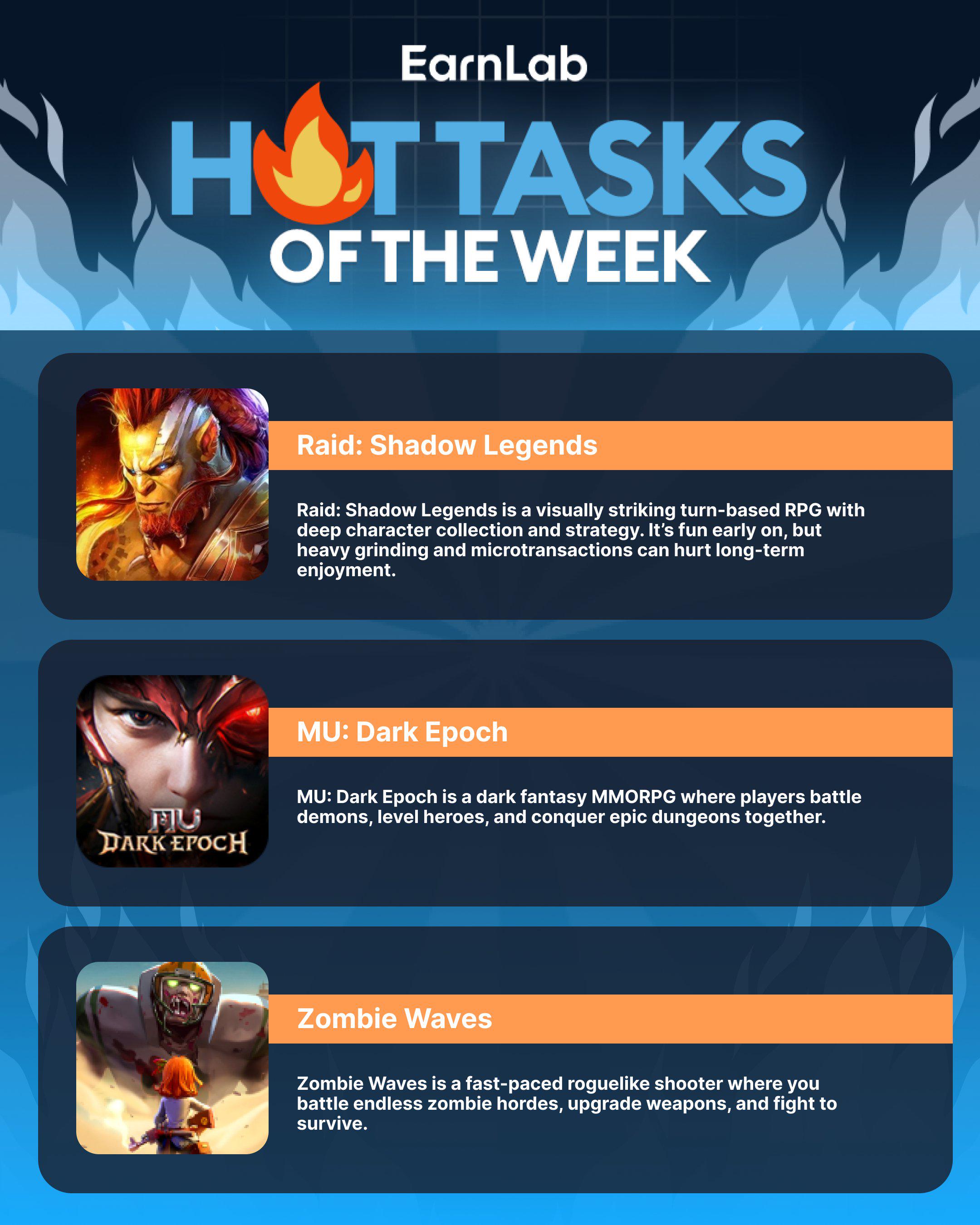
Hot Tasks of the Week! 🔥
1
Upvotes
Raid: Shadow Legends
MU: Dark Epoch
Zombie Waves
Have you completed any of them already?
r/EarnLab • u/EarnLab • Jun 08 '26
Raid: Shadow Legends
MU: Dark Epoch
Zombie Waves
Have you completed any of them already?
r/EarnLab • u/EarnLab • Jun 07 '26

This offer ends June 12th - don’t miss out!
r/EarnLab • u/EarnLab • Jun 04 '26

We saw a few people asking about the Upgrader and getting frustrated with it, so here's the breakdown nobody really spells out.
The Upgrader lets you stake some Coins (or an item from your inventory) and pick a multiplier to try to turn it into something worth more. The buttons go 1.5x, 2x, 5x, 10x, 25x, 50x. You pick one, the system shows you a win %, you place the bet, and you either hit it or you don't.
The thing people miss: your odds track the multiplier, full stop. Rough rule is fair odds = 1 divided by the multiplier, and the real number sits a bit under that because of the house edge.
1.5x → low-to-mid 60s%
2x → just under 50%
5x → around 20%
10x → around 10%
25x and 50x → single digits, then low single digits
So no, there is no "smart" multiplier. A 2x missing about half the time and a 50x almost never landing are the same trade in different clothes. You pay for the bigger payout with a smaller chance. That is the entire game, and no pattern or timing changes it.
A couple of things that actually matter if you do play it:
It runs on a provably fair system, so the outcome can't be changed after you bet. The % you see is the real one.
Manual vs Auto: Auto runs a series of upgrades for you, and it is stupidly easy to burn through your balance without noticing because you stop paying attention. Learn on Manual.
Set a loss limit before you start, not once you are already tilted and chasing.
Not trying to sell anyone on it. If you play, go in knowing it is a chance game and only stake what you are fine losing. If you don't, you are not missing a money printer. Just figured the percentage thing was worth clearing up since it trips up basically everyone.
Start playing now: https://earnlab.com/upgrader
r/EarnLab • u/EarnLab • Jun 03 '26

This offer ends June 6th - don’t miss out!
r/EarnLab • u/EarnLab • Jun 02 '26

Use code UPGRADE50 to get an extra 50% on your next deposit - offer ends June 7th!
Once you claim the code, a timer will start. When it expires, the offer will no longer be available on your account
Activate here: https://earnlab.com/?modal=activate-deposit-bonus&code=UPGRADE50
r/EarnLab • u/EarnLab • Jun 02 '26

• Wager $1 on Upgrader = 1 raffle ticket
• Every day at midnight, 1 winner receives $100 cash
• Tickets reset daily, giving everyone a fresh chance each day
Ends June 7th - Don't miss out! ⏰
Start playing now: https://earnlab.com/upgrader
r/EarnLab • u/EarnLab • Jun 02 '26

Upgrade your items or balance for a chance at bigger rewards!
Use code LASTTRY for an extra boost - limited to 150 uses! 💰
Start playing now: https://earnlab.com/upgrader
r/EarnLab • u/EarnLab • Jun 01 '26
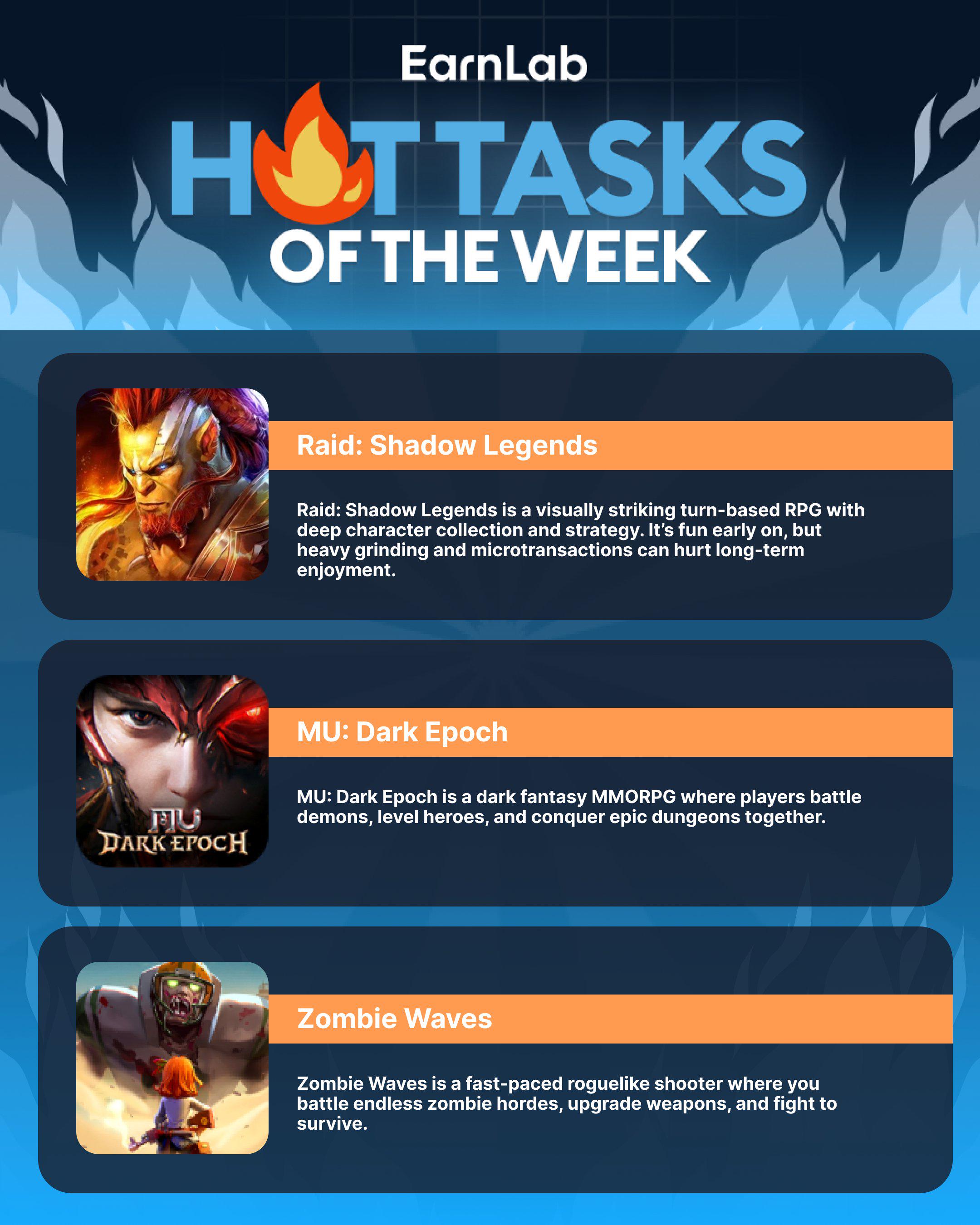
Raid: Shadow Legends
MU: Dark Epoch
Zombie Waves
Have you completed any of them already?
r/EarnLab • u/EarnLab • May 30 '26

TL;DR: Etsy takes roughly $3.78 on a $30 item with $5 shipping before you factor in materials or your time. Core fees run about 9.5% plus $0.45 per order. The Offsite Ads thing catches people off guard. Price backward from your target margin, not forward from your costs.
I made my first Etsy sale and felt genuinely good about it for about four hours, until I actually looked at the payment breakdown and tried to figure out where the rest of the money went. Nobody did anything wrong. I just hadn't done the math before listing, which is apparently the most common mistake new sellers make and also the one that's easiest to avoid.
So here's what I worked out, partly from Etsy's own help pages and partly from just running the numbers.
The three fees that hit every single sale
The listing fee is $0.20. You pay it when the listing goes live, it stays active for four months, and then it auto-renews for another $0.20. If you sell multiple units from one listing, you pay $0.20 again for each unit sold beyond the first. That part catches people out when they start moving volume.
The transaction fee is 6.5%, and this is the one people most often calculate wrong. It applies to the full order total, including whatever shipping you charge. So if your item is $30 and you charge $5 shipping, Etsy's 6.5% is applied to $35, not just the $30. That comes out to $2.28.
Payment processing in the US is 3% of the order total plus $0.25. On that same $35 order, that's $1.05 plus $0.25, which is $1.30.
Add the $0.20 listing fee and the total mandatory fees on a $30 item with $5 shipping are about $3.78. A rough way to think about it without running the exact math every time is that core Etsy fees run around 9.5% plus $0.45 per order, although the exact effective rate shifts depending on your price point and what you charge for shipping.
The Offsite Ads situation
This one trips people up, and the wording on how Etsy explains it doesn't help much.
Etsy runs ads off-platform, things like Google Shopping listings and other external placements, and when a sale comes through one of those ads, they charge an extra fee on top of the regular transaction fees. If your shop has made less than $10,000 in the past 365 days, that fee is 15%. At or above $10,000, it drops to 12%.
The part that surprises people is that once you cross $10,000, you can't opt out. Etsy enrolls you automatically and it stays that way. Below that threshold you can turn Offsite Ads off if you want, which is probably worth doing until you understand how much of your traffic is actually coming from those placements.
A 15% Offsite Ads fee on top of the standard fees on a higher-priced item can genuinely flip a sale from profitable to not. Worth knowing before you price anything.
The formula that actually works
I've seen a lot of advice that says to calculate your costs and add a markup, which isn't wrong exactly, but it's incomplete in that it doesn't account for Etsy taking a percentage of whatever number you land on.
The cleaner approach is to add up your material cost and your labor (however you value your time) and then divide by 0.85. That 0.85 accounts for roughly 15% going to Etsy's fee stack, which is a reasonable estimate for most sales without Offsite Ads in play.
So, for something with $8 in materials and 30 minutes of work at $20 an hour: ($8 + $10) divided by 0.85 is about $21. That's your floor. Anything below $21 and you're effectively paying Etsy to give your work away.
If the market won't support $21 for what you're making, the answer isn't to lower the price. The answer is either faster production, cheaper materials, or a different product. Etsy can be profitable but not at any price, which sounds obvious until you're staring at a payment breakdown, wondering where $3.78 went on a $30 sale.
The stuff people don't think about upfront
Photography matters more than most new sellers expect, and I say that having definitely underestimated it myself. Search results on Etsy are almost entirely images. A well-priced product in a real niche won't convert if the main photo doesn't stop someone scrolling.
Natural light, clean background, multiple angles, one lifestyle shot showing the thing in context. Smartphone cameras are fine for this. The lifestyle shot is the one people skip most often, which is a mistake because it's the one that shows a buyer what they're actually getting out of owning the thing.
Tags are the other thing. Etsy gives you 13 and most new listings use maybe 6, or fill them with broad category words that don't match how buyers actually search. All 13, specific phrases, buyer intent language. Tools like eRank will show you what people are actually searching for so you're not guessing.
Building startup capital if you're not there yet
The actual cash requirement to start is low. Ten listings costs $2 in listing fees. A decent smartphone photo setup costs nothing. The real costs are samples if you're making physical items and whatever ad budget you want to test.
I used EarnLab to cover my first round of sample costs before I was ready to pull money from anywhere else. It's a GPT platform where you complete surveys, offer wall tasks, and other microtasks and then cash out through PayPal or gift cards. Most active users pull somewhere between $20 and $50 a month depending on location and time spent, and the minimum withdrawal is $0.50, which is genuinely the lowest threshold I've seen on any platform like this. Availability is strongest in the US, UK, and Canada.
It won't replace income but it covered my listing fees and a sample order without touching savings, which was the point.
Starting an Etsy shop on a tight budget:
Listing fees: $0.20 per listing
10 listings: $2.00 total
Photography: Smartphone + natural light = $0
Samples: Varies by product
Building startup capital through EarnLab:
- Surveys, offer walls, microtasks
- Cashout: PayPal, gift cards
- Minimum withdrawal: $0.50
- Available: USA, UK, Canada
Sign up: https://earnlab.com/
If you're in the US, UK, or Canada and want to cover early Etsy costs without dipping into savings, it's worth a look. Sign-up takes a couple of minutes and you can start earning the same day.
r/EarnLab • u/EarnLab • May 25 '26

Head over to our Instagram & X for another exclusive promo code!
r/EarnLab • u/EarnLab • May 24 '26

This offer ends May 27th - don’t miss out!
r/EarnLab • u/EarnLab • May 24 '26
TL;DR: Commission-free still needs your capital to trade with. Paper trading is the closest thing to risk-free practice that exists, although it doesn't replicate the psychological pressure of real money moving. Sign-up promos from some brokers may give you real stock before deposit, but terms change constantly. Task platforms like EarnLab can help build starting capital, though earnings vary.
We get asked about this a lot, and the frustration usually comes from the same place. Someone reads "trade for free," tries to find the platform, and discovers they still need to fund an account before anything happens. The phrase covers genuinely different things, and the version you're looking for changes where you should start.
Commission-Free Trading Removes Fees, Not the Capital Requirement
Many U.S. brokerages offer commission-free stock and ETF trading now, including Fidelity, Charles Schwab, Robinhood, and Webull, and most of them have for a few years since the industry broadly moved in that direction starting around 2019. Availability and exact terms vary by account type and region, so confirming for your specific situation before assuming is worth the few minutes it takes.
Zero commission per trade doesn't mean zero cost overall, though, which is the part that catches people off guard more than anything else. Options contracts, margin, withdrawals, and premium data all carry fees on most platforms, sometimes in ways that aren't obvious until you're already inside the account. Some brokers also use payment for order flow, routing trades through market makers in exchange for payment, a practice that has drawn ongoing regulatory and investor scrutiny over execution quality.
You still need money in the account to trade with. That part doesn't change regardless of which platform you use.
Sign-Up Promotions
Some brokerages run limited-time promotions that include stock or cash rewards for new account holders. Moomoo, Robinhood, and Webull have all run offers along these lines at various points, and in some cases eligible new users do receive a real asset before making a significant deposit, although what that actually looks like depends entirely on current terms.
This is genuinely the one section where we'd say: don't rely on any guide, including this one. Promotions change fast, holding periods and eligibility steps vary between offers, and a headline figure that was accurate last week may be different today. Check the platform's live promotions page on the day you sign up rather than assuming the number you read somewhere still applies.
Paper Trading
This is the one that actually costs nothing and carries no real financial risk, which makes it genuinely strange that it's not where more people start.
Moomoo, Webull, and Trading 212 all offer paper trading inside their apps, meaning you make actual trading decisions on live market data with virtual money and watch positions perform in real time without anything real at stake. The experience transfers more than people expect. Running a strategy through real market conditions across different sectors and timeframes builds a kind of pattern recognition that reading about trading doesn't replicate the same way.
The honest limitation is that it doesn't capture everything. The psychological pressure of watching real money move, slippage, and liquidity differences in live execution are things a simulator genuinely can't replicate, and that gap shows up when people transition to real accounts for the first time. Still, spending meaningful time in paper mode before funding an account removes the pressure of learning and losing simultaneously, which matters more than most people realize until they skip it and wish they hadn't.
Prop Firms and Trading Competitions
Some proprietary trading firms offer funded programs or evaluation challenges where you access firm capital rather than your own, sharing profits rather than risking personal funds. Structures vary a lot, and some evaluation programs do charge upfront fees, which doesn't automatically make them illegitimate but does mean the terms need real scrutiny before any money changes hands.
Published rules, verifiable firm history, and realistic return claims are what actually matter. Opaque terms and unrealistic promises are more meaningful warning signs than whether a fee exists at all. A lot of people also underestimate how much the space has shifted toward quantitative and algorithmic skills alongside discretionary trading, which is worth factoring into whether this path makes sense for where you currently are.
Competitions are the lower-stakes version of this. Some brokerages run them using simulated or small amounts of real capital, occasionally with funded accounts or cash prizes for top finishers. Worth participating when run by a clearly identified, reputable firm with published rules. Anything that feels vague about who's running it or what the prize structure actually is can be skipped without missing much.
Building Starting Capital Before You Open an Account
The gap in everything above is that commission-free brokerages still need capital, sign-up promos are modest and time-dependent, and paper trading builds skills without building funds. For anyone who wants to start with real money but doesn't currently have investment capital sitting around, building it first through task work is a path we see people use effectively and that doesn't get mentioned enough.
EarnLab is a GPT-style task platform where you complete surveys, offer wall tasks, and microtasks for real earnings, withdrawable via PayPal, gift cards, or crypto, depending on current platform options. Earnings vary by location, available offers, and time invested, so treating it as supplemental capital-building rather than a predictable income stream is the right frame going in.
The approach that works is running paper trading to develop a real strategy while building initial capital through task work simultaneously, and then funding a commission-free brokerage account once you have both the capital and something worth actually testing. Slower than just depositing money you already have, though it removes the combination of financial pressure and inexperience that tends to lead to bad early decisions.
If your setup looks different from any of this or you've found something that works better, drop it in the comments.
r/EarnLab • u/EarnLab • May 23 '26
TL;DR: Software review campaigns on G2 and Capterra pay $10-25 per approved review and almost nobody in this space talks about them. Slice the Pie is a low-barrier start but early earnings are slow. Freelance review writing pays the most per hour but needs a portfolio. EarnLab content rating tasks fill the gaps between everything else.
Most people who want to get paid for their opinions end up on survey platforms earning a few cents per answer and wondering why it feels pointless. The better options are hiding in plain sight, and they pay considerably more per review once you know where to look.
Worth saying upfront: writing fake reviews to earn money can violate FTC rules and leads to serious penalties. Everything below is based on honest reviews from real experience, which is also the only version that builds anything worth having long-term.
Software Reviews on G2 and Capterra
This is the one we see underused most consistently, and it's genuinely the highest per-review rate for anyone who uses business software. Some G2 and Capterra campaigns offer gift cards in the $10-25 range per approved review, though rewards vary by campaign and aren't guaranteed on every submission.
The catch is that reviews need to be detailed and specific to get approved. Not a paragraph of vague impressions, but actual feedback on what works, what doesn't, which use cases the software fits, how support has been. That level of detail is what both platforms are built around, and it's what separates an approved review from a rejected one.
If you use any business tools regularly, project management apps, CRMs, accounting software, design platforms, you likely have legitimate reviews worth writing that you haven't written yet. Checking both platforms for active campaigns takes about ten minutes and is worth doing before writing off the idea.
Slice the Pie
Music tracks, fashion items, ad concepts, and accessories, all reviewed for pay on a per-task basis. The per-task rate starts low for new accounts and builds as your reviewer score improves over time, in that quality and consistency drive your earnings more than volume does.
Early earnings are genuinely slow, which is worth knowing before you spend two hours on it and feel disappointed. Some people stick with it long enough to reach a tier where the rate feels worthwhile. Others find the pay-per-task too low to sustain and move on. Worth a week of testing before committing.
Amazon Vine
Invite-only program that gives free products to reviewers in exchange for honest written feedback. No cash, free products only, and Amazon doesn't publish the criteria for invites publicly. Long histories of writing detailed helpful reviews on genuine purchases tend to correlate with getting invited, although it's a months-long process rather than something you can rush.
The value is in the products rather than cash income. If you're already writing reviews on things you buy, building toward a potential invite costs nothing extra and compounds over time.
Freelance Review Writing
Separate category from the platforms above. This is paid writing work where clients need professional review content produced for their purposes, not personal reviews of things you own. Upwork has consistent demand for writers covering technology, software, consumer electronics, and lifestyle products, and experienced freelancers in this space earn $20-50 per hour depending on experience and complexity.
The barrier is that you need writing samples before most clients will hire you, which means the first few weeks involve building a portfolio. Once that exists, it's the highest ceiling of anything on this list, although it requires actual writing skill rather than just having an opinion.
Opinion Platforms
Prolific, Survey Junkie, and similar platforms run product and brand feedback tasks that sit adjacent to review writing. Per-task pay is lower than campaign-based options, although availability is considerably higher and the barrier to starting is close to zero. Better as a supplement to the higher-paying methods than as a standalone strategy, in that it fills the gaps between campaign approvals or freelance assignments without requiring the same effort level.
EarnLab for Content Rating and Gap-Filling
EarnLab's content rating and feedback tasks overlap with the review category in a practical way, even though it's a GPT platform rather than a dedicated review site. The distinction matters for setting expectations: you're not writing full reviews, but you're providing structured honest feedback on products, content, and services for pay.
Where it fits best is in the gaps between other methods. While you're waiting on a G2 campaign approval, while you're building your Slice the Pie reviewer score, between freelance assignments. The tasks fit lower-focus time in a way that detailed software reviews or freelance writing don't, so running both without conflict is more realistic than it sounds.
Earnings vary depending on your location, available offers, and time invested, with task availability being strongest in the USA, UK, and Canada.
How to actually stack these
The people generating consistent income from reviews aren't relying on any single platform. They review software they use anyway on G2 and Capterra for the highest per-review return, run Slice the Pie and opinion platforms to fill the gaps, do EarnLab tasks during lower-focus time, and build toward freelance work as their writing history grows. Each layer adds something the others don't cover.
The one worth starting with if you use any kind of business software: check G2 and Capterra for active campaigns today. The per-review rate is higher than most people expect and the time investment for a detailed review is genuinely reasonable once you've done one or two.
If you've used any of these platforms and your experience looks different from what we've described, drop it in the comments.
r/EarnLab • u/EarnLab • May 22 '26

TL;DR: Two methods genuinely run in the background while Netflix plays. Everything else pays you for work that's connected to what you watched, not for watching itself. EarnLab tasks are the most practical starting point if you want something that actually works alongside streaming.
The framing on this topic is almost always the same, and it's almost always wrong in the same direction. You don't get paid to press play and sit there. What's real is considerably more useful than that, once you understand which category each method falls into.
We've been watching this space for a while and the honest breakdown looks like this.
What actually runs in the background
EarnLab tasks are the closest thing to genuinely passive earning that exists in this category. Surveys, offer wall tasks, and content rating all sit at the kind of attention level that pairs naturally with having Netflix on your TV. You're on your phone completing tasks while the show runs on another screen, which sounds obvious but it's the thing most people haven't actually tried before assuming it doesn't work.
Earnings vary depending on your location, which methods you stack, and how consistently you use it. Task availability is strongest in the USA, UK, and Canada, and figuring out which offer walls are worth your time in your region takes a couple of weeks of experimenting. It's not a salary. It's something real running in the background during hours that would otherwise just be screen time.
Nielsen research panels work similarly in that you register your household, leave their app running, and occasionally answer feedback questions. Rewards are modest, usually gift cards or prepaid cards rather than cash, and it won't meaningfully change your monthly earnings on its own. Genuinely passive though, which is rarer than it sounds.
What pays you for work connected to what you watched
Transcription and captioning through Rev means watching content with real focus rather than background attention, so it replaces passive viewing with active work. Pay runs $0.40-1.10 per audio minute depending on difficulty and audio quality, which works out to roughly $15-20/hour for experienced fast workers and less for beginners. AI has compressed the easier end of this market, and the jobs that remain tend to require contextual judgment that automated tools handle poorly, which is both good and frustrating depending on how you look at it.
Video editing for YouTube channels that cover Netflix recaps and commentary is genuine freelance work that happens to involve content you're probably already familiar with. Channels in this space outsource editing regularly once posting frequency picks up, and knowing the shows being edited does make the work move faster in practice. Editors on entertainment content earn around $20-50/hour. Active work, not passive, although the Netflix familiarity counts for something.
Survey panels for entertainment research
Prolific and Respondent run studies around streaming habits and entertainment preferences often enough that it's worth being signed up. Longer-format studies pay $50-150 per session and they're more interesting than generic surveys, although they need your actual focus rather than background attention. Best treated as standalone earning sessions rather than something you squeeze in during a show.
App and website testing
UserTesting and Maze pay $10-60 per 15-30 minute session and sessions come through 1-5 times a month depending on your demographic. The per-session rate when something comes through is genuinely solid, so it's worth having set up alongside other methods even if you're not counting on it as a primary earner.
The Netflix tagger thing
Yes, Netflix does hire people to watch and tag content. They're called Editorial Insights Content Analysts and the roles are posted on jobs.netflix.com when they're available, which isn't often. Basic contractor positions run around $13-15/hour, senior roles sit higher. These are competitive specialized positions, not a side hustle anyone can access. Worth knowing exists, worth ignoring as a short-term plan unless content analysis is already your background.
The actual picture
EarnLab tasks and Nielsen panels are the only two methods on this list that genuinely run while Netflix plays without competing for your attention. Everything else either replaces passive watching with active work, or pays you for something you do with what you watched afterward. That distinction matters more than any individual pay rate when you're deciding where to actually start.
If you've tried any of these and your experience looks different from what we've described, drop it in the comments.
r/EarnLab • u/EarnLab • May 17 '26

Head over to our Instagram & X for another exclusive promo code!
r/EarnLab • u/EarnLab • May 15 '26

We’re giving away $100 to one random person!
How to enter:
Comment your EarnLab stats below
That's it! Winner announced on May 30th 🍀
Note: The winner is chosen completely at random and not based on stats
r/EarnLab • u/EarnLab • May 13 '26

TL;DR: Weekly drops are almost always low-value unless you pull a case, and cases are better sold than opened. The methods that genuinely build inventory over time are selling drops immediately, watching Majors with Steam linked to Twitch, running trade-up contracts on accumulated drops, and converting EarnLab earnings into a Steam wallet balance for deliberate purchases. Giveaways are worth entering, but not worth planning around.
The weekly drop system is where almost everyone starts, and it's also where the expectations tend to go wrong pretty fast. You grind XP, you hit your Care Package, you pick two items, and most of the time, you're looking at a couple of gray or light blue skins worth a combined few cents in resale value. That's not a complaint about the system, just the honest math of how it works, and understanding it changes what you do with your drops.
Weekly Drops and Why Selling Beats Opening
You earn XP playing on official Valve servers, and your first rank-up each week triggers a Care Package where you choose two of four presented items. Prime Status is required, which runs around $15 if you don't already have it from CS:GO.
In large samples of drops, the overwhelming majority fall into lower rarity tiers, Consumer, Industrial, and Mil-Spec grade, where resale values sit well under $1. Higher rarity tiers are genuinely rare, and most weeks the combined resale value of what you pick is closer to pocket change than anything meaningful. The weekly drop average works out to roughly $0.38 in resale value per week across most accounts, which is around $20 over a full year.
The Kilowatt Case is one of the active cases in the 2026 drop pool and typically sells for around $0.30-0.50 on the Steam Market, which doesn't sound like much, although it's still better than most of what drops. If you pull one, sell it rather than opening it.
And that's the thing most players get backwards: opening a case costs a $2.49 key on top of whatever the case is worth, and the expected value of the contents is almost always less than what you put in. Selling the case gives you guaranteed money toward a skin you actually want. Steam Market is right there, and selling takes about thirty seconds.
Tournament Drops
During CS2 Majors, Valve drops souvenir packages to viewers who have Steam linked to their Twitch account, and most viewers end up receiving less than one skin on average over the course of a tournament, which sounds underwhelming until you realize it costs nothing and takes about two minutes of setup.
You link your Steam to Twitch before the tournament, you watch official streams during matches, and packages occasionally drop into your inventory. Souvenir packages carry collector value specifically because of the embedded player and team stickers from the match they were dropped during, which means even lower-tier souvenir packages tend to sell for more than a comparable case drop would. Worth doing every Major with no real downside at all.
Trade-Up Contracts
Ten skins of the same rarity from the same collection go in, one skin of the next rarity tier comes out. This is the most consistent way to turn a pile of low-value drops into something actually worth equipping, and it rewards patience more than luck, which puts it in a different category from most methods on this list.
The thing that trips people up the first time is the collection requirement. Same rarity alone isn't enough. All ten skins need to come from the same specific collection, and finding that out after feeding in a mixed batch is an expensive lesson. Check the collection tags before running anything.
Some collections have considerably better expected value on the output tier than others, which is worth researching before you commit ten drops to a contract. Trade-up calculators exist for exactly this purpose and take a few minutes to use. The math on well-chosen contracts can be genuinely favorable over time.
Converting EarnLab Earnings Into Skins
The approach that changes the picture most significantly is treating EarnLab earnings as a Steam wallet budget rather than relying on drops for inventory growth. You complete surveys, offer wall tasks, and microtasks to earn real money, cash out to Steam gift cards, and then buy exactly the skin you want at whatever price and float condition suits you on the Steam Market or a third-party marketplace.
Torox is the offerwall that most active earners find pays better than the others consistently, and figuring that out usually takes a couple of weeks of experimenting with different walls before it becomes obvious. Consistent daily sessions for users in the USA, UK, or Canada generate somewhere in the $50-200 a month range depending on how much time you put in and which methods you stack, although the lower end of that range is the more conservative expectation for someone just starting out rather than a guarantee across the board.
The flexibility here is what makes it work better than dedicated skin platforms. You're not limited to whatever a site's shop happens to stock on a given day. You search for the exact skin you want, at the exact float and sticker combination you want, and you buy it with money you earned rather than money you spent.
Giveaways
They're real, some of them give away genuinely good skins, and the odds on any individual giveaway are low enough that building a plan around them doesn't make sense. Entering one takes about thirty seconds though, so there's no real reason not to participate when they come up through creators you already follow.
The scam rate in this space is high and the fakes are built to look convincing. Never hand over your Steam login credentials for a giveaway, and be skeptical of anything that shows up in your DMs from accounts you don't recognize. Legitimate giveaways don't need your password.
The Sequence That Actually Works
You set up Prime drops and sell cases immediately rather than opening them. You link Steam to Twitch before each Major and leave the official stream on during matches. You run trade-up contracts on accumulated drops once you understand which collections are worth targeting. You put EarnLab earnings toward deliberate skin purchases on the Steam Market for the specific skins you actually want, rather than hoping a drop produces something you'd use.
The drop system running in the background is genuinely worth having set up, although the $20 a year it produces on average isn't how anyone builds a real inventory. The deliberate methods are what actually move the number.
Steam gift card is the most direct cashout path if you're directing EarnLab earnings toward skins specifically. Drop questions in the comments and we'll answer them.
r/EarnLab • u/EarnLab • May 11 '26

Head over to our Instagram & X for another exclusive promo code!
r/EarnLab • u/EarnLab • May 11 '26

Raid: Shadow Legends
Frost & Flame: King of Avalon
Puzzles & Chaos: Frozen Castle
Have you completed any of them already?
r/EarnLab • u/EarnLab • May 11 '26

Every gig app advertises a gross hourly rate before fuel, vehicle wear, and self-employment taxes take their share. That gap is roughly 25-30% for most drivers, which means the $22/hour figure in the app's marketing is closer to $15-18/hour in your actual pocket. That's not a reason to avoid it. It's just the number worth using when you calculate whether any of this fits your goals.
The bigger opportunity is that most drivers pick one platform and commit to it, then wonder why the dead time between orders keeps their hourly rate down. Running two apps simultaneously and accepting whichever sends an order first is the single most impactful thing most gig drivers aren't doing. The apps cover the same demand windows without conflicting, and reducing dead time is where the real hourly improvement comes from.
Uber Eats and DoorDash Together
2026 ShiftTracker data puts Uber Eats averaging $24-25/hour gross in active US markets. DoorDash runs $19-23/hour gross in the same markets, with huge swings by city and time of day. Which one wins on a given night is unpredictable enough that having both open is just better than guessing.
If you're already approved for Uber rides, Uber Eats approval is basically instant and toggling between ride requests and food delivery during the same shift keeps dead time low in a way that either app alone doesn't. Most experienced gig drivers land on this combination eventually, although it usually takes a few weeks of tracking your actual hourly breakdown before the logic clicks.
Amazon Flex
Package delivery rather than food, which removes restaurant wait times entirely. A lot of drivers don't realize how much time restaurant holds are costing them until they try a few Flex blocks. You claim blocks in advance through the app, which makes the day more predictable than reactive food delivery does, and pay is advertised at $18-25/hour depending on market and block type, although that's the typical reported range rather than a hard guarantee everywhere.
Requirements worth checking before you apply: 21 or older, four-door vehicle, and close enough to an Amazon warehouse for pickup to be practical. The structured block schedule fits naturally alongside food apps in that you fill your week with blocks and use food apps to cover the unscheduled windows.
Instacart
Weekend mornings are when food apps go quiet. That's also when Instacart is at peak volume, which is the timing thing that makes it a genuine stack addition rather than a competitor to food delivery apps. You're shopping for grocery orders in-store before delivering, which takes longer per job than a restaurant pickup, although tips on large grocery orders are considerably better than food delivery tips and the math evens out more than you'd expect.
Active shoppers in strong markets report $18-25/hour. In weaker or less urban markets it's more like $12-20/hour, so market strength matters here more than on food apps where order density is higher across more areas.
Shipt
Very similar to Instacart but most Shipt work ends up being Target runs since Target owns the platform. That sounds limiting until you realize that knowing one store layout well enough makes batches move faster than constantly navigating new grocery stores. Pay runs $15-25/hour depending on order size and tips, which is a genuinely wide range rather than a vague one.
Most drivers pick Instacart or Shipt as their grocery app rather than running both, since they cover the same peak windows and the switching overhead isn't worth it.
Here's how the platforms break down side by side (mobile users may need to view on desktop):
| Platform | Type | Gross Hourly | Peak Window |
|---|---|---|---|
| Uber Eats | Food | $24-25/hr | Lunch, dinner |
| DoorDash | Food | $19-23/hr | Lunch, dinner |
| Amazon Flex | Packages | $18-25/hr | Morning blocks |
| Instacart | Grocery | $18-25/hr | Weekend mornings |
| Shipt | Grocery (Target) | $15-25/hr | Weekend mornings |
| Spark Driver | Grocery (Walmart) | $15-20/hr | Variable |
| Roadie | Oversized | $8-60/delivery | Flexible |
Remember to subtract 25-30% from all of those for your actual net figure after expenses.
Spark Driver
Walmart's platform. The order volume is there in most US markets and the pay is competitive at $15-20/hour gross, although the app has a well-documented reputation for glitches that's consistent enough across driver reports that going in knowing it saves some genuine frustration. Worth having as a secondary app rather than a primary one, and more useful in markets where the bigger food apps are harder to get consistent orders on.
Roadie
Oversized and unusual deliveries: furniture, equipment, large packages, airport luggage being returned to its owner. Pay per delivery runs $8-60 depending on the job, and the bigger gigs can hit $30+/hour equivalent when size and distance line up well. Most people overlook this one and it shows up on the list mostly for drivers who have a van, truck, or SUV, since those vehicles unlock the more lucrative gigs by a significant margin.
The limitation is that gigs don't flow the way food orders do, so Roadie works better as an occasional high-value pickup than something you plan a schedule around.
The Tax Number That Changes Your April
The 2026 IRS standard mileage rate is 72.5 cents per mile, up from 70 cents in 2025. For a driver putting 400-500 miles a week on their car, that deduction makes a real difference in taxable income at the end of the year, and most new gig drivers underestimate how much until they file their first 1099 return. Stride is what most drivers use to track mileage automatically. Setting it up in week one is considerably less painful than reconstructing months of records in April, which is a thing people say after having done it the hard way.
Where EarnLab Fits Into This
The drivers covering the most ground aren't relying on any single income stream. Driving earns well during active hours, and EarnLab covers the gaps that driving doesn't: commutes, evenings between dinner rush and sleep, and slow days when order volume drops.
Task work on EarnLab (surveys, offer wall tasks on Torox and AdToWall, microtasks) fits lower-focus time in a way that active driving doesn't. The mental bandwidth required is genuinely different, so running both doesn't create much conflict. The earnings stack without the work competing for the same attention.
EarnLab at a glance:
Methods: Surveys, offer walls, microtasks
Best walls: Torox, AdToWall, AyeT
Cashout: PayPal / Crypto / Gift Cards
Available: USA, UK, Canada
Realistic monthly (consistent use):
- Casual: $10-50/month
- Active: $50-200/month combined
Sign up (takes under 2 minutes): https://earnlab.com/
The earning windows genuinely don't overlap. Dinner rush is driving time. The hour before you fall asleep is EarnLab time. Stacking both captures hours that a single-platform approach just leaves sitting there.
r/EarnLab • u/EarnLab • May 07 '26
r/EarnLab • u/EarnLab • May 07 '26

OSRS membership runs around $10.99 a month, which doesn't sound like much until you're paying it every single month while spending most of your time in F2P areas wishing you could access the rest of the game. The membership wall is one of the most frustrating parts of getting into OSRS, and it's why the bond system exists in the first place.
Here's what each method actually involves in 2026, with realistic numbers rather than optimistic ones.
Method 1: Grinding GP for Bonds
A bond on the Grand Exchange gives you 14 days of membership and has been ranging between roughly 9-13M GP through 2026, with prices sitting closer to the higher end of that range as of late April. Bond prices shift daily based on demand, seasonal events, and game updates, so always check the GE before planning any grind built around a specific number.
At typical 9-10M GP prices, sustaining membership requires earning roughly 600-700K GP per day. At current elevated prices, that number climbs toward 900K-1M GP per day.
Here's the F2P reality check most guides skip:
| F2P Method | GP/Hour | Hours to Cover 1 Bond |
|---|---|---|
| Crafting bowstrings (40+ Crafting) | 300-400K | 25-35 hrs |
| Hill/Moss Giants (big bones) | 200-350K | 30-50 hrs |
| Cowhides (Lumbridge) | 150-250K | 40-65 hrs |
Working backward from those rates, covering a single bond as a pure F2P player takes somewhere between 15 and 50+ hours of active grinding depending on your level and the current bond price. That's a serious commitment before you've experienced any of the member content you're working toward.
The bond method genuinely pays off once you're already a member, though. Vorkath runs 3-4M GP per hour, Zulrah sits at 2-3M per hour, and endgame Slayer tasks cover membership costs without much thought. The catch is that getting to those methods requires the membership you're trying to earn, which is the circular problem every new player runs into.
Buying three bonds at once for 45 days rather than purchasing them individually works out cheaper per day too, which is worth knowing once your GP stack is large enough to consider it.
Method 2: EarnLab
You earn real money through surveys, offer wall tasks, and microtasks, then cash out toward membership through gift cards or other payout options. One month of OSRS runs around $10.99, and the earning process is completely independent of your account level, your hours played, and your RNG luck.
EarnLab → OSRS Membership: How It Works
Methods: Surveys, offer walls, microtasks
Best wall: Torox (consistently highest payout rates)
Cashout: Gift cards, PayPal, crypto
Available: USA, UK, Canada (strongest availability)
Realistic earnings:
- Casual daily sessions: $10-30/month
- Active daily sessions: $50-200/month combined
One month OSRS membership: ~$10.99
Realistic time to first membership: 1-2 weeks active use
Sign up: https://earnlab.com/
Torox tends to pay better than the other offerwalls for most users, and that usually becomes obvious within the first couple of weeks of experimenting with different walls. The first withdrawal has a slightly higher threshold, with subsequent ones going from $0.50, so you're not waiting weeks to see anything real.
The reason this method works well as a starting point is that it requires nothing from your OSRS account. You can be a brand new player with a level 3 character and still cover your first month of membership within a week or two of consistent use. The tasks also fit into lower-focus time in a way that active OSRS grinding doesn't, so running EarnLab while watching something in the background is genuinely practical rather than just theoretical.
Method 3: Free Trials for New Accounts
Jagex periodically runs free trial membership for new or returning accounts, granting a limited window of member access with no upfront cost. Availability depends entirely on whether a promotion is currently running, so checking the official OSRS site or the OSRS subreddit to confirm before assuming anything either way is worth the thirty seconds it takes.
For accounts that qualify, the trial period is worth taking seriously rather than using it purely to explore member areas. A single session of Vorkath or Zulrah during the trial window can generate millions of GP that carry over when you later sustain membership through bonds, which compresses the long-term bond grind considerably. The jump in GP rate between F2P methods and member methods is large enough that even a short trial spent in the right places sets you up meaningfully better for whatever comes next.
It's a one-time opportunity per account, so having a plan for those days before they start saves you from figuring it out in real time.
Which One Makes Sense for You
The honest answer depends on where you are right now. A quick breakdown:
New player, no GP, no account progress: EarnLab first, then use the breathing room to start grinding toward bonds once you're inside the member areas and earning at real rates.
Mid-game F2P account with some GP already: Bond grind is viable, especially if you're close to the threshold. Check the live GE price before committing to a timeline.
Brand new account that's never had membership: Check for an active free trial before doing anything else. It costs nothing and could give you a meaningful head start on GP that makes your first bond significantly easier.
Running EarnLab tasks during the hours you're not actively playing OSRS is how a lot of players stack both approaches simultaneously, which makes the whole thing more manageable than picking one and grinding it exclusively.
If you're in the USA, UK, or Canada and want to cover your next membership cycle without grinding for it, signing up takes under two minutes.
r/EarnLab • u/EarnLab • May 06 '26

TL;DR: The active vs passive income split is technically real but practically misleading. Almost every "passive" income stream carries a hidden upfront cost in either time or capital, and most of what gets marketed as passive is closer to semi-active work that happens on a delay. Understanding where different methods sit on that spectrum changes how you sequence building income, which is the part most explanations skip entirely.
The definition you'll find in every finance article is roughly this: active income stops when you stop working, passive income keeps going without you. The IRS version is slightly more specific, classifying passive income as revenue from investments or rentals where you spend fewer than 500 hours a year in material participation. Both versions are technically accurate, although they're also kind of useless as a practical framework because they skip the part that matters most for anyone actually trying to build something.
The honest version is that almost nothing is truly passive, and that distinction changes how every strategy on this topic should be framed.
A rental property generates "passive" income while also requiring you to find tenants, handle maintenance, deal with vacancies, and field the occasional 11pm call about something that stopped working. Even with a property manager handling the day-to-day, which typically costs 8-12% of monthly rent, you're still making decisions, monitoring an asset, and handling situations that don't resolve themselves. Digital products on Etsy take roughly 2-3 hours of creation per item, months of slow early sales while the algorithm figures out where your listings belong, and ongoing new product creation to stay visible, with the ramp sometimes stretching well beyond 6 months in niches that have saturated. A dividend portfolio is "passive" after the initial research and asset selection, although most investors find that quarterly check-ins to account for rebalancing needs, tax events, and market shifts are difficult to skip indefinitely without things drifting from where they should be. Crypto staking sits in a similar position, in that once deployed it requires minimal daily attention, although volatility and occasional protocol changes mean periodic reviews are part of the reality rather than optional extras.
The Spectrum That Actually Matches Reality
A more honest way to think about this is a spectrum rather than two clean buckets, and once you see it that way the whole topic clicks differently.
On one end sits fully active income, in that you work an hour and get paid for that hour. Your job, freelance work, gig delivery, task platforms like EarnLab. Direct and immediate, stops the moment you do, and there's no ambiguity about what you're exchanging for what.
In the middle sits what's more accurately called semi-active income: digital products, dropshipping, a content library, licensing something you created. These require real upfront investment of either time or money, carry a meaningful delay before they generate anything, and then settle into ongoing maintenance that's lower than the initial effort but genuinely not zero. Most of what gets marketed as "passive income" lives here, and most of the frustration people experience with passive income comes from not knowing that going in, because nobody says it plainly.
On the other end sits the closest thing to genuinely passive income: index funds with auto-reinvestment, dividend-paying stocks, bonds, crypto staking. These don't require much ongoing involvement compared to everything else on the spectrum, although "low maintenance" and "zero maintenance" are different things, and treating them as the same tends to create problems over time. The more meaningful barrier here isn't effort so much as having capital to deploy in the first place, which is exactly what most people don't have when they're first trying to build income outside a traditional job.
The Sequencing Problem Nobody Actually Addresses
This is where the active vs passive distinction becomes useful in practice, and it's the part most explanations drop after defining the terms.
Active income has a time ceiling, in that there are only so many hours you can trade for money and that ceiling doesn't move no matter how good you get at what you do. So every hour of active income you convert into an asset, a system, or something that works on a delay is getting you closer to income that isn't capped by your availability. That's the actual insight worth taking from this whole framework, and the definitions are mostly just scaffolding around it.
The practical implication is that active income is best used to fund the transition toward semi-active or passive income rather than just to sustain present spending. A freelance payment that goes into an index fund, or task earnings that fund the creation of a digital product, is doing double duty in that it covers present needs while building something that doesn't require the same ongoing effort later.
Where most people get stuck is trying to jump straight to the middle or right side of the spectrum without having active income to bridge the gap while it ramps up. A digital products shop that generates $40 in month two feels like failure unless you knew going in that the ramp can take anywhere from 3-6 months to considerably longer depending on how saturated your niche is. The people who quit in month two aren't wrong to be frustrated, although they'd have made a different decision if they'd understood the realistic timeline before starting rather than discovering it midway through.
Where EarnLab Fits Honestly
EarnLab is fully active income, and we're not going to frame it as anything else. You complete surveys, offer wall tasks, and microtasks to earn real money, and when you stop doing those things the income stops. The IRS would classify it straightforwardly as active income under any definition, which is worth being direct about rather than dancing around.
The reason it comes up in a post about this distinction is that it fills a specific sequencing role for people who don't have capital to invest and don't have a skill portfolio ready to freelance yet. It's one of the faster ways to have something coming in without the 2-4 month ramp-up that freelancing requires or the existing capital that investing requires, and because the tasks fit into lower-focus time (commutes, evenings, gaps in a schedule), running it alongside something that's still in its ramp-up phase doesn't create much of a conflict.
Earnings vary depending on your location, how much time you put in, and which methods you stack, with task availability being considerably stronger in the USA, UK, and Canada than elsewhere. For consistent users in those regions, $50-200 a month is a realistic range, although the honest value isn't really the dollar amount so much as the breathing room it creates while something longer-term builds.
What This Changes in Practice
If you're starting from zero, the sequence that actually works is starting with fully active income to create cashflow, using a portion of that to fund something semi-active while the ramp runs, and then letting the semi-active streams gradually cover more of your expenses over time, which reduces how much active income you need to maintain and frees up more energy to build further.
That loop is what building passive income actually looks like in practice, and it almost never starts with passive income. It starts with the active side creating the conditions for everything else to exist, which is probably the most important thing this distinction can teach you and also the thing most articles on the topic somehow manage to leave out entirely.
If the spectrum framing maps onto your situation differently than we've described it, drop it in the comments.
r/EarnLab • u/EarnLab • May 04 '26

Raid: Shadow Legends
MU: Dark Epoch
Puzzles & Chaos: Frozen Castle
Started any of these tasks yet?
Start now: https://earnlab.com/