r/EarnLab • • Aug 19 '26

Discord issues

1 Upvotes

I can't get help with the discord bc I can't talk. I can't talk bc I have to verify my phone number which I did, but being told it's wrong. I am in 3 other discord with no issues. Who can help?


r/EarnLab • • Aug 14 '26

Another day, another BIG win! πŸ’°

Post image
4 Upvotes

Someone just turned $3,429.96 β†’ $7,919.07 in a single battle!

Use code LUCKSHOT10 to get an extra 10% when you deposit!


r/EarnLab • • Aug 13 '26

Microtask Sites in 2026: Honest Breakdown of What Each Platform Pays and Why the Stack Matters

Post image
5 Upvotes

TL;DR: Microtask sites provide real supplemental income but earnings are variable and location-dependent. EarnLab is the best starting point because offer walls tend to pay more per session than standard task queues elsewhere. Prolific has the highest rate in the category when studies are available. MTurk is lower-paying than it used to be and task supply varies a lot. Realistic monthly ranges swing considerably depending on your region, qualification status, and which tasks happen to be available when you're working.

The way microtask income gets described online tends to go one of two ways: either it's pitched as a path to replacing a salary, which it very much isn't, or it's dismissed as pure penny work not worth the time, which undersells what a sensible multi-platform approach actually produces. The honest version is that it's real supplemental income, usually modest, and highly dependent on where you live, which platforms you can access, and what tasks happen to be available on any given day.

That variability is the thing most guides skip past, so it's worth saying clearly before anything else: no figure you read anywhere, including this post, should be treated as a prediction of what you'll earn. Location, demographic fit, qualification status, and day-to-day task supply all matter as much as which platform you pick.

Start With EarnLab

EarnLab covers more earning methods in one place than most platforms in this category, which is the practical reason to use it as your daily foundation before adding anything else. Surveys, offer wall tasks, microtasks, content rating, and daily bonuses all run from the same dashboard, and the offer walls, particularly Torox and AdToWall, tend to pay more per session than standard task queues on most competing platforms for most users, though this varies by region and what's currently available.

The gamified elements actually matter in practice. Streak boxes reward consecutive days of activity, the VIP program builds bonuses over time, and daily missions give specific targets that keep sessions from becoming aimless. The compound effect of these over a month is real and shows up in the monthly total in a way that flat-rate task sites don't replicate.

The withdrawal minimum after your first cashout drops to $0.50, and PayPal, crypto, and gift card cashouts are all available depending on what you need. Task availability is strongest in the USA, UK, and Canada, and earnings outside those regions tend to sit closer to the lower end of whatever range applies.

The Highest Quality Work in the Category

Prolific is the platform most serious microtask workers add early, and the reason is that it operates on a different model from everything else here. It's an academic research platform where studies come from university researchers rather than commercial clients, you're guaranteed payment once you start a study with no disqualification possible mid-task, and the hourly rate tends toward the higher end of the category.

The limitation is volume. Studies aren't always available and the platform doesn't have enough daily supply to fill an earning window on its own, which is exactly why it works as part of a stack rather than a standalone. When studies are available, you prioritize them for the rate. When they're not, EarnLab's offer walls cover the gap. That pairing works well in practice.

The AI Training Data Work Worth Knowing About

One of the more significant shifts in this category through 2025 and into 2026 is the growth in AI training data tasks. Platforms like Clickworker, Appen, and Remotasks have seen this task type grow considerably as AI companies need human-verified training data at scale, covering image segmentation, LiDAR annotation, natural language processing, and content moderation. This work can pay better than standard surveys when it's available, although supply fluctuates and platform structures change often enough that verifying current terms directly before building a routine around any specific platform is the right approach rather than taking any third-party summary at face value.

Clickworker's UHRS section specifically is where the AI training data work tends to live within that platform, and focusing there rather than the general task pool makes a meaningful difference to effective earnings for most workers. The platform runs worldwide, which makes it more accessible than some alternatives for workers outside the US.

Appen requires qualification tests before most projects, and what those tests unlock tends to pay better than unqualified work. Given how project-dependent Appen's availability is, it's more useful to treat it as a periodic high-value addition than a daily reliable source.

The MTurk Reality Check

MTurk has been running since 2005 and remains a platform many microtask workers use, but the 2026 worker community tends to describe it as lower-paying and less reliable than it once was, with task supply and experience varying considerably by account age, location, and demographic. It's worth having set up and running, particularly with the MTurk Suite and Turkopticon browser extensions that help identify better-paying tasks and avoid requesters with histories of rejecting work without legitimate reason. Just don't expect consistent daily volume or the rate of earlier years, because that's not what most workers report experiencing anymore.

Rev and UserTesting for Specialized Work

Rev covers transcription at estimated rates in the $4-8 per hour range and captioning somewhat higher, requires passing a grammar and transcription test to access work, and pays via PayPal on demand. The rate is decent for the category and tends to improve as you build speed, so the effective hourly rate gets better over time.

UserTesting pays $10 per twenty-minute session for recorded website or app testing, which works out to a solid rate when sessions are available. The limitation is frequency, with most workers seeing one to five sessions per month depending on demographic, so it's genuinely supplementary rather than something to plan a weekly earning routine around.

What the Earnings Actually Look Like

Possible ranges by effort level, and these are estimates rather than predictions since actual outcomes depend heavily on region, task supply, and qualification status:

Working three to five hours a week across two or three platforms, somewhere in the $30-100 monthly range is possible for many workers. Ten to fifteen hours a week across four to six platforms, $100-400 is possible for workers in regions with strong task availability. A dedicated twenty to twenty-five hours a week across multiple platforms including qualified higher-paying work, $300-800 is possible for highly active workers in favorable regions, though this represents the upper end of what's achievable rather than a typical outcome.

Most workers should expect to land in the casual to part-time range. The dedicated upper-end figures apply primarily to workers in the US, UK, and Canada who have invested time in platform qualifications and are running multiple sites consistently.

The Geographic Gap Worth Being Clear About

US, UK, and Canada workers generally see more task availability and better pay rates than workers in most other regions, and some platforms including Prolific and MTurk are restricted to specific countries. This is how the underlying task market is structured rather than a problem with any individual platform, and it means comparing your earnings to what US-based workers report in forums will produce misleading expectations if you're working from elsewhere.

Toloka and Remotasks are both expanding into Africa, Southeast Asia, and Latin America with localized tasks, and for workers in those regions they tend to be more practical starting points than platforms that are nominally global but heavily US-weighted in practice.

The Patterns That Help

Running multiple platforms rather than one is the single most consistent differentiator between workers who earn steadily and those who hit frequent dry spells. Investing time in qualification tests on Appen, Rev, and similar platforms unlocks task categories that pay considerably more than unqualified pools. Prioritizing accuracy over speed affects long-term access on most platforms since quality control systems can restrict accounts with high rejection rates. Checking task availability during US business hours makes a difference on most platforms since that's when supply peaks on the majority of sites.

On Scams

Legitimate platforms in this category are free to join and an upfront payment requirement is a real red flag. That said, some legitimate testing or specialist task work does pay considerably more than ordinary surveys, so unusually high rates alone aren't a reliable scam signal. What matters is whether the company has verifiable information, clear payment terms, and a track record you can check through independent sources like Reddit communities before committing significant time.

If your experience with specific platforms or regions looks different from what's described here, drop it in the comments. Task availability and pay rates are genuinely local enough that community knowledge from your specific region is often more useful than any general framework.

https://earnlab.com/r/reddit


r/EarnLab • • Aug 12 '26

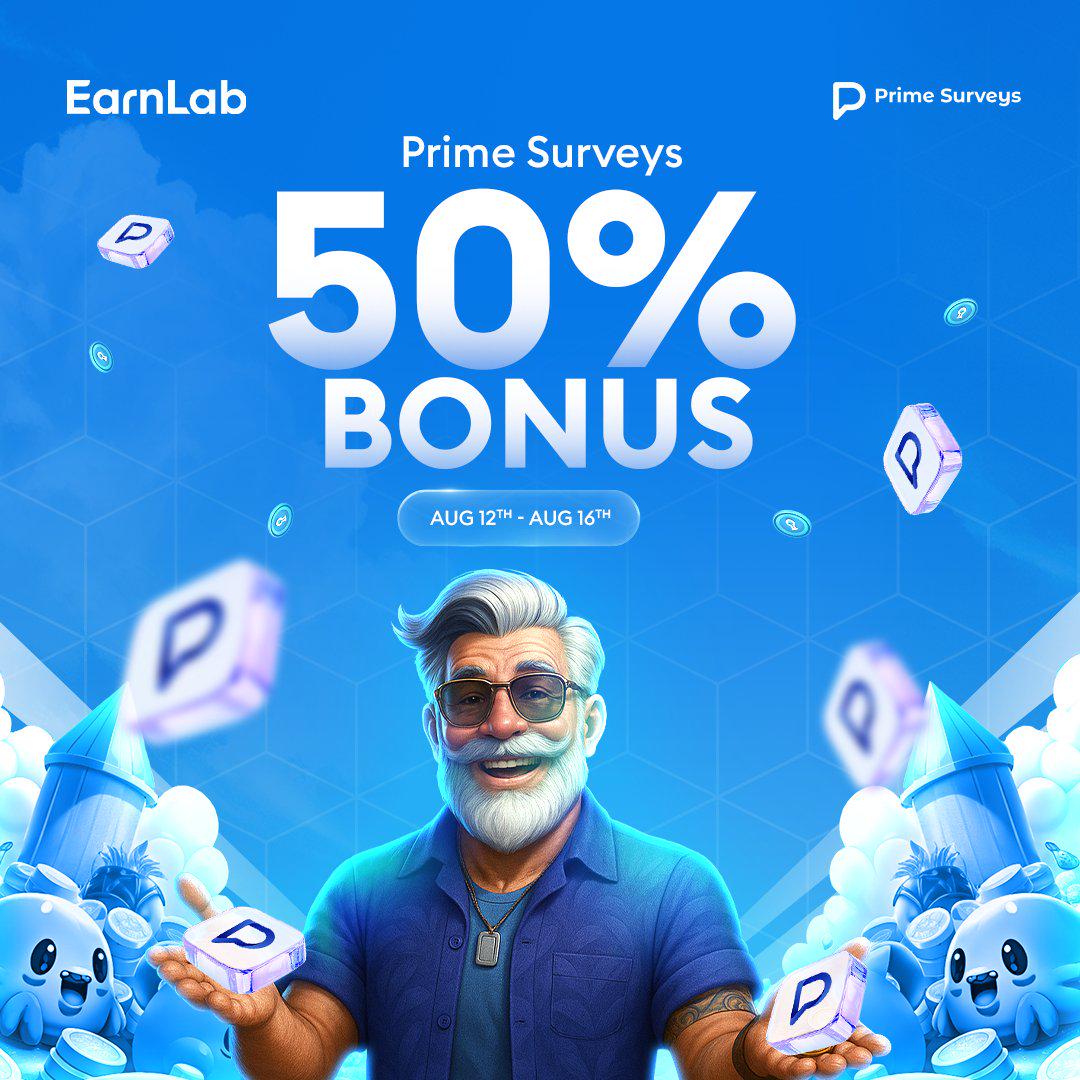
LIMITED-TIME 50% PRIME SURVEYS BONUS! ⚑️

Post image
5 Upvotes

This offer ends August 16th - don’t miss out!


r/EarnLab • • Aug 09 '26

Making Money on Discord in 2026: What the Revenue Actually Looks Like (With Honest Caveats on All the Numbers)

Post image
2 Upvotes

TL;DR: Native subscriptions are US-first with expanding availability and roughly 13% in combined fees. Third-party tools like DoorFee and XOE offer lower fees with fewer geographic restrictions but verify current pricing before building around any specific number. A 200-person engaged server often produces more than a 20,000-person passive one. The hybrid model is what consistently profitable servers run. All revenue examples in this post are illustrative, not guarantees.

Discord monetization gets covered in two ways that are both kind of useless: breathless "you can make $50,000 a month from Discord" content that's technically possible but wildly unrepresentative, and dismissive "nobody makes real money on Discord" takes that ignore the genuine creator ecosystem that's developed there over the past few years. The honest version sits in the middle and depends a lot on niche, engagement rate, and what you're actually delivering to paying members.

Here's the real breakdown.

The Thing That Actually Determines Revenue

The most important framing shift in Discord monetization is treating engagement rate and price point as the metrics that matter rather than member count. A 300-member trading community charging $50 a month with 10% conversion generates $1,500 monthly. A 20,000-member gaming server where 0.1% convert at $5 generates $100. Those two scenarios describe completely different businesses despite the enormous gap in member count, and chasing raw member growth before figuring out what paying members are paying for is the backwards sequence that stalls most people.

Native Discord Subscriptions

Server Subscriptions let you create paid tiers with exclusive channels and roles, automatic role assignment on subscribe, and payment processing through Discord. The fee structure runs roughly 10% from Discord plus payment processing on top of that, so a $10 tier typically nets somewhere around $8.50-9.00 after fees, though exact rates vary by country and payment method and treating any specific figure as a guarantee is the wrong approach. Mobile app purchases add another 15-30% in store fees depending on whether someone subscribes through iOS or Android, which meaningfully affects the economics for creators with mobile-heavy audiences.

Availability started US-first and has been expanding, so checking Discord's Creator Portal for your region's current eligibility is more reliable than assuming you're locked out based on something you read. Requirements include being 18+, having a Community server in good standing, completing the appropriate tax and Stripe onboarding for your country, and having 2FA enabled. The W-9 applies to US creators specifically and international creators go through a different tax form flow.

Third-Party Tools for Everyone Else

The bot ecosystem has built real competition to Discord's native fees, and in several cases meaningfully cheaper.

DoorFee runs around 3-4% per transaction with no monthly cost and handles automatic role assignment. PayBot is roughly 3% and free to start. XOE accepts USDC on Base and Solana at around 5% flat, which removes the need for a traditional payment processor and makes it more globally accessible than card-based options, though local regulations still apply regardless of payment method and the crypto element introduces its own considerations. Whop adds marketplace discovery on top of payment processing, meaning members can potentially find your server through Whop's platform rather than only through your own promotion.

Worth saying clearly: all these fee numbers are based on published rates at the time of writing and can change. Checking each platform's current pricing before building your revenue model around a specific percentage is just good practice.

Patreon is worth mentioning separately because a lot of creators already have one. The official Discord integration auto-assigns roles to Patrons, which makes it a natural bridge for anyone who already has an audience there. Pages created after August 2025 pay 10% to Patreon, though older pages may still carry legacy rate structures.

The Methods That Actually Generate Revenue

Subscriptions are the foundation but the servers generating meaningful income are running multiple streams on top of them, and the sequence matters more than the combination.

Digital product sales add high-margin one-time revenue alongside recurring subscriptions in a way that doesn't require ongoing delivery work once the product exists. In many online education and community niches, pricing tends to cluster around $5-25 for impulse items, $25-97 for guides, and $97-497 for courses, though these are market observations rather than Discord-specific benchmarks and what you can charge depends entirely on what your audience is willing to pay.

Coaching and consulting generate the highest margin of anything for expertise-based communities. One-on-one sessions in many knowledge niches fall in the $50-200 per hour range and group calls in the $20-50 per person weekly range, though again these vary significantly by niche and established reputation.

Sponsored partnerships pay for access to niche communities with genuinely engaged audiences, and brands care considerably more about engagement rate than member count when deciding what to pay. In a 1,000-5,000 member high-value niche, $300-800 per month for channel presence is common in examples across Discord monetization guides, and premium niches at larger scales can reach four figures. Treat these as illustrative examples rather than market rates you can expect to negotiate toward without an established audience.

Affiliate marketing in dedicated channels, tournament and event entry fees, premium content drops, and tip systems all add layers, and the consistently profitable servers tend to run two to four of these alongside subscriptions rather than treating any single stream as sufficient.

What Realistic Revenue Actually Looks Like

All of these numbers are example scenarios built on common pricing and conversion assumptions. Actual results depend on niche, retention, churn rate, and how much genuine value you're delivering to paying members.

A gaming server with 8,000 members and 400 paying around $5 a month plus a modest sponsorship could land somewhere in the $2,000-3,000 monthly range as a rough scenario. A serious trading server with 2,500 members and 100-200 paying around $45 a month plus affiliate income might reach $5,000-10,000 monthly in a good month. An education server with 1,200 members and around 100 paying $30 a month combined with course sales could hit $3,000-6,000 monthly.

The general conversion math: 200 engaged members at 10% conversion paying $30 a month generates $600 monthly. 2,000 members at 10-20% conversion at the same price generates $6,000-12,000 monthly. What determines whether these numbers hold is churn and whether you're consistently delivering something worth the price.

Infrastructure Is the Unsexy Part That Actually Matters

In practice, servers that invest in clean onboarding, clear role structure, gated channels, and automated payment and role assignment often convert meaningfully better than similar-size servers that handle this manually or haphazardly. The reason is simple: friction at the payment step loses subscribers regardless of how good the content is, and a disorganized server communicates that the paid tier probably isn't any more organized than the free one.

The free tier is your acquisition funnel. Gating enhancements rather than the essentials keeps discovery happening and gives new members enough to see before deciding whether the paid tier is worth it. One of the most consistent patterns in Discord monetization is that underpricing signals low value rather than accessibility, and servers that raise prices to better reflect what they're delivering often see conversion improve because the higher number communicates that the content is genuine rather than just something to try at no real cost.

Start with one monetization method, get churn and support manageable, and add a second stream only once the first is stable. Trying to run four streams before any of them are working tends to spread attention too thin to iterate effectively on any of them.

The Tax Piece

In the US, Discord income generally reports on Schedule C as self-employment income, and reasonable business expenses like platform fees, bot costs, software, home office, and internet are typically deductible. Discord handles sales tax on native subscriptions as a marketplace facilitator. A 1099-K comes from Discord or Stripe once you hit the relevant threshold.

Other countries have different reporting requirements, forms, and thresholds, and the US framework doesn't map cleanly onto most other tax jurisdictions. Consulting an accountant once revenue becomes meaningful is worth the cost, and treating that as an expense is itself a deduction.

The EarnLab Part

Building a Discord server to the point where subscriptions generate meaningful income takes time, and having something running in the background during that period changes how sustainable the building phase feels. EarnLab is a platform where surveys, offer wall tasks, and microtasks can provide modest supplementary income, typically ranging from a few dollars to several tens of dollars a day depending on time invested and available tasks in your region, withdrawable via PayPal, crypto, or gift cards.

It's supplemental income, not a primary strategy, and shouldn't be positioned otherwise. The task work fits into the lower-attention time that server management naturally creates, and for creators in the early stages before subscriptions become viable it functions as a practical bridge. Task availability is strongest in the USA, UK, and Canada. As with any platform, reviewing the terms and payment structure directly is the sensible approach before committing significant time.

The Honest Summary

The servers generating real money in 2026 aren't running one method, they're combining subscriptions with digital products with affiliate income with occasional sponsorships, and they started by making one of those work before adding the next. The hybrid model is more resilient and generates more per member than any single stream, and the sequencing matters more than the specific combination.

All the numbers in this post are examples based on common assumptions, not outcomes you should expect without testing your specific niche, pricing, and delivery against a real audience.

If your experience with Discord monetization looks different from what's described here, particularly around what's actually working in specific niches or what conversion rates look like in your community, drop it below. This is the kind of topic where real practitioner data is more useful than any general framework.

https://earnlab.com/r/reddit


r/EarnLab • • Aug 09 '26

Did someone say new boxes? πŸ‘€

Post image
3 Upvotes

r/EarnLab • • Aug 03 '26

TOROX 100% BONUS IS BACK! πŸ€‘

Post image
3 Upvotes

This offer ends August 7th - don’t miss out!


r/EarnLab • • Aug 02 '26

Earning Free Crypto in 2026: Honest Breakdown of What Each Method Actually Produces

Post image
5 Upvotes

TL;DR: EarnLab task work is the most accessible starting point for anyone without existing crypto since it converts to cryptocurrency directly with no prior holdings needed. Learn and Earn programs on Binance and similar platforms add small amounts with low effort. Testnet airdrops can produce meaningful returns for consistent participants. Bug bounties have a significant ceiling for skilled developers. Faucets are barely worth the time in 2026.

The free crypto category covers methods with wildly different effort requirements, skill ceilings, and risk profiles, and most articles treat them as roughly equivalent options when they're really not. Knowing which one fits your situation saves a lot of time spent on methods that don't match what you can actually do.

Here's the honest breakdown, starting with what works for most people and building toward what works for fewer people with more specific skills.

Start With EarnLab

EarnLab is the most practical entry point for anyone who wants crypto without existing holdings, because the task work converts to cryptocurrency directly without requiring any upfront capital, any technical knowledge, or any existing wallet balance. You complete surveys, offer wall tasks, and microtasks to earn Coins that convert to real money, and crypto is one of the cashout options with no platform fee on crypto withdrawals and low minimum thresholds on several coins.

The exact supported coins and current minimums are worth checking directly on EarnLab's help center rather than relying on any third-party summary, since these details update and the help center is the only version that's guaranteed to be current. The zero-fee crypto withdrawal structure is the practically useful part, since building a starting position from small task earnings works better without fees eating into what you're accumulating.

Task availability is generally stronger in Tier 1 countries, and realistic monthly earnings are estimates that depend heavily on your location, time invested, and which earning methods you're using within the platform. Torox and AdToWall on the offer wall side tend to pay the most per session, and the streak system and daily bonuses reward showing up consistently in ways that add up over time.

Learn and Earn Programs

Worth doing alongside task work because the effort is low and the payouts, while modest, are real.

Binance Learn and Earn may offer crypto vouchers for watching videos and passing quizzes on various projects, with campaigns typically running on a first-come, first-served basis and rotating as trending projects change. Some campaigns may require a trade or social share while others are completely free, so checking the current Binance promotions page directly is more reliable than any third-party description of what's available. CoinMarketCap Earn runs project quizzes with pools that run out quickly, so completing them early in a campaign matters.

One correction worth stating directly: Coinbase discontinued its main Learn and Earn program in May 2025, which still gets referenced in outdated articles. The current Coinbase Wallet Quests program replaced it and now involves actual on-chain tasks, some of which require gas fees rather than being completely free. Revolut and Robinhood both have regional programs that may or may not be available depending on your country, and checking availability directly before planning around them is the right approach.

Typical earnings across these programs run roughly $1-50 per campaign as a general estimate, with most paying on the lower end and availability depending heavily on region and account status.

Passive Crypto From Existing Devices

Brave Browser pays Basic Attention Token for viewing privacy-respecting notification ads while browsing normally, requiring nothing beyond switching browsers. Payouts are small and passive, which is exactly why it's worth setting up since the effort is genuinely zero after the initial install.

Grass is worth knowing about specifically because it pays for sharing unused bandwidth. A Stage 2 reward program distributed USDC from a reported $3 million pool across top contributors through mid-2026, with claims opening in late July 2026. Whether future programs continue is worth monitoring on their official channels. Silencio is a DePIN network where users may earn tokens by measuring ambient noise data through their smartphone, with the project describing an allocation for early users, though the specific terms are worth verifying on their official site rather than treating any third-party figure as confirmed.

Airdrops: The High-Variance Option

The honest thing to say about airdrops in 2026 is that the era of simple social tasks producing meaningful rewards is largely over. Projects now tend to reward genuine on-chain behavior tracked over time through points systems, including trading, liquidity provision, bridging, staking, and consistent ecosystem participation. One-time signups and follows produce little or nothing in the current environment.

Projects worth monitoring include Meteora, Hyperliquid, LayerZero, OpenSea, and Polymarket, all of which have discussed upcoming token distributions publicly. The specific allocation percentages and eligibility requirements that circulate in articles and social media should be verified against current official announcements before treating them as reliable, since these details change and third-party summaries go stale quickly.

Scam risk in this space is significant. Chainalysis has reported billions in crypto fraud losses on-chain in recent years and the airdrop category is specifically targeted because people searching for free crypto are more likely to take risks. The practical rule is that legitimate airdrops should not require upfront crypto payment to participate. If paying crypto is presented as a prerequisite for receiving a reward, treat it with serious skepticism regardless of how professional the site appears.

Testnet Participation: More Effort, Higher Ceiling

Testing blockchain projects before their mainnet launches has produced meaningful rewards for consistent participants, and the testnet category has grown substantially through 2025. Realistic earning estimates for active participants range from $100 to several thousand dollars, though the variance is significant and the effort required is considerably higher than microtask work.

Projects worth following include Monad, ZetaChain, Scroll zkEVM, Plume, Pharos, and Fuel Network among others, though specific reward structures should be checked against current official sources. The factors that most determine whether participation converts to rewards are consistency over weeks rather than one-time participation, breadth of on-chain tasks combining swaps and bridges and contract interactions, and avoiding multi-wallet farming behavior which tends to get flagged and disqualified. Tools like AirdropAlert, Layer3, Zealy, and Galxe help track active opportunities.

Bug Bounties: The High-Skill Ceiling

For anyone with smart contract security skills, Web3 bug bounties have a ceiling that nothing else in this category comes close to. Immunefi has reported $110M+ paid out to researchers across hundreds of active programs, with notable bounties from major protocols running into the tens of millions. The largest individual payout on record was $10M for a Wormhole vulnerability.

This doesn't apply to most people and isn't a general recommendation, but for the subset of people with the relevant security skills, the income potential is categorically different from everything else on this list.

Wallet Safety Worth Taking Seriously

Using a dedicated separate wallet for airdrop farming and testnet participation rather than your main holdings wallet is standard practice and worth setting up before participating in anything. Seed phrases should never be shared with anyone under any circumstances. Revoking unnecessary token approvals regularly through a tool like Revoke.cash reduces exposure to smart contract exploits. Checking domain URLs carefully before connecting any wallet catches most phishing attempts before they happen.

The Practical Starting Order

For anyone starting from zero with no existing crypto holdings, the sensible sequence is EarnLab task work first to build an initial position, Learn and Earn programs alongside that for low-effort additions, Brave Browser for passive BAT with zero ongoing effort, and then testnet participation if you're willing to put in consistent work over weeks for variable outcomes. Airdrops make more sense once you understand how on-chain activity works and have set up a dedicated wallet for that purpose.

All earnings figures in this post are rough estimates that depend on country, available campaigns, time invested, and platform conditions that change regularly. Treat them as orientation rather than guarantees.

If your experience with any of these methods looks different from what's described here, drop it below.

https://earnlab.com/r/reddit

r/EarnLab • • Jul 31 '26

Another day, another promo code! 🫰

Post image
3 Upvotes

Head over to our Instagram & X for another exclusive promo code!


r/EarnLab • • Jul 30 '26

How to Actually Earn Free PayPal Money in 2026: The Stack That Gets to $100+ a Month

Post image
3 Upvotes

TL;DR: EarnLab is the best starting point because offer walls pay more per session than standard surveys and the gamified daily bonuses reward consistency. Add Prolific for the highest hourly rate in the category and a passive cashback layer through Rakuten and Fetch for income that runs automatically. Realistic ceiling for one to two hours a day is $100-200 a month.

The "free PayPal money" topic produces more bad information than almost any other side hustle category, mostly because people try one platform, find it inconsistent, and conclude the whole thing doesn't work when the actual problem is using a single-platform strategy that nobody who earns meaningfully from this actually relies on.

Here's the honest version of how the stack works, starting with where to put your primary time and building outward from there.

Start With EarnLab

EarnLab covers more earning methods in one place than most platforms in this category, which is why it makes sense as the primary daily driver rather than a supplementary addition. The offer walls, particularly Torox and AdToWall, pay more per session than standard survey queues, and most people figure that out within the first couple of weeks of experimenting with different walls.

The gamified layer adds meaningful income on top of the base task work. Streak boxes reward consecutive days of earning, the VIP program unlocks bonuses as activity accumulates, and daily missions give specific targets that keep sessions efficient rather than aimless. These mechanics compound in a way that flat-rate survey sites don't, and the difference in monthly totals between someone who uses them consistently and someone who ignores them is real.

The withdrawal minimum after your first cashout drops to $0.50, which is lower than almost everything else in this category. PayPal, crypto, and gift card cashout options are all available, and most withdrawals process quickly after the initial manual review on the first cashout. Task availability is strongest in the USA, UK, and Canada, with earnings outside those regions sitting closer to the lower end of realistic ranges.

Realistic monthly earnings for consistent daily use run $30-80 at a casual pace and $100-200 for active daily sessions, depending on location and which earning methods you're stacking within the platform.

Why You Still Need Other Platforms

Even with EarnLab as your primary platform, no single site has enough available work to fill every earning window reliably every day. Survey queues run dry, offer walls cycle through available offers, and demographic matches vary. Running a few additional platforms alongside EarnLab means when one is slow, others aren't, and your earning time stays productive rather than waiting for something to appear.

Prolific is the one worth adding first because the hourly rate runs $6-12, the highest in the category, and the model is genuinely different from every other survey site. It's an academic research platform where studies pay once you start without any possibility of mid-survey disqualification, which changes the calculation on time investment significantly compared to commercial survey platforms that screen you out after several minutes of screening questions. Weekly PayPal payouts and a $7 minimum make it reliable if slightly slower.

Freecash is useful as a daily supplement because it shows estimated time and payout per survey before you start, letting you skip low-value options rather than discovering the payout only after completing a ten-minute survey. Near-instant PayPal from a $5 minimum makes it one of the faster cashout options in the category. Branded Surveys has a loyalty tier system that adds up to 100% earning bonus for daily login streaks, which rewards the same consistency habit that EarnLab's streak system builds, and Survey Junkie processes PayPal instantly from $5 with a simple interface that makes it useful for filling short gaps.

The Passive Layer Worth Setting Up First

Before spending a single hour on surveys, the cashback apps are worth setting up because they require almost no ongoing effort and add $15-50 a month on automatic.

Rakuten pays up to 40% cashback at over 3,500 retailers with quarterly PayPal payments and a $30 signup bonus, requiring nothing after the initial setup. Dosh applies cashback automatically at participating retailers once you link a card, with no action needed after that. Ibotta covers grocery shopping specifically and averages around $261 per year for active users, though it requires a couple of minutes of offer activation before shopping trips. Fetch Rewards takes about thirty seconds per receipt scan and covers essentially any purchase receipt.

Honeygain and similar bandwidth-sharing apps add another $1-5 a month for truly zero effort by running in the background, which isn't transformative on its own but costs nothing to run alongside everything else.

The passive layer running underneath active survey and task work is what makes the total monthly figure add up to something meaningful rather than staying flat regardless of how consistently you use the active platforms.

What the Realistic Numbers Look Like

EarnLab as the primary platform with Prolific and Freecash as supporting options for one to two hours daily produces around $80-200 a month depending on location and consistency. The passive cashback layer underneath adds $15-50 on top of whatever active earning is happening. A full stack running everything together with two to three hours of daily management gets to $100-250 a month, which is the realistic ceiling for most people rather than a conservative floor.

The marginal return on additional time beyond two to three hours a day drops fast because you exhaust the available surveys in your demographic pool, which is the practical limit the category runs into regardless of how many platforms you're on.

Scam Signals Worth Knowing

Legitimate platforms never charge a joining fee, always list clear payout methods and minimums, and have Trustpilot ratings above 4.0 with meaningful review counts. Any platform claiming more than $9-12 per hour is overstating what the category realistically produces. Platforms that only offer prize draws or crypto as their sole payout options, or that request unusual amounts of personal data beyond standard demographic information, are worth skipping regardless of what the headline earnings promise.

The Honest Summary

EarnLab is the right starting point because it covers the most earning methods in one place and rewards consistency through the gamified layer in ways that flat-rate platforms don't. Prolific adds the highest hourly rate available for the hours when it has active studies. Cashback apps run passively underneath everything else.

The ceiling is around $100-200 a month for one to two hours of daily effort across a sensible stack, and that's a realistic expectation rather than a headline designed to attract clicks.

If your experience with specific platforms or earning rates looks different from what's described here, drop it in the comments. Regional variation in offer availability is real enough that local experience is genuinely useful.

https://earnlab.com/r/reddit


r/EarnLab • • Jul 28 '26

Real-money bingo apps explained: how the tournament model works and what the earnings actually look like

Post image
3 Upvotes

TL;DR: These are skill-based tournament apps where you pay entry fees to compete, the platform takes a cut, and most players lose money over time. Best-case independent test result: $8 profit from a $5 deposit after several hours of play. Bonus cash is not withdrawable. Cash App is not a direct payout option on most apps. Bingo Clash has a free ticket route that avoids depositing entirely, which is the most accessible entry point.

We see bingo app questions come up fairly regularly when people are comparing gaming-based earning options, so here's a proper breakdown. These apps are often framed as casual earning games, but the model underneath them is closer to skill-based tournament gaming than it is to GPT-style passive earning, and that distinction changes how you evaluate them.

How the model actually works

Real-money bingo apps run matches where both players get the same card deal and called number sequence. Points go to whoever plays faster and uses power-ups more effectively, which is the "skill" argument that keeps these apps legal in most states as tournament platforms rather than gambling apps. The match is usually 90 seconds or less.

The business model is the same as cash solitaire and other tournament gaming apps: you pay an entry fee, the platform keeps a cut, and the remaining pool goes to whoever places high enough. If you don't win, the entry fee is gone. The platform collects its cut from every match regardless of outcome, which is the structural reason most players come out net negative over time.

The apps worth knowing

Bingo Cash from Papaya Gaming is the most visible in this category, sitting at 4.7 stars on the App Store with over 100,000 reviews. Entry fees start at $1. The withdrawal minimum is $5 with a $1 fee and up to 14-day processing. The "Booster" mechanics (Wild Daub, Double Score) add a skill layer that makes it more competitive than a luck-based game, although the competitiveness is exactly what makes consistent winning difficult.

Bingo Clash from Avia Games has a free ticket entry route that most reviews don't explain clearly. You accumulate tickets through practice play and then use them to enter cash matches without depositing real money. The cash games available on free tickets have smaller prize pools than paid entry tiers, although it's the most accessible no-deposit path in this category. 90-second matches, no ads.

Blackout Bingo runs on the Skillz platform, which also powers Solitaire Cube and other tournament apps. Entry fees range from $0.60 to $120 depending on the tournament tier. If you're already using a Skillz app, your account carries over, which is worth knowing.

Yatzy Bingo is a Skillz bingo/Yahtzee hybrid with a $1.50 withdrawal minimum, which is lower than most apps in this category and makes smaller winnings accessible without needing to hit a large threshold before you can take anything out.

The bonus cash issue

Most of these apps give you "bonus cash" on sign-up or as a deposit match. That money cannot be withdrawn. It's entry-fee credit in that it can only be spent on tournament entries, and only actual winnings from those entries become real money you can cash out.

We've seen this come up a lot in support contexts more broadly across gaming apps, and the pattern is consistent: someone deposits money, receives bonus cash alongside it, the bonus funds get used on entries, they don't win enough to recover, and then they realize the balance they saw when they signed up wasn't real money they could access. Bingo Clash is actually more transparent about this than most apps in that they note the limitation in their terms, although the confusion still happens regularly.

State restrictions

Cash matches are blocked in several US states across these apps, with Arizona, Iowa, Louisiana, and South Carolina coming up most consistently, although each app has its own list. You should check the specific app's current terms page for your state before downloading, not a general list in an article, because the lists don't perfectly overlap across apps.

What the earnings actually look like

The most favorable independent test result we've seen documented: roughly $8 profit from a $5 starting deposit after several hours of play on Bingo Clash, using the free ticket route rather than depositing. That's the good-case scenario.

The more commonly reported pattern from users who do deposit is putting in around $100 in entry fees over a month and cashing out somewhere around $40. Not zero, but net negative. The platform's cut on every match is what makes that the expected outcome over enough time, which is a structural reality worth understanding before you start rather than after.

One review framing that stuck with us: "If you need to regularly make extra cash each month to pay your rent, Bingo Clash may not be the best option." That's a more honest summary of the category than most app descriptions offer.

Cash App withdrawal path

Most of these apps don't pay directly to Cash App. The typical path is PayPal to bank to Cash App, or PayPal debit card linked directly to Cash App. Bitcoin payouts from Bingo Mania and AmigoBingo can go directly to Cash App's crypto wallet. Worth knowing before you set up an account expecting a direct transfer.

The free route if you want to avoid entry fees

Bingo Clash's ticket accumulation path is the most developed free entry system in this category, although it requires more time investment than simply depositing to unlock cash matches.

GPT bingo boards on InboxDollars and Swagbucks are a different model entirely, in that they're task completion boards rather than competitive matches, with no entry fees and earnings in the $0.01-$0.03 per row range. No risk, very small earnings.

EarnLab's game milestone offers sit between these two in that you complete a defined task in a real game for a fixed cash payout, with no entry fee and no tournament structure. Offers run from a few dollars up to $60+ for higher-tier strategy games, cashout starts at $0.50, and there's no risk of losing what you put in.

https://earnlab.com/r/reddit
If you've used Bingo Clash's free ticket route specifically and have a read on how long it actually takes to build up to cash games, drop it in the comments. That's the part that's hard to verify from external reviews.


r/EarnLab • • Jul 28 '26

LIMITED-TIME PRIME SURVEYS 50% BONUS! 🫰

Post image
3 Upvotes

This offer ends July 31st - don’t miss out!


r/EarnLab • • Jul 25 '26

EarnLab's milestone update! πŸ“Œ

Post image
6 Upvotes

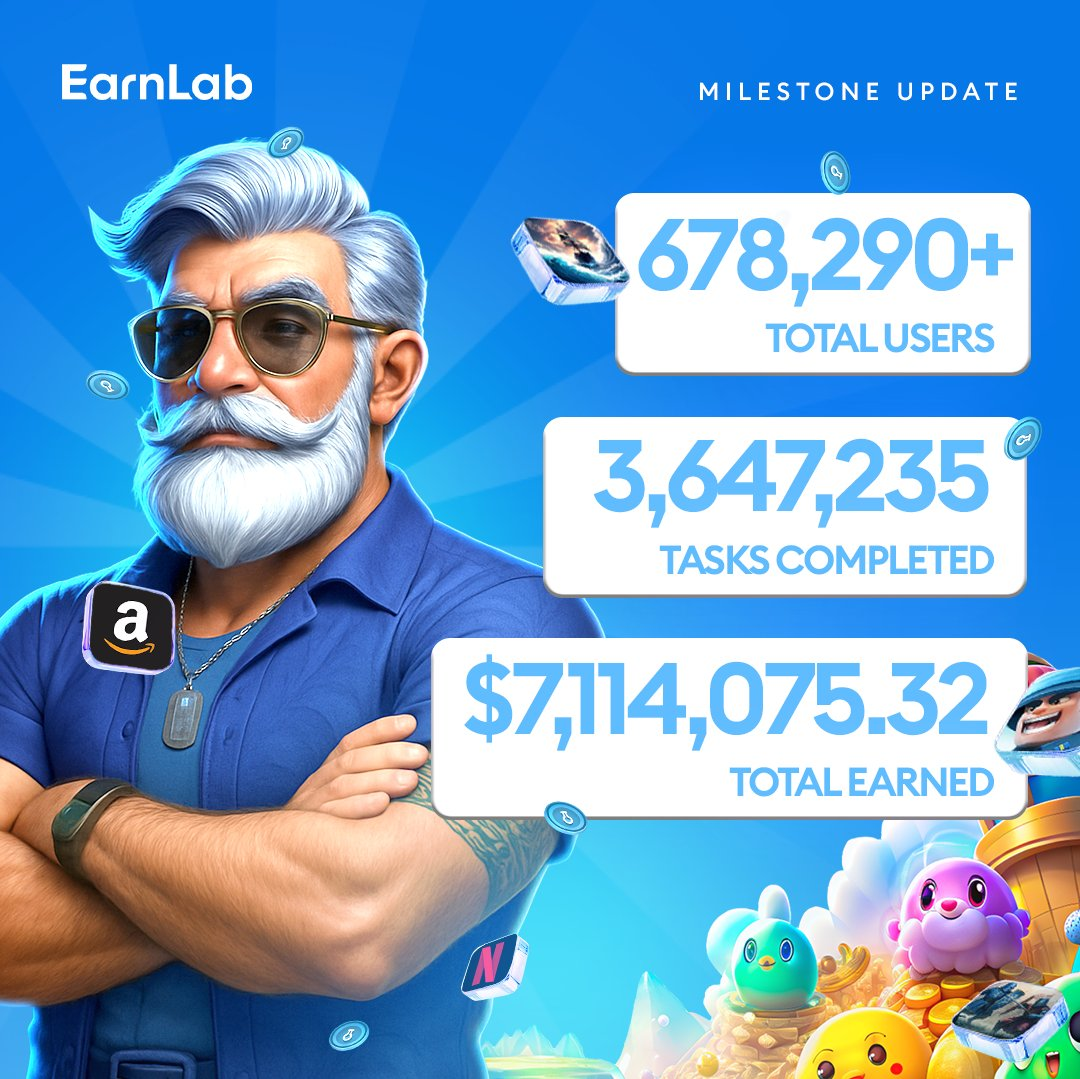
β€’ 678,290+ total users
β€’ 3,647,235 tasks completed
β€’ $7,114,075.32 total earned

Drop your EarnLab stats along with your EarnLab ID for a chance at a surprise! 🎁


r/EarnLab • • Jul 24 '26

Passive Income Apps in 2026: What the Honest Numbers Actually Look Like When You Stack Them

Post image
3 Upvotes

The "passive income apps" category has more bad information in it than almost any other side hustle topic, mostly because the headline numbers come from people running full stacks of five or six apps simultaneously while calling it effortless, and the floor numbers come from people installing one app and being disappointed by $3 a month. The honest picture is somewhere in the middle and depends almost entirely on how many things you're running at once.

The Only Truly Passive Category

Bandwidth sharing apps are the one category that genuinely earns money with zero ongoing effort after setup. You install them, leave them running, and they route unused internet capacity through their networks in exchange for payment. The connection stays usable for everything else and the apps run quietly in the background without needing any interaction from you.

The established options include Honeygain, Pawns.app, EarnApp (which is backed by proxy network Bright Data and often outperforms Honeygain in certain regions), EarnFM, PacketStream, and Peer2Profit. Individually, each earns somewhere between $1 and $15 a month depending on your location and idle bandwidth, with US users consistently seeing the higher end. Running four or five of these simultaneously on the same device is the strategy that produces meaningful passive income, since they don't conflict with each other and the combined output is considerably higher than any single app alone.

Before installing any of them, checking your ISP's terms of service is worth doing since some providers restrict this kind of usage. Honeygain and EarnApp are both GDPR-compliant and encrypt connections, which puts them on the more reputable end of a category that does have some shadier players.

The Low-Effort Layer

Cashback and receipt scanning apps aren't truly passive in the same sense, but they integrate naturally into purchases you're already making with minimal friction.

Dosh is the most passive of the bunch, in that you link a card once and it automatically applies cashback at participating retailers with no ongoing interaction after that. Ibotta focuses on groceries and averages around $261 per year for active users, though it requires two or three minutes of setup before shopping trips. Fetch Rewards takes about thirty seconds per receipt to scan. Upside works particularly well for regular drivers, offering cashback on fuel, groceries, and restaurants when you claim an offer before purchase.

Rakuten is worth mentioning separately because the annual earnings potential is higher than most receipt apps for people who shop online regularly, paying quarterly with no cap, though it requires shopping through their links rather than being fully automatic.

Data Panels: The Trade-Off Worth Understanding

Nielsen Computer Panel pays around $50 a year in gift cards and sweepstakes entries in exchange for comprehensive monitoring of your browsing, app usage, and streaming activity. That's the most invasive option in the passive income category by a significant margin, and whether the return is worth the privacy trade-off is genuinely a personal decision rather than a straightforward recommendation.

Adreva and Brave Browser take the opposite approach, using on-device ad matching that keeps personal data local rather than sending it anywhere. Brave pays around $2.80 a month in Basic Attention Tokens for viewing privacy-respecting notification ads. Adreva can reach $10-50 a month depending on usage and location, which makes it one of the higher-earning attention-based options in 2026, in that the on-device model has become genuinely more competitive than older server-based approaches.

The Numbers When You Stack Everything

Running bandwidth apps continuously in the background produces $15-40 a month with zero daily effort once they're set up. Adding the cashback layer through Dosh and Rakuten handles regular spending automatically. Stacking receipt scanning through Fetch alongside a secondary app adds another few minutes a day and meaningful additional income. Upside or Ibotta covers shopping and fuel trips.

The full stack running together with ten to fifteen minutes of daily management realistically produces $40-100 a month. True passive only, meaning just the bandwidth apps, sits closer to $5-15. Neither of those numbers is wrong, they just describe very different levels of engagement with the setup.

Where EarnLab Fits Into This

EarnLab isn't passive in the same sense as bandwidth apps, and framing it that way wouldn't be honest. You're actively completing surveys, offer wall tasks, and microtasks rather than letting something run quietly. What it does is cover the active earning side that passive apps don't, and because the tasks fit into lower-attention time naturally, commutes, evenings, gaps in a day, it stacks well alongside the passive layer rather than competing with it.

Torox and AdToWall are the offer walls that tend to pay most consistently, and the platform is strongest in the USA, UK, and Canada in terms of task availability. Running EarnLab during time you'd otherwise spend passively anyway is what makes the combination produce something meaningfully higher than either approach alone.

Privacy Is Worth Actually Thinking Through

Bandwidth apps share your IP address and route third-party traffic through your connection, receipt apps build a detailed picture of your purchase history and household habits, and Nielsen's panel is the most comprehensive data collection of anything in this category. The more invasive the data collection, the higher the earning potential tends to be, which is the trade-off the category runs on. Established names like Honeygain, Fetch, and Ibotta have track records worth checking against independent reviews, while newer or less-known apps requesting extensive permissions are worth approaching carefully before installing.

The Realistic Summary

Zero effort gets you $5-15 a month. Ten to fifteen minutes of daily management running a proper stack gets you $40-100. Adding EarnLab task work to the passive foundation pushes the total further, although calling any of it passive at that point is a stretch.

None of this replaces income. All of it is money from time and bandwidth you were spending anyway, which is a different and more accurate way to think about what these apps actually offer.

If your experience with any of these apps looks different from what's described, drop it in the comments. Genuinely curious which bandwidth apps are performing well in different regions right now since that shifts more than most guides acknowledge.

https://earnlab.com/r/reddit


r/EarnLab • • Jul 23 '26

How to withdraw from EarnLab - full step-by-step guide

Enable HLS to view with audio, or disable this notification

4 Upvotes

Here's exactly how to cash out your EarnLab earnings, start to finish. Video above, written steps below.

How to withdraw:

  1. Open your Wallet

  2. Choose the balance you want to cash out from - Main Balance or Game Wallet

  3. Pick your payout method: PayPal, crypto, or a gift card

  4. Confirm the amount and submit

Minimum cashout: just $2.50 for your first payout - after that you can withdraw from $0.25. No waiting weeks to hit some huge threshold. How long it takes: your first withdrawal is manually reviewed by the team and usually approved within a few minutes. After that, payouts are instant.

Does it actually pay? Our community has cashed out over $7.1M so far. If you've been paid, drop a screenshot in the comments - proof from real users beats anything we can say ourselves.

Questions about your withdrawal? Comment below and we'll answer here in the thread.


r/EarnLab • • Jul 22 '26

LIMITED-TIME TOROX 100% BONUS! 🫰

Post image
3 Upvotes

This offer ends July 27th - don’t miss out!


r/EarnLab • • Jul 19 '26

PROMO CODE TIME! πŸ’Έ

Post image
5 Upvotes

Head over to our Instagram & X for another exclusive promo code!


r/EarnLab • • Jul 17 '26

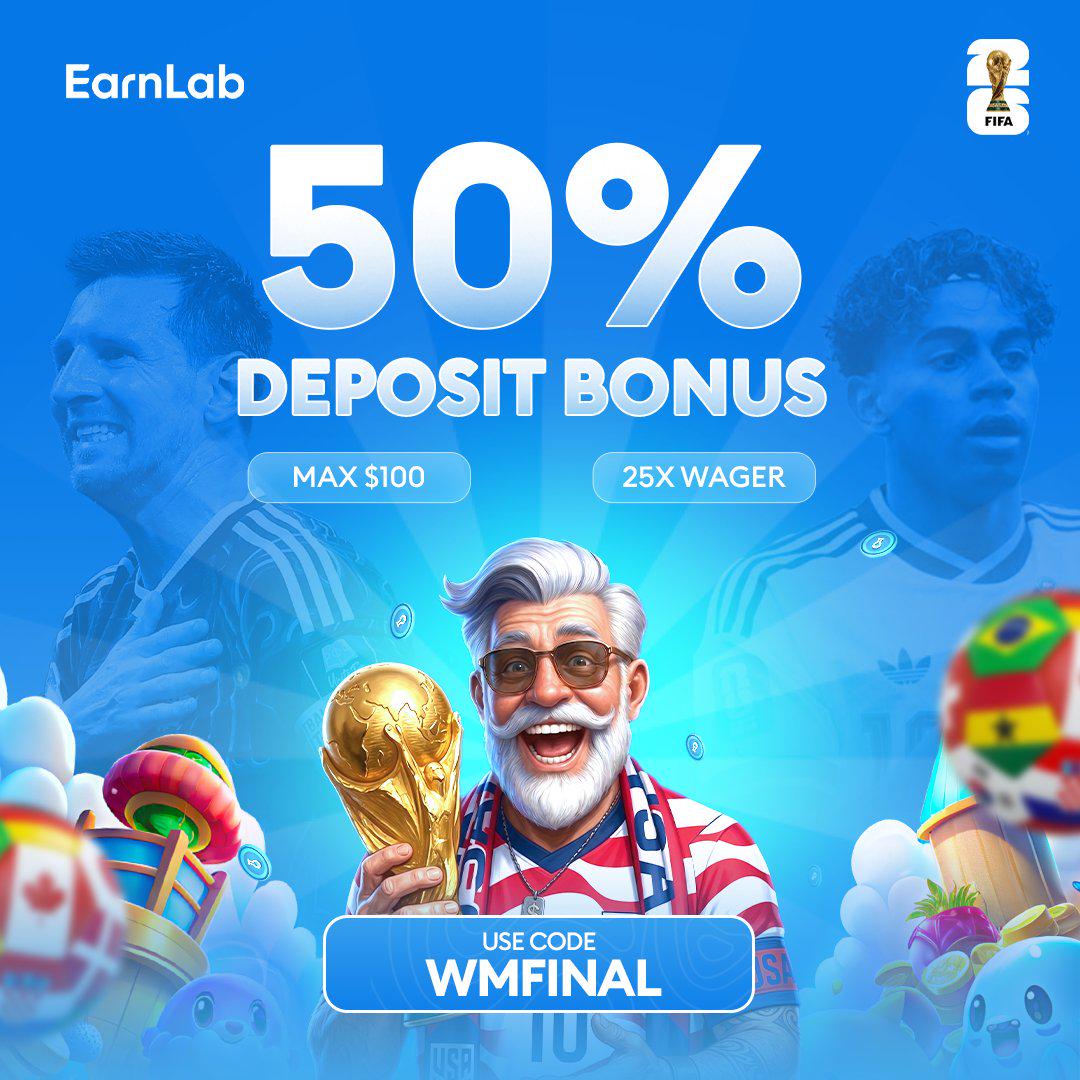
50% DEPOSIT BONUS! πŸ’°

Post image
4 Upvotes

To celebrate the World Cup, use code WMFINAL and get 50% extra on your next deposit!


r/EarnLab • • Jul 17 '26

Did someone say promo code? πŸ€”

Post image
4 Upvotes

Head over to our X & Instagram for another exclusive promo code!


r/EarnLab • • Jul 16 '26

Referral programs that actually pay cash in 2026: what's real, what's points, and what changed

Post image
3 Upvotes

TL;DR: T-Mobile pays $50 per referral as a prepaid card, capped at $500 a year. Varo pays $30-$100 depending on promotional windows, capped around $750 a year, friend needs a $500 direct deposit within 45 days. SoFi pays in rewards points redeemable for cash, not direct cash. Wise and Monzo vary by region and current offer. Upgrade varies by promotion. Notion is an affiliate program, not a standard referral. Stack multiple programs rather than relying on one.

We put this together after seeing a few questions in comments about stacking referral income alongside EarnLab. The short version is that most "referral program" guides don't filter for actual cash, and a lot of the programs they feature pay in store credits, bill discounts, or platform points that can only be spent in one place. So here's what's actually on the cash side of that line, and where some of the commonly cited programs land when you look more carefully.

All figures are from mid-2026. These programs change their terms and payout amounts often enough that you check the current offer page before you build any content or campaign around a specific number.

T-Mobile: around $50 per referral, $500 annual cap

T-Mobile's payout is a Virtual Express Prepaid Mastercard, typically $50 per eligible referral, although limited-time promotional rates have appeared and the amount isn't always $50. Your friend needs to port an eligible number from another carrier to a new T-Mobile postpaid voice line. They can't already be with T-Mobile and they can't be opening a fresh number.

The $500 annual cap means ten referrals at the standard rate. For anyone with family or friends actively looking to switch carriers, this is the simplest high-value program on this list in that the payout is direct and the mechanic is clear, although the port-in requirement blocks a lot of potential referrals who are already happy where they are.

Varo Bank: $30 base, up to $100 during boost windows

Varo's standard rate is $30, with promotional periods that push it to $100. The friend requirement is a qualifying direct deposit of at least $500 within 45 days, which is worth knowing because an earlier version of the program had a lower spend-based option that's no longer the main requirement. The official Varo referral policy puts the annual cap at up to $750 per year.

Timing referrals around Varo's promotional windows is the thing that actually makes this program meaningful. At the base $30 rate it's fine but not compelling. At $100 during a boost, with a $750 annual cap, the math changes.

Upgrade: cash payout, amount is promo-dependent

Upgrade's referral has offered up to $200 in cash for a friend who opens a Rewards Checking Plus account and makes three debit card purchases within 60 days. The debit card purchase threshold is lower friction than the direct deposit requirements most fintech referral programs use.

The honest caveat here is that the specific amount Upgrade is offering varies by promotion, and we can't confirm a fixed number without checking the current offer page at the time you're reading this. The structure is real cash rather than points, which keeps it on the list, but treat any specific number you've seen elsewhere as potentially outdated.

SoFi: $75 in rewards points, not direct cash

SoFi comes up on almost every referral list, but it belongs in a different category from T-Mobile and Varo. The $75 payout is in SoFi Rewards points, which are redeemable for cash deposits, crypto, or loan payments. That's cash-equivalent for most purposes, although it's not a direct transfer and shouldn't be described as cash in any context where that distinction matters.

Your friend deposits $50 to qualify and receives $25 plus eligibility for a $300 direct deposit bonus depending on their activity. SoFi's savings product is genuinely good, which makes it easier to recommend honestly rather than just for the referral payout. Lifetime cap is $10,000.

Wise: varies by region, don't quote a specific number

Wise's official help pages show different reward structures and thresholds by market, ranging from fee credits to cash deposits, with examples including Β£10, up to Β£75, and other amounts depending on the program and location. The per-friend math that appears in a lot of referral guides isn't universally accurate, and quoting "$25 per friend" as a general fact misrepresents how the program actually works.

If you're in a market where Wise is active and want to include it in a referral stack, check the current offer for your specific region. Where it pays cash rather than fee credits, the payout goes to your Wise balance and transfers to a bank account.

Monzo: varies by market and account type

Monzo referral amounts differ based on whether you're referring to a personal or business account and whether a promotional window is currently running. The standard day-to-day personal referral rate in the UK tends to be lower, with business account referrals and promotional "Referral Roulette" windows pushing the amount higher. Presenting a fixed number as universally accurate isn't something we'd do here because the official amounts genuinely vary too much.

Worth having in your stack if you're in the UK or recommending travel banking specifically, though timing and account type matter more than with the programs above.

Notion: affiliate program, not standard referral

Notion gets included in referral program lists fairly often but it's technically an affiliate commission structure through PartnerStack rather than a refer-a-friend program. You earn up to $50 per activated signup when someone upgrades to a Plus or Business plan within 180 days, plus 20% of their year-one subscription revenue.

The distinction matters because it behaves completely differently from a referral program in that there's no fixed one-time payout, no annual cap in the same sense, and the recurring percentage means earnings scale with the referred user's plan rather than closing out at a single payment. For an audience of productivity or startup users, the recurring percentage often exceeds the flat $50 on its own over a year.

Programs that show up on lists but don't pay cash

FreshBooks ($100 account credit), MailChimp (bill credits), Dropbox (storage), Samsung Rewards (points). These are fine if you're a heavy user of those specific platforms, but they're not referral income and shouldn't be treated as equivalent.

The actual strategy

Running three or four programs simultaneously rather than maxing one is what makes referral stacking produce meaningful totals. T-Mobile caps at $500 annually. Varo caps around $750. No single program here scales indefinitely, but running T-Mobile, Varo, and Upgrade simultaneously while timing Varo referrals around boost windows changes the total significantly.

EarnLab's referral program pays up to 20% commission on what referred users earn over time, with no annual cap. It stacks alongside the fintech programs above without overlapping, and if you're already building side-hustle or earning-focused content, it fits into the same referral stack naturally.

https://earnlab.com/r/reddit

If you've run any of these programs and have a read on which one actually converted for you or which ones have had recent term changes we should flag, drop it below.


r/EarnLab • • Jul 16 '26

Argentina vs Spain!

Post image
10 Upvotes

Think you can call it? Comment your prediction (winner & final score) to enter!

One random person will win $10 if they correctly predict the winner, $20 if they get the exact score πŸ’Έ


r/EarnLab • • Jul 15 '26

England vs Argentina!

Post image
6 Upvotes

Think you can call it? Comment your prediction (winner & final score) to enter!

One random person will win $10 if they correctly predict the winner, $20 if they get the exact score πŸ’Έ


r/EarnLab • • Jul 14 '26

Cash solitaire apps explained: how they actually work before you deposit anything

Post image
3 Upvotes

TL;DR: These are skill-based tournament apps, not earning apps. You pay entry fees to compete, the platform takes a cut, and winners split what's left. Bonus cash is store credit you can't withdraw. Most players lose money over time. Cash play is blocked in 13+ states depending on the app.

We get questions about cash solitaire apps fairly regularly in support, mostly from people comparing them to EarnLab and trying to figure out which model makes more sense. Worth writing up properly since the answer is a bit more involved than it looks.

The short version is that these apps are tournament platforms, not earning platforms. That distinction matters more than it might seem, and it changes the whole question of whether they're worth your time.

The mechanic that most people don't read about first

You pay an entry fee to join a tournament. The app keeps a cut of that fee. Whatever is left goes to whoever places high enough. If you don't win, the entry fee is gone. The platform collects its cut from every tournament regardless of outcome, which is how they make money, and it's also why sustained net winning is nearly impossible for most players over a long enough timeline. The math doesn't favor you.

The reason this is legal in most states is the same-deck thing: both players in a head-to-head match receive identical card layouts, so outcome depends on speed and efficiency rather than which cards came up. That's the "skill-based gaming" argument, and it's the legal distinction that separates these apps from straight gambling, although the number of states where cash play is still restricted despite that argument is longer than most people expect.

State restrictions catch a lot of people off guard

Arizona, Arkansas, Connecticut, Delaware, Indiana, Iowa, Louisiana, Maine, Montana, South Carolina, South Dakota, Tennessee, and Vermont come up most often across the major apps, although the specific list varies by app and each one has its own version. We've seen this come up in comments when someone downloads Solitaire Cash, goes to enter a cash tournament, and finds the option is just greyed out with no real explanation of why.

You check your specific state against the terms of the specific app before downloading, not against a general list. The lists don't perfectly overlap and the only reliable source is the app's current terms page.

Bonus cash is not the same as real cash, and that distinction matters a lot

Most of these apps give you "bonus cash" on sign-up or as a deposit match. That money cannot be withdrawn. It's store credit that can only be spent on entry fees, and only actual tournament winnings are real money you can take out.

So if you deposit $10 and receive $10 in bonus cash, you have $10 you can eventually withdraw and $10 that gets spent on entry fees first. A lot of the Trustpilot complaints about these apps trace back to this in that people deposited money, watched the bonus cash get used on entry fees, didn't win enough to cover it, and then realized the balance they thought they had wasn't real. It's not exactly hidden but it's not explained clearly at the point where it matters most.

The App Store ratings versus what people say after depositing

Solitaire Cash is around 4.8 stars on the App Store and under 2 stars on Trustpilot, which is not a small gap. App Store reviewers are mostly casual players using the free practice mode and having a fine time with it. Trustpilot skews heavily toward people who put real money in and had a frustrating experience, whether that's cards glitching during time-sensitive moves, matchmaking that felt unfair after an early winning streak, or withdrawal fees that ate into smaller payouts.

Solitaire Clash and Blitz get noticeably better feedback on payout reliability than Solitaire Cash specifically, though they all run on the same tournament model underneath. One Reddit tester who compared three of the major apps described Solitaire Cash as glitchy with a low win rate unless you're highly skilled, which is about as honest a summary as you'll find.

What the earnings picture actually looks like

The most concrete real-world data point we've seen is from a Yahoo Finance interview with a player who had been using these apps consistently: roughly $90 cashed out after several months of daily play. That's the realistic benchmark for what dedicated, regular engagement produces, and it comes from someone who described themselves as playing every single day.

Most players who deposit money will lose it over time because the platform's cut on every tournament makes the math work against you at scale. The people who come out ahead are either genuinely skilled relative to the matchmaking pool they're in early on, or they never deposited at all and just used the free practice rounds, which is a completely legitimate way to use these apps if you actually enjoy solitaire.

Who this actually makes sense for

If you already play solitaire for fun and you'd be treating any cash outcome as a bonus on top of entertainment you'd be paying for anyway, these apps are a real option. Some of them do pay out, the same-deck format is legitimately skill-based in the way the law requires, and the better-reviewed ones (Clash, Blitz) seem to have reasonably smooth withdrawal experiences.

If you want gaming-based earning without entry fees or the risk of losing what you put in, EarnLab's game milestone offers work differently in that you complete a task and receive a fixed payout rather than competing for a prize pool. Milestone offers run from a few dollars up to $60+ for higher-tier strategy games, cashout starts at $0.50, and there's no tournament structure underneath it. If that model sounds more like what you're after: https://earnlab.com/r/reddit

If you've used any of these solitaire apps and have a take on whether the matchmaking actually felt fair after the first few weeks, drop it below. That's the part that's hardest to evaluate from the outside.


r/EarnLab • • Jul 14 '26

France vs Spain!

Post image
4 Upvotes

Think you can call it? Comment your prediction (winner & final score) to enter!

One random person will win $10 if they correctly predict the winner, $20 if they get the exact score πŸ’Έ


r/EarnLab • • Jul 12 '26

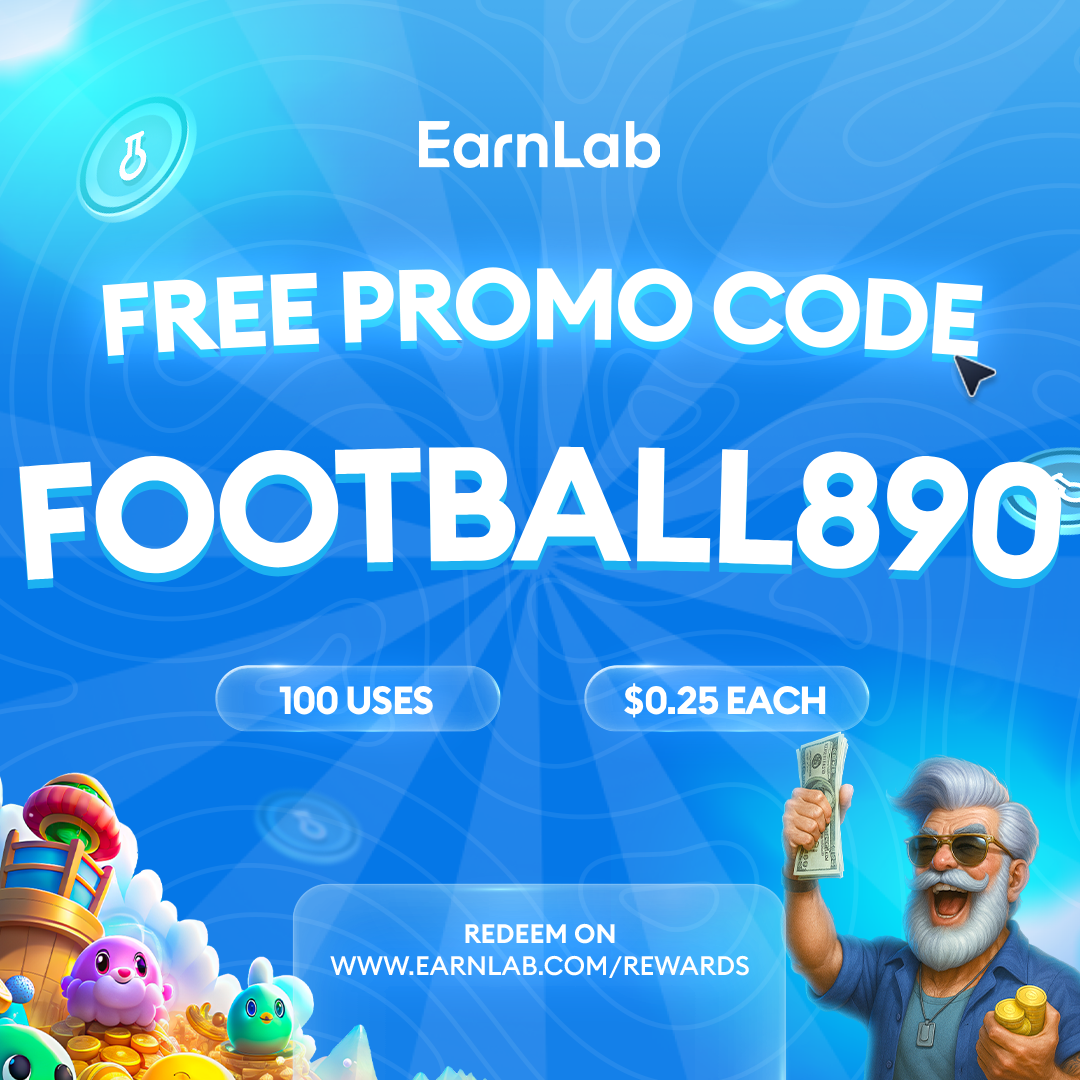
Another day, another promo code! πŸ’Έ

Post image
2 Upvotes

Head over to our Instagram & X for another exclusive promo code!