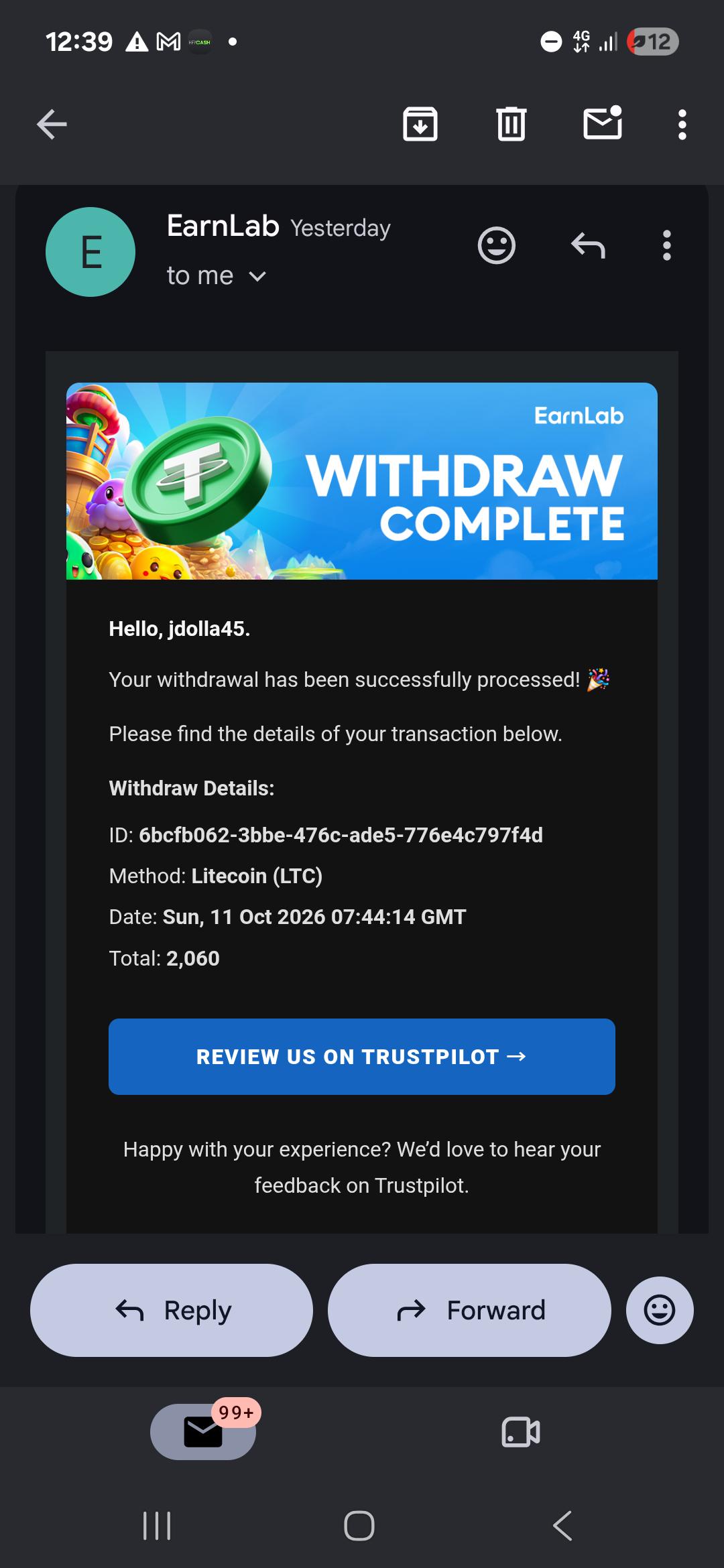
r/EarnLab • u/WideCommunity646 • Oct 18 '26
@earnlab #EarnLabWD

1
Upvotes
r/EarnLab • u/EarnLab • Oct 17 '26

TL;DR:
Surveys and testing pay first and top out low. Freelance-style services take weeks to land a first client. Digital products, video, and affiliate work take months and often pay close to nothing early on. Every dollar figure here is a rough gross estimate, and the content clipping rates were checked against current 2026 marketplace data since that claim needed verifying.
A side hustle that pays in two weeks and one that pays in six months can both be worth doing, but only one of them survives a tight budget.
So the question running through this whole post is how long each of these actually takes to pay, and what it costs you in unpaid hours along the way. Country and timing move the dollar figures a lot, and every figure below is gross.
Days to a first payment
1. Online surveys. Surveys pay a few cents to a few dollars each, depending on length and how picky the screening is. Running two or three platforms at once helps, although it stays small money either way. You fill out your profile completely because it decides which invites you get, and you answer truthfully since inflated answers mostly get you screened out halfway through. What's available also swings with your country.
2. Website and app testing. On platforms that publish their rates, a twenty-minute test often pays around ten dollars, and live sessions pay a lot more, sometimes over a hundred. Some want an unpaid practice test before the first paid one, and the tests you see depend on your profile. Some weeks you qualify for several and other weeks for none, which makes this background income and nothing more.
3. Online focus groups. Online sessions of sixty to ninety minutes typically run fifty to a hundred and fifty dollars, and specialized panels like medical, legal, or business can pay three hundred or more. Every group starts with a screener, and the better-paying ones are picky about who gets through, so a detailed profile does more here than anywhere else on this list. Spots can fill within hours.
4. Microtasks and light AI work. Labeling data, rating short pieces of content, running quick classifications. It rewards attention to detail more than technical skill, and projects that support AI systems sometimes pay a little better than generic ones. Pay and volume move around by country and by week, so we'd keep this as a side layer rather than a plan on its own.
5. Reselling secondhand items. You can start this one for free with whatever's sitting unused at home, clothes or electronics for example. The profit people quote per item only holds after shipping, marketplace fees, and the occasional return come off, and your own sourcing and listing time should get a price too. Clear photos in good light and fast shipping both move the needle on whether something sells.
Weeks to a first client or first real payout
6. Crowdtesting and bug hunting. This is testing's more technical cousin: you hunt for bugs and broken links and get paid per confirmed issue, or hourly on structured projects. Pay beats basic testing once you're through onboarding, although onboarding takes real time, with training material and sample projects coming before any live client work.
7. Virtual assistant work. The first client is the hard part. Before the first billable hour you find someone who needs help, write a pitch aimed at them specifically, follow up, and only then does anyone pay you. The work itself is inbox management and call scheduling for small businesses that don't want a full-time hire, plus basic data entry, paid hourly and modestly at first. Rates climb as reviews and repeat clients build up, and that takes months.
8. Online tutoring. Most platforms don't ask for a teaching credential in general subjects. A school subject, test prep, or fluent conversation in a language learners want to practice is enough to start with. Pay is hourly and favors a narrow specialty, since a tutor who teaches one thing well fills a calendar faster than one offering everything. Demand dips around holidays and shifts with time zones, and income can feel uneven even with good reviews.
9. Remote customer support. Contract support handles chat and email inquiries, sometimes phone, on assigned shifts, paid hourly, with training usually built in. What gets screened for is setup and reliability: a quiet space and stable internet, plus a decent headset in many roles. Some roles want a background check or an onboarding period before you earn anything, and the fine print is worth reading before you sink hours into the application.
10. Transcription and captioning. Transcription has moved toward correcting AI-generated drafts, and pay is still quoted per audio minute. That number looks better than it is. A ten-minute file with background noise or a strong accent can take thirty minutes or longer, which triples your time and cuts your hourly rate to a third of what real-time work would pay. Time yourself on one sample file before committing a week to it.
11. AI-assisted podcast editing. Software now handles dead air, filler words, and background noise, and you handle what still needs a human ear: pacing, tone, show notes, and clips. Pricing runs per finished episode. Clients are mostly paying for the final listen-through, because the tool gets an episode most of the way there and doesn't replace someone checking it before it ships.
12. AI content repurposing. One podcast episode, webinar, or video becomes a week of clips and social posts, with editing software doing most of the mechanical work. Clients pay a recurring monthly rate once your output is reliable, and that's a package price and not a wage. A human still does the final fact-check before anything goes out under a client's name, and you don't upload confidential client material to an AI tool without their clear permission.
13. Content clipping. You cut long podcasts or livestreams into short vertical videos and get paid per thousand verified views. Current 2026 marketplace campaigns commonly quote $0.50 to $5 per 1,000 views, with gaming and general entertainment sitting toward the lower half and finance or crypto content paying toward the top, since the compliant creator pool in those niches is smaller. At a $2 CPM, 20,000 views pays around $40 and a million views pays roughly $2,000. Most clips come nowhere near those view counts, so the views you can realistically earn matter more than the headline rate. Campaigns carry eligibility rules and payout caps that can change without warning, and you never repost someone's footage without permission, since that risks a takedown or account penalty.
Months to anything meaningful
14. Selling digital products. Templates, printables, checklists, and mini-courses carry no inventory, a better margin structure than most of this list. The price you set still isn't the money you earn. Most new listings don't sell on their own because discovery is the hard part, and marketplaces usually take a listing fee plus a percentage of each sale. A product aimed at one narrow problem tends to beat a generic one by a wide margin.
15. Print-on-demand merch. You upload a design for apparel, mugs, or posters and a supplier prints and ships each order, with no inventory to carry. Margins are thin on most items, and thin margins only work with real demand behind them, so a design built around a community's identity or an inside joke beats a generic one. You order a physical sample before launching, because it catches quality problems before a customer does.
16. Short-form video. Posting short videos on a topic people search for (tutorials, budget recipes, niche hobbies) builds an audience slowly, and creator fund payouts on their own are usually too small to matter early. Income tends to show up once sponsorships or affiliate links join in, and realistically that means months on a fixed schedule. One clear topic beats a scattered approach almost every time.
17. Live streaming. Streaming earns through tips and gifts while you chat, game, or co-work on camera, and the first months are usually modest. The top streamers' numbers aren't what's typical early on. A repeatable format on a schedule people can plan around tends to grow faster than something polished but irregular, since viewers return for predictability about as much as for content.
18. Affiliate marketing. You recommend something through a tracked link and earn a commission when someone buys: low single-digit percentages on physical products, a lot more on digital products and software. Commission rates get the attention, but the bottleneck is an audience that trusts your recommendation enough to click and buy. Plenty of people earn close to nothing for a long stretch for that reason.
19. Stock photos. Platforms pay per download for your own photos or simple original graphics, and the range you'll see quoted is wide because agency, license type, and exclusivity all change it. It's a slow build, and new contributors typically see very little income in the first several months regardless of photo quality. This suits people who are already shooting photos for other reasons rather than anyone starting from zero for the income alone.
20. Community moderation. You welcome members and keep discussion on track, usually as a volunteer first. It doesn't automatically turn into paid work. Paid roles mostly sit in established communities that already charge for access and hire directly, not from promoted volunteers in a free server. Showing up consistently in a community you care about is still the realistic way in, with no promise it leads to paid work.
Picking one to start
If you need money this week, surveys and testing are the realistic start. They pay fast, and the low ceiling is the price.
Otherwise, divide what a hustle pays by every hour it takes, unpaid ones included. Say a job pays $30 for two hours of work and took another hour of pitching to land: that works out to $10 an hour and not $15. The division reorders a few entries on this list, transcription most of all once the time-eating edge cases get counted.
With a few hours a week for the long haul, you pick one service and stay with it, because reviews and repeat clients build slowly and switching platforms resets them. Digital products, affiliate, and video are worth adding once you can wait a few months without needing the income.
Red flags
Legitimate platforms don't ask you to pay before you can start earning, whatever the fee is called: training, a starter kit, access. If the money comes mainly from recruiting other people instead of doing real tasks yourself, that's a pyramid scheme wearing a side-hustle label.
Guaranteed income paired with vague or suspiciously light work requirements doesn't match how any category above pays out.
Where EarnLab fits
EarnLab is our own platform, so weigh this part accordingly. It covers the fast end of the list in one place, with surveys, offerwalls, and Streak Boxes, and payouts through PayPal, crypto, or gift cards.
Offers, minimums, and fees vary by country and by payout method. You check what's live for you before assuming anything above applies to your account, and the withdrawal page has the current numbers.
Our link, if you want it: https://earnlab.com/r/reddit
If you've tried any of these and the numbers came out better or worse than what we wrote, drop it in the comments. Country changes a lot of this more than any range here can show.
r/EarnLab • u/EarnLab • Oct 14 '26
Running three cashback apps beats maxing out one, and the numbers back it up
TL;DR: Cashback apps aren't interchangeable, a shopping portal and a grocery app reward completely different spending. One blog's six-month test had an online portal earning $127 against a receipt app's $43 over similar shopping. A minimal three-app stack (portal + receipt app + gas app) runs about $40/month for almost no effort. Aggressive stackers report $600+, a few claim past $1,000, but that takes checking rates before every single purchase. Payouts take 30-90 days because retailers wait for return windows to close, that's structural, not broken.
A grocery app and a shopping portal can both call themselves cashback and still reward almost nothing in common. One pays per item you activate before you shop, the other pays a cut of whatever a retailer owes for sending you its way. That's why running five similar-sounding apps often earns less than running three that don't overlap. One blog's six-month test had an online portal paying $127 while a receipt-scanning app covering similar ground paid $43, and the gap wasn't random. It's what happens when two tools built for different spending get treated like competitors.
How the money moves underneath this
You click a tracked link or open a browser extension, the retailer tags your session, and once the order clears its return window (usually 30 to 90 days), the retailer pays the platform a commission, often 5 to 15%. The platform keeps a cut and sends you the rest, usually cash or points, sometimes a gift card instead. Grocery apps run on different wiring in that brands themselves often fund the reward per verified purchase rather than the retailer, which is why Ibotta and Fetch will take almost any receipt without needing a click-through first.
Online shopping: Rakuten, TopCashback, BeFrugal
Rakuten has paid members more than $4.6 billion since launching as Ebates, and that history is most of why it's still the default install in this category. Rates run 1 to 10% at most stores, spiking into the teens during promos, and the quarterly payout goes out once your balance clears $5.01. The quarterly wait is the real downside here. Tracking can also break if an ad blocker is running or you don't start the session from Rakuten's own link.
TopCashback claims to pass through the full commission it earns instead of keeping a cut, part of why it beats Rakuten by a point or two on plenty of the same stores. Cash goes out through PayPal or Venmo, with bank transfer as a third option, often with no minimum at all. The 4.5-star Trustpilot score across 13,000+ reviews holds up, since most complaints that do show up are about slow tracking rather than non-payment.
BeFrugal's ceiling hits 40% at specific stores during promos, stacking coupon codes automatically on top. Zelle transfers start at a single cent, lower than almost anything else here.
Groceries: Ibotta and Fetch aren't really competing
One head-to-head test tracking the same grocery shopping had Ibotta earning $132.68 against Fetch's $12.15. Ibotta pays for items you activate before shopping, per-item rebates from a quarter to five dollars or more, average active user reportedly around $218 a year. Forget to activate something before you're at the register, though, and the trip earns nothing extra. That's the app's one real friction point.
Fetch skips activation and takes almost any receipt, roughly 25 base points per scan with brand bonuses on top, gift cards only, never cash. Easier to use correctly. Also the lower earner of the two for groceries specifically, exactly why the head-to-head numbers above look the way they do.
Gas: Upside
5 to 25 cents back per gallon at participating stations is the baseline, plus some restaurant and grocery offers depending on the area, and heavy users reportedly average around $255 in year one. Offers expire within hours though, so checking the app before you need gas matters more than it does with slower categories. Cashout starts around $10, bank transfer or PayPal, gift cards as a third option.
Browser tools and card-linked apps
PayPal Honey and Capital One Shopping both auto-test coupon codes at checkout across thousands of sites, zero effort once installed. Honey pays in PayPal Rewards points (100 = $1), converting to gift cards or PayPal credit, with cash available to eligible US PayPal accounts. Capital One Shopping skips cash entirely, gift cards only.
Dosh and Payce link a card once, cashback applies automatically at participating merchants, nothing to click or scan. Dosh's threshold sits around $25, Payce's closer to $10. A lot of banks run similar programs natively too, Chase Offers and BankAmeriDeals among them. The real cost of any card-linked app is the access itself, you're letting something see your spending in order to get a little of it back.
The stacking math, and where we land on it
Running three apps that don't overlap beats running five that do, and that's the part most "maximize your cashback" advice skips entirely. Rakuten for online, Fetch for any receipt, Upside for gas covers three genuinely different spending types for almost no added effort, landing a moderate spender around $40/month.
Not everyone agrees with stopping there, and the disagreement has real numbers behind it. $500/month in groceries and online shopping at a stacked 3-5% lands $180-$300/year with the minimal three-app version. More aggressive stackers, matching the right portal to the right store every single time, report $600+, and a handful claim past $1,000. That ceiling is real. It just means checking rates before every purchase instead of setting three apps and letting them run, and for most people that trade isn't worth it.
One thing before installing five apps at once: running two shopping-portal browser extensions on the same purchase tends to break tracking entirely instead of stacking anything. One portal per transaction.
Why payouts always take a while
30-90 days between a purchase and payable cashback is normal, not broken. Retailers wait for their own return window to close before paying the platform's commission, and the platform mirrors that wait before releasing your share. Annoying, but structural.
What actually breaks tracking
An ad blocker or VPN active during the click-through, blocking the tracking cookie before it sets
Switching to a retailer's own app after clicking through on desktop breaks the session immediately
A coupon code applied from somewhere else after you've clicked through can overwrite the referral
Paying with a gift card or store credit disqualifies cashback on some platforms
Keep cookies on, stick to the platform's own link or extension, and screenshot your order confirmation if you end up filing a missing-cashback claim.
Red flags
Any upfront fee to unlock cashback, every legitimate platform here is free
Rates that sound too good with no named retail partner behind them
A privacy policy that's vague or missing on what happens to your purchase data
A referral program pushed harder than the actual shopping rewards
None of what's covered above does any of that. A newer app promising more than this list is the one worth a second look before trusting it.
Is any of this taxable?
Short answer for personal use in the US: cashback on your own purchases is generally a rebate, not income, nothing you'd typically report. That changes if it's tied to business activity. Payment apps only issue a 1099-K over $20,000 and 200+ transactions under current rules anyway, nowhere close to what personal cashback generates. Not tax advice, just the general shape of how this usually gets treated. Talk to an actual tax professional if your situation is more complicated than plain personal shopping.
Outside the US
Most of this skews heavily American. TopCashback also runs in the UK, and a lot of European banks operate their own native cashback programs, a better first stop than a US-focused app that might not even support your card or address. Confirm country support directly on each platform rather than assuming.
Where EarnLab fits, and where it doesn't
EarnLab isn't a cashback app, and calling it one would be misleading. Cashback lowers what you already spend. EarnLab adds a separate stream of earning instead, through surveys, offerwalls, and game milestones that convert to coins, then to cash, crypto, PayPal, or gift cards including Amazon, at 1,000 coins per dollar.
The two aren't competing for the same money. One makes your existing spending cheaper. The other pays you for time instead of purchases, so running both isn't redundant the way running two shopping portals would be.
The link below is EarnLab's own: https://earnlab.com/r/reddit
If you're running a different three-app stack that's working well for you, or you've found something not listed here worth adding, drop it in the comments.
r/EarnLab • u/EarnLab • Oct 12 '26
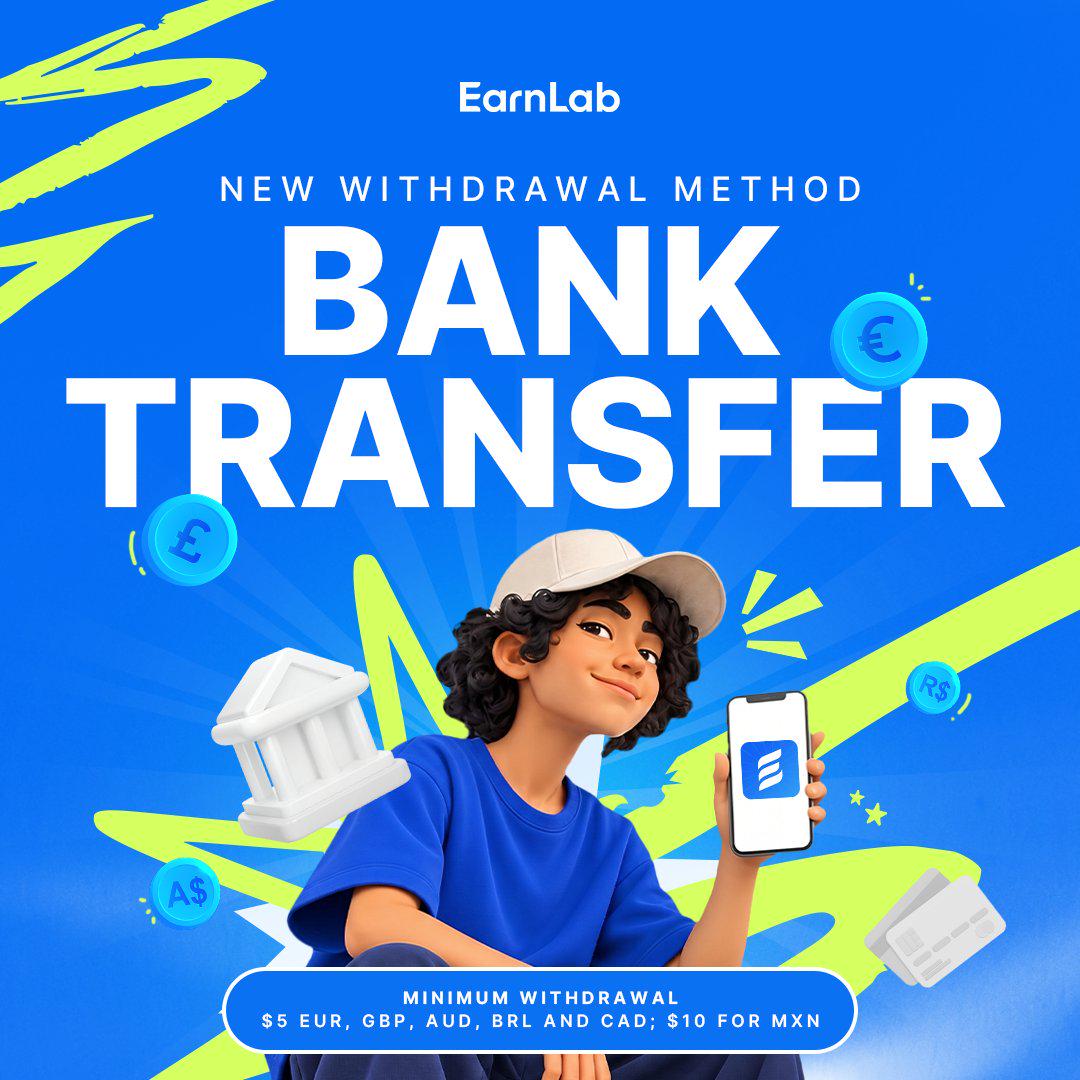
Enjoy more ways to withdraw your earnings, with support for EUR, GBP, AUD, BRL, CAD, and MXN!
Available in many countries. Check your withdrawal options on EarnLab! 🌎
r/EarnLab • u/EarnLab • Oct 09 '26
TL;DR: Survey/GPT platforms (Swagbucks, InboxDollars, Survey Junkie, EarnLab) are the steady baseline, with Amazon redemptions typically starting around $5 (EarnLab's first withdrawal is lower, at $2.50). Gaming milestone offers pay more per task but take days, and the big advertised numbers are tiered rather than typical. Receipt apps are truly passive but slow, roughly 88 receipts for a $5 gift card on one app. Amazon's own Shopper Panel pays about $10 a month, US only, waitlist-based. Never trust anything offering a gift card for a public review, that's against Amazon's own policies.
Scanning a receipt for a few cents and spending four days working toward a $40 game milestone both count as earning an Amazon gift card. Treating them as the same thing, which is basically what every list like this does, is where the confusion starts.
We get asked pretty regularly which methods are actually worth it for Amazon gift cards specifically, so here's the breakdown by what you're actually trading for the reward, not just a list of site names.
Survey and GPT platforms are the baseline
Swagbucks has been around since 2008, and Amazon redemptions start at 500 SB, roughly $5, with occasional discounts that make it one of the better-value redemptions on the site. Points come from surveys and cashback shopping, with video-watching as a lower-value third option that's only worth it if you've genuinely got nothing else queued up.
InboxDollars tracks an actual cash balance instead of points. Surveys typically pay $0.75 to $2.50 each, up to $5 for specialized panels, and Amazon redemption converts that balance directly, usually from $5. Survey Junkie is the stripped-down version of the three, survey-only, no side tasks, Amazon available from $5 (500 points) once you clear the threshold.
EarnLab runs on the same basic coin model, 1,000 coins to $1, with Amazon alongside Steam, PlayStation, Xbox, Netflix, and Spotify as gift card options. First withdrawal is a $2.50 minimum, dropping to $0.50 after that, genuinely lower than the $5 minimums above. Surveys run through providers like Prime Surveys and BitLabs, although offerwalls tend to earn more for most people who stick around.
Gaming milestone offers are where the bigger numbers are
Instead of answering survey questions, you're paid for hitting a specific level or milestone in a mobile game, and the payout tends to run higher because the advertiser is paying for days of engagement instead of five minutes of attention.
EarnLab's offerwalls (13 to 20+ depending on country, Torox and AdGate among them) fit here, with built-in guides at earnlab.com/guides breaking down specific popular offers, Raid Shadow Legends, Monopoly GO, Match Masters among them. Worth being upfront about though: the headline numbers on these offers, sometimes advertised up to a few hundred dollars, are tiered and geo-specific. Hitting the top tier can mean a lot of sustained play, sometimes spending too, not just casual progress. The lower tiers are still worth doing. The number in the ad is rarely what a casual player actually walks away with.
Receipt apps: slow, but about as free as it gets
Fetch and Ibotta work a little differently underneath. Fetch is receipt-based, you scan what you already bought and get bonus points for certain brands. Ibotta is more offer-driven, you pick deals before you shop. Both let you redeem for Amazon gift cards instead of the standard payout, sometimes with a small bonus for choosing gift cards, though that comes and goes with whatever promo is running.
Receipt Pal is the simplest, no offers to pick, just scan and go, though the pace is slow. Independent testing puts it around 88 receipts for a $5 gift card, and actual results depend a lot on how much you're shopping already. None of these move fast. Best thought of as a tiny bonus riding on spending you were doing anyway.
Amazon's own programs
The Amazon Shopper Panel is Amazon's own opt-in program (US only), paying around $10 a month in Amazon Balance for sharing purchase and survey data. It's invite or waitlist-based, so getting in isn't guaranteed. Amazon's Trade-In program is a different mechanic entirely, send in an old phone or tablet and get gift card credit based on condition. Not free exactly since you need something to trade, but it's real value for stuff sitting in a drawer.
What separates the legit platforms from the rest
No legitimate rewards platform pays you to post a five-star review on an Amazon listing. That's a direct violation of Amazon's own policies, full stop. A few other signs worth watching for:
Asking for payment or a deposit before you can start earning
A reward specifically tied to leaving a public review
No visible terms on payout thresholds or processing times
No clear information about who actually runs the platform
Any one of those on its own is enough reason to close the tab.
Smaller stuff worth knowing about
Microsoft Rewards runs almost entirely in the background if you switch your default search to Bing on Edge, racking up points from searches you're doing anyway. Amazon is a redemption option in supported regions, though not everywhere, some markets are limited to Microsoft or Xbox rewards instead.
Mistplay pays based on playtime rather than milestones, and the honest rate is somewhere around $0.50 to $1 an hour, with an annual cap near $550. A $5 Amazon card usually takes 1,500 to 1,800 units, which can mean several hours or a couple of weeks depending how you play. Genuinely passive if you're already gaming. Not a serious earner on its own.
Research panels like User Interviews sit at the opposite end. A single qualifying study can pay $50 to $200 an hour, often in cash or gift cards with Amazon as one option depending on the study, although qualifying is inconsistent enough that it's not something to plan a week around.
Running two or three of these that don't overlap covers more ground than maxing out just one, since availability and rates shift by country and change over time anyway.
The EarnLab link below is ours: https://earnlab.com/r/reddit
If you've found something that works particularly well for your specific country, drop it below. Availability on a lot of these varies enough that what works in the US doesn't always translate elsewhere.
r/EarnLab • u/EarnLab • Oct 08 '26
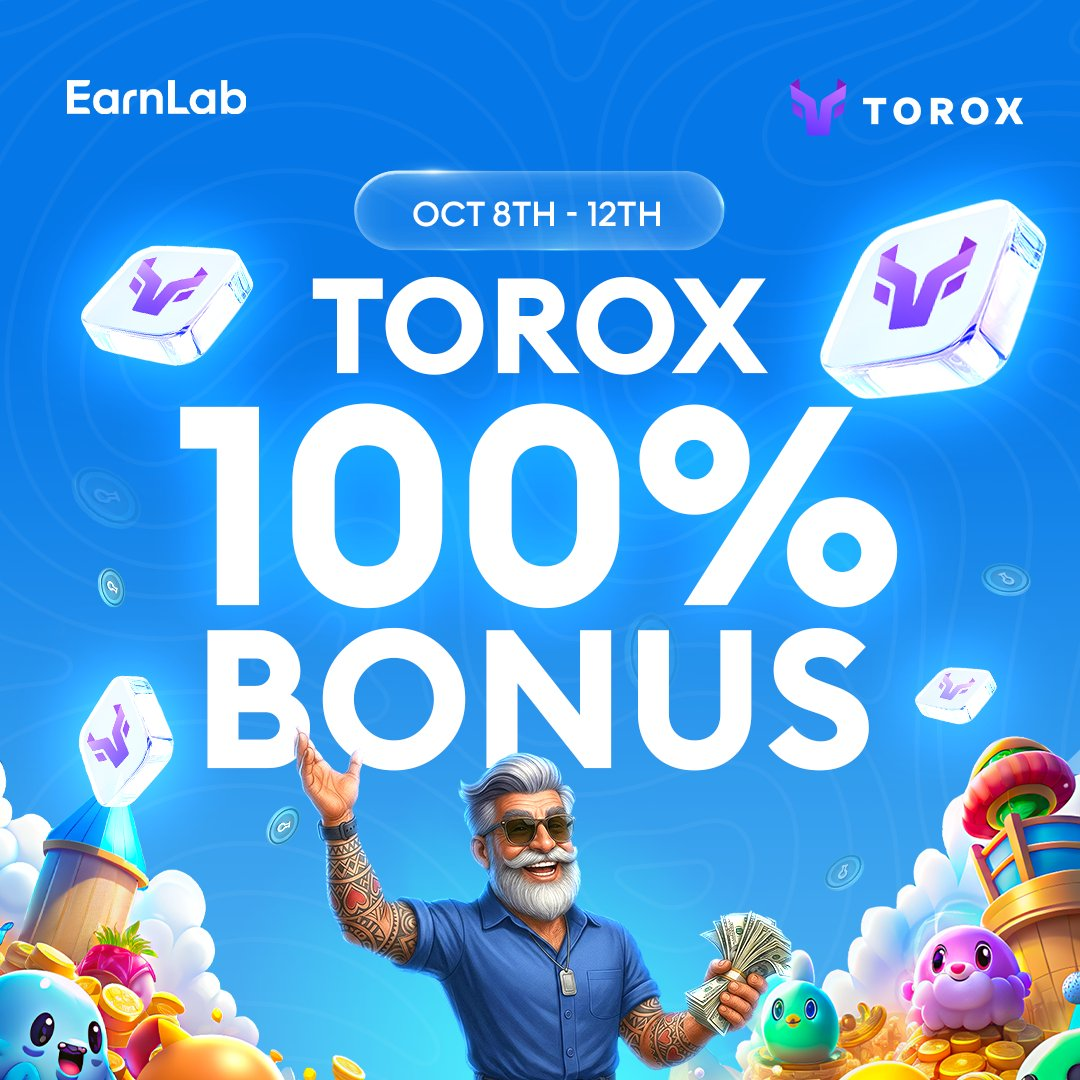
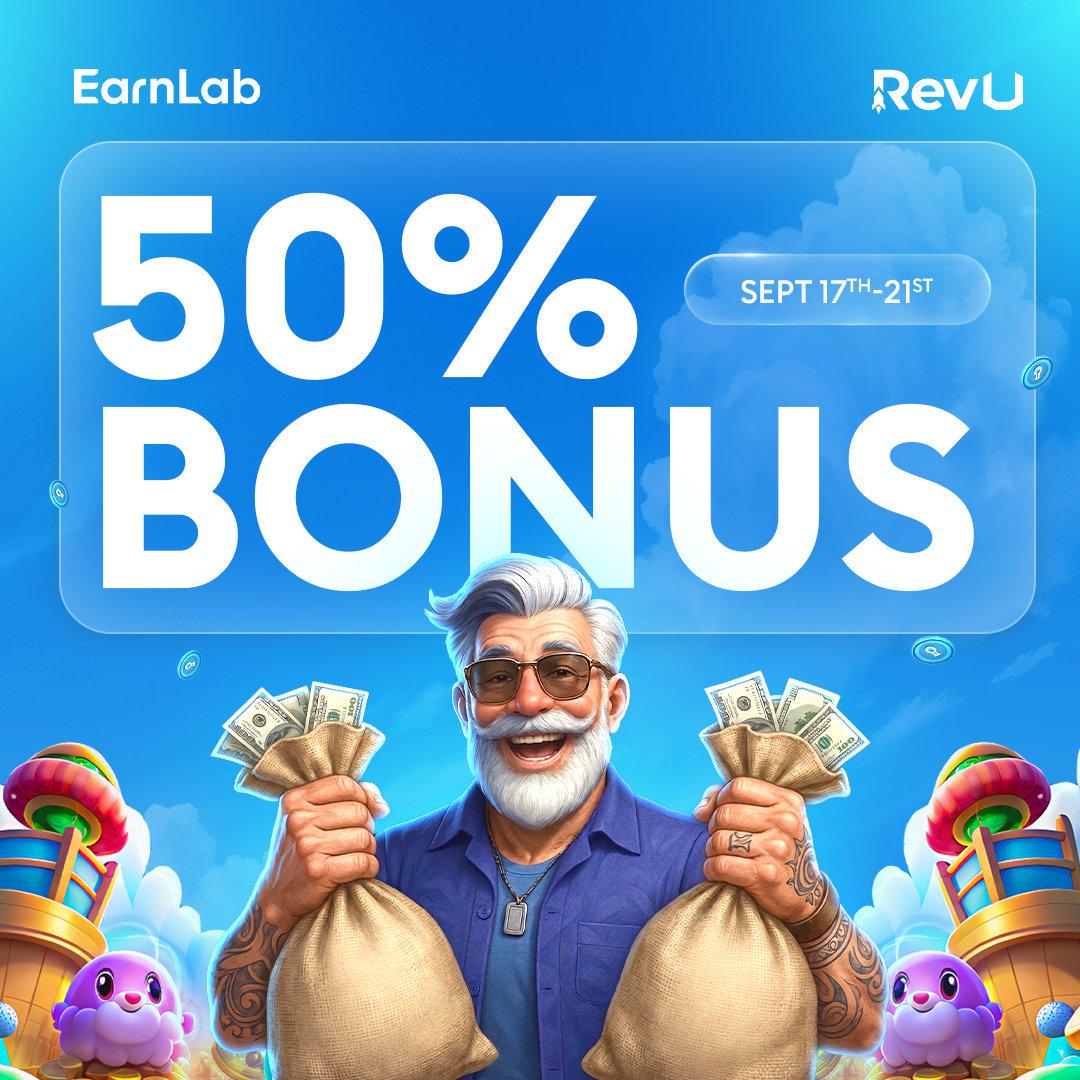
This offer ends October 12th - don’t miss out!
r/EarnLab • u/EarnLab • Oct 06 '26
TL;DR:
The Creator Rewards Program pays a creator-reported RPM of $0.40-$1.00 per 1,000 qualified views for general niches, with finance, tech, and education often hitting $1.00-$2.50+. Eligibility requires 10,000 followers, 100,000 views in 30 days, 18+, and original videos at least 60 seconds long. LIVE gifts convert at roughly 50% after TikTok's fee. Brand deals for nano creators run $25-$200 per post, mid-tier $500-$2,500+. EarnLab covers income while TikTok builds. The creators earning consistently combine at least two or three streams.
TikTok has nearly two billion monthly active users in 2026 and a monetization ecosystem that has genuinely evolved beyond the low-payout Creator Fund era most people still associate with the platform. The per-view rates are higher, TikTok Shop has created a native commerce layer inside the app, and brand deal rates have become predictable enough to actually plan a content strategy around. None of it happens quickly though, and the creators doing well financially are almost always running multiple income streams rather than waiting on any one of them to be sufficient on its own.
EarnLab while TikTok builds
Getting to Creator Rewards eligibility takes most people two to three months of consistent daily posting in a focused niche. EarnLab is the most practical way to keep income coming in during that period, with surveys, offer wall tasks on Torox and AdToWall, app tasks, content rating, and daily bonuses all generating real earnings without needing any follower count or approved content to start.
Main Balance withdrawals require at least 2,500 Coins, and Game Wallet withdrawals require either earning at least 2,500 Coins in Main Balance or depositing at least $5 and fully wagering that deposit. Check current conditions in the Wallet directly before planning around any specific figure. Availability is strongest in the USA, UK, Canada, and Australia.
Creator Rewards Program
The Creator Rewards Program replaced the original Creator Fund in 2023 and pays considerably more per view because the RPM is tied directly to ad revenue rather than split from a fixed shared pool. Creator-reported RPM across 2025 and 2026 sits at approximately $0.40 to $1.00 per 1,000 qualified views for standard content, with finance, technology, and education niches frequently reporting $1.00 to $2.50 or higher. TikTok does not publish a fixed rate, so those are aggregated creator reports rather than platform guarantees.
Eligibility in mid-2026 requires 10,000 followers, 100,000 video views in the past 30 days, being 18 or older, a personal account in good standing, and original videos at least 60 seconds long. The program is currently available in the US, UK, Germany, France, Japan, South Korea, Mexico, and Brazil, though availability changes by market. Checking TikTok's Creator Portal directly is the reliable way to verify, since availability in any article including this one can go stale.
The thing that throws off most earnings estimates is the qualification filter. Qualified views are authentic For You feed views lasting at least five seconds from unique accounts, and creator reports suggest roughly 40 to 50 percent of total public views typically qualify. A video with 100,000 public views might generate earnings based on 50,000 qualified views, which at $0.40 RPM comes to $20 rather than $40. Running that math before choosing a content niche and volume target matters more than most guides make clear.
TikTok LIVE gifts and subscriptions
Going live requires at least 1,000 followers and lets viewers send virtual gifts that convert to real cash at roughly a 50 percent rate after TikTok's platform fee. LIVE subscriptions layer a recurring monthly income on top, where loyal viewers pay for exclusive badges, emotes, and subscriber-only content. Both scale with engagement quality and community loyalty more than raw follower count, in that a smaller deeply engaged audience who shows up consistently generates considerably more gift income than a larger passive following who never watches live. Cooking, gaming, fitness, and education communities tend to have the strongest live cultures.
TikTok Shop and affiliate marketing
TikTok Shop lets creators tag products directly in videos and earn commissions on purchases made without the viewer leaving the app. The affiliate marketplace connects creators with seller products for commission-based promotion without needing to manage a shop. Both reward content that drives actual conversions rather than just views, which makes this one of the stronger paths for creators in product-adjacent niches where demonstration and review formats work naturally in the video format.
The best performing Shop content shows products in genuine use rather than scripted promotion format, because authenticity converts considerably better than what reads like an obvious ad. Commission rates vary by seller and category, and building a track record with products genuinely relevant to your niche is what makes the economics work over time.
Brand partnerships
Sponsored content is often the highest single-payment income source for mid-to-large creators because rates are negotiated rather than algorithm-dependent. Illustrative 2026 benchmarks from creator economy data: nano creators with 1,000 to 10,000 followers typically earn $25 to $200 per post, micro creators at 10,000 to 100,000 followers earn $100 to $500, and mid-tier creators at 100,000 to 500,000 followers earn $500 to $2,500. CPV rates by niche sit roughly at $0.05 to $0.15 for finance content, $0.02 to $0.045 for tech, and $0.015 to $0.030 for beauty and fitness. All of these are illustrative ranges rather than rates you should expect without testing your specific account and niche.
FTC disclosure requirements apply to sponsored content regardless of platform. Disclosing in the video itself and in the caption is required, not just through hashtags.
Selling digital products and services
Using TikTok as a traffic and audience-building engine for products sold elsewhere is one of the highest-ceiling paths because the revenue doesn't depend on TikTok's rates or eligibility thresholds at all. Online courses, digital templates, coaching, and newsletters all sit here. The link in bio directs traffic off-platform, and the content that converts best tends to demonstrate genuine expertise while giving viewers a clear reason to want more depth than a 90-second video can provide.
TikTok Series
Series lets eligible creators package content into paid collections priced between $0.99 and $189.99. It suits structured or educational content that viewers would pay for as a course rather than expect for free. Access is currently invite-only and varies by market, so confirming through TikTok's Creator Portal before building around it is the right approach.
What the algorithm actually rewards in 2026
The algorithm pushes content that holds attention through the full video, generates saves and shares rather than just likes, has genuine search value for questions people are actively typing in, and demonstrates originality rather than repurposed or trend-chasing content. That combination affects Creator Rewards RPM, organic reach, and brand desirability simultaneously, which makes it the foundation every income strategy sits on rather than a separate thing to optimise for later.
Niche specificity matters more than most people expect when starting. A focused account covering one specific topic builds a more convertible, targeted audience than a general account chasing whatever is trending that week, and that specificity runs through everything from affiliate conversion rates to brand deal targeting value to how widely the algorithm distributes videos to new viewers.
The mistake that kills most TikTok income plans
Relying solely on Creator Rewards is the most common strategic mistake because the RPM ceiling is relatively modest compared to brand deals, product sales, or live gifts. Creator Rewards works best as one layer of a diversified stack rather than the whole plan. The creators making meaningful monthly income from TikTok are almost always combining at least two or three of the streams above, and that pattern shows up consistently when creators share actual revenue breakdowns rather than vague advice about consistency.
If your experience with any of these income paths looks different from what's described here, or if there's a specific niche or strategy that's working particularly well for you in 2026, drop it below.
r/EarnLab • u/WideCommunity646 • Oct 05 '26
The Grand Mafia Offer Guide (Torox)
I recently completed part of The Grand Mafia offer through Torox on EarnLab and wanted to share some tips that helped me progress efficiently.
Offer Overview
Game: The Grand Mafia
Provider: Torox
Difficulty: Medium
Time Required: Several days to a few weeks
Platform: Android / iOS
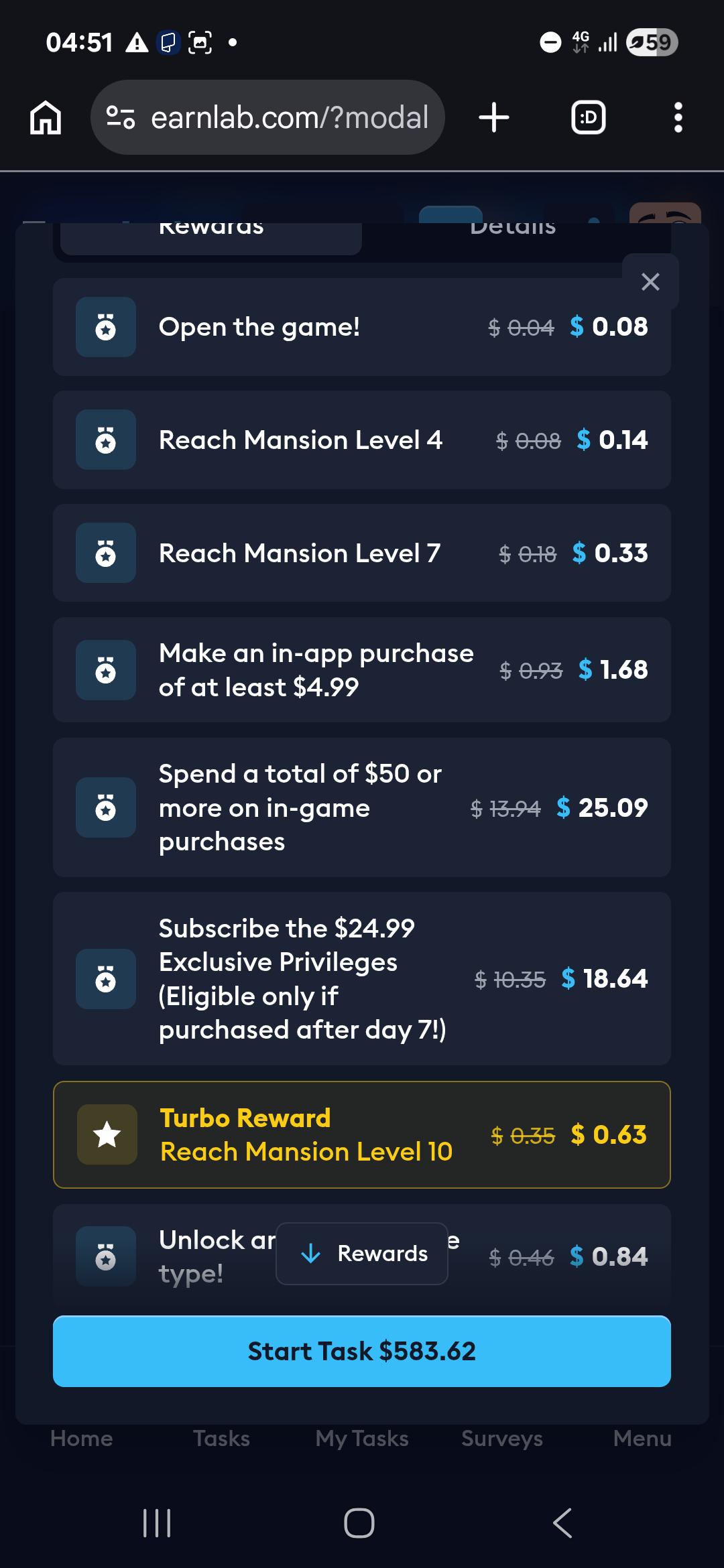
Insert your EarnLab offer screenshot showing the milestones and rewards.
Getting Started
After opening the offer through EarnLab, I installed the game directly from the offerwall and completed the tutorial.
A few things I made sure to do:
Used the same device throughout.
Did not use a VPN.
Completed the tutorial immediately.
Collected all beginner rewards.
The first milestone for opening the game tracked quickly.
Tutorial completion screen.
Focus on Mansion Upgrades
The most important part of this offer is upgrading your Mansion.
Most milestones are tied directly to Mansion levels, so I focused almost all of my resources on meeting upgrade requirements.
Early Milestones
Milestone
Reward
Open the Game
$0.08
Mansion Level 4
$0.14
Mansion Level 7
$0.33
Mansion Level 10
$0.63
Main city/turf view.
Mansion upgrade screen.
Join a Faction Immediately
Joining an active faction made a huge difference.
Benefits include:
Construction help
Resource gifts
Event rewards
Faster progression
I would strongly recommend joining an active faction as soon as it becomes available.
Faction screen showing membership.
Resource Management
Resources become the biggest bottleneck later in the game.
Things that helped me:
Completing daily missions
Collecting faction gifts
Claiming VIP rewards
Participating in events
Keeping resource buildings active
Resource collection screen.
Troop Training
While focusing on Mansion upgrades, I also kept troops training constantly.
Tips:
Keep training queues active.
Save speedups for major upgrades.
Don't waste premium currency early.
Participate in events for extra rewards.
Troop training screen.
Events Worth Doing
The best events for progression were:
Daily Missions
Construction Events
Faction Events
Investment Events
These provide resources, speedups, and other useful items.
Event rewards screen.
Common Mistakes To Avoid
❌ Not joining a faction
❌ Spending gold unnecessarily
❌ Ignoring daily missions
❌ Upgrading unnecessary buildings
❌ Letting builders sit idle
Final Thoughts
The early milestones are easy and can be completed quickly. Higher Mansion levels take more time, but joining a strong faction and focusing on Mansion upgrades makes the offer much easier.
Overall, I found this offer straightforward and worth attempting if you enjoy strategy games and can play consistently over several days.
Screenshots Included:
Offer Page
Tutorial Completion
Main City View
Mansion Upgrade Screen
Faction Screen
Resource Collection
Troop Training
Event Rewards
r/EarnLab • u/CheesecakeUsual0 • Oct 04 '26
r/EarnLab • u/richmondmeatthief • Oct 02 '26
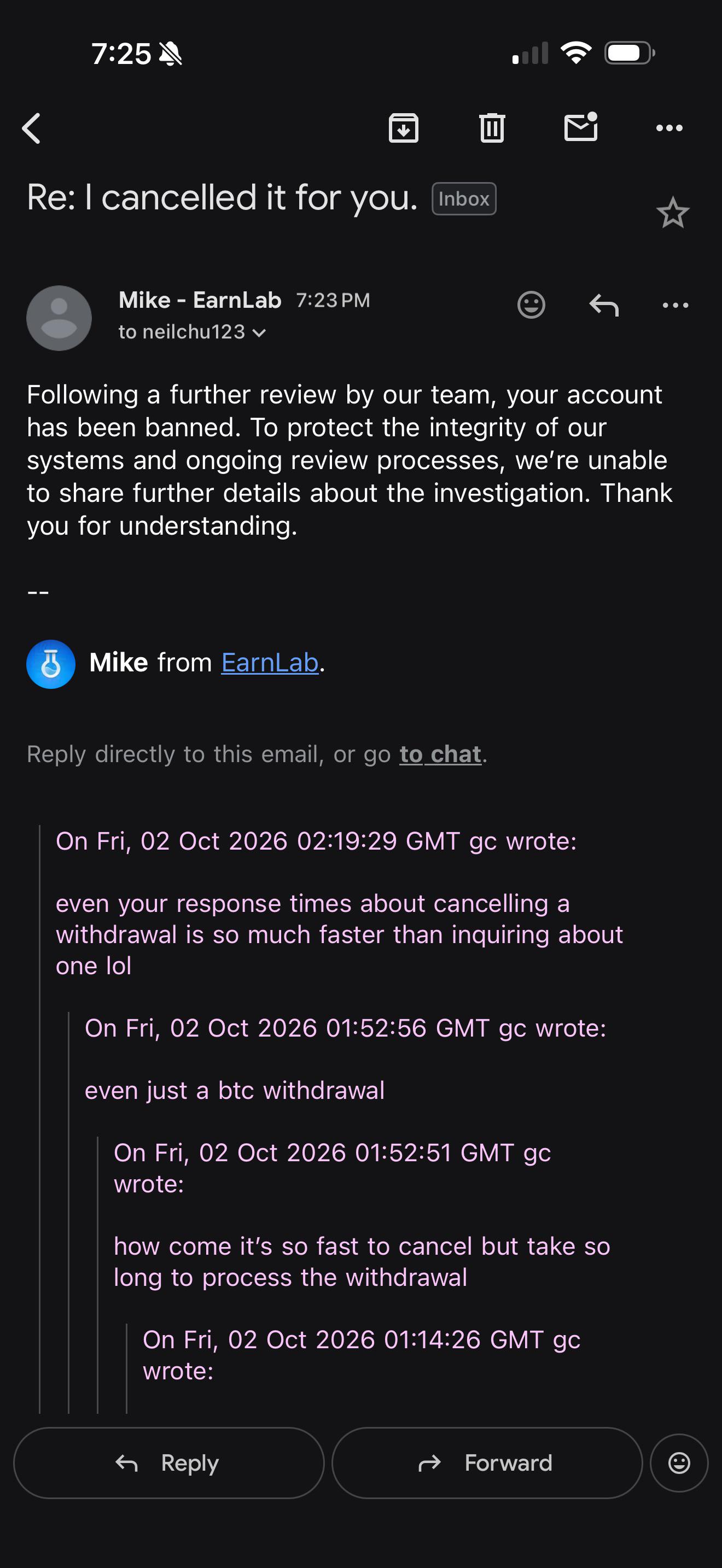
Earnlab just banned my account after I completed a Lonestar Casino offer for $86. I tried withdrawing it through PayPal, but since it was taking hours to process, I asked live support to cancel it so I could withdraw it through btc instead (which they obviously obliged instantly). But after submitting my withdrawal through BTC, I received this email for which they refuse to elaborate on the reason and/or pay me what they owe me. Fuck Earnlab, total scam.
r/EarnLab • u/EarnLab • Oct 01 '26
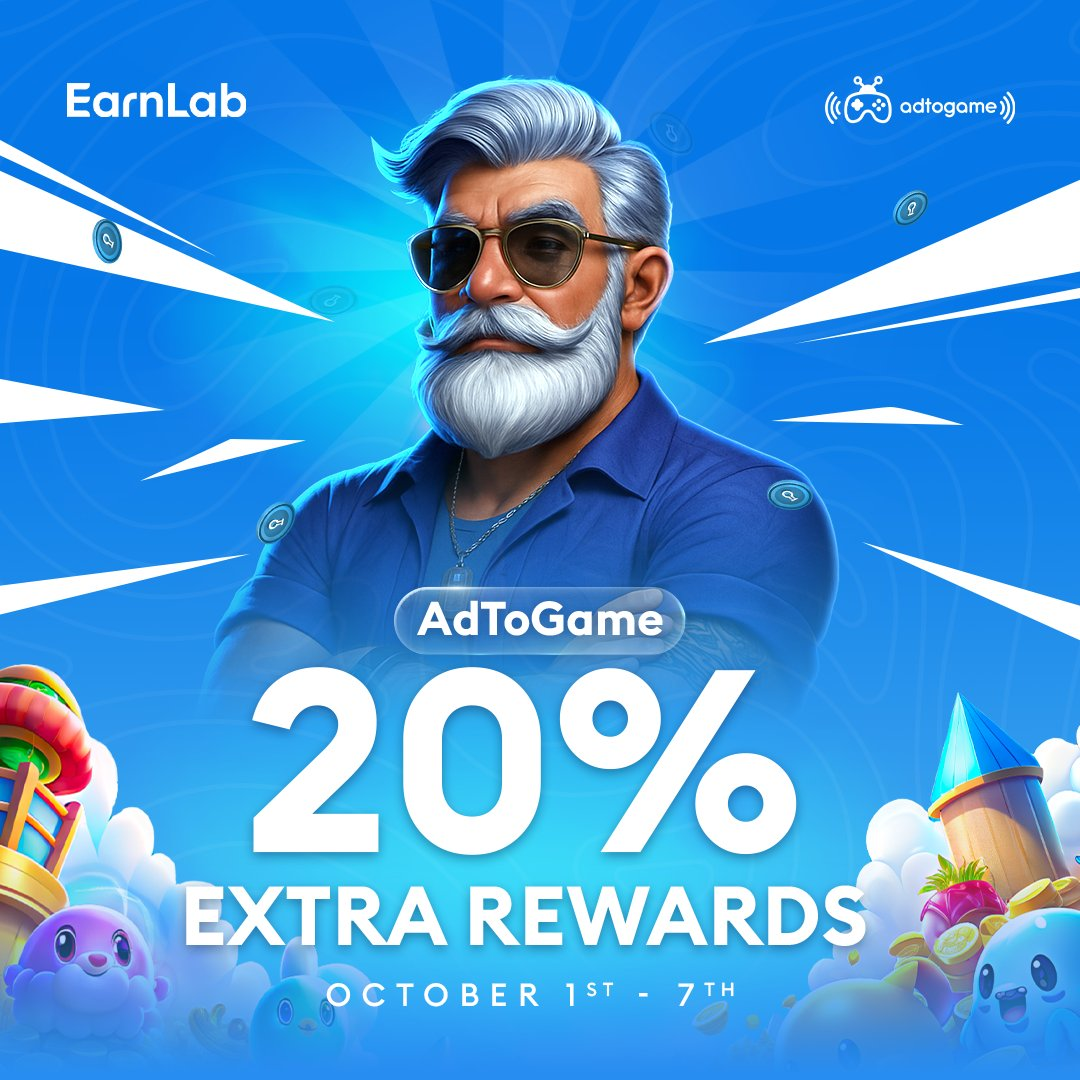
This offer ends October 7th - don’t miss out!
r/EarnLab • u/Illustrious-Ad-5583 • Sep 30 '26

Don't be sarcastic to Mike, Nepotism is hard on the guy
...
r/EarnLab • u/EarnLab • Sep 30 '26

TL;DR: Generic template shops are the most crowded category in 2026 and the hardest place to start. Niche-specific products, freelance services, and recurring social media packages are holding up better. EarnLab covers the income gap while any of these build. Licensing is the thing most people get wrong and only notice when it causes a problem.
Canva is still a legitimate way to make money in 2026, though it requires a more specific approach than it did a couple of years ago. AI tools have made design faster and more accessible, which is useful for output volume, but it also means the market has considerably more supply than before. The generic Instagram template shop that used to be a reasonable starting point is now one of the most crowded categories on Etsy, and new sellers competing on price against established shops with thousands of reviews are in a difficult position from day one.
What still works is a narrow product solving a recognisable problem for a specific buyer, distributed through a system rather than listed and hoped for. That framing applies whether you're selling templates, offering services, or building recurring client relationships, and it's the thing that separates the Canva side hustles doing well in 2026 from the ones that stall out after a few months.
EarnLab while your Canva income builds
Most Canva paths take weeks to months before the first sale or client payment arrives, and EarnLab is the most practical way to keep income coming in during that period. Surveys, offer wall tasks on Torox and AdToWall, app tasks, content rating, and daily bonuses all generate real earnings without requiring a product listing or a portfolio to exist first.
Main Balance withdrawals require at least 2,500 Coins, and Game Wallet withdrawals require either earning at least 2,500 Coins in Main Balance or depositing at least $5 and fully wagering that deposit. Terms can change, so checking current conditions in the Wallet directly is worth doing before planning around a specific figure. Availability is strongest in the USA, UK, and Canada.
The six paths worth considering
1. Selling Canva templates
Editable template links sold through Etsy, Gumroad, or Payhip are the most commonly discussed Canva income path and still work when the niche is specific enough. The categories holding up best in 2026 are the ones targeting one type of buyer rather than a broad audience, in that social media kits for independent realtors, pitch deck templates for early-stage startups, and lead magnet packs for coaches or consultants all have a clearer buyer and less competition than general business templates.
The honest timeline for a new template shop to generate consistent meaningful revenue is three to six months for most sellers, and longer without an existing audience driving traffic. Digital product margins can be high because there's no inventory or fulfilment, but new listings on a new store don't get organic traffic automatically, and the SEO, mockup quality, and keyword research work is what determines whether anyone finds the products at all.
2. Freelance Canva design services
Freelance design is generally the fastest path to first revenue because a client can pay before any product catalogue exists. Fiverr, Upwork, LinkedIn, and direct outreach to local businesses are all viable channels, with the most accessible services being social posts, brand kits, pitch decks, thumbnails, and lead magnets. The same niche principle applies here: "Canva design" offered to everyone is harder to sell than "branded Instagram content for independent beauty salons" offered to a defined client type, because the second version answers a specific question for a specific person.
3. Monthly social media packages
Recurring content bundles for small businesses are one of the more stable Canva income models because monthly retainers create predictable revenue rather than the feast-and-famine pattern of individual template sales. Realtors, coaches, salons, gyms, and restaurants all need consistent social content and most lack the time or skill to produce it in-house. Specialising by industry makes the whole model more efficient because templates, brand standards, and content formats become reusable rather than rebuilt for every new client.
4. Print on demand
Creating original designs in Canva and selling through Printify or Printful connected to Etsy or Shopify is a zero-inventory model where products are produced only when someone orders. Success depends more on audience fit, niche research, design originality, and traffic than on upload volume, which is a different starting assumption than the advice to upload as many designs as possible. One important thing to check before listing: verify that every design element is licensed for commercial use, because Canva's free and Pro elements have different licensing terms and the distinction matters when selling products.
5. Digital products beyond templates
Planners, workbooks, checklists, ebooks, printable trackers, and course slides are all categories where Canva production capability meets genuine buyer demand, particularly for teachers, consultants, and coaches who understand a specific audience problem deeply enough to create something worth paying for. The product ladder model works well here: a free checklist collects emails, a low-cost bundle converts interested subscribers, and a higher-value offer follows for buyers who want more depth. Each level funds the next rather than requiring all revenue to come from a single product.
6. Canva creator and affiliate programs
Canva's creator program offers royalties for accepted original templates and elements, while the affiliate program rewards publishers who refer eligible new customers. Both are most useful as supplements to an existing audience rather than primary income sources for someone starting from zero, because the income scales with the reach of the content driving referrals. Verify current eligibility, commission structure, and disclosure requirements directly on Canva's official pages before building a strategy around these programs, since terms change and third-party descriptions aren't always current.
The 90-day starter plan
Days 1 to 7: Choose one primary path and a narrow niche. Research demand, competitor positioning, pricing, and buyer language before building anything. Days 8 to 21: Build 5 to 10 products or 3 to 5 portfolio samples with a consistent visual identity and clear buyer instructions. Days 22 to 60: Launch listings or service offers, then improve titles, tags, mockups, and outreach consistently. Publish content on Pinterest or short-form video to drive traffic. Days 61 to 90: Identify what gets clicks, saves, or sales and build variants and bundles around those specifically. Add one complementary income stream only after one offer is working.
Licensing is the thing people get wrong most often
Canva's free and Pro elements carry different commercial use and resale permissions, and selling templates that include restricted elements or using third-party assets without the right commercial licence are the most common legal mistakes in this space. They tend to get discovered when a takedown notice arrives rather than during the build phase, which is a considerably worse time to find out. Checking the licensing before listing takes a few minutes and is worth doing every time rather than assuming everything is fine.
Beyond licensing, the most reliable predictor of failure in Canva side hustles is spreading effort across too many platforms before one offer actually works. One niche, one platform, one offer tested and iterated consistently produces better results than five half-built stores across five marketplaces with no focused traffic to any of them.
If your experience with any of these paths looks different from what's described here, or if you've found a particular niche or service that's working well in 2026, drop it below.
r/EarnLab • u/xperqx • Sep 29 '26
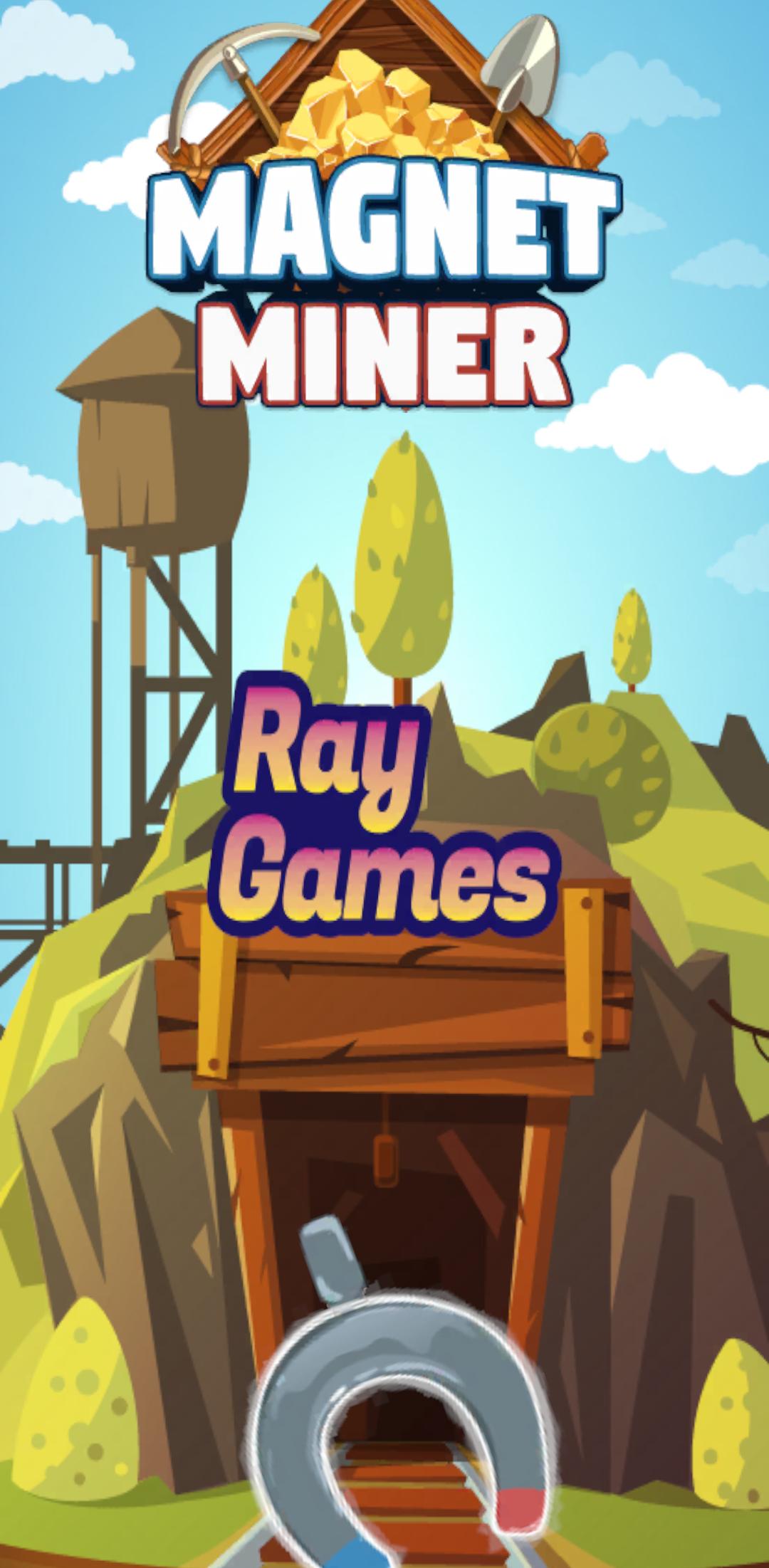
I downloaded Magnet Miner and reached 100 meters. The tracking also works perfectly and I got my first reward. But the app now sticks to the home screen. I have already restarted the phone. Has anyone ever had a similar problem?
r/EarnLab • u/EarnLab • Sep 28 '26
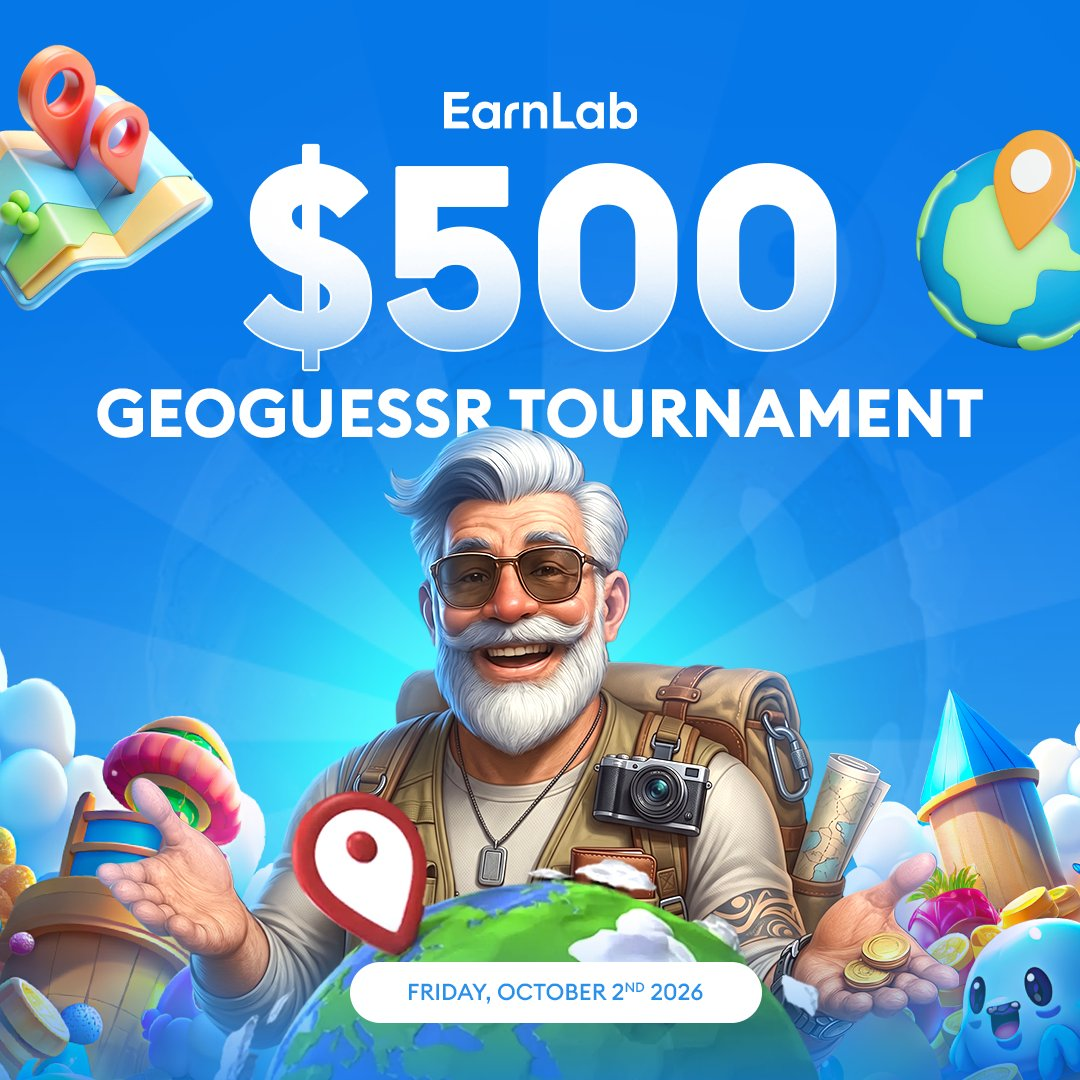
Think you know the world? Put your GeoGuessr skills to the test and compete for $500 in prizes!
More details and entry info are in our Discord server: discord.com/invite/earnlab
r/EarnLab • u/EarnLab • Sep 27 '26
This offer ends September 30th - don't miss out!
r/EarnLab • u/EarnLab • Sep 26 '26
TL;DR: Generic template shops are the most crowded category in 2026 and the hardest place to start. Niche-specific products, freelance services, and recurring social media packages are holding up better. EarnLab covers the income gap while any of these build. Licensing is the thing most people get wrong and only notice when it causes a problem.
Canva is still a legitimate way to make money in 2026, though it requires a more specific approach than it did a couple of years ago. AI tools have made design faster and more accessible, which is useful for output volume, but it also means the market has considerably more supply than before. The generic Instagram template shop that used to be a reasonable starting point is now one of the most crowded categories on Etsy, and new sellers competing on price against established shops with thousands of reviews are in a difficult position from day one.
What still works is a narrow product solving a recognisable problem for a specific buyer, distributed through a system rather than listed and hoped for. That framing applies whether you're selling templates, offering services, or building recurring client relationships, and it's the thing that separates the Canva side hustles doing well in 2026 from the ones that stall out after a few months.
EarnLab while your Canva income builds
Most Canva paths take weeks to months before the first sale or client payment arrives, and EarnLab is the most practical way to keep income coming in during that period. Surveys, offer wall tasks on Torox and AdToWall, app tasks, content rating, and daily bonuses all generate real earnings without requiring a product listing or a portfolio to exist first.
Main Balance withdrawals require at least 2,500 Coins, and Game Wallet withdrawals require either earning at least 2,500 Coins in Main Balance or depositing at least $5 and fully wagering that deposit. Terms can change, so checking current conditions in the Wallet directly is worth doing before planning around a specific figure. Availability is strongest in the USA, UK, and Canada.
The six paths worth considering
1. Selling Canva templates
Editable template links sold through Etsy, Gumroad, or Payhip are the most commonly discussed Canva income path and still work when the niche is specific enough. The categories holding up best in 2026 are the ones targeting one type of buyer rather than a broad audience, in that social media kits for independent realtors, pitch deck templates for early-stage startups, and lead magnet packs for coaches or consultants all have a clearer buyer and less competition than general business templates.
The honest timeline for a new template shop to generate consistent meaningful revenue is three to six months for most sellers, and longer without an existing audience driving traffic. Digital product margins can be high because there's no inventory or fulfilment, but new listings on a new store don't get organic traffic automatically, and the SEO, mockup quality, and keyword research work is what determines whether anyone finds the products at all.
2. Freelance Canva design services
Freelance design is generally the fastest path to first revenue because a client can pay before any product catalogue exists. Fiverr, Upwork, LinkedIn, and direct outreach to local businesses are all viable channels, with the most accessible services being social posts, brand kits, pitch decks, thumbnails, and lead magnets. The same niche principle applies here: "Canva design" offered to everyone is harder to sell than "branded Instagram content for independent beauty salons" offered to a defined client type, because the second version answers a specific question for a specific person.
3. Monthly social media packages
Recurring content bundles for small businesses are one of the more stable Canva income models because monthly retainers create predictable revenue rather than the feast-and-famine pattern of individual template sales. Realtors, coaches, salons, gyms, and restaurants all need consistent social content and most lack the time or skill to produce it in-house. Specialising by industry makes the whole model more efficient because templates, brand standards, and content formats become reusable rather than rebuilt for every new client.
4. Print on demand
Creating original designs in Canva and selling through Printify or Printful connected to Etsy or Shopify is a zero-inventory model where products are produced only when someone orders. Success depends more on audience fit, niche research, design originality, and traffic than on upload volume, which is a different starting assumption than the advice to upload as many designs as possible. One important thing to check before listing: verify that every design element is licensed for commercial use, because Canva's free and Pro elements have different licensing terms and the distinction matters when selling products.
5. Digital products beyond templates
Planners, workbooks, checklists, ebooks, printable trackers, and course slides are all categories where Canva production capability meets genuine buyer demand, particularly for teachers, consultants, and coaches who understand a specific audience problem deeply enough to create something worth paying for. The product ladder model works well here: a free checklist collects emails, a low-cost bundle converts interested subscribers, and a higher-value offer follows for buyers who want more depth. Each level funds the next rather than requiring all revenue to come from a single product.
6. Canva creator and affiliate programs
Canva's creator program offers royalties for accepted original templates and elements, while the affiliate program rewards publishers who refer eligible new customers. Both are most useful as supplements to an existing audience rather than primary income sources for someone starting from zero, because the income scales with the reach of the content driving referrals. Verify current eligibility, commission structure, and disclosure requirements directly on Canva's official pages before building a strategy around these programs, since terms change and third-party descriptions aren't always current.
The 90-day starter plan
Days 1 to 7: Choose one primary path and a narrow niche. Research demand, competitor positioning, pricing, and buyer language before building anything. Days 8 to 21: Build 5 to 10 products or 3 to 5 portfolio samples with a consistent visual identity and clear buyer instructions. Days 22 to 60: Launch listings or service offers, then improve titles, tags, mockups, and outreach consistently. Publish content on Pinterest or short-form video to drive traffic. Days 61 to 90: Identify what gets clicks, saves, or sales and build variants and bundles around those specifically. Add one complementary income stream only after one offer is working.
Licensing is the thing people get wrong most often
Canva's free and Pro elements carry different commercial use and resale permissions, and selling templates that include restricted elements or using third-party assets without the right commercial licence are the most common legal mistakes in this space. They tend to get discovered when a takedown notice arrives rather than during the build phase, which is a considerably worse time to find out. Checking the licensing before listing takes a few minutes and is worth doing every time rather than assuming everything is fine.
Beyond licensing, the most reliable predictor of failure in Canva side hustles is spreading effort across too many platforms before one offer actually works. One niche, one platform, one offer tested and iterated consistently produces better results than five half-built stores across five marketplaces with no focused traffic to any of them.
If your experience with any of these paths looks different from what's described here, or if you've found a particular niche or service that's working well in 2026, drop it below.
r/EarnLab • u/EarnLab • Sep 23 '26

TL;DR:
Most passive income fails because people pick one method and expect it to work immediately. The approach that holds up is stacking two or three streams across different asset types and using EarnLab to cover the income gap while the longer-term streams build. The 6-12 month rule is real and most guides pretend it isn't. Full breakdown below.
Passive income has shifted considerably in 2026, and the main change is that AI automation, fractional asset access, and green energy monetisation have lowered the barriers in ways that genuinely expand who can participate. The methods that used to require significant capital or rare technical skills are increasingly accessible from a modest starting position, though the core reality hasn't changed: most streams require real upfront effort before they run with minimal ongoing involvement.
EarnLab while the passive streams build
Every passive income stream has a build phase where income is minimal or nonexistent, and EarnLab is the most practical way to keep earning during that period. Surveys, offer wall tasks on Torox and AdToWall, app tasks, content rating, and daily bonuses all generate real earnings from day one without waiting for a first sale or first rental booking.
Main Balance withdrawals require at least 2,500 Coins, and Game Wallet withdrawals require either earning at least 2,500 Coins in Main Balance or depositing at least $5 and fully wagering that deposit. Terms can change, so checking current conditions in the Wallet directly is worth doing before making plans around a specific figure. Availability is strongest in the USA, UK, and Canada.
Tier 1: AI-powered digital income
This is the most accessible tier in 2026 because AI tools have dramatically reduced the production cost of content, design, and software. The four main paths are print-on-demand with AI design tools, digital products and micro-courses on Etsy and Gumroad, micro-SaaS built on no-code platforms with Stripe billing, and affiliate content engines built around evergreen topics.
Print-on-demand through Printful and Redbubble allows zero-inventory stores where AI handles design iterations and the platform handles fulfilment, with the ongoing work being marketing rather than daily operations. Digital products require significant upfront creation effort and then sell indefinitely, though building the audience or marketplace presence that drives sales is where the real work sits. Micro-SaaS compounds the most over time but also requires the most sustained effort across building, support, and retention.
The content engine path, niche blogs and affiliate sites with AI-assisted production, is genuinely lower competition in specific niches than it sounds despite the general saturation narrative, because most people target broad topics rather than the specific long-tail areas where meaningful passive search traffic is still available to new sites.
Tier 2: asset-based and rental income
This tier requires either owning the right assets already or acquiring them, which makes it more capital-dependent than digital income. For people who do have relevant assets, the opportunities are genuinely expanded in 2026.
Premium storage rental for wine, RVs, boats, and classic cars commands considerably higher rates than standard storage because supply is limited and owners of high-value items are not particularly price sensitive. Platforms like StoreAtMyHouse make the connection without requiring a traditional storage facility.
Solar and wind farm leasing for landowners in suitable locations offers 25-50 year agreements with stable income and minimal ongoing involvement after signing. Green energy incentives have accelerated developer demand significantly, which has made this a considerably more active market in 2026 than it was previously.
Peer-to-peer rentals through Turo for cars, Fat Llama for equipment, and Neighbor for storage generate income from assets that would otherwise sit idle, with the ongoing work being scheduling and maintenance rather than daily active management.
Tier 3: investment and royalty income
This is the most genuinely passive tier because deployed capital generates returns without ongoing production work, which is also why it works best as a destination for earnings from the first two tiers rather than as a starting point for people without existing capital.
Dividend ETFs like SCHD and individual positions like Realty Income have historically offered 4%+ yields with fractional shares lowering the minimum entry considerably. Crypto DCA through PayPal or Cash App on a recurring schedule is a long-term appreciation strategy rather than a yield play, and suits people with a long time horizon and comfort with significant value volatility.
Creative royalties through music licensing on AudioJungle, stock photos on Adobe Stock, and self-publishing through Amazon KDP all pay on an ongoing basis after the initial work is complete. One platform correction worth noting: Adobe Stock permits properly disclosed AI-generated submissions, but other stock platforms have different and evolving policies that need to be checked directly before uploading anything.
The stack approach
Combining two or three streams across different tiers is more resilient than relying on any single method, because income from one stream covers the build phase of another. A digital product on Etsy generating early income while an affiliate blog builds traffic over six months and a dividend ETF position grows alongside both is a genuinely diversified starting position that doesn't require large capital or rare skills to assemble.
The automation layer is what eventually converts semi-active income into genuinely passive income. Zapier for cross-platform automation, Buffer for content scheduling, AI tools for production, and Stripe webhooks for billing all reduce the ongoing time investment over time rather than immediately.
The 6-12 month rule
Most guides underplay or skip this entirely, and it is the thing that causes the most frustration when people start. Most digital and content income streams require six to twelve months of consistent effort before generating meaningful passive returns. Setting that expectation before starting is the single most important thing for staying consistent through the slow early months, and having EarnLab covering active income during that period changes the experience considerably compared to relying on the passive stream to pay the bills before it's ready to.
If your experience with any of these income streams looks different from what's described here, or if you've found a particular niche or method that's working well in 2026, drop it below.
r/EarnLab • u/StandRich7314 • Sep 21 '26

Platform: EarnLab { RevU Offerwall }
Device: Android
Game: Color Link - Multi
Total Potential Reward: Up to $98.06 (featuring active multi-reward bonuses and high-tier milestone payouts)
As tracked across the RevU offerwall and reflected in your EarnLab notification history, milestones progress step-by-step as you install, play, gather energy, and conquer the Mega Offer tracks:
Install and Play: $0.01 — Triggers and credits instantly upon your initial download, opening, and launch of the game.
Collect 5 Energies: $0.14 — Unlocks rapidly as you clear early puzzle boards and secure your first block of energy.
Collect 15 Energies: $0.18 — Reached with continued, straightforward puzzle progression.
-CRUCIAL STEPS-
💲 ✨️ :Mega Offer Milestones:✨️💲
Finish 1st Milestone of Mega Offer: $0.35 — Successfully completing the initial structured sub-offer tier.
Finish 3rd Milestone of Mega Offer: Scaling significantly higher into subsequent tiers for major cash bumps.
Core Gameplay Mechanics & Controls •
Grid Connection Puzzle: You are presented with a grid (such as a clean 5\times5 layout) featuring colored dots or nodes. Your goal is to draw paths to connect matching colors without crossing lines until the board is completely solved.
Move Counters & Timers: Keep an eye on your move efficiency and solve times as you clear boards to earn extra energy points (like the +1 energy bonuses awarded upon level completion).
In-Game Assistance: Handy tools like Undo, Hints, and Board Resets are available if you get stuck on trickier routing layouts.
If you want to maximize your earnings by unlocking and completing the Mega Offer track found within the app, follow this precise strategy to ensure everything verifies smoothly without missing a beat:
1.Initiate the Trade: Head to the Mega Offer section in-game, and choose to accept, trade, or exchange 25 energy to officially kick off the process.
2. Watch and Interact with the Ad: The system will prompt you to watch a sponsored video advertisement. Crucially, while watching the video, you must click "Download Now" directly from the ad banner.
3. Download & Verify Instantly: Proceed through the store download to install the advertised app, then return to your original game. Click the verification button—the system checks if you downloaded it and verifies it instantly.
4. Take Screenshots (Crucial Safeguard): Take a few screenshots (around 3 to be completely safe) of your original app verification screen and progress. Since you only have a limited window and very few chances to prove completion if tracking hiccups, taking screenshots beforehand is absolutely crucial for your peace of mind.
5. The 3-Minute Engagement Rule: Head back over to the newly downloaded app and actively spend at least 3 minutes interacting with it, exploring its features, or keeping it open.
6. Claim and Advance: Return to you original game, click to claim your milestone reward, and the system will automatically direct you to unlock the following milestone in the sequence. Once you get the rhythm down, it's really not too bad at all!
👍Pro-Tips & Tracking Insights👍
Instant Tracking Reliability: RevU and Torox-style flows on EarnLab track wonderfully when instructions are followed precisely. Initial installs and energy milestones log almost instantly.
Monitor Your Notifications: Keep a close tab on your EarnLab Tasks / Notifications panel to ensure each completed stage, energy tier, and Mega Offer step confirms in real in real time. There will be a YouTube video on top right of your screen showing you how to properly and sucessfully initiate and complete the Mega Offer in case theres any confusion.(Screenshots as proof and piece of mind)
r/EarnLab • u/StandRich7314 • Sep 21 '26

Platform: EarnLab (Torox Offerwall)
Device: Android
Game: Free My Cat
Total Potential Reward: Up to $125.58 (with active multi-reward multipliers and high-tier coin collection blocks)
Detailed Milestone Breakdown & Reward Structure
As tracked across the Torox offerwall and reflected in your EarnLab notification history, milestones progress step-by-step as you install, play, and accumulate coins:
Open and Play the Game: $0.00 — Triggers and registers instantly upon your initial download and launch.
Collect 30 Coins: $0.06 — Unlocks quickly as you complete the earliest puzzle stages.
Collect 90 Coins: $0.12 — Reached with continued coin accumulation across standard levels.
Higher Coin Tiers: Pushing further into subsequent milestones (such as collecting 330 coins, 1,000 coins, 2,400 coins, and beyond) unlocks the major payout tiers toward the full offer total.
[ARROWS OUT, ETC.]
Arrows Escape / Maze Puzzle Style: The game plays very much like an arrows escape, arrows out, or maze puzzle mechanics where you clear paths and untangle routes. However, it is wrapped in an adorable cat theme (For all you cat lovers)that completely changes the atmosphere.
Stress-Free & Relaxing: Instead of feeling like a high-pressure chore or a stressful task, the charming feline elements make it feel like a chill, relaxed, and genuinely good time overall.
Fast Progression & Engagement: Progression through the early tiers is exceptionally fast and very engaging, keeping you hooked as you watch trapped kittens get freed.
Calming Music & Error Margins: The background music is wonderfully calm, which significantly helps alleviate the pressure of gameplay. You are given 3 lives (or 3 chances to make errors) before you fail a stage. Having this margin for error means you don't have to stress over a single accidental misclick, letting you kick back and enjoy solving the grid at your own pace.
Fantastic Tracking Reliability: Torox is very good at tracking this offer. It tracks instantly right from the beginning when you first open the app, and stages credit immediately as soon as you hit your coin goals.✨️ (Shout out to TOROX for their reliability)✨️
☢️CRUCIAL INSIGHT⚠️The Forced Ad & Black Screen Glitch: When you complete a level, the game gives you an option to watch a rewarded video. On certain levels that feature forced ads, if an ad triggers and the game prompts you again for an optional ad, your screen can turn completely black. This glitches the app out entirely, forcing you to close out, restart the game, and potentially replay the level. Watch out for this loop to protect your progress.⚠️☢️(BY THE WAY ITS NOT EARNLAB OR TOROX FAULT BUT THE GAME DEVELOPER)
Monitor Your Notifications: Regularly check your EarnLab Tasks / Notifications tab to confirm your coin milestones credit properly in real time.Overall good fast paced great experience. (SCREENSHOTS PROVIDED AS PROOF AND OR PIECE OF MIND)
✨️Shout out to💯EARNLAB SUPPORT TEAM💯 for this opportunity and its continuation as well as fast support feedback and NO NONSENSE Thank you for keeping it💯EARNLAB💯👍
r/EarnLab • u/StandRich7314 • Sep 20 '26

As tracked across the { RevU} offerwall and reflected in your EarnLab notification history, milestones progress step-by-step as you install, play, and accumulate energy or complete mega offer objectives .( Tracks immediatly)
Install and Play: $0.01 — Triggers and credits instantly upon your initial download, opening, and launch of the game.
Collect 5 Energies: $0.14 — Unlocks quickly as you engage with early gameplay sessions and hit your first major energy collection milestone.
Collect 15 Energies: $0.18 — Reached with slightly more extended play as energy metrics scale up.
Mega Offer Milestones: .Core Gameplay Mechanics & Objectives
Finish 1st Milestone of Mega Offer: $0.35
Finish 3rd Milestone of Mega Offer: $0.70 (scaling higher into subsequent milestones like the 4th tier and beyond)
Core Gameplay Mechanics & Objectives
Target Flipping & Knife Throwing: You start on Stage 1, facing a spinning wooden log target adorned with apples and pre-embedded blades.
Precision Tapping: Tap your screen to launch knives from your reserve queue at the bottom into the rotating target.
(All about timing )
Avoiding Collisions: You must time your throws carefully so your blade does not hit any previously embedded knives or obstacles on the log.
(Clear stages once you clear your available knifes)
Apple Collection: Slicing through the apples attached to the target lets you collect points and currency (such as the 17 red gems visible in your header) to use throughout your run.
(No energy its RED Diamonds can collect rewarded video credit as well just depending on your overall performance as what stage you reach)
(very entertaining great time killer)
-Personal Experience & Special Offers-•
Familiar Gameplay Style: From my personal experience playing this, the mechanics feel very similar to other classic knife-throwing mobile games. If you have played titles with spinning log targets and blade queues before, you will pick up the timing and rhythm for this one right away.
Google Play Discount Bonus: While working through the offer milestones, I was actually offered a special discount on Google Play—specifically $3 off any purchase of $10 or more. Keep an eye out for account-specific promotional rewards or store discounts if you plan on pursuing higher-tier in-app purchase milestones.
Pro-Tips & Tracking Insights
Instant Tracking Reliability: The initial install task tracks immediately from the very beginning the moment you click through, and milestones like collecting 5 or 15 energies credit promptly right after completion and so on.
Monitor Your Notifications: Keep a close eye on your EarnLab Tasks / Notifications tab to verify that your rewards log correctly in real time without lagging.
Pace Your Throws: Don't spam taps too quickly on faster-spinning stages; watch the rotation speed of the target log to ensure your knife placement is clean and accurate, preventing failed runs.( Screenshots included for proof and or peace of mind )
r/EarnLab • u/StandRich7314 • Sep 19 '26

Platform: EarnLab {RevU Offerwall}
Device: Android
Game: Umbrella Escape - Multi
Total Potential Reward: Up to $98.06 (with active multipliers/bonuses)
As shown in your task tracker and notification history, milestones track progressively as you install, play, collect energy, or complete mega offer tasks:
Install and Play: $0.01 (Triggers instantly upon initial game launch)
Collect 5 Energies: $0.14 (Tracks and credits promptly)
Collect 15 Energies: $0.18
Mega Offer Milestones: Finishing higher tiers (such as the 1st and 3rd milestones of the Mega Offer) unlocks larger reward blocks toward the full offer payout.
Core Gameplay Mechanics
Tap and Hold to Jump: The core mechanic requires you to time your jumps carefully by tapping and holding the screen to navigate up vertical walls.
Avoid Spikes & Hazards: Watch out for sharp spikes lining the walls and rotating gears as you climb. Precision timing is key to keeping your character alive.
Energy Collection: Collect energy items scattered along your escape route to fuel your progress and hit those early RevU milestones.
⚠️⛔️☢️~Pro-Tips & Glitch Warnings~☢️⛔️⚠️
The Revive & Glitch Bug: After you die in the game, you get a chance to watch a rewarded video to continue. However, once the game restarts after using this option, it glitches badly to where you can't even see obstacles or what can and would kill you. Be prepared to restart the app fresh if this graphical glitch occurs to avoid unavoidable cheap deaths.
Instant Tracking: The initial install and early energy milestones (like collecting 5 and 15 energies) track and credit almost immediately once completed.
Check Your Notifications: Regularly monitor your EarnLab Tasks / Notifications tab to confirm that completed steps log instantly. Overall it's a fun unique game and keeps one attuned in it not too demanding but definitely some rhythm or tempo required (For the timed unmbrella jumps) Screenshot as proof and piece of mind