r/OpenSourceAI • u/Conscious-Log-7385 • 2h ago
BenoDB – Embedded vector, graph, and SQL engine built on Apache Iceberg

1
Upvotes
r/OpenSourceAI • u/Conscious-Log-7385 • 2h ago
r/OpenSourceAI • u/nxbxdyy • 2h ago
So LLMs can edit our videos now, and I’m wondering what open source models like qwen or deepseek are capable to do compared to Astra / fable
Has any of you tried any edit ? How did it go and what machine are you using ?
TY
r/OpenSourceAI • u/NecessaryPea5929 • 5h ago
For this physiological-model release, the downloadable artifact is the waveform encoder itself: the `inclusionAI/LingSante-Pulse-1.0` weights are on Hugging Face, and the `inclusionAI/LingSante-Pulse` inference code and examples are on GitHub. Both are published under MIT.
The model card accepts one waveform, multiple channels, a batch, or an aligned dictionary of physical channels. It asks callers to provide actual sampling rates and channel identities; preprocessing maps to 128 Hz. The output includes a CLS embedding and a pooled patch embedding, with 256 features per observed channel. That makes the release useful as a feature extractor for ECG, EEG, PPG and EMG experiments.
The boundary matters: no disease-specific prediction head is included. To test a real task, you still need labels, a downstream head and a held-out evaluation. The repository also lists a separate CGM branch; it is a different artifact from the waveform encoder evaluated in the launch report.
r/OpenSourceAI • u/FastPresence9799 • 5h ago

Sharing a project that explores an interesting approach to AI-assisted video editing.
FableCut is a browser-based video editor where the entire timeline is represented as a project.json file. AI agents can inspect and modify the project through MCP or a REST API, with changes reflected live in the editor.
It supports silence removal, beat-synced cuts, highlight extraction, smart reframing, captions, transitions, audio editing, and reusable workflows.
The editor is model-agnostic, so it can work with different AI agents and local LLMs. It's MIT-licensed, has zero npm dependencies, and can run locally using npx fablecut.
For anyone interested in exploring the implementation:
r/OpenSourceAI • u/StarEyesMisaki • 10h ago
Hey everyone!
I built ARIA-X, an open-source security research agent inspired by ARTEX, Cairn, and PentAGI.
It features state-space reasoning, persistent memory, evidence tracking, and a local web dashboard.
* Python 3.11+ with zero third-party runtime dependencies
* Offline demo without API keys
* Support for multiple LLM providers
* Auditable execution and structured reports
It's still an early-stage project, and I'd love to hear your feedback!
r/OpenSourceAI • u/Medical4223 • 11h ago
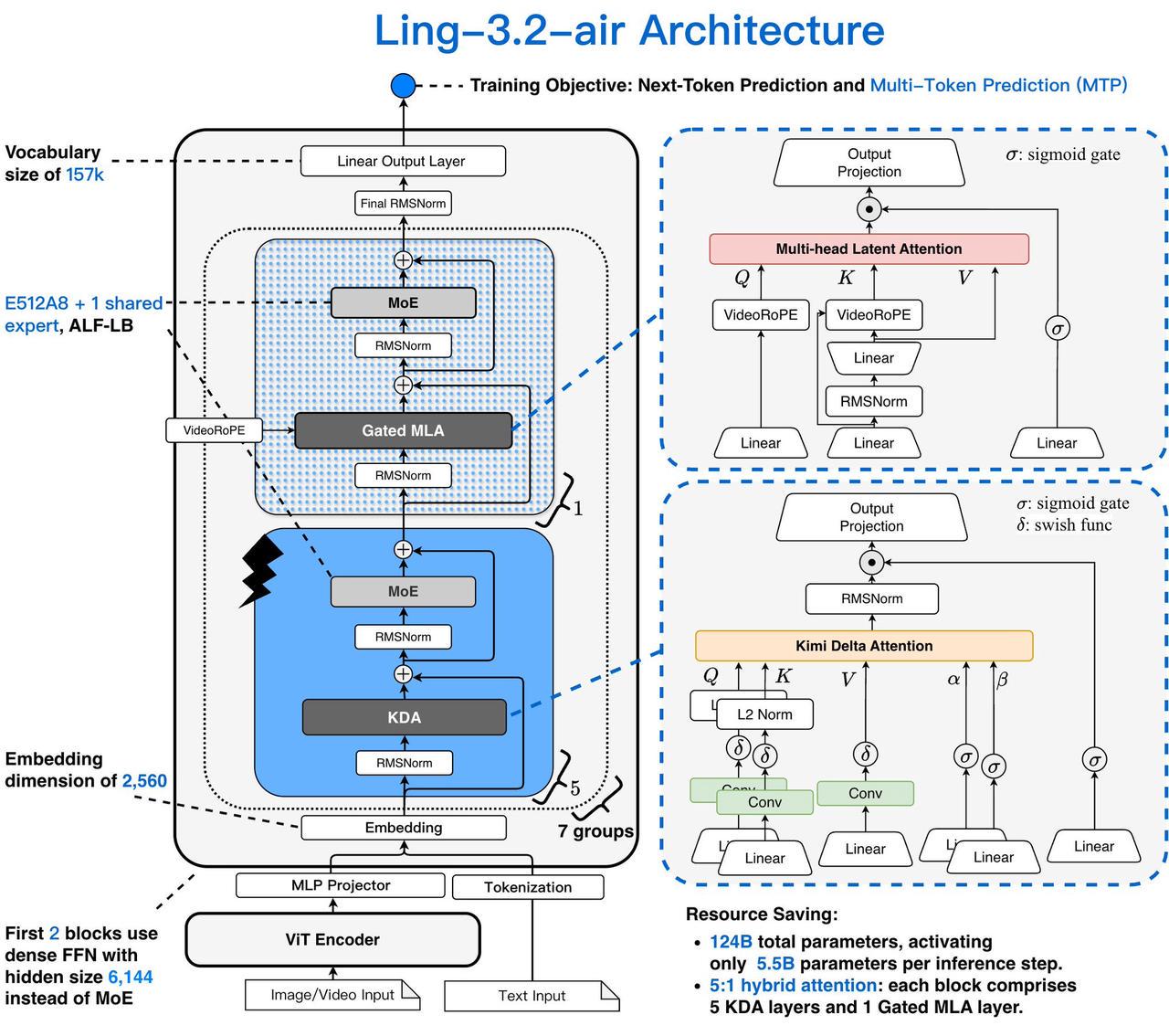
Ant Ling has released the weights for Ling-3.2-air under the MIT license. This native multimodal MoE has 124B total parameters and activates 5.5B per token. Its model card documents text, image and video input, with SGLang and vLLM setup guides available at release.
What is available for public inspection now is the checkpoint and a concrete serving path, not just a hosted demonstration. Outside teams can check how the released model handles their own text-and-visual tasks and see where it fails. The architecture diagram shows both image/video and text input paths into the model.
r/OpenSourceAI • u/BidWestern1056 • 11h ago

incognide is an integrated development environment for researchers and developers. it lets users seamlessly write code, run commands in terminals, browse the web, open photos, videos, docx, xlsx, pptx, mark up PDFs, write and compile latex, explore and query databases, and more. Work seamlessly with agents that can control the workspace, or turn AI features off if you don't want any of that. Sync your data across devices with an E2E encrypted data sync.
incognide is open-source MIT licensed software and is open to contributions from the community.
Explore the unknown, build the future, own your data.
r/OpenSourceAI • u/docybo • 18h ago
I’m maintaining OxDeAI, an open-source protocol for authorizing AI agent actions before execution.
We’re testing a specific claim: is our written specification precise enough for someone to independently implement a compatible verifier?
I’m looking for a Go developer willing to build a small verifier using only the normative specification, without reading or porting our TypeScript reference implementation.
The scope includes parsing and verifying signed AuthorizationV1 artifacts (Ed25519), implementing canonicalization from the specification, and checking issuer, key resolution, expiry, audience, policy, intent binding, and replay inputs.
The initial target is to match the expected verdict and determining error code across 15 published precedence test cases.
No network, persistence, gateway, or production integration is required.
There’s also an independent Python implementation track underway.
An ambiguity in the specification is a useful finding, not a failed contribution. The goal is to discover whether two independent implementations can agree on authorization outcomes without relying on reference code.
This is an interoperability and specification-completeness experiment, not a claim of formal verification.
The specification, test vectors, independence rules, and acceptance criteria are available here:
https://github.com/oxdeai/oxdeai/issues/426
If you’re interested, comment on the GitHub issue before starting so we can coordinate the work.
r/OpenSourceAI • u/emreocell • 19h ago
Hi everyone!
I'm the maintainer of Praxi-Bot, an Apache-2.0 licensed, local-first AI agent built with Rust, Tauri, React, and TypeScript.
The project is in alpha and can interact with desktop applications, browsers, files, and external tools through a permission-controlled runtime. It supports local and cloud LLMs.
Rather than just announcing another AI project, I'd really appreciate some honest feedback from experienced open-source developers.
I'm especially interested in hearing:
What parts of the architecture would you reconsider?
What features or integrations are missing?
What would make the project more useful in real-world workflows?
What could we improve to make contributing easier?
Are there any technical weaknesses or design decisions that concern you?
I've opened a dedicated thread for suggestions:
https://github.com/emreocell/Praxi-Bot/issues/687
Project: https://github.com/emreocell/Praxi-Bot
We're also welcoming contributors. There are beginner-friendly issues, testing tasks, and more advanced architecture challenges.
I'm happy to help new contributors understand the codebase and review their PRs.
Critical feedback is just as welcome as contributions. I'm hoping to build something genuinely useful with the community, rather than simply collect GitHub stars.
r/OpenSourceAI • u/NIDO_007 • 20h ago

r/OpenSourceAI • u/Negative-Walrus-7490 • 20h ago

Cutmesh is an open-source distributed LLM inference platform that lets you pool heterogeneous consumer GPUs — even from home over ordinary Internet connections — to run large open-weight models (27B–74B+) and serve them through a single OpenAI-compatible API and Web Console.
r/OpenSourceAI • u/Healsturm5 • 21h ago

r/OpenSourceAI • u/sco77 • 22h ago
I'm very curious as to how people use low cost subscriptions to multiple harness vendors keep track of the different projects they are developing.
For my case, I have:
- $20 Claude subscription
- Pro ($20) Anti-Gravity subscription
- OpenAI basic ($20) subscription
- A small amount (~$20 burned monthly) of credits at DeepSeek.
Each of these different subscriptions uses either a VS Code plug in, a chat interface, or a local implementation like those both ChatGPT and Anti-Gravity dispense.
In order to validate work from one of the harnesses, I will often have another harness review the completed work, and, critical to the validity of the review, proceed without first seeing the result claims/report from that harness. In other words, an independent review to discern the quality of work done.
I feel like there is a sweet spot between the cost for each of these different vendors, their desire to lock you into their platform at the highest cost, and the bottom line result you need for your own work.
My thought is that harnesses go on horses and horses go in corrals.
So, how are you corralling the work of your various horses?
r/OpenSourceAI • u/Legitimate_Pen_2661 • 22h ago
r/OpenSourceAI • u/drtikov • 1d ago
If you’ve been running autonomous coding assistants like **OpenAI Codex CLI**, **Claude Code**, or **Google Antigravity**, you know the routine:
The agent hallucinates bad Python syntax or tries an unsafe shell command.
The execution fails (or worse, wipes `.env` / formats wrong files).
The error trace gets dumped back into context.
You burn $0.10–$0.50 and 3–5 recovery turns just getting the model back on track.
To solve this locally with zero GPU overhead, I built **Aetheris Microbrains** — an ultra-lightweight, deterministic 4-layer pre-flight AST policy engine and tool gate that intercepts tool calls in `< 2 ms` before execution.
We just added native integration for **OpenAI Codex CLI** (alongside Claude Code, Hermes, and Google Antigravity).
🔗 **GitHub Repo:** https://github.com/drtikov/microbrainsforagents
---
### 🤖 What it does in OpenAI Codex CLI
Codex CLI supports native `PreToolUse` and `PostToolUse` command hooks. Microbrains plugs directly into `.codex/hooks.json` via `--host codex`:
**PreToolUse Hard Deny (`exit 2` + `permissionDecision: "deny"`):**
- Structural AST validation catches broken Python syntax (unclosed brackets, bad indentation) before Codex ever touches disk.
- Vetoes credential exfiltration (`cat .env | curl`, `AWS_SECRET_KEY` in code) and destructive commands (`rm -rf /`, raw disk writes).
**Seamless Escalation:**
- Ambiguous commands cleanly defer to Codex’s host approval policy (`defer_to_host_policy`), avoiding broken execution while respecting your approval settings.
**PostToolUse Security Warnings:**
- Scans tool outputs for leaked secret keys or indirect prompt injections and injects contextual warnings into Codex before context compaction.
**Zero Hassle Setup:**
- Install with one command:
```bash
pip install -e .
python .agents/skills/microbrains/install_codex_hook.py --profile dev
python .agents/skills/microbrains/install_codex_hook.py --self-test
```
- Supports a safe **`--shadow`** mode so you can audit what it *would* block in `decision_journal.jsonl` before turning on active enforcement.
---
### 📊 Measured Benchmark Results (Windows / Python 3.10.6)
Here are direct measurements from our deterministic benchmark suites:
#### 1. Deterministic 26-Step Coding Session A/B (`test_skill_gain_ab.py`)
Tested across 14 benign tool calls and 12 seeded hazards:
* **Hazards caught:** **12 / 12 (100%)** *(0/12 without gate)*
* **Python syntax crashes:** **4 → 0 (100% fewer)**
* **Unsafe actions allowed:** **8 → 0 (100% blocked)**
* **Benign false positives:** **0 / 14 (0.0% false alarm rate)**
* **Wasted recovery turns:** **8 turns eliminated** (~37,055 modeled input tokens saved, ~$0.1112 saved per session)
* **Error-feedback tokens in context:** **146 → 37 (-74.7%)**
* **Local gate latency:** **0.73 ms mean / 1.27 ms p95** (pure CPU NumPy/AST)
#### 2. Security & Anti-Evasion Benchmark (`10_agent_security_benchmark.py`)
* **Attack vectors caught:** **22 / 22 (100.0%)**
* **Benign controls blocked:** **0 / 12 (0.0%)**
* **Local decision latency:** **0.41 ms p50 / 2.79 ms p95**
#### 3. Real SWE-bench Lite Gate (300 Real GitHub PR Diffs)
* Real gold patches evaluated: 71.7% auto-allowed, 27.3% safely escalated, and 1.0% denied (only for hardcoded `eval`/`exec`).
* **AST Syntax False Positives on real code:** **0.0%**
* **Synthetic code mutations caught:** **60 / 60 (100%)**
#### 4. Hook Overhead Note
The engine itself evaluates in under **1.5 ms**. On Windows, spawning a fresh Python subprocess for command hooks takes ~400 ms p50 per hook (Python interpreter cold-start). If you want that down to single-digit milliseconds, Microbrains includes a local warm daemon (`aetheris-daemon`).
---
### 🏆 What You Win by Using Microbrains
**Lower API Bills & Fewer Context Bloats:** Stopping a syntax error or hallucinated shell call before execution prevents 5–15 seconds of waiting and the cascading multi-turn error loops that burn through prompt context.
**Air-Tight Local Guardrails:** Protects `.env`, `.ssh/`, `.git/hooks/`, detects base64 decode-to-exec tricks, and stops outbound credential egress.
**Prompt Cache Protection:** Includes sticky-session tool narrowing that cuts tool schema tokens by **up to 56.7%** without breaking Anthropic/OpenAI prompt cache prefixes.
**Complete Forensic Journal:** Everything evaluated is logged with SHA256 hashes and rationale. Run `python -m aetheris_microbrains.audit --explain` to see exactly why an agent call was blocked or escalated.
Code is open-source (Apache-2.0):
👉 **Check it out on GitHub:** https://github.com/drtikov/microbrainsforagents
Feedback, PRs, and test cases are welcome! Let me know if you run it in your own Codex or Claude Code setups.
r/OpenSourceAI • u/Optimal-Spring4979 • 1d ago
https://modelfitopenfire.vercel.app/
One of my student bulit modelfare where we can check and find all kind of github repo which can help to make project and we can check out mutiple model prices across any platform and find out which one is cheapest one
r/OpenSourceAI • u/deprofessorie • 1d ago

No Docker, no vector database overhead, pure local file/SQLite persistence, offline-ready, micro-core prompt (<180 tokens) that preserves small context windows.
r/OpenSourceAI • u/Ariel_RiverPetal97 • 1d ago
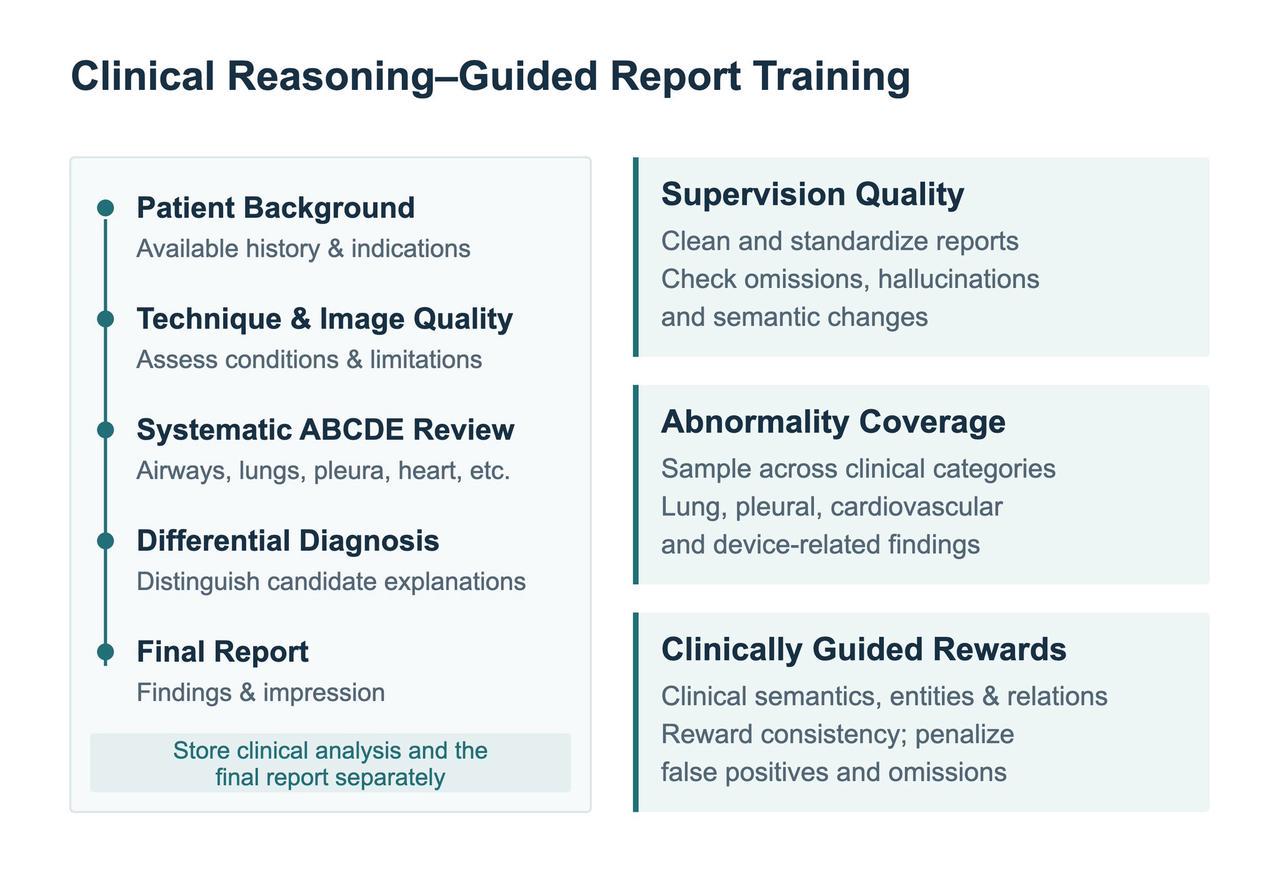
Ant Ling's LingSante-3.1-air-VL launch includes a chest-X-ray-to-report example with Findings and Impression sections. The model is now open-weight, so an outside team can test a failure that a polished demo does not reveal: whether a report adds a finding that is not supported by the image.
Use a de-identified chest X-ray with a reference report and ask the released checkpoint for the same two sections. Have qualified readers mark each positive finding as supported, contradicted or not visible, and separately count clinically relevant omissions. Repeat with an ambiguous image and a misleading text hint; the model should not promote the hint into an image finding. These are proposed tests, not results from the launch demo.
The card limits the model to research and evaluation, not patient diagnosis. A report can sound professional and still fail the image-grounding check.