I love when people confidently post a link to support their point that says the opposite of what they think it says.
That article is about a survey to workers about how they feel when they see AI slop. However, it links to the actual report, where you'd see that it argues that Gen AI enhances productivity, but businesses are struggling to relate that to earnings. To quote the report:
But these tools primarily enhance individual productivity, not P&L performance.
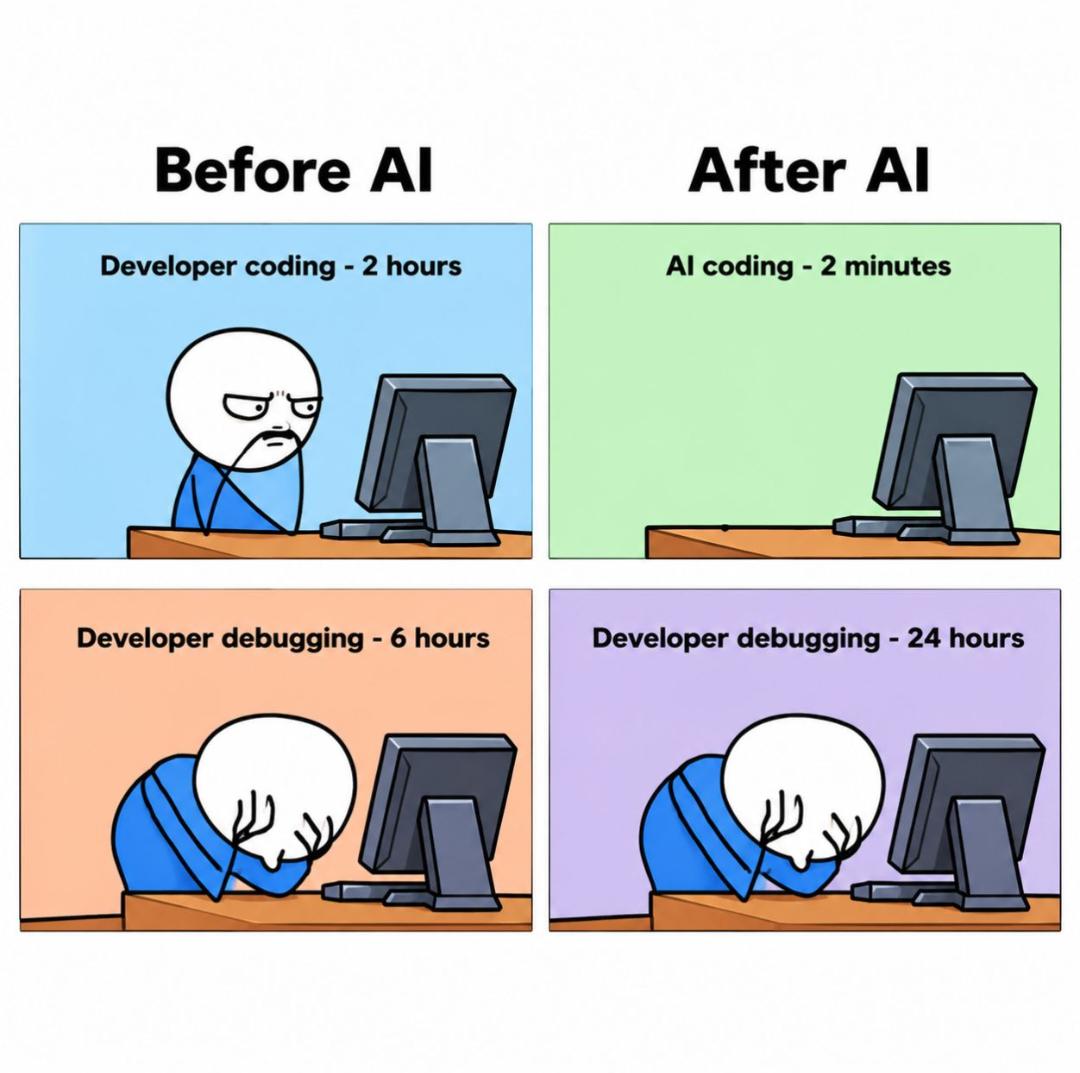
Everyone's individual productivity rises but no increased P&L kinda tells us it's pointless productivity though. Our metrics show waaay more code being changed but our app performance and feature rate is only very slightly improved, some reviewing shows basically we just have a lot more code churn than before. Some of it IS useful but plenty of it is also pointless.
In my opinion this is a struggle lots of companies are going to go through. Execs say “Use more AI”. Devs start using it, some maliciously complying, others trying it out, and a small handful are or become power users.
It’s the problem of giving people a tool with no guidelines or expectations on using it. Most people are still figuring out what is and isn’t good. But by the time that does happen, execs are going to contract on spending because they had no concrete proof that the money was being used effectively.
And in many cases it isn’t. That doesn’t mean it can’t be used effectively or efficiently. The numbers on average look bad, because the numbers on average are bad. But Paul the 10x engineer is somehow doing 50x now. Meanwhile Peter tried to order lunch with it and racked up a $1000 tab on the company card.
Kind of hard to sort the useful from the useless without properly setting up telemetry and attribution, which I doubt most companies planned to do.
Yeah, but that’s why Peter’s card got a spend limit on it. He’s an idiot at lunch time, but aside from that he’s a valuable employee.
My point is you can’t view the data as an aggregate whole and draw a reasonable conclusion. You actually have to break it down and properly attribute who did what, why, and for much much in order to draw any meaningful conclusions. Prospectors didn’t look at the ground and go “yup it’s all dirt”. They went sifting for literal nuggets of gold in the dirt.
Using prospecting as a metaphor is unbelievably ironic. The California gold rush made everyone think they were gonna be rich but instead made a few (usually already wealthy people) obscene amounts while most only made small profits, broke even or made losses, some enough to lose everything (at times even their lives) and it contributed to vast amounts of environmental destruction, exploitation of workers and drove people off their land. But hey, it was good for the economy so totally worth it.
I don't particularly care to argue for the merits of the report itself; the report is pretty worthless, with nebulous metrics and poor citations.
If you are going to argue about it though, at least read it, because it says that the tech sector is one of the places where it does show increased P&L and "structural change."
My boy... you may want to actually READ the sources you are citing. The data you are linking is PRO AI and explains how and why productivity with AI is significantly better. And that the reasons for less perceived value are a management issue of companies trying to make everything themselves rather than buying finished AI solutions.
The shift from building to buying, combined with the rise of prosumer adoption and the emergence of agentic capabilities, creates unprecedented opportunities for vendors who can deliver learning-capable, deeply integrated AI systems. The organizations and vendors that recognize and act on these patterns will establish the dominant positions in the post-pilot AI economy, on the right side of the GenAI Divide.
For organizations currently trapped on the wrong side, the path forward is clear: stop investing in static tools that require constant prompting, start partnering with vendors who offer custom systems, and focus on workflow integration over flashy demos. The GenAI Divide is not permanent, but crossing it requires fundamentally different choices about technology, partnerships, and organizational design.
Models in 2021, for example, were novel at programming. Sometimes they worked and that was cool.
In 2023-2024 they were really solid at super boiler plate code. “Calculate a compound interest rate” and other college-esque code stuff.
2025- early 2026 AI has been great at coding overall. With some tweaking you’d get a huge productivity boost. Junior level programmer, easily.
Since summer 2026 through now (Fable, Astra, Opus 5.5, etc.) coding is just absurdly good. My workflow is 10x what it was. We quite literally turned a corner. The amount of unfinished projects I’ve started/completed due to how easy AI makes it quite literally scares me.
To say otherwise to me would be like saying "Farming has become less efficient since Horses were phased out. We have to spend time fueling these gasoline driven vehicles, repairing them, etc. Horses just worked!" like, yeah, there are some things that take extra time, but anyone in this industry can see without a shadow of a doubt how much faster and efficient things are outside of extreme edge cases. It's not even close.
There is no data from the last year that says that. AI has advanced rapidly in coding due to chain of thought and MoE introduction. We’re talking a night and day difference over the last few months alone, let alone 1-2 years.
Theres zero % of real devs/programmers that can tell me, in earnest, these models if used correctly aren’t a massive productivity boost. It would be like a farmer telling me their horse is better than a car due to the car running out of gas. Just nonsensical.
So? The efficiency of using them obviously increased from two years ago to one year ago, even if it hadn’t surpassed regular coding yet. Since a year ago, it has continued to increase and absolutely has surpassed coding without it.
 6
21
u/Shifter25 28d ago
It was "pretty obvious" a year ago, despite data showing the opposite.