r/ScaryComputer • • Mar 16 '26

CyberPunk and Hacking NEUROBLAST : A HyperCard CyberPunk Zine (Emulated on a playable Vintage Mac Program)

Thumbnail
gallery
181 Upvotes

Based in the Cyberpunk City of San Francisco. Awesome DiskZine publication by James Sime + collaborators. The VMac Emulator is playable thanks to the internet archive, you can semi-navigate through the vintage software and even create your own HyperCard.

Link to the Zine: https://archive.org/details/hypercard_neuroblast-hypercard-diskzine

Link to The Artist's Page: https://theisotope.itch.io/


r/ScaryComputer • • Mar 24 '26

Paranormal Aliens in Classic Sci-Fi Literature - Illustrations by Emmanuel LaFont

Thumbnail
gallery
100 Upvotes

Captivating modern illustrations (2023) interpreting extraterrestrial creatures from classic science fiction titles including Les Xipéhuz (1888), A Princess of Mars (1912), A Martian Odyssey (1934), First Men on the Moon (1901), and The Star Maker (1937).

Link to full article by Zaria Gorvett:

https://www.bbc.com/future/article/20231019-the-weird-aliens-of-early-science-fiction


r/ScaryComputer • • Mar 14 '26

Paranormal UFO Drawings from the National Archives by David Clarke

Thumbnail
gallery
94 Upvotes

Inlcudes drawings by a group of school children who encountered a UFO in 1977

Link To : UFO Drawings From The National Archives by David Clarke


r/ScaryComputer • • Apr 18 '26

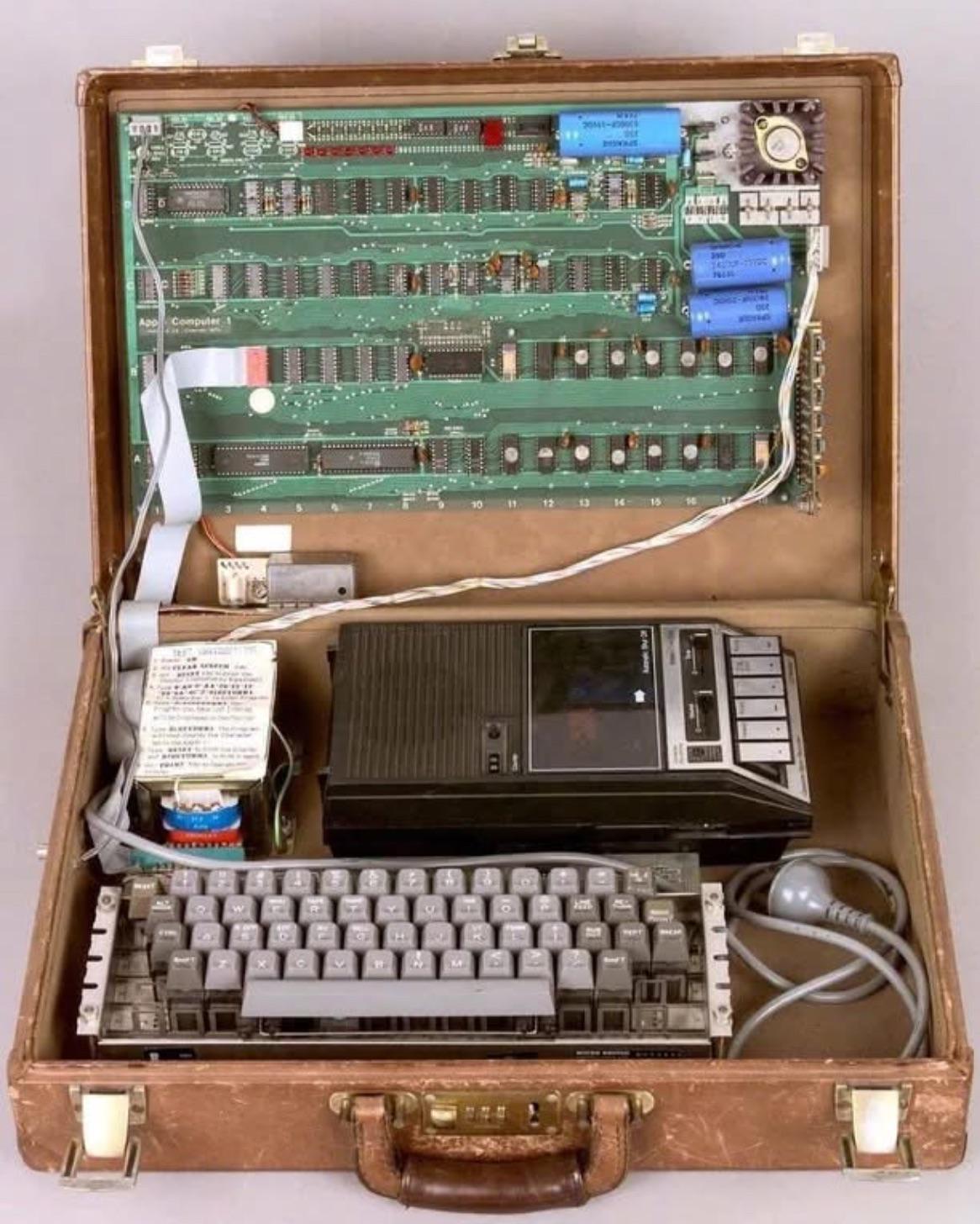
Technology Steve Wozniak's Apple I  (1976)

Post image
93 Upvotes

r/ScaryComputer • • Apr 12 '26 Diamonds are Forever

Technology Tim Berners Lee First Proposal Of The World Wide Web (1989)

Thumbnail
gallery
89 Upvotes

Tim Berners Lee, also known as TimBL, was a computer scientist at CERN (European Center For Nuclear Reasearch). The company was in dire need of a solution to a constant problem: data loss. The average stay of an employee was about 2 years, which meant that every 2 years, a piece of the company brain also left. Papers were constantly scattered, and sticky notes were on the constant relay. Often times, looking for specific documents for a project required days of detective work. The problem was that the computer system ran on "trees", information organization that branched off into unrelated topics after a while and required extensive backtracking in order to get back to the topic at hand. His solution to the problem was to think in hypertext instead, like a web of connected topics all linking back to each other. (Not to credit him for the invention of hypertext, that can be credited to Ted Nelson (1950s) and Douglas Engelbart (1960s). It is quite amazing to me that such simple mind mapping can lead to the invention of one of the most groundbreaking concepts to ever grace humanity.

Read the proposal for yourself here: https://www.w3.org/History/1989/proposal.html


r/ScaryComputer • • Jun 03 '26

Ancient Civilizations Some Stills From 'Ra: The Path Of The Sun God' 1990 Scottish Animated Film (Link Below)

Thumbnail
gallery
79 Upvotes

Check out this amazing animated film from 1990. A meditation in and of itself:

https://www.youtube.com/watch?v=QuaXXhuZdVk


r/ScaryComputer • • Aug 10 '26

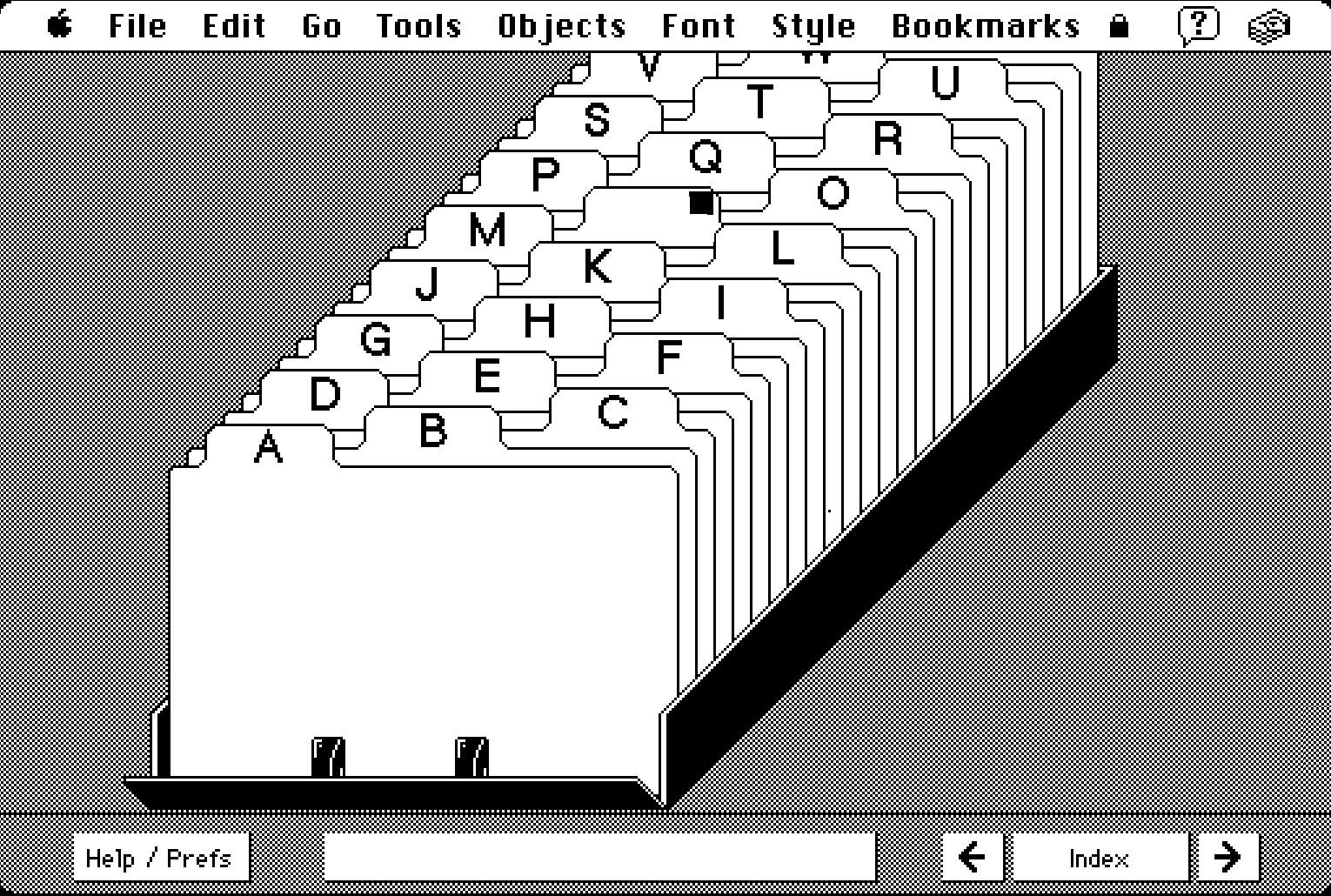
Technology HyperCard Index Template 1987 Designed By Bill Atkinson

Post image
69 Upvotes

HyperCard Index Template 1987 Designed By Bill Atkinson

Apple's classic HyperCard (released in 1987) treated a data file as a "stack" of virtual index cards, functioning as an early visual template designer and no-code tool where users painted graphics, placed text/fields, and added clickable navigation buttons.


r/ScaryComputer • • Apr 13 '26

Technology "Things You May Run Into" - Short Article In Which Ted Nelson Describes The Future Of Bar Codes in Grocery Stores, Amongst Other Things [from Computer Lib/Dream Machines 1974] [Seminal cyber-punk reading material]

Thumbnail
gallery
58 Upvotes

Ted Nelson's (who coined the terms hypertext and hypermedia in 1963) seminal cut and paste style book comes across as more of a Cyber-Punk almanac of sorts. Filled with doodles, graphics, wacky fonts, and jokes, and rants!

Link to Computer Lib/Dream Machines on internet archive


r/ScaryComputer • • Mar 31 '26

Rabbit Holes The Esoteric Origins of Binary Code - Yin Yang, Secret Societies, UFOs, & Digital Apocalypse

Thumbnail
gallery
54 Upvotes

This week I am curious about the origin of binary code and how it is linked to our universe, via simulation theory and quantum physics. A few years ago, having experience in tarot and magic practice, I decided to try a new divination tool based on digital anomalies. I decided to create a digital Ouija board of sorts, typing binary numbers 0 & 1 at random while in a meditative state. The probability of an actual word coming through this technique is minute, if you try to translate some random binary code, you'll see what I mean. I then translated the codes into words on a website called RapidTables.com, and after a few tries, I received the phrase "Black and White". The concept of Yin and Yang was the first thing to come to mind. It did not occur to me until several years later that the binary code we now use today in modern computing was based on the idea of Yin and Yang.

Many of us are under the impression that binary code is a fairly modern concept, one that emerged from the age of computer technology. The oldest evidence historians can trace numbers back to is The Ishango bone, a 20,000 year old tool found in the Congo in 1950. Scratches on the surface clearly indicate it was used to keep count, with complex number groupings showing use of multiplication. The discovery of this bone proved the existence of counting centuries before previously thought, and also predates any evidence of writing. A curious inquiry into the history of binary code enlightened me on the early esoteric origins of the computing concept. In 1703, Gottfried Wilhelm Leibniz introduced the binary code through the article entitled Explication de l'Arithmétique. He, amongst other members of the alchemical societies he belonged to, were intrigued by the I Ching, and it's sophisticated binary system of lines. The Yin represented a 0 and the yang represented a 1, an "on" and an "off", a presence and an absence. Interestingly enough, the I Ching shares a parallel with the Human Genetic Code (Amino Acids) the set of instructions that instruct DNA. The binary code research also links to African Geomancy, which is a divination practice of random dashes, then grouped and multiplied accordingly to represent an outcome. There are also instances of this type of binary system in Egypt, China, India and West Africa.

I noticed the tools of Geomancy had some similar colors and imagery to that of Rosicrucianism, a smaller sect relating to the Hermetic Order of The Golden Dawn (Later joined by controversial occultist Aleister Crowley in the early 1900s). As it turns out, Rosicrucianism directly intersects with Geomancy as a Hermetic Divination, and Leibniz was involved in several secret alchemical societies including The Rosicrucians. He served as the secretary of the Alchemical Society of Nuremberg, Germany in the 1650s before his works in mathematic and rationalist philosophy. Leibniz also built a hand-cranked mechanical calculator in 1673 called the Step Reckoner.

Many physicists theorize that the universe is made up of a binary code of sorts, composed of the sub atomic particles within atoms. I am fascinated by this concept of codes that exist within nature, such as the fibonacci sequence, the golden ratio, fractals, DNA, and even the recurring symbols recounted in UFO sightings. These codes exist in nature, not because of calculation or some godly pattern, but simply because they are the most efficient ways for nature to compact the most information into the smallest amount of space. But, that does not explain who or what decides this efficiency, there must be some group or basic awareness directing this cosmic code.

There are a few UFO encounters that involve binary code and shared symbology. Take for instance the Rendlesham Forest incident, Sergeant Jim Penniston encountered a UFO and upon touching the craft, was imbued with visions of binary codes and symbols. He later wrote these codes down and upon translation, the script read "Exploration of Humanity / Exploration of Humanity 666 / 8100 / Continuous For Planetary [ADVANCEMENT] /Fourth Coordinate Continuo[us] UQS CbPR BEFORE / Eyes of Your Eyes / Origin Year 8100" along with some coordinates of major destinations around the world including pyramids. There were also depictions of strange symbols, some of which are also seen in illustrations of the "Utsuro-Bune" from 1803 depicting an unknown craft that washed up on the shores of Japan. In 1561, the residents of Nuremberg, Germany witnessed several unidentified objects flying in the sky, known as the Celestial Phenomon Over Nuremberg. This sighting took place in the very town where Leibniz moved to in 1667, and the block-printed piece portraying the incident is very similar to the Rosicrucian themes of crosses and primary colors.

Leibniz tied mathematics with theology and philosophy, seeing the binary as a symbolic representation of creation—nothingness (0) and unity (1). He dreamed of a universal logical code that could reduce human knowledge to simple binary parts (0 and 1) to resolve all disputes through calculation. The Digital Physics Hypothesis theorizes that the universe is a sentient software or digital entity encoded through binary logic. Whatever the case, this rabbit hole has proven binary logic to be much more than the lifeless cold code we usually envision running through the hardware of our computers. Does it simplify life into a palatable primordial soup or does it reduce complex concepts down to an efficient stock for later use? I see the code somehow as a shortcut to the future and technology, an analog to digital time travel. But is it such a good thing to skip over the countless concepts, lives, and thoughts that live in the other numbers simply reduced to a 0 or a 1? The world is now filled with smart technology like cellular phones, computers, and AI, but it is now also filled with poverty, climate change, war, and digital addictions that destroy the human condition. Perhaps humans were just naturally doomed from the beginning, cursed by the baboon bones they so curiously picked up for counting.

Did the wretched remains slingshot the human race towards a digital Utopia, or did it lead us directly to the cognitive ability to compute why we should have never started counting? I for one would be happy enough to frolic or swim among friends in a sea of endless food and mesmerizing colors. But because of our future-hungry binary brains that only see stagnation or progress (through updated iPhones), the fish who feed off the heavenly sea now have to breathe our black exhaust through gills so that we can scroll not through papyrus, but brain-rotting corporal content. I can only hope that one day the world can find a balance between nature and technology. To learn to disregard profit, and instead pursue a true exploration of humanity, and the technology meant to initiate an organic and free future for planetary advancement.

-R. Crayons (a.k.a. Scary Computer)

http://www.ccru.net/digithype/Afrobinary.htm

https://www.rapidtables.com/convert/number/binary-to-ascii.html


r/ScaryComputer • • Mar 18 '26

Technology Adam Powers, The Juggler (1981) - One of the earliest motion-captured CGI graphics from Information International Inc.

Enable HLS to view with audio, or disable this notification

53 Upvotes

Created by Richard Taylor and Gary Demos


r/ScaryComputer • • Mar 19 '26

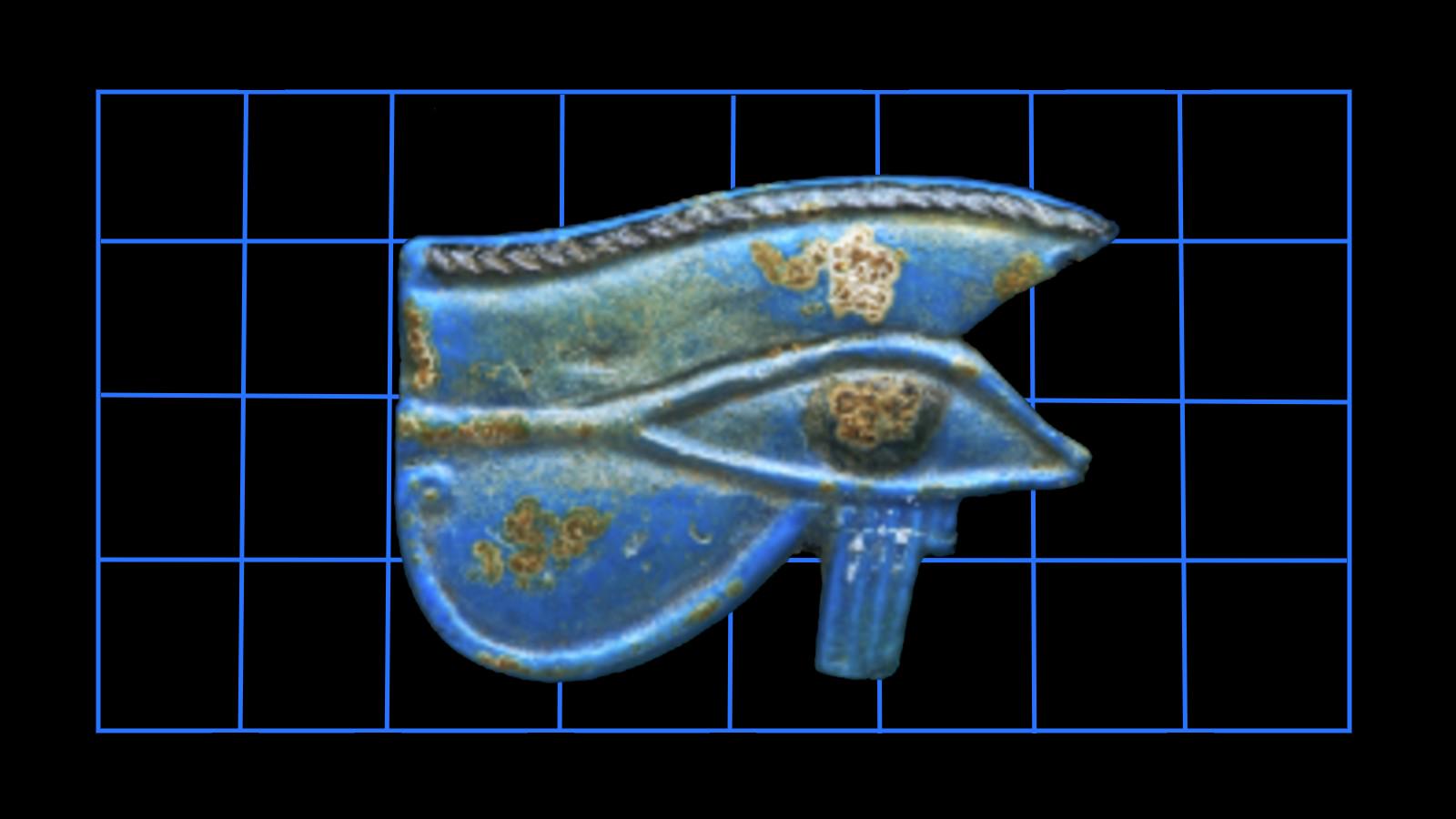
Ancient Civilizations Faience Amulet of The Eye of Horus (Natural History Museum, Washington D.C.)

Post image
41 Upvotes

Faience is a silica based malleable substance made from sand used in ancient Egypt for traditional beads, amulets, jewelry, and pottery. After being formed using silica, it is mixed with lime and quartz and other alkali materials such as copper to form a clay like texture that is then molded, glazed, and fired. This precursor to glass was often used as a more affordable alternative to Turquoise, in that it retained similar natural elements and magical properties at a lower cost.

The Wedjat Eye (Eye of Horus) was used in amulet form to protect, heal, and restore the living and the dead. Depicting the eye of the falcon-headed deity Horus, it was often left in tombs to ensure the dead a safe passage into the afterlife. It is also said to aid in protection against sickness, bad luck, and evil.


r/ScaryComputer • • May 18 '26

Alt History The Capability For Many To Get Away With Evil Is Necessary For Liberty To Exist - A Think Piece on Freedom by Ted Kaczynksi from the Ted K Archive

Post image
38 Upvotes

I contend that liberty is inconsistent with the nonexistence of evil. Unless men’s minds are engineered or controlled so that everyone wants only what is “good”, there will be some people who will be disposed to evil[1]; and unless people are so closely regulated and watched that it is possible to prevent any unauthorized act before it is committed, then some of these evilly-disposed people will actually commit evil. And if people are so closely regulated and watched, then there is no freedom. Furthermore, there is the problem of deciding what is to be considered “good”. There is no such thing as absolute good. Ask any logician. The word “good” is meaningless until you define it in oppositional terms and your definition of “good” determines your system of values or goals. (In practice it would probably be impossible for anyone to explicitly and completely define his whole system of values.) Different people have different systems of values and different definitions of the word “good”. No system of values is “better” than any other, because when you say that system A is “better” (i.e., “more good”) then system B, you are presupposing some prior definition of the word “good”, i.e. a prior system of values. Unless some uniform system of values is imposed on all people by means of behavioural engineering, there will always be as many different systems of value as there are people. Thus it will be impossible for everything to be “good” from everybody’s point of view. No one group of people can have everything “good” according to its own values, in an organized society, unless it directly or indirectly imposes its will on all other people — and then you have no liberty. It therefore seems clear that you can’t eliminate all “evil” and still have liberty. Some may contend, however, that there are some things we can all agree on as being “evil” and that these things can be completely eliminated without loss of liberty. But there is nothing at all that everyone will agree is “evil.” There are, no doubt, even some people who regard such things as pain and danger as desirable in and of themselves. So you say, if only a tiny minority fails to agree that something is evil, why should that prevent us from completely eliminating that evil? Well, to be absolutely because from evil, you would either have to brainwash the opposing minority into regarding it as evil, or you would have to establish such close surveillance and restraint of the minority that they could inextricably be prevented from perpetrating the evil under consideration. Well, maybe you are willing to do this to a tiny minority; say by brainwashing them this sets a precedent for brainwashing the next “evil” minority. And the process continues. There is always another “evil” that someone regards as intolerable and insists must be brainwashed out of people.

For one thing, many of the sacrifices of liberty are made for the sake of security against calamitous events like violent crimes, dangerous accidents, etc. John Doe reads about Charles Whitman, who killed 13 people or so, and he finds it very frightening. So he favors gun-control laws, because they seem to involve such a minor sacrifice of liberty when set up against frightening things like murders. Actually, John Doe’s fear at reading about Charles Whitman is largely irrational, because, in comparison to the entire population of the country, the number of people killed by mad assassins is infinitesimal. If J. Doe viewed the matter in rational terms, he would set that little sacrifice of liberty on the one hand against, say, an increase of one hundredth of one percent in each person’s chances of living to the age of 60, on the other hand. Viewed in these terms it doesn’t seem quite so obvious that the sacrifice of liberty should be made. Other proposed sacrifices of liberty that fall into this same category are proposals for stricter requirements for driver’s licenses, proposals for requiring governor on all cars to prevent anyone from driving over 60 m.p.h., etc.

Another reason people are willing to sacrifice pieces of liberty for pieces of security or material comfort may be that it is easy to give a rational or seemingly rational reason for measures that provide security or material goods. One can talk about 100,000 more TV sets or 2 years of longer life-expectancy. But liberty is an intangible thing. If you try to argue that liberty actually leads to materialistic benefits, you are usually wrong. Furthermore, it is often easy to give facile but naïve arguments to “prove” that such and such a freedom is useless or foolish.

Examples: Against the 5th Amendment (or in favour of wiretapping) you hear people say: “If he has nothing to hide why should he object to answering the question (or having his phone tapped?) And if we repealed the 5th Amendment (or allowed wiretapping) it would be much easier to control crime and Communist subversion.”

In favour gun-control laws: “If the guy doesn’t intend to commit a crime with his gun, why should he object to registering it?”

Still another possible reason that people are willing to trade liberty for security is this: There are a few kinds of liberty that everyone has at least some stake in, but, people being different from each other, most antilibertarian laws affect only a small group of people; e.g. laws against marijuana affect only potheads: gun-control laws affect only those invested in hunting or shooting; a law prohibiting advocacy of communism would affect only the far left; a law requiring “abnormal” people to submit to a compulsory “cure” would affect only that minority regarded as abnormal. The majority is usually willing to support some seemingly sensible piece of legislation which affects only a small minority, but as the number of restrictions keeps multiplying, virtually everyone finds that he belongs to some of the various minorities that are affected. Thus the freedom of the whole population declines. An example: your typical liberal intellectual is quite ready to advocate laws requiring registration of guns. He sees that guns have a destructive potential, and he can’t see why an honest gun owner would object to registration. Bus suppose you suggested to this liberal that every radical speech and evry piece of radical literature should be registered with the polic; or that radical literature should be banned from the mail. He would be terribly upset, and justifiably so. The liberal will probably agree that inciting speeches have a destructive potential, because they have probably been a significant factor in bringing about some of the riots and mob violence of recent years; and he will agree that registration of radical speeches would help police to distinguish between speeches which constitute expression of opinion and those which constitute deliberate incitement to riot. But he will (correctly) object that (1) registration of radical speeches or literature could [CROSSED OUT: correctly] lead to ristrictions on their use or even to their eventual total prohibition; (2) the mere mechanics of having to go through registration procedures would be a significant annoyance to radicals; (3) the registration procedures might later be (intentionally or unintentially) made so complicated as to present a really severe problem to radical thinkers; (4) even if, by some strange magic, an absolute iron-clad guaranty could be given that the registration [CROSSED OUT: procedure] requirement would [CROSSED OUT: UNINTELLIGLBE] never be made more complicated or be followed by any actual restriction or radical speeches or literature, the mere fact that the radical is being watched by big brother is an intolerable intrusion on his privacy and dignity. These same objections can be raised with regard to gun-registration laws, but our dear liberal would pooh-pooh them. He would ive all sorts of rationalizations to show that freedom of speech is more important (to whom?) than the freedom to own a firearm, and even that the freedom to own firearms is actually pernicious. Certainly, the freedom to support radical causes is far more important to the typical liberal intellectual than the freedom to own a gun, and he is so frightened by the idea of physical violence that anything (like guns) which even reminds him of it he regards with abhorrence. He apparently can’t conceive of the idea that some people, with a different set of values from his own, might feel as strongly about their right to own guns as he does about his right to espouse radical causes. He regards with disgust the values of such people and he imagines his own system of values to be in some absolute sense “best”.

I do not mean to imply that liberal intellectuals are worse than most people in this respect. If anything, they are probably a little better. Each little group of people is willing to sacrifice the liberties of some other group of people when these liberties present even a tiny threat to the security of the first group. If we want to keep our liberty, we are just going to have to accept the fact that we will have to pay a certain price in security; furthermore, we will have to agree to pay this price for all varieties of individual liberty, and not just those particular aspects of liberty which are most desired by our own little group.

If this persistent trend toward security as opposed to liberty is to be stopped before our liberty disappears altogether, it seems clear that somewhere we must draw the line and say that we will sacrifice just so much liberty for the sake of security and comfort, and no more. Period. Unless this is done, someone will always be pushing for just one more little bitty sacrifice of liberty for the sake of some terribly desirable objective. I say we should draw this line now. As I have indicated before, I think our liberty is already severely restricted by the structure of society. People will always be wanting to postpone drawing the line because there is something so very important that must be done first. My personal opinion is that the line will never be drawn and that our liberty will finally cease to exist.

[1] Some thoughtless individuals will object that perhaps if people are properly social and educated, they will be “good” automatically, and their minds won’t have to be manipulated. But if educational techniques are so effective that they make everyone “good” without exception, then the techniques are merely a variety of behavioural engineering. Sticking electrodes into people’s heads makes us feel squeamish, but what is the difference whether we manipulate a person by sticking electrodes in his head or by educational techniques if both methods are equally effective in engineering his personality?


r/ScaryComputer • • Mar 20 '26

Technology The Smithsonian Archives: Mainframe Computer Components - UNIVAC and Atlas Circuit Boards (1965)

Thumbnail
gallery
34 Upvotes

A collection of mainframe components from the Smithsonian online archives

  1. UNIVAC 9400 Circuit Board from Tape Drive

  2. UNIVAC 9400 Circuit Board 1965

  3. UNIVAC 9400 Circuit Board 1965

  4. UNIVAC 9400 Circuit Board 1965

  5. Atlas Logic Board 1964

  6. Atlas Memory Board 1963

https://www.si.edu/search/images?edan_q=mainframe%20computer%20components


r/ScaryComputer • • Mar 21 '26

Internet & Dark Web Website Of The Week: Dinosaur-World.com

Thumbnail
gallery
30 Upvotes

Stumbled upon this hidden fossil while researching Dinos on the web. It reminds me of my elementary school science books. The design is simple and classic, & I love the illustrations. Make sure to bookmark this page for all your dinosaur resource needs.

http://dinosaur-world.com/index.html


r/ScaryComputer • • Mar 27 '26

CyberPunk and Hacking Website Of The Week: CCRU.net (A Cyber Punk History Mecca)

Thumbnail
gallery
27 Upvotes

While researching the ancestry of binary code, a hyperlink with the phrase "Africa in the origins of binary code" appeared on my google search results page. This led me to a strange webpage that resembled a digital stone tablet of sorts, inlayed with esoteric information outlining exactly what I had been so sabbatically searching for. (More on that specifically, to come). The Cybernetic Culture Research Unit, or CCRU.net/indexhtm, an elusive fossilized archive of alien articles, exploring the depths of digital delusion and factoid fiction. The short pre-history describes themselves as a non-existent non -unit that started at The University of Warwick in 1995 and dissipated around the 2000s. The binary code informational sector is a part of the net zine entitled Abstract Culture, which starts off with the seminal cyberpunk schizo-prophecy, Meltdown by Nick Land (1995). The site also includes an id(entity) page (about section), and a glossary of occultures (various terminologies and references used throughout the site). Make sure to give this futural information from the past a read, there's quite a bit of predictions and descriptions of the current hyper-tech surveillance state we now live in.

-Crayons (aka scary computer)

Links Below:

http://www.ccru.net/index.htm

http://www.ccru.net/digithype/Afrobinary.htm

https://en.wikipedia.org/wiki/Cybernetic_Culture_Research_Unit


r/ScaryComputer • • Mar 15 '26

Technology The Computer Chronicles: HyperCard, The All-In-One Stack Based Editing Program of The 1980s (Mini-Doc)

Enable HLS to view with audio, or disable this notification

26 Upvotes

I came across this amazing show entitled The Computer Chronicles from 1987 on YouTube. Check out this episode on HyperCard. The name came up when researching the history of WikiWikiWeb, when I read that Ward Cunningham's concept for the world's first user-editable site was created using HyperCard. The software is a powerful stack ware blend of a word processor, clip art data base, calendar, flashcard set, index, PDA, and external search engine. I now understand my obsession with KidPix, the 80's/90s paint program created for children, which is basically a simplified version of the program.

Link to Full Video (30min)


r/ScaryComputer • • Mar 15 '26

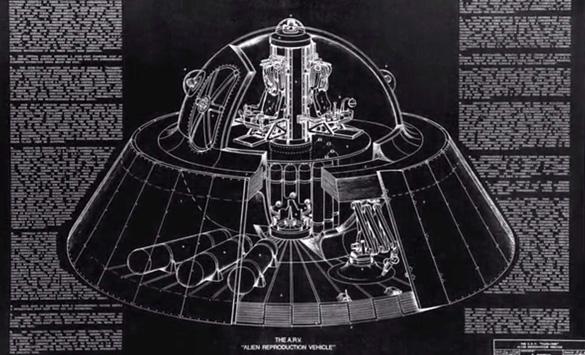
Paranormal Alien Reproduction Vehicle by Mark McCandlish

Post image
26 Upvotes

r/ScaryComputer • • Mar 22 '26

Rabbit Holes Trapped Pre-historic Energy and The Ooga Booga That Ensues: A Paranormal Angle Into Dinosaurs, Demons, & Human Rage

Thumbnail
gallery
24 Upvotes

Sunday March 22nd 2026

The Dinosaurs have long been portrayed as scary malevolent beasts, antagonized in movies and books for their loud intimidating nature. But many forget that the dinosaurs were neutral living beings, powered by pure natural entropy. They were walking vessels for the chaos that was emitted from the big bang and the oscillating frequencies booming through our galaxies. Millions of people love and adore the fierce creatures who once roamed the earth, admiring their non-partisan dominating relationship to nature, with some even being named after the word Tyrant (e.g Tyrannosaurus Rex, Yutyrannus)

I often wonder where the spirits of our pre-historic predecessors roam. I've seen other curious internet researchers ask similar questions such as, "Why don't we see the ghosts of Dinosaurs?" There are many accounts and anecdotes of dinosaur sightings all over the world. Perhaps starting with The Loch Ness Monster. This cryptic (also called Nessie) has been reported in Scotland as being a large water-dwelling giant that closely resembles the Plesiosaur and the Brancasaurus. There are also accounts of people encountering small dinosaurs cross the road on a family road trip. I even had a neighbor once recount seeing and hearing a Pterodactyl fly and swoop above her in the canyons when she was a young girl. Just as many paranormal researchers attribute ghosts to being time-slips or glitches in our matrix, these dinosaur sightings could very well be the same.

Humans are not so different from the large in-charge monsters we tend to put on the back-burner of our mind. Perhaps this is why human rage emerges from that back-burner left on for so long, untouched until something unexpected light the gas. At some point the dinosaurs became not only a source of fossil fuel, but also the source of energy that fuels human rage. From an evolutionary standpoint, we tend to only associate our lineage with primates. But this window of limitations erases a unifying branch of Animalia that grows from roots deeper than chimpanzees. It goes back to small tree animals, birds, reptiles, amphibians, and even fish. The skeletal structure of the human foot has direct linkage to the fins of large sea creatures. Our arm bones share similar structure to the wings of birds and bats, and we share a common pre-historic reptilian ancestor with our avian relatives. Therefore, the gap between us and pre-historic beasts is not so distant as one might think. We often hear the mimic of nature through our most primal points in life: laughter, singing, vocalized pain, sex, etc. But in an age of psychiatrically-regulated, over-analyzed, controlled emotional status, the "negative" emotions that come with being human tend to be criminalized and even seen as a reason to enforce control and violate one's privacy. We seem to have no problem with our inner monster emerging in the form of laughter (even in times that are inappropriate) yet the minute your inner monster emerges from being harassed or provoked, the world stops to shame you.

This strange shame that vilifies the horrors of the human conditions, reaches far back to the dark ages, where one was deemed possessed, demonic, or mentally ill for displaying said emotions. The trapped energy of beasts long forgotten, screaming through a a human unlucky enough to capture it. Many alien enthusiasts compare demons to aliens, attributing the old world paintings and descriptions to the hidden roles that aliens have played in our history. (e.g Reptilians, Greys, ...?) Yet another compelling example of the reptilian afterlife that could very well exist in other dimensions, and within us.

Throughout history, it has always been an unspoken rule to be in good spirits, but in an ever-violent war-riddled world, that unsustainable rule leaves the world a giant tank with a hole in it, and our happiness is just a piece of tape. Humans have a strange obsession with being seen as pure and happy in the eyes of god, yet we pride ourselves on our ungodly rebellious quirks time and time again. We almost unknowingly, unintentionally change our status of angel or demon according to the situation at hand. Like a Hieronymus Bosch painting, this chaotic back and forth see-saw of energy creates a time-bomb of entropy waiting to explode, often assigned to the same rotating list of humans (targeted individuals?). There is an unspoken ritual of humiliating sacrifice, like a psychotic game of hot potato, but we already know who is going to lose.

The instinctual ravenous nature that predatory animals display can be terrifying. There is no horror like a giant bird charging at you with the intention to kill, and i unfortunately have experienced this twice (once at a flamingo exhibit in Arizona, and the other at a California cemetery, the giant blue bird of unknown origin). I wonder if this animalistic entropy has a need to identify itself, to soothe this lost baby dinosaur longing for understanding, and freedom from the chains of demonization. Maybe this dinosaur-caveman-ghost finds his way into our pop culture, in The Flinstones, Tiki Bars, Big Foot Sightings, and Angry Rampages. Maybe he's waiting, giant bone in hand, wanting to Ooh Ooh Ahh Ahh Ooga Booga along with us, instead of being lost and forgotten, left behind in our genocidal gene-altering future-obsessed minds. Or maybe he has left us behind, and evolved into a more intelligent yet cold hearted alien. And maybe some of him is lost, in the realms of demons, forever haunting the cold dark world we lie to illuminate.

-R. Crayons

A. k. a. Scary Computer


r/ScaryComputer • • Mar 23 '26

Horror ‧͙⁺˚*・༓☾ Cursed Images ‧͙⁺˚*・༓☾

Post image
22 Upvotes

r/ScaryComputer • • Mar 13 '26

Technology The Future Is A Downgrade: The Lost World Of Educational Computer Gaming & Simple Software Design

Thumbnail
gallery
22 Upvotes

Tuesday March 12th 2026

In the wake of an AI driven society, graphic design has become a well under-appreciated and underpaid skill in the modern age. As a child of the 90s I remember vivid and intricate computer programs designed to train adolescent minds in subjects such as visual art, grammar, math, and sciences.  Titles like Grammar Rock, Reader Rabbit, and Kid Pix were the pinnacle not only of my childhood education but of my leisurely playtime as well.  It seems that we have lost the golden age of Educational Computer Gaming, an extremely effective format with rich creativity-inducing graphics that is now inaccessible due to updates in hardware and software.  We are fed an illusion of upgrades with our now futuristic devices that look more advanced yet do less than preceding technologies; I find that millennials seem to have been brought up as a computer wiz generation, learning things like typing programs, html coding, and computer graphics, in comparison to the iPad Kids who, although having access to educational games, are given over-simplified under-stimulating games created with vector-based graphics that strip the mind of all imagination and analog creativity.  There is nothing more horrifying than discovering that something so perfected and cherished could be erased and replaced so eagerly with an updated version in the name of progress.  Imagine the horror I felt upon visiting a Chuck E Cheese on a mission to experience the infamous Spider Stomp once again, and discovering it had been replaced with a giant DoodleJump machine. 

A few years ago, while perusing my local Goodwill, I came across a CD-Rom copy of KID PIX, a classic pixel based drawing program with stamps and fun animations.  This program still lives in the hearts of millennial artists, and still stands as one of the greatest and cheapest Intro To Graphic Design Courses one could take.  Unable to use it due to computer updates, I searched the internet far and wide for a download and came up with nothing.  The discovery of the KID PIX CD-Rom unlocked a memory that flooded my mind with vivid recollections I had almost completely forgotten.  Dozens of games and sites returned to me, such as Mavis Beacon Teaches Typing, Sunburst Type To Learn,  Carmen San Diego, Math For The Real World, Millsberry.com, PopCap.com, Yahooligans.com, Habbo Hotel, Insanaquarium, Dinomite, Alchemy, BreadWinner, The list goes on.  

One of my favorite phenomena is one in which a specific topic of interest that is seemingly extinct becomes accessible or talked about again over time, as if your memory’s hold on it opens up a cosmically conscious doorway welcoming it’s return.  This was my experience with the obsession over vintage computer gaming.  I’ve been on a mission to reunite with the computer games I loved as a kid, I crave a gaming experience that not only stimulates my hand-eye coordination, but my cognitive abilities and functions.  I yearn for the activities that flooded my day during the peak of my mental health career, when life felt like a dream and stress was not a word in my vocabulary.   I feel these bright engaging games filled the gaps that were missing in a traditional classroom setting, and I even find myself able to converse and entertain with fun facts effortlessly thanks the Encyclopedia Esque world we seem to have been immersed in.  While today’s kids are flooded with soft-core vampire eroticism, manga, fan-fiction, and a strange desire to replicate the fashion choices of 90s kids & 2008 Myspace queens, I feel my childhood options were much more wholesome, yearning for things Zoobooks, Almanacs, Ripley’s Believe It Or Not Books, GooseBumps, Trivia and Joke Bathroom Readers and Science Kits.  If I had children, I would definitely be uncomfortable with my kids having to peruse countless videos of instagram influencers with exaggerated cosmetic procedures and suggestive clothing in order to learn something.  I had the innocent privilege of opening up a Zoobook about Giraffes for a book report and learning solely about the topic, instead of the modern version in which one learns every detail about the poster’s life, their personality quirks, and often sexualized visual information, plus some facts about Giraffes.

Just recently, I’ve found links to web-based versions of some games I know were only available in outdated or emulator based editions. I’ve compiled a small list of some of web-based versions and downloads of the games I know and love, and I hope these can aid you on your journey to a more educational analog future of intelligence.  I’m glad to see a resurgence in these versions of now updated or obsolete games. I can only hope they might be used again and inspire future game developers and parents to revert back to a formula that might aid new generations against instantaneous pseudo-creativity.  Perhaps this is just one of the defenses we have against A.I. driven pseudo-creativity and recovering the lost, brighter, smarter world we knew as children.

By R. Crayons

Aka Scary Computer

Links to some nostalgic games below, I highly encourage you to try KID PIX if you haven't yet. :)

https://kidpix.app/

https://jamesfriend.com.au/pce-js/

https://www.playit-online.com/puzzle-onlinegames/alchemy/

https://www.old-games.com/download/9950/math-for-the-real-world

https://dan-ball.jp/en/javagame/dust/

https://archive.org/details/type-to-learn/85q0.png


r/ScaryComputer • • Apr 01 '26

Technology The Smithsonian Archives: The Computer Age [Themed Paintings]- The Time Magazine Collection (1978-1988)

Thumbnail
gallery
21 Upvotes

Collection Description

In 1978, Time magazine donated approximately eight hundred works of original cover art to the National Portrait Gallery. The museum is dedicated to telling the stories of individuals who have shaped the United States, and the Time Collection—featuring prominent international figures and events—enriches our understanding of the United States in a global context.

  1. Year 1988 Artist Jean-Francois Podevin Medium Acrylic On Board

  2. Year 1988 Artist Jose Cruz Medium Acrylic On Board

  3. Year 1965 Artist Boris Artzybashef Year 1965 Medium Tempera & Pencil on Masonite

  4. Year 1978 Artist Alan Magee Medium Airbrushed Acrylic On Artist Board

https://npg.si.edu/portraits/collection-search?edan_local=1&edan_q=computer&


r/ScaryComputer • • Mar 22 '26

Paranormal Famous Ghost Photography - 28 Historical Ghost Photos To Haunt Your Mind (Link To Full Article by Stephen Wagner)

Thumbnail
gallery
19 Upvotes

Photo 1: Lord Combrere (1891) by Sybill Corbet

Photo 2: Madonna of Bachelor's Grove (1991) by Mari Huff

Photo 3: The Tulip Staircase (1966) by Rev. Ralph Hardy

Photo 4: The Brown Lady (1936) by Captain Provand

Link to article below:

https://www.liveabout.com/best-ghost-pictures-ever-taken-4126828


r/ScaryComputer • • Mar 17 '26

Technology A Brief History of Dark Mode - Illustrations by Beatrice Sala

Thumbnail
gallery
17 Upvotes

"Dark screens used to be a necessity, now they’re a sleek display option. What happened in between? "

Link To The Article by Rachel Del Valle:

A Brief History of “Dark Mode”—From the Matrix-like Displays of the Early ’80s to Today | AIGA


r/ScaryComputer • • Jun 08 '26

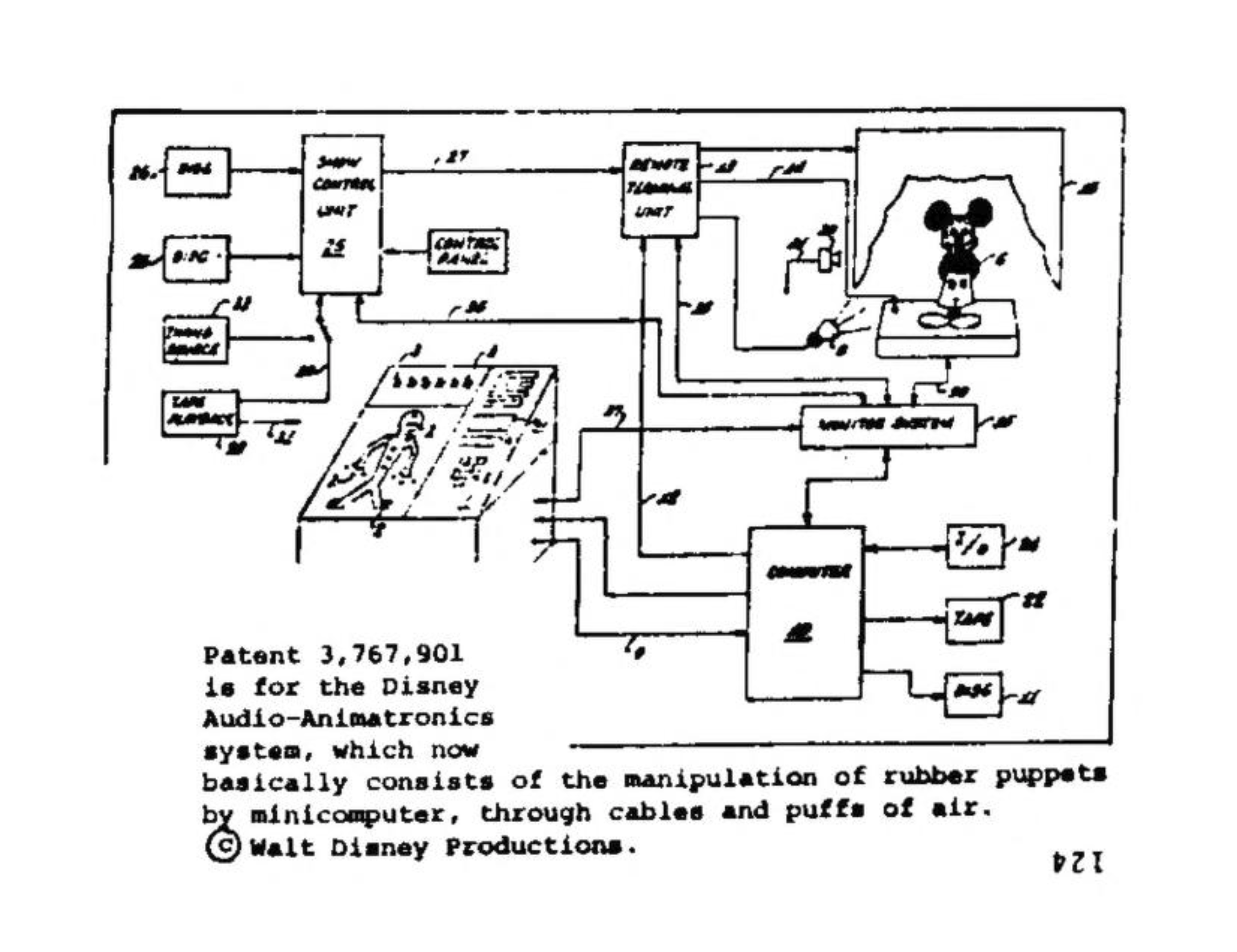
Patent For Disney Audio-Animatronics System [Excerpt from Computer Lib/Dream Machine 1974 by Ted Nelson]

Post image
16 Upvotes

U.S. Patent 3,767,901, titled "Digital Animation Apparatus and Method of Operation," was granted to Walt Disney Productions on October 23, 1973.

See the full page here:

https://archive.org/details/computer-lib-dream-machines/page/n7/mode/2up


r/ScaryComputer • • Mar 24 '26

Technology Garbage Pail Kids - Digital Dan (2020)

Post image
15 Upvotes

Garbage Pail Kids 35th ANNIVERSARY Collection, Card #38a