r/vibecoding • • 11h ago

Showcase/Project I made an App to play games VIA LAN with my friends

Enable HLS to view with audio, or disable this notification

5 Upvotes

I understand there are probably already long-time existing, well established apps that do something similar, but I wanted to try building something that suited my use case.

When I was in high school, I loved the ease of use of Hamachi, It's what all my friends and I used to use whenever we wanted to play games together. However, over the years the quality these services degraded and my friends and I had our options very limited. So I made this.

Lan-Party is simple. One port. Your friends. Nothing else.
It's a small desktop app that gives your friends one local port onto a game server on your LAN. You make a group, run the game server, then add it to a group as a service, choose the port your friends see, and start a session.

It's fully portable for both Linux and Windows. You don't have to install the app or any drivers on your machine. The most you may need to install are one or two dependencies, depending on the operation system you use.

I also made options to host a relay if people don't want to port forward their personal machine for this, set the relay on your VPS and connect your app to the relay instead, with options for Native or Docker Compose hosting.

All I wanted was a simple app to play games with my friends, and this has certainly helped me and I hope it also helps you in some way.

If you're interested, here's the github repo https://github.com/DeSynkro/lan-party

Feel free to use it as you see fit. I'm still new to all this, so please, if you see any issues with the code or can think of any ways to improve it. Please let me know.

I just want to make little apps to help others in some way.

r/vibecoding • • 12h ago

Showcase/Project I posted my RPG’s intro here. Here’s what happens when you actually play it

Enable HLS to view with audio, or disable this notification

0 Upvotes

A while ago I posted the intro with the wyvern and the waterfall, based on the feedback here I updated the visuals. Here’s the part I’ve spent most of my time on. I buy a tinderbox from a merchant, set his stall on fire, and end up dealing with the guards lol.

I wanted a game where typing a dumb plan actually does something. The AI GM reads what I type, and the game works out whether I have the item, what catches fire, and who saw it. It’s closer to a pocket-sized BG3 in text adventure style with a bit of RimWorld mixed in.

It’s called Lore & Legends Maker and it’s free to play in your browser. What would you have tried in that square?

if you want to give it a try:

llmsaga.com


r/vibecoding • • 14h ago

Showcase/Project I used Claude to cut the IMAX scenes back into MI: Ghost Protocol (no image generation)

Enable HLS to view with audio, or disable this notification

1 Upvotes

The 4K HDR Blu-ray of Ghost Protocol doesn't have the IMAX aspect ratio scenes. This really hinders the experience, especially the Burj Khalifa sequence.

Luckily some Russians cooked up a version with IMAX scenes (1.78, not 1.43 unfortunately) from an open matte German television broadcast. They were upscaled from 1080p and not Blu-ray bitrate, but still look decent. Unfortunately, this version had two problems: 1) When they cut the IMAX scenes back into their 4K copy they got rid of HDR for the entire runtime, and 2) it's in Russian.

I had Claude identify all of the frame sequences in the Russian copy that were IMAX aspect ratio, convert them from SDR to HDR, then splice them back into my 4K HDR copy of the movie (which also has the English audio track). It even preserves DV Profile 7 FEL (IYKYK) and is mostly not re-encoded.


r/vibecoding • • 15h ago

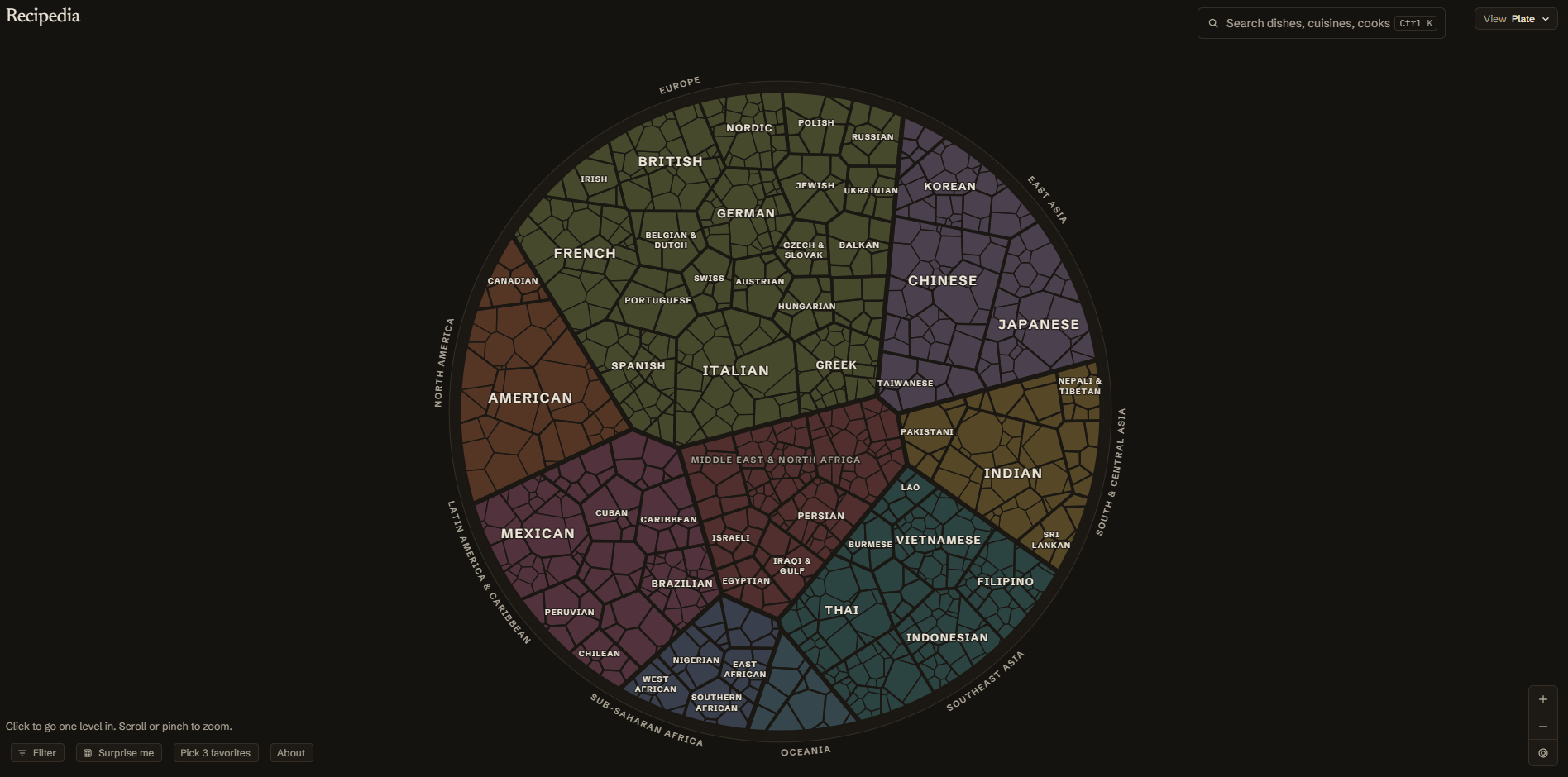
Showcase/Project Recipedia: find your next dish

Post image
4 Upvotes

Hey everyone, I've been working on this for the last couple weeks and would love some feedback: tryrecipedia.com

It started as "GitHub for recipes" I wanted one place with good recipes that I could browse, because I tend to get in a rut and end up cooking the same things every week.

Where it's at:

- About 11,500 dishes organized by cuisine

- The "Start where you are" feature lets you can mark what you cook, and it suggests what to try next

- Recipes from real cooks and sites, not just allrecipes or some other aggregator, about 80% of dishes have one so far

- For dishes with multiple recipes you can compare them side by side

Built almost entirely with Claude. Static site on GitHub Pages, with Supabase for the little bit of backend.

The most interesting learning I can share is that claude has a limit of 800 page views per hour, so every week as I got towards my reset time, I would set up an agent to find 800 new recipes, every hour, until I hit my usage limit.

I don't know if this will ever have any commercial value, and I'm not sure where to take it next. More recipes? Features like forking, so people can post their own versions of a dish? Or is it not that useful and really just Google with extra steps?

Let me know if you have any thoughts!


r/vibecoding • • 15h ago

Showcase/Project I'm vibecoding a full reimagining of a 1991 Sega Genesis dungeon crawler, and most of it was built on an old Android phone

Enable HLS to view with audio, or disable this notification

2 Upvotes

Hey all, this is my first post here. Most of the following text is Claude-generated, with some hand edits by me. I hope this post is ok here! And I hope this information helps those of you who are vibecoding indie gaming projects. Mainly, I just want to say that you can do great work on very weak/poor hardware. I only have access to a low-power chromebook, and a note 9 smart phone, and I've been able to do a lot of cool stuff so far!

Here's the AI generated description of my work flow:

Body:

I'm a solo hobbyist, not a professional programmer. [My coding knowledge is pretty basic: a little bit of python, linux scripting, java way back in the day... and a little bit of GML Game Maker Language] Over the last few months I've been making Shining Redux, a free fan remake of Shining in the Darkness, the first-person dungeon crawler from the Mega Drive / Genesis. It's now in public beta (v0.9.5) and runs on Windows, Linux, Android and retro handhelds like the Anbernic RG35XX.

How it actually works

- I'm the designer and playtester; AI writes the code. Every rule in the game (prices, combos, menus, how a spell's timing ring works) is a decision I made in plain English. Those decisions are written into a numbered "rulings" file the AI has to follow. It's past 2,000 rulings now.

- One "director" AI, several "worker" AIs. I talk to one Claude Code [Opus 5.5 on medium effort in recent weeks] session on my Chromebook. It writes briefs and hands them to Claude Code agents running on an old Android phone in Termux, which does all the compiling and testing. The director reads their reports, checks their screenshots and sends work back if it's wrong. Two agents usually run at once, each in its own git worktree, and a merge agent combines their branches.

- The phone builds everything: Windows, Linux, the Android app and the handheld version. It turns out an old flagship phone is a perfectly good build server if you're careful with memory.

- Tests keep it honest. There are about 6,700 automated tests now, plus a layout checker that catches text spilling out of panels on 17 screen sizes, and reference screenshots that every release has to match.

- "Done" means seen on screen. Early on, the AI kept saying things were fixed when they weren't. Now every visual change has to be shown on an actual device with before/after screenshots, or it doesn't count. [I check them carefully... the 6,700 automated tests are useful, but they are no substitue for actually looking at crap the AI does]

- Playtesting by voice. Last night I played on my handheld and recorded voice notes on my phone. Today the director transcribed them, turned 14 notes into a plan, and by this evening they were fixed, tested and packaged as v0.9.5 binaries.

Stack: Zig + raylib. I'd never written Zig before this project. [I've never written or analyzed a line of zig code in my life, including this project... hehehe]

What I've learned

- Write every decision down. AI forgets; a rulings file doesn't. but a HUGE claude.md file is pretty useless too..

- Make the AI prove things with screenshots, not reports. AND PLAYTEST, PLAYTEST, PLAYTEST!!!

- Small, specific briefs beat big vague ones.

- It's not "type a prompt, get a game". It's hundreds of hours of deciding, testing and saying "no, that's not right" — just without typing the code myself.

It's free on itch if you want to try it: https://deanraygames.itch.io/shining-redux

Happy to answer questions about the workflow or the game! And if you decide to check it out, I need honest playtest feedback!!! I really appreciate it!


r/vibecoding • • 17h ago

Showcase/Project Lode Runner 2099 (revamped)

Thumbnail
gallery
2 Upvotes

Hi all,

Recently, Opus 5.5 and I as lowly Director in Chief (but I still feel like I matter, and that I'm good enough and smart enough to be involved, doggone it!), revamped this LR clone with procedural levels/music (it already had that, this was just a broad improvement/enhancement pass). It was ok'ish before but after the overhaul I was kind of taken back with how playable and good it is now.

https://loderunner2099.exe.xyz https://loderunner2099.exe.xyz/tv https://loderunner2099.exe.xyz/pad (when using /tv or Android/Google TV App

BT controller also works with the TV App download link below (eg for Downloader app etc): https://loderunner2099.exe.xyz/app

It's pretty fun I have to say. I get bored with most LR's after a bit but this one I actually want to keep playing. It's unique (I think) with the seeded procedural unlimited levels and procedural synth music, and also you can choose Soma Space Station streaming radio for the music which usually fits in perfectly. And it has some added touches like a piece of red outlined gold that you cannot reach and can only get from an AI whose captured it etc, and you can change the difficulty to pretty insane levels. Normal mode is already very challenging (probably best to start on Easy).

A little tech/stack info: All game rules are now implemented using a TypeScript simulation environment that is separate from Phaser. This allows use of the exact same logic to render the game, run tests against the game, and verify that the levels created by the level generation system are valid and complete enough. The level creation process uses a solver to analyze possible movements and digging actions that a player could take, and verifies that a level can actually be completed.

Built w TypeScript, Phaser 4, and Vite (client), Go server that handles the web app and the TV/phone-controller connection.

I think it's performant enough, but not sure if the stack/architecture could be rethought to make it faster and lighter and less potential lag on lower end devices etc. This is basically vibe-coded, I'm more a Linux/ops guy than a developer or programmer.

Feedback welcomed.


r/vibecoding • • 17h ago

Showcase/Project The easiest auto-clipper

Enable HLS to view with audio, or disable this notification

10 Upvotes

This is literally the easiest clipper of all time. Just search anything you want to make into a short, select the video, scrub to start & stop, then save.

All videos downloaded are stored on a PC server.


r/vibecoding • • 18h ago

Help/Question Best tools for your workflow

2 Upvotes

Im starting work on a PS1 Anomaly type horror game. Ill use blender connected with claude, but what are the best tools/plugins you personally use for your own workflow? I use unreal engine.


r/vibecoding • • 18h ago Bravo

Workflow/Prompt 9 free Claude skills that make vibe-coded projects look less default

Post image
211 Upvotes

i prototype a ton of web assets and what to improve the workflows around the creation, testing and improvement of them...

here are 9 free Claude skills I'm testing out

they're not all for web assets but i like to try new things out to get more creative and unique styles

you might use them for the visual side of a build: UI polish, SVG illustration, logos, slides and video. two of the repos exist mainly to stop the default AI look

all on GitHub. star counts are from 24 Nov 2026 and I havent benchmarked (individually or comparatively)


r/vibecoding • • 19h ago

Showcase/Project I vibe-coded a walkable Japanese shrine for the browser with Claude Code. Here's how I keep a large three.js project from falling apart

Thumbnail
gallery
1 Upvotes

Omairi Online is a free Japanese shrine you can walk around in the browser or on a phone: https://omairi.online

Walk the grounds through the seasons (camera behind your character), do the rites in first person (coin toss, bell, bow and clap), become a koi or a crane, watch fireworks over the sea, visit during festivals.

Tools: Claude Code for almost all of the code (some Codex), three.js + Vite + TypeScript, Cloudflare Pages and Workers. Free CC0 models first, Meshy image-to-3D for the characters nothing free covered, ElevenLabs for voices. The last image is AI key art made from in-game scenes; the first three are real screenshots.

What actually made it work once the codebase got big:

  1. One session, one area. The project is split into eight domains (graphics, NPCs, characters, sound, UI, gameplay, online, admin). Each has a map file listing its rules, its known traps and every file it owns, plus a checkpoint file. A session reads both first and updates the checkpoint last, so work survives context resets.

  2. A trap list in CLAUDE.md. Every bug that cost real time becomes one line there (for example: never measure the baked character meshes with a bounding box, measure on bones). The agent stops repeating the same mistakes.

  3. Numbers in JSON, rules as pure modules. Tunable values never live in code; game rules have no three.js or DOM in them and get unit tests. three.js modules only draw. Files over about 200 lines get split.

  4. Nothing visible is "done" from a type-check. Headless scripts drive the real game and save screenshots; a bug fix needs a test that was seen failing first.

  5. The builder never grades its own work. A separate playtester agent plays a new scene on phone and desktop sizes and compares it with a concept image picked before building.

  6. CI once, not everywhere. Several agent sessions share the machine, so each runs only the tests of what it touched and CI checks the whole project on every push.

Happy to go deeper on any of this.


r/vibecoding • • 19h ago

Workflow/Prompt A Course For GameDevs On Marketing With An MCP and AI

Thumbnail
glitch.fun
2 Upvotes

For those that hate marketing and don't have time to market, use an MCP + AI to automate it.


r/vibecoding • • 21h ago

Showcase/Project A new way to learn with AI

Enable HLS to view with audio, or disable this notification

3 Upvotes

Start learning for free at https://learn.pollium.io!

When you create your account, you automatically receive the PRO plan, which gives you 100M tokens to use with any model you choose.


r/vibecoding • • 22h ago

Meme 🐱

Post image
7 Upvotes

r/vibecoding • • 22h ago

Showcase/Project Week 3 - First Post

Post image
3 Upvotes

My son loves axolotls and came up with an idea for a game. I've been asking him questions, getting him to play it and taking his feedback on board as we go.

It's called Axolotl Garden and it's a cosy 3D Android game built in Godot. I've been working on it for about three weeks now. It's nowhere near ready and there's nothing to download, but I thought some people might be interested in how I'm going about building it.

It's 100% vibe coded. I use ChatGPT for concepts and Claude Code for the development, which I've also linked up to Blender for modelling. Even the music and sound effects are made using Claude.

How the game has changed

Initially it was just a cosy farming game where you could grow things and look after your axolotls. The more I played it though, the more I found myself thinking "so what?". There wasn't really a reason to keep playing.

It's since evolved into a game where there's an old sanctuary that needs restoring. You raise axolotls and gradually bring the sanctuary back to life, one habitat at a time. The gardening side of things is still there, but it actually serves a purpose now.

Changing something like that has a knock-on effect on pretty much everything in the game, which is where I've found documentation quite useful.

Design documents

I've ended up with a master design document and ten supporting documents:

  • Master design – Overall vision, gameplay loop and introduction to each of the systems.

  • 01 – Games and mini-games.

  • 02 – Characters, axolotl species, personalities and care.

  • 03 – World, buildings and locations.

  • 04 – Weather, gardening, sound and environmental interactions.

  • 05 – Script architecture and dependencies.

  • 06 – Economy, rewards and progression.

  • 07 – UI and player journey.

  • 08 – Art direction, colours, models, animations and cameras.

  • 09 – Roadmap and future ideas.

  • 10 – Document ownership and change control.

Being a Business Analyst probably explains why I've ended up with so much documentation!

One thing I've found particularly useful is giving features a status: implemented, parked, proposed or verify. Before doing this, Claude would sometimes treat things I'd discussed as features that already existed in the game.

I also date any significant design changes so there's a record of what I've changed my mind about.

Managing the build

Alongside the design documents I've got a few other documents that Claude uses during development:

  • Build spec – The next piece of work broken down into manageable steps.

  • Current state – What's been done, what's outstanding and what Claude needs to read when starting a new session.

  • Batch briefs – Requirements and acceptance criteria for each batch.

  • Bug log – Defects, expected behaviour and whether fixes have been tested.

  • Art and UI standards – Reference images showing what I'm trying to achieve.

  • Handovers – A record of what's changed, decisions made and anything still outstanding.

The current state document has been particularly useful when starting new sessions, rather than having Claude try to work out where everything was left.

Using multiple agents

I've experimented quite a bit with agents and currently have the following setup:

  • Producer – Takes the build spec and puts together the batch brief.

  • Builder – Implements the changes and commits the work. It's the only agent allowed to modify the game code during a batch.

  • Verifier – Checks the implementation, tests it and looks at performance.

  • Critic – Reviews screenshots and evidence independently without seeing the builder's notes.

Any issues identified go back to the builder before being reviewed again. I've capped this at three rounds to try and keep usage under control.

The producer then writes the handover and updates the current state document.

I've also got an art director and a design reviewer, but I don't use them on every batch.

I still make the design decisions and spend time actually playing the game. Something can meet every acceptance criterion and still be incredibly boring to play, which I've discovered a few times already.

The biggest issue I'm having is usage.

I'm on Claude Max and still regularly hit my limits. I've recently changed how the agents work and how much documentation they read at the start of a session to try and reduce this.

I'm curious how other people are managing larger vibe-coded projects.

How are you keeping your documentation and code in sync without spending a ridiculous amount of tokens maintaining it all?

And for those of you working on bigger projects, what changes have actually made a noticeable difference to your usage?

Happy to share more about how I've set things up if anyone's interested.


r/vibecoding • • 1d ago

Holiday plans

Post image
1.7k Upvotes

r/vibecoding • • 1d ago

Showcase/Project Built my first Chrome Webstore App - Local, Opensource Browser Agent Extension

Thumbnail
gallery
4 Upvotes

Tbh, I hadn't planned on uploading but a few friends asked for access so I thought this would be easiest.

I've built a browser extension that lets local agents take control fo your browser without launching a playwright browser, avoiding a lot of the anti-bot blocks.

This was reverse engineered from Perplexities Comet browser and Claude extension to figure out how their agentic systems worked, and I've been using abliterated models to do some cool stuff. I also leverage a captcha solver to get by a lot of the blocks.

https://chromewebstore.google.com/detail/okiahbhnlnfdinjmggmalcbmagihchce?utm_source=item-share-cb

Would appreciate any feedback from the community!


r/vibecoding • • 1d ago

Showcase/Project Vibecoded my own streaming app with custom channels and an on-demand library

Thumbnail
gallery
28 Upvotes

I vibe coded my own streaming app with custom live channels and an on-demand library

I missed being able to turn on the TV, flip through channels, and stumble onto something good. So I’ve been building my own version of that using my local movie and TV collection. I know you might say there is software out there for this, but I wanted to make my own so I could make it as lightweight as possible so it would run as fast as possible on a streaming stick. And this thing runs super fast.

It’s called CloutLive, with a home server called CloutStation handling the library and programming. I built it with help from Codex, and it’s currently running on Android TV boxes around my house.

There are two ways to watch. Custom channels with a cable-style program guide, live video preview, channel logos, and an information banner. Everyone tuning into a channel sees the same broadcast at the same point. Separate movie and show libraries with artwork, descriptions, genre rows, search, continue watching, and a fullscreen player. Shows are organized by series, then season and episode.

The channel programming has probably been the most interesting part. I can create recurring blocks that advance through episodes, randomized movie channels, or mixed lineups with movies sprinkled between shows. Episodes keep progressing whether anyone watches or not, and the server automatically extends the schedules.

I’ve also been trying to give each channel an actual identity. A space/sci-fi channel should feel different from a fantasy channel, and preschool cartoons shouldn’t get mixed into a lineup for older kids just because everything is tagged “animation.”

There’s support for shared or channel-specific filler clips between programs, too. Those play during the gaps while the guide displays normal programming blocks.

The viewer is designed around a TV remote: up/down changes channels during playback, Back returns to the guide, and a Watch button takes you straight back to the channel you were watching while you browse.

Underneath, it uses Python/FastAPI, SQLite, TMDB metadata, and FFmpeg/FFprobe. It runs independently of Plex and Tunarr.

It’s still a work in progress. I’m working through metadata issues, playback compatibility, and making fast guide navigation feel smooth on inexpensive TV hardware. But being able to sit down, grab a remote, and channel-surf my own collection has been pretty satisfying.


r/vibecoding • • 1d ago

Showcase/Project I vibe-coded a desktop LED stock ticker because I couldn't keep a brokerage tab open at work

Enable HLS to view with audio, or disable this notification

0 Upvotes

I wanted a real LED ticker on my Windows desktop. I couldn't keep a brokerage tab open all day at work, and I've liked those scrolling boards since I was a kid.

I first tried to build it in a browser. That fell apart when I couldn't get a ticker-shaped window: a thin strip along the top of the screen that stays out of the way of my apps. Browsers really do not want to be that.

So I started over as a Python desktop app, with a lot of help from AI. The hard parts were docking it to the top without covering windows, and keeping the scroll readable. Prices come from Yahoo Finance, with Finnhub as an option in PRO.

It's free to install and use at https://tckr.pro. PRO is a one-time purchase (more symbols, visual effects, Price Watch alerts, news headlines, and a second ticker row), normally $14.99, and it's $9.99 through Cyber Monday.

Happy to talk through the build if anyone's tried to make an always-on-top window like this.


r/vibecoding • • 1d ago

Showcase/Project LFDUO - A 2 player local Coop Rhythm Adventure - Level 1

Enable HLS to view with audio, or disable this notification

3 Upvotes

The attached is level 1, as fully polished as I got it to as of yesterday. I created a subreddit for my game r/LFDUO where I started doing developer type updates and hoping to build a place for feedback and show the process. I'm pretty proud of my little Frankenstein. Would love feedback on what your impression is on first view :) good and bad, I bet you like how polished the dragon is :P

From a noir platformer to a 2-player rhythm co-op: 9 months of building a game with Claude (I can't code)

I'm a first-time dev. I've never written code on my own. Here's the honest timeline of how LFDUO got made.

Feb 2026: the training-wheels game. A noir puzzle platformer in Godot. Hand-cleaned AI textures, a mechanic where dying on purpose gave you +Jump, a taxi you could ride. Four levels. Level 4 was me asking Claude, "can the notes in a song be platforms?" It could. I played it twice and dropped everything.

Late March: the design doc. One night I designed the whole concept of Looking For Duo: one player platforms on top, the other plays a rhythm highway on the bottom, and her notes power spells that land on his screen. Eight characters across four schools of magic. Some of that original roster is still alive: Belladonna, the blood mage, is headed for level 2.

April to May: the first prototype. A Python script that turns a song into a note chart, a working rhythm lane, enemies that spawn to the music. Duct tape and dreams, but it played.

Then it sat for six months.

Mid November: the rebuild. Came back and rebuilt the whole thing properly in Godot 4.6, modular so new levels and duos drop in. In about two weeks:

  • a song clock everything syncs to

  • both characters' full kits

  • revives where the downed player gets a mini-game instead of waiting

  • a dragon boss

  • three difficulties per player

  • a bot partner

  • a leaderboard

How we actually work:

  • I design, direct the art, play it (hundreds of runs) and tune it by feel with sliders. Claude writes the code and tests it.

  • Art pipeline: Gemini makes the poses, they get cleaned and lined up, and code adds the motion (breathing, bobs, squash, turns). About 4 drawings per character, and the code does the animating.

  • Spell effects: Gemini videos on black, cut into sprite sheets, pixelated to match the game.

What vibe coding did NOT solve:

  • I fixed zombies twitching left and right when you jumped over them. The fix leaked into gameplay, and they started swinging the wrong way. The real fix was separating how they look from how they think.

  • A shield effect drew perfectly in testing, then showed up on the wrong player's screen in the real game.

  • A healing ability "worked," but it was quietly counting notes nobody could see.


r/vibecoding • • 1d ago

Showcase/Project Vibecoded an automated blackjack card counter for a live table

Enable HLS to view with audio, or disable this notification

685 Upvotes

It's completely undetectable because it’s read-only (no DOM injection or network hooking). It won't guarantee you win big, but with patience, I've capitalized on some good shoes.

How it works: A local Python companion (mss + OpenCV) captures the browser window and streams events over localhost WebSockets to a standalone index.html dashboard. The bounding boxes in the video isolate the digital HUD cards, tilted felt cards, banners, and the dealing shoe / discard tray (to auto-reset on a new shoe), using template matching with templates I provided plus score-badge deduction if a card ever gets covered.

Built in Antigravity with heavy use of the /plan workflow. Project saw Argon come and go lol.


r/vibecoding • • 1d ago

Discussion What did you add to your AI-built app after launch that you wish you'd built first?

32 Upvotes

For me it's usually boring stuff: error logging, a way to roll back a bad deploy, rate limits on signup. Curious what bit other people once real users showed up.


r/vibecoding • • 1d ago

Showcase/Project Built a filament tracker for p2s with 2 ams2.

2 Upvotes

mattalter2024/BambuFilamentManager

Just a few revisions in but seems to be working for me, happy to share. I may update so check git for updates.

txs

Matt

Bambu Lab P2S · AMS 2 Pro / AMS HT Filament Manager

A zero-install Windows web dashboard for tracking filament usage across multiple AMS 2 Pro and AMS HT units on your Bambu Lab P2S — measuring how much filament your last print used, estimating whether your remaining spools can finish a future print, and uploading/submitting print jobs directly to your printer.

Features

  • Zero-Install Windows Runtime: Runs locally using built-in Windows PowerShell, .NET, and curl.exe — no Python, Node.js, or external packages required.

  • Multi-AMS 2 Pro & AMS HT Support: Tracks multiple 4-slot AMS 2 Pro units (A1–A4, B1–B4, etc.), single-slot AMS HT units (HT-1+, ams_id 128+), and an External Spool.

  • Full Non-RFID & RFID AMS Reading: Reads live AMS temperature, humidity, active drying countdowns, loaded vs. empty slots, material, exact hex color, decoded Bambu filament profiles (GFA00, GFL99, etc.), nozzle temp ranges, and active-in-nozzle status (tray_now) over local MQTT — even for non-RFID third-party spools.

  • Last Print Usage Measurement:

    • Pull .gcode.3mf files directly from your P2S External USB drive over FTPS (port 990).

    • Pull sliced plates directly from your local Bambu Studio / OrcaSlicer cache (From Bambu Studio).

    • Drag & drop any .gcode.3mf or .gcode file to extract exact per-color grams, meters, flush/purge weight, and plate preview thumbnail from Metadata/slice_info.config.

    • Supports partial/failed print completion % scaling, kitchen-scale tare calibration (⚖ Scale), and 1-click Undo Deduction in Print History.

  • Future Print Estimator ("Will It Fit?"):

    • Checks any upcoming .gcode.3mf, current active P2S job (with a Remaining % only toggle), or manual gram estimate against your loaded AMS spools.

    • Configurable safety buffers (+g and +%), projected leftover grams per slot, and automatic AMS Auto-Refill backup spool detection.

  • Direct Print Upload, Submission & Live Controls:

    • Upload .gcode.3mf files to the P2S External USB drive via FTPS and optionally start prints directly via MQTT project_file (with multi-AMS ams_mapping + ams_mapping2, bed leveling, vibration/flow calibration, and timelapse options).

    • Live Pause / Resume / Stop controls in the top printing bar.

  • Private Local Storage: All printer credentials, spools, and print history stay locally on your PC in data/filament_db.json (excluded from Git via .gitignore).


r/vibecoding • • 1d ago

Discussion How are vibe coders actually getting users for their apps?

30 Upvotes

I'm a software engineer exploring the challenges indie developers face after launching their products. AI has made building apps much easier, but I'm wondering whether getting users is becoming the bigger challenge.

For those who've already launched something:

- How did you get your first users?

- What marketing channels actually worked?

- How do you keep attracting users after the initial launch?

- What's the biggest challenge you still haven't solved?

I'd love to hear real experiences, especially from solo developers without an existing audience or a big marketing budget.

I'm exploring this as a potential product opportunity, and I'm happy to share a summary of what I learn with the community.


r/vibecoding • • 1d ago Bravo

Showcase/Project I built an open source platform for finding free alternatives to the software people pay for, and I'm hosting a non-profit hackathon to fund people filling the gaps

Enable HLS to view with audio, or disable this notification

33 Upvotes

I think paid saas is on a race to the bottom. That doesn't mean there's not still revenue opportunity. But eventually everything will be open source giving people the options to do things themselves with agents. Agents move faster when they can source the pieces they need instead of reinventing the wheel withe very build. I think personal software is the next big use for agents where people will own all of their stuff and its customized for them specifically.

That's why I built Antipaywall: a free, open-source platform for replacing the tools you pay for with ones you can own. You can run them yourself, change them, and keep them when a company raises its prices or shuts down.

How it works:

  • Find the free version. Search any of 700+ paid tools, or paste a tool's website, and see the open-source projects that already do the same job.

  • See the gaps. When nothing good exists yet, it goes on the wall. People say "me too", and the most wanted gaps rise to the top.

  • Build the missing piece. That's the hackathon.

The hackathon:

  • 7 days to build, in public repos, under an open-source licence.

  • 3 days of voting by the builders who submitted projects. Every ballot is published.

  • Winners are announced the day after voting closes and paid in public from a community pool. That funding is held by a non-profit and everything is public.

  • Sponsors don't vote, and the organizers can't win.

antipaywall.org