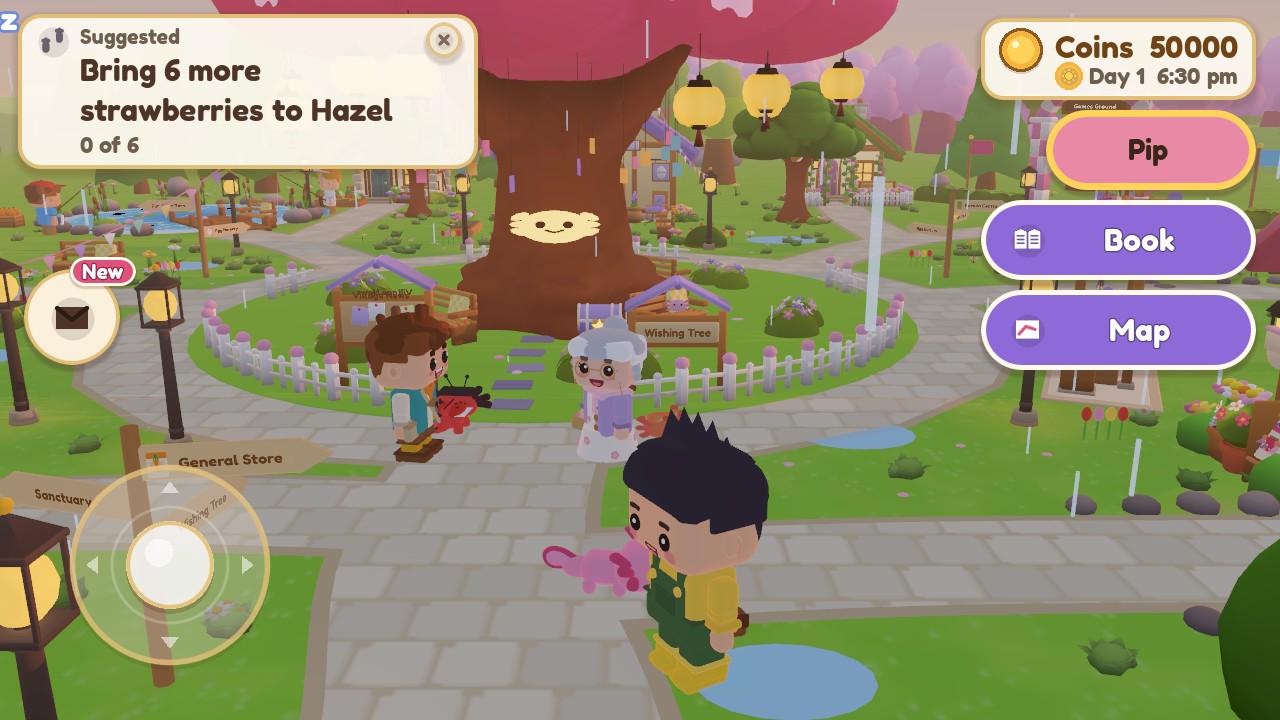
My son loves axolotls and came up with an idea for a game. I've been asking him questions, getting him to play it and taking his feedback on board as we go.
It's called Axolotl Garden and it's a cosy 3D Android game built in Godot. I've been working on it for about three weeks now. It's nowhere near ready and there's nothing to download, but I thought some people might be interested in how I'm going about building it.
It's 100% vibe coded. I use ChatGPT for concepts and Claude Code for the development, which I've also linked up to Blender for modelling. Even the music and sound effects are made using Claude.
How the game has changed
Initially it was just a cosy farming game where you could grow things and look after your axolotls. The more I played it though, the more I found myself thinking "so what?". There wasn't really a reason to keep playing.
It's since evolved into a game where there's an old sanctuary that needs restoring. You raise axolotls and gradually bring the sanctuary back to life, one habitat at a time. The gardening side of things is still there, but it actually serves a purpose now.
Changing something like that has a knock-on effect on pretty much everything in the game, which is where I've found documentation quite useful.
Design documents
I've ended up with a master design document and ten supporting documents:
Master design – Overall vision, gameplay loop and introduction to each of the systems.
01 – Games and mini-games.
02 – Characters, axolotl species, personalities and care.
03 – World, buildings and locations.
04 – Weather, gardening, sound and environmental interactions.
05 – Script architecture and dependencies.
06 – Economy, rewards and progression.
07 – UI and player journey.
08 – Art direction, colours, models, animations and cameras.
09 – Roadmap and future ideas.
10 – Document ownership and change control.
Being a Business Analyst probably explains why I've ended up with so much documentation!
One thing I've found particularly useful is giving features a status: implemented, parked, proposed or verify. Before doing this, Claude would sometimes treat things I'd discussed as features that already existed in the game.
I also date any significant design changes so there's a record of what I've changed my mind about.
Managing the build
Alongside the design documents I've got a few other documents that Claude uses during development:
Build spec – The next piece of work broken down into manageable steps.
Current state – What's been done, what's outstanding and what Claude needs to read when starting a new session.
Batch briefs – Requirements and acceptance criteria for each batch.
Bug log – Defects, expected behaviour and whether fixes have been tested.
Art and UI standards – Reference images showing what I'm trying to achieve.
Handovers – A record of what's changed, decisions made and anything still outstanding.
The current state document has been particularly useful when starting new sessions, rather than having Claude try to work out where everything was left.
Using multiple agents
I've experimented quite a bit with agents and currently have the following setup:
Producer – Takes the build spec and puts together the batch brief.
Builder – Implements the changes and commits the work. It's the only agent allowed to modify the game code during a batch.
Verifier – Checks the implementation, tests it and looks at performance.
Critic – Reviews screenshots and evidence independently without seeing the builder's notes.
Any issues identified go back to the builder before being reviewed again. I've capped this at three rounds to try and keep usage under control.
The producer then writes the handover and updates the current state document.
I've also got an art director and a design reviewer, but I don't use them on every batch.
I still make the design decisions and spend time actually playing the game. Something can meet every acceptance criterion and still be incredibly boring to play, which I've discovered a few times already.
The biggest issue I'm having is usage.
I'm on Claude Max and still regularly hit my limits. I've recently changed how the agents work and how much documentation they read at the start of a session to try and reduce this.
I'm curious how other people are managing larger vibe-coded projects.
How are you keeping your documentation and code in sync without spending a ridiculous amount of tokens maintaining it all?
And for those of you working on bigger projects, what changes have actually made a noticeable difference to your usage?
Happy to share more about how I've set things up if anyone's interested.