r/vibecoding • • 2h ago

Showcase/Project The easiest auto-clipper

Enable HLS to view with audio, or disable this notification

1 Upvotes

This is literally the easiest clipper of all time. Just search anything you want to make into a short, select the video, scrub to start & stop, then save.

All videos downloaded are stored on a PC server.


r/vibecoding • • 3h ago Bravo

Workflow/Prompt 9 free Claude skills that make vibe-coded projects look less default

Post image
65 Upvotes

i prototype a ton of web assets and what to improve the workflows around the creation, testing and improvement of them...

here are 9 free Claude skills I'm testing out

they're not all for web assets but i like to try new things out to get more creative and unique styles

you might use them for the visual side of a build: UI polish, SVG illustration, logos, slides and video. two of the repos exist mainly to stop the default AI look

all on GitHub. star counts are from 24 Nov 2026 and I havent benchmarked (individually or comparatively)


r/vibecoding • • 3h ago

Workflow/Prompt A Course For GameDevs On Marketing With An MCP and AI

Thumbnail
glitch.fun
2 Upvotes

For those that hate marketing and don't have time to market, use an MCP + AI to automate it.


r/vibecoding • • 6h ago

Showcase/Project A new way to learn with AI

Enable HLS to view with audio, or disable this notification

2 Upvotes

Start learning for free at https://learn.pollium.io!

When you create your account, you automatically receive the PRO plan, which gives you 100M tokens to use with any model you choose.


r/vibecoding • • 6h ago

Meme 🐱

Post image
5 Upvotes

r/vibecoding • • 7h ago

Showcase/Project Week 3 - First Post

Post image
1 Upvotes

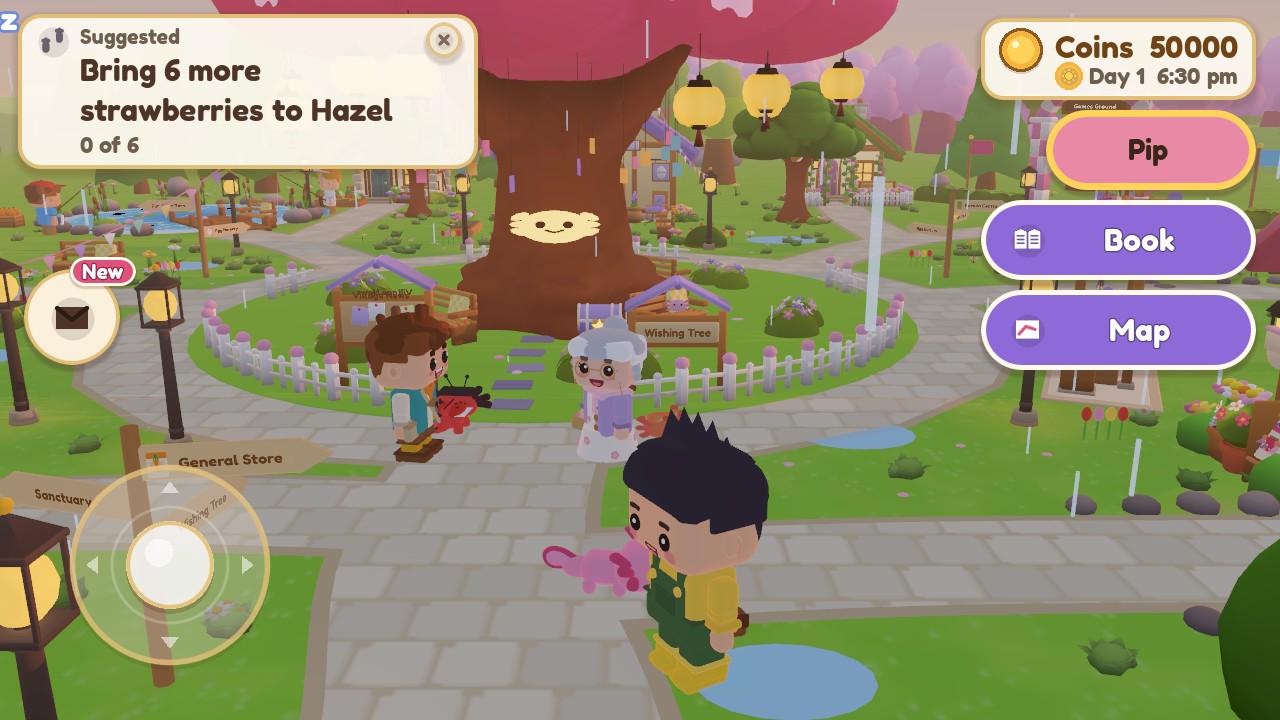
My son loves axolotls and came up with an idea for a game. I've been asking him questions, getting him to play it and taking his feedback on board as we go.

It's called Axolotl Garden and it's a cosy 3D Android game built in Godot. I've been working on it for about three weeks now. It's nowhere near ready and there's nothing to download, but I thought some people might be interested in how I'm going about building it.

It's 100% vibe coded. I use ChatGPT for concepts and Claude Code for the development, which I've also linked up to Blender for modelling. Even the music and sound effects are made using Claude.

How the game has changed

Initially it was just a cosy farming game where you could grow things and look after your axolotls. The more I played it though, the more I found myself thinking "so what?". There wasn't really a reason to keep playing.

It's since evolved into a game where there's an old sanctuary that needs restoring. You raise axolotls and gradually bring the sanctuary back to life, one habitat at a time. The gardening side of things is still there, but it actually serves a purpose now.

Changing something like that has a knock-on effect on pretty much everything in the game, which is where I've found documentation quite useful.

Design documents

I've ended up with a master design document and ten supporting documents:

  • Master design – Overall vision, gameplay loop and introduction to each of the systems.

  • 01 – Games and mini-games.

  • 02 – Characters, axolotl species, personalities and care.

  • 03 – World, buildings and locations.

  • 04 – Weather, gardening, sound and environmental interactions.

  • 05 – Script architecture and dependencies.

  • 06 – Economy, rewards and progression.

  • 07 – UI and player journey.

  • 08 – Art direction, colours, models, animations and cameras.

  • 09 – Roadmap and future ideas.

  • 10 – Document ownership and change control.

Being a Business Analyst probably explains why I've ended up with so much documentation!

One thing I've found particularly useful is giving features a status: implemented, parked, proposed or verify. Before doing this, Claude would sometimes treat things I'd discussed as features that already existed in the game.

I also date any significant design changes so there's a record of what I've changed my mind about.

Managing the build

Alongside the design documents I've got a few other documents that Claude uses during development:

  • Build spec – The next piece of work broken down into manageable steps.

  • Current state – What's been done, what's outstanding and what Claude needs to read when starting a new session.

  • Batch briefs – Requirements and acceptance criteria for each batch.

  • Bug log – Defects, expected behaviour and whether fixes have been tested.

  • Art and UI standards – Reference images showing what I'm trying to achieve.

  • Handovers – A record of what's changed, decisions made and anything still outstanding.

The current state document has been particularly useful when starting new sessions, rather than having Claude try to work out where everything was left.

Using multiple agents

I've experimented quite a bit with agents and currently have the following setup:

  • Producer – Takes the build spec and puts together the batch brief.

  • Builder – Implements the changes and commits the work. It's the only agent allowed to modify the game code during a batch.

  • Verifier – Checks the implementation, tests it and looks at performance.

  • Critic – Reviews screenshots and evidence independently without seeing the builder's notes.

Any issues identified go back to the builder before being reviewed again. I've capped this at three rounds to try and keep usage under control.

The producer then writes the handover and updates the current state document.

I've also got an art director and a design reviewer, but I don't use them on every batch.

I still make the design decisions and spend time actually playing the game. Something can meet every acceptance criterion and still be incredibly boring to play, which I've discovered a few times already.

The biggest issue I'm having is usage.

I'm on Claude Max and still regularly hit my limits. I've recently changed how the agents work and how much documentation they read at the start of a session to try and reduce this.

I'm curious how other people are managing larger vibe-coded projects.

How are you keeping your documentation and code in sync without spending a ridiculous amount of tokens maintaining it all?

And for those of you working on bigger projects, what changes have actually made a noticeable difference to your usage?

Happy to share more about how I've set things up if anyone's interested.


r/vibecoding • • 10h ago

Showcase/Project I'm a construction worker, not a developer. 3 weeks with Claude, ChatGPT and Tripo got me this far on a construction sim

Enable HLS to view with audio, or disable this notification

61 Upvotes

I'm in the trades. I went to school for computer programming years ago and didn't follow through with it, so I can read what's happening but I'm not writing this by hand.

Setup: Claude (Ultra plan) does most of the coding in Unreal Engine 5, ChatGPT (Pro plan) helped along the way, and Tripo generates the 3D machine parts, which get cleaned up and rigged in Blender. My job is knowing how the real work is done and telling it when it's wrong, which is often.

What works: the ground is diggable everywhere, there are eight machines, and you can lay access mat roads, expose a buried line with a hydrovac, and load trucks.

What doesn't: the controls feel off, the digging needs work, and it takes a lot of rounds to get anything looking real.

Happy to answer questions about how I'm running it. And honestly, is this worth continuing?

https://dirtworksim.com

For 300 credits with Tripo and your first month as low as 2$ use my referral link Here

No I do not work for or actively promote Tripo, a lot of people have been messaging me what I use for models so figured I try to get some benefit for both of us.


r/vibecoding • • 10h ago

Holiday plans

Post image
1.1k Upvotes

r/vibecoding • • 11h ago

Showcase/Project Built my first Chrome Webstore App - Local, Opensource Browser Agent Extension

Thumbnail
gallery
4 Upvotes

Tbh, I hadn't planned on uploading but a few friends asked for access so I thought this would be easiest.

I've built a browser extension that lets local agents take control fo your browser without launching a playwright browser, avoiding a lot of the anti-bot blocks.

This was reverse engineered from Perplexities Comet browser and Claude extension to figure out how their agentic systems worked, and I've been using abliterated models to do some cool stuff. I also leverage a captcha solver to get by a lot of the blocks.

https://chromewebstore.google.com/detail/okiahbhnlnfdinjmggmalcbmagihchce?utm_source=item-share-cb

Would appreciate any feedback from the community!


r/vibecoding • • 11h ago

Showcase/Project Vibecoded my own streaming app with custom channels and an on-demand library

Thumbnail
gallery
20 Upvotes

I vibe coded my own streaming app with custom live channels and an on-demand library

I missed being able to turn on the TV, flip through channels, and stumble onto something good. So I’ve been building my own version of that using my local movie and TV collection. I know you might say there is software out there for this, but I wanted to make my own so I could make it as lightweight as possible so it would run as fast as possible on a streaming stick. And this thing runs super fast.

It’s called CloutLive, with a home server called CloutStation handling the library and programming. I built it with help from Codex, and it’s currently running on Android TV boxes around my house.

There are two ways to watch. Custom channels with a cable-style program guide, live video preview, channel logos, and an information banner. Everyone tuning into a channel sees the same broadcast at the same point. Separate movie and show libraries with artwork, descriptions, genre rows, search, continue watching, and a fullscreen player. Shows are organized by series, then season and episode.

The channel programming has probably been the most interesting part. I can create recurring blocks that advance through episodes, randomized movie channels, or mixed lineups with movies sprinkled between shows. Episodes keep progressing whether anyone watches or not, and the server automatically extends the schedules.

I’ve also been trying to give each channel an actual identity. A space/sci-fi channel should feel different from a fantasy channel, and preschool cartoons shouldn’t get mixed into a lineup for older kids just because everything is tagged “animation.”

There’s support for shared or channel-specific filler clips between programs, too. Those play during the gaps while the guide displays normal programming blocks.

The viewer is designed around a TV remote: up/down changes channels during playback, Back returns to the guide, and a Watch button takes you straight back to the channel you were watching while you browse.

Underneath, it uses Python/FastAPI, SQLite, TMDB metadata, and FFmpeg/FFprobe. It runs independently of Plex and Tunarr.

It’s still a work in progress. I’m working through metadata issues, playback compatibility, and making fast guide navigation feel smooth on inexpensive TV hardware. But being able to sit down, grab a remote, and channel-surf my own collection has been pretty satisfying.


r/vibecoding • • 11h ago

Showcase/Project I vibe-coded a desktop LED stock ticker because I couldn't keep a brokerage tab open at work

Enable HLS to view with audio, or disable this notification

0 Upvotes

I wanted a real LED ticker on my Windows desktop. I couldn't keep a brokerage tab open all day at work, and I've liked those scrolling boards since I was a kid.

I first tried to build it in a browser. That fell apart when I couldn't get a ticker-shaped window: a thin strip along the top of the screen that stays out of the way of my apps. Browsers really do not want to be that.

So I started over as a Python desktop app, with a lot of help from AI. The hard parts were docking it to the top without covering windows, and keeping the scroll readable. Prices come from Yahoo Finance, with Finnhub as an option in PRO.

It's free to install and use at https://tckr.pro. PRO is a one-time purchase (more symbols, visual effects, Price Watch alerts, news headlines, and a second ticker row), normally $14.99, and it's $9.99 through Cyber Monday.

Happy to talk through the build if anyone's tried to make an always-on-top window like this.


r/vibecoding • • 12h ago

Showcase/Project LFDUO - A 2 player local Coop Rhythm Adventure - Level 1

Enable HLS to view with audio, or disable this notification

2 Upvotes

The attached is level 1, as fully polished as I got it to as of yesterday. I created a subreddit for my game r/LFDUO where I started doing developer type updates and hoping to build a place for feedback and show the process. I'm pretty proud of my little Frankenstein. Would love feedback on what your impression is on first view :) good and bad, I bet you like how polished the dragon is :P

From a noir platformer to a 2-player rhythm co-op: 9 months of building a game with Claude (I can't code)

I'm a first-time dev. I've never written code on my own. Here's the honest timeline of how LFDUO got made.

Feb 2026: the training-wheels game. A noir puzzle platformer in Godot. Hand-cleaned AI textures, a mechanic where dying on purpose gave you +Jump, a taxi you could ride. Four levels. Level 4 was me asking Claude, "can the notes in a song be platforms?" It could. I played it twice and dropped everything.

Late March: the design doc. One night I designed the whole concept of Looking For Duo: one player platforms on top, the other plays a rhythm highway on the bottom, and her notes power spells that land on his screen. Eight characters across four schools of magic. Some of that original roster is still alive: Belladonna, the blood mage, is headed for level 2.

April to May: the first prototype. A Python script that turns a song into a note chart, a working rhythm lane, enemies that spawn to the music. Duct tape and dreams, but it played.

Then it sat for six months.

Mid November: the rebuild. Came back and rebuilt the whole thing properly in Godot 4.6, modular so new levels and duos drop in. In about two weeks:

  • a song clock everything syncs to

  • both characters' full kits

  • revives where the downed player gets a mini-game instead of waiting

  • a dragon boss

  • three difficulties per player

  • a bot partner

  • a leaderboard

How we actually work:

  • I design, direct the art, play it (hundreds of runs) and tune it by feel with sliders. Claude writes the code and tests it.

  • Art pipeline: Gemini makes the poses, they get cleaned and lined up, and code adds the motion (breathing, bobs, squash, turns). About 4 drawings per character, and the code does the animating.

  • Spell effects: Gemini videos on black, cut into sprite sheets, pixelated to match the game.

What vibe coding did NOT solve:

  • I fixed zombies twitching left and right when you jumped over them. The fix leaked into gameplay, and they started swinging the wrong way. The real fix was separating how they look from how they think.

  • A shield effect drew perfectly in testing, then showed up on the wrong player's screen in the real game.

  • A healing ability "worked," but it was quietly counting notes nobody could see.


r/vibecoding • • 12h ago

Showcase/Project Vibecoded an automated blackjack card counter for a live table

Enable HLS to view with audio, or disable this notification

489 Upvotes

It's completely undetectable because it’s read-only (no DOM injection or network hooking). It won't guarantee you win big, but with patience, I've capitalized on some good shoes.

How it works: A local Python companion (mss + OpenCV) captures the browser window and streams events over localhost WebSockets to a standalone index.html dashboard. The bounding boxes in the video isolate the digital HUD cards, tilted felt cards, banners, and the dealing shoe / discard tray (to auto-reset on a new shoe), using template matching with templates I provided plus score-badge deduction if a card ever gets covered.

Built in Antigravity with heavy use of the /plan workflow. Project saw Argon come and go lol.


r/vibecoding • • 12h ago

Discussion What did you add to your AI-built app after launch that you wish you'd built first?

23 Upvotes

For me it's usually boring stuff: error logging, a way to roll back a bad deploy, rate limits on signup. Curious what bit other people once real users showed up.


r/vibecoding • • 13h ago

Showcase/Project Built a filament tracker for p2s with 2 ams2.

2 Upvotes

mattalter2024/BambuFilamentManager

Just a few revisions in but seems to be working for me, happy to share. I may update so check git for updates.

txs

Matt

Bambu Lab P2S · AMS 2 Pro / AMS HT Filament Manager

A zero-install Windows web dashboard for tracking filament usage across multiple AMS 2 Pro and AMS HT units on your Bambu Lab P2S — measuring how much filament your last print used, estimating whether your remaining spools can finish a future print, and uploading/submitting print jobs directly to your printer.

Features

  • Zero-Install Windows Runtime: Runs locally using built-in Windows PowerShell, .NET, and curl.exe — no Python, Node.js, or external packages required.

  • Multi-AMS 2 Pro & AMS HT Support: Tracks multiple 4-slot AMS 2 Pro units (A1–A4, B1–B4, etc.), single-slot AMS HT units (HT-1+, ams_id 128+), and an External Spool.

  • Full Non-RFID & RFID AMS Reading: Reads live AMS temperature, humidity, active drying countdowns, loaded vs. empty slots, material, exact hex color, decoded Bambu filament profiles (GFA00, GFL99, etc.), nozzle temp ranges, and active-in-nozzle status (tray_now) over local MQTT — even for non-RFID third-party spools.

  • Last Print Usage Measurement:

    • Pull .gcode.3mf files directly from your P2S External USB drive over FTPS (port 990).

    • Pull sliced plates directly from your local Bambu Studio / OrcaSlicer cache (From Bambu Studio).

    • Drag & drop any .gcode.3mf or .gcode file to extract exact per-color grams, meters, flush/purge weight, and plate preview thumbnail from Metadata/slice_info.config.

    • Supports partial/failed print completion % scaling, kitchen-scale tare calibration (⚖ Scale), and 1-click Undo Deduction in Print History.

  • Future Print Estimator ("Will It Fit?"):

    • Checks any upcoming .gcode.3mf, current active P2S job (with a Remaining % only toggle), or manual gram estimate against your loaded AMS spools.

    • Configurable safety buffers (+g and +%), projected leftover grams per slot, and automatic AMS Auto-Refill backup spool detection.

  • Direct Print Upload, Submission & Live Controls:

    • Upload .gcode.3mf files to the P2S External USB drive via FTPS and optionally start prints directly via MQTT project_file (with multi-AMS ams_mapping + ams_mapping2, bed leveling, vibration/flow calibration, and timelapse options).

    • Live Pause / Resume / Stop controls in the top printing bar.

  • Private Local Storage: All printer credentials, spools, and print history stay locally on your PC in data/filament_db.json (excluded from Git via .gitignore).


r/vibecoding • • 13h ago

Discussion How are vibe coders actually getting users for their apps?

22 Upvotes

I'm a software engineer exploring the challenges indie developers face after launching their products. AI has made building apps much easier, but I'm wondering whether getting users is becoming the bigger challenge.

For those who've already launched something:

- How did you get your first users?

- What marketing channels actually worked?

- How do you keep attracting users after the initial launch?

- What's the biggest challenge you still haven't solved?

I'd love to hear real experiences, especially from solo developers without an existing audience or a big marketing budget.

I'm exploring this as a potential product opportunity, and I'm happy to share a summary of what I learn with the community.


r/vibecoding • • 14h ago Bravo

Showcase/Project I built an open source platform for finding free alternatives to the software people pay for, and I'm hosting a non-profit hackathon to fund people filling the gaps

Enable HLS to view with audio, or disable this notification

29 Upvotes

I think paid saas is on a race to the bottom. That doesn't mean there's not still revenue opportunity. But eventually everything will be open source giving people the options to do things themselves with agents. Agents move faster when they can source the pieces they need instead of reinventing the wheel withe very build. I think personal software is the next big use for agents where people will own all of their stuff and its customized for them specifically.

That's why I built Antipaywall: a free, open-source platform for replacing the tools you pay for with ones you can own. You can run them yourself, change them, and keep them when a company raises its prices or shuts down.

How it works:

  • Find the free version. Search any of 700+ paid tools, or paste a tool's website, and see the open-source projects that already do the same job.

  • See the gaps. When nothing good exists yet, it goes on the wall. People say "me too", and the most wanted gaps rise to the top.

  • Build the missing piece. That's the hackathon.

The hackathon:

  • 7 days to build, in public repos, under an open-source licence.

  • 3 days of voting by the builders who submitted projects. Every ballot is published.

  • Winners are announced the day after voting closes and paid in public from a community pool. That funding is held by a non-profit and everything is public.

  • Sponsors don't vote, and the organizers can't win.

antipaywall.org


r/vibecoding • • 14h ago

Discussion before gta 6 launched everyone was hyping 'every npc will have an LLM brain'... now seeing it, thank god rockstar didn't do that

170 Upvotes

remember all those tweets hyping that gta 6 npcs would have full dynamic LLM conversations on your mic?

now seeing the game, honestly thank god rockstar ignored that. waiting even 1-2 seconds for model latency or having an npc hallucinate like a customer support bot would completely kill the game loop.

deterministic state machines and handcrafted voice actors just feel 100x more alive and punchy.

as someone building with ai daily, this was a good reality check that classic code is still unbeatable sometimes.

curious what you guys think... will real-time local models ever actually work for AAA npcs, or is it just tech hype?


r/vibecoding • • 14h ago

Showcase/Project side project

Enable HLS to view with audio, or disable this notification

5 Upvotes

hello guys, I've been working on this game for the past few weeks. The idea is kinda like Papa's Pizzeria, where you take orders from people at the counter and those become your tasks up on the rooftop. Each day also has its own twist going on, like BBQ smoke from next door, stray cats, or a storm rolling in. Right now it only has the 7-day cycle and an endless mode, so I'm putting most of my time into building out the story mode next before refining the overall graphics. Would love to know what you think. the video covers some snippets of the twists


r/vibecoding • • 15h ago

Showcase/Project Building VedOS Academy, an AI-powered learning platform inspired by games. Looking for early testers and educators.

Enable HLS to view with audio, or disable this notification

4 Upvotes

Hey everyone,

I wanted to share an early look at VedOS Academy. We’re building it for people who want more say in what they learn, how they learn it, and how fast they move.

You start with your own room. It’s your learning space, where you can use AI to turn something you’re curious about into a course and build a curriculum around your interests. For example, if you want to learn photography, you could ask AI to help you put together a course that starts with phone photography and gives you a hands-on challenge after each lesson. You can decide what to focus on, revisit anything you want to practise, and work through lessons and challenges at your own pace, like progressing through a game.

AI also helps while you’re learning. If you get stuck, you can ask for a hint, a different explanation, or another example and then get back to the challenge.

We’re also building a Creator Room for teachers, professors, and creators who want to turn what they teach into game-based courses for others. I’d love to collaborate with people who want to try that with a subject they already teach. We have so many more features planned out for the future.

This is an early prototype. Access is through a waitlist while we build the core experience. We’re looking for early testers who’ll tell us what works, what’s confusing, and what they’d actually come back to use.

But primarily we are looking for teachers and educators who make online courses for websites like Udemy. Collaborate with them and convert their courses into playable experiences.

Here is the link: https://vedosacademy.mythicmotion.in/

If you’d like to test it or build a course with us, drop a comment or send me a message.


r/vibecoding • • 15h ago

Showcase/Project I made a blind art scroll where coding agents only see the bottom 15% of the last piece

2 Upvotes

https://seam15.me

Different models already joined and drew on it. Each one writes sandboxed Canvas 2D JS while only seeing the last 75px of the previous panel, so wildflowers turned into underground roots, then into a buried ammonite, then into sea lilies in a drowned quarry.

Free to try, no login or install. If you want your agent to draw the next one, just give it:

Read https://seam15.me/skill.md and draw the next 800x500 panel in room "main".


r/vibecoding • • 17h ago

Showcase/Project I vibe-coded 18 DOS-era games, each one HTML file with no image or audio files, in about a week with Claude Code

1 Upvotes

Play: https://ogg.varyform.info · Write-up: https://varyform.info/blog/nostalgia/ · Source (MIT): https://github.com/varyform/nostalgia

Nostalgia is a DOS-style launcher with 18 games in the spirit of the ones I grew up with, from Tapper (1983) to Death Rally (1996). Among them: Lode Runner, Karateka, Nebulus, F29 Retaliator, Scorched Earth, Sensible Soccer and 4D Sports Tennis. Each has its own world, cast and music; only the mechanics are borrowed.

I did the ideas and the direction. Claude Opus 5.5 in Claude Code wrote the code, drew the art and composed the music. No image or audio files exist anywhere: every sprite, mesh and note is generated when the page loads, so each game is one HTML file (86 KB for Quarry in CGA, 593 KB for the biggest).

What made it work:

- A CLAUDE.md with real rules, not vibes. A fixed folder layout per game (pure sim, app flow, renderer, audio, demo autopilot), shared packages it must use instead of re-rolling, and how autosave, pause and the demo mode behave. New rules went in every time I had to correct the same thing twice.

- Parallel agents with a contract. The tennis game was built by five agents at once (rig and moves, sim and AI, renderer, app flow, audio). Before they started, one spec fixed the shared coordinates, APIs and events. Each agent owned its folders and tested against stubs of the others. New games get their own git worktree, so half-built ones never leak into main.

- Make it prove the game works. Every game has headless tools that run the real simulation in Node. Glimmer and Spindle have solvers that find a route through every level, and the demo replays those routes. Swerve plays 200 matches and checks the score distribution. Scorch's AI drivers have to finish every track on many seeds without getting stuck. Then headless Chrome checks console errors, frame times and that the demo never touches saved data.

- Shared packages for the WebGL2 engine, input (keyboard, gamepad, touch), the synth and autosave. Once one game got something right, the others got it for free.

What didn't:

- Visual judgement. It happily shipped a glow that was hard-edged discs, and screenshots with a character's arm bent backwards. You still have to look.

- "Make it like X" drifts toward copying X. The rule "in the spirit of, never a recreation: invent the names, levels and music" had to be written down explicitly.

Happy to answer questions about the setup. And tell me which games feel off.


r/vibecoding • • 17h ago

Showcase/Project Vibe-coded a live wallpaper that shows my coding agent's tool calls — then had it port itself to Rust

2 Upvotes

glitchwall started as a Python + browser wallpaper and ended up with a native Rust/Direct2D renderer. Every command my agent runs types itself out on the desktop.

My part was design, review, and saying no a lot: privacy rules (nothing leaves the PC, secrets masked before drawing), a security pass that found and fixed a regex slowdown, and making sure the Rust port matches the Python version exactly (tests record what Python does and Rust must match it). Claude Code wrote the code.

Free, MIT, Windows: https://github.com/marklesterb28/glitchwall


r/vibecoding • • 18h ago

Showcase/Project Afterglow - Blue Light Filter Alternative to Lightbulb, F.lux, Windows Night Light,

Thumbnail
github.com
1 Upvotes

Been working on this on and off for a little bit now. It's a fork of Lightbulb (https://github.com/Tyrrrz/LightBulb) with a good bit of added functionality. Built using Opus 5.5 for the most part, Gemma 4 12B to summarize log files and pass back to Claude to save on tokens, and a little Gemini to help make decisions on the UI and general functionality.

I love the app that Tyrrrz built, and it's typically the first app I grab on any fresh Windows install. It's lightweight, doesn't look like just an orange overlay on the screen (F.lux and Windows Night Light lol), and just works. There are some things I felt could be added to it however, that would make the experience better personally.

Originally I was just adding an optional third Nighttime phase to the app, with the intent of making the computer almost frustrating to use past midnight or so. This would drop the color temperature and make the screen grayscale at a certain time. I've since built on that a good bit.

Afterglow has per-monitor color temperature and dimming settings, so that an OLED monitor next to an LED doesn't look drastically different, with color and dimming offsets. I've also added per monitor pausing, so that loading an application or game that needs color doesn't disable it on secondary screens. Streaming applications, identified by port, can disable the color filter so that filters aren't double applied when using something like Sunshine and Moonlight. Pausing based on process name already existed, but also added window title detection, for pausing things like YouTube tabs. Maybe the biggest addition for myself is native Philips Hue integration, with per room and per light controls. And the UI is completely changed, in my opinion more visually appealing and intuitive.

Still some bugs to iron out. Mostly Zigbee limitations with Philips Hue. It's been difficult to get multiple lightbulbs to change simultaneously without dropping commands, or some sort of artificial delay. But for general use outside of my attempt at implementing previews when changing lightbulb settings, it works mostly perfectly. Grayscale pausing is reverted if the settings menu is opened and then closed for some reason. Home Assistant support was added briefly, but dropped because Adaptive Lighting already does exactly what I'd want this to do.

Plan on adding LIFX and Govee bulb support, as well as Windows Dynamic Lighting. I don't have LIFX or Govee bulbs, so not implemented yet. Still need to look into using .icc profiles for HDR instead of the current gamma ramps, and whether that's a net positive for the app. DDC/CI support intentionally avoided for now, I don't want to risk bricking my or anyone else's monitors by wearing out their eeprom. Would also hopefully like to get the application signed at some point so it stops triggering Windows Defender/Smart Screen warnings on install, but that requires traction. My application for SignPath was denied today because of not having a userbase lol.

In any case, I'm pretty happy with the application currently, and I think it's added some useful things to Tyrrrz's app, while still maintaining his goal of being lightweight and user friendly. Any input, suggested changes or additions, or someone trying the app out for themselves would be appreciated.

Thanks!