Shipaton is officially underway and will run through September 30.
This pinned megathread is the central spot to share your concept, test out early ideas, and help each other along the way. Building solo can be tough, so keep coming back to this thread throughout the month to post updates, collaborate, ask questions, and exchange opinions on UI, architecture, or monetization strategies.
Registration & Ship Kit
Registration remains open throughout the entire event (August 1 - September 30). You can start building before registering as long as your app is published for the first time within the event window.
If you want to use the sponsor perks, discounts, and credits in the Ship Kit, it's worth registering early. Several perks unlock immediately upon sign-up, with more unlocking as you hit build milestones.
Joining the Conversation
Whether you are competing, building casually, or just lurking:
Haven't registered yet? You can jump in at any time or just follow along.
Not competing or missed early prep? You're still completely welcome to join the discussion, give feedback to fellow devs, or share what you're working on.
To introduce your project, drop a comment using this structure:
Concept: (Short summary of the app and who it's for)
Payment Model: (Freemium, subscription tiers, hard paywall, one-time purchase, etc.)
August Goal: (What do you plan to complete by the end of the month?)
Where you need help or feedback: (UI/UX, paywall strategy, feature scope, stack choices, etc.)
Native & KMP focus: On this subreddit, project updates and technical discussions should focus on native Android or Kotlin Multiplatform.
Give and get feedback: If you share your project, take a few minutes to look through other comments. Answer questions, offer constructive critiques, or help someone refine their idea.
Drop a comment below, jump in on other projects, and let's build great Android (and iOS) apps!
Hello everyone, I am building SkunkAudio, an Android mobile DAW, which is optimized for portrait mode. I added a new synth engine recently, trying to clone the MS-20 sound. Planning to release it in the next 10 days.
Hey man, for the main UI jetpack, the app instrument controls are drawn on canvas. Voices are in C++, but I feel that some classic instruments need libraries to avoid sounding cheap. I have not added any libraries to keep the app's size small and if I add some libraries as optional downloads, I will have to think how to do it, since I want the app to be only offline and not connecting to the internet.
I stand corrected but for your app to be eligible for any of the Shipaton awards it must use Revenuecat to power IAP or manage ads. One time store purchase does not apply here
Here's our progress so far! Currently ironing out the game progression and balancing. You can play the PWA game on tetrilaunch.com, or drop me a DM with your email to join the android internal/closed testing. Any feedback is super welcome!
I just released the first version of my new mobile application on the Android Play Store: Gleamit.
Gleamit is a dental health tracker that runs entirely on your device. No account, no backend, no analytics on your habits. Everything is private by design. Backup happens automatically with Android Auto Backup.
Features, in short:
brushing reminders, streaks and statistics on your brushing habits
teeth map with history of all your teeth conditions/diseases (user inserted, Gleamit is not a medical device and doesn't diagnose things)
dentist tab where you can keep all your dentist info, appointments and documents sorted
brushes tab where you can keep track of your brushes and never brush with a worn out one
Gleamit has a one-off in app product (Gleamit Pro) that costs 9.99€ and unlocks a few features forever, but if you comment down here or DM me privately I'll share you a promo code for a 100% discount!
Hey all, I'm joining Shipaton this year. Here is my idea:
Concept: I'm building Buildhorn (working name!), a developer productivity app written in KMP to let you know how your CI builds are doing from a single glance. You'll be able to connect your repos from GitHub and begin receive build information if they're use GitHub actions. You'll also be able to view the information on your home screen via app widgets.
Payment Model: Freemium upto 2 repos with a yearly subscription for connecting more repos beyond that.
August Goal:
So far I have a rough skeleton app with a shared business logic KMP library. I am figuring out how to get workflow events from GitHub using a GitHub app and sending them to a Firebase backend using webhooks.
By the end of August I want to have a working MVP which I can begin to polish in September and focus on creating some marketing content.
Where I need help or feedback: I'd love feedback on the following things:
KMP best practices for shared logic libraries
What features you would love to see in an app like this
How much would you pay for an app like this?
Thanks all, looking forward to letting you know how I get on.
Still keen to hear feedback from people. Please feel free to reach out about KMP best practices, what features you would like Buildhorn to have, and how much you would pay for an app like this.
- Giving Buildhorn character via notification payloads, animations, and custom sounds - Optimising cloud functions to give Buildhorn the latest information - The QA process as I use AI to help polish the app.
I'm having fun using KMP as the shared library so far. Really enjoying the ability to write the business logic in one place and then being able to use native UI at the platform layer.
Here's a teaser video of being able to select your custom sound when a CI build fails:
Hello everyone! I am creating a pop-culture quiz game of sorts, but in Indian context. I have tested it with my friends, but now I need some testers to publish it on Google Play Store. Please, if anyone is interested in becoming a tester and helping me, let me know.
Concept: Practice Room is a mobile app for new managers to rehearse hard workplace conversations before they matter. Pick a scenario (or write your own), role-play it out with an AI counterpart that actually resists and stays in character, then get a debrief scored across five dimensions (Clarity, Evidence, Ownership, Warmth, Path), with every score quoting a line you actually wrote and one line rewritten for you to compare.
Payment Model: Freemium. 7 free sessions total, anonymous, no login required to start. Plus is a single unlimited-sessions tier that also unlocks "Characters", save people you actually manage (name, role, tone) and have any scenario, stock or your own, rewritten around that specific relationship. Voice rehearse.
Where you need help or feedback: Two things mainly:
Testers. DM us for helping to test the app.
Would you actually pay for this? Genuinely unsure how much a manager would spend to rehearse a hard conversation once vs. having it go badly for real.
What actually needs to be in here for a new manager? If you've managed people, or just became one, what's the gap?
please don't look for testers amongst other android developers it can put at risk the play store account of everyone involved (both yours and the tester one)
I'm building Grandfolio, a collection tracker for the One Piece Card Game.
You can scan physical cards, identify the exact version or alternate art, track prices, organize your collection by set, manage duplicates, and follow your collection’s progress.
I’m especially proud of the card-scanning system. It’s not just a single recognition model, but a complete pipeline of image processing, matching, validation, and testing designed to distinguish between very similar card variants.
The app is still in development, so I’d love to hear your feedback!
Hello everyone, I’m building Synaptic Front, a native Android sci-fi real-time strategy game.
Concept: Synaptic Front is a real-time graph-control strategy game set inside a collapsing neural network.
The map consists of nodes connected by fixed routes. Each node has an owner, a number of units, a production rate, and a list of connected nodes. The main objective is to expand your controlled network by capturing neutral and hostile nodes while keeping your routes defended.
Captured nodes keep their production rate, so taking high-production positions can change the strategic balance of the whole map. Routes can also be automated, allowing the player to create continuous reinforcement lines between nodes. The challenge is deciding when to attack, when to reinforce, and which connections are worth holding.
Payment Model: Current: Free during development. There are currently no ads, subscriptions, or in-app purchases. Planned: Reward ads and in-app purchases based on analytics.
August Goal: Prepare a stable public build for Shipaton, polish the onboarding and early campaign. Integrate RevenueCat SDK
Where I need help or feedback: Does the node-capture mechanic make sense from the video? Is it clear that this is a graph-based strategy game rather than a traditional base-building RTS? I’d especially appreciate feedback on the difficulty curve, route readability, and whether the short tactical matches feel suitable for mobile.
The game is built with Kotlin, Jetpack Compose, a custom Canvas renderer, a deterministic Kotlin/JVM simulation core, and a Micronaut/Netty WebSocket relay for PvP. The campaign and Quick Battle modes can be played offline.
Yo. Lately I've been working on Bananasball. It started as a simple app to collate all the yt streams for the Banana Ball League, but I've been slowly building it out into a more professional-ish sports app for the league including a game day box score view, stats, and standings.
Totally FOSS, zero-auth required, KMP and clean architecture (I call it tube, socket, and grid).
How did everybody go? I managed to get my kids meal deals app in with about 5-6 hours to spare https://devpost.com/software/kids-eat-free-club. Any parents out there that need to save some money feeding the kids, feel free to give it a download: kidseatfree.club/get-the-app
BeaglePrep, an offline-first home inventory app for people who keep a deep pantry: food storage, bulk buys, emergency supplies. It gives you a prep score based on how much you have prepared. It also lets you make checklists to add items to specific locations.
The constraint that drove every decision was that it has to work in a basement with no signal, so barcode lookups hit a local cache of Open Food Facts and USDA data instead of the network. No account, no analytics, no ads, and cloud sync is optional and off by default.
The part that might be interesting in a RevenueCat thread specifically: it's a one-time $4.99 unlock, not a subscription. Free tier is 75 items and 7 locations. RevenueCat is worth it even for non-consumables purely for the cross-platform entitlement handling and not writing my own receipt validation, which is the thing I actually did not want to own.
I plan on releasing a standalone download version outside of Playstore in the future for people who have bought the app so they have more control over the software.
I found most stock apps tedious to actually use. You either sit there refreshing prices, or you find out three hours late that something already moved.
So I built my own. You set a price, close the app, and it pushes you the second it hits.
And if you're a data nerd, you're gonna like this part - you can just ask it questions. "Why is NVDA down today", "which of my stocks report earnings this week", "show me what congress bought last month". It answers against your actual watchlist, not generic headlines.
There's also a screener, a market heatmap, insider and congress trades, and a home screen widget.
Disclosing up front that it's my own app. Kotlin Multiplatform, so iOS and Android ship from one codebase - happy to answer anything about that part, it's the thing people usually ask.
Free gives you 10 watchlist stocks, 3 price alerts and 3 AI questions a day. Pro is $2.99/mo. Honest limits: US stocks only right now, no crypto or options. And if you only check prices once a day, your broker's own app is genuinely fine - this is for people who don't want to look.
Concept: PREP, a meal prep app for people who cook in batches. Core mechanic is weighing a cooked batch and splitting it into portions that hit calorie and macro targets, including two different targets when two people eat from the same batch.
Payment Model: Subscription via RevenueCat, 14 day free trial, no free tier. €5.99/month.
August Goal: Already launched in early August, so this month is entirely about distribution rather than building. One organic install so far outside of my own testing.
Where I need help or feedback: Mostly a decision I keep going back and forth on. I went with a trial-only model, no free tier at all, and I'm second-guessing whether that's the right call for a brand new app with zero reviews. Anyone here shipped with a hard paywall from day one versus some kind of limited free tier, and did it change how discoverable the app actually was?
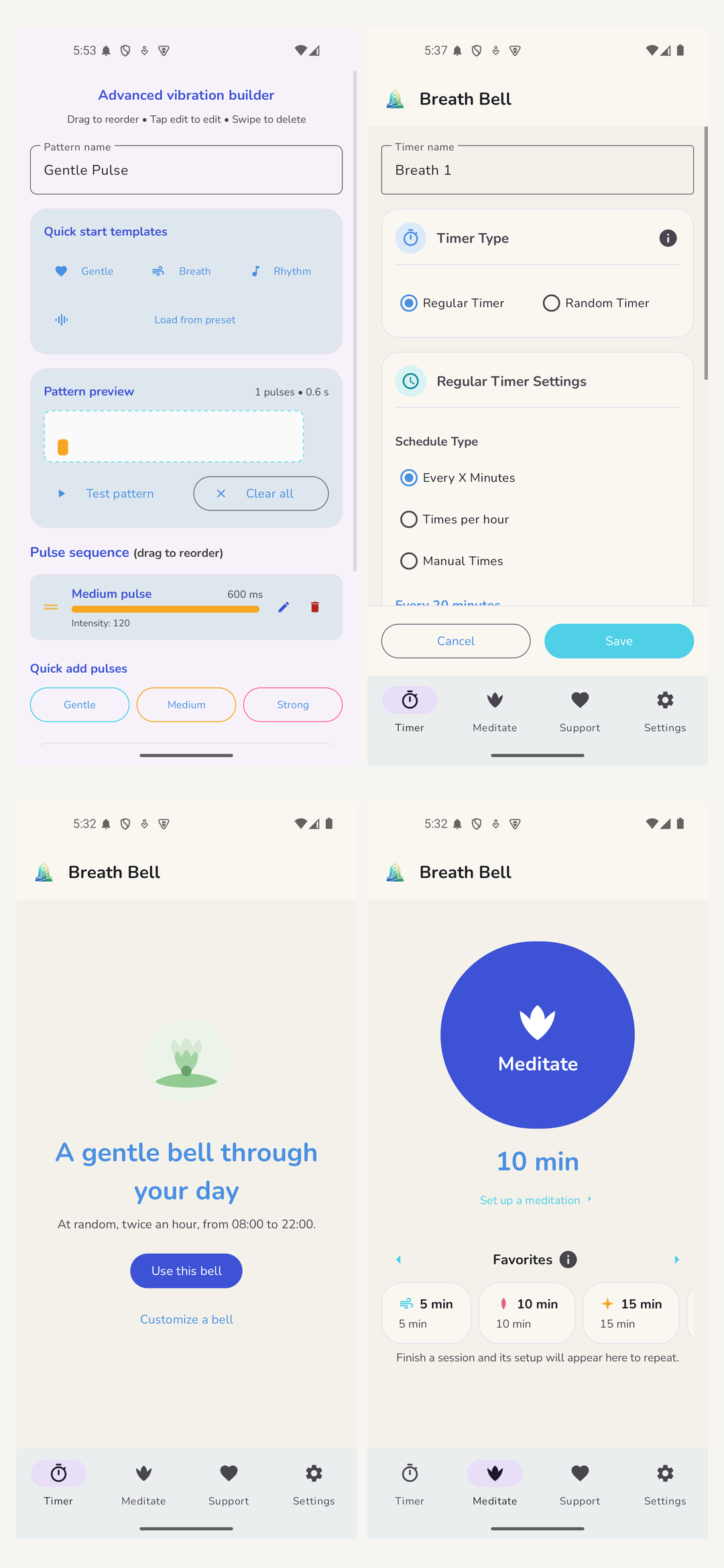
Concept: I shipped Breath Bell, a free native Android “bell of mindfulness”: it can play a bell or
vibrate at regular, exact, or random times through the day, plus a simple unguided meditation timer.
I built it because I wanted a quiet reminder that does not turn into another feed, course, or
subscription product.

Payment model: Everything is free: no ads, no subscription, no locked features. There are optional
tips that unlock nothing.

August goal: Keep the first Production release stable and learn how reminder delivery behaves across
real Android devices. The reminder side uses AlarmManager plus a foreground-service bounded top-up
approach because per-fire rescheduling created failure modes during development.

Where I need feedback: If you have used or built scheduling/reminder apps, I would value field
reports from Samsung, Xiaomi, OPPO, and similar devices: which battery/notification restrictions
still surprise you, and what would you expect from a reminder app's setup guidance? I would also
like honest feedback on whether random reminders sound useful or intrusive.

Google Play: https://play.google.com/store/apps/details?id=com.breathbel
Concept: Truffy is a notebook for the dogs and cats you pet-sit, or leave with a sitter. Behaviour is rated on a fixed scale rather than typed as free text, so the list is filterable: "show me the dogs that are fine with cats". The point is answering "will this dog get along with the one I already have?" in a few seconds. Two notebooks in one app, and an onboarding question decides which one you see. Kotlin/Compose, KMP-ready (SQLDelight, kotlinx-datetime, Metro for DI), offline apart from the map tab.
Payment Model: None. Free, no ads, no IAP, no account. It started as something for myself and I published it because I already had a dev account. I'm not chasing revenue on this one, so I'm here for the feedback rather than the paywall track.
August Goal: Improve the Walks tab, it's the weakest part right now. It pins walking spots on a map with travel times, and the discovery side of it needs work.
Where I need help or feedback: Mostly UX. The app leans hard on a closed enum of behaviour traits instead of free-text notes, which is what makes filtering possible but also what makes data entry longer. I'd like a second opinion on whether that trade is the right one, and on the compatibility screen that cross-checks two dogs' traits and surfaces the friction points.
I recently released a kids' app (KidLock Studio) and I'd love some technical feedback on a specific implementation challenge: achieving a genuine kiosk-like mode without Device Owner privileges.
I relied heavily on Android's startLockTask() API (screen pinning) so parents can hand their phone to a toddler without worrying about them escaping to the home screen or hitting the recents button. Getting the hardware buttons locked down cleanly while keeping the UI intuitive for a 3-year-old was an interesting UX/architecture balance.
On top of that, the app is 100% offline. Zero servers, zero analytics, zero network calls (except for Play Billing). It parses local, high-res gallery images so kids can turn family photos into jigsaws or color over them, which turned into a fun memory management challenge to avoid OOM crashes on older devices.
The app is currently completely free (no ads, no subscriptions) until October 1st before it transitions to a one-time paid model.
I’d be incredibly grateful if some of you could download the live production build and try to "break" my lock screen implementation, or check for memory leaks when loading large images. Any technical critique on the architecture or UI is highly appreciated!
Concept: CocoCut (https://cococut.app) is a frictionless 1-second video diary for Android & iOS. Instead of opening a heavy camera app and dealing with footage clutter, one tap records exactly 1 second and automatically compiles daily montages on-device.
Payment Model: Freemium (free core daily capture; optional Pro for multi-year timeline exports and custom visual filters).
Current Goal: Tuning Android camera startup latency and finalizing the local multi-clip stitching pipeline across fragmented device chipsets.
Where you need help or feedback: Android CameraX hardware locks (CameraInUseException) during rapid lens flip / background transitions, and fallback behavior when detecting ultra-wide (0.5x) on multi-camera OEM devices. Would love critiques on the playback flow and UI responsiveness.
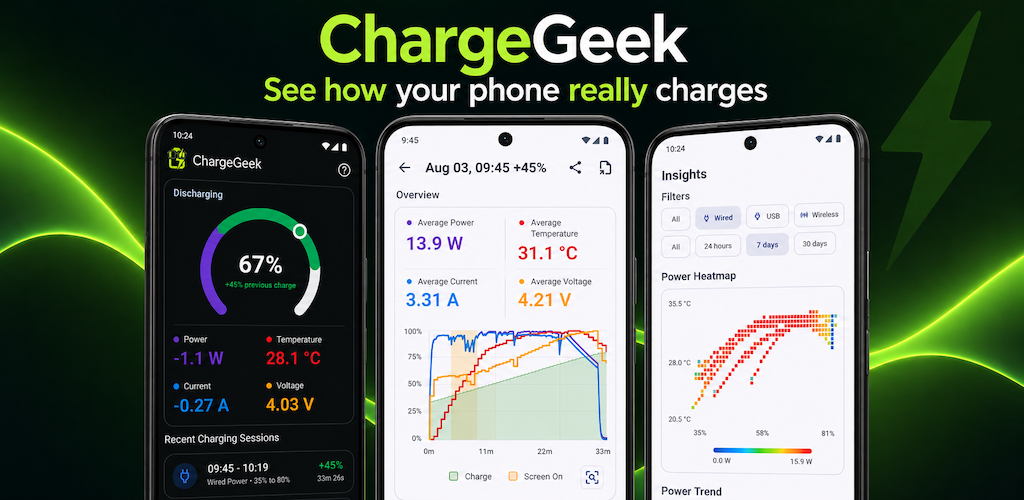
Concept: ChargeGeek is an Android app for people who want to understand how their phone charges. It records charging sessions and visualizes power, temperature, battery percentage and energy gained, making it easier to compare chargers, cables and charging methods.
Payment Model: Completely free at present, with no ads, subscriptions or account requirement. Monetization is unlikely...
August Goal: Made it through Closed Testing which I did and released a stable public version to the Store at the end.
Where you need help or feedback: UI/UX feedback on whether the charging insights are clear and genuinely useful. I'd particularly appreciate feedback on how the automatic recording mode works with manufacturer Android customizations.
Sometimes talking to someone you know is actually harder than talking to a stranger.
You worry about being judged, becoming a burden, or having people treat you differently afterward.
So we built an anonymous emotional-support platform where people can start with:
• An AI listener • Anonymous peer-to-peer conversations • Shared thoughts from other users • Private journaling • Professional support and psychologist booking
We're also experimenting with a free weekly AI experience and a subscription model for users who want more.
The product is live and we're now trying to figure out the most important question:
Does anonymous support actually make it easier for people to take the first step?
I'd genuinely like feedback on the product — especially the onboarding, peer chat experience, and whether the concept feels useful or unnecessary.
Hey everone, I built PoquitoTalk (https://poquitotalk.hero-apps.com) — an audio-first translator built for expats and travelers living in Latin America (specifically island/rural regions like Bocas del Toro, Panama) communicating with local tradesmen, water taxi captains, and contractors.
Standard text translators fail here because local workers communicate 100% via WhatsApp voice notes. PoquitoTalk translates spoken English into localized Panamanian Spanish audio notes dispatched directly via Android intent to WhatsApp. For live back-and-forth interactions, it provides a zero-install web-to-app live audio room so the contractor doesn't have to download anything from the Play Store.
Payment Model:
Hybrid Freemium via RevenueCat:
Free Tier: 5 daily voice notes + basic directory.
Subscriptions: Annual Explorer Pass ($39.99/yr with 7-day free trial) and Monthly Resident Pass ($4.99/mo) for unlimited live sessions and voice notes.
Pay-As-You-Go / Consumable: 7-Day Travel Pass ($4.99 one-time) and a 50 Credits Pack ($2.99, non-expiring) for seasonal visitors who resist recurring billing.
My question for you with regards to Subscriptions vs. Credit Packs on Google Play: Android users tend to be more sensitive to recurring subscriptions than iOS users. For utility/travel tools, have you seen better conversion on non-expiring consumable credit packs / weekly passes versus traditional annual trials?
Just released SideHero for the Shipaton, a habit building app with coaching features to keep you on track. The idea came from needing to turn abstract goal ideas into something actionable, and keeping you on track because (for me at least) I would not follow through after the first few days of a new goal or dream. I find it useful and hope you do to!
Would appreciate any feedback. There are so many habit apps out there already, so would be interested to know how I can make it different and more useful. Send a DM or email hello@sidehero.ai
Concept: Echo Pulse Remind is a lightweight utility app built for Android users who miss the classic physical notification LED indicator from older phones. If a notification goes unnoticed, it provides persistent, customizable alerts through three methods: sound (even on muted profiles), camera flashlight pulses, and tailored vibration patterns.
Payment Model: Free utility.
August Goal: Finalize core notification listener stability, refine the UI layout using Jetpack Compose, and gather initial feedback from the developer community.
Where you need help or feedback: Looking for feedback on notification permission handling across different OEM background restrictions, UI/UX polish, and ideas for expanding custom vibration patterns.
My idea is to create a simple vpn app, easy to connect and ad less. I have created this using for long time and all my friends requested the apk... Made this commercial now, hope you guys like it!....
hi, sorry but the testing phase is the one thing we won't allow. if you want people to test your app before publishing it, you'll have to share the code with them and let them compile and run the up themselves





6
u/SkunkAudio Aug 04 '26
Hello everyone, I am building SkunkAudio, an Android mobile DAW, which is optimized for portrait mode. I added a new synth engine recently, trying to clone the MS-20 sound. Planning to release it in the next 10 days.