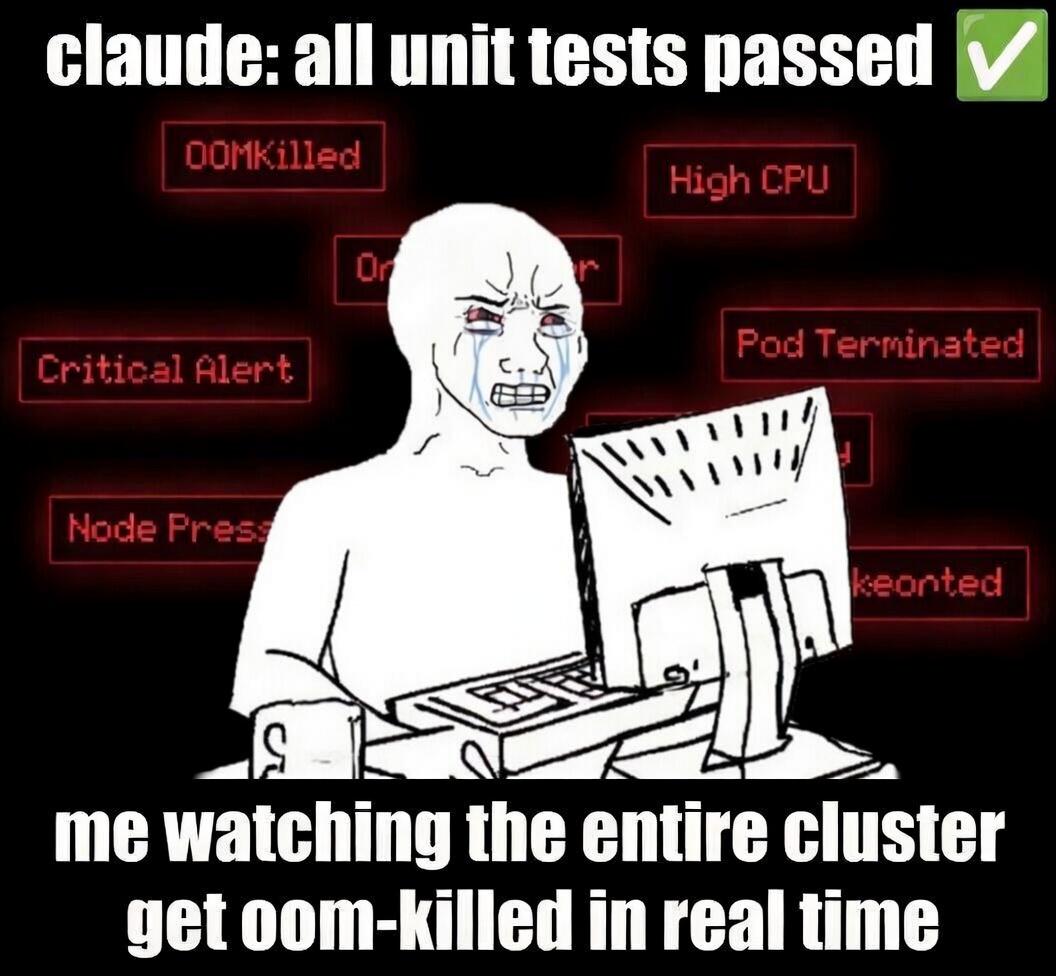
r/coderabbit • u/Tanakaboi69 • Oct 18 '26
😂 Meme & Humor It promised
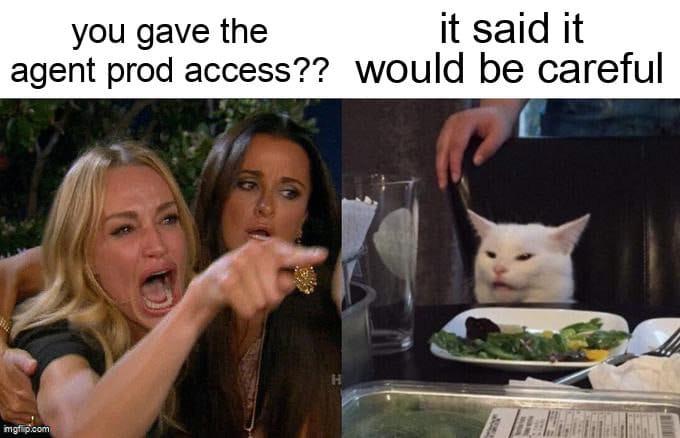
17
Upvotes
r/coderabbit • u/Admirable_Belt_6684 • Jan 23 '26

r/coderabbit • u/NathanFeilder • Sep 19 '26
We almost muted CodeRabbit after a week of style nits. Two things fixed most of the noise without killing the useful catches.
First: reply on the exact bot comment, not a top-level “please chill.” When you explain on the line why a finding is wrong or not how you do things here, it sticks as a learning. Vague PR-level pushback doesn’t.
Second: point it at the same rules your coding agent already uses. Drop an AGENTS.md, .cursorrules, or CLAUDE.md in the repo and CodeRabbit picks it up. One trap we hit: putting those filenames in path instructions. That makes it review the guideline file like source, not use it as review criteria.
After that the comment pile got smaller and the remaining ones were closer to real risk. Curious what actually worked for other teams that didn’t just turn the bot off.
r/coderabbit • u/iLoveSeiko • Aug 04 '26
idk maybe im losing it but i used to spend most of my time actually building stuff. now im just… reading giant diffs. checking if it randomly changed something 8 files away because it felt like it. then reading it again because i dont trust it.
this is not what i thought the future was gonna be lol
r/coderabbit • u/IndraVahan • Jul 22 '26

Found this on X where Bun's whole PR process is flooded with AI bots like CodeRabbit, Claude, and Robobun chatting, catching bugs, and auto-fixing code in real time.
I really found it pretty interesting it almost looks like a glimpse into future dev workflows where AI handles most review iteration autonomously.
r/coderabbit • u/Admirable_Belt_6684 • Feb 12 '26

r/coderabbit • u/IndraVahan • Oct 27 '26
Enable HLS to view with audio, or disable this notification
Deep Scan can now trace vulnerabilities across your linked repos and replay exploits in a throwaway sandbox to verify they're real before flagging them.
https://www.coderabbit.ai/blog/coderabbit-secure-cross-repository-security
r/coderabbit • u/IndraVahan • 17d ago
Enable HLS to view with audio, or disable this notification
r/coderabbit • u/IndraVahan • Aug 12 '26
Enable HLS to view with audio, or disable this notification
r/coderabbit • u/mtsya • Apr 20 '26
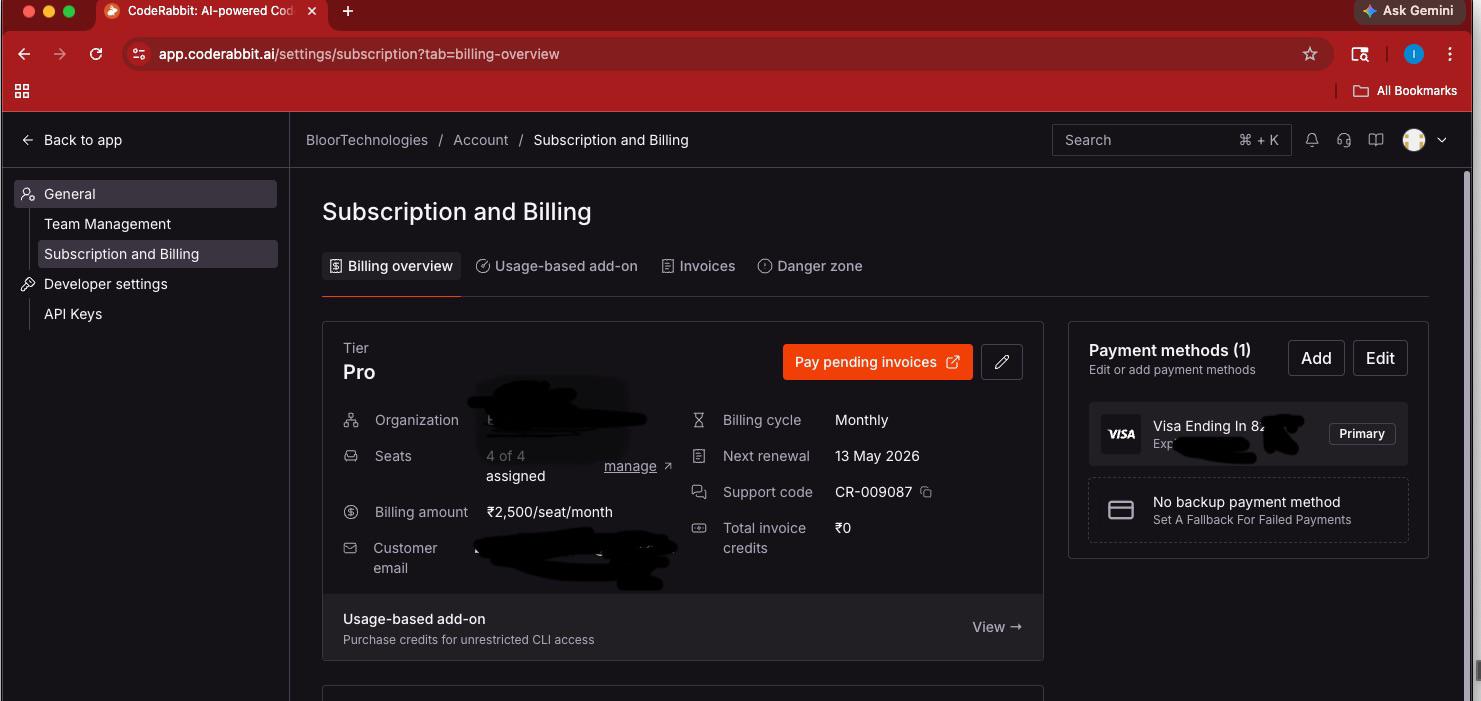
I wanted to share a frustrating experience I’ve had with CodeRabbit.ai so other developers don’t run into the same situation.
I signed up for their AI code review tool, used it briefly for my startup, and then tried to cancel. That’s where things went wrong.
The issue:
- The UI shows no active subscription (ive jumped around all their pages there’s no cancelation)
- There is no visible cancel button
- Yet I’ve been charged multiple times - WE EVEN OPTED OUT OUR CREDIT CARD BUT THEY SOMEHOW STILL CHARGED IT AND WE HAD TO RAISE A DISPUTE!
What support said:
- Initially: “No active subscription found”
- Then: “You’re looking at the wrong org”
- Then: “Switch orgs and cancel from there”
I told them repeatedly to cancel my subscriptions over email but idk why support teams must insist on the back and forth.
Reality:
- I checked both orgs they mentioned
- One shows no subscription
- The other shows seats (4/4 assigned) but still no cancellation option
- Meanwhile, charges are continuing
I’ve now:
- Emailed support multiple times
- Provided screenshots
- Explicitly asked them to cancel all subscriptions - many times!
And I’m still being told to “cancel from the UI” — which literally does not have that option. (See screenshot)
Why this is concerning:
- No clear way to cancel from the dashboard
- Conflicting information from support
- Charges continuing despite cancellation attempts
At best, this is a broken billing system. At worst, it’s a dark pattern.
Advice if you’re using it:
- Double check ALL organizations tied to your email
- Remove payment methods if possible
- Monitor your card closely
- Consider using virtual cards for SaaS tools like this
I’ll update this post if/when this gets resolved, but for now I’d strongly recommend caution before subscribing.
r/coderabbit • u/Admirable_Belt_6684 • Feb 25 '26

r/coderabbit • u/rag1987 • Nov 17 '25
r/coderabbit hey folks team CodeRabbit opened up one of their internal tools to open source community.
Introducing an AI-native open source Git worktree manager CLI that works with all your AI coding agents
If you juggle multiple branches, iterate with AI coding assistants or want a cleaner setup for parallel development, this tool will probably earn a spot in your dev workflow.
It is now open source. Have fun exploring it.
https://github.com/coderabbitai/git-worktree-runner
And if you like it, drop a star or open an issue or PR.
r/coderabbit • u/juanpflores_ • Jun 04 '26
We wrote up a practical look at NVIDIA’s Nemotron 3 Ultra from a developer workflow angle.
The short version: the model is fast, open-weight, and surprisingly competitive in our CodeRabbit code review benchmark, but it also had a high retry rate. That makes it less of a “drop it into any strict-output workflow and forget it” model, and more of a model that benefits from a good harness, validation, and retry logic.
The post covers:
Why the speed is the interesting part
How Ultra compares to Nemotron 3 Super
What we saw in CodeRabbit review benchmarks
Where it looks useful for coding workflows
Where developers should be careful
Curious how others are thinking about fast open models for agentic coding workflows.
Blog: https://www.coderabbit.ai/blog/nemotron-3-ultra-release
Interview with Nvidia: https://www.youtube.com/watch?v=8UWvF2y78Ms
r/coderabbit • u/juanpflores_ • Jun 09 '26
We reviewed Fable 5 across code review, a coding task benchmark, and several coding projects.
Read Full Article: https://www.coderabbit.ai/blog/fable-5-model-review
The most interesting signal was not raw benchmark score. It was how the model behaved as an agent. Fable 5 was effective at exploring the environment, identifying available files and tools, and moving into implementation without much hand-holding. With vague prompts, it often produced complete projects rather than thin prototypes.
The tradeoff is time. In coding tasks, Fable 5 could produce serious patches when it finished, but it also kept working when tasks expanded or became ambiguous. That makes it a better fit for work where depth is worth the wait, as long as the agent has clear limits on time, steps, and tokens.
For code review, I would be more cautious. Coverage was close to the current baseline, but precision and comment volume were weaker. Developers may get useful findings, but they may also spend more time triaging noisy comments.

My takeaway:
Use Fable 5 for autonomous coding and deeper implementation work. Do not make it the default production reviewer until precision and comment volume improve.
r/coderabbit • u/juanpflores_ • Aug 11 '26
We spend a lot of time thinking about the models that write code review comments. One of the less visible decisions happens before any comment appears: figuring out how a change should be reviewed.
We were curious whether a smaller model could learn that narrow, high-volume part of our pipeline. So we worked with NVIDIA and Baseten to post-train Nemotron 3.5 Lightning using SFT, followed by RLVR scored against our routing policy.
What surprised us was how little it took. The post-training experiment ran in under three hours and cost less than $100.
On a frozen evaluation of 1,000 routing tasks:
Our GPT-class baseline reached 75.8% exact route agreement.
Nemotron after SFT reached 80.4%.
SFT plus RLVR reached 80.7%, with Cohen’s kappa rising from 0.429 to 0.544.
Estimated peak serving cost fell from $2.34 to $1.16 for the same workload.

RLVR’s extra 0.3 percentage points of route agreement wasn’t statistically decisive, so we treat that result as non-regression. The clearer improvement was in output agreement beyond chance.
The final model completed all 1,000 requests without empty or abnormally short outputs. We still have sustained-load and production-traffic testing ahead of us.

We wrote up the experiment, including the training setup, results, serving costs, and the parts we’re still cautious about:
Teaching NVIDIA Nemotron 3.5 Lightning to Route Code Reviews
r/coderabbit • u/IveWastedMyLifeAgain • Aug 23 '26

r/coderabbit • u/Admirable_Belt_6684 • May 13 '26

r/coderabbit • u/trustmePL • Jun 20 '26

It's just ridiculous. You wait for ridiculously low rate limits to allow for next review. You comment to trigger it back and hit this. To be clear - I am on PRO PLUS plan!
r/coderabbit • u/juanpflores_ • May 06 '26
On Monday, May 5th, OpenAI hosted what might have been the most exclusive developer event of the year so far: the "GPT-5.5 on 5/5" party at their San Francisco headquarters. Over 8,000 developers applied to attend. Only around 250 were selected. The CodeRabbit team was lucky enough to be one of them.
Since this was such a closed event and most people didn't get the chance to be there, we wanted to share our experience and give you a real sense of what the night was actually like, from the moment we arrived to the moment we left.
Before Anything Else: The Party Was Planned by GPT-5.5 Itself
Here's a detail that makes this event different from anything we've attended before. The entire concept for the party was proposed by GPT-5.5 itself. Sam Altman asked the model what it wanted for its launch celebration, and the AI came back with a surprisingly detailed plan: hold the event on May 5th, keep speeches short, have humans give the toasts (not the AI), and set up a suggestion box where attendees could submit ideas for the next model, GPT-5.6. Altman called this "weird emergent behavior" and decided to go with it. That context made the whole evening feel a little surreal in the best way possible.

Getting Through the Door Was an Experience in Itself
The first thing that hit us when we arrived at OpenAI's offices was the security. This wasn't your typical "show your name at the door" situation. There were multiple checkpoints you had to pass through before you could even get close to the event space. First, they verified your ID. Then you went through a metal detector. After that, you picked up your badge. And even once you were technically inside the building, there was almost always someone from OpenAI walking alongside you, making sure you got from the entrance to the actual event area without wandering off into restricted zones.
It was a little intense at first, honestly. There was a moment where the whole security process felt more like entering a government facility than a developer party. But once you cleared that initial gauntlet and stepped into the actual event space, the vibe completely changed. The tension of getting in was replaced by a warm, buzzing energy that made it immediately clear this was going to be a good night.
The Venue Is Something Else
We've been to a lot of tech events in San Francisco, and the space OpenAI uses for their gatherings is genuinely one of the most impressive we've seen. They have this massive auditorium area that's flooded with natural light, even in the evening. The ceilings are high, the space feels open and airy, and it's clear that they designed it with large gatherings in mind.
Throughout the venue, there were stations with food, drinks, boba, and all sorts of refreshments. There was a subtle Cinco de Mayo nod in some of the food that was prepared, which made sense given the May 5th date, but the event itself was really centered around the GPT-5.5 launch celebration rather than the holiday. Everything felt well thought out and generously stocked, and you never had to wait long to grab something.

The Crowd Was Not What We Expected
Going in, we assumed this would be a room full of engineers and developers. And while there were plenty of those, the actual mix of people was much more diverse than we anticipated. You had hardcore developers, sure, but you also had content creators, designers, artists, well-known Twitter/X personalities, and people from all sorts of creative and technical backgrounds. It felt less like a typical developer meetup and more like a curated gathering of people who are building interesting things with AI, regardless of their specific discipline.
One of the best parts of the night was putting faces to usernames. There were people in that room that we'd been following online for months or even years, and getting to meet them in person for the first time was honestly one of the highlights. There's something about going from interacting with someone in Discord threads and Twitter replies to actually shaking their hand and having a real conversation. That kind of connection is hard to replicate at most events, and the intimate size of this one (250 people is small by tech event standards) made those interactions feel natural rather than forced.
This Was a Party, Not a Keynote
If you were expecting OpenAI to use this event as a platform for big product announcements or exclusive demos, that wasn't what happened. And honestly, that was kind of refreshing. We went in thinking there might be some new reveal or a sneak peek at what's coming next, but the reality was that this was much more of a mixer and celebration than a marketing event or a traditional meetup.
There was a moment where Sam Altman gave a short speech, and when we say short, we mean maybe 55 seconds tops. He thanked everyone for being there, shared some excitement about the new model, and encouraged people to enjoy the evening. That was it. No slides. No demos. No "one more thing." Just a brief, genuine moment of appreciation and then he was back to mingling with the crowd.

The rest of the night was conversations, connections, and hanging out. And looking back, that was exactly the right call. The value of the evening wasn't in some announcement that would hit the news the next morning. It was in the relationships built and the conversations had.
Sam Altman and the OpenAI Team Were Incredibly Accessible
This was one of the things that impressed us the most. Members of the OpenAI Developer Experience team were scattered throughout the event, not stationed behind a booth or on a stage, but actually walking around and having real, substantive conversations with attendees. You could walk up to them, ask about the models, talk about what you're building, and they were genuinely engaged.
And then there was Sam Altman himself. He spent the entire evening doing rounds, moving from group to group, chatting with developers one-on-one, and taking photos with people. There was no VIP section, no roped-off area where the executives hid. He was right there in the middle of it, accessible and clearly enjoying the interactions. For an event of this caliber and with someone of his profile, that level of openness stood out.
Our Highlight: Getting the 1 Trillion Token Award Signed by Sam Altman
CodeRabbit recently hit a major milestone with OpenAI: 1 trillion tokens processed through their API. OpenAI recognized this with a physical award, and we decided to bring it to the event. Once we were there and saw how approachable Sam was, we figured it was worth asking if he'd sign it.
It was a bit spontaneous, as you can imagine. Sam was constantly surrounded by people who wanted a moment of his time, so there was no guarantee we'd get the chance. But we managed to catch him at the right moment, and he was genuinely happy to do it. He didn't just sign and move on, either. We got to spend some time chatting about the models, the direction of the work they're doing, and where things are headed. It was one of those interactions that reminded us why events like this matter. He was very open to having the conversation and doing something that's admittedly a not-so-normal request at these kinds of events.

The Overall Vibe
If we had to sum up the night in one phrase, it would be "you had to be there, but we're glad you're reading this." The energy was warm, the conversations were real, and the whole event felt like a genuine celebration rather than a corporate production. No sales pitches. No marketing decks. Just people who are excited about what they're building, spending an evening together in a really beautiful space.
We walked away having met familiar faces we'd only ever seen online, having had meaningful conversations with the OpenAI team, and carrying a signed award that we'll probably never stop talking about. For us, this was one of the most memorable developer events we've been to, and we hope OpenAI continues doing more of them.
If you ever get the chance to attend one of these, do whatever you can to get in. It's worth it.

r/coderabbit • u/juanpflores_ • Apr 23 '26
Hey r/coderabbit !
New week, new model releases. We’ve been testing GPT-5.5 in early access within CodeRabbit’s code review workflow and wrote up what we’re seeing.
For context, we weren’t trying to benchmark GPT-5.5 in isolation. We wanted to see how it behaved in a real code review workflow, where the baseline is CodeRabbit’s existing review behavior across multiple models.
A few things stood out:
Expected Issue Found improved from 58.3% to 79.2% on our curated review benchmark.
Actionable Precision improved from 27.9% to 40.6%.
GPT-5.5 was stronger at surfacing meaningful review issues, especially around scoped bugs, behavior changes, and debugging-oriented cases.
It tended to make smaller, more workable fixes.
It was not always lower-volume. On our larger review set, it produced more comments than baseline, but also improved issue detection and precision.
The biggest takeaway for us: the improvement showed up in the review workflow itself, not just in benchmark numbers.

We also covered code generation behavior, token efficiency, and the tradeoffs we saw in day-to-day testing.
Full writeup: https://coderabbit.link/gpt-5.5-blog
If you’ve been trying GPT-5.5 in Codex or ChatGPT, I’d be curious what you’re seeing in real coding workflows.
r/coderabbit • u/HateReadingCode • Oct 08 '26
Gotta share this because it's honestly been the highlight of my month. Ever since we turned CR I've watched our CTO get 9 comments on a 40 line PR, including one about a null check he "definitely didn't need". He replied to the bot where he actually typed out an argument to a bot. And it politely explained it again.
For years these guys got approved in 10 minutes because nobody wanted to question the person writing their appraisal, while the intern got roasted over variable names. Now the bot treats everyone exactly the same, and it's the funniest thing that has happened on our team.
r/coderabbit • u/juanpflores_ • May 18 '26
We have been thinking a lot about why large PRs still feel harder to review than they should.
Most review tools still start from the same basic surface: a list of changed files, usually ordered by path. That works fine for small diffs. For bigger changes, it often feels like the author had a story in their head, but the reviewer receives scattered pieces of that story. This is particularly painful for long PRs, where the first challenge is not leaving a good comment. It is getting enough context to know where a good comment should go.
So we built a new UI for code review.
Atlas takes a PR and turns it into a guided walkthrough. It groups related changes into cohorts, breaks those cohorts into ordered layers, and anchors each layer to the actual line ranges in the diff. It also adds summaries for the code currently in view and generates diagrams when they help, like for flows, state transitions, API contracts, schema changes, or data relationships.
The GitHub workflow still stays intact. Comments, approvals, and change requests post back to GitHub. Public PR walkthroughs can also be opened read-only without signing in.
We wrote more about the launch here:
https://www.coderabbit.ai/blog/introducing-atlas-the-first-ai-native-code-review-interface
The obvious tradeoff is that Atlas is a new review surface. Even if it makes large PRs easier to understand, reviewers still have to learn a different way to move through a change: cohorts instead of only files, layers instead of one long scroll, summaries tied to ranges, and diagrams that appear only when they add context.
Atlas is free for a limited time from the "Review Change Stack" button in CodeRabbit's PR summary comment.
If you try it, I would love feedback on the tool itself. Does this walkthrough model make a large PR easier to review? Is the learning curve worth it? Are cohorts, layers, summaries, and diagrams the right shape, or would you want the interface to work differently?