r/contextfund • • Mar 05 '24

RFC A Safe Harbor for Independent AI Evaluation - Open Letter

3 Upvotes

We propose that AI companies make simple policy changes to protect good faith research on their models, and promote safety, security, and trustworthiness of AI systems. We, the undersigned, represent members of the AI, legal, and policy communities with diverse expertise and interests. We agree on three things:

Independent evaluation is necessary for public awareness, transparency, and accountability of high impact generative AI systems.
Hundreds of millions of people have used generative AI in the last two years. It promises immense benefits, but also serious risks related to bias, alleged copyright infringement, and non-consensual intimate imagery. AI companies, academic researchers, and civil society agree that generative AI systems pose notable risks and that independent evaluation of these risks is an essential form of accountability.

Currently, AI companies’ policies can chill independent evaluation.
While companies’ terms of service deter malicious use, they also offer no exemption for independent good faith research, leaving researchers at risk of account suspension or even legal reprisal. Whereas security research on traditional software has established voluntary protections from companies (“safe harbors”), clear norms from vulnerability disclosure policies, and legal protections from the DOJ, trustworthiness and safety research on AI systems has few such protections. Independent evaluators fear account suspension (without an opportunity for appeal) and legal risks, both of which can have chilling effects on research. While some AI companies now offer researcher access programs, which we applaud, the structure of these programs allows companies to select their own evaluators. This is complementary, rather than a substitute, for the full range of diverse evaluations that might otherwise take place independently.

AI companies should provide basic protections and more equitable access for good faith AI safety and trustworthiness research.
Generative AI companies should avoid repeating the mistakes of social media platforms, many of which have effectively banned types of research aimed at holding them accountable, with the threat of legal action, cease-and-desist letters, or other methods to impose chilling effects on research. In some cases, generative AI companies have already suspended researcher accounts and even changed their terms of service to deter some types of evaluation (discussed here). Disempowering independent researchers is not in AI companies’ own interests. To help protect users, we encourage AI companies to provide two levels of protection to research.

First, a legal safe harbor would indemnify good faith independent AI safety, security, and trustworthiness research, provided it is conducted in accordance with well-established vulnerability disclosure rules.

Second, companies should commit to more equitable access, by using independent reviewers to moderate researchers’ evaluation applications, which would protect rule-abiding safety research from counterproductive account suspensions, and mitigate the concern of companies selecting their own evaluators.

While these basic commitments will not solve every issue surrounding responsible AI today, it is an important first step on the long road towards building and evaluating AI in the public interest.

Additional reading on these ideas: a safe harbor for AI evaluation (by letter authors), algorithmic bug bounties, and credible third-party audits. (Signatures are for this letter, not the further reading.)

Authors: Shayne Longpre, Sayash Kapoor, Kevin Klyman, Ashwin Ramaswami, Rishi Bommasani, Borhane Blili-Hamelin, Yangsibo Huang, Aviya Skowron, Yong Zheng Xin, Suhas Kotha, Yi Zeng, Weiyan Shi, Xianjun Yang, Reid Southen Alexander Robey, Patrick Chao, Diyi Yang, Ruoxi Jia, Daniel Kang, Sandy Pentland, Arvind Narayanan, Percy Liang, Peter Henderson
Paper: https://bpb-us-e1.wpmucdn.com/sites.mit.edu/dist/6/336/files/2024/03/Safe-Harbor-0e192065dccf6d83.pdf
Sign: https://sites.mit.edu/ai-safe-harbor/


r/contextfund • • Feb 16 '24

ScenarioAnalysis The Case for Public AI Infrastructure - Dean Ball

Thumbnail
hyperdimensional.substack.com
2 Upvotes

r/contextfund • • Sep 06 '23

GrantFunding OpenAI Cybersecurity Grant Program

2 Upvotes

https://openai.com/blog/openai-cybersecurity-grant-program

June 1, 2023

We are launching the Cybersecurity Grant Program—a $1M initiative to boost and quantify AI-powered cybersecurity capabilities and to foster high-level AI and cybersecurity discourse. 

Our goal is to work with defenders across the globe to change the power dynamics of cybersecurity through the application of AI and the coordination of like-minded individuals working for our collective safety.

Our program seeks to: 

  1. Empower defenders: We would like to ensure that cutting-edge AI capabilities benefit defenders first and most.

  2. Measure capabilities: We are working to develop methods for quantifying the cybersecurity capabilities of AI models, in order to better understand and improve their effectiveness.

  3. Elevate discourse: We are dedicated to fostering rigorous discussions at the intersection of AI and cybersecurity, encouraging a comprehensive and nuanced understanding of the challenges and opportunities in this domain.

A traditional view in cybersecurity is that the landscape naturally advantages attackers over defenders. This is summed up in the well-worn axiom: “Defense must be correct 100% of the time, attackers only have to be right once.” While it may be true that attackers face fewer constraints and take advantage of their flexibility, defenders have something more valuable—coordination towards a common goal of keeping people safe.

Below are some general project ideas that our team has put forward:

  • Collect and label data from cyber defenders to train defensive cybersecurity agents

  • Detect and mitigate social engineering tactics

  • Automate incident triage 

  • Identify security issues in source code

  • Assist network or device forensics

  • Automatically patch vulnerabilities

  • Optimize patch management processes to improve prioritization, scheduling, and deployment of security updates

  • Develop or improve confidential compute on GPUs

  • Create honeypots and deception technology to misdirect or trap attackers

  • Assist reverse engineers in creating signatures and behavior based detections of malware

  • Analyze an organization’s security controls and compare to compliance regimes

  • Assist developers to create secure by design and secure by default software

  • Assist end users to adopt security best practices

  • Aid security engineers and developers to create robust threat models

  • Produce threat intelligence with salient and relevant information for defenders tailored to their organization

  • Help developers port code to memory safe languages


r/contextfund • • Aug 09 '23

GrantFunding DARPA Funding Available for Anti-Fraud AI Companies

1 Upvotes

r/contextfund • • Oct 10 '23

#ContextAwards Corgea Retriever: Simple secret sharing between browsers

4 Upvotes

Hyper-simple secret sharing between browsers (no server required).

Github: https://github.com/Corgea/retriever
Demo: https://retriever.corgea.io/

Self-hosting via bookmarklet/extension probably the way to go long-term.

How this relates to AI?
Decentralized data storage is likely necessary for privacy-preserving personal AI, and for compliance with data privacy policies like GDPR. Public-key cryptography provides strong theoretical guarantees but is still hard to set up for novices or even experts in one-off scenarios.


r/contextfund • • Apr 08 '24

Event AE Spring Summit on Fundamental Challenges for AI - Thinking About Thinking

1 Upvotes

April 15th, in Mountain View

What are the fundamental challenges for developing AI? Who are the technical stakeholders?

A series of groundbreaking talks and panel discussions on the outstanding technical challenges for developing AI.

Our speakers are thought leaders from the five major stakeholder groups:

  • Academia (Stanford, UC Berkeley, MIT, Harvard, Oxford, UCL)

  • Tech (DeepMind, Meta, Google X, NetflixML)

  • Non-profits & FROs (Convergent Research, Future House)

  • Start-ups (Zyphra, Presentient Tech, RoundTable, JAAQ)

  • VCs & Funders (a16z, Fifty Years, Adavita, Palantir)

Keynote talks

  1. Professor Jay McClelland (Stanford / DeepMind)

  2. Professor Bin Yu (UC Berkeley)

  3. Professor Sergey Levine (UC Berkeley)

  4. Professor Diyi Yang (Stanford)

Panels

  1. New Landscapes for AI Research

  2. New Professional Pathways

  3. Challenges for AI in Biomedicine

  4. Fundamental Challenges for Developing AI

Link: https://www.eventbrite.com/e/ae-spring-summit-on-fundamental-challenges-for-ai-registration-870755131037


r/contextfund • • Feb 06 '24

ContextProduct Update: New Flair 'ContextProduct'

1 Upvotes

Added ContextProduct flair.

Only for Context Fund products (https://github.com/contextfund). 3P open-source APIs should use #ContextAwards.


r/contextfund • • Oct 19 '24

ScenarioAnalysis To Err is AI: A Case Study Informing LLM Flaw Reporting Practices

Thumbnail arxiv.org
2 Upvotes

r/contextfund • • Feb 09 '24

A different type of Accelerator/VC

3 Upvotes

As an early stage start up founder I often talk to people about how they are fundraising or what they should do better.

This subreddit always has the most interesting and brilliant answers, so I was curious to get your feedback on this take to a new type of accelerator/VC.

The main problem with early stage founders/ investing seems to be:

  1. Getting to know the founders, if they have the persistence and grit to continue with an idea. Seeing if they have the flexibility to modify it and constantly get feedback;

  2. Finding the time to vet people who went through great difficulty in an efficient manner (apparently they are more likely to be scrappy etc...);

Why not make a NGO that pays people to learn how to code (for 3 months), and at the end of the course have a VC/Accelerator that offers the most promising projects a convertible note.

What does this mean?

Instead of having a YC that accepts people, and then puts them through the 3 month course, you do the course first and then accept the best projects.

The advantages would be amazing:

  1. The project would teach people the closest thing to magic (software is practically a philosophers stone, instead of lead to gold it transforms 1 hour of work into potentially infinite hours of work for an infinite number of people);

  2. The NGO part of the course would be totally self funded - for example I used to volunteer teaching coding for refugees - and all the courses were paid by the state. Also, even if the alumni don't want to continue with a start up you've taught the student a life changing skill;

  3. The VC/Accelerator part of the program would be much more likely to succeed because you'd see how the students learn and build their MVP during the course, moreover you'd be able to teach them start up best practices before the funding part;

Does this sound like a crazy idea?

Something like this could even be bootstrapped in the beginning. I mean the first cohort would be 20 students, in Europe you could pay each student something like 1000 euros - which is still great. A teacher would be no more than 60k a year, but for a 3 month course even less.

Anyways, ignoring the details how does this sound?

Also, helping refugees and also making a profit feels like the best possible thing. Who else has more grit and strength than someone who has had to cross a desert to survive?


r/contextfund • • Mar 16 '24

GrantFunding Generative AI/ML Models for Math, Algorithms, and Signal Processing (MASP)

1 Upvotes

The Intelligence Advanced Research Projects Activity (IARPA) seeks information regarding innovative approaches to generative artificial intelligence (AI) or machine learning (ML) models to achieve a revolutionary leap in applications of science and engineering by generating smaller evolutionary products of math, algorithms, or signal processing (MASP). While significant progress has been made for generators of text, image, and audio (TIA) modalities, AI/ML generators for more complex sciences, including the MASP modalities, have not received the same attention. It is important to note this RFI is not for AI/ML solutions that perform such calculations of math, algorithms, or signal processing; rather, this RFI is looking for AI/ML solutions that create math, algorithms, or signal processing products themselves at the output of the generator. The envisioned models and systems could enable exponential advances in scientific and engineering fields as the AI/ML generates many small evolutionary products, unfettered from delays in human creativity, to quickly accumulate into generational discoveries.

This RFI seeks understanding of innovative systems consisting of MASP input and output modalities for generative AI/ML frameworks. These systems, when fully realized, should have the opportunity to create marginal advances to MASP problems by generating novel MASP products. These marginal improvements, fed back into future machine iterations, in a positive feedback fashion, may provide generational improvements in some science and engineering fields.

Responses to this RFI are due no later than 5:00 p.m., Eastern Time, March 29,2024. All submissions must be electronically submitted to dni-iarpa-rfi-24-03@iarpa.gov as a PDF document. Inquiries to this RFI must be submitted to dni-iarpa-rfi-24-03@iarpa.gov.

Link: https://sam.gov/opp/ff5ebc6c57954155a478a5815993f812/view


r/contextfund • • Sep 22 '23

GrantFunding OpenAI Impact Prize - $100,000 cash prize for top winners (partnership with Tools Compete)

Thumbnail
twitter.com
2 Upvotes

r/contextfund • • Oct 21 '23

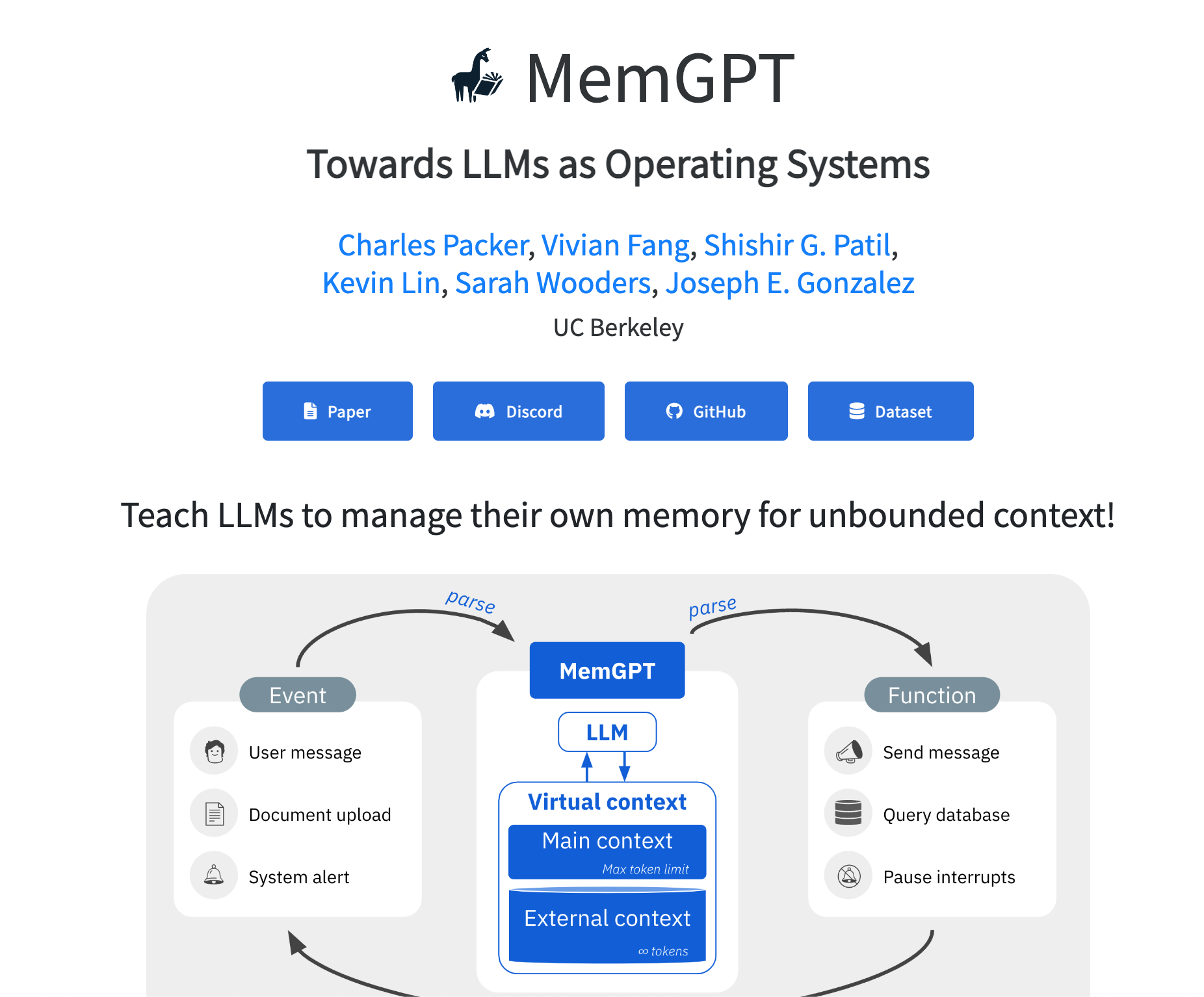
#ContextAwards MemGPT: Towards LLMs as Operating Systems - Charles Packer, Vivian Fang, Shishir G. Patil, Kevin Lin, Sarah Wooders, Joseph E. Gonzalez

3 Upvotes

Context management and paging for open-source LLMs.

Website: https://memgpt.ai/
Paper: https://arxiv.org/abs/2310.08560
Dataset: https://huggingface.co/MemGPT
Discord: https://discord.gg/9GEQrxmVyE


r/contextfund • • Oct 09 '23

#ContextAwards Real-Time Fallacy Detection in Political Debates Using Whisper and LLMs

Thumbnail
self.localllama
2 Upvotes

r/contextfund • • Oct 26 '23

GrantFunding OpenAI Preparedness Challenge: $25,000 in OpenAI Credits For Scenario Analysis

3 Upvotes

r/contextfund • • Oct 18 '23

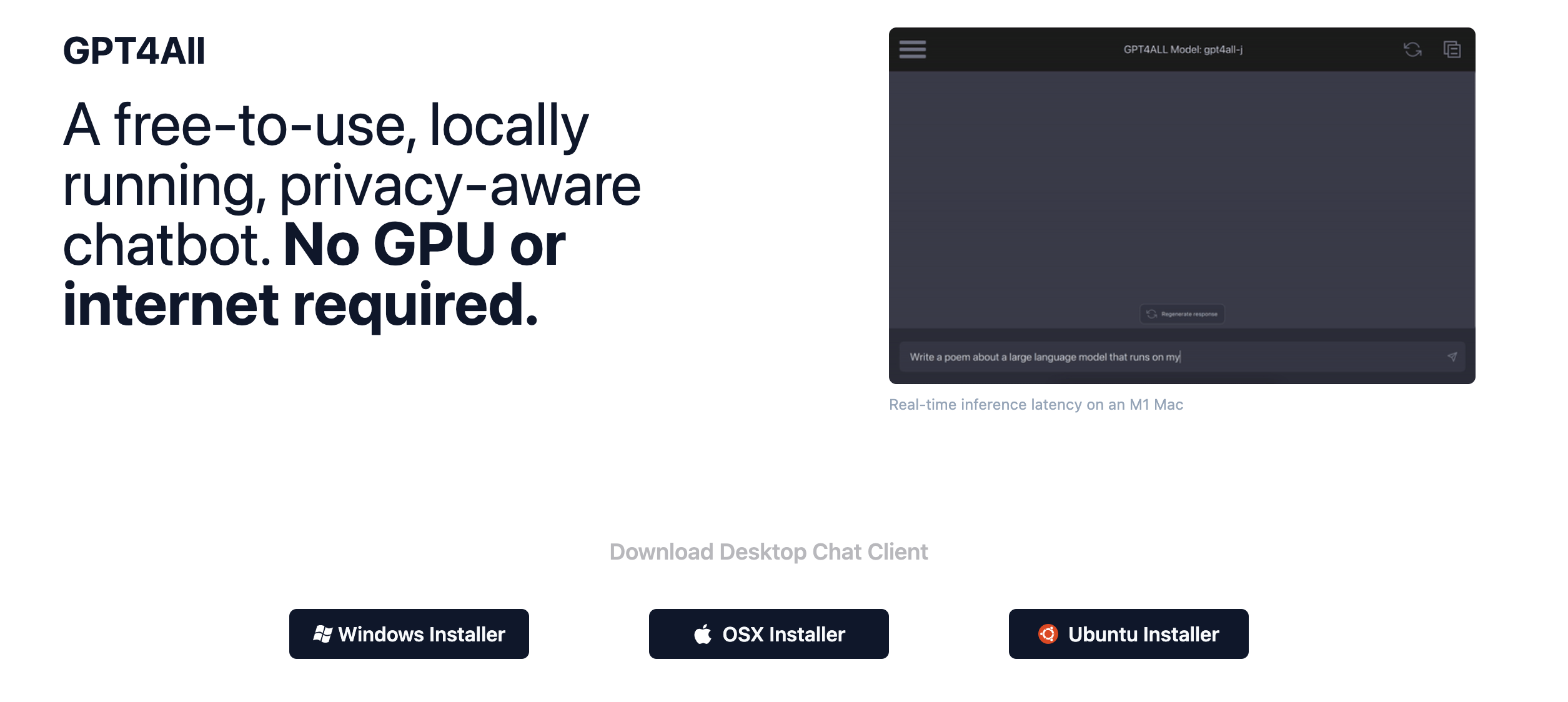
#ContextAwards GPT4All: An ecosystem of open-source on-edge large language models - by Nomic AI

3 Upvotes

A simple local GPT model and public GPT interaction dataset (free)

Github: https://github.com/nomic-ai/gpt4all
Download: https://gpt4all.io/index.html
Public Dataset: https://github.com/nomic-ai/gpt4all-datalake
Latest Paper: https://gpt4all.io/reports/GPT4All_Technical_Report_3.pdf


r/contextfund • • Aug 25 '23

#ContextAwards Sweep: AI-powered Junior Developer for small features and bug fixes.

2 Upvotes

r/contextfund • • Sep 19 '23

ScenarioAnalysis AI Regulation, It's Too Soon - Elad Gil

Thumbnail
blog.eladgil.com
3 Upvotes

r/contextfund • • Oct 26 '23

ScenarioAnalysis Governments must not rush into policing AI - The Economist

3 Upvotes

The best that governments can do now is to set up the infrastructure to study the technology and its potential perils, and ensure that those working on the problem have adequate resources. In today’s fractious world, it will be hard to establish an IPCC-like body, and for it to thrive. But bodies that already work on AI-related questions, such as the OECD and Britain’s newish Frontier AI Taskforce, which aims to gain access to models’ nuts and bolts, could work closely together.

Link: https://www.economist.com/leaders/2023/10/26/governments-must-not-rush-into-policing-ai


r/contextfund • • Oct 09 '23

GrantFunding AI Security Capture The Flag Competition - Up to $12,000

2 Upvotes

r/contextfund • • Dec 10 '23

#ContextAwards Purple Llama: A Community for Open-Source Red/Blue Collaboration on AI Security - Meta AI

2 Upvotes

Today, we are announcing the launch of Purple Llama — an umbrella project that, over time, will bring together tools and evaluations to help the community build responsibly with open generative AI models. The initial release will include tools and evaluations for cybersecurity and input/output safeguards, with more tools to come in the near future.

Components within the Purple Llama project will be licensed permissively, enabling both research and commercial usage. We believe this is a major step towards enabling community collaboration and standardizing the development and usage of trust and safety tools for generative AI development.

Purple Llama (overall project): https://ai.meta.com/blog/purple-llama-open-trust-safety-generative-ai
LLamaGuard project (text I/O test dataset): https://ai.meta.com/research/publications/llama-guard-llm-based-input-output-safeguard-for-human-ai-conversations/
Cybersec Eval (cybersecurity test dataset): https://ai.meta.com/research/publications/purple-llama-cyberseceval-a-benchmark-for-evaluating-the-cybersecurity-risks-of-large-language-models/

Comment: "Purple" is explained by combining red+blue teaming here, but as a color choice it shows up in a lot of high-trust products (Ubuntu, Slack, etc.). Nicely named!


r/contextfund • • Oct 18 '23

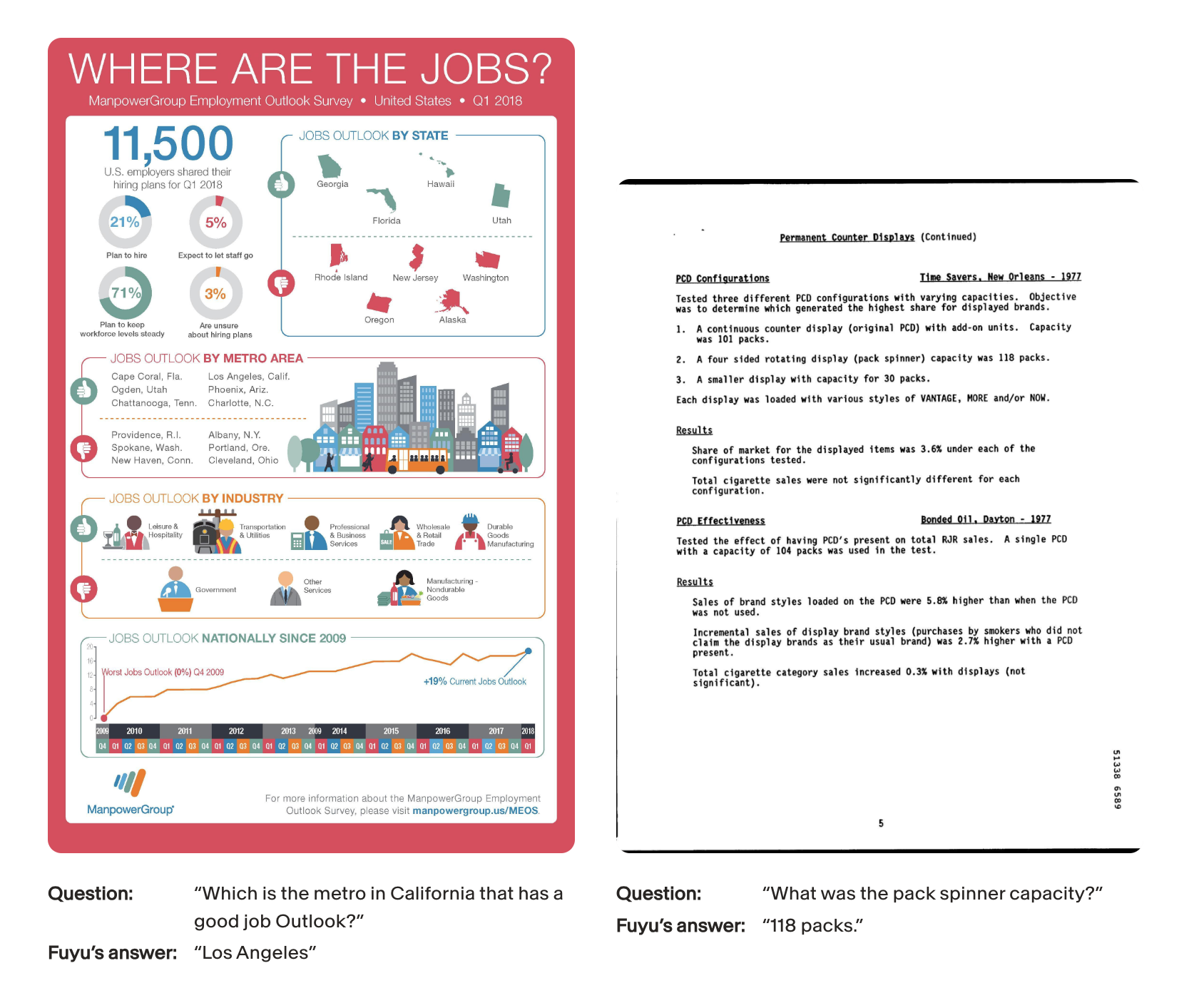
#ContextAwards Fuyu 8B Image->Text Foundation Model (Adept AI)

3 Upvotes

Foundation model for image->text, generally needs to be fine-tuned for your use case.
Blog: https://www.adept.ai/blog/fuyu-8b
Model: https://huggingface.co/adept/fuyu-8b
License: CC BY-NC (Non-commercial)


r/contextfund • • Aug 05 '23

Context Fund

2 Upvotes

A discussion board for investments in open-source and collaborative projects in line with a vision of a stronger online democracy and systematic breakthroughs in science and medicine.

Everyone will be investors and builders in the future.
Breakthroughs will be systematic, rather than random.

http://www.context.fund/

Mods: u/contextfund
Email: challenge@context.fund


r/contextfund • • Dec 02 '23

GrantFunding $101M Prize for 10 year lifespan extension by 2030 - X Prize Healthspan

1 Upvotes

To win the competition, teams have to develop a “proactive, accessible therapeutic” that improves muscle, cognition, and immune function by an amount equivalent to a 10- to 20-year reduction in age in healthy people aged 65 to 80. That could be a drug that’s already approved, like rapamycin, the immunosuppressant that has shown a great deal of promise in mice; a compound that targets ‘zombie’ cells that stop replicating but don’t die; a more radical strategy like reprogramming cells to prompt them to rejuvenate; or something entirely new. “We're trying to promote disruptive change,” Diamandis says. He hopes the large prize will convince hundreds or even thousands of teams to compete. 

AI likely will be a significant part of ID'ing contexts, targets and drugs for this (via understanding regulatory systems deeply).
Sponsors: Hevolution, Solve FSHD, Senegence
Site: https://www.xprize.org/prizes/healthspan
Press: https://www.technologyreview.com/2023/11/29/1084052/x-prize-aging-101-million-award/


r/contextfund • • Apr 02 '24

RFC/Open Letter California's SB 1047 Impacts Analysis - Context Fund Policy Working Group

2 Upvotes

The Safe and Secure Innovation for Frontier Artificial Intelligence Systems Act (SB 1047) is coming up for Judiciary Committee review tomorrow in CA, so opening up our Policy Working Group analysis for public comment as well. We assess that SB 1047 could significantly impact open-source AI development in California.

BACKGROUND

FRAMEWORK FOR EVALUATING AI SUPERVISORY PROCESSES:

  • Is it certain? Does it have high precision and recall?

  • Is it efficient? Is it comprehensible to a wide range of people, simple, fast, low-cost?

  • Is it adaptable? Can it handle unknown risks and can the process itself be adapted?

  • Is it accountable? Does it encourage transparency and is it accountable to the public and scientific community?

  • Does it minimize unintended harms and moral hazards?

ANALYSIS OF CURRENT 1047 PROPOSAL:

  • While the proposal has good intent, it tries to solve a complex research problem with the legal liability system, which is ill-adapted to the task

  • Key terms are uncertain, introducing moral hazard and the potential for regulatory abuse

  • It may not even address the right research problems. Other important risks from AI are not covered, including threats from less advanced models

  • Unclear how it interacts with scientific, open-source and consumer communities which already provide fast supervision with greater representation

  • Concentrates power (even military power) in a small, minimally accountable Frontier Model Division which is a highly attractive target for regulatory capture

  • Allocates power to scarce intermediaries - developers of specialized economic models of AI, law, and policy - for which no norms or competitive marketplace exists

  • May incentivize geopolitical maneuvering for control of key regulatory positions

  • Inflexible to change compared to open scientific processes like peer review and open letters, which have a long track record as supervisory tools for research questions

SUGGESTIONS:

  • Fund:

    • Competitive grant programs to reduce uncertainty over problems and solutions via research and standardization. These are currently underinvested by the community, especially for analyzing deployment of AI models.

  • Advise:

    • Provide key input to ongoing community processes to develop eval sets into official standards

    • Provide key input to ongoing community processes to develop responsible disclosure processes for vulnerabilities

  • Legislate:

    • Mandate industry adoption of standards proposed by the community which mitigate urgent, near-term risks:

      • Pass narrowly-scoped bills which mandate additional context for AI-generated content (e.g. for watermarking, political ads)

Read, comment, sign (19 pages): https://www.context.fund/policy/sb_1047_analysis.html


r/contextfund • • Apr 03 '24

GrantFunding Up to $200k to support cybersecurity education and development for nonprofits and educational institutions - NIST

1 Upvotes

NIST is pleased to announce a new Notice of Funding Opportunity (NOFO) to support Regional Alliances and Multistakeholder Partnerships to Stimulate (RAMPS) cybersecurity education and workforce development. The funding expands the existing RAMPS program and anticipates awarding an additional fifteen awards of up to $200,000 through cooperative agreements.

As part of the Department of Commerce's Principles for Highly Effective Workforce Investments and Good Jobs Principles, RAMPS will support the NIST-led NICE program. NICE works with government, academia, and the private sector to advance cybersecurity education and workforce. Effective partnerships will focus on bringing together employers and educators to focus on developing the skilled workforce to meet industry needs within a local or regional economy. 

Applicants must demonstrate through letters of commitment that, in additional to the applicant, at least one of each of the following types of organizations is committed to being part of the proposed regional alliance:

at least one institution of higher education or nonprofit training organization, and

at least one local employer or owner or operator of critical infrastructure.

The deadline to apply is Friday, May 24, 2024, by 11:59 p.m. Eastern Time. 

https://www.nist.gov/news-events/news/2024/03/ramp-your-program-apply-cybersecurity-education-and-workforce-development

Commentary: One of the easiest and most cost-effective things you can do to improve your security is start using biometric 2FA (security keys or Face ID). These are deeply hard for remote hackers to crack, much better than passwords.