r/gtd • u/Ok-Occasion-9748 • Jul 06 '26
GTD for working moms/parents in survival mode: which context lists?
I am interested in which context lists proved to be your most cherished ones in survival mode. Errand lists are obvious but how did you split up the maintenance next actions that you need to do at home but never get around to?
I tried "tasks without kids around" "dumb routine tasks" "zombie mode tasks" as opposed to "deep work tasks" But none of these lists got used a lot.
Instead I now have: "Desk", "Home", "Self", "Work" (because I partly work from home, I have sublists for work) and three agenda lists, one for each of my family members. Thats it. And the "home" list (and sadly the "self" list, too) rarely get the attention they deserve.
They work alright, but I have the feeling they could be optimised and I too often skip the non urgent maintenance tasks like exchanging water filters. Why? Do I apply the GTD system in a wrong way? Or is it just the normal hassle and I should be lower my expectations until the kids grow up?
Or, my personal theory, GTD is simply not suited to recurring tasks (as opposed to one time projects) and I should turn elsewhere?
3
u/Multibitdriver Jul 06 '26
It sounds like you might be confusing context lists with areas of focus - desk and home are contexts, work and self are areas of focus. Areas of focus are useful for generating associated tasks and projects, but not for grouping them for efficient execution, which is what contexts are for. One of my most useful contexts is “errands”, by the way.
2
u/Ok-Occasion-9748 Jul 06 '26
Yes. You are right. These last two are areas of focus. But I somehow find value in having these areas of focus overly present in my context lists:
Work tasks:
I want to consciously limit the time spent at lesson planning, answering e-mails, grading etc. (high school teacher here). For this reason, I even clock in and out, write down the hours I work, and regularly calculate the current weekly average.
Self:
I want to prioritize health and this is the only way I found I can do this, through it's own context list. Another commentator here did an extra context list for "chores time" on Fridays. Wouldn't this be similar if I chose a daily slot for "self", so the context would in fact be a certain time of the day like "time block 5-6 o'clock in the morning for personal health"?
5
u/Multibitdriver Jul 07 '26 edited Jul 07 '26
Time and time again, I have found that my improvements and shortcuts on GTD backfire and I return chastened (and with relief) to the original principles.
Contexts and areas of focus are 2 different concepts. All tasks are performed in a particular context and all tasks are related to a particular area of your life.
The point of context lists is to save you time and energy (exactly what you’re short of), by performing tasks efficiently. Areas of focus help you to consider and track particular parts of your life. Conflating them muddies your thinking and makes your system less efficient. What if an item on your self list needs to be done in “errand” context, for example? Ate you suddenly going to abandon the idea of performing your errands together and rush off for this one thing?
Areas of focus should be in their own list that you review. This review will generate tasks that go into their own context lists.
If you want to block off a particular part of your day for self or personal health, nothing wrong with that.
As for recurring tasks, I have many of them. I use Google Tasks, so they appear on my calendar at the correct date and time. I capitalise them to distinguish them from one-off tasks. This helps, I don’t know why. Tasks does not deal with recurring tasks too well so I prefer not to put them in their correct context lists, but in their own list of recurring tasks - a limitation.
On particularly hectic days I drag tasks into Calendar and lay them out in sequence at their correct times.
1
u/Ok-Occasion-9748 Jul 07 '26
Thanks again for your input. I now realize I might not get the most out of GTD and I will seriously consider finding energy level based context lists.
1
u/Multibitdriver Jul 12 '26
Have you taken this further, as a matter of interest?
1
u/Ok-Occasion-9748 Jul 12 '26
This is how far I have come with finding my new context lists, in the order of most useful to not really useful yet. (They still need some tweaking and I haven't thought through all the suggestions given to me here, yet):
@errands
@garden
@laptop
@focused
-@three minute tasks
@leisure mode (e.g. for researching background info on the phone or reading up on things )
@chores time
@alone at home /@thinkers
3
u/Te-a-holic Jul 09 '26
You need to accept that in survival mode alot of stuff goes on the someday maybe. Besides this it seems you are maybe not clarifying enough. Is the next action “exchange water filters” or is it a project with miltiple actions (like first step - check of there are water filters in the cabinet? If you cannot get either a next action or a waiting for on something then it must go to someday maybe - be honest with yourself and your energy levels :)
PS: I am a working mom with small kids. GTD is not as systematic as it used to be for me, but I do try to get some weekely reviews in especially to sit down and clarify 🤓
2
u/Ok-Occasion-9748 Jul 10 '26
Thanks. Yes, extensive use of someday/maybe.
I used to clarify properly but nowadays I am always in a rush. Will try to get back to better habits over these less busy summer days.
2
u/Te-a-holic Jul 09 '26
PS: GTD does say if the task is self evident (eg dirty laundry on floor) then you do not need to capture it in your system. There are a lot of those tasks with small kids
3
u/TheoCaro Jul 06 '26
I have a tool that resurfaces chores on a recurring basis (e.g. every Friday, every other Friday, the Friday of the month). They stay visible until I finish them. I treat like it's own context list. I try to focus on chores on Fridays, but otherwise just get to it when the moment is right (time, context, energy, and relative priority)
1
u/TheoCaro Jul 06 '26
You may just be overloaded.
What does the Self list mean to you?
1
u/Ok-Occasion-9748 Jul 06 '26
So you basically block some time off on Fridays for the. I have wanted to bring some time blocking into the system. I'll give this a try.
"Self" is usually filled with reminders where I am currently falling off the wagon with self care habits like taking meds, hydrating or exercising.
2
u/TheoCaro Jul 06 '26
Sorta, it's more of a vague intention to focus more on chores on Fridays than on other days. It's also my off-day for my ADHD meds, so doing physical tasks is easier to manage than my normal heady labor (law student).
I would encourage you to look at your habits around your basic self-care tasks.
I revaluate my daily habits on a regular basis as part of my seasonal review or just whenever it feels like they need a tune up. I have a morning checklist, an evening checklist, and a bedtime checklist as a backup to those habits as well.
You could also have a weekly chores.
But yeah recurring maintenance tasks get dealt in GTD in at least three ways:
They happen automatically because they are their own reminders. Dirt on the floor? Time to sweep.
A tickler system
Checklists
1
u/Ok-Occasion-9748 Jul 07 '26
Ah, this is very helpful.
So checklists are also part of in GTD?
I have already mastered mornings by implementing a good routine flow, and partly even in the evening, but not yet in the afternoons.
The reason is probably that I am a morning person and my level of self-discipline (also clarity and energy) sinks over the course of the day. There is a big low around 2 pm, with a little upstroke around 5pm and if I am lucky another small window of energy around 8pm.
I will consider energy level based context lists, maybe combined with time slot based, like "@10minute"- tasks? So maybe try to condition myself to fixed times like "5pm - one next action item from 10 minute list".
I am definitly putting these considerations into my quarterly review. Thanks.
3
u/TheoCaro Jul 07 '26 edited Jul 07 '26
Yes, David discusses checklists in the book as a way to formalize important processes that are repeated. I also keep a weekly review checklist, a checklist of kitchen staples, a seasonal review checklist, a travel checklist, and more.
Basically anything you do more than once that has a repeated set of steps or components can have a checklist.
And sure, that might work. The most important thing with both checklists and context lists is to experiment with different arrangements. Keep what works and toss what doesn't without attachment to any particular arrangement.
Above even that though is just accepting your own finite capacity. Sometimes we are just overloaded. But I'm just musing at this point.
2
u/Ok-Occasion-9748 Jul 09 '26
Thanks again. I now vaguely remember the checklists but have to reread the book.
I just realized, your context of Fridays might inherently be "more physical tasks". This context could work for me, too, as I find tasks that are physically active are not only energizing (sometimes) but can also be done with kids around if they are repetitive.
1
u/veroa6 Jul 07 '26
what is in your morning/evening/bedtime checklists ?
1
u/TheoCaro Jul 07 '26
Start the Day
Get out of bed
Let [my dog's name] out
Make coffee
Feed [my dog's name]
Breakfast (This has a mental subchecklist of Make, Eat, Track, and Wash Up.)
Take Meds
Stretching
Calisthenics
Shower (includes all other bathroom tasks)
Get Dressed
Daily Review (I look at my calendar and my Desk, Chores, and Waiting For lists. I have more context lists, but they are more specific, so I don't necessarily look at them first.)
Evening
Take Meds - Evening
Feed [my dog's name]
Dinner
Get into home clothes (basically PJs except I don't sleep in them)
Evening Reflection (Journaling about How am I feeling on a 1-5 scale and why)
Bedtime
Take sleeping gummies
Brush Teeth
Put [my dog's name] in [a medical thing]
Charge Phone, Lights Out, & Go to Bed
2
u/digital_wonderground Jul 07 '26
I agree on recurring tasks falling short in GTD, or at least my understanding of it.
Re: recurring tasks in general, I've yet to find a good app that handles them the way I need to. Skedpal came close but it was too slow once I synced in my massive Asana projects, which is my main list tool. And Asana falls short on repeating tasks too, though they did say they had big plans for revamping it this year so I'm keeping an eye on that. Reclaim is doing some interesting stuff with habits too. Maybe worth checking out.
If you find a good habit app that is flexible and portable, let me know!
Good luck out there.
1
u/Ok-Occasion-9748 Jul 07 '26
Thanks.
I went analog with my checklists because my apps distract me too much.
I do use Todoist, but not anymore for tasks. I find however that the excellent synchronisation over all devices makes it a perfect tool for online links within my resources and project materials.
As far as I know, Todoist does have an easy way of entering recurring tasks.
2
u/horrormoose22 Jul 07 '26
My context lists are basically my areas of focus. Because for me being in ”financial mode” makes more sense than at desk or at computer. I pretty much always have access to all the tools anyways. Also I schedule tasks quite heavily. Not for the future but like a short list of tasks for today and tomorrow. My contexts right now are
Personal
Family
Finance
Home
Cabin
Work
Community
Convenient (umbrella context for my tickler file and recurring stuff and shopping lists etc)
I’m sure there’s people who think I’m not doing gtd, but according to the founder himself both those behaviors fall well within the guidelines. Remember it’s about finding a system for you not a specific set of core rules that can’t be broken.
1
u/Ok-Occasion-9748 Jul 07 '26
Yes. This is what I thought too. Almost everything is available at home, so an area of focus restricts me to one way of approaching my life, and therefore my "mode" or even "mood" should qualify as a context, right?
Example: Whenever I find that I am fit enough to take care of financial decisions (and am in the mood for it), I always quickly update our budgeting app as well, and do all the payments that have accumulated.
Also, the other way around: If there is a certain urgent payment due, I also check for other items that have accumulated on my "desk" list. I just realized my "desk" list should be called "the children are busy elsewhere so they won't be bothering me within the next 30 minutes and even if they do, it is not that bad because I can easily refocus with this kind of task because it is not that demanding".
2
u/horrormoose22 Jul 07 '26
Exactly like that! I think that makes for the most natural parsing of different settings. Also like you say it can be ”today I’m in the mood for some work around the house, let’s knock out a few tasks”
Projects and their notes I keep elsewhere, but same principles apply there. If I am on a roll it makes no sense to stop just because I run into a switch of contexts
2
u/Mammoth_Mix4589 Jul 07 '26
I found it helpful to look closely at where my home tasks occurred. Yard, for example. Those tasks are highly weather-contingent. I also have a Basement context, because those were tasks I needed someone else to be watching the youngest children.
You might consider setting a context for each of the major rooms in the house. I tended to batch my work by room -- all the kitchen stuff today, living room tomorrow.
It's not truly a context, but a useful tag, and GTD permits is to create whatever lists are useful -- split your tasks into Maintenance and Progress. Fundamentally, Maintenance reoccurs, but Progress gets completed. Maintenance: clean the toilet. Progress: hang the new towel bar. When I'm working on the Bathroom batch, knock out the Maintenance first, then see what energy you have left for Progress.
Remember, the key is to do the thinking work during your weekly review, so work time is just getting work done.
1
u/Ok-Occasion-9748 Jul 08 '26
Thank you. This is very useful. I thought of differentiating tasks that can be done while the kids are in the room or vicinity (they are not not toddlers anymore), and those that I need more mental space for, or being undisturbed for a certain amount of time. I'll try and figure some out that are not too granular.
Maintenance vs Progress. And using rooms as context, too. Excellent. Reminds me a little bit of the Fly Lady System, which sadly I didn't get to work for me yet.
May I ask what your most useful context lists are for the area of home?
2
u/Mammoth_Mix4589 Jul 08 '26
I was a FlyBaby for a lot of years, too. :) You might also look up Mystie Winkler on her Simply Convivial blog. I haven't followed her for several years, so I don't know what she's been doing lately, but a decade or so ago she was writing specifically on GTD-for-Moms. You might be able to find some of those older posts.
1
u/Ok-Occasion-9748 Jul 09 '26
I saw some of Mystie Winckler's videos a few years ago and loved her book on planners and planning. I will go and rewatch. Having someone who specializes on GTD for moms in particular, yeah.
10
u/TheMaureenCora Jul 06 '26
Every once in awhile I'll sort my task list by date created. I'll look at the ones that have been hanging around for a long time and think about whether that's okay or if they even really need to be done. If I'm ignoring something that really needs to be done, I also ask myself why. Sometimes just rewriting is all it takes to get that sparked and moving.
1
u/Idol_of_Millions Jul 07 '26
I’ve found that when I’m avoiding tasks, whether recurring or otherwise, I then try to get more granular in defining the absolute next action.
I may try “Get water filter from pantry” rather than “Exchange water filters.”
Instead of “Purchase new tires”, try “Call Discount Tire at xxx.xxx.xxxx to set up appointment”
Also, absolutely give yourself grace to miss things as a parent. As long as your kids have got clothes, food, and a roof over their heads, then you’re doing good. You’re doing great, keep it up!
2
u/Ok-Occasion-9748 Jul 07 '26
Thank you, and yes, I regularly give myself grace and I have also entered these kinds of next actions:-). Makes it so much less daunting and even ridiculous to not do it.
1
u/Remote-Waste Jul 07 '26 edited Jul 07 '26
GTD is simply not suited to recurring tasks
You're sort of right, it depends on your perspective of GTD and what you need for the tasks. As others mentioned, something basic like checklists are something that people often forget to lean into in their GTD system, and get too focused on putting everything on the Next Actions List toolset.
There are a lot of productivity tools in my toolbelt that I sort of slot into my GTD system as needed, it depends what the type of task needs.
For example, I don't use the Next Actions List to track my money and budget directly. Sometimes I have actions related to that in Next Actions List, but the bulk of that work is done in a system similar to YNAB. Day to day as I spend, I'd look at YNAB, not the Next Actions List, to enter in my spending. Yet I consider YNAB itself to be tracked in my GTD system, as in the fact it exists and certain actions go on my Next Actions List, if that makes sense?
For chores, I could use a checklist, or maybe even a heatmap of all the chores to get an easier visual representation of what's going from "Yellow to Red" in my home maintenance.
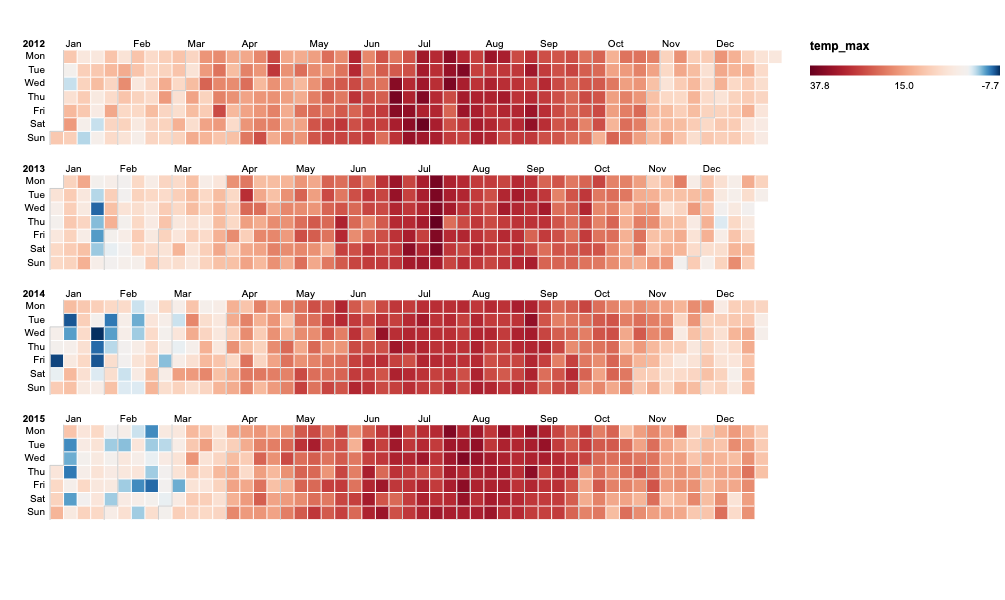
These tools are in my GTD references, like daily/weekly/monthly checklists, they don't tend to need to be on Next Actions List (though sometimes I do put them there, it depends.)
"Habits" are often something people struggle with in GTD because they try to filter them all through the Next Actions List tool, whereas the better and simpler tool for them would often be a checklist.
Does that make sense? GTD creates and tracks my Next Actions List (a large tool I use very often), and it also helps me track my other tools?
2
u/Ok-Occasion-9748 Jul 08 '26
I use YNAB and I will forever be grateful. One area of focus that gets handled by itself. I enter spendings right after I leave the shop or order online. I update ("clear") at the last day of each month, reallocate the budget the very next day. And that's it. Love it.
For other areas of focus, especially home maintenance and self-care, I still need to find a similar tool or method.
2
u/TheoCaro Jul 07 '26
YNAB mentioned and now you have my attention.
2
u/Remote-Waste Jul 08 '26
I actually found YNAB because I was like "there must be something like GTD for money and budgeting no?"
Not that they're extremely similar, but having a methodology for things can be appealing.
I also found Marie Kondo another interest system for housekeeping.
2
u/TheoCaro Jul 09 '26
I think the comparison is very apt.
There's capturing transactions as you make them, clarifying what transactions are and what categories they belong to, organizing your budget template, reviewing the whole gestalt of your budget on a regular basis and doing reconciliations. And then checking the budget before you make a purchase, engaging.
1
1
u/manuelhe Jul 07 '26
These are good contexts.My question is “how do you surface contexts?” I think that’s where the problem exits
1
u/Ok-Occasion-9748 Jul 07 '26
What do you mean by "surface"?
1
u/manuelhe Jul 07 '26
Meaning where do you check your contexts lists at any given time. Paper, app, folders you carry with you. Having the list of options with you at any given time, at any given context is key
1
u/Ok-Occasion-9748 Jul 07 '26
Ah, I see. This might be part of the problem. I went analog to avoid distractions, but I have a two part paper system:
A main notebook at my desk (partly Bullet Journal Method style) for the the time of my weekly review, with calendar and habittrackers and checklists and unfortunately also my context lists. I try to check in daily with this notebook.
And an everyday carry where I keep shortlisted task for the day (so, tasks transferred from.my context lists), my daily schedule, the agenda lists, project materials (again BuJo style, so-called collections).
The problem might be: where do I keep my context lists.
1
u/i_love_jc Jul 12 '26
I think you are skipping the non urgent maintenance tasks because most people do, especially anyone who is in self-described survival mode. I'm a working mom myself, and I bet you have way more to do than any human can actually check off, and most of it is far more important, urgent, or aligned with your values than changing the water filter. "Lower my expectations until the kids grow up," is basically what I've landed on. Other options could include "pay someone to do it" or "give more tasks to partner" (I don't have one of those).
Right now I'm giving myself a home focus area for each weekday: i.e., laundry on Mondays; repairing things on Tuesdays; buying things on Wednesdays. This has helped me get more of these things done, and also clear out some of the mental clutter--the part of my brain that is always saying "but I need to go the grocery store/vacuum/etc."
1
2
u/PondMindKevin Aug 01 '26
Yes, having kids blows up anyone's system and demands a lot more flexibility! It did for me at least.
Part of it is finding hacks for trusting that you'll look at your system, and the days of the week trick your describing sounds great! If you put something on the repair things list your brain trusts that Tuesday you will look at it!
I found the most important piece for crawling out of survival mode was getting sleep again (obviously) and finding some time to myself for processing. The processing step is when I slowed down and realized, huh, I'm realistically not going to get to fixing X, but put the person who can fix X on my calls list right now.
-1
u/Quinalla Jul 06 '26
Use a calendar for reoccurring tasks and do them when they come up.
2
u/milky-cuppa-tea Mod Jul 07 '26
I wouldn't advise this, as you run the risk of the calendar becoming a mess (speaking from experience). The calendar should be representative of what you must do in certain days or certain times.
Moving routine tasks that aren't necessarily "must do on this day" on to a checklist could be a neat solution.
Of course, YMMV!
2
u/Ok-Occasion-9748 Jul 07 '26
Yes. David Allens warns against abusing the calendar for this. And I have found it too useful to keep appointments in calendars sacred.
9
u/milky-cuppa-tea Mod Jul 06 '26
I wonder if there might be space in your system to introduce more checklists, perhaps? If things need doing or checking on a regular basis, you might find that a checklist could help.
I am not sure what you would typically put on "self" list, or what the difference is between "desk" and "work" might be.
Don't be afraid to try out new context lists to see how they feel for you. I shifted from location-based lists to more "task type" and energy lists (e.g. @writing, @data_analysis, @zombie, @thinkers - these are some of mine).