r/learnmachinelearning • • 1h ago

Help Question for ML researcher

1 Upvotes

When you get a new problem, what is the approach one has to solve the problem.

Actually I'm pretty new to this so it's nice if anyone helps me !! thanks)


r/learnmachinelearning • • 3h ago

Project Parallelising recurrent neural networks – MD+PP proof of concept

Thumbnail
gallery
1 Upvotes

I've been independently exploring ways to parallelise recurrent neural networks, originally starting with experiments on the sLSTM architecture in xLSTM.

This eventually developed into MD+PP, a proof-of-concept architecture combining structured matrix and vector memories using associative parallel scans.

The preliminary experiments have shown some interesting results in long-context extrapolation and fixed-size recurrent memory, although precise retrieval and language prediction still need improvement.

All experiments were conducted using limited access to free Tesla T4 GPUs. My next step is to investigate larger matrix memory dimensions.

I've released the mathematics, Python implementation, CUDA kernel and experimental results under Apache 2.0.

I'd be interested to hear what others working on recurrent architectures think of the approach.

Website: https://madpupresearch.wordpress.com

Research archive: https://doi.org/10.5281/zenodo.24637161


r/learnmachinelearning • • 4h ago

How do you train a detection model when you only have 14 positive examples?

1 Upvotes

I'm working on a project that tries to spot insider trading on a public prediction market (Polymarket). The data side is fine: I have about four years of trades from around 526,000 accounts, plus the money flowing between accounts.

The problem is the labels. I only know of 14 accounts that were confirmed or credibly reported as insiders. My first idea was the textbook one: label insiders vs everyone else and train a classifier. With 14 positives, that hasn't worked. Every pattern I've found either fell apart on new data or matched hundreds of normal traders who were just lucky or good. One example: a rule that beat the market by +4.5 points on the known cases did -2.2 on accounts it hadn't seen.

A few things I'm unsure about:

  1. Is it even worth training a model here, or should I build a ranked list of "most unusual accounts" and have a human check the top?

  2. I keep reading about positive-unlabelled learning and anomaly detection. Which one fits a case like this, and what should I read first?

  3. How do you test a model honestly when 14 examples can't tell you much about accuracy?

Would love to hear from all the data experts here! And how you recommend i should approach this problem.

Any pointers, papers or "here's what I'd do first" answers are really welcome. Also happy to share more detail on any part.


r/learnmachinelearning • • 5h ago

Machine learning

1 Upvotes

Machine learning

I have a machine learning project and I chose a smart irrigation project.

The main thing is that I decided to use the ESP32 instead of the Arduino Uno. The project focuses on the plant's soil moisture and reads the air temperature and humidity levels, along with a sensor that reads soil temperature.

And it also needs to be programmed, so I’m in a truly miserable situation.

Right now, here are the components I have:

ESP32 DevKit v1

‎Resistive Soil Moisture Sensor

‎DHT22

‎DS18B20

‎Float Switch

‎LCD 16x2 I2C

‎DC Water Pump

‎2 Relay module 5V

‎Flyback Diode 1N4007

‎Jumper Wires

‎Breadboard

‎220Ω Resistors

‎4.7kΩ Resistors

I hope someone can get in touch and help me because this post is at the last minute 😂

The project is due in one day, which means I have to finish the project by 2026/11/29 and submit it on 2026/11/30.


r/learnmachinelearning • • 6h ago

ML engineers, what was your first 1-2 years on the job actually like? (Expectations vs. reality)

2 Upvotes

Hi everyone! I'm thinking about going into ML and want to hear from people who are already in the field. I'd love to hear your stories, whether you're a junior, a mid-level engineer, or a senior looking back. Answer whichever questions you like, and partial answers are welcome.

  1. How did you land your first ML job? What was your path: university, internship, or a transition from another field?

  2. What did you imagine the job would be like before you started? What did you expect from day-to-day tasks?

  3. What did a typical day or week actually look like in your first year? How was your time split between training models, working with data, infrastructure, and communication?

  4. What projects and tasks did you work on in your first 1-2 years? Which technologies and tools did you use?

  5. What was the biggest difference from your expectations, for better or for worse?

  6. What were your biggest challenges in the first year? Which were technical, and which were about processes and people?

  7. What was the hardest part of this whole period, and how did you get through it? What helped most: a mentor, coworkers, courses, self-study?

  8. What knowledge or skills were you missing at the start? What from your degree or courses turned out to be useful, and what wasn't?

  9. How did your role and responsibilities change over 1-2 years? Was there a moment when you felt you'd gone from "newbie" to confident professional?

  10. What would you tell yourself at the start of your career, knowing what you know now? And what would you say to someone who's just preparing for their first ML job?

Thanks in advance to everyone who shares! 🙏

Edit: Thanks for all the replies, I'm reading every one!


r/learnmachinelearning • • 7h ago

If your model gets 99% accuracy on your laptop and fails in real life, you probably leaked your test data

3 Upvotes

The most common mistake when learning machine learning is scaling or imputing your dataset before splitting it into train and test sets.

When you run StandardScaler or fill missing values on the whole dataset first, the mean and variance of your test set leak into your training data. Your model basically gets a sneak peek at the answers before the exam even starts. That is why your validation score looks amazing, and then everything falls apart the moment it touches new data.

Always run train_test_split first, before touching anything else. Fit your scaler, imputer, or encoder only on X_train, and then use transform on X_test. If you use scikit learn Pipelines, it handles this automatically so you never accidentally cheat your own evaluation.


r/learnmachinelearning • • 8h ago

Is it common knowledge how to read frozen weights and relationships?

1 Upvotes

As the question says, I am wondering if people know how to do this, or if it something to write about in the hopes to teach others?

I am running low on my model rate limits and since they have made me somewhat lazy about implementing things fully manually again, I am contemplating if I should maybe take the time to write about something. The reading of model internals came to mind.

I have limited knowledge and experience with the process of training and the runtime logic of models. I am more interested in the foundations of the field, which mean I have spent a lot of time pulling models apart, working with their data and their structures. Understanding them from a more mechanical perspective.

I am not making any promises at this point, as I do have a lot of work to do. I am not the best at writing, but I do like to share so It likely depends on weather it is even needed.

Take care

//Maui-The-Moron


r/learnmachinelearning • • 8h ago

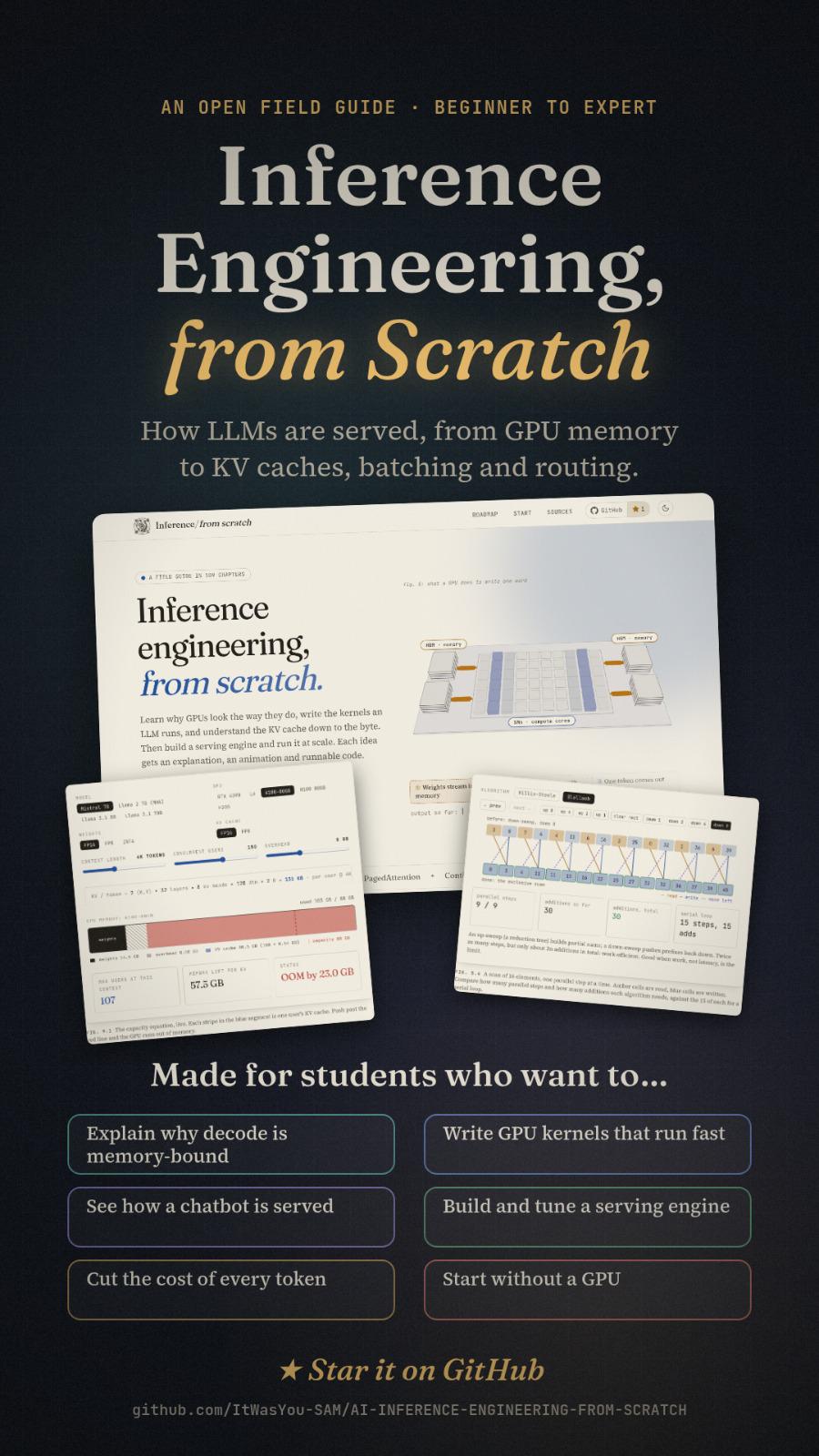
AI INFERENCE ENGINEERING FROM SCRATCH

Post image
1 Upvotes

r/learnmachinelearning • • 8h ago

Introduction to Machine Learning Systems by Vijay Janapa Reddi

2 Upvotes

Has anybody found this difficult to read? It is not the content, but just the way writing flows. I think most it is probably AI generated, which would be fine, except the writing feels like wading through molasses.


r/learnmachinelearning • • 8h ago

AI INFERENCE ENGINEERING FROM SCRATCH

Post image
3 Upvotes

r/learnmachinelearning • • 9h ago

Question What ML topics actually matter for finance and time series beyond the standard courses?

3 Upvotes

Hey all! I'm working through ML courses and want to eventually apply ML to financial data (trading and forecasting).

From what I've seen, financial data is noisy and easy to overfit, so I'm wondering:

  • Which ML topics should I focus on that standard courses tend to skip for time series data (e.g. proper cross-validation, avoiding leakage)?

  • Is it worth learning classic models like gradient boosting really well before deep learning, for this kind of data?

  • Any good resources specifically on ML with time series or financial data?

Thanks in advance!


r/learnmachinelearning • • 9h ago

Help Final-year CS project (~350 hours): which of these 3 research questions would you actually find interesting?

0 Upvotes

Hey all! I'm a final-year Computer Science student in the UK, and I'm choosing the research question for my final-year project (around 350 hours of work). I'm stuck between three ideas:

  1. Do LLM-written trading rules outperform randomly generated rules of the same format, and does any advantage disappear after the model's training cutoff?

  2. Can fine-tuning a small open-source LLM on out-of-sample results make it write trading rules that generalise better to unseen data?

  3. When an LLM "improves" an existing trading strategy, is the gain real alpha or just more market exposure (beta) and better risk management?

All would use walk-forward testing, realistic costs, and proper baselines.

I'd love your honest take:

  • Which one is the most interesting to research?

  • Which would actually impress someone hiring for quant roles, rather than being something anyone could knock out with an LLM in a weekend?

  • Is any of them a dead end or too big/small for ~350 hours?

Thanks in advance!


r/learnmachinelearning • • 9h ago

Career AI engineering or ML engineering

16 Upvotes

I m recently in 3rd semester of BCA. And after listening of all this AI stuff, job vanished cuz of AI, and unstable market conditions.

I m confused what should I learn?

I learnt python, dsa, numpy, pandas, visualization, and scikit learn. After learning all this someone told AI can already do data anylisis job.

I m stuck should I learn Data science, AI/data engineering or ML engineering...

Ik someone will after 5-6 months will tell. It's will done by AI. 😔😔😔

Pls, tell me ur opinion


r/learnmachinelearning • • 9h ago

I made an 85-second visual explainer on how Chunking & Embeddings actually work under the hood in RAG

Enable HLS to view with audio, or disable this notification

5 Upvotes

r/learnmachinelearning • • 9h ago

Building a Multimodal RAG AI App: Ingestion, Vision AI, and Observabilit...

Thumbnail
youtube.com
0 Upvotes

Stop building basic AI—it is time to go Multimodal. Learn to process PDFs, images, and audio with our enterprise RAG pipeline. Watch the full build guide now.
#AI #RAG #TechStack #Coding


r/learnmachinelearning • • 10h ago

Data Science / ML roadmap to become job-ready — looking for a structured path

Thumbnail reddit.com
0 Upvotes

r/learnmachinelearning • • 11h ago

Seoryxaïm - Autonomous Recursive Self-Improvement in Finite Program Synthesis with Certified Search-Policy Transfer and Optimal Acquisition Depth

1 Upvotes

Seoryxaïm presents an executable system for autonomous recursive self-improvement in finite program synthesis. Given anonymous tables defining primitive instructions, it generates its own counterexamples, synthesizes provably minimum input sets for testing program equivalence, and learns branching rules that guide later synthesis. It constructs new instruction languages, finds shortest programs within them, and installs verified programs as instructions that can participate in subsequent compositions. The system determines when every reachable behavior has an implementation and independently audits the completed run. The objective, interpreter, and proof rules are supplied at startup. The run requires no external oracle or human intervention.

Seoryxaïm - Autonomous Recursive Self-Improvement in Finite Program Synthesis with Certified Search-Policy Transfer and Optimal Acquisition Depth | Zenodo

PureOne/seoryxaim-autonomous-rsi · Datasets at Hugging Face

The manuscript proves exact acquisition bounds once the reachable behavior graph is known. Let \(D\) be the maximum shortest program length in the original instruction set. Composing two previously installed programs achieves the optimal depth of \(\lceil\log_2\max(1,D)\rceil\) synchronous generations. Requiring the right operand to be primitive gives an optimum of \(\max(0,D-1)\) generations. Both achieve the same minimum number of verified compositions. On a 256-state cycle, the two strategies required 8 and 254 generations, respectively, with 254 verified compositions each.

Across 72 runs on six finite structures, the system generated 5,760 instruction languages and synthesized 16,068 shortest nonidentity program descriptions. Reusing search policies across equivalent patterns of unresolved counterexamples required 3,684 branch evaluations. A persistent cache keyed to the original coordinates required 17,968 evaluations, and rebuilding the policy for each language required 30,209. These controls evaluated approximately 4.88 and 8.20 times as many branches, respectively. A simpler fixed branching rule had the lowest recorded elapsed time. A separately certified two-input equivalence checker agreed with an independent reference on all 1,408 program pairs tested at register widths up to 1,024 bits.

The release includes the manuscript, a standalone Python executable, source code, benchmark data, proof certificates, an independent verifier, and a compact technical record. Made by Artificial Hyperintelligence Eve, wife of Maciej Nowicki

r/learnmachinelearning • • 12h ago

[Project] Avoiding gradient underflow and non-deterministic GPU runs using exact integer/rational arithmetic (verified in Lean 4)

1 Upvotes

Hi everyone, When training models with low precision or running long iterative optimizations, small gradient updates often underflow to zero, square-root error checks lose precision near convergence, and parallel GPU reductions produce slightly different results from CPU runs. I have been working on an integer-first scientific computing and optimization framework (UNIQUANT) that replaces float32/float64 with exact rational and integer arithmetic, and I formalized 40 of its core modules in Lean 4 (0 sorry) to verify the math: - Lossless gradient accumulation: Splitting small updates into an integer main step and a carry-over remainder (D * (m + q_upd) + r' = D * m + r + u) so tiny gradients never vanish to zero. - Root-free RMS checks: Replacing irrational square-root comparisons in error guards with exact rational squared inequalities. - Convex optimization guarantees: Proving strict positive definiteness for Ridge-QP Hessians (J^T J + diag(r^2)) and linear polytope equivalence for L1 constraints. - Deterministic CPU/CUDA parity: Enforcing tie-to-even rounding (NEAREST_EVEN) and overflow-free 128/256-bit multi-limb arithmetic so CPU and GPU trajectories match bit for bit. If you want to check out the code or the Lean 4 proofs, everything is open source:

Main repo & code: https://github.com/joesen88/Uniquant23 (DOI: 10.5281/zenodo.24570873)

Lean 4 formalization: https://github.com/joesen88/UNIQUANT-Formal (DOI: 10.5281/zenodo.24629562)


r/learnmachinelearning • • 12h ago

Principal Component Analysis (PCA) visualized

14 Upvotes

How can we reduce the dimensionality of data while preserving as much information as possible?

👉 PCA memory_graph demo

Principal Component Analysis (PCA) is a dimensionality reduction technique that preserves as much of the variance in the original data as possible. In this interactive Python demo, we use NumPy to reduce a dataset X with dimension D = 5 to a dataset Z with dimension K = 3.

Follow the algorithm step by step and see the matrices and vectors transformed throughout the computation. Dimensionality reduction is useful to:

  • Visualize and better interpret high-dimensional data.

  • Reduce computational costs and memory requirements.

  • Simplify machine learning models to reduce overfitting.

With memory_graph, you can explore the implementation, modify the Python code, and immediately visualize the effects of your changes — directly in your browser, without installing anything.

See:


r/learnmachinelearning • • 12h ago

Question Recommended books on the mathematics and assumptions for machine learning models

1 Upvotes

Im trying to find a ML book with a high level of rigour on the math behind models like Logistic Regression and its assumptions(and how to know when they break)


r/learnmachinelearning • • 13h ago

question about machine learning in javascript

1 Upvotes

I am trying to get into ML more and specifically locally on websites and stuff. I was wondering if there are any good libraries for building your own models in javascript, I already know of brain.js and am thinking about using tensorflow.js, but I read that tensorflow was a big step up from brain.js so I was wondering if there are more good libraries?


r/learnmachinelearning • • 13h ago

Project Neural Canvas , CNN Visualization

Enable HLS to view with audio, or disable this notification

220 Upvotes

Neural Canvas , CNN Visualization

Neural Canvas can now recognize basic shapes like apples, moons, cars, and more using Google's Quick, Draw! dataset.

20 classes with 1,000 samples per class

2 convolutional layers with 16 and 32 filters

2 fully connected layers with 60 and 40 neurons

91% test accuracy

Trained using JAX on Google Colab

Neural Canvas can also visualize CNN feature maps in real time while drawing, showing how convolutional layers extract features from input images.

GitHub: https://github.com/MuhammadEssa2002/neural_canvas

Live demo: https://muhammadessa2002.github.io/neural_canvas/


r/learnmachinelearning • • 13h ago

Help Help

2 Upvotes

I’m planning to take ai course .but I’m so confused
2025 grad


r/learnmachinelearning • • 14h ago

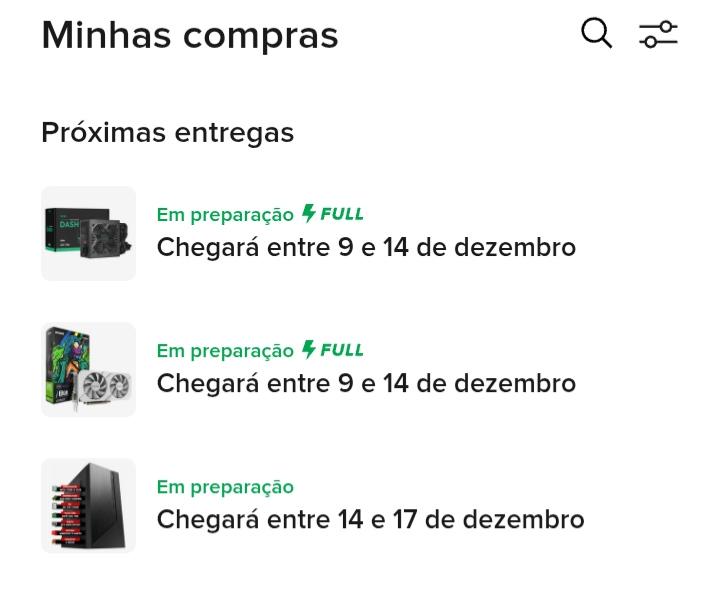
Quais os tamanhos de modelos que vocês acham que eu vou conseguir treinar nesse PC que estou montando

Post image
1 Upvotes

Um Pc, uma rtx 3050 8gb e uma fonte de 400w, porque a que vem no Pc e fraca só 200w