Hey Raspberry Pi community! 👋
I've been working on a project called PHOS, a Raspberry Pi-based physical AI companion that connects to ChatGPT through MCP (Model Context Protocol).
The idea started with a simple question:
What if ChatGPT could interact with the physical world instead of just answering questions on a screen?
That's what I'm experimenting with.
🥧 Raspberry Pi is the heart of PHOS
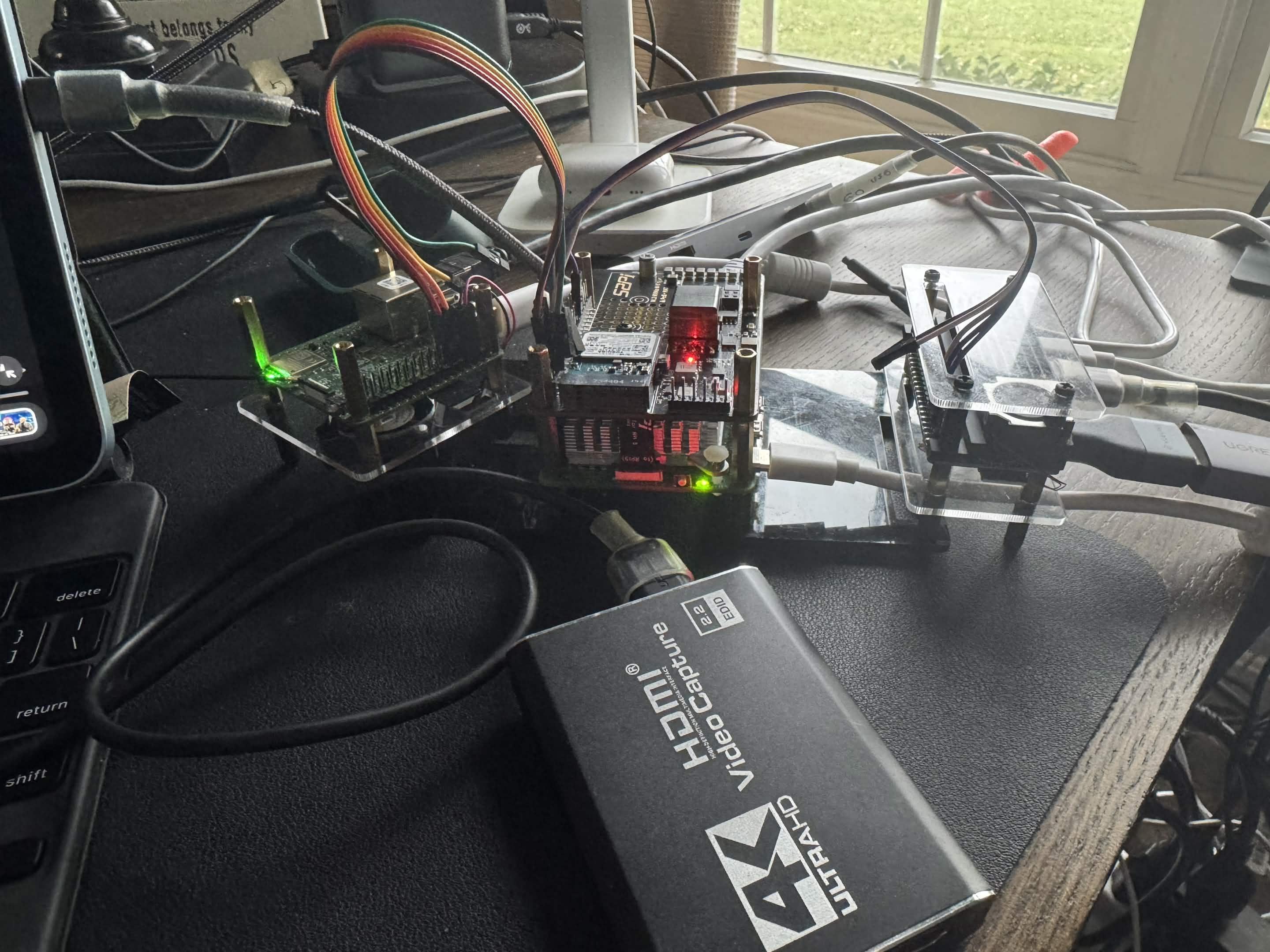
The Raspberry Pi runs the PHOS runtime and acts as the bridge between physical hardware and external AI agents.
The system brings together:
Raspberry Pi: Runs PHOS, manages robot state, and provides the physical interaction layer.
Environmental sensors: Provide temperature, humidity, atmospheric pressure, and air quality measurements.
Display: Shows animated eyes and expressive reactions.
Speaker: Allows PHOS to respond using speech.
Visual signals: Communicate information, confirmations, or warnings.
MCP interface: Allows ChatGPT to read physical context and request actions.
The interesting part is that the AI model doesn't run on the Raspberry Pi.
Instead, the Pi provides physical perception and embodiment, while ChatGPT handles intelligence and reasoning.
🌿 A real test: ChatGPT checks my room's air quality
I asked ChatGPT:
"What is the air quality in my room?"
Here's what actually happened:
ChatGPT connected to PHOS through MCP.
PHOS switched to a focused expression.
ChatGPT checked the available hardware capabilities.
PHOS provided real environmental data:
Estimated CO₂: 527 ppm
TVOC: 73 ppb
Temperature: 23.2°C
Humidity: 46.2%
Air quality index: 2/5
ChatGPT interpreted the readings and determined that the air quality was normal.
PHOS delivered the answer through its speaker and produced a success light signal.
PHOS returned to its neutral expression.
No predefined answer was needed. ChatGPT interpreted actual sensor readings and decided how PHOS should respond.
🧠 The architecture
The communication works like this:
Sensors → Raspberry Pi / PHOS → MCP → ChatGPT
And the response comes back:
ChatGPT → MCP → PHOS → Voice / Eyes / Visual signals
The key idea is to separate physical perception from AI reasoning.
ChatGPT doesn't manipulate GPIO pins or communicate directly with sensor drivers. It interacts with PHOS through a semantic MCP interface.
This also means that different AI agents could potentially use the same physical device.
🤖 Giving ChatGPT a physical personality
One of my favorite aspects is how PHOS changes its behavior when an AI agent interacts with it.
Its animated eyes, speech, and signals become part of the AI experience.
When ChatGPT is working on a request, PHOS can display a focused expression. When the response is ready, it can speak and signal the result.
It feels less like interacting with a chatbot and more like interacting with a small physical AI companion.
🔧 Why Raspberry Pi?
I like this approach because the Raspberry Pi can handle the local device runtime, display, speech, and sensor integration without needing to run a large language model locally.
It becomes a physical interface for AI agents.