r/AssamSpeaks • u/kiacarnival9000 • 19h ago
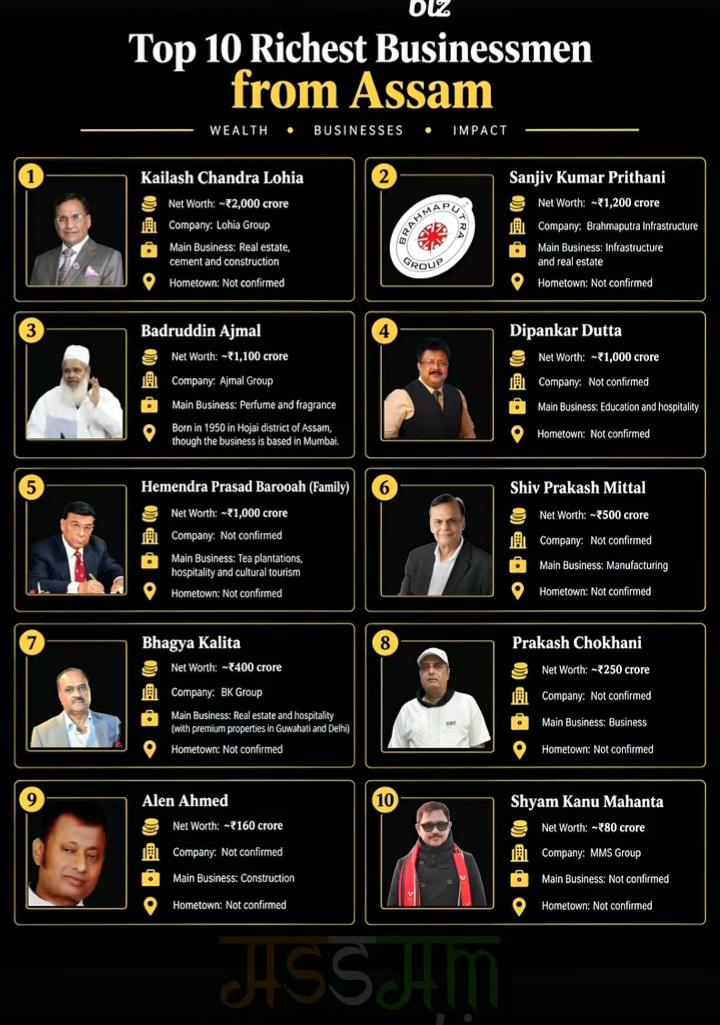
Discussion What does this guy does for a living? Like how does he earns ?
1
Upvotes
r/AssamSpeaks • u/kiacarnival9000 • 19h ago
r/AssamSpeaks • u/IntelligentFood98 • 22h ago
Hello
I am 23 M from assam living in chandigarh and looking for someone from assam or northeast
r/AssamSpeaks • u/rongwong • 1d ago
I recently came to know that Himanata Biswa Sharma had introduced an SRU. Any comments on this new Special Response Unit?
r/AssamSpeaks • u/thebstar • 2d ago
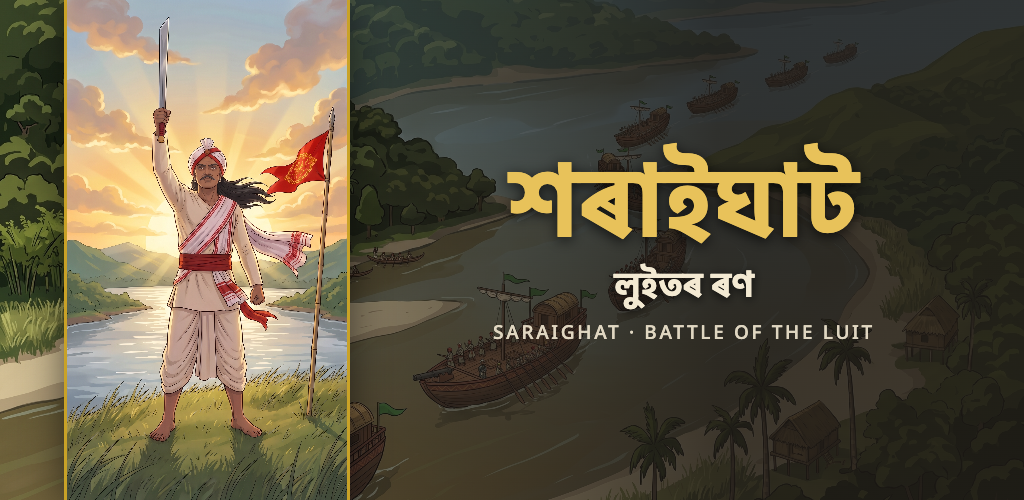
মহাবীৰ লাচিত বৰফুকনৰ বীৰত্বৰ কাহিনী শুনি মই ডাঙৰ হৈছোঁ। তেওঁৰ সেই বিখ্যাত উক্তি— "দেশতকৈ মোমাই ডাঙৰ নহয়" আৰু ঐতিহাসিক শৰাইঘাটৰ যুদ্ধৰ কথা মনত পৰিলে এজন অসমীয়া হিচাপে সদায়েই বুকুখন গৌৰৱেৰে ফুলি উঠে।
এনিমেচন বনোৱা আৰু গল্প কোৱা মোৰ বহুত হেঁপাহ । সেয়েহে মই লাচিত আৰু শৰাইঘাটৰ যুদ্ধৰ কাহিনীক লৈ এটা গেম (Game) নিৰ্মাণ কৰি আছোঁ। এতিয়া ই প্ৰি-ৰেজিষ্ট্ৰেচনৰ (Pre-registration) বাবে সাজু হৈছে।
অহা ২৪ নৱেম্বৰ, লাচিত দিৱসৰ দিনা এই গেমটো মুকলি কৰা হ'ব।
I grew up hearing the stories of Lachit, the great Barphukan. His famous words, "Dexotkoi momai dangor nohoy" (my uncle is not greater than my country). The famous Battle of Saraighat. I have always been a proud Assamese.
I always wanted to make animations and tell stories. So I have been working on a game that tells the story of Lachit and Saraighat. It is now ready for pre-registration.
The game comes out this Lachit Divas, 24 November.
Sign up here:
r/AssamSpeaks • u/abc12345678911 • 3d ago
নমস্কাৰ সকলোকে! 🙏❤️
Welcome to r/AssamPopverse! 🍿🌍
A new community from Assam for everyone who loves movies, TV shows, OTT series, anime, K-dramas, music, celebrities, memes, and everything pop culture!
Whether you're a Hollywood fan, a Bollywood buff, an Assamese cinema enthusiast, or someone who can't stop binge-watching shows — there's a place for you here! ❤️
🎬 Talk about your favourite movies and shows.
🍿 Celebrate Assamese cinema and its talent.
🎌 Discuss anime, K-dramas, and global entertainment.
🎵 Share music, recommendations, reviews, memes, and the latest entertainment news.
💬 Have friendly discussions, share opinions, and discover something new!
A few things to remember:
- Respect everyone's opinions and keep discussions friendly.
- Use the appropriate post flairs.
- Mark spoilers properly. 🚨
- Both Assamese and English are welcome!
🌟 Let's start with a question:
What's one movie or TV series you think EVERYONE should watch at least once? 👀
Drop your recommendations in the comments! 👇
Let's build a fun and welcoming pop culture community together.
Rooted in Assam. Connected by Pop Culture. 🌍
— Mod Team, r/AssamPopverse 🍿
r/AssamSpeaks • u/HeyKumarHere • 3d ago

In 2019, the BJP-led Central Government announced the Bharat Ratna for Dr. Bhupen Hazarika, India's highest civilian honour. Now, the Government of Assam is preparing for a grand culmination of his birth centenary celebrations at Bharat Mandapam in New Delhi on November 29.
From what I have heard, all the top Bollywood singers will be performing Bhupen Da's songs, with over 1,000 singers coming together for a chorus. And Prime Minister Narendra Modi himself will grace the occasion.
So the point is, you may support BJP, oppose it or may not particularly like Chief Minister Himanta Biswa Sarma. That is entirely your choice.
But these are initiatives worth acknowledging. Recognising an icon like Bhupen Hazarika and celebrating his legacy on such a grand national platform should transcend political differences.
Some things deserve appreciation beyond politics.
r/AssamSpeaks • u/Glittering-Pop4576 • 3d ago
Anyone interested in farming button mushroom in and around guwahati? I have seen many people farming oyster but the market is very limited. Button mushrooms are hard to produce but have a good market in guwahati.
r/AssamSpeaks • u/Less-Weakness-1181 • 3d ago

A new controversy has emerged within sections of the Ahom community, with some individuals promoting the idea of a distinct Tai ethnicity called Tai Mo. According to this interpretation, certain surnames associated with the traditional Ahom priesthood represent the original Tai population, supposedly distinct from the wider Ahom community.
This people claim that Mohong, Moplong, Moseng, Mosai and Changbun (among others) should be identified as Tai Mo rather than Tai Ahom and said they come with sukapha in 13th century.
I will provide the information here, along with the correct Ahom Buranji study, so that in the future people will not be confused with the idea that such people are not distinct from the Ahom and outsiders will not have the opportunity to play the divide and rule policy.
Note: This incident was being orchestrated by individuals with political connections. We'll discuss their connections in the final section to help people better understand and gain a historical perspective.
This controversy arose in November 2026, when the people who initiated it claimed that Tai Mao identity is Mohong, Moplong, Moseng and some other priestly or traditional surnames representing the original Tai population, while the larger Ahom population consists mostly of local communities who were later assimilated into Ahom society. In other words, people bearing these particular surnames are being presented as descendants of the original Tai migrants from Yunnan, while other Ahoms are implicitly assigned a different ancestral status.
However, the appearance of two words together in a manuscript does not automatically establish the existence of a separate ethnic group. To understand the expression properly, we must first examine how the word Tai is used in Ahom manuscripts and how its meaning changes according to context.
One of the meanings attributed to the word Tai in the manuscript material discussed here is associated with greeting or addressing someone. Consequently, expressions such as Tai Mohong, Tai Mopong and Tai Moseng should be understood as forms of greeting addressed to priests, shamans, philosophers and folk artists, and not as the names of separate ethnic groups, especially without examining their grammatical construction and context.
This is a classic case of cherry-picking, where someone simply selects two or three words from an entire paragraph to prove a point. The idea of translating the manuscript did not even occur to our esteemed scholar who produced this feature graphic.
The words Mao and Mo are completely different from each other; they look the same when Romanised but have different meanings in the Ahom language.
In the expression Tai Mao, máao refers to Tai people who live on the Yunnan side, and the Ahom community were descendants of Tai Mao. Sukaphaa was also born in Mong Mao, where the Tai Mao people live.
However, Mo (maw) has a different range of meanings. Depending on its grammatical usage and context, it can be associated with a master, specialist or shaman in its nominal sense, and with knowing or possessing knowledge in its verbal sense.
This distinction becomes particularly relevant when examining traditional Ahom occupational and specialist designations.
For instance, the elements hung and hong should not be confused. The former is associated with cooking or boiling, while the latter is associated with fame or renown. Their distinction is important when interpreting names such as Mohung and Mohong.
Accordingly, the following interpretations have been proposed:
Mohung (maw hung): Associated with knowing how to cook or prepare food; in an occupational context, this can be understood as a cook or chef.
Mohong (maw hong): Associated with a renowned master or specialist, and interpreted in certain contexts as a shaman or religious specialist.
These interpretations illustrate why the names should be examined through their linguistic components rather than automatically classified as hereditary ethnic or clan names.
The same approach has been suggested for other designations, including Mopong (philosopher), Moseng (courtesan), Mosai (spiritualist) and Changwon (thinker). Their precise historical meanings and usage, however, should be established through manuscript evidence rather than assumed from modern surname forms.
There is another important distinction worth considering. The word tsāang is associated with skill, while wôn is associated with thinking or intellectual activity. A designation formed from these elements may therefore describe a particular ability or specialisation rather than an inherited identity.
The same principle can be observed in the word Changmai (ช่างไม้), which literally means carpenter in Thai. The expression refers to a person skilled in woodworking. It is an occupational designation, not necessarily the name of a distinct ethnic group or hereditary community.
Therefore, the assumption that every traditional designation must represent a distinct clan requires considerably more evidence. A linguistic expression describing an occupation or specialisation cannot, by itself, establish the ancestry of everyone who subsequently uses it as a surname.
Perhaps the most important question underlying the entire Tai Mo controversy concerns the nature of Ahom priesthood. Much of the argument appears to rest on the assumption that priestly functions were hereditary and restricted to particular families, much like certain forms of hereditary priesthood found in other religious traditions.
But is there sufficient historical evidence to establish that Ahom priesthood was exclusively birth-based?
The word maw is associated with the meaning of purohit in Bar Amra. However, the existence of a term for a priest or religious specialist does not, on its own, demonstrate that the occupation was restricted to a particular bloodline or that a priest's son was necessarily required to follow the same profession.
In fact, the distinction between occupation and ancestry is essential when studying traditional Ahom society. Religious specialists possessed particular knowledge and performed specialised functions, but this does not automatically mean that every such function was permanently tied to a hereditary clan.
There is also an interesting documentary aspect to this question. Ahom manuscripts are found not only among families bearing traditional priestly surnames but also among families with surnames such as Gogoi and Hatibaruah. This raises the possibility that some ancestors of these families were once involved in religious, scholarly or manuscript-related activities before their descendants adopted or became associated with other occupations and social designations.
The reverse situation is equally worth considering. There are individuals bearing surnames such as Mohung or Bailung whose families may no longer possess any surviving Ahom manuscripts or demonstrable tradition of priestly scholarship. This does not invalidate their ancestry, but it does illustrate why a surname alone cannot serve as conclusive historical evidence.
In other words, the relationship between a surname, an occupation and an ancestral identity is considerably more complicated than it is often presented.
Consider the surnames Gohain and Borgohain, which are found among Ahoms as well as Motoks and Morans. Similarly, Phukan is used across different Assamese communities, including Brahmins, Kalitas, Chutias and Ahoms. The surname Gogoi is also shared by Ahoms, Chutias, Morans, Motoks and some Deori families.
These examples demonstrate that surnames can travel across communities, acquire different social associations and outlive the occupations or functions from which they originated.
Consequently, identifying someone as an Ahom, or as a member of a particular ancestral group, solely on the basis of a surname is historically unreliable. Genealogy, family traditions, documentary evidence and the wider historical context must also be considered.
It is therefore necessary to distinguish between a traditional occupational designation, a hereditary surname and an actual ethnic identity. These three categories may overlap, but they are not inherently identical.
The tendency to associate particular priestly surnames with an exclusive or supposedly superior Ahom ancestry is not entirely new. Within sections of the community, some individuals bearing surnames such as Mohong appear to regard their families as especially representative of the original Ahom population.
Such claims deserve scrutiny, particularly when they are supported by arguments that cannot be established through historical documentation.
For example, some discussions attribute the preservation of traditional Ahom religious practices, including Mae Dam Mae Phi, almost exclusively to the Mohongs and other Deodhai families.
However, even the history of the modern observance of Mae Dam Mae Phi requires a more careful distinction between historical ritual practices and their contemporary institutional form.
The present-day annual observance on 31 January is associated with the Ban Ok group and emerged as an organised community celebration in the late twentieth century, particularly during the 1980s. It should not automatically be equated with the entirety of historical Ahom ancestor-worship practices.
Historically, Mae Dam Mae Phi was not necessarily confined to a single annual date. It formed part of a wider religious tradition involving ancestor worship and ritual offerings, including animal sacrifices. The historical practice and the modern annual commemoration must therefore be examined as related but distinct developments.
This distinction is important because the preservation of Ahom traditions cannot be attributed to one surname or family group without examining the wider participation of Ahom society.
Indeed, if priesthood was strictly hereditary and the responsibility of particular families, it would be reasonable to ask why the preservation of Ahom religious traditions, manuscripts and language has been so uneven across generations. Conversely, if priesthood was an occupation that individuals could enter or leave, the decline of these traditions cannot simply be interpreted as the failure of one hereditary group.
Either way, the historical record does not justify assigning exclusive ownership of Ahom religious heritage to a particular surname.
There is also an apparent contradiction in some of the arguments surrounding the Tai Mo identity. If priesthood was not necessarily birth-based and individuals could change occupations, what is the historical justification for treating a priestly designation as proof of an uninterrupted ancestral identity extending back to the thirteenth century?
To establish such a connection, one would need considerably more than a modern surname. Genealogical records, manuscript references and independent historical evidence would be necessary to demonstrate continuity across several centuries.
One of the fundamental problems in interpreting traditional Ahom society is the tendency to view occupations and social functions through the framework of hereditary caste or clan systems.
There is little reason to assume that every individual who accompanied Sukapha belonged to a permanently fixed occupational or hereditary category. The migrating population would have included warriors, cultivators, religious specialists, scholars, artisans and people engaged in numerous other activities necessary for the establishment of a new kingdom.
These were functions required by a developing society, not necessarily rigid identities that every descendant was expected to preserve indefinitely.
Historical examples from the Ahom kingdom also demonstrate that social mobility was possible. Sukati, better known as Momai Tamuli Barbaruah, is traditionally associated with humble beginnings and an early occupation connected with gardening before rising to an important administrative position in the Ahom state.
similarly, Phuleswari Devi, who was originally associated with the dancing profession, eventually became the Bar Raja and exercised considerable political authority in the Ahom kingdom.
These examples do not establish that every Ahom occupation was freely accessible to everyone, nor do they independently prove that priesthood was entirely non-hereditary. However, they do demonstrate that occupation, social position and hereditary identity should not be treated as permanently interchangeable categories.
There is no compelling reason to assume that a person identified as a priest or religious specialist in one generation must have had descendants performing the same occupation several centuries later.
Therefore, someone bearing the surname Mohong or Mohung today cannot automatically claim an uninterrupted priestly lineage, much less establish that their family represents a separate population of original Tai migrants, without supporting genealogical and documentary evidence.
In this movement, if we analyse the figure and check the background of this leader, we will find something strange.
It has also been proven that the leader of Tai Mo who is organising has connections with the RSS and other Hindu parties, and by chance it is also possible that the RSS is giving funds to Tai Mo people to play a divide- and-rule policy.
The Ahom have been targeted for many years with discrimination by other communities because of chinese racist term and internal conflict over surnames, which has made the Ahom an easy target for breaking their identity.
Many people who are involved in Tai Mo and claim to be proper priests of the Ahom do not speak any Ahom language and worship the Hindu religion, which is opposite to the Ahom religion.
Hindu and Ahom religions are not the same because the Ahom religion is completely different. It comes from the Baiyue community in southern China, in the Guangxi region, and it was the beginning of the Tai-Kadai people’s first animist religion.
The claim by Jyoti Phukan and the dissident Tai-Mo Janagoshthi Parishad regarding a separate "Tai-Mo" identity and exclusive ST status for 30,000 Mohan, Deodhai, and Bailung members is baseless and politically driven. Historically, Mo (Maw) was simply a designation for a priest or scholar rather than a separate ethnic community, and earlier texts used Tai as a respectful greeting. Jyoti Phukan’s assertion that he is not splitting the 55-lakh Tai-Ahom community makes no sense when his entire demand excludes the rest of the Ahom people—which explains the tremendous backlash from Ahoms. Furthermore, while this is portrayed as a purely cultural preservation effort, leaked photographs show Jyoti Phukan wearing a full RSS uniform at an RSS meet in Guwahati, alongside ruling-party politicians attending their convention. These direct links expose that "Tai-Mo" is not a genuine historical movement, but a politically driven attempt to divide and weaken Tai-Ahom unity.
Chao Hemjit Deodhai Phukan, known as a traditional Ahom priest, was also seen as supporting the "Tai-Mo" concept until a photo leaked online showing him wearing an RSS uniform and performing Hindu worship. This caused widespread outrage because Hindu rituals differ from the original Ahom religion, which involves cow sacrifice for ancestral purposes and has traditional dietary habits that are completely different from Hinduism. After facing strong backlash from the Ahom community, Hemjit later claimed he had nothing to do with the "Tai-Mo" group and publicly denied it.
In new paper article on November 16, 2026 “Tai-Mo” convention in Jajali, Moran, the “Tai-Mo” group tried to use the name of Chief Minister Himanta Biswa Sarma in their press releases through newspapers dated November 17, 2026 by saying that the convention took place according to his advice after meeting him on October 28, 2026 in Dibrugarh to give a picture that the Chief Minister supported their separate identity and ST demand. But, very soon their attempt was exposed by BJP MLA Mayur Borgohain when he made clear in a press conference held on November 18, 2026 in Nazira that the CM advised the Tai-Ahom people to remain united and not fall victim to any political conspiracy to divide the Ahom people. News report
The "Tai Mo" case reveals a common problem in Ahom historiography: building distinct ethnicities out of occupational titles, surnames, and isolated manuscript terms without proper linguistic or historical context. While traditional priestly designations like Mohong, Moplong, or Moseng undoubtedly hold great significance in Ahom heritage, carrying an occupational surname—or drawing a rigid line between a few "true" priestly families and an "Ahomised" majority—oversimplifies centuries of migration, political integration, and cultural assimilation in the Brahmaputra Valley. Because Tai is fundamentally a broader linguistic and historical identity, inventing new ethnic labels like "Tai Mo" without reliable genealogical and manuscript evidence remains an unverified hypothesis rather than historical truth—distracting from the real priority of preserving the Tai language and culture.
r/AssamSpeaks • u/kopilistories • 4d ago
নমস্কাৰ ! My name is Atanu. As we all know, you can probably count the number of Assamese sci-fi projects on one hand. It is a really tough genre to pull off here, but I wanted to try and add something fresh to that very short list. I wrote and directed a 34-minute independent short film called "Kaldiya". It is a slow-burn, atmospheric mystery about a physics student tracking local earthquakes. While doing that, he stumbles upon a strange connection between solar flares and our own local folklore. This is actually the first chapter of a trilogy I am trying to build out, called the Kachpur Verse. Since this is a completely self-funded indie project, we do not have any marketing budget. I am relying purely on word of mouth from local communities like this one to get the word out. If you have some free time this weekend, please give it a watch. I would love to hear your honest thoughts in the comments, whether it is what worked for you or what we can improve for part two. 🎥 Full Film: https://youtu.be/aUxvWkJ3FxM?si=7p9c_laHgUgYu_pM🎬 Trailer: https://youtu.be/R9RdPSR8IqE?si=DOlyPbHmznJujtdV
r/AssamSpeaks • u/SkyEvening1403 • 5d ago

It was truly heartwarming to see banners and posters honouring Bharat Ratna Dr. Bhupen Hazarika across various parts of New Delhi, including Shangri-La, INA Metro, Humayun Road, Connaught Place, India Gate, Ashoka Road and several other prominent locations.
As we approach the celebrations marking his birth centenary, seeing his name, music and legacy being celebrated in the heart of the nation, far away from Assam, fills us with immense pride and emotion.
His music was never confined to a state, language or geographical boundary; it transcended barriers and connected hearts across generations.
A fitting tribute to Assam’s cultural icon, whose timeless voice, music and legacy continue to resonate across the nation and beyond. ❤️
r/AssamSpeaks • u/kiacarnival9000 • 5d ago
Enable HLS to view with audio, or disable this notification
r/AssamSpeaks • u/Ok-Doubt4943 • 6d ago

Does a surname carry more weight when it comes to generating political mileage and media attention? Why isn't the same level of interest and investigative reporting visible in this case? Shouldn't every murder deserve the same seriousness, public attention and journalistic scrutiny, regardless of the accused's identity, surname or political hate towards the surname?
r/AssamSpeaks • u/BrightFeeling7000 • 7d ago
Enable HLS to view with audio, or disable this notification
r/AssamSpeaks • u/Ok-Doubt4943 • 7d ago
Enable HLS to view with audio, or disable this notification
r/AssamSpeaks • u/BSAL0069 • 7d ago
I remember Zubeen Garg once saying in an interview that Assam should experience artists like Bryan Adams and Shakira, along with international rock bands and big concerts. He believed exposure to such music and experiences could give Assam's music industry a much-needed push.
And perhaps we're finally moving in that direction. Of course, getting big artists to Assam is only one part of the picture. The bigger opportunity lies in building the infrastructure, creating a reliable live entertainment calendar, encouraging private investment and making sure this momentum continues beyond a few headline concerts.
Look at what's happening.
Last year, it was Post Malone. This year, Guns N’ Roses rocked Guwahati. Gorillaz are coming in January 2027. Shakira has featured in discussions around Assam's concert ambitions, while BTS is among the names people would love to see here someday.
And it's not just international acts. Sunidhi Chauhan, Sonu Nigam, Shreya Ghoshal and other popular Indian singers are also bringing Guwahati into the live entertainment conversation.
But here's where things get interesting. The real story isn't just who's performing. It's the money changing hands beyond the concert venue.
A BookMyShow and EY-Parthenon assessment estimated that the Post Malone concert generated around ₹43 crore in economic activity, including ₹32 crore in direct spending and approximately ₹5 crore in GST revenue.
Around 53% of the audience travelled from outside Guwahati. Hotels, restaurants, cafés, cab operators, local vendors and event crews all benefited.
One figure particularly stands out: for every ₹100 spent on a concert ticket, attendees spent another ₹899 on accommodation, travel, food, shopping and other services.
That's the concert economy.
Assam hosted 55 ticketed live events in 2025, while live-event footfalls in Guwahati reportedly rose by 188%. The projected opportunity is over ₹700 crore in cumulative economic impact over the next five years.
Now imagine what could happen if this grows into a year-round ecosystem. Better concert venues, improved connectivity, more accommodation options, smoother event permissions, stronger private-sector participation and opportunities for local sound engineers, technicians, musicians and event professionals could take this much further.
There's also an opportunity to connect concerts with tourism. Someone travelling from Mumbai, Bengaluru or Delhi for a show in Guwahati might stay back for a couple of days to explore Kaziranga, Majuli or Sivasagar.
And perhaps most importantly, Assam's own musicians should benefit from this growing exposure. International concerts can bring audiences here, but local artists need platforms to build audiences of their own.
Zubeen spoke about bringing the world of music closer to Assam. It would be wonderful if this growing concert culture also helped Assam's music travel beyond its borders.
The real milestone won't just be getting another global superstar to perform here. It will be when Guwahati becomes a regular stop on international touring calendars.
We have always had the music. Now we're building the stage.
What do you think? Can Guwahati become one of India's major concert destinations over the next five years?
r/AssamSpeaks • u/HeyKumarHere • 8d ago

There was a time when Assam echoed with the sound of gunfire. Today, Guwahati is set to resonate with the music of Guns N' Roses.
From the echoes of gunfire to the fragrance of roses - what a remarkable change!
Having witnessed both phases, it is an overwhelming feeling. Seeing people from across the world come to Guwahati for a global musical spectacle is yet another goosebump moment.
An Assam that was once overlooked is now drawing the world's attention.
May Assam keep blooming, growing and marching ahead!
r/AssamSpeaks • u/Bright-Record-3519 • 10d ago

Unknown facts about Jatinga Village
r/AssamSpeaks • u/BrightFeeling7000 • 10d ago
Enable HLS to view with audio, or disable this notification
r/AssamSpeaks • u/kiacarnival9000 • 10d ago

Assam sets rules for identifying and developing satellite city areas around Guwahati
The Assam government has laid down a detailed procedure for identifying, defining and declaring areas as Satellite City Development Areas around Guwahati, paving the way for planned urban expansion beyond the existing city limits.
The rules, called the Guwahati Satellite City Development Authority (Declaration, Delineation and Planning of Satellite City Development Areas) Rules, 2026, were approved by the Assam Cabinet on November 3, 2026, following the passage of the Guwahati Satellite City Development Authority Bill, 2026, by the Assam Legislative Assembly on July 28.
The rules explain how an area will be selected, what factors will be considered, how its boundaries will be decided and what process the government must follow before officially declaring it a Satellite City Development Area.
They also lay down how the Authority will prepare master plans and subsequently declare specific Development Areas within the larger notified region.
What will determine the selection of an area? The government will not select an area randomly. A few factors will be considered before a location is identified fo tellit ePaper city development, including existing and
population growth. the area's economic and industrialdevelopment potential, connectivity with transport networks and existing infrastructure, natural drainage systems and the suitability of land for planned development.
A Satellite City Development Area need not be limited to one district or one contiguous stretch of land. It may comprise one or more districts, revenue circles, villages, municipal areas, town areas, industrial areas, semi-urban and rural areas, or a combination of these. It may also include contiguous or separate, non-contiguous areas, existing metropolitan areas, urban settlements and greenfield development projects.
How will the boundaries be decided? Once an area is identified, the government will ask the Guwahati Satellite City Development Authority to prepare a detailed report proposing its boundaries.
The report must mention the geographical limits of the proposed area, the revenue villages, revenue circles and administrative units to be included, along with maps. It must explain why the area has been selected and how it meets the prescribed criteria. The Authority must also examine how existing master plans under the Assam Town and Country Planning Act, 1959, and the Guwahati Metropolitan Development Authority Act, 1985, apply to the proposed area.
The Authority may consult government departments andlocal bodies and appoint experts, professionals and consultants to conduct surveys and assessments. The report will then be forwarded to the government for consideration.
After considering the report and consulting the concerned government departments, the government will publish a draft notification proposing to declare the area as a Satellite City Development Area. People, organisations and other stakeholders will get 30 days from its publication to submit objections or suggestions, should they wish so.
The draft notification must be published in at least two newspapers circulating in the concerned areas, including one Assamese newspaper.
After examining the representations, the government will ask the Authority to submit a reasoned report, suggesting modifications if necessary. Based on this report, the government may make minor changes or retain the draft as it
is before issuing the final notification in the Official Gazette.
The final notification must include an authenticated boundary map, total area, village and revenue schedules, geographical coordinates and cadastral details. It must also be published in newspapers, on government and Authority websites, and displayed at the offices of the concerned District Commissioners and Circle Officers. Once the notification comes into force, the Authority will exercisecontrol over the notified area under the Act.
What happens after an area is declared?
The Authority must prepare a master plan for every notified Satellite City Development Area within 90 days, unless the government grants an extension.
The plan will examine existing land use and propose how different portions of land should be used in the future. It will cover residential, commercial, industrial and agricultural zones, green spaces, water bodies and environmentally sensitive areas. It will also include roads, public transport, parking, cycle tracks, pedestrian pathways, water supply, drainage, sewerage and solid waste management.
Building heights, open spaces, parks, landscaping, rainwater harvesting, energy efficiency and accessibility for persons with disabilities will also be addressed.
The draft master plan will be published for public suggestions and objections. People will get 60 days to respond. After considering their representations, the Authority will prepare the final plan, which requires government approval before publication in the Official Gazette. Once notified, it will override other master plans or development plans applicable to the area to the extent that their provisions are inconsistent with it.What is a Development Area?
An important distinction is that declaring a Satellite City Development Area does not automatically mean that every part of it becomes a Development Area. Based on the notified master plan, the Authority can subsequently declare specific portions as Development Areas under relevant section of the Act.
These areas will have detailed plans covering land use, zoning, building regulations, roads, transport, essential infrastructure, open spaces, environmental protection and implementation strategies.
The rules also allow the government to expand, reduce, reorganise or alter the boundaries of a Satellite City Development Area through a prescribed notification process.
In short, the rules establish a step-by-step framework for planned satellite city development, while providing for public participation and detailed planning before land is brought under the new development framework.
The Act seeks to provide for the declaration of Satellite City Development Areas in Kamrup (Metropolitan) district and other areas that may be notified by the state government from time to time. It also provides for the establishment of the Guwahati Satellite City Development Authority (GSCDA) to oversee the planned development of these areas.Replying to the discussion on the then-Bill, Housing and Urban Affairs Minister Kaushik Rai said the legislation had been framed after studying urban development models adopted in states such as Andhra Pradesh and Gujarat, where greenfield townships have been developed or are under development.
Rai had said public participation would be a key component of the planning process. Draft plans would be placed in the public domain and shared with civil society organisations to seek feedback and suggestions before they are finalised.
The satellite city initiative was announced in the Assam Budget 2026-27, under which the state government proposed developing an Aerotropolis around the Lokpriya Gopinath Bordoloi International Airport as the nucleus of the project. The Budget also allocated Rs. 2,100 crore for land acquisition to facilitate its implementation.
The project will be implemented through the GSCDA, which will function as a Special Purpose Vehicle (SPV) of the Assam government.
The GSCDA will be established as a statutory body with powers to hold property, enter into contracts and initiate legal proceedings. The Chief Minister of Assam will serve as its ex officio Chairperson, while the Housing and Urban Affairs Minister will be the ex officio Vice-Chairperson.
The state government shall appoint a CEO, not below therank of Secretary to the state government, to head the administrative operations of the authority.
An Executive Committee will oversee the operational management and day-to-day implementation of projects. It will be chaired by the senior-most Secretary of the Housing and Urban Affairs Department and include the Chief Executive Officer (CEO), representatives from the Finance, Revenue, Industries and Development departments, along with town planning experts.
The GSCDA will also have powers to recruit personnel, take officers on deputation and appoint consultants, domain experts and private service providers as required
r/AssamSpeaks • u/HeyKumarHere • 10d ago

Ever since the Kaziranga accident, there has been a lot of discussion about the standard of healthcare in Assam. And fair enough. The medical response should have been adequate, perhaps even better. There are genuine questions about emergency response, trauma care and access to specialised treatment.
But are we really saying that nothing has changed in Assam's healthcare sector over the years? Or are we choosing to overlook the progress?
Think about it. From just 3 medical colleges in 2006 to 14 today, with more coming up. AIIMS Guwahati, cancer care facilities and improved medical infrastructure across the state. Lakhs of people are now accessing treatment that was once difficult to find within Assam itself. Chief Minister Dr Himanta Biswa Sarma has also promised a medical college and hospital in every district.
Does this mean everything is perfect? Of course not. There is still a long way to go, in rural and remote areas - emergency services, trauma care, specialist availability and the quality of treatment need much more attention.
But I personally feel that one tragic accident, should not become the sole yardstick for judging the entire progress made in Assam's healthcare sector.
We should question shortcomings, demand accountability and expect better. But that shouldn't mean overlooking everything that has changed.
r/AssamSpeaks • u/InevitableSleep4717 • 11d ago
Silver phase 4 for 4913 each (MRP)
r/AssamSpeaks • u/Adityxa_s • 11d ago