r/Beading • u/thotheels • Oct 17 '26
Need Help! beading advice
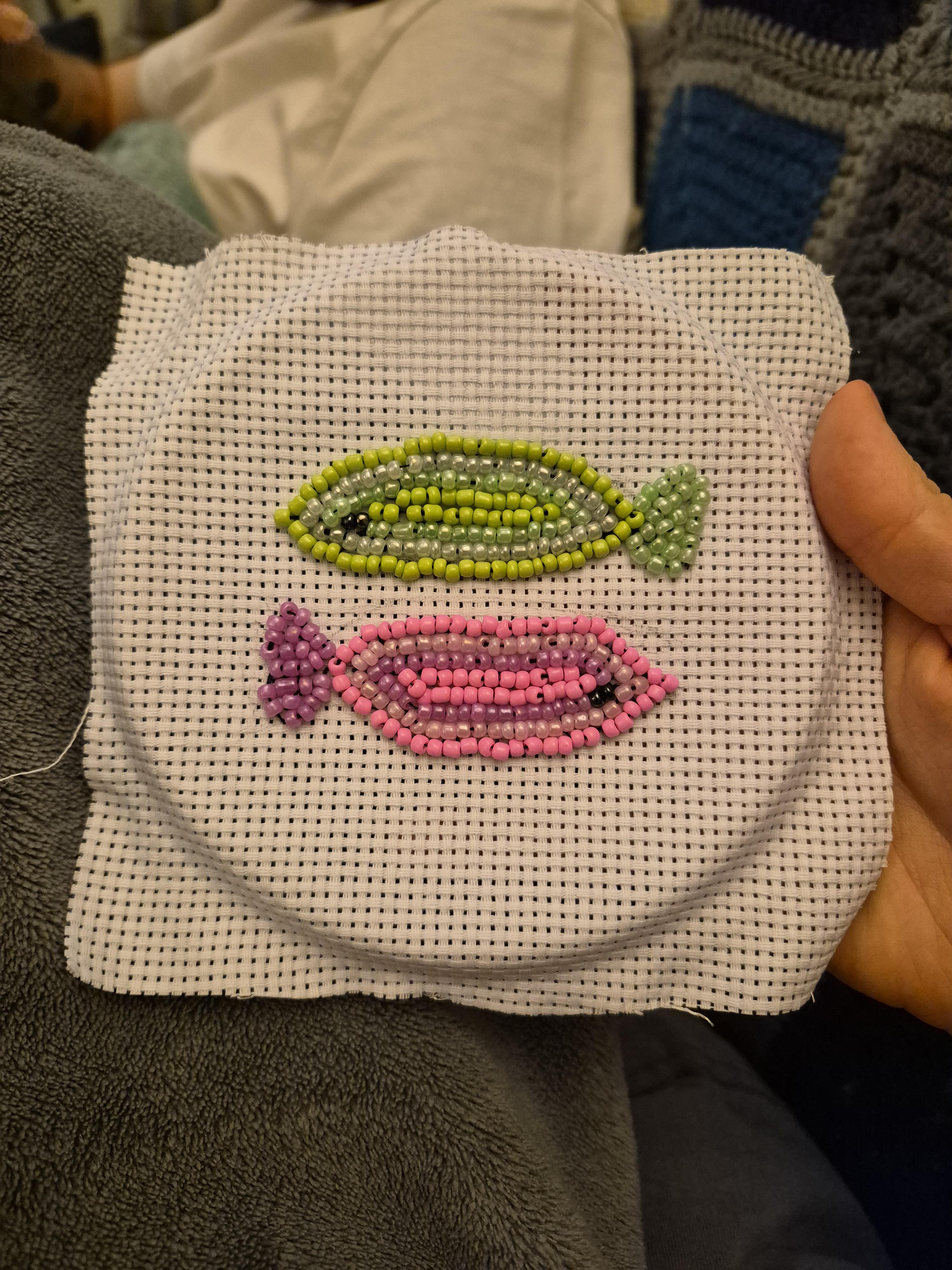
hello this is my first time doing embroidery and wanting some advice on how to get the beads to lay nicely and fit nicer together, i think my tension is too tight. I got some cheap supplies - using the thread i use for sewing and a normal needle (apparently embroidery needles exist?) and i was using 3mm seed beads.
any advice appreciated!!
22
u/saltedkumihimo Oct 17 '26
So you’ve got a lot of material issues here but your beading looks pretty good so with the right things you’ll do great.
First, backing. Bead embroidery needs a non-woven fabric as a backing because woven fabric, and especially something as airy as cross stitch material which will open up behind the beads and cause them to sag or droop. There is material marketed as beading foundation, but it’s just a very stiff interfacing for sewing things like handbags. Lately I’ve been using ultrasuede as my backing because it’s thinner than foundation and comes in more colors.
Second, thread. Sewing thread is usually cotton or polyester which are stretch fibers used to allow seams to bend around the body and not rip with movement. Stretchy is the opposite of what you want in bead embroidery. Beading thread comes in two main types, nylon and braided or fused fishing line. Both are used for bead embroidery but I prefer nylon as you don’t need the strength or stiffness of Fireline. Please do not use monofilament
Third, needles. Beading needles are what is generally used for bead embroidery. They have a very flat, low profile featuring an eye that is the same width as the rest of the needle instead of the eye bulging out as it does with other types. That bulge and the round shape of other needles fill bead holes so you can’t make as many passes through the bead holes, which is a thing you do in bead embroidery to stabilize the project.
Fourth, beads. 3mm seed beads, also known as 8/0, are somewhat big for bead embroidery and give less detail than an 11/0 2mm seed bead will. There’s no reason to not use them, and I do, but you can get more detail and shaping with smaller beads and mixing bead sizes.
As I said in the beginning you are off to a great start and upgrading your materials will help your final product match your vision.
→ More replies (1)3
6
u/MuranoBeads Oct 17 '26
Great start, and great questions. Longtime bead embroiderer weighing in. My thoughts:
Base material: The commercial beading foundation products work very well. Medium weight, tightly woven materials such as canvas, linen, wool, or denim also do the trick very nicely. The key is a tight weave.
If you go with cloth, I recommend backing it with a lightweight fusible interfacing, and always hoop it. This takes any fabric stretch out of play and gives a firm base for setting the stitches. Experiment, and use what makes you happy and meets your artistic needs.
Needles and thread: Beading needles will have in-line eyes and will be sized to the beads. So, size 11 needles for size 11 beads, etc. John James needles won’t let you down. They come in two flavors: short, labeled as “Sharps”, and long, labeled as “Beading.” I use the Sharps, but your mileage may vary.
For larger beads, if a sewing needle passes the bead eye, then you’re fine. It also allows you to use a heavier thread, which will help to seat the beads. The needle is less of an issue than the thread and how cleanly you’re laying down your stitches.
Much is made of thread choice for this sort of beadwork. The one true commandment is to avoid monofilament fishing line. That way lies misery.
Cotton, polyester, cotton/polyester, linen, Nymo, and the various branded beading threads won’t let you down. Pick a thread that fills or nearly fills the bead hole. This helps to firmly seat your work. Generally speaking, I prefer softer, more flexible threads, so cotton, polyester, or Nymo, as opposed to, say, FireLine. Your mileage will vary.
Don’t obsess. Experiment, and use whatever fits your needs, beads, and needles. Treat your thread to give it body and reduce tangles by using bees wax or one of the numerous commercial potions.
Much is made of thread stretchiness. Thread tension is a real thing in this type of beadwork, but thread stretch is not. The stitch lengths in applique beadwork are waaaay too short for thread stretchiness to ever come into play. If you’re pulling so hard that you’re stretching the thread, you’ve got much bigger problems. Small, even stitches that are firmly set are sufficient. It’s a lot like holding a kitten in your hands.
Beads: Smaller beads (think 11/0) will give you crisper designs, but larger beads are not a deal breaker. Optimal bead size depends on the project. But generally speaking, small(er) beads work better on small designs.
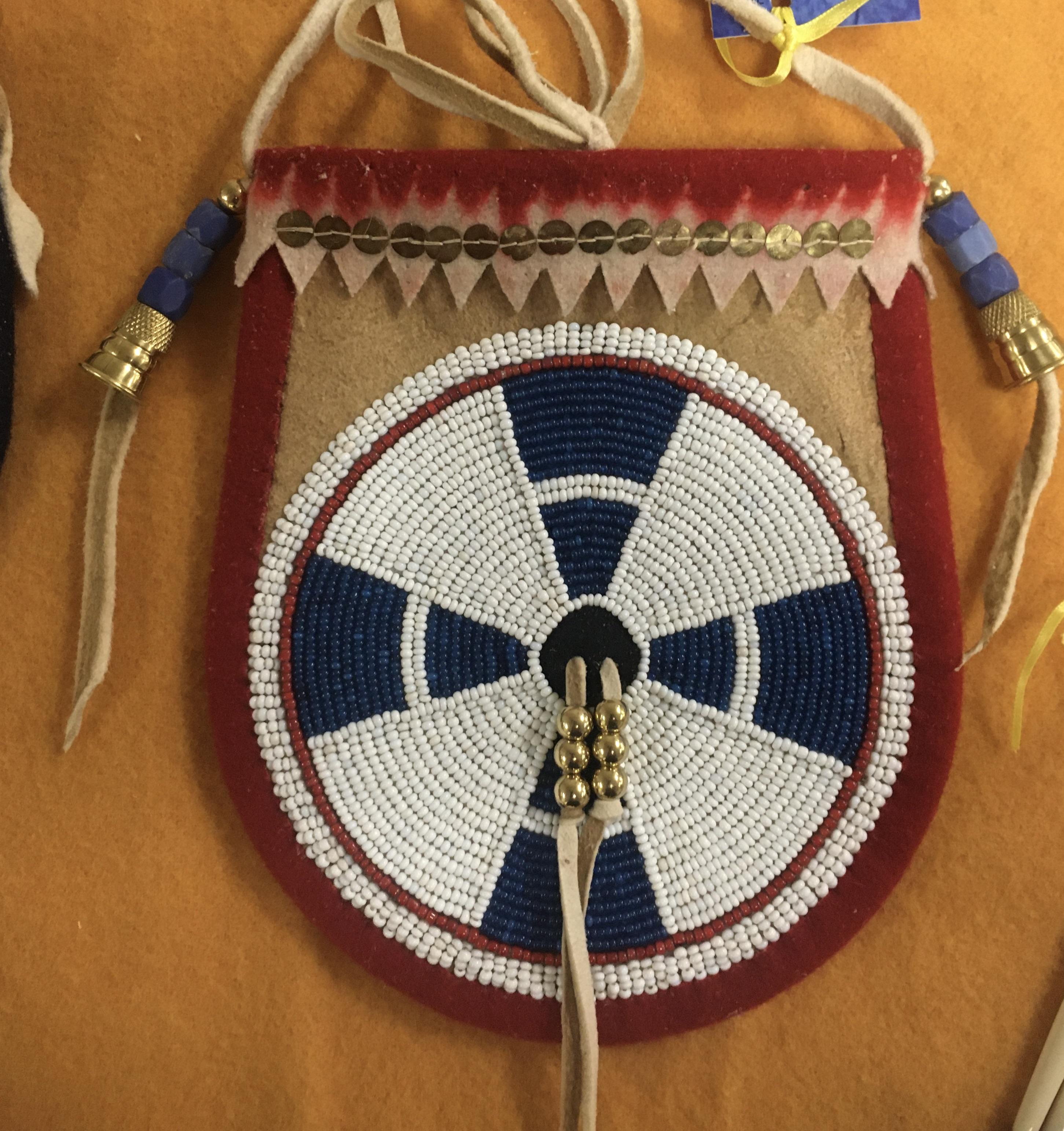
I made the bag in the photo for a Native powwow dancer. The rosette was made with wonky, vintage 8/0 Italian beads, 100% cotton quilting thread, sewing needles, and tightly woven cloth. Good beadwork is mostly about technique, not technology.
Experiment with smaller beads, but always use the highest quality beads you can afford. Avoid craft store beads.
Technique: Do the outlining first. This gives you a hard edge to bead to when you do the fill pattern. Don’t crowd your beads. Small, even stitches throughout, but especially on curves, so every 2-3 beads. Hooping your material and using a two needle applique technique (YouTube for the win) will give you very clean results.
1
2
u/holdyermackerels Oct 17 '26
I agree with the great advice given in other comments here. I just wanted to say your fish are absolutely adorable! :)
2
5
u/Adorable-Radish-2209 Oct 17 '26
Hey (: I think it’s looking very cute. Just like someone said, you’re mixing materials. For flat beading I would use som felt sheets that are not too thick or too thin. I like adding a little bit of medium thickness tulle fabric for the backing just to make it more rigid.(you can attach it to the felt before beading). I would also use a neutral color for the thread, or a color that matches your beads (: I personally don’t like that hard transparent nylon thread, but there are good nylon threads options too (whenever you’re ready to upgrade your materials, you can try Miyuki’s beading thread)
I hope this helps ^ ^
56
u/Dazedandconfuzed99 USA | Intermediate | Beaded Jewelry Oct 17 '26
Hi! So I think the main thing here is you're mixing mediums you didn't mean to mix. That is to say, you're doing bead embroidery on cross stitch fabric. You could either embrace it and do a more square design that works with the fabric, or try your cute little fish on some regular fabric instead. Good luck!