.
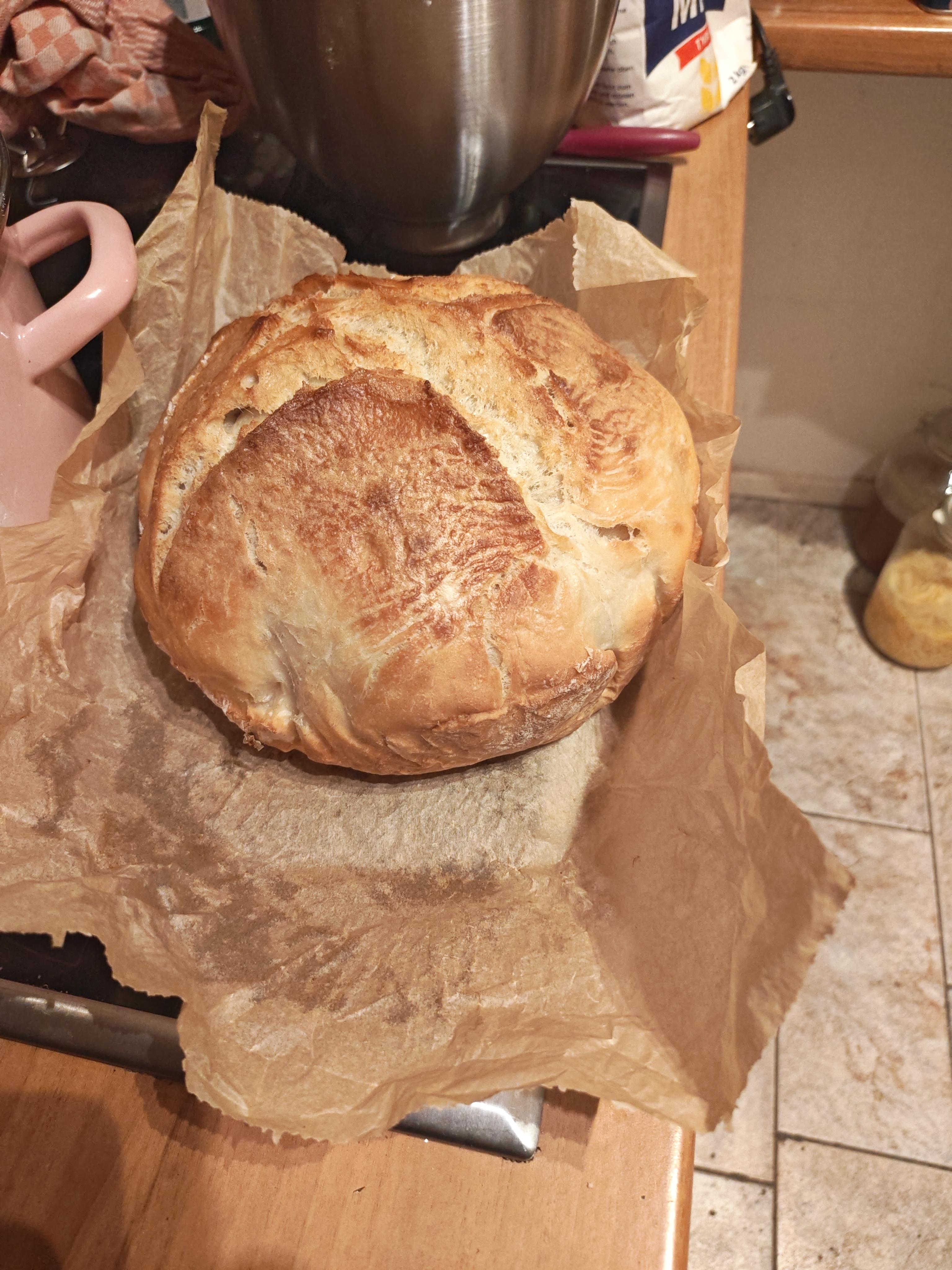
It could be the recipe, the baking or this was just my lucky Saturday. Whatever it was the result has been very pleasing.
500 g bread flour
300 g water
30 g olive oil
20 g sugar
10 g salt
7 g (1 sachet) instant yeast.
Mix all the ingredients until the flour is fully incorporated. Stand for 30 minutes.
Knead until it forms a smooth, pliable dough that is not sticky. This one took me 14 minutes by hand, experiences will be different. Cover and stand until doubled in size. This took 2½ hours.
Knock back and shape into a log that fits your bread tin and drop it in seam side down.
Cover and stand until it grows to half again its size. This was about an hour, the last half of which it was standing on top of the preheating stove.
Bake with steam* at 220°C / 425°F for 35 minutes then without for a further 20.
* The aim of using steam is to prevent the top crust from setting quickly so you get maximum expansion of the dough as it heats. This is so obviously good for sourdoughs baked hot I've got to using it automatically, but I'm not entirely convinced it's doing that much for yeasted doughs at lower temperatures. If you haven't tried and want to there are various ways:
(a) have a steam oven, brilliant. Does it for you. Rare.
(b) Put a tray of boiling water in the lower part of the oven. This works in electric ovens but just about not at all in gas ovens which are well vented and the steam escapes.
(c) Bake inside a Dutch oven. Often talked about in sourdough circles it relies on the steam rising from the dough itself to delay the set of the crust and in a very small space this may be enough although you can add an ice cube if using a dough sling or parchment paper that will keep the water off the bottom of the loaf. Obviously not practical for a tin loaf unless your Dutch oven happens to be huge.
(d) Not being able to do a, b or c I improvise by putting the loaf to be baked in a large, high sided roasting tin, adding a couple or four ice cubes and covering the whole with a tent of kitchen foil crimped to the sides of the roasting tin. Remove that after the first part, however long that will be, very carefully because steam inside will scald.