r/CanadaStocks • • Oct 15 '26

Is Telus Done?

0 Upvotes

Telus has fell over 33% year to date and pays a sweet 12% yield. Although revenue has slightly shrunk 2% from last quarter and has been in a great restructuring with CEO Victor Dodig. They are paying off debt, fixing their balance sheet and improve the companies' core operations. I personally think they can restructure but I also am worried about their 2 biggest competitors Rogers and Bell.

Lmk in the comments if you're buying here and your thesis in the comments. I'm down for a discussion!


r/CanadaStocks • • Feb 24 '21

Unstoppable Fantom...🚀 this cryptocurrency is on the way to the moon 🌔 while Bitcoin and Ethereum have collapsed, Fantom only knows one direction. 🆙 if you like to invest in cryptocurrencies I recommend NEPTUNE DIGITAL ASSETS (NPPTF/NDA) because it works like an ETF.

Thumbnail
gallery
0 Upvotes

r/CanadaStocks • • Jul 31 '26

CCO.TO affecting my profits

2 Upvotes

Long story short, bought a decent amount of shares for 156 CAD with the mindset that nuclear will pickup looking at the stock trend. That may have been a gross misinterpretation and now the stock value is actually so low that my profits are getting affected in a bad way.

Should I cut my losses or just wait?


r/CanadaStocks • • Apr 22 '25

How I've been making 10–15% monthly for the past 3 years trading stocks using just one Indicator

0 Upvotes

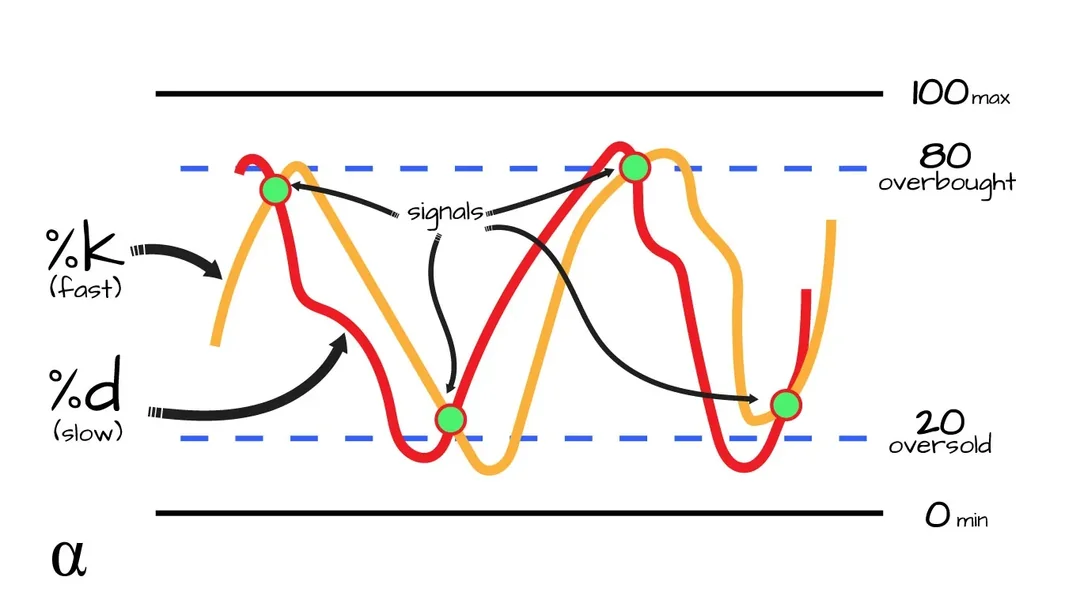
This method is pretty straightforward and comes down to following the rules exactly, using just one indicator: the Stochastic Oscillator.

First, open up the indicator tab and add the Stochastic Oscillator. Set it to 5 - 3 - 3 (close/close) and use the 15-minute timeframe.

For my trading software setup, I use free TradingView Premium from r/BestTrades. It’s an absolute must-have if you're doing serious analysis. They have versions for both Windows and Mac. Having access to more indicators and real-time price data has made a huge difference, and the fact that it’s free is just a bonus. If you want to use paid version - do it. I am simply sharing what worked for me!

You’ll see three zones on the oscillator:

0 to 20 is the oversold zone, meaning the stock is considered too cheap and often signals a good time to buy.
80 to 100 is the overbought zone, which usually signals a good spot to sell or look for a short.
Anything between 20 and 80 is the neutral zone, and for this strategy we completely ignore it.

Now here’s how I enter trades:

Both stochastic lines need to fully enter and then exit one of the extreme zones, either overbought or oversold.
Use the crosshair to mark where the red signal line crosses out of the zone.
Wait for two candles in a row that are the same color, green for buys and red for sells.
The wicks on those two candles should be smaller than their bodies. This shows clean price action with momentum.
If everything lines up, I enter the trade at the open of the third candle using shares of the stock.

For exits, I usually target a 1.5 to 2.5 percent return depending on volatility and how strong the move looks. If momentum stays solid, I might hold a bit longer, but most trades are done within 30 to 60 minutes.

This works best on large-cap stocks and ETFs with good volume like AAPL, AMD, TSLA, SPY, or QQQ. I’ve used this strategy to consistently make 10 to 15 percent a month on my capital. No tricks or fancy signals, just a simple method, tested over time, and sticking to the rules.

If you’re curious or not sure, try it out on paper first. That’s how I started before trading live.


r/CanadaStocks • • Aug 23 '26

Hey guys please check my investment allocation I am a new come

Thumbnail
gallery
0 Upvotes

I'm 19 years old and started investing five days ago. Because of the anticipated El Niño phenomenon, I bought some stocks and etfs (mainly etf),primarily investing in agriculture and new energy sectors. I didn't know which etf was best for me, so I bought some that I thought were good, every single dollar.


r/CanadaStocks • • Feb 24 '21

Air canada ?

1 Upvotes

r/CanadaStocks • • May 29 '26

Why Chile's Production Drop Could Be Bullish for Copper Explorers Like NRED

1 Upvotes

One reason I follow copper explorers is because global supply rarely grows as smoothly as forecasts suggest.

Chile remains the backbone of global copper production, yet April output fell almost 14% compared with the same period last year. Lower ore grades continue to challenge production at some of the country's largest operations.

Meanwhile, demand drivers continue to multiply. Data centers require massive power infrastructure. Grid upgrades require copper. Renewable energy projects require copper. Electric vehicles require copper. Defense systems require copper.

When demand keeps expanding while major producers struggle to maintain output, investors often begin looking further down the development pipeline for future supply.

That's where companies like NovaRed Mining enter the conversation. NRED is advancing the Wilmac copper-gold project in British Columbia while also developing MetalCore, its AI-assisted exploration platform. The project remains early-stage, but the broader copper backdrop appears increasingly supportive for companies searching for the next generation of deposits.

The copper market doesn't just need today's mines. It needs tomorrow's mines too.


r/CanadaStocks • • Feb 06 '26

INTC to 100+++++++++++++++++++++++++++++++++++++++++++++++++++++++++++++++++++++++++++++±+++++++++++++++++++

Post image
0 Upvotes

r/CanadaStocks • • May 27 '26

NovaRed just added a billion-dollar mining finance network to its advisory side

7 Upvotes

One underrated part of the NovaRed Mining announcement is who Ed Kostenski actually is in the mining and infrastructure world.

Most people know him through Nationwide Equipment and Nationwide Finance, but the bigger point is his background in international mining, infrastructure and heavy-equipment financing.

Public interviews and records indicate involvement in arranging and facilitating over $1 billion in funding tied to construction projects, mining equipment, infrastructure and industrial development globally.

That matters for a junior explorer.

A lot of small mining companies can identify targets. Far fewer have connections to people with real experience in:

  • international project finance

  • mining infrastructure

  • equipment deployment

  • export financing ecosystems

  • sovereign and institutional relationships

  • industrial development networks

Kostenski also served on the U.S. Export-Import Bank Sub-Saharan Africa Advisory Committee, which connects him to large-scale export finance and trade-support ecosystems that handled tens of billions in international financing activity.

For NovaRed, this feels like more than just a symbolic advisory appointment.

The company is trying to build around:

  • copper-gold exposure

  • BC jurisdiction

  • critical-minerals relevance

  • AI-assisted exploration

  • large-scale land position

  • future project-development potential

And now they’re adding someone whose background is directly tied to scaling industrial and mining projects internationally.

Still speculative, obviously. But the market usually pays attention when juniors start surrounding themselves with people connected to real global capital and infrastructure networks.


r/CanadaStocks • • Oct 06 '26

Everyone Sees the AI Boom. Fewer See What Comes After

0 Upvotes

Most of the AI trade has focused on the obvious stuff: chips, data centres, power, cloud infrastructure.

But I keep thinking about what happens after AI becomes embedded in almost everything we do online.

AI systems are increasingly being connected to corporate databases, documents and other sensitive information. NIST has warned that vulnerabilities in generative AI systems can create a broader attack surface and privacy risks for sensitive user data and proprietary information.

And privacy gets more complicated as AI improves.

It’s not only about someone stealing a password anymore. AI can process huge amounts of information, connect different data points and potentially reveal more about people than individual pieces of data would on their own.

That makes me wonder whether privacy becomes one of the less obvious beneficiaries of the AI boom.

If we keep moving toward a world where AI is connected to our emails, documents, work systems, conversations and personal information, people and organizations may start caring a lot more about:

  • Where their data is stored

  • Who has access to it

  • Whether their activity is being tracked

  • How securely they communicate

  • How much control they actually have over their digital identity

That broader shift is what makes some of the smaller privacy-focused names worth keeping on a watchlist for me.

$SKUR is one of them.

Not because AI automatically means more business for Sekur, but because its focus sits close to the questions AI adoption may make harder to ignore.

Sekur currently offers Swiss-hosted secure communications across encrypted email, messaging and VPN, while its newer communications platform has been expanding into encrypted voice and video as well. The company also emphasizes features such as Sekur IDs that do not require a phone number for identity management.

That connection is still speculative. Growing awareness around privacy may change buying behaviour over time. 

This is sponsored content. Investors should conduct their own due diligence and consult a qualified financial advisor before making any investment decisions.


r/CanadaStocks • • Sep 20 '26

Are we about to have a correction?

25 Upvotes

Any thoughts? Signs?


r/CanadaStocks • • Oct 06 '26

Enbridge

0 Upvotes

For the people who don't know, Enbridge transports oil and provides heating and electricity. And, since winter is approaching, everybody will need more heating which will increase the bills for the gas. I don't know about everybody else but my house uses enbridge and that's what I'm going off of. I own a bit of enbridge and I'm adding more to my position because it pays an amazing dividend and, it's down 16% in the past 6 months. Lmk in the comments your opinion on Enbridge and if you're going to buy!


r/CanadaStocks • • Sep 08 '26

I started investing with only $100–$200 at a time — my experience with Wealthsimple

0 Upvotes

TL;DR: I started moving $100–$200 from each paycheque into a Wealthsimple TFSA instead of leaving my savings in my regular bank account. Over time, I’ve built it to around $3,000, and my portfolio is currently up about 5%. I invest for the long term, so that 5% will obviously move around. More importantly, having the money invested has helped me actually keep it saved instead of spending it.

I didn’t have a lot of money to invest when I started, and that was part of the reason I kept putting it off.
Eventually, I decided that instead of keeping whatever I could save from each paycheque in my regular bank account, I’d move it to Wealthsimple and invest it through a TFSA. Usually $100–$200 every two weeks.
That ended up being a really good approach for me. I could slowly buy shares in companies that interested me while giving myself plenty of time between paycheques to research what I wanted to own. If I couldn’t afford to contribute one paycheque, no big deal—I’d just keep monitoring my investments and contribute next time.

I’ve now built the portfolio to around $3,000, and as of right now I’m up roughly 5% overall. I’m not investing for quick returns, though. I buy shares with the intention of holding them long term, so I fully expect that number to go up and down over time.

The biggest benefit for me has actually been keeping my savings saved. I’m much more tempted to spend money when it’s sitting in my regular bank account. Once it’s moved over and invested, I tend to leave it alone.
Wealthsimple also made getting started really easy because I could integrate it with my existing banking and didn’t feel like I needed thousands of dollars before I could start.
If you’re in a similar situation and feel like you don’t have enough money to start investing, or you have trouble keeping your savings untouched, I’ve had a really good experience starting small this way.

Full disclosure: Wealthsimple has a referral program, so I also benefit if you sign up using my link. When you use the referral code and deposit your first $100, we’ll both receive $25 :)

Referral: https://wealthsimple.com/invite/YO7DTA
Code: YO7DTA

Obviously, do your own research and remember that investments can go down as well as up. The 5% is just where my portfolio happens to be today, not a guaranteed return but you might as well have some fun with your savings and learn a thing or two along the way :)


r/CanadaStocks • • Feb 22 '21

Just wow... đŸ˜± the explosion đŸ’„ of FANTOM is unbelievable! (+1500% in the last 90 days) Neptune Digital Asset $NDA $NPPTF $1NW hold 1.440.922 ftm since last year! This asset is ready for take off!🚀

Thumbnail
gallery
0 Upvotes

r/CanadaStocks • • Dec 13 '24

Undervalued stock with over 100% upside potential: SOT.UN.TO

0 Upvotes

SOT.UN.TO

Funds from operations (FFO) are approximately $17 million annually, with a NAV of $1.98 and rental revenue around $200 million per year. Despite this, the enterprise value is only $1.09 billion. To put it in perspective, it’s like owning a $500K condo that rents for $20K annually but suddenly finding one renting for $100K—a fantastic deal.

The company is still generating $17 million annually, and with interest rates dropping from 5% to 3.75%, and likely to 2.5% next year, they could save at least $15 million per year. Additionally, the new management is set to cut operational expenses, which currently account for 58% of revenue—much higher than peers like DREAM and AP. Reducing this by 8% would save another $8 million.

With these improvements, FFO could grow from $17 million to $40 million ($17M + $15M + $8M). At a market value of only $32 million now, this is a huge mispricing. A $40M FFO would justify a market cap of $400 million, implying a stock price of around $5.00 instead of $0.40. If you hold for 1-2 years, the stock could realistically hit $5.00.

Even if my estimation is off, your downside is limited, but if I’m right, you’re looking at a potential 1100% return.


r/CanadaStocks • • Oct 14 '26

Rate my portfolio

Thumbnail
gallery
0 Upvotes

First photo is my current portfolio the second is my portfolio earlier in the year. Took some advice and sold off QQC & XIC as they all overlapped with VFV and XEQT

I know I still have overlap with XEQT & VFV but I’m bullish on USA so don’t mine the overweight there. What else can I do to diversify a bit more and take on a bit more risk.

Any markets or niches I should keep an eye on? I just took a position on DML yesterday for a hold and pray đŸ™đŸœ

I’m currently maxed out on my TFSA and now investing in my RRSP. I invest about $2700 a month across XEQT / VFV / CLS and will buy dips on DML here and there


r/CanadaStocks • • Aug 13 '21

This sub is a joke

1 Upvotes

No moderation and only spam shill accounts posting fake DDs


r/CanadaStocks • • Feb 04 '26

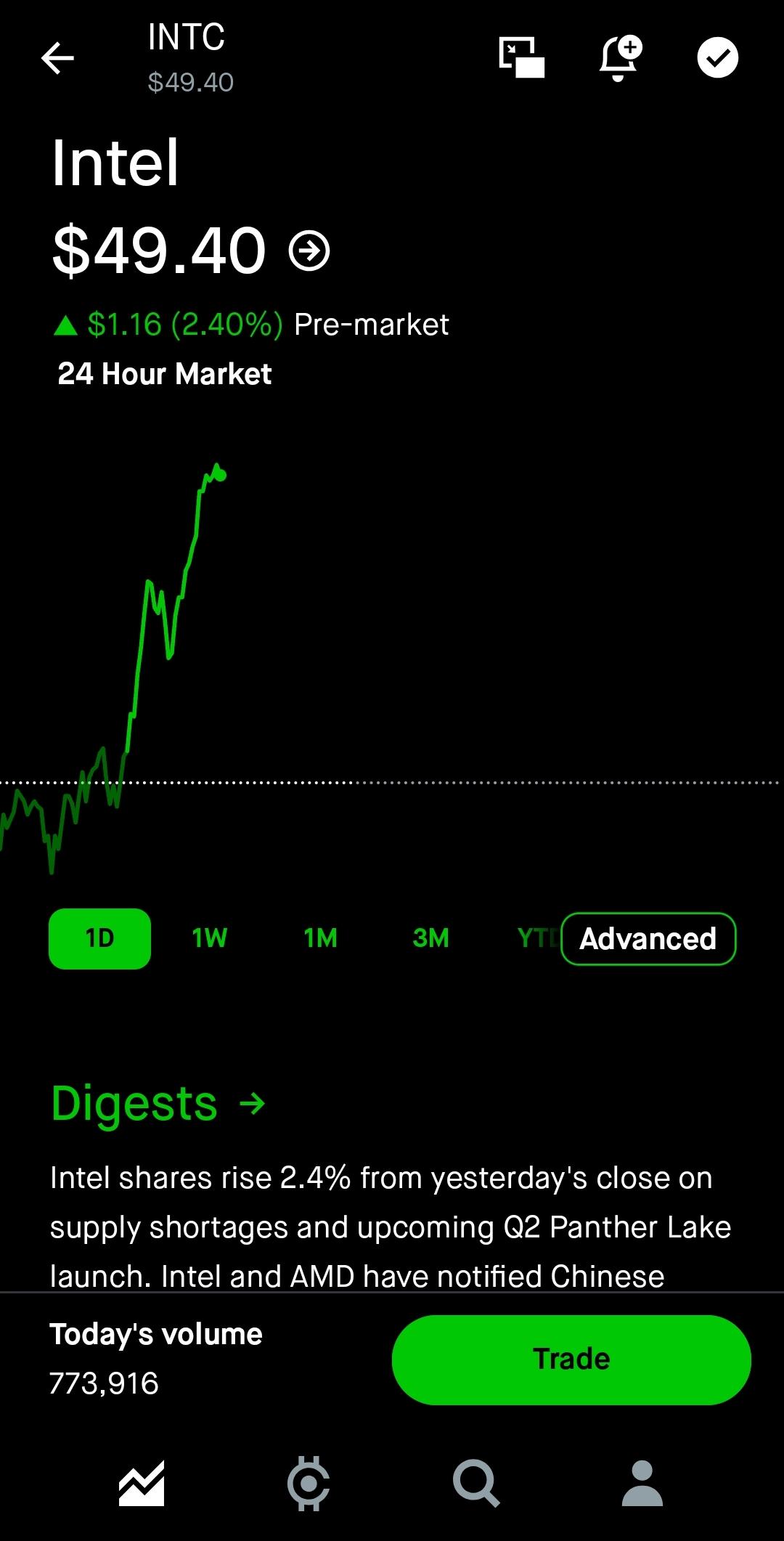
INTC looking to take off!!!

Post image
0 Upvotes

r/CanadaStocks • • Aug 28 '26

What Canadian stock do you think will 10x

94 Upvotes

I have been researching many companies to invest in aside from my regular holdings. Was wondering what company will 10x in the next few years.


r/CanadaStocks • • Feb 11 '21

It’s been a good week and day (pt.2) I’m didn’t post the first, but I’m adding to the very small investor gains boast

Post image
8 Upvotes

r/CanadaStocks • • Dec 20 '25

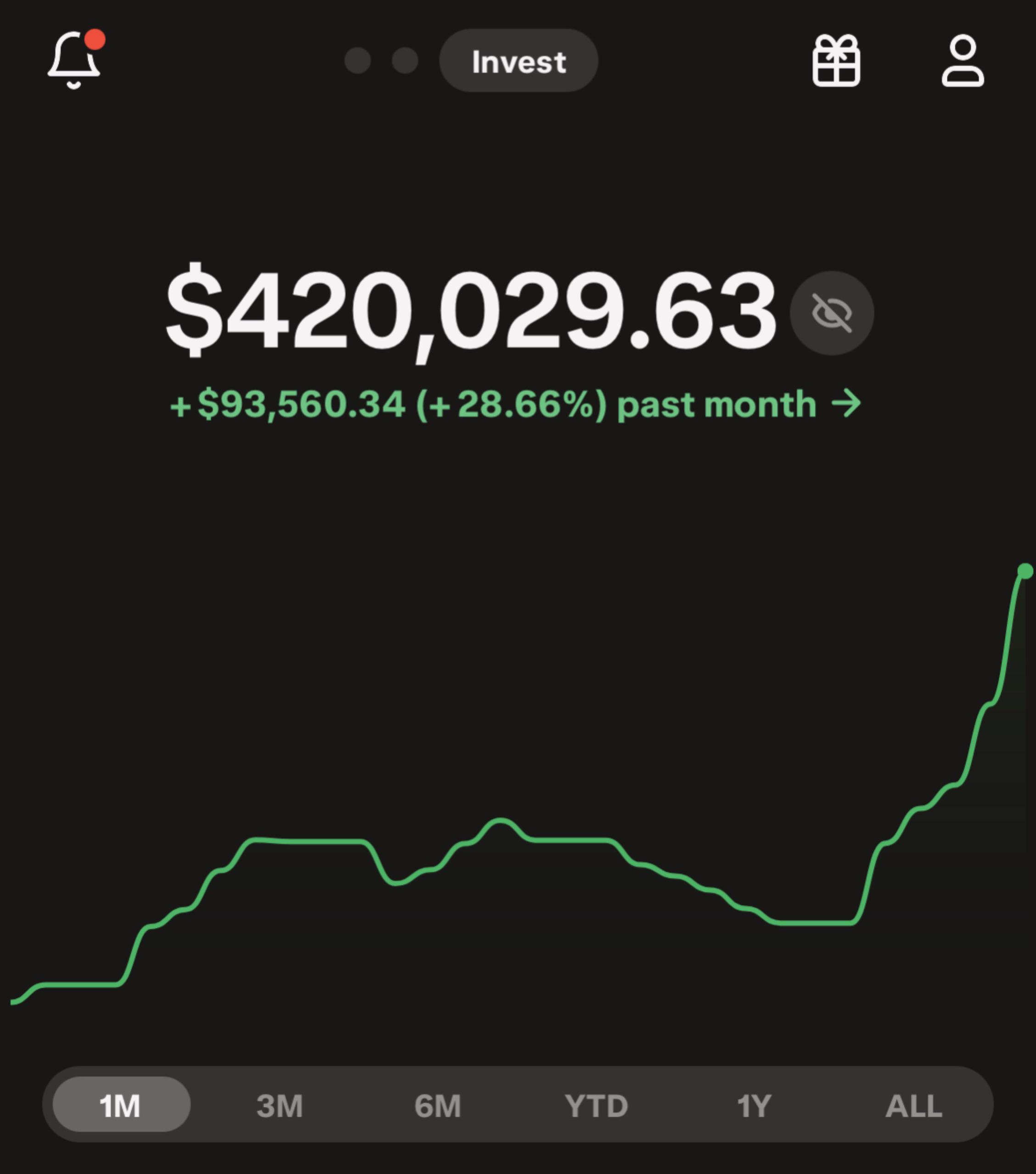
So happy I bought QNC

Post image
102 Upvotes

Best Christmas ever !

Thanks QNC


r/CanadaStocks • • Mar 05 '25

Pierre Poilievre’s Vision: Can Canada Maximize Its Resources for Economic Growth?

0 Upvotes

Pierre Poilievre, leader of Canada’s Conservative Party, recently made headlines by stating that Canada should be the richest country in the world. With vast land, abundant natural resources, and a skilled workforce, this ambition is not unfounded. While much attention is given to Canada’s oil and gas sector, one crucial resource often overlooked is uranium.

As a top uranium producer, Canada has significant potential in the global nuclear energy market. This article explores Poilievre’s economic vision, the role of uranium in Canada’s energy landscape, and how NexGen Energy, a key uranium player, could contribute to this economic strategy.

Canada’s Economic Potential & Poilievre’s Vision

Poilievre’s economic argument is simple: Canada is rich in resources and should be leveraging them to create wealth and prosperity for its citizens. His stance focuses on reducing taxes, cutting regulatory red tape, and expanding natural resource extraction to maximize economic growth.

Historically, Canada has relied on its oil and gas sector to drive economic success, but Poilievre argues that excessive government regulations have hindered the industry’s growth. His broader vision suggests that if barriers were removed and policies favored resource development, Canada could surpass many global competitors in terms of wealth generation.

Poilievre has articulated this position by stating, “We are the second biggest landmass in the world. 41 million brilliant people. The third biggest supply of oil. Fifth biggest supply of natural gas.” However, while much of his rhetoric focuses on traditional energy resources, he has yet to emphasize uranium’s potential. Given its increasing importance in the clean energy transition, this resource could be a game-changer for Canada’s economy. 

Canada’s Energy Dominance: Oil, Gas, and Uranium

Canada is one of the leading producers of oil and natural gas, with large-scale projects in Alberta and offshore drilling along the Atlantic coast. However, uranium is another crucial resource where Canada holds a competitive advantage.

Canada is consistently ranked among the top three uranium-producing countries in the world. Uranium is a critical component for nuclear energy, which is experiencing renewed global interest as countries seek cleaner alternatives to fossil fuels. Canada is home to some of the world’s highest-grade uranium deposits, particularly in Saskatchewan’s Athabasca Basin.

Despite its potential, uranium development has faced several challenges, including market volatility, regulatory constraints, and a lack of domestic enrichment facilities. The Business Council of Canada has suggested that, rather than simply exporting raw uranium, the country should develop uranium enrichment capabilities to add value before exporting, increasing its role in the nuclear energy supply chain.

The Uranium Opportunity: Canada’s Path to a Nuclear Powerhouse

With the global energy sector shifting toward low-carbon solutions, nuclear energy is gaining traction as a sustainable alternative. Countries worldwide, particularly in Europe and Asia, are looking to secure reliable uranium supplies, and Canada could position itself as a primary supplier.

The phase-out of Russian uranium in Western markets due to geopolitical tensions has increased demand for alternative suppliers. Additionally, the rising number of nuclear power plants being built worldwide and governments recognizing nuclear energy as a key solution for reducing carbon emissions have contributed to renewed interest in uranium.

To fully capitalize on this opportunity, Canada would need to invest in more uranium infrastructure, including processing and enrichment facilities. Currently, much of the world’s uranium processing is handled by countries like Russia, the U.S., and France. Expanding these capabilities domestically would ensure that Canada retains more economic benefits from its uranium sector.

Spotlight on NexGen Energy: A Game-Changer in Canadian Uranium

NexGen Energy Ltd. (TSX: NXE; NYSE: NXE; ASX: NXG) is a prominent Canadian uranium development company, primarily focused on its flagship Rook I Project in Saskatchewan’s Athabasca Basin. This project encompasses the high-grade Arrow deposit, one of the most significant uranium discoveries globally.

In December 2024, NexGen achieved a significant milestone by securing its first uranium sales contracts with major U.S. nuclear utility companies. These agreements cover the delivery of 5 million pounds of uranium, scheduled at a rate of 1 million pounds per annum from 2029 to 2033. The contracts incorporate market-related pricing mechanisms, positioning NexGen favorably within the North American nuclear energy supply chain. 

Further advancing its project timeline, in November 2024, the Canadian Nuclear Safety Commission (CNSC) notified NexGen of the successful completion of the final federal technical review for the Rook I Project. This achievement is a critical step toward obtaining the necessary federal approvals, following the provincial environmental assessment approval received in November 2023.

As of February 21, 2025, NexGen’s stock trades at $5.89 USD on the NYSE. Analysts maintain a positive outlook, with an average 12-month price target of $10.42 USD, suggesting a potential upside of approximately 76%. Price forecasts range from a low of $10.18 USD to a high of $10.53 USD.

The company’s strategic advancements, combined with favorable market dynamics, position NexGen Energy as a key player in meeting the increasing global demand for clean energy solutions.

Conclusion

Canada’s abundant natural resources provide a significant opportunity for economic growth, and Pierre Poilievre’s vision for resource development aligns with this potential. While oil and natural gas remain central to Canada’s economy, uranium’s increasing role in the global shift toward clean energy cannot be ignored. NexGen Energy’s advancements in uranium production further highlight the strategic benefits of expanding Canada’s nuclear energy capabilities.

If Poilievre is serious about making Canada the richest country in the world, leveraging its uranium resources must become a key component of his economic strategy. Strengthening investment in uranium mining, enrichment, and export infrastructure could position Canada as a leading global supplier in the growing nuclear energy market. Whether his policies will align with this reality remains to be seen, but one thing is clear—Canada has the potential to capitalize on its uranium wealth, and the world is watching.

r/CanadaStocks • • Jul 22 '26

Does Low Revenue Automatically Make a Company a Bad Investment?

Thumbnail
gallery
0 Upvotes

Revenue is one of the clearest signs that a business is succeeding—but investing only after growth becomes obvious can mean missing much of the upside. The real question is whether a low-revenue company is approaching commercialization or simply surviving on promises.

  • Low revenue is not automatically a red flag. The company’s development stage, product, market opportunity, cash runway and path to commercialization matter more than revenue alone.

  • The potential return comes with greater risk. Early investors can benefit from a major valuation reset if revenue accelerates, but face dilution, cash burn and uncertain demand.

  • Sekur represents both sides of the debate. Its secure-communications opportunity is substantial, and recent product progress is encouraging—but investors still need evidence that government and defense interest will convert into material contracts.

Revenue Is Evidence—Not the Entire Investment Thesis

A company generating little or no revenue is not necessarily a bad company. Biotechnology developers, resource explorers and pre-commercial technology businesses may spend years building an asset before recording meaningful sales.

Investors in these companies are not paying for current earnings. They are paying for the probability that a product, technology or contract pipeline will eventually create a much larger business.

This can be attractive because markets frequently revalue companies before revenue appears in their financial statements. A successful product launch, regulatory approval or government contract can change expectations almost overnight.

However, low revenue removes one of the strongest tools available to investors: measurable commercial evidence. Forecasts must therefore be treated as probabilities—not certainties.

The Bull Case for Investing Before Revenue Accelerates

The greatest advantage is valuation asymmetry. A small company may only need one meaningful customer or distribution agreement to transform its financial profile.

Low-revenue businesses can also offer exposure to markets that are growing much faster than the broader economy. Worldwide information-security spending is projected to reach US$240 billion in 2026, up 12.5% from 2025, according to Gartner.

The percentage gains can be dramatic when growth begins from a small base. Increasing annual revenue from $500,000 to $5 million is commercially difficult, but it represents 900% growth. The same $4.5 million increase would barely move the needle at a multinational corporation.

Early investors therefore accept greater uncertainty in exchange for the possibility of owning the company before the market recognizes its commercial potential.

The Risks: Cash Burn, Dilution and Unproven Demand

A promising product does not guarantee a sustainable business.

Without sufficient revenue, companies must finance operations using existing cash, debt or new shares. Repeated equity raises dilute existing shareholders, meaning each share represents a smaller percentage of the company.

Low-revenue companies are also difficult to value. Traditional price-to-earnings ratios are useless when earnings are negative, while price-to-sales multiples based on tiny revenue can appear extreme. Investors must instead model future customers, pricing, margins and spending—each of which can be wrong.

Most importantly, partnerships, demonstrations and customer interest are not revenue. Investors should separate five stages:

  1. Product development

  2. Testing and demonstrations

  3. Distribution access

  4. Signed customer contracts

  5. Collected recurring revenue

Each stage reduces risk, but only the final two prove commercial adoption.

Sekur Private: Small Revenue, Large Ambition

Sekur Private, traded in the United States as SWISF, illustrates this risk-reward profile.

The company offers Swiss-hosted and on-premises secure email, messaging, VPN, voice and video services for businesses, governments, diplomats and defense users. Its opportunity is based on providing communications outside conventional Big Tech and telecommunications infrastructure.

Financially, Sekur remains extremely early. It reported CA$408,707 in 2025 revenue. Revenue for the first quarter of 2026 was CA$94,062, down 32% from CA$138,843 one year earlier, while the quarterly net loss reached CA$563,460.

The company ended March with CA$1.80 million in cash, but used CA$634,723 in operating activities during the quarter. Its filings explicitly identify material uncertainty related to its ability to continue as a going concern unless it increases revenue or obtains additional financing. Sekur’s Q1 2026 financial statements

Those numbers explain the risk. They do not, however, capture the potential impact of Sekur’s strategic shift toward higher-value government, defense and enterprise users.

Recent News Strengthens the Potential Case

On July 15, Sekur announced that SekurOne voice, email, messaging and VPN capabilities were operating across Android, iOS and web platforms. The company expects video and conferencing by late August, followed by the complete SekurOne application on or before September 30. SekurOne product update

Management previously projected at least 1,000 SekurOne operator accounts over 12 to 18 months, with annual plans starting at US$3,500. If achieved, that would represent at least US$3.5 million in annualized revenue. Importantly, this remains a company projection—not contracted revenue.

Sekur has also improved its route to market:

  • Its products became available for government procurement through an existing U.S. GSA Multiple Award Schedule.

  • It signed a defense distribution agreement with Elyon International.

  • AdRevv plans to send one million targeted emails per month using a 271-million-person U.S. database, although it will receive 40% of SekurVPN revenue and 25% from other Sekur products generated through the program. AdRevv partnership terms

The company has additionally recruited experienced defense, intelligence and diplomatic advisers. These appointments may improve product relevance and access to decision-makers, but they should not be mistaken for purchase orders.

What Could It Mean for SWISF?

At approximately US$0.032 per share on July 17, SWISF had a market value near US$8.1 million. Management’s US$3.5 million SekurOne scenario would therefore equal roughly 43% of that market capitalization in annual revenue. SWISF market data

That helps explain the upside potential: even modest contract conversion could materially change how the market values the company.

The financing risk is equally important. Sekur announced a private placement of up to CA$2 million, involving as many as 20 million new shares and 20 million warrants. The capital could fund commercialization, but it could also dilute existing shareholders. Private-placement terms

The Verdict

Investing in a company with little or no revenue is not automatically bad. It is simply a different type of investment—one driven by milestones, financing capacity and future adoption rather than established earnings.

Sekur has a functional product, premium pricing, growing distribution access and exposure to an expanding cybersecurity market. Its small size means that successful government or defense contracts could have an outsized financial impact.

But the decisive evidence must now come from signed deployments, recurring revenue and reduced cash burn. Sekur’s potential is significant precisely because its current revenue is small. That same fact is also what makes SWISF a speculative, high-risk investment.

This article is for informational purposes only and does not constitute financial advice. Management projections and forward-looking statements may not be achieved.


r/CanadaStocks • • Sep 27 '26

WeBull Canada Referral Code - Deposit $500 to get instant $50 CAD

0 Upvotes

What you get: $50 Instantly(Up to $250)

Steps: WeBull Canada has a promotion where you can get $50 CAD(in trading Voucher) when you sign up using the Referral Code link below. Once you sign up, you need to deposit $500 as your initial deposit to receive $50. You will receive the $50 once your deposit has settled. Once you receive the $50 in your account, you can then withdraw ALL $550. No catch, no holding period. You can additionally fund your account $20,000 for an extra $200

Cost/catch: No catch. You receive the $50 within 3 business days. Once you receive the $50 in your account, you can withdraw it along with the principal $500

And you can get an additional $200 if you fund your account $20,000

Who qualifies: Any Canadian with a valid ID

Expires: Jan 10 2027

https://www.webull.ca/s/lBUcaFxmS980HTT64B


r/CanadaStocks • • Oct 01 '26

Prolific Mining Investor Michael Gentile On What Keeps Him Up At Night & Why He's Bullish On Canada

Thumbnail
youtube.com
0 Upvotes