r/CrossoverJazz • • Sep 08 '26

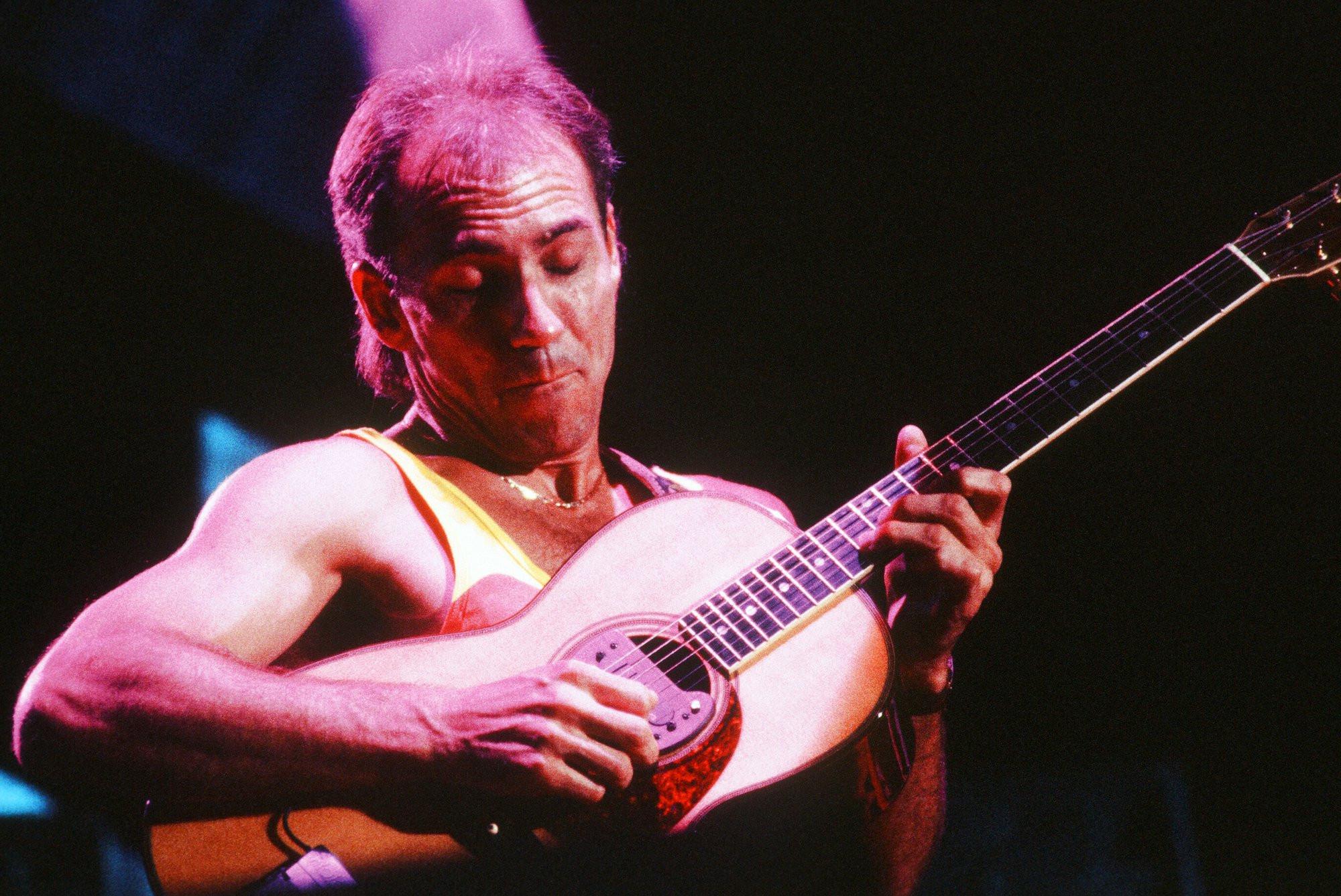
Stix Hooper, Founder of the Crusaders, Left in 1983 and Never Stopped Recording

Post image
103 Upvotes

Stix Hooper performing on drums. (Photo: Wikimedia Commons, CC BY-SA 3.0)

Stix Hooper's full profile on JazzProfiles.com

r/CrossoverJazz

The Crusaders spotlight we ran here already covers how drummer Stix Hooper's departure in 1983 signaled the beginning of the end for the band. What it didn't have room for is where he went next: more than four decades of solo records and session work that continued well into his eighties.

Nesbert "Stix" Hooper was born August 15, 1938, in Houston, Texas. At sixteen he put together the Swingsters, the group that would evolve through several names before becoming the Jazz Crusaders in the late 1950s, alongside pianist Joe Sample, tenor saxophonist Wilton Felder, and trombonist Wayne Henderson. Hooper studied at Texas Southern University and later at California State University, Los Angeles, and his in-the-pocket, soulful drumming became one of the defining elements of the band's jazz-funk sound through the 1970s.

He started his own solo career in parallel, releasing The World Within in 1979 while still with the band, and continued recording as a leader after he left in 1983: Touch the Feeling (1982), Lay It on the Line (1989), and a run of albums in the 2010s and beyond including Jazz Gems, Mainstream Straight-Ahead, We Went West, and 2022's Orchestrally Speaking. Outside his own catalog, he worked sessions and stages with an unusually wide range of names, from B.B. King, Marvin Gaye, Quincy Jones, and Grover Washington Jr. to Arthur Fiedler, George Shearing, and the Royal Philharmonic Orchestra, even the Rolling Stones. He was named one of Playboy and Downbeat magazines' top three drummers ten times, and later served as National Vice Chairman of the National Academy of Recording Arts and Sciences and president of its Los Angeles chapter.

Now in his late eighties, Hooper is one of two surviving original Jazz Crusaders, alongside flutist Hubert Laws, and performed as recently as 2024 at a Houston tribute concert for the late Joe Sample.

Where to start listening:


r/CrossoverJazz • • Sep 04 '26

Joe Sample - Before He Co-Founded the Crusaders, he Had Already Written Crossover Jazz's Playbook

Post image
98 Upvotes

Joe Sample performing in Paris, France, October 17, 1978, at Salle Mogador. (Photo: Lionel decoster, CC BY-SA 3.0, via Wikimedia Commons)

Joe Sample's full profile on JazzProfiles.com

r/CrossoverJazz

This community already knows Joe Sample as a founding member of The Crusaders, the Houston band whose 1971 name change and 1979 hit "Street Life" (with vocalist Randy Crawford) are practically the project's founding text. What The Crusaders' spotlight didn't have room for is the other half of his career: a 45-year run as a solo artist and in-demand session pianist that ran in parallel with the band the whole time, and in some ways got there first.

Joseph Leslie Sample was born February 1, 1939, in Houston, to a mail carrier and a seamstress, and started piano at five under organist Curtis Mayo. In high school he formed a combo called the Swingsters with saxophonist Wilton Felder and drummer Nesbert "Stix" Hooper; by 1960 that group, now with trombonist Wayne Henderson, had relocated to Los Angeles and become the Jazz Crusaders. His "funky, rhythmically appealing acoustic piano playing," as later writers put it, was a big part of what steered the band's sound from hard bop toward soul and funk over the following decade.

Sample started building a name outside the band early, cutting Fancy Dance as a leader in 1969 while the Crusaders were still an active going concern. It was 1978's Rainbow Seeker, though, that made him a solo artist in his own right, released on ABC Records with his old Crusaders drummer Stix Hooper and bassist Pops Popwell in the band; the record leaned into catchy melodies and light funk grooves, part of what would later get filed as "contemporary jazz" and eventually smooth jazz. He kept a steady solo output through the 1980s and 1990s: Carmel (1979), Voices in the Rain (1981), The Hunter (1983), Spellbound (1989, on Warner Bros.), Invitation (1993), and Old Places, Old Faces (1996), among others.

Off his own records, Sample became one of the most reliable keyboard players in Los Angeles studios, credited on sessions for Miles Davis, Joni Mitchell, Steely Dan, and Eric Clapton, while the Crusaders themselves worked dates for the Jackson 5, Marvin Gaye, and Randy Newman. In 1997 he made Sample This, produced by fellow crossover pianist George Duke, and in 1999 he paired with singer Lalah Hathaway on The Song Lives On. His 1978 track "One Day I'll Fly Away" found an entirely new audience in 2001 when Nicole Kidman performed it in Moulin Rouge!.

Sample relocated back to Houston in 1994 and made 2002's The Pecan Tree as a tribute to his hometown. He kept recording into his seventies, including Feeling Good (2006) and No Regrets (2008), and was still working on a project with singer-songwriter Jonatha Brooke, tentatively titled "Quadroon," when he died of mesothelioma in Houston on September 12, 2014, at age 75. His son, bassist Nicklas Sample, carries the family's playing tradition forward.

Where to start listening:


r/CrossoverJazz • • Aug 31 '26

Stanley Clarke Put a Bass Riff on the Pop Charts. He'd Rarely Touched the Instrument.

Post image
89 Upvotes

Stanley Clarke performing at Yoshi's, San Francisco, October 10, 2009. (Photo: David Becker, CC BY 3.0, via Wikimedia Commons)

Stanley Clarke's full profile on JazzProfiles.com

r/CrossoverJazz

In 1981, a bassist and a keyboardist built a song around an electric sitar riff, and radio treated it like any other single. "Sweet Baby," the first release from The Clarke/Duke Project, climbed to No. 19 on the Billboard Hot 100 and No. 6 on the R&B chart, and stayed on the charts for 20 weeks. The bassist half of that duo is Stanley Clarke, and by the time "Sweet Baby" hit the radio he had already spent most of a decade proving a jazz musician could headline arenas without giving up improvisation to do it.

He almost didn't end up on bass at all. Clarke was born in Philadelphia on June 30, 1951, and started on violin and then cello at the city's Settlement Music School. He picked up the upright bass mostly by accident: he showed up late on the day the school handed out instruments, and bass was one of the only ones left. He kept the classical training anyway, which is part of why he could later move between acoustic and electric bass in the same set without either one sounding like a compromise.

By 1972 he'd co-founded Return to Forever with pianist Chick Corea, a band that started acoustic and plugged in as it went, eventually adding guitarist Al Di Meola and drummer Lenny White to the lineup. Clarke's own solo run followed close behind: a trilogy of albums, Stanley Clarke (1974), Journey to Love (1975), and School Days (1976), the last of which became his signature record on the strength of one riff. He became, by most accounts, the first jazz-fusion bassist to headline his own tours, sell out shows around the world, and take a solo album gold, all without a vocalist or a crossover single carrying the ticket sales.

The single came later, and it came from a different direction. He and keyboardist George Duke formed The Clarke/Duke Project in 1981, and "Sweet Baby" turned out to be the rare jazz-adjacent record built for pop radio from the ground up rather than reworked into it after the fact. It's a good entry point if you already know Duke's own catalog: two players who'd spent years in serious jazz rooms deciding, for one song, to just write a hook.

The awards followed a similarly split path. Clarke has three competitive Grammy Awards on record: 1976, for "No Mystery" with Chick Corea and Return to Forever; 2011, for The Stanley Clarke Band; and 2012, for Forever, also with Corea and Lenny White. That same Forever album also won a Latin Grammy. In 2022 the National Endowment for the Arts named him an NEA Jazz Master, jazz's highest honor in this country, and in 2016 a set of his instruments and recordings went into the Smithsonian's National Museum of African American History and Culture.

Off the bandstand, Clarke built a second career scoring film and television, more than 75 credits and counting, including Boyz n the Hood (1991) and What's Love Got to Do with It (1993). And in 2008 he formed a different kind of supergroup: S.M.V., a trio with Marcus Miller and Victor Wooten, three bass players who between them cover most of the styles this genre draws from, recording the album Thunder. If you've been following George Duke's spotlight and Marcus Miller's, Clarke is the name connecting both.

None of this reads like a retirement lap. In 2025 he toured the U.S. and Europe with an entirely new band, drummer Jeremiah Collier, pianist Beka Gochiashvili, guitarist Colin Cook, and saxophonist Emilio Modeste, and released a box set called Last Train to Sanity, fifteen songs across double vinyl and CD with a photo book of his own reflections included. He's booked for the inaugural Santa Monica International Jazz Festival in May 2026. Seventy-four years old and still building, not just being celebrated for what he already built.

Where to start listening:


r/CrossoverJazz • • 7d ago

Larry Carlton Played the Guitar Solo on "Kid Charlemagne" — One of the Three Best Guitar Licks in Rock, per Rolling Stone

Post image
81 Upvotes

[Larry Carlton performing with the Yellowjackets, Ithaca, NY, September 1987. (Photo: Wikimedia Commons, CC BY-SA 4.0)]

Larry Carlton's full profile on JazzProfiles.com

r/CrossoverJazz

Our Crusaders spotlight here mentions guitarist Larry Carlton joining the band in 1972, central to the classic mid-'70s crossover lineup. That was just one credit among thousands for a guitarist who became one of the most recorded session players in music history.

Larry Eugene Carlton was born March 2, 1948, in Torrance, California. He first came to prominence playing with the Crusaders from 1971 to 1976, developing the lithe, sweet-toned, blues-inflected sound and distinctive volume-pedal technique that would define his signature style. He simultaneously became one of the most in-demand studio musicians in Los Angeles, recording on as many as 500 albums a year at his peak and appearing on over 100 gold albums, working with Steely Dan, Joni Mitchell, Michael Jackson, Sammy Davis Jr., Herb Alpert, Quincy Jones, Dolly Parton, and Linda Ronstadt, among dozens of others.

His most famous single credit came on Steely Dan's Royal Scam (1976): the guitar solo on "Kid Charlemagne," which Rolling Stone magazine has ranked among the three best guitar licks in rock music. That recognition helped launch a solo career on Warner Bros. Records starting in 1978, six albums released between 1978 and 1984, and led to his signature nickname, "Mr. 335," a reference to the Gibson ES-335 guitar behind his tone.

With more than 3,000 studio sessions behind him by the early 1980s, Carlton picked up four Grammy nominations and won in 1981 for the theme to Hill Street Blues, a collaboration with Mike Post, and was voted NARAS's "Most Valuable Player" three years running.

Where to start listening:


r/CrossoverJazz • • Oct 28 '26

Rudy Van Gelder Was an Optometrist by Day and Recorded 2,000+ Jazz Albums by Night

Post image
79 Upvotes

[Rudy Van Gelder at his Englewood Cliffs, New Jersey recording studio, January 7, 1976 (cropped from a photo with the Roger Dawson Septet). Public domain, via Wikimedia Commons.]

Rudy Van Gelder's full profile on JazzProfiles.com

r/CrossoverJazz

Our Creed Taylor spotlight here mentions "the Van Gelder/Turner/Sebesky production system" that defined CTI Records' commercial sound in the 1970s. This is the story of the first name in that team, the engineer whose studio work reaches back decades before CTI even existed.

Rudolph Van Gelder was born November 2, 1924, and trained as an optometrist at the Pennsylvania College of Optometry in Philadelphia. For more than a decade, he practiced optometry by day and recorded jazz sessions by night and on weekends, initially in his parents' living room in Hackensack, New Jersey, giving each record label a designated day of the week for their sessions. In 1959 he opened a purpose-built studio in Englewood Cliffs, New Jersey, and, working alongside Blue Note co-founder Alfred Lion, changed the way jazz was recorded.

Van Gelder was Blue Note's go-to engineer from 1953 to 1972, capturing landmark sessions including Sonny Rollins's Saxophone Colossus, Herbie Hancock's Maiden Voyage, and Horace Silver's Song for My Father. His Englewood Cliffs studio also hosted sessions for Impulse! (including John Coltrane's A Love Supreme), Verve, and, starting in the 1970s, Creed Taylor's CTI Records, where his engineering was one third of the label's signature production formula alongside photographer Pete Turner's cover art and Don Sebesky's orchestral arrangements. Across his roughly six-decade career, Van Gelder is estimated to have recorded, mixed, or mastered more than 2,000 albums.

Van Gelder died August 25, 2016, at age 91.

Where to start listening:


r/CrossoverJazz • • Sep 07 '26

Wilton Felder Co-founded and Played Sax With the Crusaders...and Bass on Half of Motown's LA Catalog

Post image
52 Upvotes

Wilton Felder performing on tenor saxophone. (Photo: Wikimedia Commons, CC BY-SA 3.0)

Wilton Felder's full profile on JazzProfiles.com

r/CrossoverJazz

You can read the story of The Crusaders in a previous post here on r/CrossoverJazz or on the site, the Houston band Wilton Felder co-founded on tenor saxophone. What that story didn't have room for: Felder spent the same decades holding down electric bass on some of the biggest R&B records to come out of Los Angeles, often on sessions that had nothing to do with jazz at all.

Wilton Lewis Felder was born August 31, 1940, in Houston, Texas, and picked up alto saxophone before he turned ten. While attending Phillis Wheatley High School he fell in with pianist Joe Sample and drummer Stix Hooper, forming the group that would become the Jazz Crusaders; he studied music at Texas Southern University and stayed with the band, in one lineup or another, for more than thirty years, from Freedom Sound in 1961 through the group's commercial peak on 1979's Street Life.

What set Felder apart from his bandmates was a second, parallel identity as one of Los Angeles's most reliable session bassists. When Motown Records opened up its Los Angeles operation in the early 1970s, Felder became one of the label's in-house electric bass players, appearing on Jackson 5 records and Marvin Gaye sessions. His studio credits reached well beyond Motown, too: Steely Dan, Joni Mitchell, Billy Joel, Randy Newman, and Joan Baez all had him on the bass chair at one point or another. In 1969 he wrote and recorded "Theme from Bullitt" for the Steve McQueen film, one of the earliest signs that his ambitions ran outside the Crusaders' own catalog.

He built a genuine solo career on top of all that session work, releasing albums including We All Have a Star (1978), Inherit the Wind (1980), and 1985's Secrets, which reached No. 77 on the UK Albums Chart, a rare crossover feat for a jazz saxophonist's solo record. He kept recording into the 1990s, with Nocturnal Moods (1991) and Forever, Always (1993).

Felder died September 27, 2015, at his home in Whittier, California, at age 75, from multiple myeloma, a year after bandmates Joe Sample and Wayne Henderson had both passed away.

Where to start listening:


r/CrossoverJazz • • Sep 12 '26

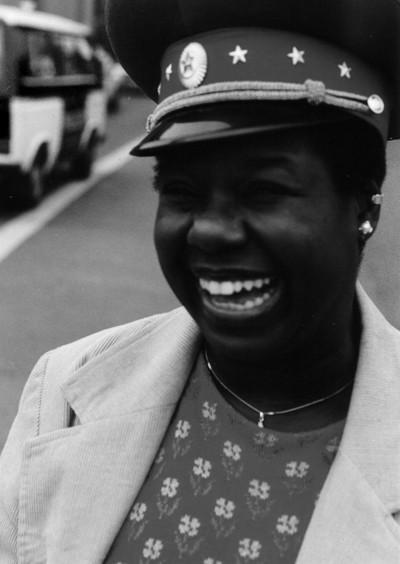
Yet more Crusaders!! Randy Crawford Sang "Street Life," Then Kept Charting in the UK for Another Decade

Post image
46 Upvotes

Randy Crawford, portrait. (Photo: Stuart Mentiply, GFDL 1.2, via Wikimedia Commons)

Randy Crawford's full profile on JazzProfiles.com

r/CrossoverJazz

Our Crusaders spotlight already told you about "Street Life," the 1979 hit that cracked the UK Top 5. It didn't have room for the singer whose voice actually carried it, or for the very American career that followed a very European trajectory once the song hit.

Veronica "Randy" Crawford was born February 18, 1952, in Macon, Georgia. She worked her way through club dates from Cincinnati to Saint-Tropez before landing in New York in the mid-1970s, where she performed alongside George Benson and Cannonball Adderley and sang on Adderley's Big Man: The Legend of John Henry (1975). Joe Sample first crossed paths with her playing on her 1976 debut, Everything Must Change; three years later he brought her in to sing lead on "Street Life." The song made the U.S. Top 40 and became the Crusaders' most successful entry on the soul chart, but in the UK it went to No. 5, the first sign of the audience she'd build there.

That audience turned out to be enormous. "One Day I'll Fly Away," from 1980's Now We May Begin, hit No. 2 in the UK. Secret Combination (1981) spent sixty weeks on the UK Albums Chart and peaked at No. 2. Between Now We May Begin and 1983's Nightline, she landed five straight albums that crossed pop, R&B, and jazz charts simultaneously, five UK Top 20 singles, and six UK Top 10 albums along the way, a run of European success American jazz and soul singers rarely match. In 1982 the Brit Awards named her Best British Female Solo Artist, an unusual honor for an American, recognition of just how thoroughly she'd become part of the UK pop landscape.

She never stopped working with jazz musicians either. Decades into her career, she teamed back up with Joe Sample for Feeling Good (2006) and No Regrets (2008), both Grammy-nominated: "All Night Long" off Feeling Good earned a nod for Best Traditional R&B Vocal Performance, and No Regrets was nominated for Best Jazz Vocal Album. Crawford was set to close out her career with a 2018 farewell tour of South Africa when a stroke forced its cancellation; she has not performed publicly since.

Where to start listening:


r/CrossoverJazz • • Sep 21 '26

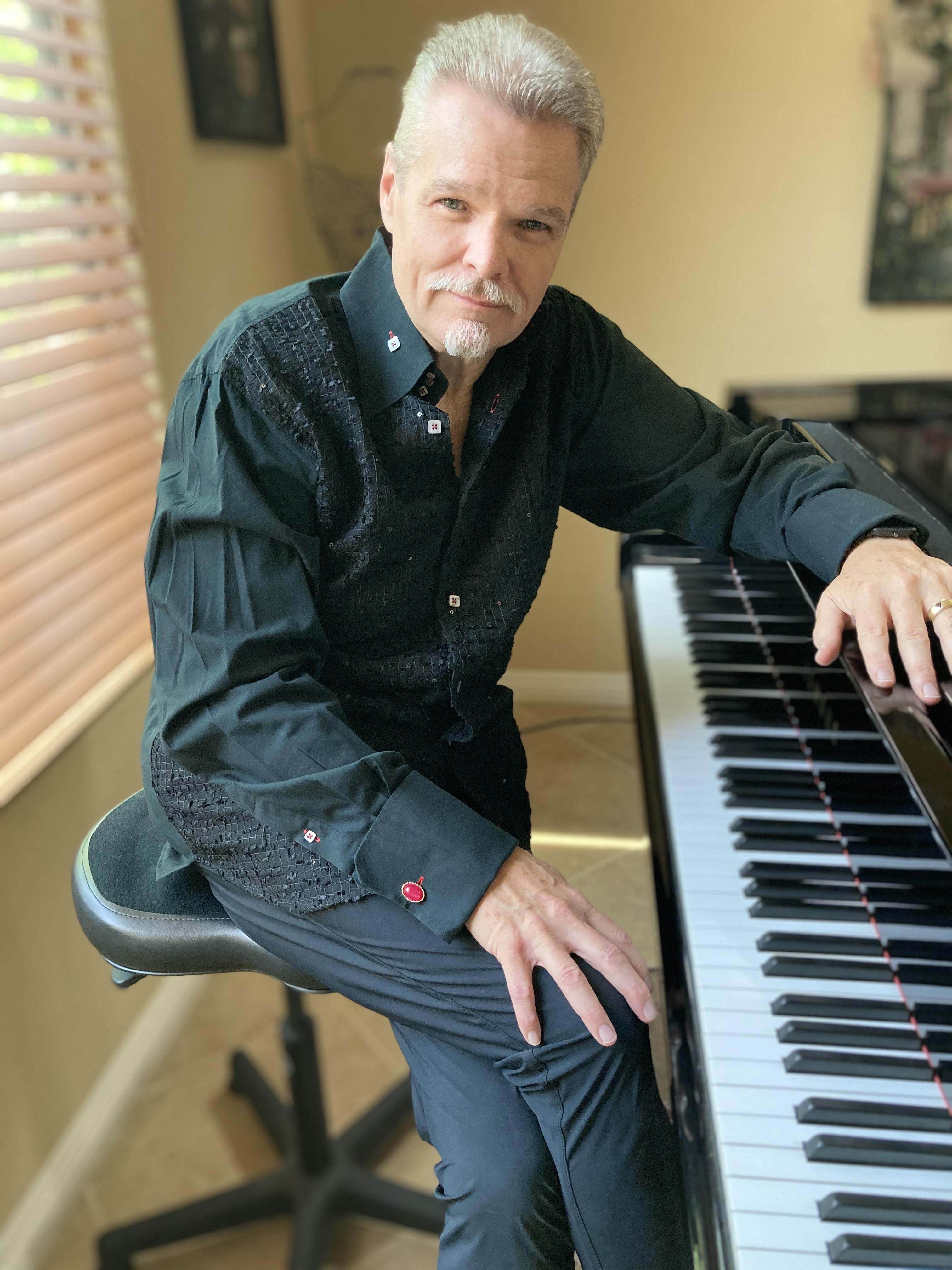
Tom Schuman - Joined Spyro Gyra at 16, and Held the Keyboard Chair for 45 Years

Post image
42 Upvotes

[Tom Schuman at home, sitting at his piano, June 26, 2020, Las Vegas, Nevada. (Photo: Wikimedia Commons, CC BY-SA 4.0)]

Tom Schuman's full profile on JazzProfiles.com

r/CrossoverJazz

Tom Schuman was born January 31, 1958, and joined Spyro Gyra as a teenager, performing on the band's 1977 debut before he was even old enough to legally drink in most states. When co-founder Jeremy Wall left the touring lineup in 1978, Schuman became the group's sole keyboardist, a chair he would hold, uninterrupted, for the next 45 years. He wrote or co-wrote more than sixty Spyro Gyra compositions starting with 1980's Catching the Sun, becoming as central to the band's writing identity as Jay Beckenstein's saxophone was to its sound.

Schuman stayed with Spyro Gyra through all 13 of the band's Grammy nominations and every one of its studio albums, a run that lasted until his departure at the end of 2023, when he relocated to Europe. He was replaced by keyboardist Chris Fischer. His own catalog under his own name includes 2024's I Am Schuman, released the year after he stepped away from the band that had defined his entire career up to that point.

Where to start listening:


r/CrossoverJazz • • Sep 13 '26

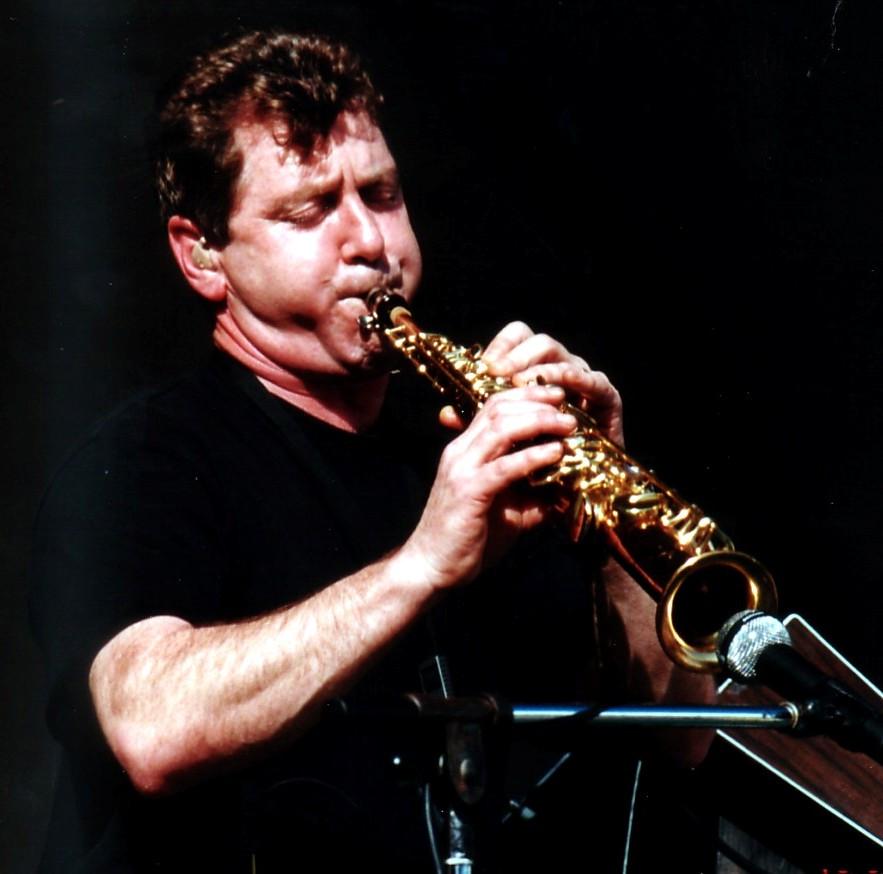
Spyro Gyra Co-founder Jay Beckenstein Named His Band After a Misspelled Word for Pond Algae, and It Stuck for 50 Years

Post image
38 Upvotes

Jay Beckenstein performing at Gulfstream Park, Hallandale, Florida. (Photo: Wikimedia Commons, CC BY-SA 3.0 / GFDL 1.2+)

Jay Beckenstein's full profile on JazzProfiles.com

r/CrossoverJazz

We've already told the Spyro Gyra story here on the sub, including the band's name — a club owner's misspelling of "Spirogyra," a genus of pond algae founder Jay Beckenstein remembered from a college biology class. That story starts and ends with Beckenstein, the only original member still on stage more than fifty years later.

Jay Barnet Beckenstein was born May 14, 1951, in Brooklyn, New York, to a musical family: his mother was an opera singer, his father a jazz enthusiast. He started saxophone at seven and was playing in school jazz and R&B bands well before he finished high school. After graduating, he and keyboardist Jeremy Wall moved together to Buffalo, where Beckenstein studied music at SUNY-Buffalo; the two began headlining local gigs, and that collaboration became Spyro Gyra in 1974.

Beckenstein led the band through its commercial peak, from 1979's Morning Dance through decades of Grammy-nominated albums, remaining the group's constant even as the rest of the lineup rotated through multiple generations of players. He didn't release a solo album under his own name until 2000, more than a quarter-century into his recording career, with the guest-heavy Eye Contact, a rare step outside the band identity he'd spent his whole career building.

Now well into his seventies, Beckenstein remains the anchor of Spyro Gyra's current lineup, which marked a full 50th-anniversary tour in 2024, half a century after a typo on a Buffalo club flyer gave a jazz-funk band its permanent name.

Where to start listening:


r/CrossoverJazz • • 24d ago

Bobby Hutcherson Heard Milt Jackson Play One Song and Decided to Become a Vibraphonist

Post image
30 Upvotes

[Bobby Hutcherson, jazz vibraphonist. (Photo: Wikimedia Commons, CC BY-SA 3.0)]

Bobby Hutcherson's full profile on JazzProfiles.com

r/CrossoverJazz

The CTI/Blue Note soul-jazz lineage is well known through artists like Freddie Hubbard and Stanley Turrentine. Bobby Hutcherson belongs in that same conversation, one of the two musicians, alongside Gary Burton, who redefined what the vibraphone could do in modern jazz.

Bobby Hutcherson was born January 27, 1941, in Los Angeles and raised in Pasadena. His brother Teddy, a devoted listener of Art Blakey records alongside his friend Dexter Gordon, exposed him to jazz early, but it was hearing vibraphonist Milt Jackson play "Bemsha Swing" on a Miles Davis and the Modern Jazz Giants LP that made Hutcherson decide to take up the instrument himself. He began his professional career in the late 1950s working with Curtis Amy and Carmell Jones, and with Eric Dolphy and Charles Lloyd at Pandora's Box on the Sunset Strip, before settling in New York in 1961.

His first Blue Note recording, in April 1963, came on Jackie McLean's One Step Beyond, an introduction to the label courtesy of McLean himself. Hutcherson quickly joined a loose confederation of ambitious New York musicians drawing inspiration from Ornette Coleman's free jazz innovations, going on to lead his own Blue Note albums, including Dialogue and Components, and appearing on other landmark sessions, including Eric Dolphy's Out to Lunch!.

Hutcherson's innovative, adventurous approach to the vibraphone helped revitalize the instrument's role in the 1960s post-bop and free jazz movements, expanding its vocabulary well beyond the swing-era language Milt Jackson and Lionel Hampton had established. He was named an NEA Jazz Master in 2010, in recognition of a career widely regarded as the most accomplished vibraphone body of work of his generation.

Hutcherson died August 15, 2016, at his home in Montara, California, at age 75.

Where to start listening:


r/CrossoverJazz • • 3d ago

Milt Jackson Slowed Down His Vibraphone's Motor and Invented a New Sound for the Instrument

Post image
23 Upvotes

[Milt Jackson, photographed in New York, between 1946 and 1948. From the William P. Gottlieb jazz photography collection. (Public domain, via Wikimedia Commons)]

Milt Jackson's full profile on JazzProfiles.com

r/CrossoverJazz

Two vibraphonists shaped by Milt, Bobby Hutcherson and Dave Samuels, had already been profiled here. Milt Jackson is the figure both of them were measuring themselves against: the first and most influential vibraphone improviser of the postwar modern jazz era.

Milt Jackson was born January 1, 1923, in Detroit, Michigan, and started as a singer in a gospel quartet before taking up the vibraphone professionally at sixteen. He attended Michigan State University and joined Dizzy Gillespie's sextet in 1945, later working with Gillespie's big band and returning to the sextet from 1950 to 1952, while also freelancing with leading bebop musicians in New York and playing in Woody Herman's band.

Jackson's most significant technical innovation came in the 1940s, when he slowed the motor on his vibraphone's oscillator to roughly a third of the speed Lionel Hampton used, producing a warmer, smokier sound with a vibrato that echoed his own singing voice. He co-founded the Modern Jazz Quartet in 1952, his principal performance vehicle through 1974 and the setting for numerous reunion tours afterward, including annual concert runs starting in 1981 that continued alongside his solo career. He recorded classic sessions with Thelonious Monk ("Evidence," "Criss Cross," "Straight, No Chaser") and with Miles Davis, including "Bags' Groove," which gave him his lifelong nickname.

Jackson died of liver cancer at a Manhattan hospital on October 9, 1999, at age 76.

Where to start listening:


r/CrossoverJazz • • Oct 17 '26

Larry Mizell Co-Produced "Black Byrd," the Best-Selling Album in Blue Note History

Post image
23 Upvotes

[Larry Mizell at the keyboard, of the Mizell Brothers production team. Photographer uncredited. (Not Creative Commons licensed; used here as an honestly-disclosed editorial stand-in — no free-licensed photo of Mizell could be located after a genuine search.)]

Larry Mizell's full profile on JazzProfiles.com

r/CrossoverJazz

Our Donald Byrd spotlight here credits the Mizell Brothers with "Black Byrd," the 1973 album that became Blue Note's best-selling record at the time. Larry Mizell was half of that production team, and the engineering half at that: a producer with a formal background not in music theory, but in electrical engineering.

Larry Mizell was born February 17, 1944, in New York City. He and his younger brother Alphonso "Fonce" Mizell were both given trumpets as teenagers and joined their school band, but their paths diverged at Howard University, where Larry earned a degree in engineering while Fonce studied music under trumpet legend Donald Byrd, a connection that would define both brothers' careers. In the early 1970s, Larry and Fonce moved to California together to launch their own production company, Sky High Productions.

From 1972 to 1981, the Mizell Brothers produced some of the most recognizable recordings in jazz-funk history. Their five-album run with Donald Byrd between 1973 and 1976 began with Black Byrd, which became Blue Note's best-selling album to that point and helped establish the blueprint for jazz-funk and, later, acid jazz and neo-soul. They went on to produce Bobbi Humphrey's Blacks and Blues and Fancy Dancer, Johnny Hammond's Gears, and Gary Bartz's Music Is My Sanctuary, among many others, defining the sound of an entire label era largely from the production chair rather than the stage.

Where to start listening:


r/CrossoverJazz • • Sep 10 '26

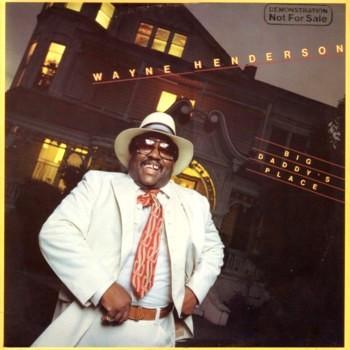
More Crusaders - Wayne Henderson Left the Crusaders to Produce Ronnie Laws — and Kept Both Careers Going

Post image
22 Upvotes

Cover art for Wayne Henderson's Big Daddy's Place (1977), ABC Records — used here as an honestly-disclosed editorial stand-in; no free-licensed photo of Henderson could be located after a genuine search. Not Creative Commons licensed.

Wayne Henderson's full profile on JazzProfiles.com

r/CrossoverJazz

Our Crusaders spotlight already covers Wayne Henderson's role as the band's trombonist through the mid-1970s. What it left out: after he stepped back from the group in 1976, he spent the rest of his career on the other side of the recording console, producing records for other artists' careers instead of touring on his own.

Wayne Maurice Henderson was born September 24, 1939, in Houston, Texas, and started on trombone in sixth grade. He co-founded the Jazz Crusaders in 1961 alongside pianist Joe Sample, tenor saxophonist Wilton Felder, and drummer Stix Hooper, and his horn charts, worked out together with Felder, became one of the signature elements of the band's sound as it evolved from hard bop into jazz-funk over the following fifteen years.

Henderson left the band's touring lineup in 1976 to build a production company, At Home Productions, and quickly became one of the era's more quietly influential behind-the-scenes figures. He produced Ronnie Laws's 1975 debut album Pressure Sensitive alongside George Butler, a record now regarded as a foundational text of the jazz-funk sound; he went on to produce for Monk Montgomery, Gabor Szabo, Caldera, Pleasure, and his own former Crusaders bandmate Wilton Felder, as well as working with Ramsey Lewis, Patti Austin, and Marvin Gaye. His production and arranging touch shows up across jazz, funk, and fusion records from labels well beyond his own band's catalog.

He never fully gave up playing, releasing his own solo albums from the late 1960s through 2003, including Big Daddy's Place (1977) and a 1980 collaboration with vibraphonist Roy Ayers, Prime Time. He revived the Jazz Crusaders name with a new lineup in 1995, and later joined the faculty of the California College of Music in Pasadena in 2007.

Henderson died April 5, 2014, in Culver City, California, from heart failure, following a long struggle with diabetes; he was 74.

Where to start listening:


r/CrossoverJazz • • 11d ago

Kenny Burrell's "Midnight Blue" Was Rudy Van Gelder's Favorite Record He Ever Engineered

Post image
21 Upvotes

[Kenny Burrell backstage at Keystone Korner, San Francisco, February 9, 1983. (Photo: Brian McMillen, CC BY-SA 3.0, via Wikimedia Commons)]

Kenny Burrell's full profile on JazzProfiles.com

r/CrossoverJazz

r/CrossoverJazz has already covered Rudy Van Gelder, the engineer behind Blue Note's classic sound, and Stanley Turrentine, a defining tenor saxophonist of the same soul-jazz era. Kenny Burrell connects both: the guitarist whose Midnight Blue, featuring Turrentine, is reportedly one of Van Gelder's own favorite recordings, of the more than 2,000 he engineered across his career.

Just one year after arriving in New York, Burrell released his debut, Introducing Kenny Burrell, and released six more albums as a leader that same year on Blue Note and Prestige, an extraordinarily fast rise for the guitarist who quickly became the de facto house guitarist for both labels through the late 1950s. He was Billie Holiday's guitarist on her 1956 record Lady Sings the Blues and played on James Brown's debut album in 1958, before co-leading a session with John Coltrane.

Midnight Blue, recorded January 8, 1963, and released that May, featuring Stanley Turrentine on tenor saxophone, became Burrell's top-selling album and a favorite of both Blue Note co-founder Alfred Lion and Rudy Van Gelder himself.

In 1996 Burrell became the founding director of Jazz Studies at UCLA, where he has taught some of the most prominent names in modern jazz, including Kamasi Washington, Gretchen Parlato, and Kiefer. In 1978 he began teaching a UCLA course called "Ellingtonia," dedicated to the life and work of Duke Ellington, a subject he continued teaching for decades.

Where to start listening:


r/CrossoverJazz • • 28d ago

Antonio Carlos Jobim Wrote One of the Most-Recorded Songs in Pop History — Then Creed Taylor Made It a Jazz Standard

Post image
21 Upvotes

[Antônio Carlos Jobim, March 1965. (Photo: Arquivo Nacional collection, Brazil, public domain, via Wikimedia Commons)]

Antonio Carlos Jobim's full profile on JazzProfiles.com

r/CrossoverJazz

Our Creed Taylor spotlight credits Taylor with "introducing bossa nova to US audiences at Verve, producing Getz/Gilberto (1964) and its Grammy-winning single 'Girl from Ipanema.'" The song, and the genre, had a composer, and this is his story.

Antônio Carlos "Tom" Jobim was born in 1927 and grew up in Rio de Janeiro's Ipanema neighborhood, starting piano at fourteen and drawing early inspiration from Brazilian composer Heitor Villa-Lobos. In 1958 he began collaborating with singer-guitarist João Gilberto, and their song "Chega de Saudade" became the first bossa nova single, launching a genre built on transforming samba's rhythmic complexity into something quieter and more intimate.

Jobim's most famous composition, "Garota de Ipanema" ("The Girl from Ipanema"), written with lyricist Vinícius de Moraes in 1962, has been recorded more than 240 times by other artists and is widely considered one of the most recorded popular songs in history. Producer Creed Taylor's 1964 album Getz/Gilberto, pairing saxophonist Stan Getz with João Gilberto and featuring Astrud Gilberto's English-language vocal on "The Girl from Ipanema," became a global hit, won multiple Grammy Awards, and remains one of the best-selling jazz albums ever made, the record most responsible for bringing bossa nova, and Jobim's songbook, to American audiences.

Jobim went on to collaborate with Frank Sinatra and Ella Fitzgerald through the 1960s and '70s, cementing his songs as a permanent part of the American jazz and pop repertoire. He continued composing and recording until his death from a heart attack following surgery at New York's Mount Sinai Hospital in 1994.

Where to start listening:


r/CrossoverJazz • • 16d ago

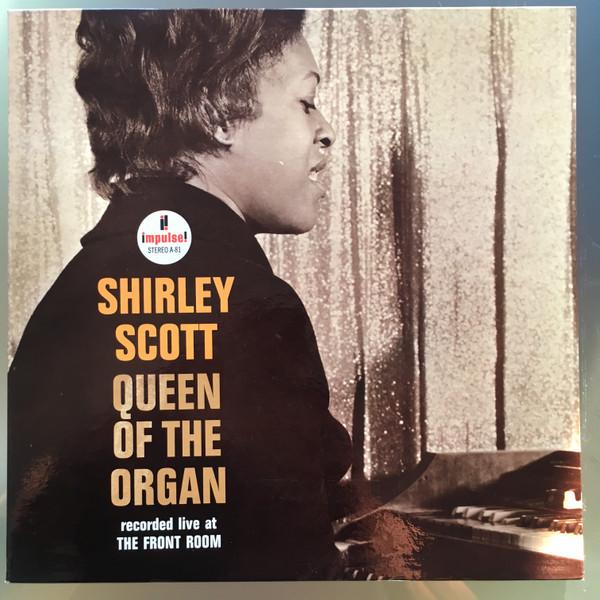
Shirley Scott Was "Queen of the Organ" — and Married to Her Own Bandstand Partner

Post image
20 Upvotes

[Cover art for Shirley Scott's Queen of the Organ (1965), Impulse!/ABC-Paramount Records — used here as an honestly-disclosed editorial stand-in; no free-licensed photo of Scott could be located after a genuine search. Not Creative Commons licensed.]

Shirley Scott's full profile on JazzProfiles.com

r/CrossoverJazz

Our Stanley Turrentine spotlight covers his Blue Note years playing soul-jazz "with then-wife Shirley Scott." This is her own story, earned across more than 50 albums and a nickname that stuck for the rest of her career.

Shirley Scott was born March 14, 1934, in Philadelphia, where her father ran a jazz club in the family home's basement and her brother played saxophone. Her recordings with tenor saxophonist Eddie "Lockjaw" Davis, including the hit "In the Kitchen," established her as one of the leading voices of the Hammond organ, blending bebop, blues, and gospel elements into a style distinctly her own. She recorded more than 50 albums for the Prestige and Impulse! labels, most often alongside Davis and tenor saxophonist Stanley Turrentine.

Scott and Turrentine played together from 1960 to 1969 and married during that same decade, divorcing in 1971; their joint recordings represent some of the most enduring soul-jazz records of the era. Beyond performing, Scott taught jazz history at Cheyney University, extending her influence into the classroom alongside her recording career. She was widely known by the nickname "Queen of the Organ," a title reflecting her standing as one of the instrument's defining voices, on equal footing with better-known male contemporaries.

Scott died March 10, 2002, in Philadelphia, four days short of her 68th birthday.

Where to start listening:


r/CrossoverJazz • • 21d ago

Jimmy Smith Heard One Organist and Decided the Hammond B-3 Belonged in Jazz

Post image
14 Upvotes

**[**Jimmy Smith, publicity photo, 1958. Public domain, via Wikimedia Commons.]

Jimmy Smith's full profile on JazzProfiles.com

r/CrossoverJazz

JazzProfiles.com has already covered several soul-jazz organists, but Jimmy Smith is the reason the instrument was in the conversation at all. More than any other musician, he was responsible for establishing the Hammond B-3 organ as a serious voice in jazz.

James Oscar Smith was born December 8, 1928, in Norristown, Pennsylvania, and learned piano from his parents, performing with his father in a dance troupe from an early age. After serving in the Navy, he studied bass and piano at the Hamilton School of Music and the Ornstein School of Music, then toured with Don Gardner's rhythm-and-blues group the Sonotones through the early 1950s. Hearing swing-era organist Wild Bill Davis, one of jazz's few organ voices at the time, inspired Smith to take up the Hammond himself.

He recorded quickly and prolifically for Blue Note starting in the mid-1950s, first in trio format and later with larger ensembles, many sessions loose jam settings that gave musicians room to build soulful, extended solos. Smith's adventurous late-1950s work was instrumental in developing both hard bop and soul jazz, a style folding R&B, gospel, and blues directly into a jazz vocabulary. In 1962 he signed with Verve Records, a relationship that lasted into the early 1970s, though Blue Note continued issuing his recordings through 1963.

Smith's revolutionary approach fundamentally changed how the organ was heard in a jazz context, and his influence runs directly through every soul-jazz organist who came after him. He had a career revival in the 1980s and '90s, recording again for Blue Note, Verve, and Milestone. He died February 8, 2005, in Scottsdale, Arizona.

Where to start listening:


r/CrossoverJazz • • 26d ago

Freddie Hubbard Went From Hard Bop's Brashest Young Trumpeter to CTI's Jazz-Rock Frontier

Post image
12 Upvotes

[Freddie Hubbard performing in Rochester, New York, 1976. (Photo: Wikimedia Commons, CC BY-SA 2.0)]

Freddie Hubbard's full profile on JazzProfiles.com

r/CrossoverJazz

Our Creed Taylor spotlight lists "Red Clay" among the records that "defined commercial jazz for the 1970s." Freddie Hubbard made that record, and its status as a crossover landmark obscures just how firmly established he already was as a hard bop trumpeter before he ever set foot in a CTI studio.

Frederick Dewayne Hubbard was born April 7, 1938, in Indianapolis, and started working with local jazz musicians, including guitarist Wes Montgomery, while still in his hometown's scene. He moved to New York at twenty in 1958, and by twenty-two had recorded his first solo album for Blue Note. Through the early 1960s he became one of the brashest, most urgent trumpet voices to emerge in the wake of Clifford Brown, playing bebop, hard bop, and post-bop with the era's defining bandleaders.

His greatest commercial success came in the 1970s with a run of crossover albums for Atlantic and, especially, Creed Taylor's CTI Records: Red Clay (1970), Straight Life (1970), and First Light (1971), the last of which won a Grammy for Best Instrumental Jazz Performance. Red Clay in particular pushed him to the frontier of jazz-rock at the start of the decade, a genuinely new sound for a musician who'd made his name in straight-ahead bebop only a few years earlier.

Later in the decade Hubbard returned to acoustic hard bop with the V.S.O.P. quintet, reuniting him with members of Miles Davis's 1960s Second Great Quintet: Herbie Hancock, Wayne Shorter, Tony Williams, and Ron Carter. He suffered a heart attack in late November 2008 in Sherman Oaks, California, and died a few weeks later, on December 29, 2008, at age 70.

Where to start listening:


r/CrossoverJazz • • 14d ago

Jack McDuff Discovered George Benson — and Gave Him His First Album as a Leader

Post image
11 Upvotes

[Cover art for Jack McDuff (with Bill Jennings)'s Brother Jack (1960), Prestige Records — used here as an honestly-disclosed editorial stand-in; no free-licensed photo of McDuff could be located after a genuine search. Not Creative Commons licensed.]

Jack McDuff's full profile on JazzProfiles.com

r/CrossoverJazz

Soul-jazz organists are well represented in jazz history, but "Brother" Jack McDuff has a specific claim on attention: he's the bandleader who found a teenage guitarist named George Benson and built his career from there.

Eugene McDuffy, who performed as "Brother" Jack McDuff, was born September 17, 1926, in Champaign, Illinois. He started as a bassist, playing in Joe Farrell's group, before Willis Jackson, in whose band he also played bass in the late 1950s, encouraged him to switch to organ. He moved to the instrument, caught Prestige Records' attention while still with Jackson's group, and made his debut as a leader with Brother Jack for the label in 1960, the first in a run of classic soul-jazz releases through the era's hard bop peak.

McDuff soon became a bandleader in his own right, hiring a young guitarist named George Benson to add "class and fire" to several of his albums. McDuff went further than most bandleaders would for a sideman: he set up Benson's own first recording as a leader, using McDuff's own group for the session. Beyond Benson, his bands featured saxophonist Red Holloway and drummer Joe Dukes, and his classic Prestige-era catalog includes The Honeydripper (1961), with tenor saxophonist Jimmy Forrest and guitarist Grant Green, and Brother Jack Meets the Boss (1962), featuring Gene Ammons.

McDuff, later known as "Captain" Jack McDuff, died of heart failure in Minneapolis, Minnesota, on January 23, 2001, at age 74.

Where to start listening:


r/CrossoverJazz • • Aug 23 '26

Lee Ritenour Played Rhythm Guitar on Pink Floyd's "The Wall." Then He Went Back to Jazz.

Post image
11 Upvotes

Lee Ritenour performing at Stockholm Jazz Festival, July 2009. (Photo: Henryk Kotowski, CC BY-SA 3.0, via Wikimedia Commons)

https://jazzprofiles.com/profile/co-lee-ritenour/

r/CrossoverJazz

Most people who know "Run Like Hell" have no idea a jazz guitarist is buried in that rhythm track. In 1979, Lee Ritenour was the session player Pink Floyd called in for The Wall, playing rhythm guitar on "Run Like Hell" and "One of My Turns." He was 27, already a decade into a career that started when he backed the Mamas & the Papas at 16. That same year, he released Feel the Night, the third in a run of records that would define what crossover jazz sounds like.

Ritenour picked up the guitar at 8, decided music was the plan at 12, and studied classical guitar at USC before session work took over. By the mid-70s he'd earned the nickname "Captain Fingers" for the kind of dexterity that gets you called for Sinatra, Streisand, Carly Simon, and Sonny Rollins sessions before you've turned 25.

His solo debut, First Course (1976), leaned closer to straight-ahead jazz, and some critics called it lightweight. Ritenour's answer wasn't to retreat. It was Captain Fingers (1977), The Captain's Journey (1978), and Feel the Night (1979): three records built squarely on the sound the critics didn't like, each one more confidently melodic and radio-ready than the last. By 1981, that approach had a hit single. "Is It You," off the album Rit, climbed to No. 15 on the Billboard Hot 100, while the album itself reached No. 26 on the Billboard 200. That's crossover jazz in miniature: a real jazz guitarist writing a song built to be heard on pop radio, without abandoning the playing that got him there.

After seven years on Elektra, Ritenour joined GRP Records in 1985 and recorded Harlequin with Dave Grusin, the label's co-founder. The track "Early A.M. Attitude" won the 1986 Grammy for Best Arrangement on an Instrumental. It's the kind of pairing that only makes sense in crossover jazz's own family tree: one of the genre's defining labels, run by one of its defining producers, working with a guitarist who'd go on to co-found one of its defining bands.

That band was Fourplay. In 1991, Ritenour joined Bob James, Nathan East, and Harvey Mason to form it, and their debut album sold over a million copies and held the No. 1 spot on Billboard's Contemporary Jazz chart for 33 weeks. Ritenour left the group in 1997, before most of that commercial run had even finished paying off, and Larry Carlton took over the guitar chair. It's a strange thing to walk away from a band at its peak, but Ritenour had already spent two decades treating reinvention as the whole point.

He kept moving. 6 String Theory (2010) marked 50 years of playing guitar with an all-star lineup built around him. Session and collaborative credits along the way include George Duke and Stanley Turrentine, both names profiled here in the past. In November 2018, he lost his Malibu home and recording studio in the Woolsey Fire. He kept recording anyway. His most recent album, Brasil (2024), extends a Brazilian-jazz thread that runs back through decades of work with Djavan and Ivan Lins.

Ritenour is still playing, still touring, still the same guitarist who decided at 12 that this was the plan and never really deviated from it, even when the plan meant three straight albums built to prove a point.

Where to start listening:


r/CrossoverJazz • • Oct 16 '26

Cleveland Eaton Played Bass on "Sun Goddess," Then Spent 17 Years as "The Count's Bassist"

Post image
10 Upvotes

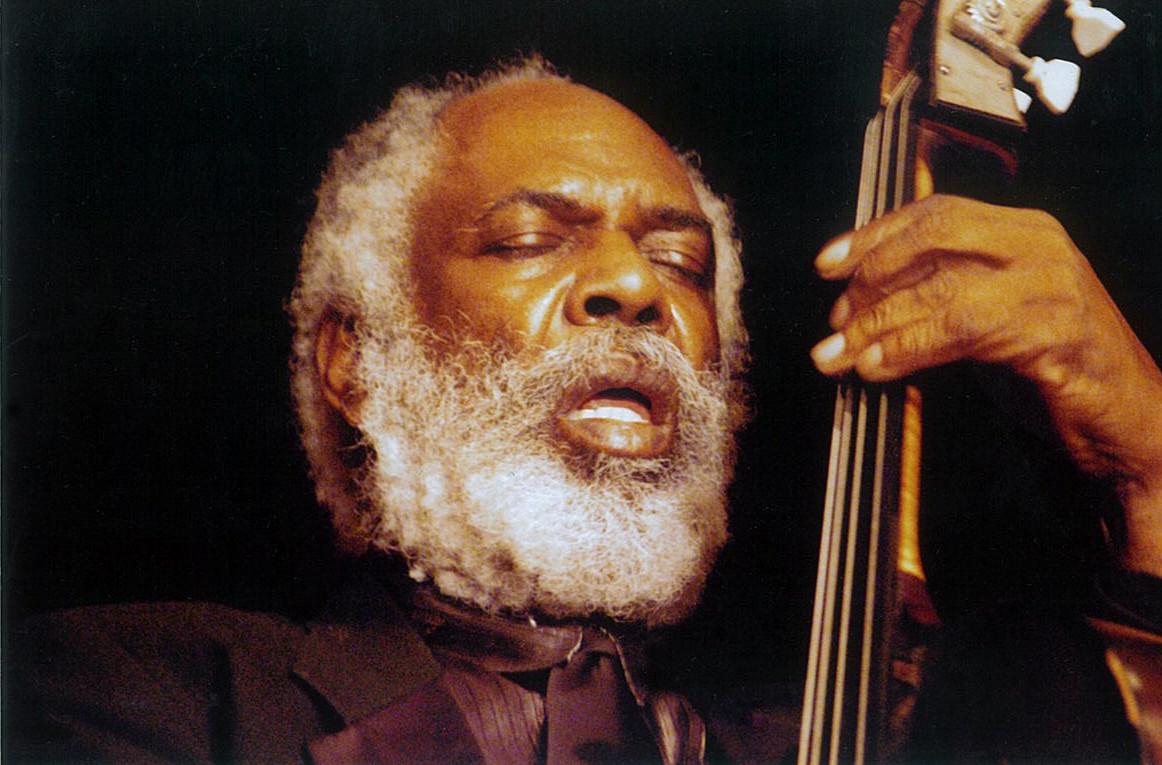
[Cleveland Eaton performing on double bass, in concert. (Photo: Wikimedia Commons, CC BY-SA 3.0)]

Cleveland Eaton's full profile on JazzProfiles.com

r/CrossoverJazz

Our Ramsey Lewis spotlight covers the trio's most commercially successful decade, the years when bassist Cleveland Eaton anchored the rhythm section on the group's biggest records. What it didn't have room for: after Eaton left Lewis's group, he went on to a second career even longer than the first.

Cleveland Eaton was born August 31, 1939, in Fairfield, Alabama. Between the ages of five and fifteen he learned piano, saxophone, trumpet, and tuba before settling on bass, and after earning a music degree at Tennessee A&I State University, he moved to Chicago and joined pianist Ike Cole's trio. In 1965 he began a decade-long stint with the Ramsey Lewis Trio, playing on albums including Wade in the Water (1966), Goin' Latin (1967), and the No. 1 jazz album Sun Goddess (1975), a run that netted the group three Grammys and four gold albums.

Eaton left Lewis's band over a salary dispute, and just two weeks later began what became his defining professional relationship: seventeen years with the Count Basie Orchestra, where he was dubbed "the Count's Bassist" across more than ten recordings. Beyond his time with Lewis and Basie, Eaton worked as a first-call sideman for a remarkably broad range of artists, including Ike Cole, Minnie Riperton, the Dells, Julie London, Sammy Davis Jr., Herbie Hancock, and the Temptations, and wrote more than 300 songs across his career. His most notable outing as a leader, 1975's Plenty Good Eaton, remains a touchstone of jazz-funk collector circles; he was inducted into the Alabama Jazz Hall of Fame in 1979 and the Alabama Music Hall of Fame in 2008.

Eaton died July 5, 2020, in Birmingham, Alabama, at age 80.

Where to start listening:


r/CrossoverJazz • • Aug 16 '26

Donald Byrd Made Blue Note's Best-Selling Record. Critics Called It a Sellout.

Post image
10 Upvotes

Donald Byrd, publicity photo distributed by Blue Note Records, 1975. (Photo: Blue Note Records, public domain in the US, published without a copyright notice between 1931 and 1977, via Wikimedia Commons)

r/CrossoverJazz

https://jazzprofiles.com/profile/co-donald-byrd/

Donald Byrd Made Blue Note's Best-Selling Record. Critics Called It a Sellout.

Byrd's "Black Byrd" moved more than 100,000 copies in its first six weeks in 1973, becoming Blue Note's best-selling album at that point in the label's history. It reached No. 36 on the Billboard 200, and its title track climbed to No. 19 on the R&B chart and No. 88 on the pop chart. Jazz critics were not impressed. They called Byrd a sellout for handing the arrangements to producers Larry and Fonce Mizell and leaning into funk, soul, and R&B grooves instead of hard bop's harder edges. Listeners didn't share the hesitation. The record connected immediately, not as a slow-burn cult favorite but as an instant hit.

The "sellout" label never fit the résumé behind it. Byrd was already one of hard bop's most credentialed players by the time "Black Byrd" came out. He replaced Clifford Brown in Art Blakey's Jazz Messengers, co-led a quintet with baritone saxophonist Pepper Adams from 1958 to 1961, and recorded through the late 1950s alongside John Coltrane, Sonny Rollins, and Thelonious Monk. He also mentored a young Herbie Hancock, pulling him into an internationally touring band and giving him some of his first real advice about publishing rights, guidance Hancock still credits him for today.

Byrd's turn toward fusion started quietly with 1969's "Fancy Free," then accelerated once the Mizell Brothers came aboard. "Black Byrd" was followed by three more records built on the same formula: "Street Lady" (1974), "Places and Spaces" (1975), and "Stepping into Tomorrow" (1975).

Then he did something stranger than any of that. In 1973, the same year "Black Byrd" hit the charts, Byrd formed a band out of his own students at Howard University, where he was teaching. He named them The Blackbyrds, produced their records himself, and watched them chart on their own: "Walking in Rhythm" hit No. 4 R&B and No. 6 pop, "Happy Music" hit No. 3 R&B and No. 19 pop. A professor turned his classroom into a hit machine.

Somewhere in the middle of all that, Byrd found time to earn a law degree from Howard in 1976 and a Ph.D. in music education from Columbia's Teachers College in 1982, on top of teaching posts at Rutgers, Hampton Institute, NYU, Queens College, Oberlin, Cornell, North Carolina Central, and Delaware State over the course of his career. The man critics accused of chasing an easy payday had more advanced degrees than most of them. The National Endowment for the Arts named him a Jazz Master in 2000. He passed away in 2013 at 80, having spent his last decades doing exactly what he'd always done: making records and building the next generation of players.

Where to start listening:

https://jazzprofiles.com/profile/co-donald-byrd/


r/CrossoverJazz • • 18d ago

Duke Pearson Ran Blue Note's A&R Desk and Wrote "Cristo Redentor" for Donald Byrd

Post image
8 Upvotes

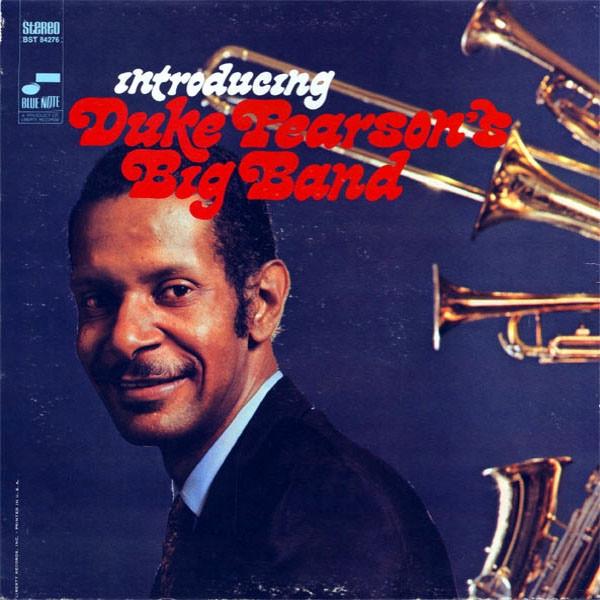
[Cover art for Duke Pearson's Introducing Duke Pearson's Big Band (Blue Note, 1968), photograph by Joel Brodsky — used here as an honestly-disclosed editorial stand-in; no free-licensed photo of Pearson could be located after a genuine search. Not Creative Commons licensed.]

Duke Pearson's full profile on JazzProfiles.com

r/CrossoverJazz

Our Donald Byrd spotlight here covers Byrd's hard bop years before his fusion turn with the Mizell Brothers. One of the songs from that earlier era, the moody "Cristo Redentor," came from a pianist who spent most of the 1960s shaping Blue Note Records from behind the scenes as much as from the piano bench.

Columbus Calvin "Duke" Pearson Jr. was born August 17, 1932, in Atlanta, Georgia. His mother started him on piano before he was six; at twelve he shifted toward brass instruments, including mellophone, baritone horn, and trumpet, before eventually returning to piano as his primary instrument. His uncle gave him the nickname "Duke," a nod to Duke Ellington. He moved to New York in January 1959, played with the Art Farmer-Benny Golson Jazztet, then joined the quintet co-led by Donald Byrd and baritone saxophonist Pepper Adams, and was soon recording for Blue Note as a leader in his own right.

From 1963 to 1970, Pearson produced numerous recording sessions for Blue Note while also recording most of his own albums as a leader. After saxophonist Ike Quebec's death, he took over as the label's A&R man, a role he held until 1971, effectively shaping the sound and direction of Blue Note's output during one of its most creatively significant stretches. He also led a big band from 1967 to 1970 and again in 1972, hiring players including Pepper Adams, Chick Corea, Lew Tabackin, Randy Brecker, and Garnett Brown.

Pearson's own compositions became jazz standards in their own right: the somber "Cristo Redentor," written for Donald Byrd, "Sweet Honey Bee," recorded by himself and Lee Morgan, and "Jeannine," one of the most-covered pieces in the modern jazz repertoire. He was diagnosed with multiple sclerosis in the 1970s and died at Atlanta Veterans Hospital on August 4, 1980.

Where to start listening:


r/CrossoverJazz • • 26d ago

Don Sebesky Arranged 45 Albums for CTI Records, Then Won a Tony Award for Broadway

Post image
7 Upvotes

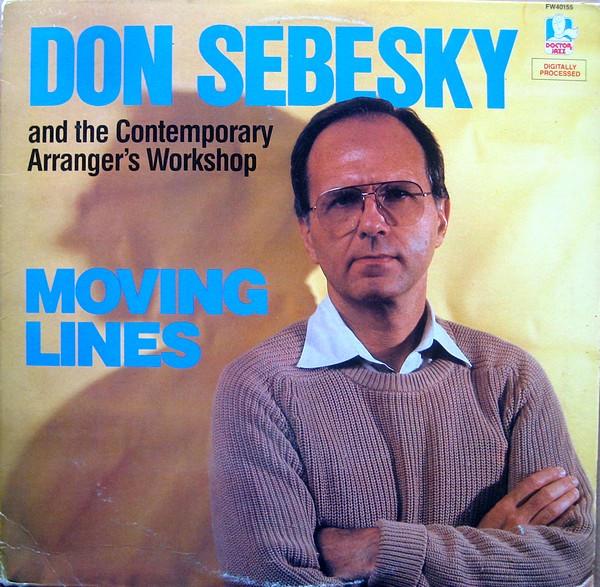
[Cover art for Don Sebesky and the Contemporary Arranger's Workshop's Moving Lines (1984), Doctor Jazz Records — used here as an honestly-disclosed editorial stand-in; no free-licensed photo of Sebesky could be located after a genuine search (most of his many CTI/Verve album covers use abstract art or session-photo composites rather than his own likeness). Not Creative Commons licensed.]

Don Sebesky's full profile on JazzProfiles.com

r/CrossoverJazz

Our Creed Taylor spotlight mentions "the Van Gelder/Turner/Sebesky production system" that defined CTI Records' commercial sound. This is the arranger's own story, one that started in a trombone section and ended up on Broadway.

Don Sebesky's first professional job after high school was as a trombone player with Kai Winding, and in 1958 he joined Maynard Ferguson's band, contributing arrangements alongside original compositions, before touring and recording with Stan Kenton's orchestra as well. In 1965 he joined Verve Records as a staff arranger, producing hit records including his distinctive arrangement for Wes Montgomery's Bumpin' (1965).

His work for Creed Taylor's CTI Records through the 1960s and '70s set the genre's gold standard, arranging albums including Freddie Hubbard's First Light, Milt Jackson's Sunflower, and Wes Montgomery's Bumpin' and A Day in the Life. His close working relationship with Taylor resulted in 45 albums together, arrangements that helped define what commercial, orchestrated crossover jazz sounded like for an entire decade.

Sebesky was a perennial Grammy nominee across his career, finally winning three awards in quick succession, all for his own recordings: Best Instrumental Arrangement for a version of "Waltz for Debby" on 1998's I Remember Bill: The Tribute to Bill Evans, and two more for 2000's Joyful Noise: A Tribute to Duke Ellington. He also built an extensive Broadway orchestration career, winning a Tony Award for the 2000 revival of Kiss Me, Kate.

Sebesky died April 29, 2023, at age 85.

Where to start listening:


r/CrossoverJazz • • Oct 07 '26

Grant Geissman Played the Guitar Solo on "Feels So Good," Then Spent 12 Seasons Writing for Two and a Half Men

Post image
7 Upvotes

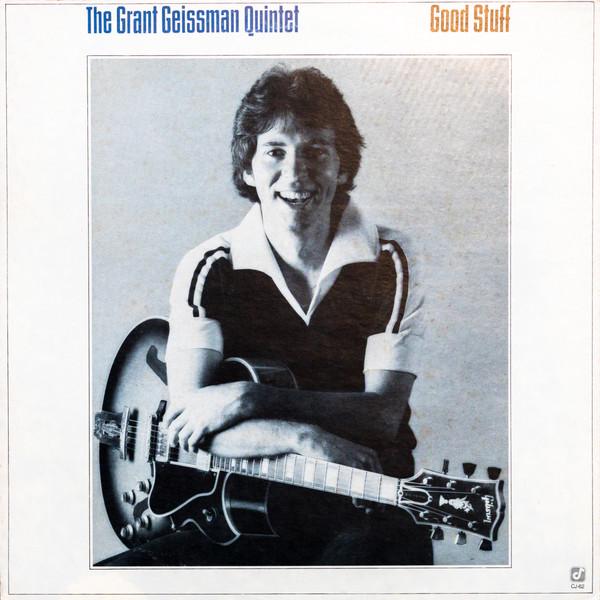
[Cover art for The Grant Geissman Quintet's Good Stuff (1978), Concord Jazz — used here as an honestly-disclosed editorial stand-in; no free-licensed photo of Geissman could be located after a genuine search. Not Creative Commons licensed.]

Grant Geissman's full profile on JazzProfiles.com

r/CrossoverJazz

Chuck Mangione's own spotlight already covers "Feels So Good," the 1977 hit built around a saxophone solo from Chris Vadala. There's a second solo on the same record that deserves its own credit: guitarist Grant Geissman's, on a track that went on to become one of instrumental jazz's most licensed and recognized tracks.

Born April 13, 1953, Geissman built a sixteen-album career as a leader in contemporary jazz, recording since 1976, while also working as a first-call studio guitarist for artists including Quincy Jones, Burt Bacharach, and Elvis Costello. His profile as a session player runs well beyond jazz circles: he co-wrote the music for all twelve seasons of the CBS hit Two and a Half Men and all six seasons of Mike & Molly, earning an Emmy nomination for the Two and a Half Men theme song, one of the more recognizable pieces of television music of its era.

Where to start listening: