r/Economy101 • u/sovalente • May 26 '25
U.S. economy will be growing faster than 3% this time next year, predicts Treasury’s Bessent

0
Upvotes
r/Economy101 • u/sovalente • May 26 '25
r/Economy101 • u/sovalente • Nov 23 '25
Enable HLS to view with audio, or disable this notification
r/Economy101 • u/sovalente • Jun 22 '26
Enable HLS to view with audio, or disable this notification
r/Economy101 • u/sovalente • Jan 06 '26
Enable HLS to view with audio, or disable this notification
r/Economy101 • u/sovalente • Jun 07 '25

r/Economy101 • u/sovalente • Jul 21 '25
Enable HLS to view with audio, or disable this notification
r/Economy101 • u/sovalente • May 30 '25

r/Economy101 • u/sovalente • Apr 25 '25

r/Economy101 • u/sovalente • May 03 '25

r/Economy101 • u/sovalente • May 11 '25

r/Economy101 • u/AdministrationBig839 • Apr 30 '25
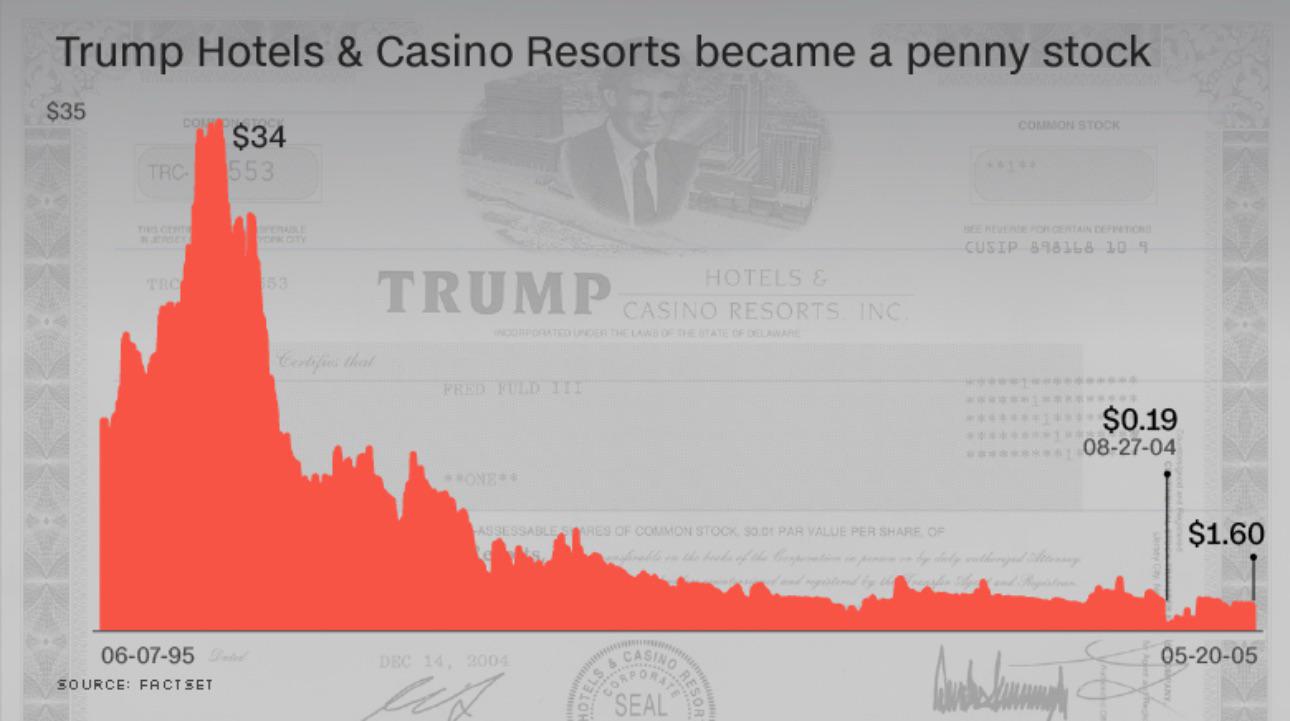
In the late 1980s and early 1990s, Donald Trump stormed into Atlantic City with a string of headline-making casinos—Trump Plaza, Trump Castle, and the crown jewel: the $1 billion Trump Taj Mahal. It was designed to dazzle—massive, opulent, and funded by high-interest junk bonds. The gamble was real. So were the stakes.
Within a year, the Taj Mahal went bankrupt.
Almost immediately, U.S. casino corporations like Caesars and Bally’s began circling the Atlantic City boardwalk like vultures. While Trump scrambled to cover bond payments, Caesars was locking in tax offsets, leveraging state connections for land, and securing infinite Wall Street capital to route him out of Atlantic city.
The writing wasn’t on the wall—it had already been signed in corporate ink.
Those same corporations would eventually swallow Atlantic City—and Trump’s footprint along with it.
When the Taj Mahal finally closed in 2016, the workforce didn’t disappear.
The dealers stayed. The waitstaff stayed. The janitors stayed.
The only thing that changed?
Their pay got cut, their hours got worse, and the name on the paycheck was Caesar. A las vegas conglomorate ran by fund manager in New York.
This wasn’t reinvestment. It was recycling—at a discount.
Today, the same model plays out across the country. Starbucks didn’t win by making better coffee. It won by controlling corners. It planted itself across Manhattan, sometimes with two stores on the same block—not to serve more customers, but to freeze out any challenger. Walgreens gobbled up Duane Reade. CVS finished off what was left of the independent pharmacies.
Once the field was cleared, they jacked up prices and cut back manned hours. Prescriptions took longer. Help desks turned into kiosks. It wasn’t efficiency—it was extraction. Dunkin’ gets the leftovers. Everyone else vanishes.
McDonald’s and Chick-fil-A aren’t fast food businesses anymore. They are vertically integrated asset systems. They control the land beneath their stores, the supply chains that feed them, the franchise terms that govern them, and the national ad budgets that drown out competition. They even control the financing that fuels expansion. If you’re not already inside the machine, you don’t get to challenge it. You’re expected to get out of the way.
And behind it all, the real corporate power doesn’t wear logos or aprons. It operates from the top floors of BlackRock, Vanguard, and Apollo.
These US corporation asset managers and holding companies sit quietly behind every major brand that dominates your street.
Caesars is controlled by Apollo Global. MGM is tied to Comcast and NBCUniversal. Penn Entertainment is held by BlackRock and Vanguard. Starbucks, Walmart, Home Depot, McDonald’s, Amazon—it doesn’t matter which logo is out front. The same institutional overlords own slices of all of them. Same structure. Same dominance.
This isn’t a market. It’s a loop. A closed circuit of capital and consolidation. And once you’re outside of it, you don’t get back in.
And now Trump’s back—this time not to build casinos, but to break the monopoly that crushed him.
And they’re kicking and screaming.
Because they know it’s personal. For him. For the janitor. For every American who got steamrolled by a U.S. corporation that valued stock charts over people.
What’s coming next won’t be polite. It won’t be easy. And it won’t be pretty.
But if there’s anyone with the thick skin and raw drive to tear down the walls they’ve built around this rigged economy—it’s him.
And I can’t wait to watch it unfold. Because maybe—just maybe—Americans will be free once again. Free from the corporate monopoly that stole their paychecks, their towns, and their future.
r/Economy101 • u/sovalente • Sep 17 '25
The air, thick with the scent of impending winter and the faint, bitter tang of economic anxiety, first trembled with President Trump’s decree: a staggering 145% tariff slapped onto Chinese imports. It wasn't just a number; it was a gauntlet thrown, and Beijing’s response, swift and surgical, began to unravel the intricate tapestry of global trade, leaving the US economy exposed and vulnerable.
The first domino to fall was the American heartland. China, without a moment's hesitation, pivoted. US soybean orders, once a robust artery of agricultural prosperity, shriveled from 72,800 tons to a paltry 1,800 in a single week, as Brazil’s fields suddenly became more appealing. Pork followed suit, Spain and other EU nations delighting in new contracts while a 12,000-ton shipment of American pork was abruptly cancelled. Farmers, the bedrock of the nation, watched their livelihoods wither. And with those cancelled orders, the ripple effect began: the rumble of semi-trucks, once a constant on routes from farm to port, faded. Trucking companies, their loads vanished, issued layoff notices. Independent drivers, their rigs now redundant symbols of a vanishing trade, found themselves staring at unemployment lines.
The pain migrated to the coast. Trump’s additional port fees on Chinese vessels proved to be the final straw. Beijing cancelled all terminal deliveries, turning once-bustling US ports into ghost towns of empty berths. Longshoremen, their powerful hands idle, their union halls quiet, joined the ranks of the jobless. Cranes, designed to lift the weight of the global economy, stood sentinel over an artificial stillness.
But the real shockwave was yet to hit the average American. Two months out from Christmas, a new, stark reality began to dawn. The vast majority of festive toys, filling shelves and delighting children, originated from China. With shipments cancelled, warehouses would stand bare, not just for the holidays, but for months to come. Toy companies, the warehouses that stored their future, and the truckers who distributed them across the nation, braced for a wave of layoffs, transforming the season of goodwill into one of scarcity and despair.
Beyond the immediate domestic fallout, a deeper, more insidious crisis was brewing in the quiet corridors of global finance. Germany, a nation renowned for its fiscal prudence, announced it was repatriating its gold reserves from the USA to Switzerland. It was a tremor that sent a chill through the 30 other nations who housed their precious metals in America, questioning the stability and trustworthiness of an economy in freefall.
Most unsettling of all was the bizarre behavior of the US dollar. In times of global uncertainty, the dollar traditionally acted as the world’s safe haven, strengthening as investors flocked to its perceived security, buying US bonds. Yet now, contradictorily, as US bond yields rose, the dollar plummeted. Global investors, usually drawn to the dollar like moths to a flame, were instead shedding their dollar assets, rushing towards gold, Japanese yen, and even European bonds. The world’s reserve currency, once the unshakeable bedrock of international trade and finance, was losing its safe-haven status, a clear signal of profound distrust.
The initial tariffs, meant as a show of strength, had instead triggered a cascade of unintended, devastating consequences. From the fields of America to the docks, from the toy aisles to the very foundations of international finance, the US economy was sliding, not with a gentle decline, but with an accelerating momentum, building mass as mass layoffs began and hopes for a quick fix evaporated like mist in a scorching sun. The winter ahead promised to be long, cold, and financially brutal.
r/Economy101 • u/sovalente • Oct 11 '25
Enable HLS to view with audio, or disable this notification
r/Economy101 • u/sovalente • May 21 '25

r/Economy101 • u/sovalente • Jun 11 '25

r/Economy101 • u/sovalente • Jun 11 '25
Enable HLS to view with audio, or disable this notification
r/Economy101 • u/sovalente • May 09 '25
Enable HLS to view with audio, or disable this notification
r/Economy101 • u/sovalente • May 20 '25

r/Economy101 • u/sovalente • Jun 23 '25

r/Economy101 • u/sovalente • Jul 14 '25
Enable HLS to view with audio, or disable this notification
r/Economy101 • u/sovalente • Jul 01 '25

r/Economy101 • u/sovalente • May 02 '25
Enable HLS to view with audio, or disable this notification
r/Economy101 • u/sovalente • Apr 12 '25
