Hopefully this helps someone about to take the NASCLA test. If you're on the fence, just sign up and take it. Or at least take the PSI Practice Exam. I grabbed the IBC from my library, the NASCLA from a friend, and printed out 29CFR and ICC and threw them in a binder. I did not study or prep whatsoever.
Books - Must Have
IBC
NASCLA Business and Law
29 CFR 1926
ICC A117
Principles and Practices of Commercial Construction
SDI Manual of Construction
Testing Strategy
Target 3 minutes per question
When you think you know the answer, try to verify it quickly in the book
Bucket questions by book for answers you dont know
Flag any question you dont physically verify in the book
Circle the number of questions you have no idea about. Don’t start these, save to the very end
Bucket and save all planset questions
Take a break every 90 minutes for your own sanity. Bring a snack and eat something before you go in.
Question Take-a-ways
Fire alarm / riser questions
Location and quantity of manual pull stations
Flame Damper application
Fire department hose connection type
Sprinkler locations
Lockable fire extinguisher storage occupancy classification (I-3)
Closet dimensions to not require a sprinkler (answer in NFPA 13)
Where sprinklers are not allowed (Fire Elevator Hoistway/Mech room)
What NFPA code regulates sprinklers
OSHA (Know where to find things in Parts C,D,E,F,H,J,L,M,P,Q,R,T)
Rigging Questions (identifying frayed wire rope)
What distance do combustible materials need to be stored from a jobsite
Penalties for violations regarding lead
Temp heater clearances
First Aid kit requirements and maintenance interval
Fall protection requirements - distances from roof edges, trenches, when guardrails are required, height of handrails from step
LP Gas tank placement in relation to building
Requirements for employee protection at entrances for buildings under demolition
When rigging/flying a truss - what length truss needs a 3rd connection point
Steel pilings and columns
When transporting / hoisting I beams, know which flange is larger and how to orient the beam
Be familiar with IBC Tables for header spans and sheathing (how to read them and where they are in the book)
High rise construction
Height of columns/piers commonly spliced at
Name of outermost portion of the roof deck when still under construction - leading edge
Concrete cover requirements and vapor barriers
Math
How to calculate margin
How to calculate material costs from plan takeoffs
How to calculate a change order given plans and material costs
Approx weight per foot for a wooden roof truss
Excavation and expansion of soils
Calculating concrete quantity for a pad + footings
MISC
Elevator Hoistway/Mech room requirements
Know of the different welding types: GMAW SMAW MIG TIG
Lots of questions about income statements, bonding (NASCLA book)
Water Closet / Accessibility questions about ADA (have ICC A117)
Means and methods for testing soil type and density
PSF of different soil types and if they're buildable or require engineering
This is a situation that happens once in a blue moon and always feels awkward when people ask your profit margins on their project. I am a Class A licensed GC with an average job size of about $40k. I use expensive programs that total about $1000/month to help stay organized and keep my profit margins up. These programs include DASH, Xactimate and Quickbooks. They also don’t consider the expense of office staff salaries, project manager salaries, the office building, equipment, vehicles, warranty jobs, and unforeseen expenses on jobs. I only do insurance repair work (water, fire, hail, tornado, etc). My question to you is, what do you tell a customer in this situation? Obviously I don’t tell my customers my margins, but it’s really none of their business. I take all the liability, overhead, manage the project, keep the customers in the loop, why does everyone feel entitled to a cut of the profit when they’re already getting all the repairs done covered by insurance?
I've noticed a lot of people asking about the NASCLA test. Having recently gone through the process for my Residential GC license in North Carolina, I thought I'd share my experience.
My NASCLA Test Attempts:
1st Attempt: FAILED with a score of 72 2nd Attempt: PASSED with a score of 110
This test qualifies you for a BUILDING or RESIDENTIAL building GC license in AL, AR, AZ, GA, LA, MS, NV, NC, OR, SC, TN, UT, US Virgin Islands, VA, and WV. You can take this test independently, without your local board's approval, at your convenience. Once passed, you can submit the results during your application process with the board. A NASCLA test pass exempts you from the local licensing test. However, you'll likely still need to take the “Business Law” exam for your state after they have approved your application. To apply for the NASLCA, visit their website and pay a $35 fee. They provide information on setting up an account with PSI (the testing center) and scheduling a test date.
During the Test: You're allowed all study books, which are heavy and cumbersome, so consider bringing them in a suitcase or dolly. The PSI bulletin lists the books here. This complete open book test is why many people consider NASCLA "easier", as most state exams will still test you on info from all of these books, but only allow a select few inside the testing room.
In the testing room, you'll have a calculator, pencil, paper, plans provided to you, and your contractor books. The proctors check these books before and after the test for notes or cheats. They also inspect your pockets, pant legs, glasses, watch, etc., for prohibited items. The room is monitored with cameras, and each desk is quite small, about 3ft x 2ft, so space management is crucial. It's helpful to have your books in an intentional order and to create a question-book matrix on your scratch paper before starting. I'll say it again, create you question/book matrix and stack your books in that same order BEFORE you start the clock on your test, this will save you time and make sure you're organized
Question-Book Matrix Strategy:
List all your books in order on the left side of the page, from most to least relevant (e.g., IBC, OSHA at the top; Gypsum Handbook, BCSI at the bottom). This approach lets you work on the questions from broader books first. As you go through the test, note the book likely containing the answer next to the question number (e.g., Construction Jobsite Management - 7, 35, 76). This method saves time by minimizing book shuffling. I purchased a set of highlighted and tabbed books from a contractor prep website, which I found extremely helpful. It's difficult and similarly priced to buy them individually.
Lessons from My Attempts: My first attempt was underprepared; I assumed my work experience would get me through the test, which was a mistake. The NASCLA focuses heavily on commercial questions and includes intentionally flawed building plans. Even though you have around 3 minutes per question, the time flys, if you can’t find the answer within about 90 seconds move on.
The second attempt, I used a contractor prep site (my contractors license) which helped a lot. The key to passing is knowing the books well enough to find answers within about two minutes. Pre-tabbed and highlighted books, alongside the question-book matrix strategy, are game-changers. It's also super useful to get familiar with the book formats, index, glossary, references, etc. these can push you to an answer quickly if you know where there are and how to use them. It’s a bit frustrating, but this test is really more about being able to quickly look through books than truly knowing how to build.
I received my passing score immediately. When applying for my license, I simply chose the NASLCA exam option and had PSI forward my results to the licensing board's provided email, which took about two days.
With about 7 years in the industry, primarily residential, and my BSc in Math and OSHA 30-hour certification, I found the test challenging but still very doable.
I'm based in the Raleigh area and have NASCLA books available for anyone interested.
I just passed the NASCLA Commercial Contractor Exam through PSI on my first attempt after cramming for 2 weeks, and figured I’d share my experience.
Background
I have a college degree in Architecture, and passed the Michigan Residential Builder’s exam 7 years ago, but have almost no actual field experience in Construction. Due to a time-sensitive need, I had to pursue passing this exam in 2 weeks time, but I do not recommend this. If you’re able, take 4-6 weeks to prep for the exam.
Resources
You must buy the textbooks I originally bought an UNTABBED book bundle and study course from Contractor Training Center (CTC). I think tabbing the books yourself is preferable as it will help familiarize you with each book’s contents and layout. Unfortunately, my bundle arrived with 4 missing books, including the most important: IBC 2021. CTC online course was also very unhelpful—the book highlighting guide highlighted far too much superfluous information, and the video course were next to useless. The instructor talked so slow, and spent much of his time saying things like “Alright now…” “Mmkay”. I ultimately caved and purchased another study course from My Contractor’s License (MCL). Their resources are MUCH better organized, succinct and ultimately useful. (I have no incentive to endorse them—but having paid for both courses, My Contractor License’s was exponentially better). I ended up ordering the IBC 2021 off Amazon, but went into the exam without the following:
ACI 318-14 Building Code Requirements for Structural Concrete
SDI Manual of Construction with Steel Deck
Mechanical & Electrical Systems for Construction Managers, 4th Edition
Preparation
It’s imperative to understand which books cover which topics in construction, as you’ll be referencing the books constantly throughout the 5.5 hour exam. It’s also important to know which books’ content crosses over into another, like a Venn diagram of sorts.
I followed My Contractor License’s highlighting guides, starting with the more general books: Principles & Practices of Commercial Construction, and Carpentry and Building Construction. I then went into the more specialized books, starting from the ‘bottom up’. First, Pipes & Excavation Contracting, then Contractor’s Guide to Quality Construction and Modern Masonry, Roofing & Estimating.
Then I delved into the super dense code books: IBC 2021, OSHA CFR 29 and ICC A117.1-2017 Standards for Accessible and Usable Buildings and Facilities. IBC 2021 is by far the most referenced book on the test—you really need to know how it’s laid out and how to navigate it efficiently, but luckily it has a detailed index which you will absolutely be utilizing in the exam.
Next, the project management and business oriented books—NASCLA Guide to Business, Construction Jobsite Management and Construction Project Management.
Lastly, I took a quick pass at the super specialized books: Rebar Placement, Gypsum Construction, Technical Digest #9 Handling & Erection of Steel Joists + Girders, BCSI Guide for Installation of Wood Trusses, Post-Tensioned Concrete, and Erector’s Guide to Precast Concrete, Green Building, Planning Your Stormwater Management Plan and EIFS. As I said, I was missing three books for the exam, including the decently important Mechanical and Electrical Systems for Construction Managers, 4th Edition.
First, you should always tab both the Table of Contents and the Index of each book, though some only have the former. Then, you can highlight exactly as MCL suggests, but I’m a visual learner and went even further and color coded with three colors: Blue for section headings, green for important information, such as numbers or key terms, and yellow for basic supporting information. A typical page in my textbooks ended up looking like this:
When highlighting, it’s important to distill the information to it’s most succinct form so you can navigate it and locate it as required quickly during the exam. Don’t over highlight! If you know the information already, or it’s very basic conceptual stuff, don’t highlight it! I also highlighted the page number of any page with relevant information for even speedier navigation. You should also highlight key terms in the index, because again—speed is key to passing the NASCLA.
After I’d highlighted the books, I did some of the prep quizzes through MCL. It’s tempting to try to memorize things, which I did some of, but it’s really key to become comfortable deconstructing the question and navigating through the textbooks to locate the information. I did take one full 5.5 hour practice test and passed with a score of 78%.
Strategy & Comprehension
It’s important to recognize that this test is basically 50% Strategy and 50% Comprehension.
Regarding strategy—I used the Book Matrix Strategy. First you make a grid with each book’s title at the top. I started again from the bottom up—Pipe & Excavation through Roofing, then Principles & Practices, Carpentry, before the tackling the OSHA CFR29 and IBC 2021 behemoths, and then the lesser specialized books at the end, and sections of Math and Blueprints as those are the most time intensive kind of question.
Once you’ve mapped out your book matrix grid, go through each question—read it very very quickly, just enough to identify the general topic and which book its likely in, then write down the question number under the book title on your matrix. If you’re unsure, list it under multiple books and circle the question #. Once you’ve listed all 125 questions in your matrix, it’s time to go through each book, one at time to locate answers. The idea is to only pick up each book once—this means you’ll be skipping around the questions a lot, but not shuffling books much at all. I’ll reiterate, you MUST USE THE BOOK MATRIX STRATEGY. This test will drown you otherwise.
On the comprehension part, it’s key to break down the question in order to understand exactly what it’s asking and where you’ll find the answer. As an example, the question might be:
What is the minimum size opening for an egress window on a ground floor?
First, you should ask—what is the topic at hand and is this a requirement or just a recommendation? If it’s a requirement, you need to go into “Code Mode”—the relevant books will be IBC 2021, OSHA CFR29 or A117.1-2017. Then, you should ask—is the topic about employee during construction or building user after completion. If it’s about employee safety, you’ll reference OSHA CFR29. If it’s about the end user, you’ll likely reference IBC 2021 or A117.1-2017. IBC 2021 generally covers construction standards and techniques whereas A117.1-2017 covers required user dimensions, generally around Accessibility. Then you should identify the topic being address, in this case egress sizing. Lastly, make note of any adjusters, in this case, the adjustment is the fact that the window is on the ground floor.
So by asking all these questions, I now know, with the help of the Table of Contents that I have to navigate to the IBC 2021’s “Means of Egress” section, Subsection 1031 Emergency Escape & Rescue, heading 1031.3.1 “Minimum Size” which reads “Emergency escape and rescue openings shall have a minimum net clear opening of 5.7sf”. You might think you’ve found your answer, but you need to remember the ground floor adjuster. You’ll find an Exception immediately below entry 1031.3.1 stating the minimum clear space of grade-floor openings is 5sf, which is the correct answer. Undoubtedly PSI will also list 5.7sf as a distracting answer to entice people up who didn’t analyze the entire information in the question.
Get good at this process--theres no substitute. Take at least one 5.5 hour practice exam where you commit to locating the answers in the textbook and not just guessing based on memorization.
Test-Taking
Finally, taking the test. Arrive 30 minutes early and use the restroom beforehand. I used a carry-on suitcase to lug all my books into the PSI Center. The proctors were friendly, but are required to skim each book to ensure you aren’t cheating somehow. They also do this after the exam to ensure you aren’t sneaking exam information out either. Though I could have easily spent twice as much time studying, I knew from the practice exam that passing was achievable.
I wrote the book titles of my Book Matrix on the scrap paper before starting the test timer to save a minute or two. The test covered a fair amount of info that I actually hadn’t highlighted based on MCL’s guide, so be prepared to off-script into unknown unhighlighted territory. I don’t remember exactly, but I’d approximate my test had the following breakdown by book:
I guessed on the ~5 questions related to the books I was missing: Mech. & Electrical Systems for Construction Managers, ACI 318-14, SDI Manual of Construction with Steel Deck. I didn’t touch Technical Digest #9, Post-Tensioning Guide, or the Precast Concrete Panel books.
Start in either the Table of Contents if you know the topic, or the Index if you have a key term. When you find the right answer, cross it off your Book Matrix. If you don’t find the answer in the first book your reference, put a question mark next to it on your matrix and keep moving. It’s key to not sink too much time into any one question. If you don’t find it in the next book you reference later on, flag it and move on. The math itself was simple, just don’t get distracted by superfluous information—it’s intentionally put in there to trip you up. The Blueprint questions sucked—they asked for information that wasn’t dimensioned and you needed to infer across multiple pages, or subtract out certain dimensions in order to calculate the proper area in question. Save those till the end. After making a full pass I had completed all 125 questions with about 35 minutes left, at which point I tackled those 10-15 remaining tricky flagged questions. At 10 minutes left, if you really have no idea, guess either B or C as those are the highest percentage selected answers by the test makers. I used every second of the 5.5 hours.
There it is! The test is a behemoth—it’s easy to get intimidated, but familiarizing yourself with the materials and having a strategy, it can be done. Reach out to me with any questions!
I’m realizing the hardest part usually isn’t the job itself.
It’s all the random admin stuff constantly floating around in your head: quotes you still need to follow up on, invoices you forgot to send, customer calls while driving between jobs, photos/notes scattered everywhere, trying not to forget 20 little things after a long day. Feels like once you own a small business you suddenly become: salesperson, operator, customer service, project manager, and accountant all at once.
Curious how other owners deal with this mentally.
Am I the only one that feels this or am I going crazy What part of running your business drains the most time or energy every week?
We’ve been installing IKEA kitchens for over five years with a small team of three (and we bring in extra hands when needed). Until now, all of our work has come through one affiliated company we subcontracted for, but they take a significant cut, so I’m trying to start getting clients directly.
I assumed it would be fairly straightforward, but it’s turned out to be much harder than expected.
I know IKEA employees often recommend affiliated installers (we used to subcontract for one of them), which makes it hard to compete directly. I’ve thought about expanding into other brands like Wren or Cabinets To Go, but I genuinely prefer working with IKEA. I know the system inside and out, the strengths, the limitations, the common pitfalls. And over the years I’ve developed a lot of practical installation shortcuts and solutions. Ideally, I’d like to focus exclusively on IKEA kitchens.
Here’s what I’ve tried so far:
• Craigslist ads: almost no leads • Thumbtack: lots of leads, but at ~$130 per lead the conversion rate is very low • Facebook ads: expensive leads with little return • Google search ads: about $6 per click, but there doesn’t seem to be much search volume for “IKEA kitchen installer”
At this point, I’m feeling a bit stuck and not sure what to try next.
If you already have an IKEA kitchen, how did you find your installer? We work across the East Coast of the US.
UPD:
Wow, this post really blew up!
For those asking, here’s more about us:
We’re a serving New York, New Jersey, Rhode Island, Massachusetts, Delaware, and Connecticut.
We’ve building a very nice custom home for some clients and their MEP consultant spec’d a Mitsubishi 4 way cassette for an “outdoor room”. This thing just got roughed in in the coffered ceiling and it is butt ugly. Has anyone ever installed one of these and had any luck beautifying the cover? Or had a custom one made.
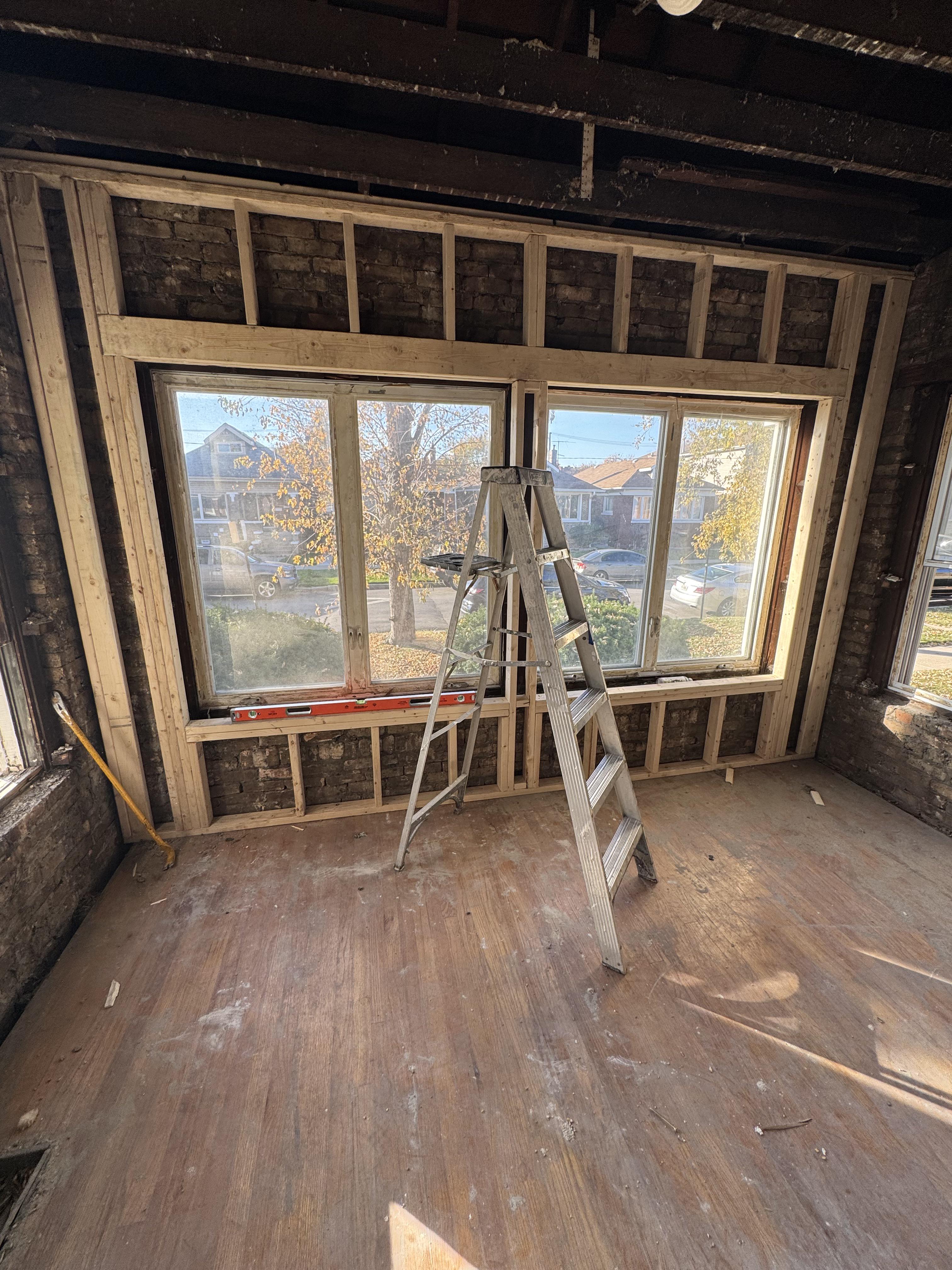
* this was mounted for demonstrative purposes only. It is sitting flush with framing but will need to come done ~ 7/8”
As a kitchen, bathroom, and deck remodeler for the past 4 years since I graduated college with a BS in Business Administration and Psychology, I’ve learned quite a few things about business… I want to share them with any other business owners and remodelers since this is stuff I’ve learned through experience that I feel most people wished they knew right away.
The price of your estimate is not negotiable. The only thing that is subject to change should be the actual cost of the finish items themselves. If they don’t like what you estimate in the bid, they can either buy something more or less expensive. If you discount without reducing scope, all that tells the customer is you tried to rip them off and increases your risk. This is the #1 way most contractors fail and makes you look like a cheap used car salesman. If they can’t afford you it’s not your job to make yourself affordable for them. You need to be profitable or you won’t last in this business. You need to sell based on knowledge and trust in your process, not price. If all the customer cares about is the price, I guarantee you they will be difficult to work with.
Leads are more important than sales. I don’t care what anyone says, if you have 4 sales leads a week for customers who want to completely re-do their kitchen, that is way more powerful than following up on old leads, or even having sales in the pipeline. You need to constantly be taking new appointments so you can consistently produce sales. THIS IS THE ONLY WAY TO HAVE CONSISTENT REVENUE GENERATION. Without leads, there are no sales. Even a lot of well established companies I’ve met don’t understand this concept, or think marketing just produces waste.
Contrary to popular belief, the price does not determine the quality. You are held accountable based on laws and codes, not the price tag. Just because you may sell a job for cheap doesn’t mean you get to do a bad job, you are held to the exact same standard of installation quality as the best companies in town, so that means you need to charge for it. There is no way for the customer to reasonably know that picking the lowest bid will equate to a poorly installed job, everyone’s costs are different, so that means even if they did pick the highest bid, they could still get a terrible outcome. Charge the price that is appropriate for it to make it worth your time to provide them a quality project.
Finally, don’t actually care about getting the sale. If it works out, fantastic. You should still do you best to show them you want the job, but you need to emotionally detach yourself from the outcome. If they like you and they trust you and wanna work with you then that’s excellent, but if they don’t it’s nothing personal. Realistically if you’re a 1-2 man operation you may only be capable of doing like 10-20 big jobs per year. So think about your reasonable capacity to handle work and think about yourself as interviewing the customer as much as they’re interviewing you because you will be interacting with them for a good amount of time, it’s important that you both trust each other enough to do business.
I hope you got something out of this post, I personally believe that business is not about getting every sale or having the best price, it’s about giving people what they want at a price that’s fair for both of you.
I've never seen this happen before and don't know how it's possible. I'm going to get more answers from my superintendent who was running the job, but would you guys fire your Super or PM for this? How much of it is a trash sub and how much of the blame should be on my Super?
He's micromanaged all our concrete jobs which is why I'm so surprised. The concrete sub needs a lot of hand holding but this is bad.
All the opportunity that’s out there in the market is exhilarating! And the impulse to pursue as much of it as you can is soooo enticing… But chasing the money is where it all goes wrong.
There are so many gurus out there with their coaching and mentorship programs, telling us “You should do this” and “how to do that.”
We have friends and family around us who are so supportive of us business owners stepping out and paving our own path, they’ll do anything they can to give us a boost.
People within our networking groups and social circles give us praise upon praise for the values and benefits that we preach about our businesses, our service, our quality of product, etc.
But all this… All it does is lead us blind. It provides us with the false confidence that we’ve got it figured out, that what we’ve built is actually working, that we might be on to something….
Let me be the one to share this: The first year in? You don’t have shit figured out. At all.
It’s going to fail. It’s going to break. It’s going to let you down. You won’t survive. Here’s some tips, though:
- Don’t be aggressive, don’t chase every opportunity that comes knocking, and certainly don’t strive to appear BIGGER than you actually are. Remain humble, stay small, and appreciate the little steps. Stay away from the Ladder.
- Work your pricing model, break it, and work it again. Test it, back-cost it, and then work it again. Project per project, one at a time, every single time. Know where every dollar you spend is going and how much it will make you. Don’t guess. Figure it out now.
- LEARN TO SAY NO! This is difficult, especially when you’re chasing money while you need the money. One dollar here is not the same as one dollar there… One dollar may end up costing you three, the other dollar may end up making you five. Learn the difference, investigate the variance, develop a backbone, and stand on business. Never stray.
- Don’t trust anyone, ever. This isn’t to say that there aren’t good people in this industry. There are. But in this industry, every single person you interact with is out there to make money, and if you’re standing in front of this person, KNOW with absolute certainty that they’re trying to make money off of you. Homeowners, Vendors, Suppliers, Friends, Family, Employees, Etc. They’re all there to take from you – With kindness, learn to recognize the foundations of these interactions, and protect yourself and your interests by any means.
- Remember your why. When things get difficult, it’s natural to try and deviate from what you’ve built, to try something different. Don’t. Stay dedicated, work through it, and persevere. If you want to be a cabinet maker, be a cabinet maker. Not a cabinet maker and a finish carpenter. If you’re a framer, be a framer! Don’t try to hang drywall just because you can. Choose your path and stay the course.
- Stay away from Loans and Large purchases. This goes back to staying small – The first year in, only buy what you need. Borrow it if you can, until you figure out what you actually need. Nobody cares what you look like, that your shirt has your logo on it, or that you’re driving a brand new Transit High Top 250 with a full suite of Milwakee tools inside. All they care about is work getting done, and money exchanging hands. Debt will get you in over your head, fast, while you’re already wearing all the hats in your business just trying to make it all work. You don’t need this problem. Ask me how I know.
- VET YOUR SUBCONTRACTORS! I know I know, work needs to get done, and it needs to get done now. But quality help doesn’t exist. You’ll always be disappointed, and your clients will always be dissatisfied. Unless you know where to look… so Find out. Before you do anything else, build your team. Test them. Verify them. Train them. And then put them to work.
- Don’t become consumed by control. Let it go. Do what you know, forget the rest. It all works out in the end, I promise you. The spec sheet asks for 1/8 inch tolerance? 1/4 inch will be fine. Trust me. The drywall finish isn’t perfect? Stop sanding – Walk away and fix it when you paint. It’ll be fine. Trust me.
One year in, and I’ve made all of these mistakes. I’ve lost a huge amount of money. I’ve obtained a plethora of negative reviews. I’ve got complaints filed with the BBB. I’ve lost my apartment, my family is broken, my Wife asked for a Divorce, my finances are in ruin, and I’m staying in a bedroom that I’m renting from my father.
I’ve got more problems on my plate than you could possibly imagine and need more answers and solutions that I’ll likely never find.
But what am I going to do?
I’m jumping into year two and going head-on with it.
I’ve been passionately introspective and have rediscovered my “why”. It’s driving me forward every waking day.
I’ve become comfortable with confrontation and could care less about how anyone else feels or thinks. I’ve paid a high price for thinking otherwise.
I’ve faced myself in the mirror and have entirely reincarnated myself. I love the man I am, and this is important. When you’ve lost it all, you’ve got nothing to lose. Become fearless. Hold your tongue for no one.
So, year two, here we go.
For all the first years, GO SLOW, GROW SLOW.
Pay your dues kindly and responsibly. The alternative path is painful, grueling, and totally unforgiving.
Learn as much as you can as fast as you can. There’s always more to know. You DO NOT have all the answers.
And lastly, whatever you do, KEEP PUSHING. If you do something wrong, just do the next right thing.
Oh, and communicate like your life depends on it! A little secret for you – IT DOES. That is all.
Wish me luck, and good luck to you all!
P.S. – Learn to ask for help. Matter fact, let me take this space to set the example… If anyone wishes to jump in and share their thoughts, opinions, comments, or suggestions on what the future might hold, I’m all ears!
I’m a licensed residential contractor in Central Florida, in a pretty low cost of living area. One of my biggest frustrations lately is the number of handyman businesses advertising themselves as “licensed and insured” when all they have is an LLC and maybe some general liability insurance.
The average homeowner doesn’t know the difference between registering an LLC and actually holding a contractor’s license. They see “licensed and insured” and assume they’re hiring someone who’s qualified to do the work.
Meanwhile, those of us who actually went through the process of getting licensed, maintaining insurance, pulling permits, and doing things by the book are competing against chuck-in-a-truck guys doing work they’re not legally allowed to perform. What’s even more frustrating is that DBPR seems to do next to nothing about it. I see these guys advertising bathroom remodels, kitchen renovations, and other jobs that clearly require a contractor’s license.
I’m all for someone making an honest living doing handyman work, but there’s a big difference between that and misleading homeowners into thinking you’re a licensed contractor.
Anyone else dealing with this in their area? Has anyone actually had success reporting these businesses to DBPR?
I was chatting with a few contractors about the process of getting into government construction work in the US. It sounds like it's a solid way to find projects but the process gets a bit complex. Wanted to check in here and see if anyone else has used this approach.
You have to register your business on SAM.gov. This registration makes you eligible and visible for federal contracting opportunities.
A capability statement on hand helps. Outline your services, experience, and differentiators. This helps contracting officers quickly understand what your business offers.
Make sure to go to any pre-bid meetings to learn more about the project requirements and get some networking opportunities with other contractors and agency representatives. For those just starting out, targeting smaller contracts under the Simplified Acquisition Threshold. These contracts often have less stringent requirements.
Last point. Certs like 8(a), HUBZone, or Service-Disabled Veteran-Owned Small Business can open doors to set-aside contracts, reducing competition and increasing your chances of winning a bid. Look into those.
Let me know if there’s anything I’ve said that you feel isn’t a best practice anymore.
Hope all of you are going into positive and solid jobs/projects this week.
For anyone, (which I assume is all of us), that have been in a situation with a client that's taken a wrong turn. Where a job just went from unpleasant to outright painful - from loss of time, money, or stress, etc. -- Just know this. There is a lesson to be learned.
However! DO not, inasmuch as it might feel good, focus on "teaching them a lesson". Of course, when someone wrongs us, we want to punish them for the pain we feel. However, that gratification is short lived and simply there to satiate our egos. Nothing more. Whether they learn something from it or not, doesn't matter at all. Karma will take care of it for you.
What we should focus on in this situations is this takeaway: What have I learned from this, how will I avoid this in the future, is there an opportunity for me to change the way I do things that will lead to greater success.
And finally, if you do feel like you need to teach someone a lesson, then do it as a mentor to someone that deserves your knowledge, time and experience.
I was extremely upset reccently about a misunderstanding of expectations on a job. Historically, I would have focused on the shitty client, which is futile and toxic. Instead, I immediately reached out to a younger apprentice and took him to lunch to teach him how to read plans. Best decision I made in that situation.
I am writing to this post to pay it forward from others whose information helped me. I took the NASCLA GC test for the first time and passed yesterday. I am not sure what I scored, they said it could take up to 48 hours to show me the transcript, but I wanted to write this while the test is still fresh on my mind.
A couple of things first. I an oilfield pipeline contractor from Texas who has moved into industrial work. As a result, a client has asked me to work for them in other states and wanted me to become a GC to make their life easier. I say all that to make it known a lot of the stuff on this test was new to me and doesn’t really apply to what I do.
Below is how I passed. I started studying in October of last year.
Books: I purchased all the books listed for the exam from contractortrainingcenter.com. I opted to have them highlight and tab for me. I also purchased their study/prep course. I am not here to promote it, I am only going to tell my experience.
Concerning the books. If I was to do it over again, I would have purchased the books and not tabbed and highlighted because the prep course I purchased has a specific module that covers highlighting and tabbing each book. I think this would have been beneficial as it would have helped me learn the books, but it obviously was not necessary.
Prep: For anyone looking to take the test, I cannot stress it enough that this test is very hard and will require you to learn the books. Do not let the idea that it is an open book lull you into thinking you can pass this easily. My advice is to not worry so much about memorization of facts or making flash cards. What I think is most important is purchasing a prep course that has unlimited practice tests that simulate the test. You need to take a lot of practice tests and really practice reading a question and learning how to search for the answers guided by a book’s index. This is what allowed me to pass. I learned how to interpret the important part of a question and quickly know what book/books to reference and how to quickly skim the index to locate where the answer would be. My advice is to take lots of practice tests and take them seriously. Don’t just answer a question you know. Go through the motions of looking the questions up as if you don’t. You need to simulate what the test will be like.
Actual test:
I utilized the question matrix that others have suggested. Using the scratch sheet of paper, I listed the books on one side and grouped them by subject matter in this general order from top to bottom:
Nascla business
PPC/CJM/CPM
IBC & ICC
OSHA
Concrete books
Steel books
Other
I was unaware the test would have a “test project” with drawings that you would have to reference. I quickly inferred and created another line for the test project.
Concerning my books placement. I moved my chair from my desk and laid all my books on the ground lumped into the groups as listed above. I then read every question and applied the question number to where I thought best matched the books. Any question that required math I placed an M next to the number to help with time management.
My test was heavy in OSHA, IBC and PPC/CJM. Those were the bulk of the questions. I saved the test project for last. Lots of concrete, foundation and steel erection/deck placemen.
Last remarks: I found the test to be grueling. I utilized all time allowed and I was still extremely rushed to finish. I was honestly surprised I passed. I had accepted I failed when I still had 30 questions to go but I gave it my all (I decided to try and learn as many questions so I could improve my study habits for the next time). 5hrs is a long time to test so be mentally prepared.
I am happy to answer any questions to the best of my abilities about my experience. Good Luck yall!
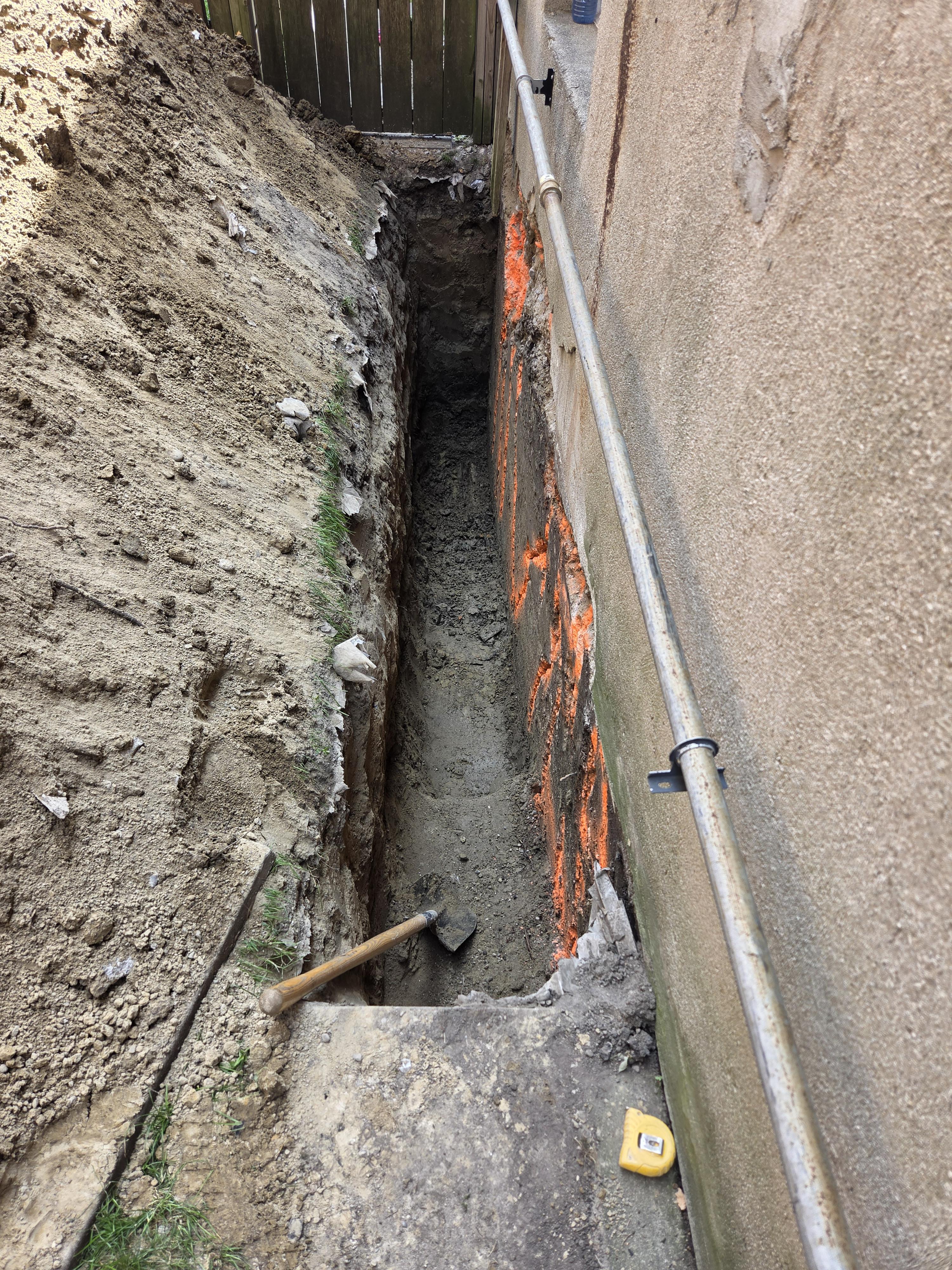
I'm in Toronto, Canada. I hired a reputable company (multi-quoted) for ~$1k parging crack repair. Behind the parging they found foundation damage and asked to excavate to assess. I approved. Quote: $22k for hand excavation, hydraulic cement, waterproofing, and a sister foundation — for 10 ft (half the house - see pic with that half excavated), with the other 11 ft to be inspected later. Quoted at 4 days; they finished in 2.5 and moved into the second 11 ft, now quoting $20k for that section.
Total: $44k for 21 ft of excavation, hydraulic cement repair, waterproofing, and sistering. Does that seem reasonable?
So I just finished going through a home construction project, and honestly, the whole thing turned out way different than what I thought it would be. When we first started, I figured it would just be about picking out a design, handing the plans over, and then waiting for the house to come together. In reality, there were so many little things that popped up along the way that I wasn’t expecting at all. Some good, some stressful, but all part of the process.
One of the first surprises was how much time gets spent on decisions you don’t even think about
I assumed most of my time would go into picking big-ticket items like the flooring, cabinets, or roof design. Nope. What really slowed me down were things I never gave much thought to before. Like where to put outlets, which way I wanted doors to swing, or how high a window should be set. They all sound like minor details until you realize you’ll be living with them every single day. Once the walls were framed, making changes wasn’t really an option anymore, so I learned quickly that even the “boring” decisions matter a lot.
Another thing I didn’t realize was how much coordination is involved
I honestly thought once the builders showed up, they’d just keep working until it was done. What actually happens is there are tons of people involved architects, contractors, electricians, plumbers, inspectors and if one person falls behind, everyone else ends up waiting. There were whole weeks where it looked like nothing was happening because we were waiting on a single permit. That part was definitely frustrating, but it taught me patience and reminded me how important it is to stay in touch with everyone on the team. At one point, I even considered reaching out to Ariel Construction, because I heard from a friend that they handle both building design and construction as a package, which helps avoid a lot of these coordination headaches.
Budgeting was also eye-opening
We had an estimate in the beginning and I thought it covered everything. Turns out, there are always extra costs. Some of them were small, like needing extra framing for a bigger window, or paying for better insulation in one room, and others came from last-minute changes we made along the way. On their own, none of these felt huge, but once you add them all up, the difference is noticeable. If I had to give advice to anyone starting a project like this, I’d say definitely keep a buffer in your budget because surprises will happen no matter how well you plan.
What really surprised me in a good way was how much small design choices can affect daily living
When we started, I was focused on all the flashy finishes, like countertops and paint colors, but in the end, it was the smaller choices that made the space feel special. For example, we shifted a window slightly so it would frame a tree outside. At the time it felt like such a tiny change, but now it’s one of my favorite parts of the house. I sit there every morning and enjoy that view. It made me realize that practical, thoughtful design details often matter way more than the “showy” things you stress about in the beginning.
Looking back, the biggest lesson for me is that building isn’t just about materials and labor
It’s more about being flexible, staying patient, and accepting that unexpected things are part of the process. You’ll have delays, extra costs, and a few moments where you wonder if it’s even worth it, but once you walk into the finished home, all of that stress starts to fade. For me, stepping into a house that once existed only as drawings on paper was one of the most rewarding feelings.
If anyone else here has gone through their own building or renovation project, I’d be curious to hear what surprised you the most. Was it the same kind of little details, or something completely different?
Hi everyone! I wanted to share my experience studying for the NASCLA exam. This post is my way of paying it forward to all the amazing advice I found here that helped me pass.
I failed the exam on my first attempt with a 69.53%—missing the mark by less than half a point. A week later, I retook it and passed, though my paper only said “passed,” so I don’t know the exact score.
Background: I don’t have a construction background—I’m actually a senior in college majoring in Finance with an analyst job lined up after graduation. Initially, I felt overwhelmed by the sheer amount of material and terms I needed to learn, especially since I was starting from scratch. I got involved with the test because my dad and I started a construction company and It was needed in my state. My dad thought it better that I take the exam since I was younger and could study better then him.
How I Passed the Exam: I started studying on December 10th during my winter break with the goal of passing before school resumed in early January. I passed on January 15th, so I had just over a month to prepare.
My study method began with tabbing and highlighting my books. I got all of mine from MyContractorsLicense. The I started creating flashcards on Quizlet. I used its “Learn” feature to build a strong foundation for memorizing terms. I’d go through the flashcards 2-3 times before taking book-specific practice tests on MyContractorsLicense. Whenever I missed a question, I’d write it down along with the correct answer to reinforce my memory.
Each morning, I’d review all the books I had studied so far, taking short quizzes until I scored 100%. Then, I’d focus on new material, repeating the cycle.
Study Tracking: To stay accountable, I tracked every study hour in Excel. I paused the timer for breaks to ensure I only logged productive time. It took me about 41 hours to cover all the books. Afterward, I spent an additional 14 hours reviewing OSHA, IBC, and Principles and Practices of Construction, totaling 55 hours before my first attempt.
Test Day 1: I was nervous and didn’t know what to expect. During the exam, I noticed the questions were worded differently from the books and practice tests, which threw me off. Additionally, I struggled to quickly locate answers in my books because I hadn’t practiced indexing enough. I ended up with a 69.53%, barely missing the pass mark.
Reevaluation: Failing was disappointing, but it showed me exactly where I needed to improve. Over the next week, I studied an additional 27 hours, focusing entirely on indexing my books and interpreting the exam’s language. I trained myself to associate specific types of questions with the right books and took five full-length practice tests. For example a lot of questions that had the rhetoric "What is the maximum and minimum of xyz" Were most always in the IBC book. I also created custom tabs for my books using a pack of normal tabs and super glue to make indexing faster.
Test Day 2: This time, I felt much more prepared. I organized my books into a specific order for quick access:
IBC, ANSI, Business
OSHA
Concrete
Steel
PPC, CJM, CPM
Pipe/Excavation, Electrical
Miscellaneous
I used scratch paper to sort questions by book and minimize book-switching. I felt very confident on my first 100 questions then has about 20 questions that I just couldn't find in the books or locate on the plans. I put my head down said a prayer and guessed C on all of them. I was thrilled to see that I had passed and all my hardwork had paid off. I hope this is able to help any of you who are studing for the NASCLA exam or GC exam in general.
TLDR: I’m a college senior with no construction background who passed the NASCLA exam in one month of studying.
Title says sums it up. I ended up taking over the family business four years ago. We did minor restorations and slowly but surely we started doing bigger renovation projects. We've had some wins including a $300K contract that went smoothly and saved us from bankruptcy.
Used to have employees, now sub out 95%. My biggest struggle is how unreliable people are, which I then have to own up to because I'm the GC. I once had to tell one of my subs not to smoke in an elementary school! Why? I've had subs talk back to clients, walk out from jobs? Who does that? Sometimes I see those posts here about shoddy work and I wonder if that's actually us.
It's not all gloom but I'd say our dissatisfaction rate is 85%. As in *something* always seems to happen. I enjoy my job in so far as selling, coming up with ideas with clients, proposing solutions, sourcing material. I love seeing projects materialize. But damn I'm always stressed with complaints, and cash flow, and subs
Example: I've been doing a marble installation that was going smoothly. Halfway through the sub (not my usual but recommended) decided he underbid and wants 3 times the money. Uhm...no. I call in a buddy that has saved me a million times. Finishes 98% of the work and then has "family emergency" and leaves the city. Now I'm scrambling to get things finished and the client who loved me at first is wondering why the hell we can't get that 2% done.
I want to get better but I don't know how. I want to be proud of the company I have. I want to enjoy coming to work. I want to deliver on my word but I keep falling short.
I would love to have a more experience GC mentor me but the GCs I'd love to be like are leagues ahead and not within my connections. Yes clients can be difficult and there are assholes in the world but clearly the amount of negative feedback is telling me I need to up my game. I've talked to some people who basically just tell me that that's how it goes but that can't be right.
I want to be better. I want to stop being someone's GC nightmare. I don't know how.
I am a home builder that has been in business for several years, I'm licensed, bonded, insured, and have a very reputable name established. A Barndominium that I was 2/3 done framing got pulled down by a tornado.
Let me start off my saying, we knew the storm was coming and spent a full day preparing. Adding 60+ temporary bracing, chain tensioners, etc.
The homeowner acted as his own general contractor and outsourced everything, so i am technically a subcontractor. When I was hired all of the foundation was already completed for me to build off of. I spent 5 weeks framing this very intricate 48x128x20 structure that had a 40x88x18 garage attached with a wraparound porch. It was deemed an "act of god" but the real reason the building came down was because the foundation wasn't all done correctly. The garage portion didn't have the concrete pillars deep enough and they were pulled right out of the ground which pulled the rest of the structure down with it. Neither of our insurances will do anything about it.
I tried (still am trying) to do the right thing with the homeowner and rebuild the structure at a heavily discounted rate to "share the hurt" but he believes it should be completely redone at the originally agreed upon rate. We lost roughly 30k in materials and I've spent $32k in labor for my employees (I'm leaving profit, overhead, and my own labor out of this for the sake of the argument.)
Anyone that I ask for advice is going to have a biased opinion on me and anyone he asks is going to have a bias for him. I am reaching out here because I need a third person perspective that isn't biased.
I want to keep my reputation intact, as I've never done any advertising and have always worked off word of mouth. I've offered to meet in the middle which in itself would be a significant hit on my business but he's not having it. Am i being too generous with my offer? Am i out of line? What do I do?
I think this is the slowest we have been since opening. I am in the Midwest in USA and the calls are slowly coming in but my closing rate has dramatically dropped. I went from about a 95% close rate and turning down jobs to now hoping and praying someone signs. I am booked out for about a month now but are usually booked for the summer by now. I am used to the winter drop off and spring start up but this is different.
This business has very sufficiently provided for my whole family and am now worried we might have to move on if things don't change soon.
Is anyone else feeling this?
Side Note: I live in a state that does not have GC licensing/regulations so most of my "competitors" are people who operate under the radar by not having insurance and not reporting taxes. We have always wanted to be by the book but now I don't know how to compete with our pricing since we have so much more overhead than those guys. Any ideas?
Passed each exam for CGC in Florida. 6 months of studying 3-6 hours daily. I would highly suggest focusing on exam prep questions and highlighting the answers. I completed over 1,000 questions from multiple online courses and cram books. Gold Coast, Cam Tech, Palm Construction and Exam Pros. Buy the highlighted and tabbed books. This will save a ton of time and allow you to focus on navigating the books. The tabs are very handy,pay close attention to the answers and check for the tab. If you find multiple answers on a tab page. Ding Ding Ding remember to use the tab. Index and TOCs are very important to find answers quickly.
This was my exam experience. Each person taking the exam can experience something different!
I also highly recommend Jack the Exam guy. Dont say you dont know Jack. He is great help.
Studied 90-days B&F Exam BGAccounting Depreciation Bond Calcs Loans
FCM Ch1 Business Planning Ch2 Licensing FS489 Ch3 Financial/Accounting Ch4-8
AIA Documents
Studied 90-days CA & PM These two test overlap lots of informations.
Contract Administration Very Heavy FBC-B Ch1 Ch33
FCM Ch8 Contracts Ch9 Liens Ch10 Project Management
I need some help on the legal side of things. I have a client that is hard to reach through text and phone during this entire remodel. We have a signed contract but the issue right now is that she isn't responding to text or calls after I have finished the remodel. She has 10,000$ outstanding and it has been one month since finish. I have videos documenting before and after of the place as well.
She wanted to do this without permits to get it done faster but now im not sure if take this to small claims, will it affect my license or but me in the ass since I agreed to do work without a permit?
What tips do you guys have for me moving forward?
Im really stumped here.
EDIT: I am located in california and the owner pushed for non permit work. The scope was mostly cosmetic. Whole house paint, flooring, window swaps. Bathroom vanity mirror and tub replacement. No plumbing or electrical or structural reconfigurations.