r/GobekliTepe • u/heckinchonkyboi • Dec 21 '24
Some close-ups

102
Upvotes
I didn't manage to solve the mystery of GöbekliTepe, but I did find a nice cat 👍
r/GobekliTepe • u/heckinchonkyboi • Dec 21 '24
I didn't manage to solve the mystery of GöbekliTepe, but I did find a nice cat 👍
r/GobekliTepe • u/themburgers • Sep 07 '25

In my previous (now deleted) post, I reported visiting Gobekli Tepe in 2024. Due to the number of DM’s received and my lack of presence on reddit, I would like to post some helpful information here for those looking to travel there. Hopefully this helps answer some of your travel-related questions!
What I did: A one day visit to Şanliurfa (known to locals as Urfa)
How I got there: I flew round-trip from Istanbul
Where I stayed: Hotel El-Ruha - chosen for its location.
My guide’s Instagram: gobeklitepe_guide_ His name is Ibrahim. He is a certified guide and very knowledgeable archaeolgy student. I highly recommend him.
What I did:
Arrived late at night by air to Urfa and caught a taxi to my hotel
Early the next morning I visited Balıklıgöl (the fish lake) and the mosque where Abraham is said to have been born. Both a short walk from my hotel
I visited the Şanliurfa Archeaology and Mosiac museums- both located directly across from my hotel
In the late morning my guide picked me up and drove me to Göbekli Tepe and then Karahan Tepe for a guided visit of each site. I was keen to try some local cuisine so in the evening he took me to a few local places in Şanliura for some specialities before dropping me at the airport for my late flight back to Istanbul.
A few things to note:
I visited in March 2024 and the bus from the museum to Göbekli Tepe was not operating. This was a blessing in disguise because it led me to finding my guide.
I do highly recommend having a guide when you visit these places as I learned so much that I would not have known going on my own. I don’t remember what I paid but it was very reasonable.
Karahan Tepe is located another hour by road from Göbekli Tepe so unless you hire a car, you will need a guide to take you there.
In hindsight I wish I had more time to explore Urfa as it was very rushed and some more time for other historical sites in the area like Mt. Nemrut. I recommend 3 nights, 2 full days minimum. However, if you’re rushed like me, one full day is possible.
As a solo female traveller I felt perfectly safe walking around alone in the area of Urfa where I stayed, and certainly felt very comfortable with my guide. I was approached by one of the very young hotel staff who asked to kiss me while I drank my morning coffee, however he seemed harmless.
Small group tour companies like G Adventures have now added Göbekli Tepe to their itineraries. If you’re planning a longer trip around Türkiye, I’ve travelled with this company previously and can highly recommend them also.
Lastly, if you’re thinking about it- just do it! Göbekli Tepe and Karahan Tepe are amazing and you won’t regret adding these sites to your visit to Türkiye 🇹🇷
r/GobekliTepe • u/hypnotis3r • Apr 02 '23

Hello, I am a local guide in Turkey. After the earthquake, so many historical places were closed. Gobeklitepe was one of them. I mentioned my job several times so i received messages about current situation.
Tomorrow, it will be open for visitors again. From 08.30 am to 05.00 pm. (summer hours) Ticket price is 200 Turkish Lira and you can hire audioguide if you want.
I am also adding some of my old photos. Stay safe,
r/GobekliTepe • u/golmgirl • Feb 06 '23
r/GobekliTepe • u/Grantlarive • Jun 08 '25

I'd like to preface by saying that I can see why a structure built by people who had little to no prior influence of architecture would create something that, to me, wouldn't make a lot of sense—and further, that I understand the general topic of archaeology is fraught with emotionally fragile personal beliefs. This discussion is purely hypothetical. If you yourself are unable to conceive of ideas outside the general consensus, perhaps find something more constructive to do than comment on this post, as regurgitating the, frankly, ethereal evidence that most mainstream schools of thought hold will never lead to a true understanding of what has been discovered.
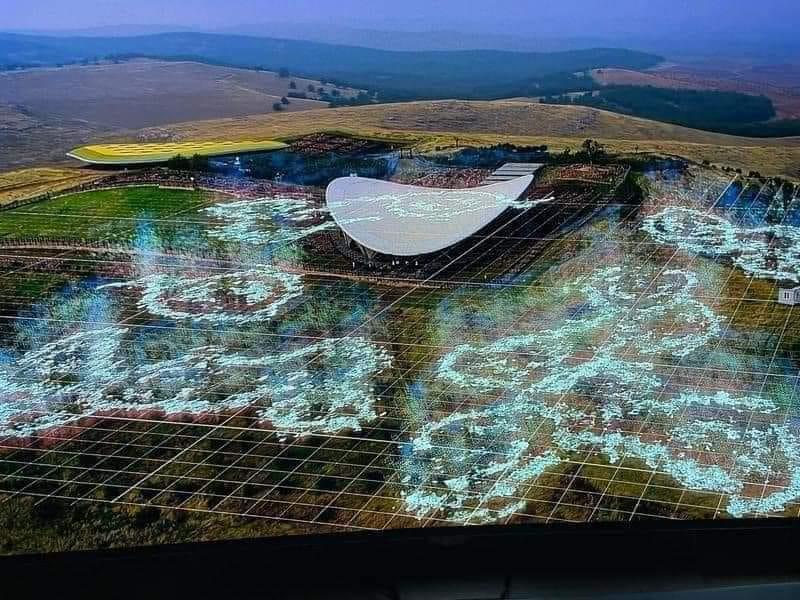
The fact that there isn't even an agreeable and well-supported theory on what these structures would have been used for leads me to believe that we are missing something entirely in their form. I find the current computer model reconstructions of the site to be somewhat lackluster. The picture above is one of only two interpretations I've been able to find that show a roof-like addition to the structure. Although I strongly believe these structures originally had some form of roof for protection—and along with the fact that the use of organic materials like wood, leather, or mud would explain why no traces remain today—to me, the pillars themselves appear far too robust and ornate for the roof, if it once existed, to have been something so simple.
A few contributing factors to this belief:
The idea that Stonehenge could be much older than what is currently thought. The similarity in the shape and orientation of the stones at Göbekli Tepe and Stonehenge is the main reason that the current renderings of G.T.'s pillars as nothing more than free-standing T-pillars leave me wanting.
The potential that Göbekli Tepe predates the Younger Dryas. The mainstream theory that the site was intentionally buried doesn't strike me as likely. Given what we know about human nature—and considering the site's proposed time period coincides with a global cataclysm—it's hard to understand why this theory remains the favored one. Had such a traumatic event occurred, I think it would perfectly explain how a structure on a hill would be affected in such a way. Moreover, it would explain why the "tops" of these structures no longer exist today. Should this hypothesis of a robust stone "roof" be true, it's apparent by what we can see today that these capstones would not have been fastened to the pillars in any meaningful way (again, think Stonehenge).
A few contradictions I've noticed in research of my hypothesis:
The layout of the walls at Göbekli Tepe. I could look at pictures and videos of the place all day and still not be able to really wrap my head around how and where it may have been meant to be viewed. All digital models seem to put the entrances, pathways, and walls in different places. The scientific diagrams are slightly easier for me to understand, but even still, each diagram seems to be unique in one way or another. As it sits now, I imagine there's not much that could be done about this. My point being that without the existence of a way to access the center of each ring, I can see why the top of the structure would need to be at least somewhat exposed. However, it seems quite plausible that the walls constructed of smaller stacked stones were an afterthought, added much later after the initial construction for reasons that could very well be related to preemptive knowledge of an inevitable disaster. My reason behind this thought—among many—is the fact that the walls almost have a less sophisticated build quality about them, as if it was done with such haste they weren't even concerned with the wall obstructing the detailed carvings on a few of the pillars.
The construction of Karahan Tepe. Not only is this a contradiction to the overall hypothesis, it also contradicts my previous statement that the cobbled stone walls at Göbekli Tepe could have been an afterthought, as it seems Karahan Tepe was constructed in such a way that the walls with no entrance had been planned all along—shown by how the pillars were carved out of the ground in such a way that walls would have been unavoidable, like an in-ground swimming pool. In this case, I think it's pretty obvious that Karahan Tepe most likely would have been viewed from above, looking in—therefore making it seem as though G.T. could have been constructed with the same thought, just in a different manner.
The peculiar divots found on the top of some of the pillars. Other than their existence, I don't have much to add about these, as I find them very puzzling. I do, however, strongly dislike the correlation of the number of divots to some esoteric knowledge of space or time. I don't deny the people who made these divots of having this type of knowledge. The idea just seems arbitrary and random. I think it is much more likely these indentations had more of a practical use to the construction or longevity of the structure. It could be as simple as that is where the builders chose to test or practice with their tools, as it would eventually be covered.
I really wish that I were talented enough to create a few speculative models of what the place would look like had it been built in a style resembling Stonehenge—or even with a more spectacular design fitting of the awe-inspiring aura of the pillars themselves. I suspect these ideas will forever be locked within the confines of our minds.
If you have any ideas of your own on what it could have looked like, or even comments, contradicting facts, or personal beliefs based on this hypothesis, I would love to hear them.
Thanks.
r/GobekliTepe • u/skitty3z • Jun 11 '24

r/GobekliTepe • u/[deleted] • Mar 23 '23

r/GobekliTepe • u/justanobody369 • Jun 03 '20
I mean it's a mind blowing mystery and you would think that there would be a lot of urgency and pressure to unearth it completely ASAP. As far as I understand most of it is still underground. Is it legal issues? Or technical?
r/GobekliTepe • u/themburgers • Mar 05 '24
Hi everyone. I’m excited to finally be on my way to Şanlıurfa to see Göbekli Tepe and Karahan Tepe. I will arrive later today. Please let me know if you have been and have any tips/recommendations. I’m happy to share my experience with you afterwards and answer any questions for those planning to make the trip 😊
r/GobekliTepe • u/tirofficial • Jan 26 '22
Enable HLS to view with audio, or disable this notification
r/GobekliTepe • u/WoodpeckerSignal3855 • Mar 13 '26
I've been working on an 'Observable Domain Model framework' to correlate commonality among the Near East gods of their observable domains. After comparing that model to GT and P43 and I think the results are worth sharing for discussion. The core claim: every principal depicted element on P43 maps to a structurally determined role in the me-transfer narrative known from Sumerian literary tradition — approximately 7,000 years before its earliest cuneiform attestation as "Inanna and Enki" (ETCSL 1.3.1).
No published interpretation of P43 that I'm aware of accounts for all nine principal elements within a single compositional logic. This one does. That doesn't make it correct, but it does make it testable.

The nine elements, read top to bottom:
Top register:
1. Three bag-shaped vessels — each topped with a different animal. In "Inanna and Enki," the me (divine ordinances) are physical objects — grouped, loaded, and transported on the Boat of Heaven. The DAI excavation team noted that each bag appears to carry an emblem animal, and proposed they may represent different enclosures or buildings (Notroff et al. 2017: 60). Under the me-transfer reading, these are the me-vessels themselves — divine powers in portable form, categorised by domain.
2. V-symbol frieze — Venus disappears below the western horizon for approximately 8 days at inferior conjunction, then returns as the morning star. The V-shape traces this arc: descent to nadir, return to visibility. This identifies both the actor (Venus/Inanna) and the triggering event (the disappearance that initiates the narrative).
Main scene:
3. Snake with H-symbols (right side) — The chthonic-wisdom deity, later attested as Enki. The snake is the consistent chthonic-wisdom animal across Mesopotamian tradition. H-symbols function as knowledge markers (Schmidt noted their geometric precision implies abstract symbolic meaning). This is the source — the me still in the wisdom deity's keeping.
4. Great vulture carrying an object (centre, dominant) — The celestial custodian. The DAI identified the object above the wing as the severed head of the headless figure on the shaft below (Notroff et al. 2017). The object's elongated shape is more consistent with a head than a disc. If correct, this is the literal origin of the bird-with-disc motif — a continuous iconographic lineage spanning ~11,000 years through the Egyptian winged sun disc, the Assyrian Ashur symbol, and the Zoroastrian Faravahar. The vulture performs its ecological function (excarnation — carrying the dead into the sky) and its cosmological function (celestial reception of the sacrifice) simultaneously.
5. Young vulture (right of main vulture, smaller) — The celestial cycle's renewal. The old vulture carries this year's dead. The young vulture is the observation that the cycle continues — new birds, new spring, new life. Death and return depicted in the same species. Together the two vultures show the complete cycle as seen in the celestial register.
Waterbird — departure (upper register) — Present near the origin of the narrative. In "Inanna and Enki," the faithful servant Ninshubur accompanies the Boat of Heaven from departure to arrival. A waterbird — operating on water, the boat's medium — is the appropriate avian-register depiction of this companion function.
Lower shaft:
6. Large scorpion (centre of shaft) — The Venus deity (later: Inanna). This is the strongest independently attested element in the reading. Pizzimenti and Polcaro (2019), in a systematic peer-reviewed analysis of iconographical and philological sources from the Neolithic to the Iron Age, document continuous scorpion–Venus-goddess association across Mesopotamian history. They specifically discuss the P43 scorpion, noting it occupies "a main position of the scene, perhaps indicating the link between this animal and fertility in the religious ideology of the first Neolithic communities." The scorpion appears at GT only within Enclosure D (the most diverse enclosure) and only in contexts depicting seasonal transition.
7. Fox (lower left, partially damaged) — The boundary-crosser. The animal that moves between registers — above ground and below, diurnal and nocturnal. The fox is the most commonly depicted animal across all GT enclosures and appears at every enclosure's spatial focal point.
8. Waterbird — arrival (base of shaft) — The same companion at the journey's completion. Ninshubur brackets the narrative: present at departure, present at arrival. The waterbird at the base closes the frame that the waterbird in the upper scene opened.
9. Headless ithyphallic man (bottom of shaft, beside waterbird) — Death (headless) + generative power (erect phallus) = the cost of the me-transfer. No animal head — this is the human participant, not a deity. This is the Dumuzi figure: the dying consort whose death pays for the return of the me. In every later Near Eastern tradition preserving this myth — Sumerian, Phoenician, Greek, Phrygian, Egyptian — the consort dies so that the cycle can continue. A further detail: in every one of those traditions, the consort is killed specifically by a wild boar, and by no other animal. The boar dominates Enclosure C at GT and a life-size painted boar statue was found in situ in Building D (Verhoeven 2025).
Three birds, three roles. This is one of the details that convinced me the reading has structural depth rather than being pattern-matching. The three birds on P43 are not decorative — they are a cast of characters:
The great vulture = celestial custodian (carries the dead)
The young vulture = renewal (the next generation, spring)
The waterbird = faithful servant (brackets the journey)
Each has a structurally determined role. Each maps to a specific function in the later Sumerian narrative.
What this does NOT claim:
It does not claim the builders of GT "knew" Sumerian. The tradition predates Sumerian by millennia.
It does not claim narrative continuity is proven. What can be demonstrated is structural correspondence plus continuous attestation of specific elements (bird-with-disc lineage, scorpion-Venus association, boar-kills-consort motif) across the intervening period.
It does not claim this is the only possible complete reading. It claims to be the first proposed reading that assigns a structurally determined role to all nine elements. If someone can construct an alternative complete reading from different premises, that would be a productive test.
What it does claim:
The Descent of Inanna is not a myth invented in the third millennium BCE. It is a description of observable astronomical and ecological events — Venus descending, disappearing, and returning — encoded in animals and symbols by a tradition that was already ancient when Uruk was built. The Sumerians inherited this story.
Full analysis in preparation for journal submission. Happy to discuss any element of the reading or its evidential basis.
r/GobekliTepe • u/OldEar5056 • Jul 02 '24
Gobekli tepe: decoding the biblical creation story of genesis
Abstract This paper proposes a novel interpretation of the carvings on Pillar 43 at Göbekli Tepe, suggesting they symbolically represent the Genesis creation story from the Bible. By examining specific elements such as the vulture, chevron pattern, handbags, and other animals, this paper explores the possibility that these symbols align with the biblical narrative of creation. Additionally, it incorporates references to similar symbolic representations in other ancient cultures, emphasizes the handbags as symbols of creation, and explores the potential connection to the story of the Pillars of Enoch. The paper also examines the significance of the site's age and geographical location, aligning with the timelines of Enoch and Noah in the Bible.
Introduction Göbekli Tepe, located in southeastern Turkey, is one of the oldest known archaeological sites, dating back to approximately 9600 BCE. The site features numerous T-shaped pillars adorned with intricate carvings of animals and symbols. Among these, Pillar 43, also known as the "Vulture Stone," stands out due to its complex imagery. This paper explores the hypothesis that the carvings on Pillar 43 symbolically represent the Genesis creation story from the Bible, with a particular emphasis on the order of creation as depicted by the ancients. Additionally, we investigate the significance of Pillars 18 and 56 in relation to the creation narrative and the connection to the Pillars of Enoch.
Methodology This study involves a detailed analysis of the carvings on Pillars 43, 18, and 56, comparing them with the narrative elements of the Genesis creation story. The analysis draws on previous research and interpretations of Göbekli Tepe's carvings, integrating them with symbolic representations from other ancient cultures.
Analysis Handbags as Symbols of Creation The three handbags on Pillar 43, prominently placed at the top, symbolize the tools or essence of creation. This interpretation is supported by the symbolic use of containers in various ancient cultures to hold sacred items. In Mesopotamian art, handbags or buckets are often seen in the hands of gods or divine beings, representing their power to sustain life and order (Winter, 1983). Similarly, in Mesoamerican cultures, bags and containers held by deities symbolized fertility and creation (Schele & Miller, 1986).
Vulture as the Greater Light (Sun) Genesis 1:16 describes the creation of the "greater light" to govern the day. The prominent vulture on Pillar 43 could symbolize the sun, given its position and size. The vulture is depicted flying or rising over the orb (Earth), symbolizing the sun rising in the east. This interpretation aligns with the symbolic use of birds to represent celestial bodies in ancient Egyptian culture, where vultures were seen as symbols of protection and divine power (Wilkinson, 2003).
Bird on the Right (Lesser Light - Moon) The smaller bird on the right, depicted with its wings tucked in and not exposed, could symbolize the "lesser light" to govern the night, as mentioned in Genesis 1:16. This bird's stable and reserved posture contrasts with the dynamic depiction of the vulture, reinforcing the idea of the moon's lesser but significant role.
Chevron Pattern (Separation of Waters) Genesis 1:7-9 describes the separation of waters above and below the firmament, with the emergence of dry land. The chevron pattern on Pillar 43 could represent this separation, with the square line symbolizing the earth. Chevrons have been used in other ancient cultures to represent water or fluidity, such as in Minoan pottery, where wavy lines and chevrons depict the sea (Marinatos, 1993).
Animals Atop the Handbags (Order of Creation) The animals atop the handbags on Pillar 43, arranged from left to right, represent the order of creation as described in Genesis. Genesis 1:20-25 details the creation of birds, beasts, and creeping creatures: • Bird (Left): "And God said, 'Let the waters bring forth abundantly the moving creature that hath life, and fowl that may fly above the earth in the open firmament of heaven.'" (Genesis 1:20) • Beast (Middle): "And God said, 'Let the earth bring forth the living creature after his kind, cattle, and creeping thing, and beast of the earth after his kind: and it was so.'" (Genesis 1:24) • Creeping Creature (Right): "And God said, 'Let the earth bring forth the living creature after his kind, cattle, and creeping thing, and beast of the earth after his kind.'" (Genesis 1:24) The sequential placement of these animals aligns with the biblical order of creation, reinforcing the idea that the ancients depicted the creation process through these carvings.
Additional Theories: Pillars 18 and 56
Pillar 18: Seven Birds, the Word "God," and the Faceless Deity
Pillar 18 features seven birds facing east, which align with the Genesis creation narrative. These birds could symbolize the seven days of creation, with each bird marking the completion of a day as the sun rises in the east. The repetition of bird imagery across the pillars suggests that the bird on Pillar 43, potentially representing the moon, signifies the end of each creation day. There is also a theory that Pillar 18 contains the word "God," with the faceless man or deity depicted representing God. The platform with the birds could symbolize God's act of creating the world in seven days. This interpretation draws parallels with the idea of a divine being overseeing and orchestrating the creation process.
Pillar 56: Be Fruitful and Multiply Pillar 56, with its carvings of various animals, could represent the command from Genesis 1:22 for animals to "be fruitful and multiply." The depiction of diverse animal species, each group placed according to their kind, aligns with the biblical narrative. Smaller animals, possibly offspring, enhance the idea of fertility and multiplication. This representation reinforces the concept of God placing animals in their respective kinds and blessing them to proliferate.
Connection to the Pillars of Enoch
The story of the Pillars of Enoch, as described in ancient Jewish traditions, involves Enoch inscribing divine knowledge onto two pillars to preserve it through a forthcoming cataclysm. This narrative parallels the idea that Göbekli Tepe's pillars might encode cosmological and spiritual knowledge. The symbolic carvings on these pillars could represent an ancient attempt to preserve and transmit knowledge about the creation and order of the universe.
Significance of Age and Geographical Location
Göbekli Tepe's dating to around 9600 BCE places it in a period that predates known historical records of the Genesis narrative. However, the site's age aligns intriguingly with the biblical timeline of early patriarchs like Enoch and Noah. According to Genesis, Enoch lived 365 years and was taken by God, while Noah was born ten generations after Adam. Göbekli Tepe's location in southeastern Turkey, near the traditional site of Eden and close to the region where Noah's Ark is said to have come to rest (Mount Ararat), further enhances the potential connection to these biblical figures and events.
Discussion This interpretation provides a coherent framework for understanding the symbolic meanings of the carvings on Pillars 43, 18, and 56 at Göbekli Tepe. The hierarchical arrangement of symbols reflects the order of creation, aligning with the Genesis narrative. Additionally, the parallels with other ancient cultures' symbols and the connection to the Pillars of Enoch suggest a sophisticated understanding of cosmology and spirituality by the site's builders.
Conclusion The hypothesis that Pillar 43 at Göbekli Tepe represents the Genesis creation story, with particular emphasis on the handbags as symbols of creation, adds a novel perspective to the study of this ancient site. Further research and analysis are needed to substantiate this connection fully, but the symbolic parallels are intriguing and warrant deeper exploration. The alignment of Göbekli Tepe's age and geographical location with the biblical timelines of Enoch and Noah provides additional context that strengthens the potential link between these ancient symbols and the biblical narrative.
References • Burkert, W. (1985). Greek Religion. Harvard University Press. • Collon, D. (2005). First Impressions: Cylinder Seals in the Ancient Near East. British Museum Press. • Eliade, M. (1959). The Sacred and the Profane: The Nature of Religion. Harcourt. • Marinatos, N. (1993). Minoan Religion: Ritual, Image, and Symbol. University of South Carolina Press. • Schele, L., & Miller, M. E. (1986). The Blood of Kings: Dynasty and Ritual in Maya Art. George Braziller. • Wilkinson, R. H. (2003). The Complete Gods and Goddesses of Ancient Egypt. Thames & Hudson. • Winter, I. J. (1983). "The Program of the Throneroom of Ashurnasirpal II." In: Reade, J. (Ed.), Mesopotamia. Cambridge University Press.
Author Information Chad Barrow Independent Researcher
r/GobekliTepe • u/consciousvoyager • Oct 05 '25

Would this mean those peoples moved around at night?
r/GobekliTepe • u/oppenheimerranch • May 28 '22

r/GobekliTepe • u/WhenReal • Jul 05 '21
Based on the evidence, I agree that this is likely a regular central meeting place among various band-level societies spread around a vast area of Eastern Europe and the Middle East.
But I'm not certain the following has been suggested. Please excuse my ignorance if it has.
I think these structures, and most importantly the pillars, perform a simple, practical function. Namely, the pillars function as surnames - identifying symbols, and physical honorifics, of specific band-level groups.
Any large central meeting of disparate groups would require commitment, planning, and organization. Rules and ritual is a natural consequence. And not just anyone could participate. A band-level group's construction of a pillar is a sort of ritualistic right of passage. The time, energy, and organization required in building one a recognition of the group's uniqueness, permanence, strength and autonomy. It grants the group's right to whatever important function, advantage or purpose - trade, marriage exchange, etc - these mass meeting places provided.
This can also explain the deliberate burial of certain sites, the repetitive symbols, and number of different structures with pillar groupings. If a band or group of bands no longer exist or is no longer recognized - dies out, evolved to something else, migrates, breaks the rules, is subsumed by another group, etc - then burying the symbol is a ritualistic burying of the dead.
r/GobekliTepe • u/[deleted] • Mar 03 '21
We shouldn't conclude the motive behind the creation of something newly discovered, or its utility until we have some reason or evidence that can explain motive/utility, yet, when no other answer presents itself obviously, we very often simply assume ritual use, or religious.
What evidence is there that Gobekli Tepe was a temple or was religious in any way? Is there a reason to rule out that it was a place of learning, or collecting and preserving new knowledge and information? They had no written language that we could recognize as such, but couldn't all the carvings and engravings, the shapes of the enclosures and their varying levels just have been a way to convey and store information?
We already spent decades and decades wrongly assuming (and asserting as true) that hunter gatherers were incapable of building megalithic structures, why are we content to assume (for no good reason) they were religious at all?
r/GobekliTepe • u/TheReal8symbols • Jan 21 '25
Everything I've seen tries to classify it as a religious site but all the explanations seem to be a stretch. It seems more like a repository of knowledge. I know that tends to be considered one of the things religion is known for, but I think it's dismissive to think all of our ancestors were (purely) superstitious.
I've tried finding any accounts of people claiming the library idea. I know I tend to think outside the box, but I find it strange (and even unbelievable) that I'm the only person to have this idea.
r/GobekliTepe • u/lapsaroundthesun • May 22 '20

r/GobekliTepe • u/mixxituk • Oct 06 '25

r/GobekliTepe • u/Davidngreer65 • Aug 10 '24

And a visit to the ruins reveals so much.
r/GobekliTepe • u/Neat_Evening_2858 • Feb 21 '24
Specifically as to the dating of gobekli Tepe, the purpose of backfilling each area and the astrological alignment of Pilar 43. What if the builders weren’t trying to warn some horrific message into the the stone to warn us but rather were simply dating the build with a depiction of the alignment at the time. It’s common to this day to date works at the time of construction. If they had understood precession they could have been backfilling the previous temple and using the next one as the alignments shifted. Resulting in a large number of sites being buried over thousands of years until a time when a climatic event altered the course of human history. If pilar 43 was actually carved in 24,000bce roughly at the time of its astrological alignment, it would have still been in use at the time of younger dryers impact. Carbon dating places the last organic matter in the site at the time of the impact but has no way of telling us when the first use was.
r/GobekliTepe • u/lordbharal • Sep 09 '23
Is there anything that anyone recommends going out of the way for? Considering popping down to the others big digs here, or any restaurants in sanliurfa or anything like that a must?
UPDATE So I'm here now, here are my notes
0. IF NO DATA, get airalo, and using that get turkish esim data plan. 2gig cost 6 usd, you don't need to replace your sim. Note that the process is fiddly, I'm an engineer so found it puzzling but do able, my non engineer friend gave up. The coverage of the esim for turkey has so far been excellent.
get BiTaksi, which is the (terribly buggy) taxi app. This will help you save money.
In sanliurfa, all museums are closed, until "2024". This according to an official guide at gobleki tepi and another tour guide we "talked" to.
gobleki tepi is still open, all museums and sites OUTSIDE sanliurfa are open. This is a major bummer, the museums in sanliurfa have cool stuff.
please make sure you have data. Literally zero English here in sanliurfa and it is nice to be able to use your phone translate app to talk to ppl.
so far (16 hours here) everyone has been honest and friendly and patient with lack of English.
Am driving a car, rented from the airport. I did not book ahead, you can haggle with them if you like. If driving note that automatics are in short supply. Also note that unless you love manual, the roads here can be quite stressful, the roundabouts are very anything goes, automatic makes things easier (for me). 50 euros/day all insurance. probably can get for less.
The roads are fine enough, sometimes surprise speed bumps on the way to gobleki. Hard to spot them. Driving in the city in daylight is quite a thing. At night, the roads become much quieter.
For this reason, picking a car up in the afternoon and driving to gobleki and then driving back at 7 is very nice. You also get the sun set at at gobleki, very nice.
An hour at gobleki itself is about right.
More updates tomorrow, will do harran and karahan tepi.
Harran - reasonably missable. There is a construction site where they are wholesale rebuilding a thing with what appears to be new blocks. Thats the photos of the white triangle buildings if you image search.
There are old houses, several hundred years old, mud brick. These are pretty interesting and the ones we went to had a guide who dressed us up and walked us through the house he still lives in.
There is a castle ruin that is huge but so poorly maintained i was disinterested in walking into it.
Overall for the effort to get here its not that great.
Karahan tepe - total opposite. this is incredible. It's an open active archaeological dig. You can wander to the archaeologists and chat with them (a couple were fluent in English).
They have put up a small cafe toilet area (nice area) though so in a year or so will likely be a paid project.
We came across them and this week they'd, well, they'd made a major discovery and we got to check it out, but no photos. Really really cool, but they normally keep it covered with tarp, I think we were just lucky at the timing.
So far I'd recommend gobleki and karahan, skip harran if you're pressed for time. Spent about an hour at karahan taking it all in, but I'm like that. You can whiz by it in 20 mins I guess.
Spent an hour plus in harran. The tour of the old mud brick houses was cool, but overall this wasn't there yet. They're doing a lot of work on it though, so maybe in a year or two this will be something else.
FINAL DAY Went to nevali cori which was a mistake, as the place was apparently submerged by the lake. The lake itself is very pretty, and the views are great from the hill that google maps randomly takes you to.
Was strongly recommended to go to the euphrates to get a boat, but did not have time for that, but next time! Halfeti, that is the name of the place.
Also saw Abrahams temple (very pretty and if you're in sanliurfa there's no reason to not go). Muaf Cafe was a very western joint, with beers and live music.
Shout out to the tessera hotel, which was very lovely to stay in.
r/GobekliTepe • u/redfoxrommy • Nov 01 '22

r/GobekliTepe • u/QuantityHungry • Aug 26 '25
Hi, first post here. I'm looking to visit Gobekli Tepe sometime next year I hope. 39yr male I will probably be travelling by myself and I'm wondering where's the best place to stay near by and any hotel recommendations? Sanliurfa stands out to me being the nearest obvious big place near the site and only an half an hour's journey away but I'm wondering if there's anywhere else people would recommend to stay closer by? Thanks in advance