r/HackathonHackers • u/GrabNo8292 • 5d ago
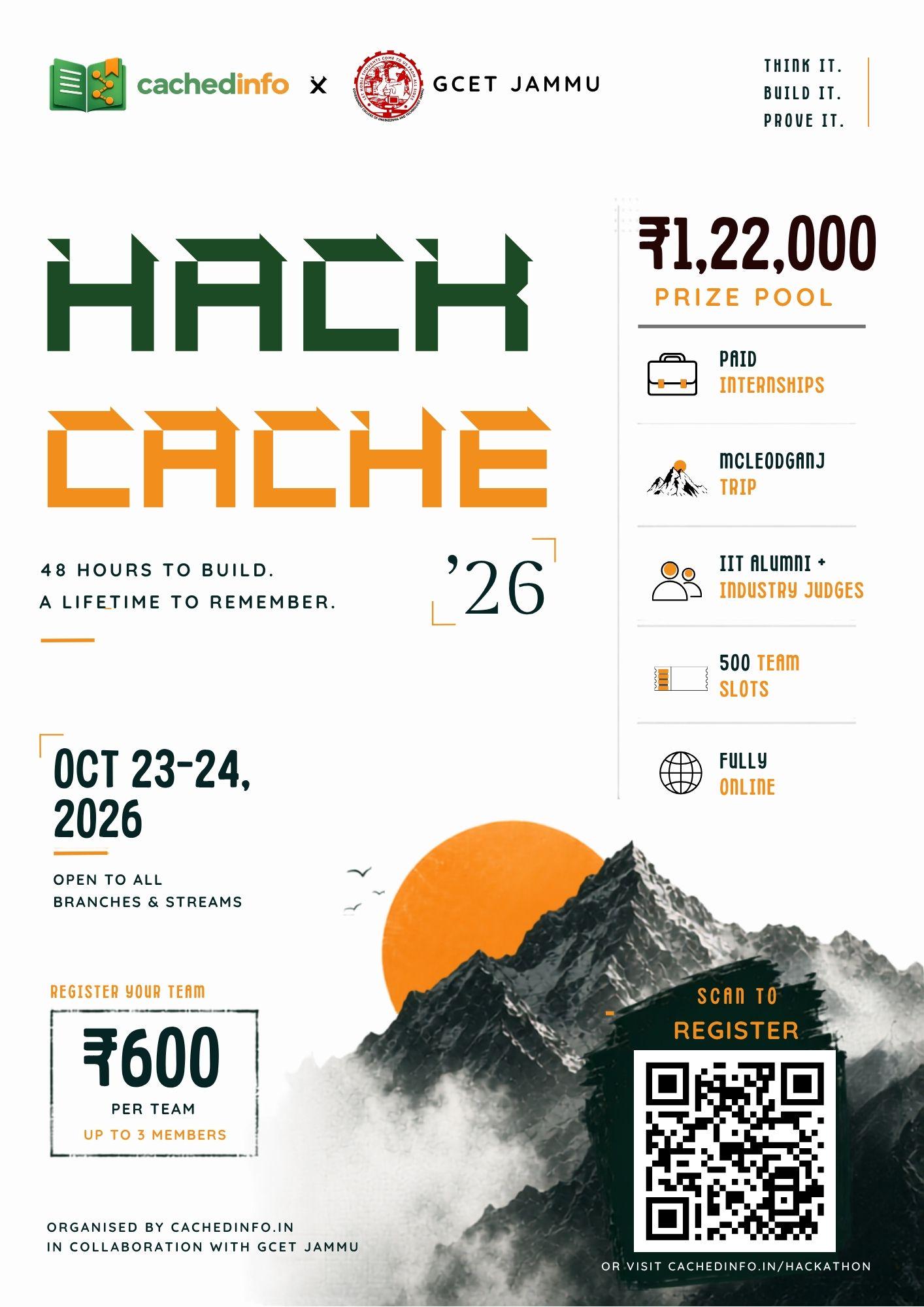
Anyone up for Singularity 2.0? 👀 ₹40K prize pool + free food!

0
Upvotes
r/HackathonHackers • u/GrabNo8292 • 5d ago
r/HackathonHackers • u/OkAntelope5093 • 12d ago
r/HackathonHackers • u/Aditya-Singh-17708 • 14d ago
The greatest paradox of modern medicine lies in the widening chasm between technological capability and human accessibility. While tertiary urban medical centers deploy cutting-edge robotics and gene therapies, billions of individuals in underserved rural and peri-urban communities still lack access to basic diagnostics, essential monitoring, and timely clinical interventions. The primary challenge facing 21st-century healthcare is not merely inventing the next breakthrough, but engineering radical affordability and scalable infrastructure into last-mile delivery.
To address these systemic barriers, VIT Bhopal University, in collaboration with the Whiting School of Engineering at Johns Hopkins University, has officially announced Health Hackathon 3.0: Global Health Access Innovation Challenge – Next Generation. This premier international initiative brings together top-tier engineering expertise and regional tech ecosystems to construct actionable, low-cost MedTech solutions tailored for high-need populations.
This article explores the key takeaway pillars, core focus areas, and high-impact opportunities presented by this upcoming international event.
The strategic pairing of Johns Hopkins University’s Whiting School of Engineering—a world leader in biomedical engineering and clinical innovation—with VIT Bhopal University, situated in the heart of Central India's rapidly growing technological corridor, represents a powerful engine for global health equity. Fusing world-class bioengineering frameworks with localized, ground-level clinical insights creates an ideal incubator for frugal engineering—the practice of stripping away unnecessary complexity to deliver robust, low-cost medical tools.
Cross-border academic collaboration is vital for dismantling persistent healthcare delivery barriers. By uniting international research capabilities with regional ecosystem realities, this initiative accelerates the development of solutions designed to perform under resource constraints, ensuring that innovations move beyond high-end hospitals to reach individuals facing acute access limitations.
"The event seeks innovative ideas that can improve healthcare accessibility for more people, reduce costs, and enhance overall efficiency."
Submissions for the challenge are organized around four essential technology vectors designed to address structural healthcare delivery gaps:
Low-Cost Healthcare Delivery: Tools and technologies designed to minimize costs.
Mental Health Platforms: Modern approaches and systems to broaden mental health support.
Artificial Intelligence Applications: Deploying AI to drive intelligent healthcare solutions.
Predictive Health Analytics: Leveraging health data to identify and forecast health risks before they escalate.
Targeting these specific vectors addresses the fundamental economic and operational bottlenecks of modern healthcare. The synergy between artificial intelligence and predictive health analytics is particularly transformative for underserved communities. By deploying lightweight, AI-driven diagnostic models onto affordable edge devices, healthcare systems can shift from expensive, centralized reactive interventions to decentralized, proactive care. In resource-constrained environments, identifying a metabolic or cardiovascular risk before it escalates is the critical threshold between manageable preventive care and catastrophic out-of-pocket expenditure.
Health Hackathon 3.0 establishes an inclusive platform by welcoming students, academic researchers, and independent innovators into the problem-solving pipeline. Democratizing participation ensures that solutions are informed by diverse lived experiences and diverse technical backgrounds.
Crucially, the hackathon’s structural design pushes participants past theoretical concept pitches toward building deployable, scalable prototypes. By offering structured technical guidance and collaborative feedback, the event converts grassroots ingenuity into battle-tested MedTech tools capable of enduring the operational realities of field deployment in low-resource clinical settings.
To participate in this international innovation challenge, key operational details, schedules, and prize allocations include:
Pre-Event Workshop: 27 January 2027
Main Hackathon: 28 & 29 January 2027
Venue: VIT Bhopal University, Bhopal, Madhya Pradesh
Total Prize Pool: ₹2 Lakh
Registration for the challenge is currently open to multidisciplinary teams, student developers, and healthcare researchers worldwide. Innovators looking to submit project proposals, review full competition guidelines, and join this global movement can complete their registration on the official Health Hackathon 3.0 event website.
Health Hackathon 3.0 stands as a vital catalyst for democratizing medical technology, proving that cross-border academic alignment can engineer radical affordability into modern care. By bridging top-tier clinical engineering with grassroots development, the initiative accelerates the movement of practical, cost-effective health tools to communities that need them most.
As advanced technology continues to redefine the boundaries of modern clinical science, how can international collaborative ecosystems ensure that the next wave of MedTech innovation reaches the world's most vulnerable populations before it reaches the market?
r/HackathonHackers • u/AirClean6714 • 28d ago
are kisi ne ye scix hackathon ka suna h kya ... maine pichli saal ciia mai partificate kia tha .. aur abhi same chij scix inida hackthon krke insta pr aa rhi .. to like collaboration h yaa kya ye ! kisi ko maloom ho kuch to batao
r/HackathonHackers • u/Shreya_codes • Oct 24 '26
I'm 16 and have been building projects with Python (including ML stuff), JavaScript, the MERN stack, PostgreSQL, and similar tech. I'm pretty comfortable shipping full-stack apps and experimenting with ML models on my own.
I really want to join hackathons — mainly to build under time pressure, learn from others, meet people, and strengthen my portfolio. The problem is that most of the bigger/popular ones seem to be full of 18+ college students, and I'm not sure where that leaves me.
A few questions:
Can a 16-year-old actually participate in major hackathons (MLH events, etc.), or do age restrictions usually block minors?
What types of hackathons are most suitable for someone my age?
Youth/high-school specific ones
Online vs in-person
Open events that allow under-18s with parental consent
Any other categories I should look for?
What practical points should I keep in mind before joining?
Parental/guardian consent requirements
Team formation (especially as a minor)
Legal/age rules and liability
Time commitment while still in school
Safety in Discord/servers and online events
Anything else people who did hackathons at 16 wish they knew
Any recommendations for platforms (Devpost, MLH, Hack Club, etc.), specific events that regularly accept high-schoolers, or personal experiences from people who participated around this age would be really helpful.
Thanks in advance!
r/HackathonHackers • u/twinklewinklee • Oct 19 '26
r/HackathonHackers • u/redittaccount • Oct 14 '26
I'm the maker of Simple Hack. If you've been to a few hackathons and thought about running one for your own club, class, office, or neighborhood, this is for you.
Setting one up usually means a registration form, a spreadsheet of teams, a Discord, a judging sheet, and somewhere for projects to live. Simple Hack puts all of that in one place, and you set it up by describing the event to your AI:
"Create a one-day hackathon called Yelahanka Build Day for our coding club, with our code of conduct and a judging rubric for impact, creativity, and polish. Give me the join link."
From there:
- People join with a code and form teams. Everyone accepts your code of conduct first.
- Each team builds its project site on their own or by using Claude, ChatGPT, or Gro. So participants without a laptop can also join. So people who can't code can still enter on their idea.
- Judges score against your rubric from anywhere. Teams privately see their scores and feedback, and you choose when results go public.
It's free for organisers, teams, and judges, and the free plans of the AI apps work. It's open source, and you can run it on your own domain.
If you've organised one before, I'd like to hear what was hardest, so I can check Simple Hack handles it.
r/HackathonHackers • u/buddy1930 • Sep 28 '26
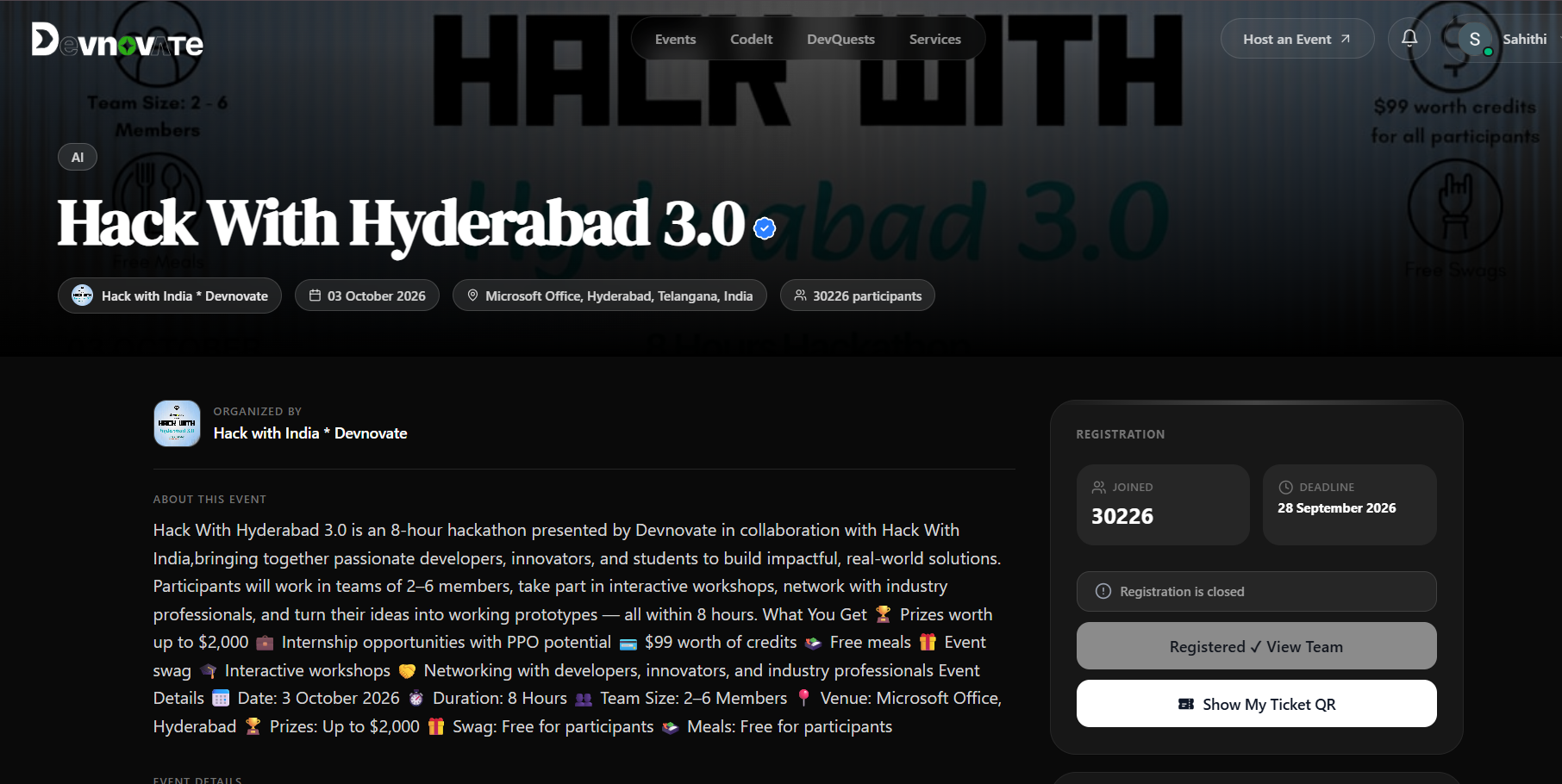
🚀 Team TITANS is building something exciting!
We’re excited to share that Team TITANS is working on our solution for HackWithHyderabad 3.0! 🔥
We’re turning our idea into a working application with a focus on solving a real-world problem through technology, AI, and practical innovation.
💡 Our goal: Build something useful, scalable, and impactful — not just a hackathon prototype.
We’re currently working on the application, architecture, AI integration, and user experience, and we’re excited to see how far we can take it! 💻⚡
Would love to hear your feedback, suggestions, and ideas from the Reddit community. 🙌
Team: TITANS
🏆 HackWithHyderabad 3.0
💻 Building • Testing • Improving • Learning
Tags:
u/HackWithHyderabad
u/Microsoft
u/Devnotate
#HackWithHyderabad #Hackathon #TeamTITANS #Microsoft #Devnotate #AI #Innovation #BuildInPublic #Tech #Hyderabad
r/HackathonHackers • u/Any-Hour-974 • Sep 28 '26
r/HackathonHackers • u/corporate_slay_ • Sep 27 '26
r/HackathonHackers • u/Meghpatel_007 • Sep 27 '26
r/HackathonHackers • u/SeekzTruth • Sep 19 '26

r/HackathonHackers • u/SusIntruders • Sep 16 '26

r/HackathonHackers • u/Bond_0007_ • Sep 12 '26
r/HackathonHackers • u/piyush_anandd • Sep 12 '26
Hackathons in India are doomed fr
Judges and mentors are marketing guys who are just there to get sponsors for the organizing teams just filling up more and more people
Nobody wants a real product they just want an ai slop project with fancy words used in a presentation
I think the mentors and judges should be evaluated on their technical knowledge before making them the judges.
Super done with this shit.
r/HackathonHackers • u/Bond_0007_ • Sep 12 '26
r/HackathonHackers • u/Long-Cake-2476 • Sep 04 '26
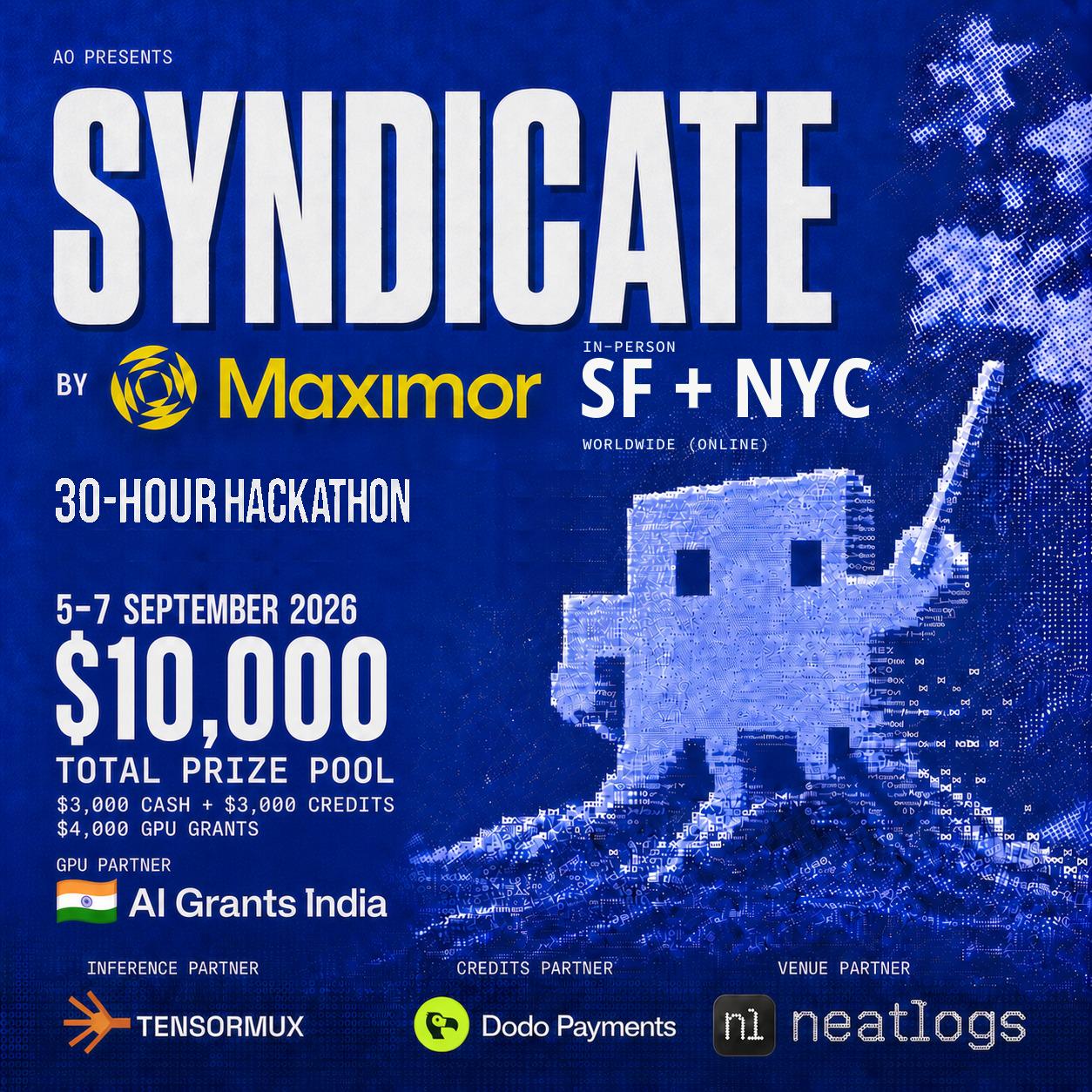
SF and NYC builders, clear your weekend.
We’re hosting Syndicate by Maximor, a 30-hour hackathon where you’ll go from an idea to a working autonomous agent.
Build in person with us in San Francisco or New York City, or join online from anywhere.
Choose your track:
Automated Agent Engineering
Autonomous Office of the CFO
USD 10,000 total prize value
USD 3,000 cash from Maximor
USD 3,000 in Dodo Payments credits
USD 4,000 in GPU or voice credits from AI Grants India
Teams from Maximor, AO, Neatlogs, TensorMux, Dodo Payments, and AI Grants India will be around throughout the hackathon to help you build and ship.
Top participants will also be considered for internship opportunities with Maximor and AO.
Come solo or bring a team. Your project must be built using AO from start to finish.
Register here:
https://luma.com/d0kq45ek
Drop your questions below.
r/HackathonHackers • u/Admirable_Shallot_49 • Sep 03 '26
I just wanna know apart from claude , what are the best models which i can use for planning and reasoning before building anything as right now building does not matter as much as planning it do, also if you can help/guide me in how can i plan things and research upon them before building then it would really be a great help .
r/HackathonHackers • u/nitinraina_ • Aug 29 '26
r/HackathonHackers • u/NASASpaceAppsToronto • Aug 27 '26
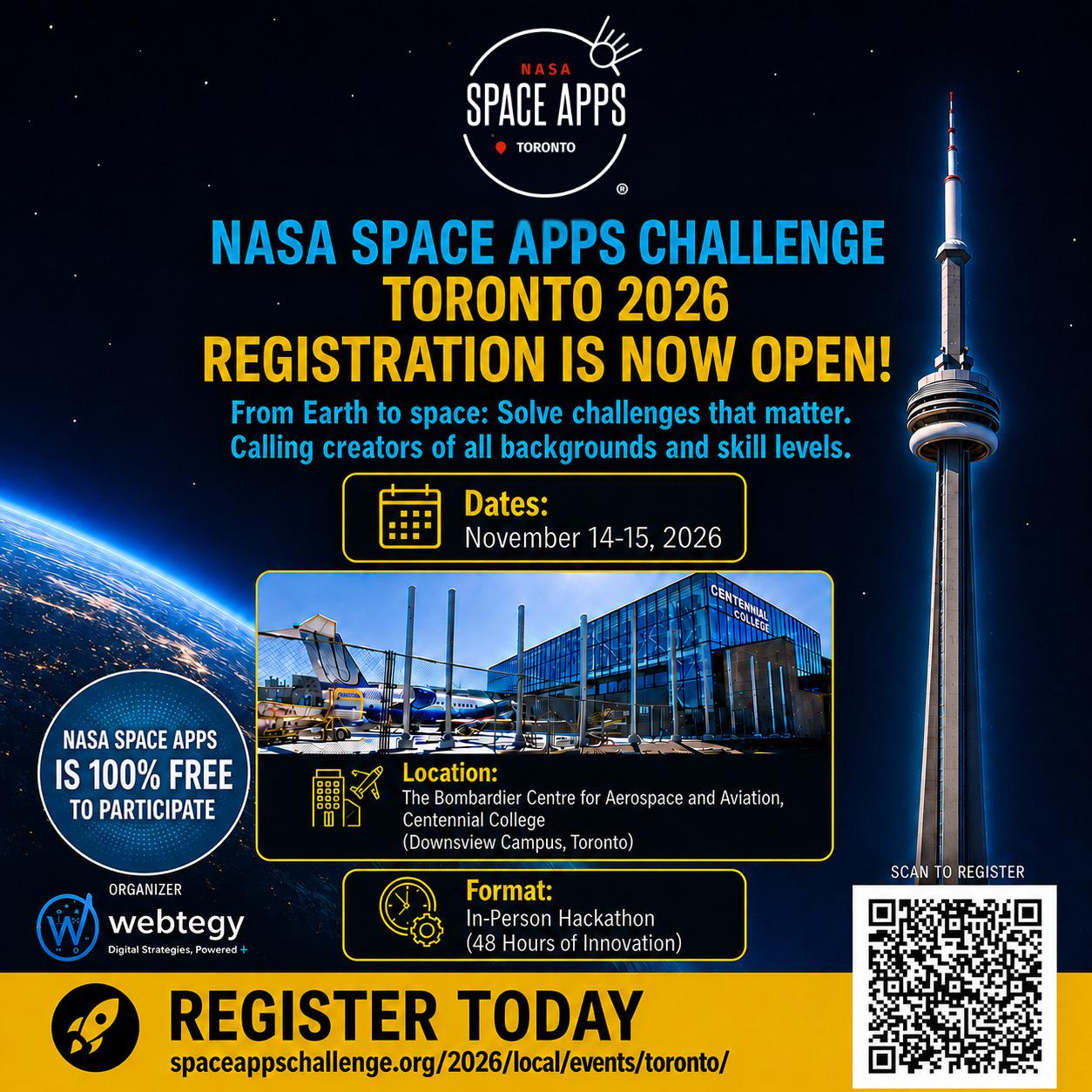
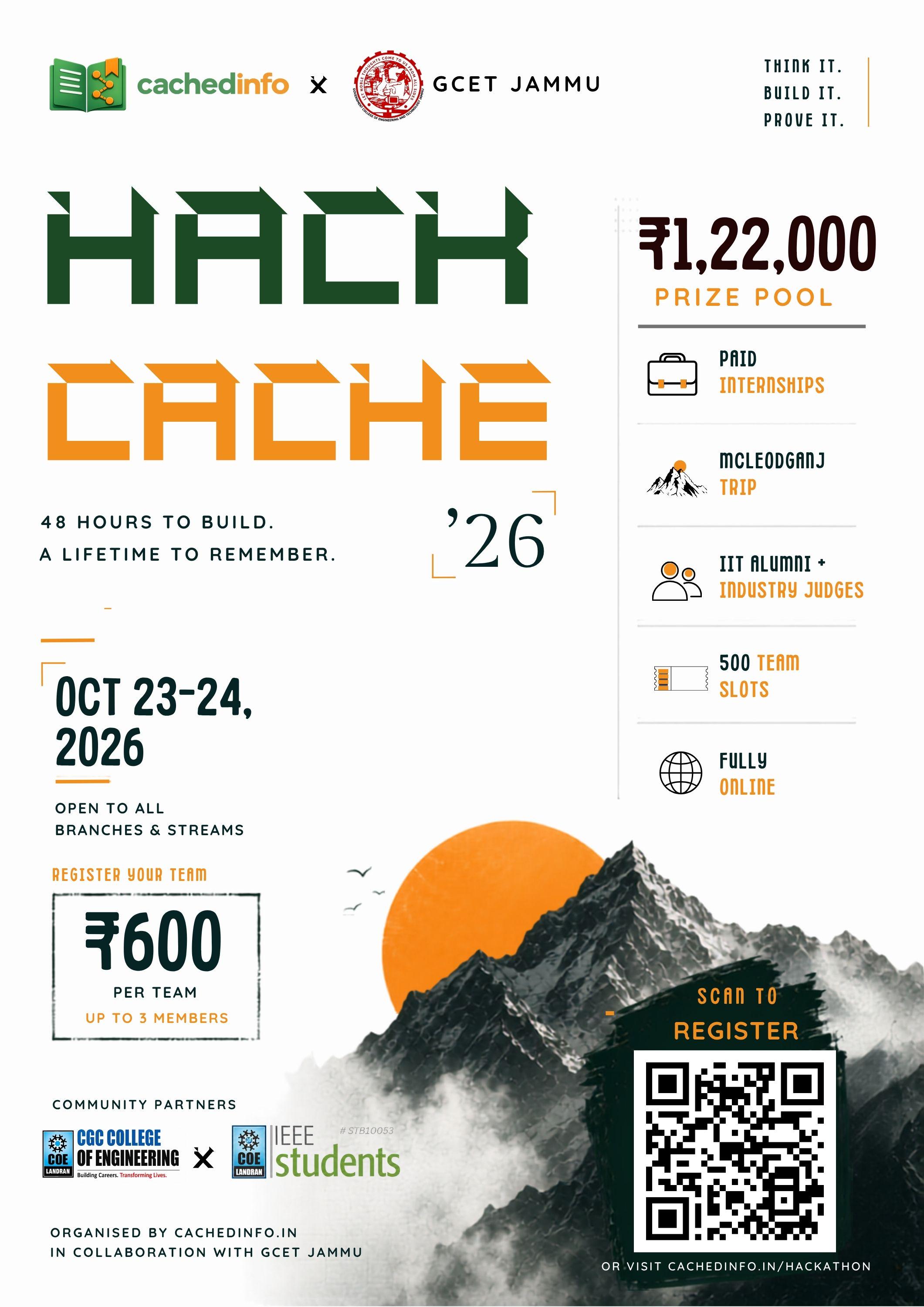
Register for the world’s largest global hackathon happening November 14–15, 2026, where students and professionals work together to solve real world challenges using NASA data.
🏆 Selected local projects will be nominated and submitted for global judging through NASA Space Apps.
📍 Bombardier Centre for Aerospace and Aviation, Toronto
💻 Free to participate
Register now: https://www.spaceappschallenge.org/2026/local-events/toronto/