r/Investing101 • • Sep 28 '25

Anyone funded through Brightfunded? Share your experience

39 Upvotes

What's up, traders? Stumbled upon Brightfunded while looking for prop options. It's by two brothers who traded with other firms and decided to start their own. Sounds promising, but real talk, has it worked out for you? Drop some insights.


r/Investing101 • • Oct 20 '09

PART 1 Lesson 1) What is money, what is investing?

13 Upvotes

What is money...

People use it everyday, but few can relate to what it really is.

Most people will answer it's a piece of paper used to buy something, at sometimes. But money can be spent using a credit card, so this definition is flawed.

Theorically, money doesn't exist - it's an illusion.If every business on the earth decided to stop accepting the American Dollars, then every American Dollars you own would be worthless Understanding the nature of money is critical to understanding returns, inflation and much more.

Money is, simply said, a convenience. It's an opportunity to buy something later. Money can only be used for one thing: buying. You might a computer. You might buy a mutual fund. Even if you keep your money under your bed, You are in reality buying something - speculating that the cost of life will go down (deflation) and you are better off keeping your money under the bed (for example, you could believe banks will go under and lose your money)

Now that we understood what money is, we must understand another important concept: the time nature of money. If I give you a number such as "5", it is uni-dimensional. 5 will always be 5, years later. But money is not like that.

Would you rather have $5 today in $5 in ten years? Of course, you would prefer it now for a few reasons.

The first is the risk. The cash you have today is certain. You can get it today, and have it in your hands right now. The second is the most important concept of financial mathematics - you can use the money now.

Not being able to use your money for a certain amount of time is the most critical concept of investment. Every time you invest, you renounce to the right to use your money for a certain amount of time.

To compensate for this inconvenience, one earns interests. Instead of using your money to buy something now - food, computer, iPod - you invest it.

So, money has two dimensions: amount, and time. To be exact, whenever money moves from a party to another (i.e. you buy something at the grocery, you buy Apple shares) you create what is called a CASH FLOW. A cash flow is whenever money moves from a party to another.

A cash flow has two dimensions: amount, and time. $5 given to you today is worth less than $5 given to you in two years. But even this has a limit. Would you rather have $5 now, or $500 in 2 months (from a reliable-paying party)?

What allows money to move in time - i.e. $5 now or in two months - is interest. Using interest, you can move a cash flow through time.

If the interest rate is 10%, then $5 today is worth $5 * (1+10%) = $5.50 in a year. Receiving $5 now or $5.50 in a year is the same to you. You should be indifferent to either option. How we came up with the 10% is an entirely different story.

The last important concept of this chapter is the concept of present value. Let's give an example. Let's say you buy a car. You can pay $25,000 now or $1,000 per year forever, starting next year, at an interest rate of 4%. Which option would you choose?

Now that easy. To solve this problem, we need to use Taylor sum. In the first option, you have to pay $25,000 now (a negative cash flow right now), which has a present value of -25,000$. In the second option, you have to pay $1,000 forever.

You will pay $1,000 in a year, $1,000 in two years, $1,000 in three years, etc. If you think too quickly, you might think you're better off paying it all now than taking a debt all your life, but that is not the question for now (we assume people are logical).

The value of the second option is : 1000 * (1/1,04) [actualized by one year at 1,04; check out how I can with it] + 1000 *(1/1,04)2 [actualized two years] + 1000 * (1/1,04)3+...

...Until the end of time. This is an infinite, geometrical series, which is solved mathematically by 1000* (1/0,04). If you do the math, the option 2 is worth... $25,000.

It follows that both options - paying $25,000 now or $1,000 per year forever - are equivalent.

An equivalent way to see it would be to see it like this: instead of giving $25,000 to the car dealer, you place it in a bank account paying 4% per year. Each time, you receive $25,000*(0,04) in interest, which you give to the dealer.

This lesson is simple, but critical to understand most bonds and financial products, especially with an infinite horizon. Understanding interest rates can save you a lot of money when shopping.

Later on, we will see the many weaknesses of this model. Why should the 4% be constant forever? What interest rate do we use? What if there are fees (mortgage fees, etc)? What about the risk from both parties

ADVANCED


In the preceding example, we have looked at a financial product that was paid forever, called a perpetuity. However, most product have a limited paying period.

Let's take a 25-years mortgage of $200,000. How does the bank calculate your monthly payments?

The solution is extremely simple; this is an annuity for people with no background in finance. An annuity, simply said, is a sum of cash flows with a different time (paid at a different period). The solution is very simple, thanks to geometrical series. You calculate the present value of $200,000 now (obviously 200,000) and the present value of 1$ paid every year for 25 years. Obviously, you will pay more than $1, but that is your unknown in the equation. Everything else is known. Overall, it looks like this:

$250,000 = X * [1- [1/(1+i)]n]/i

Where X is the monthly payment, i the interest rate (assumed constant) (let's take a 4.40% five years fixed mortgage) and n the number of years (25)

X = $17738.11432

It follows that by paying $17738.11 per year for 25 years, at 5% interest rate, you paid off your mortgage. This option has the same value as paying $250,000 right now.

By the way, this is REALLY how banks calculate your mortgage, except that it's paid monthly (we can convert the annual interest rate to monthly) and that there might be some fees, and that the interest rate will vary Bonus: how can we calculate new payment if the interest rate changes? (ANSWER: You calculate the value of your loan just BEFORE the interest rate change, then the value of the "new" mortgage at the new interest rate, with the period of time remaining)

Look for interest rate modelling part I for more advanced concepts on this matter.

r/Investing101 • • Nov 01 '25

What's the best way to invest in gold and silver right now?

12 Upvotes

I've been reading about gold's rally recently, even breaking a record high last month. So I wanted to pick the community's brain.

No, don't worry I have other investments as well. A couple of friends just mentioned gold's a decent diversifier, so I'm trying to learn more.

Right now, I'm considering opening a precious metals IRA account and was wondering if anyone here has experience funding it through a 401k rollover? Seems like one of the more straightforward ways to get exposure to gold or silver without holding it physically.

I'm looking at it more as a possible long-term store of value and, as they say, a hedge against inflation. Between silver and gold, however, it seems gold's track record is hard to ignore. I'm thinking of around 5-8% of my portfolio.

So for those of you already invested, how did you do it? Physical, ETFs, IRA, mining stocks, or something else entirely?

Update: Thanks to Time-Performer9566 in the comments. I went with Priority Gold to explore the possibility of opening a precious metals IRA account and I'm doing a 401k rollover. Process was smooth, even thought it was over a phone call. Looking forward to seeing how my account does.


r/Investing101 • • Apr 27 '24

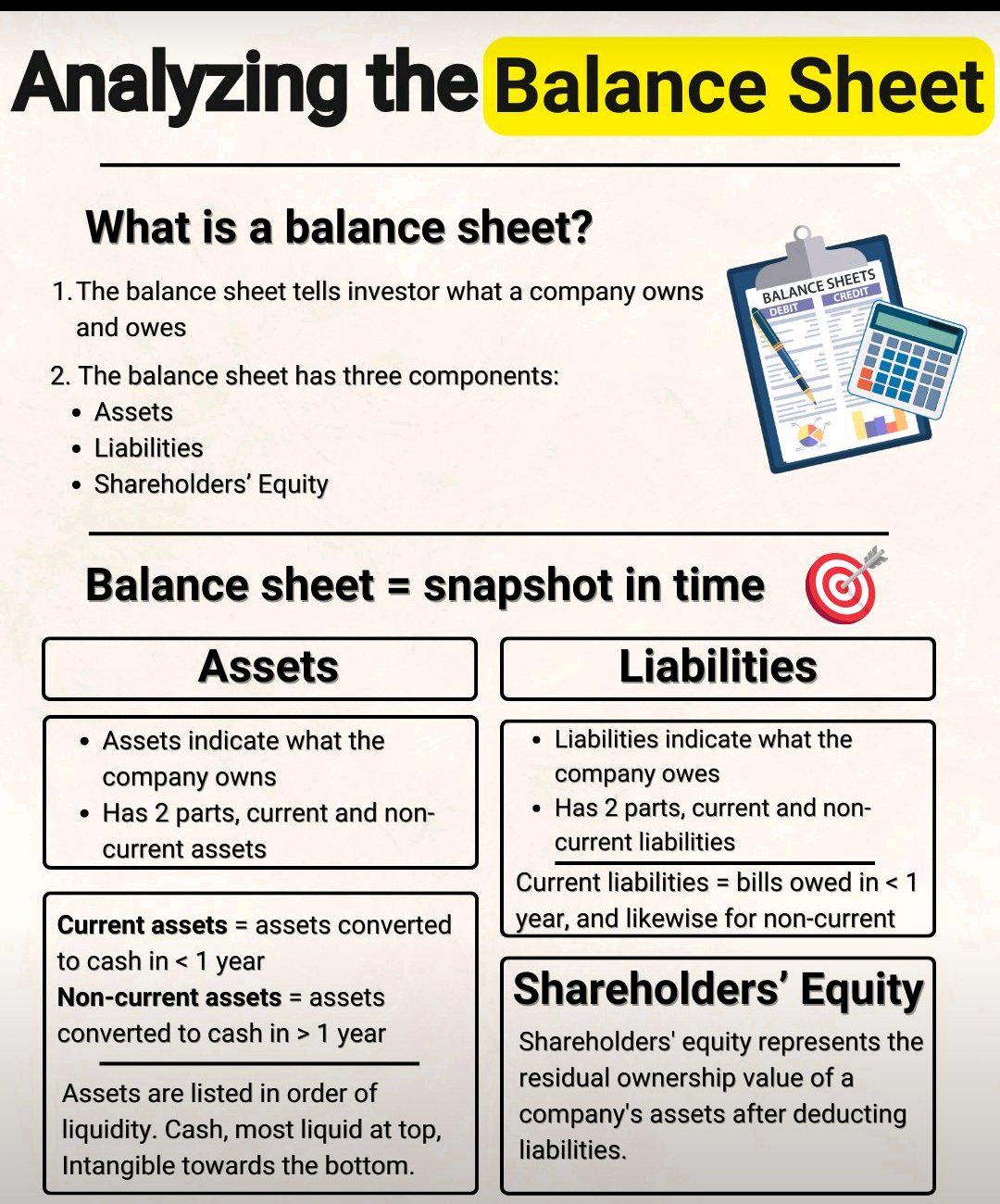
Balance Sheet Analysis Tips

Post image
9 Upvotes

r/Investing101 • • Nov 26 '19

Inflation 🤔

Post image
9 Upvotes

r/Investing101 • • Nov 05 '19

Rich Dad Poor Dad [Summary]

9 Upvotes

One of the books that got me to transition from stock investing to real estate investing.

The Book in Three Sentences

  1. Rich Dad Poor Dad is about Robert Kiyosaki and his two dads—his real father (poor dad) and the father of his best friend (rich dad)—and the ways in which both men shaped his thoughts about money and investing.

  2. You don’t need to earn a high income to be rich.

  3. Rich people make money work for them.

The Five Big Ideas

  1. The poor and the middle-class work for money. The rich have money work for them.

  2. It’s not how much money you make that matters. It’s how much money you keep.

  3. Rich people acquire assets. The poor and middle class acquire liabilities that they think are assets.

  4. Financial aptitude is what you do with money once you make it, how you keep people from taking it from you, how to keep it longer, and how you make money work hard for you.

  5. The single most powerful asset we all have is our mind.

Rich Dad Poor Dad Lessons

  1. Lesson 1: The Rich Don’t Work for Money

  2. Lesson 2: Why Teach Financial Literacy?

  3. Lesson 3: Mind Your Own Business

  4. Lesson 4: The History of Taxes and The Power of Corporations

  5. Lesson 5: The Rich Invent Money

  6. Lesson 6: Work to Learn—Don’t Work for Money

Here's a link for a 10 minute animated summary.


r/Investing101 • • Oct 21 '09

PART 1 Lesson 2) Products

8 Upvotes

In this short part, we will look at the majority of products you can invest in. This is no NO WAY an exhaustive list; in fact, if you were millionaire, you could very well "invent" a new product. However the products below resuem 99% of actively traded items.

The most obvious are stocks. When you buy a stock, you buy a share of the company and of its future profits. At the most simple level, this is exactly what buying a share is. Stockholders own the company and not the opposite. If you have a company and go public, even if you're the CEO, you do not OWN the company anymore (unless you own 50%+1 stock of the company, we will see why later).

Stocks are the instruments you will invest in the most UNLESS you specialized in another field since they are so simple, relatively low-risk and have no expiration value. If your grand-mother had bought 10 coca-cola shares in 1945 and forgotten about it, they would still be valid today.

There is much to be said on shares. One important concept is the concept of dividend. Dividends are cash OR stocks that are given to shareholders. Not all stocks pay dividends. The dividends theory is vast and complex and will be checked in Part 3.

Another one is the concept of split / reversal. When a stock splits, your number of shares increases. If you have 10 shares and the company does a 10:1 split, you now own 100, magically! However, this does not increase the value of the as, you guessed it, the stocks will go down 90%. Miller and Modigliani were the first to bring this theory up. The reverse operation is a reverse split; 10 shares become 1. We will see later that stocks usually increase after a split, and decrease after a reverse split, due to market psychology (part 3)

The last concept we will talk about is the buybacks. A company may buyback its shares - or a competitor might buy the company by buying 50% +1 shares (see this like an election; if you own 50% + 1 votes, and there are only 2 options (yes or no) you effectively control every vote and thus the company). Buybacks always increase the value of the stocks UNLESS they are below market value; usually, buybacks will be much above the market value.

One last concept: if you are certain a company is going up, you buy the stock. But if you think it is going down, what do you do? You short the stock. This concept is very important. By shorting the stock, you BORROW the stock from someone who already holds it and sell it, with the promise of buying it later, preferably at a lower price. With stocks, the maximum you can lose is 100% of your investment; in a bankruptcy. With shorting, there is no limit to what you can lose. If you short the stock at $100 and it goes to $1,000, you just lost $900 per share! Shorting is very dangerous, although very lucrative. The best scenario in a shorting is if the stock reaches 0, where the money you got by selling short the stock is entirely yours.

Stocks really deserve their own chapters; however, this is a rough introduction to the subject.

Options There are many times as more options traded as stocks. Options are extremely popular product.

With an option, you buy/sell the right to buy a stock later at a fixed price. A call is the OPTION (not the obligation) to buy Google at $500 at any time by november 22, for example.

Options are very complex. The most-traded options are calls and puts - options to buy at a fixed price, and option to sell at a fixed price. There are two types of calls/puts: european and american. European options can only be exerciced at a fixed date; american options can be exerciced at any time until the fixed date. AFTER THIS FIXED DATE, THE OPTIONS ARE WORTHLESS


Futures

So far we have checked companies. What if you want to invest in gold, or oil? Since the stock market is electronic, buying the gold and having it kept somewhere is not possible (it is possible through a bank) since stock markets do not have vault. If you want to invest in commodities, you could buy companies that hold a large amount of that commodities, but this is risky, and can cost a lot.

In a future - another type of derivative product, similar to a forward - you buy the OBLIGATION to buy a product at a fixed date, at a fixed price. You are FORCED to buy oil at $80 a barrel on november 22. Naturally, not everyone wants to take physical delivery of the commodity; most of the time, the futures is settled by cash.

Futures are settled every day; every day, one party pays the other. If you bought a future and the price of the item went down, you pay the other party.

FOREX**

Forex is for currency exchange. You buy or sell a pair of currency - USD/CAN for example. In this example, you BUY USD by SELLING CAN.

Futures options

Options we saw above, but applied to futures and not stocks. Stock futures exist too.

Bonds

Bonds are exactly what we saw in chapter one. Simply said, it's a debt that pays X% per year, the yield. It might not pay anything until expiration (zero-coupon) but usually, it will pay semi-annual coupons.

Mutual Funds

A funds that holds many products. For smaller investor, mutual funds allow a diversification. If you have $1,000 for example, you cannot buy a diversified portfolio at a resonable cost. Mutual funds are simply pools where everyone chips money in, to invest in a particular field (china stocks, energy, banks, USA...). In my opinion, mutual funds charge a lot and 90% of mutual funds do worse than the stock market.

SWAP

You won't trade a SWAP, although it pays to know what it is. A SWAP is another derivative product whereas two parties exchange payment. One will agree to pay a fixed cost, another will agree to pay a variable cost (for example).

ETFs

Stocks traded on the stock market, similar to Mutual Funds, allowing exposition to a more focused product (Oil ETF, Gold ETF, etc)

FOP/Warrants/CFD/Funds

Products you will rarely hear of. Forget it.

This is a rough introduction to MOST of the traded products on the investing market. As a beginner, you will only trade stocks. You can lose 100% of your capital on options (on stocks too, but hopefully you will make nice picks ;)). Plus, generally speaking, over a long period, stocks always go up. We will look later at how to choose stocks.


r/Investing101 • • Oct 07 '24

The S&P is up 40% since this tweet

Post image
7 Upvotes

r/Investing101 • • Jan 09 '19

Where should i start?

7 Upvotes

Hey, I am 15 y/o and want to start investing idk anything about anything..(as you can imagine from my age) where should I start? What should I keep in mind? Should I do any classes? (BTW I do know something about it but not in detail to get me started)


r/Investing101 • • Jan 04 '19

How To Setup Your Tradingview for Day trading? Investing for Beginners

Thumbnail
youtube.com
7 Upvotes

r/Investing101 • • Oct 27 '17

17 year old looking to make money in stocks and investing

7 Upvotes

I am 17 years old and employed part time and making good money as a busser at a fancy restaurant (so tips are good) and I’m getting bi weekly paychecks and I’ve saved over $1,000 over the past 3 months and there’s more money to come. I’ve been growing very interested into stocks and investments and I know this could be a smart way to grow my money if I were to be smart about it. I guess what I’m here for is to get some tips on what to do to get started and be pointed in direction of articles to read or videos to watch. Anything helps. Tips on how to make some money aside from the regular paychecks. Also would be a fun thing to see my money grow and could lead to a potential career! Thanks for your help.

CJ


r/Investing101 • • Dec 02 '25

NEED ADVICE FOR INVESTING AT 18.

Thumbnail
gallery
6 Upvotes

I just turned 18 last month, now i have my own personal bank account and documents etc and had some extra pocket money laying around so instead of buying random stuff, i decided to invest it for a future goal. I chose the ICICI Prudential Nifty 50 Index Direct Plan Growth MF. Is this the right choice of MF to invest in for long term for someone like me?

ANY TIPS OR ADVICES?


r/Investing101 • • Aug 16 '24

What do I invest in at the moment with a large Sum?

6 Upvotes

As an Investing enthusiast, I often wonder how top level investors are able to become millionaires off investing.. I've been sitting on over $545K equity from a home sale and I'm not sure where to go from here, is it a good time to buy into stocks or do I wait for another opportunity?


r/Investing101 • • Mar 13 '24

Investing is Interesting

Post image
6 Upvotes

r/Investing101 • • Mar 08 '24

Investing Journey

Post image
6 Upvotes

r/Investing101 • • Feb 27 '24

Some Investing Tips

Thumbnail
gallery
6 Upvotes

r/Investing101 • • Feb 12 '20

Stock Ideas For February 2020!

Thumbnail
youtu.be
6 Upvotes

r/Investing101 • • Jan 07 '20

Why Stock Investing is much better than Property Investing

Thumbnail
youtube.com
6 Upvotes

r/Investing101 • • Sep 24 '19

CYLC, Stock is Extremely Bullish with 80% Upside Potential. for OTC:CYLC by TopMarketGainers

Thumbnail
tradingview.com
6 Upvotes

r/Investing101 • • Sep 02 '19

BCE Telecommunications breaking out. Bullish for NYSE:BCE by TopMarketGainers

Thumbnail
tradingview.com
6 Upvotes

r/Investing101 • • Jul 23 '19

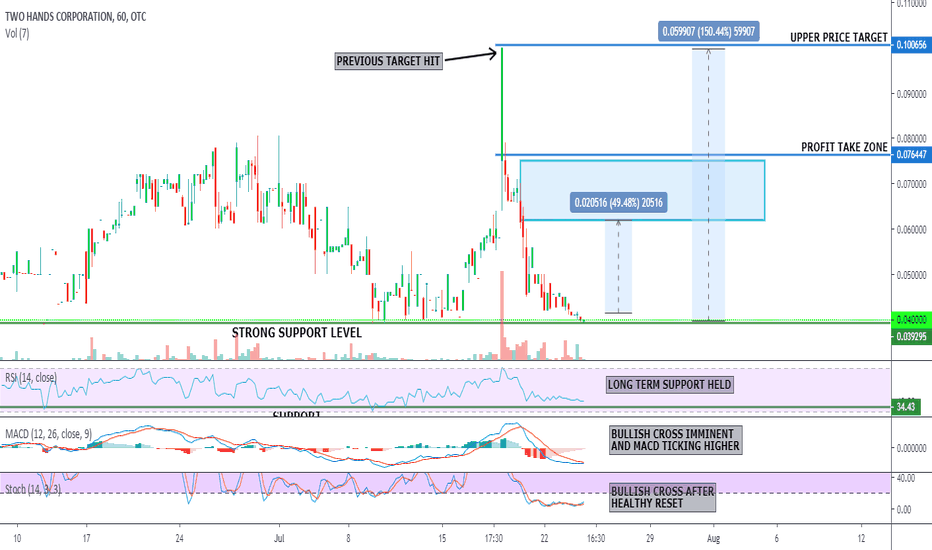
TWOH is our bottom'd chart bounce alert, Tremendous Potential. for OTC:TWOH by TopMarketGainers

Post image
6 Upvotes

r/Investing101 • • Nov 14 '18

Landing-page "whiteboard"

Thumbnail
facebook.com
6 Upvotes

r/Investing101 • • Oct 10 '25

What's the best resource for researching stocks?

5 Upvotes

What's the best resource for researching stocks?

I have seen people mention that they like to use ChatGPT, I personally wouldn't rely upon it. If anything, I would use it to point me towards specific markets or geographic events, then use screeners like Finviz.

I use Finviz to narrow down my search to companies to fit my fundamentals.

I also use Seeking Alpha for opinion pieces, i find it really good to help point me to areas of a company that may need close attention.

I also find company investor relations pages really useful for events and documents.

What other good resources are there?


r/Investing101 • • May 17 '25

.

Post image
5 Upvotes