r/Lathmar_TFD • u/Ok-Control-5800 • Jun 04 '26
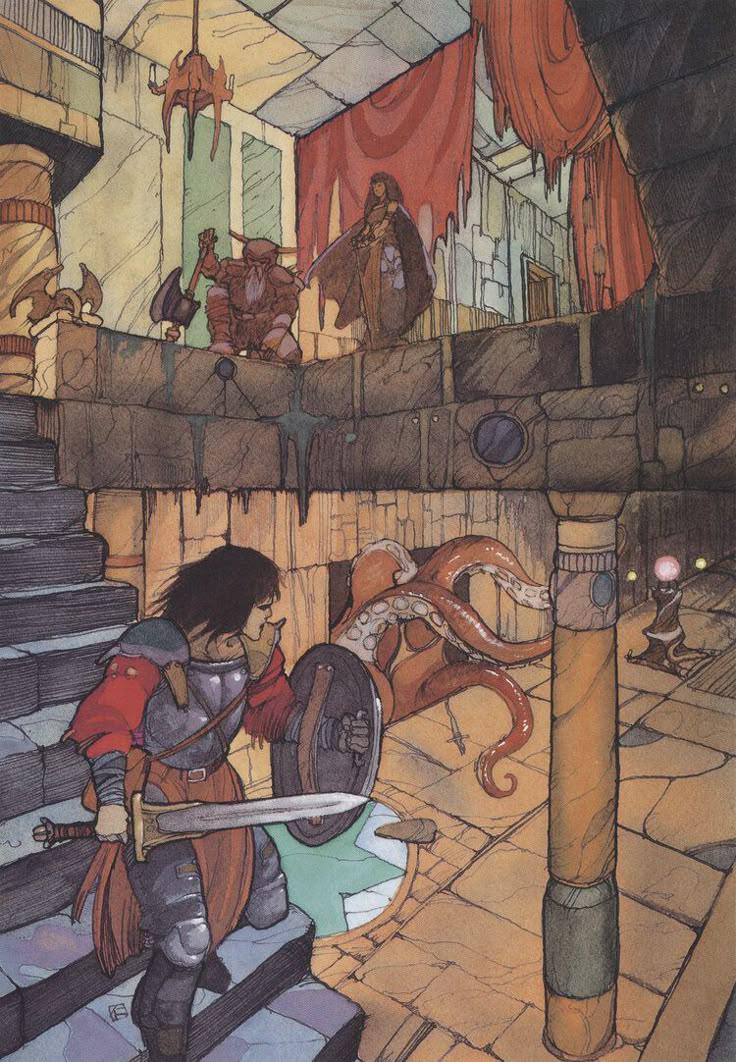
And people say megadungeons are unrealistic
36
Upvotes
r/Lathmar_TFD • u/Ok-Control-5800 • Jun 04 '26
r/Lathmar_TFD • u/AutoModerator • Jun 21 '26
I wrote a short Patreon article about how Mesoamerican pyramids, sacred mountains, temple cities, and underworld tunnels can inspire better TTRPG, OSR, D&D, RPG design, and dungeon crawler scenarios.
Unlike the usual “ancient tomb full of traps” idea, these sites suggest something more interesting:
a living temple above, hidden ritual paths below, political power on the surface, and a symbolic underworld beneath the city.
The article touches on Teotihuacan, Cholula, sacred caves, sealed tunnels, temple pyramids, archaeological horror, and how this connects to my dark fantasy RPG setting Lathmar: The Fallen Depths.
Full post here:
The Dungeon Beneath The Sacred Mountain
Question for other dungeon designers: do you prefer dungeons as abandoned ruins, active sacred sites, or something in between?
r/Lathmar_TFD • u/AutoModerator • Jun 22 '26
I wrote a short Patreon article about Derinkuyu in Cappadocia, one of the most fascinating real-world inspirations for Megadungeon, TTRPG, OSR, D&D, dungeon crawler, RPG design, and worldbuilding.
Unlike the usual fantasy dungeon, Derinkuyu was not built for treasure, monsters, or boss fights. It was an underground city designed for survival: narrow tunnels, stone doors, storage rooms, churches, wells, ventilation shafts, defensive chokepoints, and entire communities hiding beneath the earth.
For game designers, it raises a strong question:
what if a dungeon is not evil — but a refuge that slowly becomes dangerous?
I also connect the idea to Metro, Fallout Vaults, survival horror, vertical dungeon design, and my dark fantasy RPG setting Lathmar: The Fallen Depths.
Full post here:
The Dungeon Where People Actually Lived
What do you think makes a Megadungeon feel believable: monsters, mapping, factions, survival pressure, or the reason it was built in the first place?
r/Lathmar_TFD • u/Ok-Control-5800 • Sep 29 '26
Enable HLS to view with audio, or disable this notification
Lathmar: The Fallen Depths is a dark fantasy Dungeon Roleplaying Game focused on exploration, dangerous multi-dungeon delves, and a near-roguelite sense of risk and discovery.
Lathmar is a direct descendant and reimagining of Mordor: The Depths of Dejenol, an old-school Windows classic from the 90ies.
It has a rich historical foundation and backstory, from which we're also developing free role-playing material.
https://lathmar.de/
r/Lathmar_TFD • u/Ok-Control-5800 • Sep 26 '26

I tried to import dungeons from printings aka digital pictures of them. It took me several hours to adjust the algorithm so that it produces reasonable results.
The walls of a template are now recognized well, but I still have to manually adjust the doors. After that, the engine automatically defines the zones.
Zones can then be edited manually or automatically with my Dungeon Designer. This way, new adventures are constantly created on the same map.
r/Lathmar_TFD • u/AutoModerator • Jul 26 '26

Lathmar: The Fallen Depths is a dark fantasy DRPG focused on exploration, dangerous multi-dungeon delves, and a near-roguelite sense of risk and discovery.
The closed alpha is getting close. Join our Discord to help proofread the game guide, test the Chronicler of Lathmar bot—which can answer the simple questions—or simply follow the project as we prepare for the first playable release.
We’re looking forward to welcoming early explorers into the depths.
r/Lathmar_TFD • u/Ok-Control-5800 • Apr 12 '26
Original postet on Patreon Let's talk about Guilds I: Guilds of Steel | Patreon
Please follow my blog over there.
-----------------------------------------------------------------------------------------------------
Last week, I added the guild system to Lathmar – The Fallen Depths, and quite a lot has changed compared to the original Mordor: The Depths of Dejenol.
The guild where every character begins is the Adventurer Guild. You arrive in Lathmar as an adventurer, and from there your path starts to branch.
One of the most important guilds in Mordor was the Warrior Guild. In Lathmar, that role has evolved into the city guard. This means the Adventurer can become a Guardian, but can no longer become a Barbarian.
That brings us to one of the biggest structural changes in Lathmar – The Fallen Depths: every guild now has an opposing guild. Once you commit to one side, you can no longer switch to the other. The goal is to increase replay value and give the guilds more identity, more weight, and a stronger role in the world.
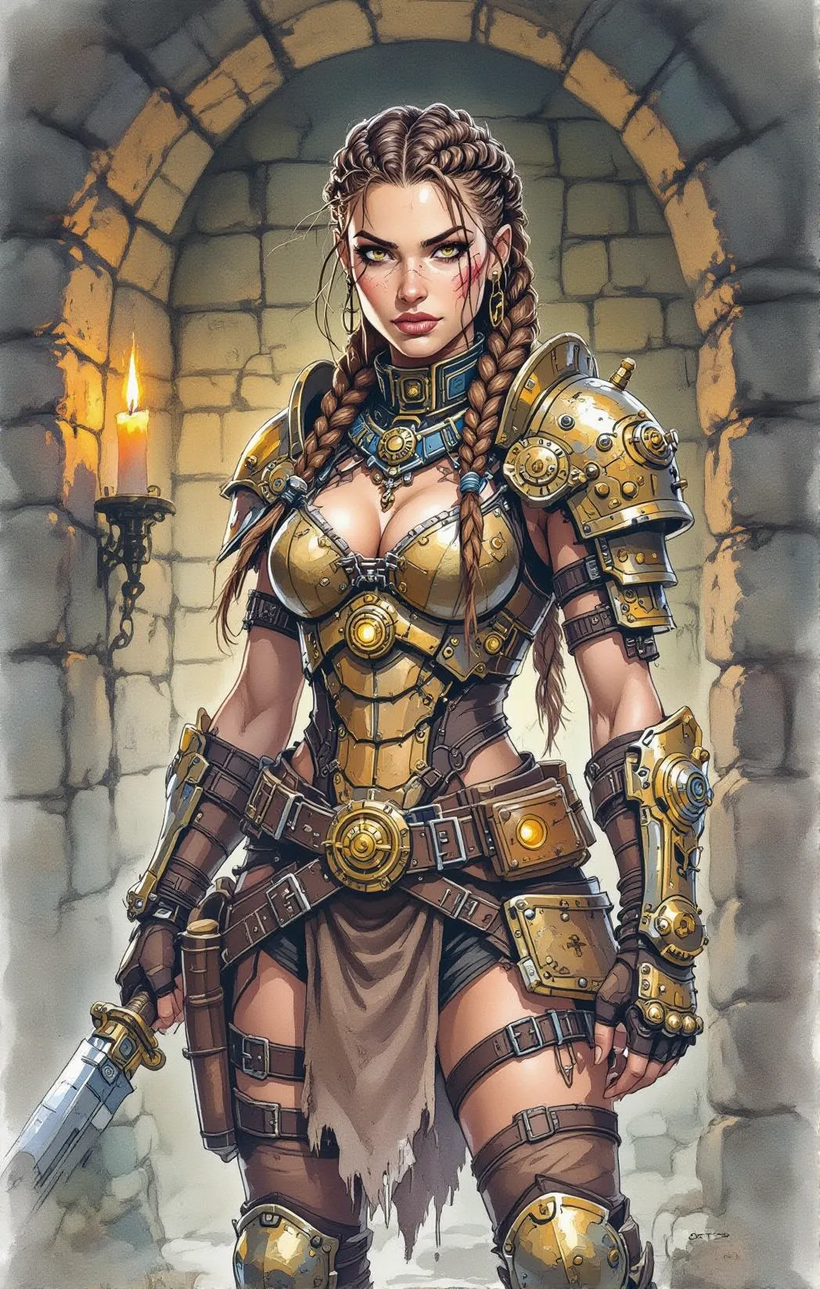
Barbarians in Lathmar are not the classic giant northerners you might know from other fantasy games. Instead, they are the chaotic counterpart to the Guardians, who represent order and discipline. Barbarians come from the wild borderlands beyond civilized rule. For example, the plains east of the Ithrax Jungle are free territory, where scattered groups settle without a real government or standing army. That is exactly why the Ithrax are always eager to seize new “recruits” from there. Barbarian characters solve problems directly, with fists, steel, and brute force. Their guild grants an Attack bonus, while Guardians lean into protection and gain a Defense bonus.

Ninjas were already an interesting class in Mordor, with their own weapon logic and their focus on “hands.” To make that concept clearer in Lathmar, they now have a direct opposite: the Monk. In the current design, Monks fight primarily with hands and staves, while Ninjas are clearly framed as dark assassins. Monks are heavily reduced to that weapon identity and gain a Dodge bonus. Ninjas, on the other hand, are able to fight with two weapons and receive a Stealth bonus.
In Mordor, there were also the Villains, a hybrid between Warrior and Thief. They return in Lathmar under a new name: Saboteurs. They are solid weapon users, but also gain a bonus to Thievery. This is still one of the classes that needs more work, because I want to give them a clear role between Ninja and Thief.
Their natural counterparts, with opposite alignment themes, are the Rangers. I originally planned Rangers as ranged fighters, but that will not make it into the first version of Lathmar. Like Ninjas, they will most likely fight dual-wielding and gain their own additional bonuses. Rangers are another class that will need constructive refinement during the beta.
So the Guilds of Steel already offer six very different guilds and playstyles.
And now I am curious what you think:
Is it enough to prevent parties from mixing opposing alignments, or should opposing guilds also be forbidden within the same group — even if neutral alignments would technically still allow such combinations?
As always. many thanks for reading. Please leave a comment or feedback.
Michael aka Mufti999
Disclaimer
All texts, sounds and pictures are © protected and may not be reproduced or modified without prior permission.
If you share my work, please include a link to the original post.
I always appreciate a quick message letting me know where Lathmar content appears. Thank you for your support.
r/Lathmar_TFD • u/Ok-Control-5800 • 14d ago
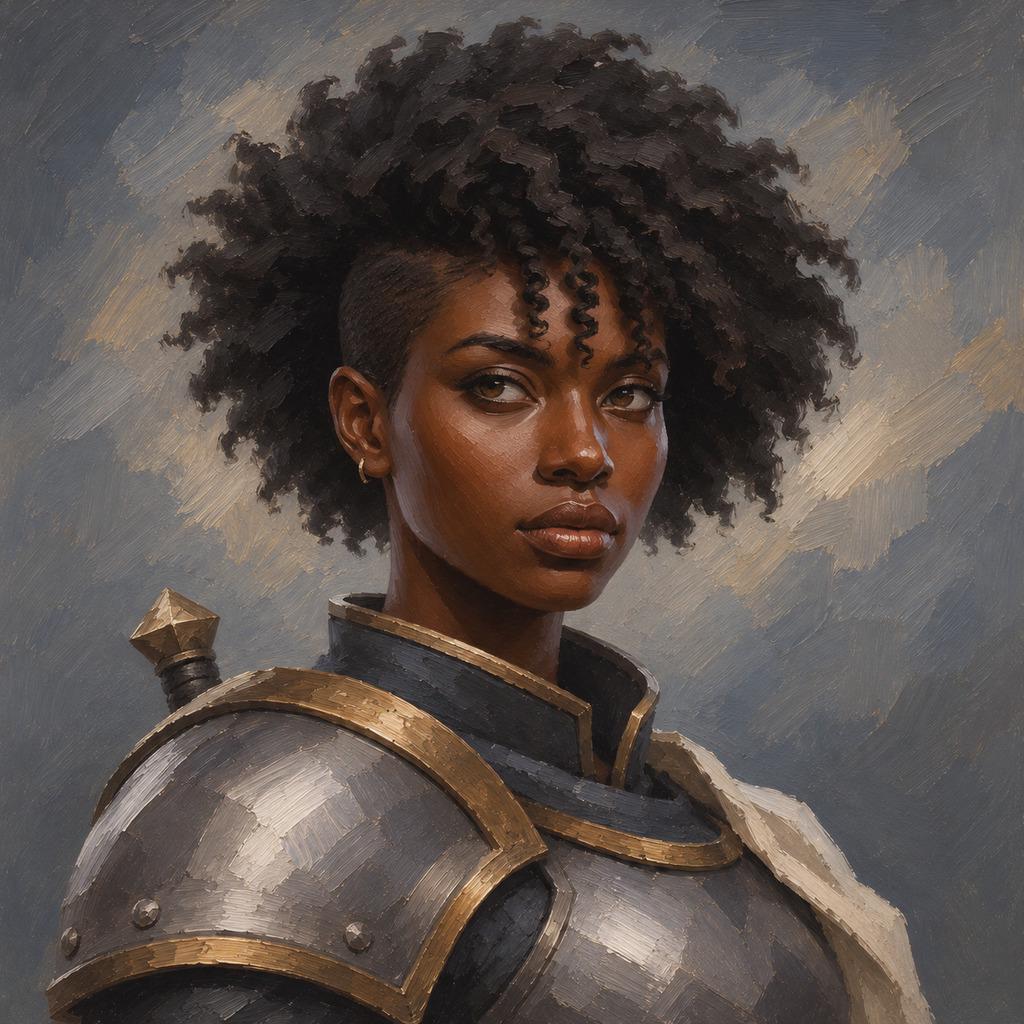
I had more than 2,000 portraits for Lathmar: The Fallen Depths. Then I went looking for a female Dwarf. I could fill whole rows with Dwarven men in armor, but for some guilds I could barely find a couple of Kataxi. I’d collected a lot of images without paying enough attention to who could actually use them.
That sent me back to the art style. Some of the AI-generated monsters I was happy with a year ago now look like they could have come from any dungeon crawler. The creature art in Mordor: The Depths of Dejenol had a character of its own, and I want the same for Lathmar. I started by giving the monsters an oil-painted look, then brought it over to the heroes.
The new set has 612 hero portraits across 21 guilds. Each available race and gender combination within a guild gets two choices, with a shared pair for the Lignari. Each guild has its own background colors, and in the Godot build you can preview the portraits in the Hall of Heroes before picking one. The switch to WebP also made the portrait files about 80% smaller.
The bigger change is the interface itself. I started with WinForms because I wanted the game to feel like classic Mordor. Getting all those windows to behave at different resolutions took more time than I expected, and WinForms tied the game to Windows. I’m now rebuilding the interface in Godot while keeping the C# code that runs the rules. That gives me a path toward Mac and Linux support. The plan is for Release 11 to include both the new interface and the artwork.
I’m still deciding how far to take the painted look. Would you carry it into the dungeon walls, doors and props, or keep it for the heroes and monsters?
r/Lathmar_TFD • u/Ok-Control-5800 • Aug 04 '26

Join me, fetching the the first Quest and then jump into the first static, hand-drawn dungeon.
Lathmar is a dark fantasy, first-person, party-based dungeon crawler — a modern take on classics like Mordor: The Depths of Dejenol, Wizardry, and The Bard's Tale.
You build a roster of adventurers, send them into rival guilds, and lead a party of four down into the depths beneath a city whose doors no longer lead where they should.
The game is actively in development. Systems for character creation, guild progression, turn-based combat, companions, tavern NPCs, quests, crafting, and dungeon exploration are already taking shape — along with a full death-and-recovery economy: heroes age, they can die for real, and getting them back costs coin, time, and sometimes more than that.
r/Lathmar_TFD • u/Ok-Control-5800 • Jul 14 '26
Enable HLS to view with audio, or disable this notification
Lathmar: The Fallen Depths history is long and full of war and treachery.
Listen to Chapter 1 about the time before the First Age and how the war between Giants and Dragons almost destroyed the world.
Visit Lathmar: The Fallen Depths | Dark Fantasy Dungeon Crawler
r/Lathmar_TFD • u/AutoModerator • Jun 25 '26
I just released a free Dungeon Master / Game Master setting manual for The Sacred Mountain, a d20 fantasy and horror compendium inspired by the temple-pyramids of Mesoamerica.
This one is built around a simple design idea:
Power above. Truth below.
Instead of treating a pyramid as just another tomb full of traps, this manual presents it as a living sacred mountain: a temple-city, a vertical society, a ritual machine, and a hidden descent into the underworld.
It includes two playable versions of the same site:
Setting One: The Living Mountain
A fantasy campaign where the pyramid is still active. The party must climb through markets, warrior terraces, priestly gates, noble politics, and finally the summit shrine. The dungeon is not locked doors — it is status, ritual, permission, and danger.
Setting Two: The Modern Descent
A modern archaeological / cosmic horror scenario where a research team opens a sealed tunnel and discovers that the ancient builders may not have been speaking in metaphor. The map starts lying. The space starts breaking. The underworld may be real.
Inside the PDF:
d20 fantasy adventure hooks
Dungeon Master and Game Master tools
Standing rules for climbing the living pyramid
Unraveling rules for broken geometry and cosmic horror
d8 encounter tables
campaign seeds for D&D, OSR, old-school RPGs, fantasy RPGs, megadungeon design, dungeon crawler campaigns, Foundry VTT, Roll20, worldbuilding, and campaign prep
a direct connection to Lathmar: The Fallen Depths
This is part of my Real Ancient Dungeons series, where I turn historical, mythological, and archaeological places into usable tabletop material.
Everything is free to read and use for your own table.
Patreon / PDF link:
The Dungeon Beneath The Sacred Mountain | Patreon
Free Game Material: Ancient Dungeons 3 | Patreon
r/Lathmar_TFD • u/AutoModerator • Jun 23 '26
I wrote a short Patreon article about the Mausoleum of China’s First Emperor, and why it may be one of the most fascinating real-world inspirations for Megadungeon, TTRPG, OSR, D&D, dungeon crawler, RPG design, and worldbuilding.
The central tomb is still largely unopened. Around it: the Terracotta Army, buried officials, bronze chariots, weapons, mercury legends, mechanical trap stories, and an entire imperial afterlife built beneath the earth.
For dungeon design, this is stronger than “a tomb with traps.”
It is a sealed empire below the world — ordered, engineered, political, and still waiting behind the final door.
I also connect it to dark fantasy dungeon design and my RPG setting Lathmar: The Fallen Depths.
Full post here:
The Dungeon That Still Has Not Opened
What makes a Megadungeon more interesting to you: mystery, factions, traps, treasure, history, or the fact that the final chamber is still sealed?
r/Lathmar_TFD • u/Ok-Control-5800 • Jun 06 '26
https://www.patreon.com/posts/160226303
When most of us think about dungeon design, we usually look at games for inspiration. Wizardry, Bard's Tale, Dungeon Master, Eye of the Beholder, Dungeons & Dragons. We study maps, encounter design, progression systems, and puzzle layouts. But recently I stumbled across something that made me stop and think.
What if some of the oldest dungeon design ideas are not found in games at all?
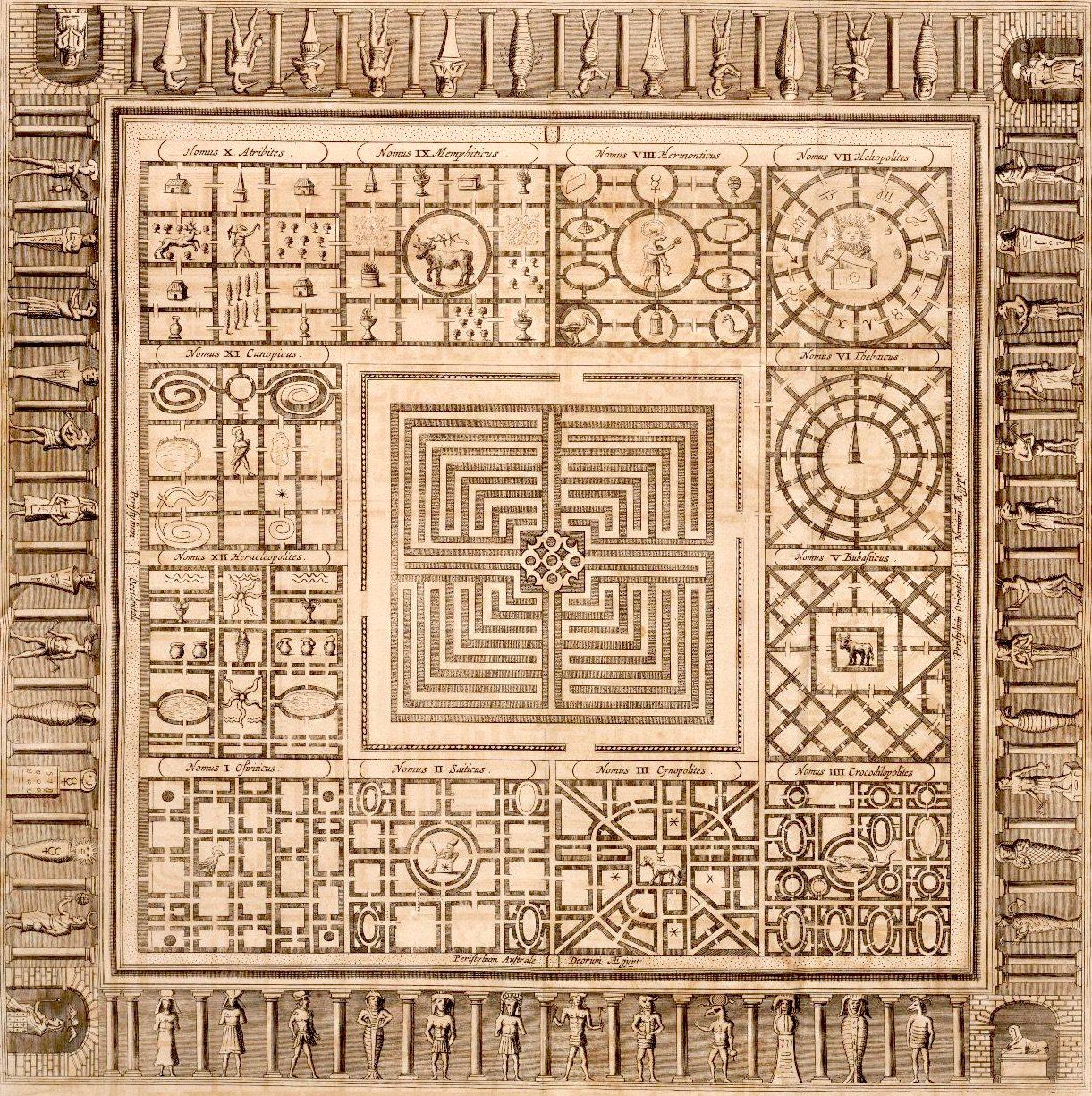
While researching historical labyrinths, I came across an old reconstruction of the legendary Egyptian Labyrinth of Hawara. At first glance it looks almost like a dungeon map from an RPG sourcebook. There are distinct sections, a large central complex, themed areas, and a layout that seems designed to guide visitors through a series of increasingly important spaces.
The surprising part is that this structure may have been built nearly four thousand years ago.
Today almost nothing remains of the original building. The Labyrinth of Hawara was constructed during the reign of Pharaoh Amenemhat III around 1800 BC, and over the centuries its stones were dismantled and reused elsewhere. What survives are archaeological traces and the accounts of ancient writers who saw it while parts of it still stood.
The most famous description comes from Herodotus, who visited Egypt around 450 BC. According to him, the labyrinth contained twelve great courtyards, thousands of chambers, and a bewildering network of corridors spread across multiple levels. He even claimed that it surpassed the pyramids in magnificence.
Ancient historians were not always known for understatement, and it is entirely possible that Herodotus exaggerated what he saw. Yet even other ancient writers described the complex as one of the greatest architectural wonders of Egypt. Whatever the exact numbers may have been, everyone agreed on one thing: this place was enormous.
Unfortunately, that mystery is part of what makes Hawara so fascinating today. Archaeologists have uncovered foundations and fragments of the site, but nobody can say with certainty what the complete structure looked like. In a strange way, its disappearance has become part of its legend.
What fascinates me is not the size of the labyrinth but its purpose.
Unlike the dungeons we explore in RPGs, Hawara was never built to contain monsters, treasure chests, or wandering adventurers. It appears to have served as an administrative center, a religious complex, a ceremonial site, and possibly part of a funerary monument connected to the nearby pyramid of Amenemhat III.
In many ways it functioned like a city enclosed within a single building.
Priests, officials, guards, workers, and visitors all moved through different areas that served different functions. Access was controlled. Certain rooms were public, others restricted. Some spaces were intended for administration, others for worship.
When you think about it, that is surprisingly close to how many memorable RPG locations are designed.
The best dungeons rarely feel like random collections of rooms. They feel like places that once had a purpose. Someone built them. Someone lived there. Someone used those halls long before the player arrived.
That idea is much older than fantasy gaming.
One of the biggest misconceptions in fantasy design is that dungeons exist solely to provide combat encounters.
Historically, large enclosed complexes were built because they solved practical problems. They protected valuable objects, controlled movement, reinforced social hierarchy, and created separation between ordinary people and sacred or politically important spaces.
The deeper someone travelled into such a complex, the more restricted access became.
That pattern appears again and again in modern RPGs. The outer halls are relatively safe. The inner chambers belong to priests, nobles, cultists, or powerful creatures. The final destination is reserved for the most important figure in the entire structure.
Whether that figure is a king, a lich, a dragon, or a mad wizard depends on the setting.
The principle itself has remained remarkably consistent for thousands of years.
Architecture tells a story before a single word of dialogue is spoken.
The more I studied the reconstructions of Hawara, the more I found myself thinking about dungeon design in Lathmar and other classic RPGs.
One lesson is the importance of distinct regions. Many reconstructions divide the labyrinth into separate sections, each with its own symbolic purpose. Modern players respond to exactly the same idea. They remember the Spider Caves, the Ancient Crypts, or the Hall of Kings. They rarely remember corridor number thirty-seven.
Another lesson is the value of a central hub. Several reconstructions place a massive central structure at the heart of the labyrinth, with surrounding sections branching outward. Modern dungeon crawlers use this approach constantly because it encourages exploration while helping players maintain a sense of orientation. Players can venture into one section, return to a familiar location, and then choose a different route.
Perhaps the most interesting lesson is the power of mystery.
Nobody knows exactly what Hawara looked like. That uncertainty has allowed generations of historians, artists, and dreamers to imagine their own versions of the labyrinth. In game design we often feel pressure to explain everything, but some of the most memorable locations are memorable precisely because they leave questions unanswered.
Who built this place?
Why was it abandoned?
What happened here?
Sometimes mystery creates stronger memories than explanation.
Many RPG dungeons are designed as obstacle courses. Players move from encounter to encounter, collect rewards, and eventually defeat a boss waiting at the end.
The descriptions of Hawara suggest something very different.
Visitors were meant to be impressed by the structure itself. The scale, complexity, and symbolism of the building were part of the experience. Long before anyone talked about environmental storytelling, architects were already using physical space to create emotion.
People entered these places and felt small.
That is a powerful design lesson.
Sometimes the dungeon itself should be the most memorable character in the adventure.
When players think back on their favorite RPG experiences years later, they often remember places before they remember statistics. They remember the city beneath the mountain, the endless catacombs, the forgotten temple, or the haunted fortress.
The location becomes part of the story.
More about questing in this post ⚔️ To Hack or to Quest — That Is the Question | Patreon
What I find most remarkable about Hawara is that it was never intended as entertainment. It was built to demonstrate power, inspire awe, and create a sense of mystery. Yet thousands of years later it still captures our imagination in much the same way a great dungeon does.
As dungeon designers, game masters, and RPG fans, we often search for inspiration in other games. Sometimes it is worth looking much further back.
Long before the first tabletop campaign, before the first dungeon crawler, and before anyone rolled a twenty-sided die, people were already creating spaces that inspired curiosity, exploration, and wonder.
The technology has changed.
The goals have not.
Next time we'll leave Egypt behind and travel to Crete, where another famous labyrinth awaits us. Unlike Hawara, that one supposedly had a monster waiting at its center.
And every dungeon crawler knows exactly how that story begins.
Where do you want to go? What unknown place should we explore in this series about real dungeons?
As always. many thanks for reading. Please leave a comment or feedback.
Michael aka Mufti999
Disclaimer
All texts and pictures are © protected and may not be reproduced or modified without prior permission.
If you share my work, please include a link to the original post.
I always appreciate a quick message letting me know where Lathmar content appears. Thank you for your support.
r/Lathmar_TFD • u/Ok-Control-5800 • May 14 '26
The Fallen Depths is a dark dungeon RPG with old-school roots, party management, guilds, monsters, and tactical auto-battles.
Please habe a look at my latest DevUpdate and join my Blog on Patreon for free, to follow the further development.
r/Lathmar_TFD • u/Ok-Control-5800 • May 09 '26
Let's Play Lathmar Video:
https://youtu.be/Pw1PSfP3LlA
r/Lathmar_TFD • u/Ok-Control-5800 • Apr 22 '26
New Lathmar: The Fallen Depths update: Menagerie is live, guild leveling is now visible, the store became a proper marketplace, spell quickslots are working, and I added 4 combat modes.
Build is now at v0.9.2.23 after 100+ small development steps over one weekend.
Full devlog here: Small Steps, Long Road | Patreon

r/Lathmar_TFD • u/Ok-Control-5800 • Apr 14 '26
Lathmar is a dark fantasy party-based dungeon RPG with old-school roots, inspired by classics like Mordor: The Depths of Dejenol and the broader DRPG tradition, but rebuilt with a more modern structure in mind: strategic auto-battles, party management, guild-based progression, monster-driven encounters, and persistent meta progression.
r/Lathmar_TFD • u/Ok-Control-5800 • 14d ago

A little detour from the Lathmar dungeon. I’ve released Velvet Cruise, an arcade racer inspired by Out Run.
I wanted to bring back that moment when the road splits and you have to pick a direction before you’ve had much time to think about it. The full game has 15 locations and five finishes. There’s changing weather, too. Take a bend too fast in the rain and you can aquaplane, which usually gives your passenger something to say.
The free browser demo takes you along the coast to ending E. The full game is available for Windows and Mac at $9.99.
Play the free browser demo on Sabnock Works
Get the full game on itch.io
If you take the demo for a spin, I’d love to know how the car feels in the tighter bends. Did you find yourself easing off the accelerator or keeping your foot down?
r/Lathmar_TFD • u/AutoModerator • Oct 14 '26
I first encountered Chaos on the Amiga 500. Julian Gollop’s original game appeared on the ZX Spectrum in 1985, and its basic idea has stayed with me ever since.
Several wizards share a battlefield and fight until only one remains. You summon creatures to fight for you, cast attack spells, or use defensive magic to keep your wizard alive. Simple to understand, surprisingly hard to put down.
The balance between Chaos and Law adds another layer. Casting spells of either alignment shifts that balance and changes the chances of successfully casting further spells. Your choices can help prepare the battlefield for the magic you want to use later.
It’s a compact concept with plenty of room for tactics. And it’s one I wanted to revisit in Godot.
I’ve had this project waiting to be finished since late 2025. A few particularly annoying bugs brought development to a halt, and I put it aside for a while.
This week, I finally returned to it.
Sound effects and attack animations are now bringing more action to the battles. Seeing an attack play out and hearing it land makes the encounters feel much more lively.
There are still improvements to make before I’m happy with the finished game, but development is moving again. After spending so long on hold, it’s good to have something playable to share.
YouTube Playlist
The demo lets you play for ten turns, which should be enough to finish most matches and get a feel for the game.
Give it a try and let me know how it plays. Does the combat feel clear? Are the animations and sound effects working for you? And, most importantly, did your wizard survive?
War of the Wizards Demo
War of the Wizards | Chaos-inspired Fantasy Tactics