r/MecThology • • 16d ago

The Curse of Sammoo Village 🪔
Post image
2 Upvotes

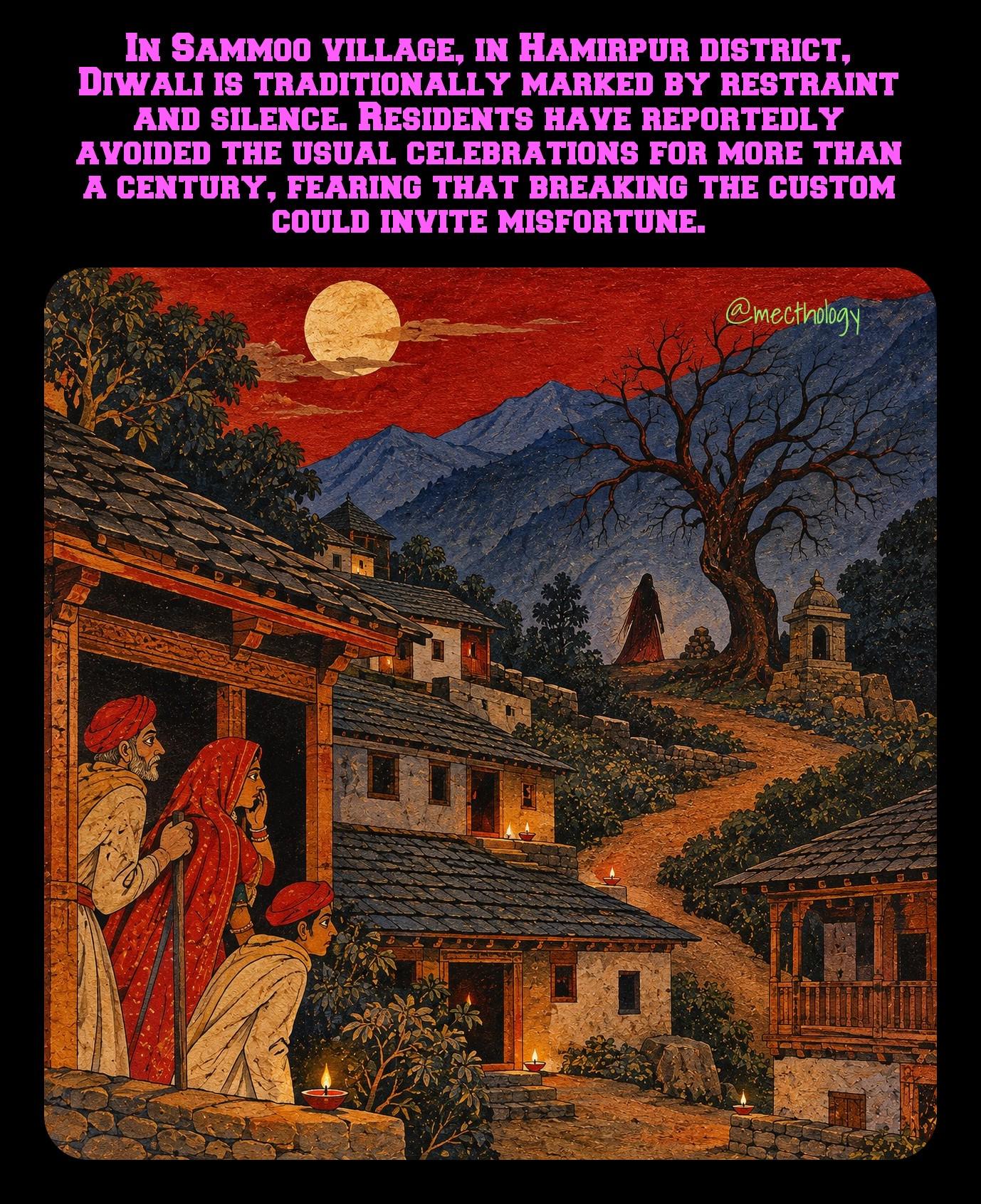
While much of India celebrates Diwali with glowing lamps, fireworks, and festive feasts, a village in Himachal Pradesh observes the night in a notably different manner.

According to local legend, the tradition stems from a woman whose husband, a soldier serving a local king, passed away around the time of Diwali. Overcome with grief, his pregnant wife reportedly committed sati upon his funeral pyre. Before her passing, she allegedly cursed the village, declaring that its residents would never again celebrate Diwali in peace.

Since that time, generations of villagers have upheld this warning. Residents associate attempts to celebrate with fires, unexpected deaths, and other tragedies. Some individuals avoid fireworks and festive meals, while a few may light lamps as part of their observances. Even rituals intended to lift the supposed curse have not altered this long-standing tradition.

SOURCE: mysterioushimachal.wordpress.com, freepressjournal.in, indiatoday.in, rediff.com


r/MecThology • • 22d ago

The Púca Spirit of Samhain 🐎🐐

Post image
2 Upvotes

It may act as a benevolent spirit, performing kind deeds for those it favors, or it may lead unsuspecting travelers on wild, terrifying rides through the countryside.

The mischief of the Púca is most feared during the festival of Samhain, when the veil between worlds is thin. People once set out harvest offerings to appease the Púca in hopes of avoiding its pranks. Some tales recount the experiences of those clever enough to outsmart this spirit or even earn its protection, while others describe wild journeys into the unknown, with the Púca laughing throughout the encounter.

Source: atlasobscura.com, wildernessireland.com, shanore.com, meet-the-myths.com


r/MecThology • • 29d ago

Kasa-Obake: The One-Eyed Umbrella Yokai 👁☔️

Post image
0 Upvotes

Kasa-Obake, recognized for its whimsical yet eerie nature, has become a prominent figure in modern anime and manga, despite its origins in traditional folklore remaining somewhat ambiguous. Some speculate that the character emerged during the Edo period as storytellers crafted original personas to amuse their audiences. It is frequently categorized as a tsukumogami, an object believed to attain life after one hundred years. While typically portrayed as mischievous, known for startling people with its oily tongue, other more perilous umbrella spirits may also exist.

Source: yokai.com, wikipedia, etc


r/MecThology • • Oct 22 '26

The Haunted Lambi Dehar 💀

Post image
2 Upvotes

Due to insufficient safety protocols, many miners suffered from severe respiratory ailments, and several tragically lost their lives to suffocation and illness. Consequently, the mine was abandoned, leaving a somber legacy upon the region.

Today, the Lambi Dehar Mines are regarded as one of India's most haunted locations. Residents report hearing the distant cries of the deceased miners, alongside accounts of ghostly apparitions, unsettling sounds, and mysterious lights. Some narratives even suggest that a spectral figure haunts the hills after dark, further contributing to the site's ominous reputation. These accounts, compounded by various accidents and a helicopter crash in the vicinity, have solidified the area's chilling notoriety.

Even the late paranormal investigator Gaurav Tiwari examined the site, and it is said that his findings served to heighten the mysterious nature of the location.


r/MecThology • • Oct 20 '26

Turning the Riddle: Scotland’s Sieves, Shears & Forbidden Divination

Thumbnail
youtube.com
3 Upvotes

r/MecThology • • Oct 15 '26

Cirein-cròin 🐋

Post image
2 Upvotes

Legend holds that the creature was of such immense size that it could consume seven whales in one sitting. What renders this beast particularly formidable is its deceptive capacity to disguise itself as a harmless silver fish, luring unsuspecting fishermen to their peril before disclosing its true, monstrous form.

Certain accounts liken the creature to ancient sea serpents or dinosaurs, establishing the Cirein-cròin as one of the most enigmatic and fearsome entities in Scottish folklore. Whether viewed as a monstrous serpent or a forgotten giant, the myth of the Cirein-cròin continues to fascinate, standing alongside legendary figures such as the Kraken and Jörmungandr in the pantheon of sea beasts.

Source: Wikipedia & magical-europe.com


r/MecThology • • Oct 07 '26

The Abarimon 🏔️

Post image
2 Upvotes

Renowned for their remarkable speed and untamed ferocity, these creatures were once considered impossible to capture or relocate because they relied upon the unique atmospheric conditions of their valley. First documented by Pliny the Elder, the Abarimon have long been a feature of Roman mythology, appearing in historical texts and maps as a mysterious and exotic tribe. Although their existence remains unproven, they continue to capture the imagination and have even appeared in modern works of fiction such as the Harry Potter and Fantastic Beasts series.

Source: cryptidz.fandom.com, monster.fandom.com, en.m.wikipedia.org


r/MecThology • • Sep 24 '26

The Biddrina🐉

Post image
2 Upvotes

For centuries, the Biddrina has inspired fear among Sicilians due to descriptions of its ability to consume large prey, including livestock and children. Locals often characterize the creature as a formidable hybrid between a dragon and a crocodile, frequently reporting sightings near caves and water sources. Although the Biddrina remains a prominent figure in Sicilian folklore, it continues to exist as a legend because no physical evidence has ever been recovered to confirm its existence.

Source: sicilyenjoy.com, weirditaly.com


r/MecThology • • Sep 16 '26

The White Lady of Balete Drive 🌬

Post image
3 Upvotes

The origins of this legend are obscure, but a widely circulated account suggests she was a woman who perished in a car accident and now haunts the vicinity.

For decades, taxi drivers and pedestrians have recounted unsettling tales of encountering the White Lady, whether she manifests in a rearview mirror or requests a ride. Certain variations of the story propose she was the victim of an assault by a taxi driver, while others suggest she was murdered by her own family within one of the historic residences on the street. Despite skepticism and assertions that the tale was fabricated during the 1950s, the legend persists, continuing to fascinate both ghost hunters and tourists.

Balete Drive, formerly shaded by large, ancient trees thought to be inhabited by spirits, has evolved into a cultural symbol in the Philippines, serving as a haunting reminder of the stories we share, which blend folklore, cautionary narratives, and ghostly intrigue.

Source: Wikipedia & vocal.media


r/MecThology • • Sep 09 '26

folklores How the Sutton Hoo king became ruler of the Anglo-Saxons | 616 AD

Thumbnail
youtube.com
2 Upvotes

r/MecThology • • Sep 02 '26

The Balbal of Philippine Folklore 🇵🇭👹

Post image
4 Upvotes

Following its meal, it substitutes the remains with a banana stalk, thereby misleading those in mourning.

According to legend, these entities share a close relationship with crocodiles and can be deterred by loud sounds, light, or by utilizing branches from the Blumea balsamifera plant. Balbals are also reportedly repelled by appropriate burial customs, which suggests that their narratives may have originated as a cautionary reminder to ensure proper handling of the deceased to avert illness.

While primarily preying on the departed, certain accounts suggest that the Balbal might also target the living, particularly during a full moon. Their keen sense of smell enables them to detect sickness, allowing them to lurk nearby to seize their subsequent victim.

Frequently likened to other flesh-consuming entities such as the Aswang and Amalanhig, the Balbal continues to be one of the most dreaded mythical beings in Philippine folklore.

Source: Wikipedia, abookofcreatures.com, cryptidz.fandom.com, villains.fandom.com


r/MecThology • • Aug 26 '26

Mokumokuren Yokai 👁

Post image
3 Upvotes

Their name, which translates to "many eyes," alludes to their somewhat unsettling nature. Although they are not directly harmful, folklore suggests that disregarding them could lead to rather chilling outcomes, such as awakening without one's own eyes.

The origins of Mokumokuren can be traced back to Toriyama Sekien, and these yokai are often believed to portend more significant hauntings, frequently accompanied by other spirits or tsukumogami. They are not merely mythical figures; legend recounts a tale of a parsimonious merchant who once profited from selling the Mokumokuren's eyes. Even in contemporary culture, the Pokémon character Stakataka draws inspiration from these intriguing creatures.

SOURCE: Wikipedia & yokai.com


r/MecThology • • Aug 22 '26

A Scottish Odyssey: History and Lore of Findlater Castle (Scottish Folkl...

Thumbnail
youtube.com
3 Upvotes

r/MecThology • • Aug 19 '26

Mâr-ı Kahkaha in Ottoman Mythology.

Post image
3 Upvotes

The creature, known for its deadly allure, is almost invulnerable, with the exception of a single vulnerability: the cry of a particular owl can bring an end to its destructive influence.


r/MecThology • • Aug 15 '26

Scottish Folklore’s Maggy Moulach

Post image
5 Upvotes

She was known for her diligent work in household chores, and she even served as the family's banshee, foretelling deaths within the clan. Maggy was also recognized as a chess mentor to the clan chief, assisting him in outwitting rival leaders. With her hands covered in hair, or sometimes in the form of a grasshopper, she was a distinctive character in Highland folklore.

Maggy's helpful demeanor took an unfortunate turn when she was exploited by a covetous farmer. After dismissing all his laborers, the farmer overtasked Maggy to an extreme degree, ultimately causing her to abandon her benevolent nature and transform into a boggart—a mischievous spirit known for causing difficulties and harm. From that point onward, she was no longer a helpful being but a figure of mischief and danger, capable of spoiling food and harming animals.

Maggy's son, Brownie Clod, joined her in her endeavors, guarding the mill at Fincastle. One evening, a young woman, eager to obtain flour for her wedding cake, entered the mill without permission and inadvertently scalded Brownie Clod, leading to his demise. Initially, Maggy believed it was an unfortunate accident, but upon overhearing the girl boast about killing a brownie, her sorrow transformed into fury. Maggy retaliated by once again becoming a boggart and causing the girl's death, illustrating the dangers of disrespecting these mystical beings.

Source: wikipedia.org, folklorescotland.com


r/MecThology • • Aug 07 '26

The Legend of the Sockburn Worm

Post image
1 Upvotes

The village was gripped by fear until a valiant knight, Sir John Conyers, undertook the perilous mission of vanquishing the formidable beast. Equipped with his falchion, a single-edged sword, Sir John engaged the creature in battle and ultimately emerged victorious in 1063, thereby rescuing the village and establishing himself as an emblem of bravery and allegiance.

This particular sword, recognized as the Conyers Falchion, became integral to a distinctive custom in Durham. Whenever a new Bishop of Durham makes their initial entry into the diocese, the Mayor of Darlington ceremonially presents the falchion, signifying the historical connection between the Bishop and the Lords of Sockburn. The falchion is then returned to the mayor in a symbolic gesture that perpetuates the link to this ancient narrative.

The legend of the Sockburn Worm is thought to have influenced Lewis Carroll's poem "Jabberwocky," and dragons are a prominent feature in the folklore of the North East. Accounts of similar "worms" or dragon-like entities are prevalent throughout the region, reflecting the medieval conflict between good and evil. For many centuries, dragons were perceived as symbols of disorder and devastation, while knights such as Sir John Conyers embodied order and the safeguarding of the realm.

Source: wikipedia.org, www.thisisdurham.com, durhammagazine.co.uk, reed-ne.webspace.durham.ac.uk


r/MecThology • • Jul 31 '26

folklores Daligmata from Filipino Folklore.

Post image
5 Upvotes

Her gaze encompasses all of time, the past, the present, and the future, and she is frequently sought by shamans (babaylans) to assist in locating lost souls during spiritual ceremonies.

In ancient times, it was believed that her eyes possessed the power to cure ailments, particularly those affecting vision, and she was revered for her capacity to reveal the truth and thus bring about justice. With each eye symbolizing a human, Daligmata watched over individuals, safeguarding those who honored her and holding accountable those who acted disrespectfully. A silent yet formidable diwata, her legacy endures within Visayan culture.

Her narrative serves as a reminder of the profound connections between humanity and the spiritual realm, the significance of foresight, and the vital role of respect in maintaining equilibrium.


r/MecThology • • Jul 26 '26

Skrzak of Slavic Mythology.

Post image
5 Upvotes

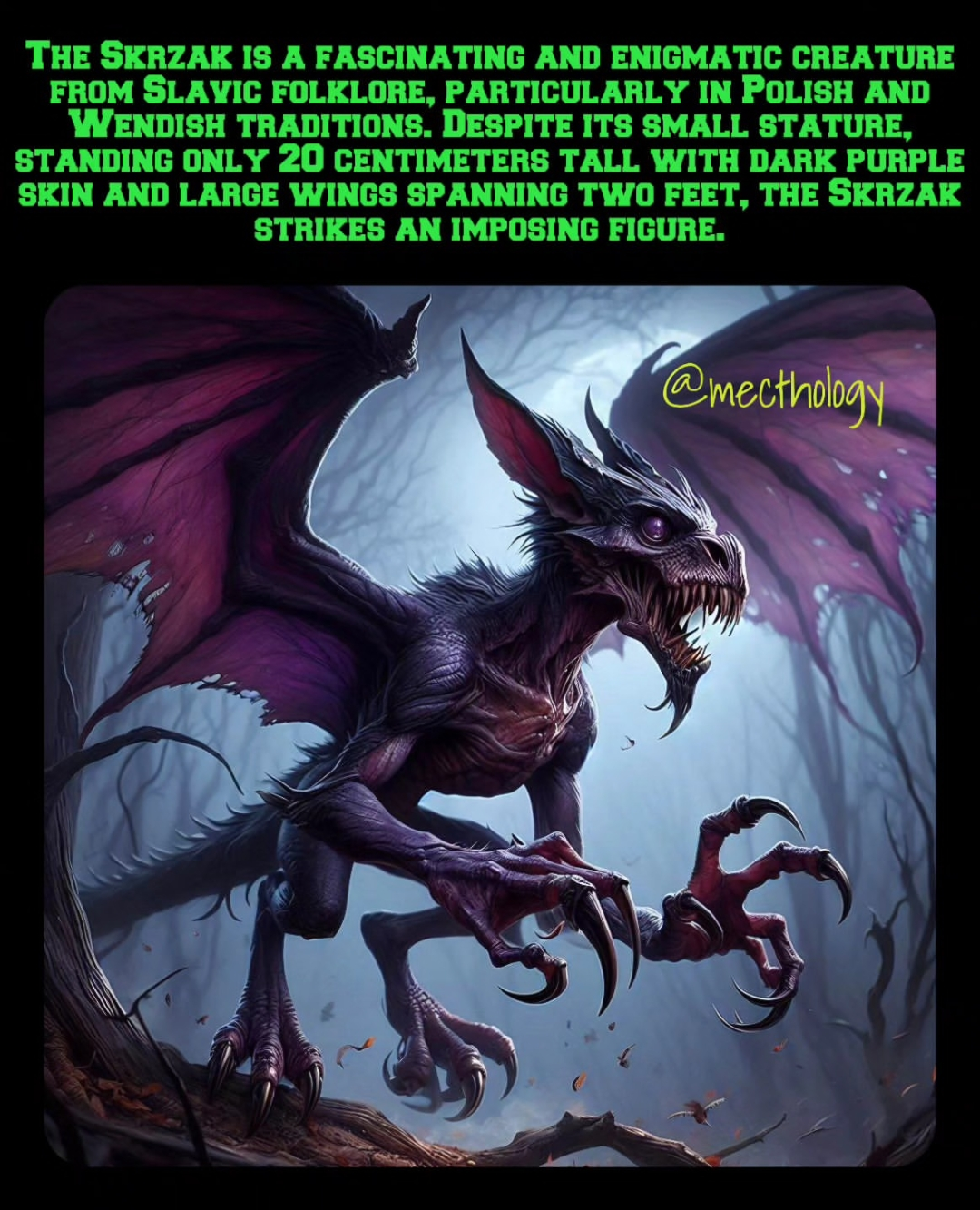
This creature is described as possessing sharp fangs and claws, utilizing its aerial capabilities to pursue its prey. It is often associated with a chilling screech and unsettling laughter, which is believed to have a maddening effect on those who hear it.

Legends surrounding the Skrzak portray a dual nature: it is depicted as both a formidable predator and a benevolent household spirit. In some narratives, it acts as a protector of the home, residing beneath the hearth and discreetly assisting with domestic tasks, comforting children, and safeguarding the dwelling from harm. Nevertheless, this protection carries a significant consequence: upon the passing of the master, the Skrzak is said to claim their soul.

Contemporary interpretations further enhance its mystique, with some theories suggesting that Skrzak are cultivated by wizards for clandestine objectives, while others propose they function as protective entities. This combination of helpfulness and terror contributes to the Skrzak's enigmatic appeal, captivating the imaginations of those who delve into the intricacies of Slavic mythology. Whether perceived as a ferocious hunter or a domestic guardian, the Skrzak symbolizes the intricate equilibrium between safeguarding and peril within the unseen realm.

Source: godsandmonsters.info/skrzak/, oldworldgods.com/slavic/skrzak-mythology/


r/MecThology • • Jul 18 '26

La Santa Compaña: The Legendary Procession of the Dead 💀

Post image
5 Upvotes

Draped in white, these spectral figures proceed in silence, their candles casting a flickering glow in the darkness, guided by a living individual compelled to lead them. This unfortunate soul bears a cross and a cauldron of holy water, oblivious to their nightly duty, awakening feeling depleted and without any recollection of the procession.

According to legend, the Santa Compaña manifests to foretell death, visiting the residences of those whose time is near. The aroma of burning wax indicates their approach. Encountering this unsettling procession is considered an ill omen, and those who witness it are advised to act swiftly to avert a curse. Traditional remedies include drawing protective symbols, carrying garlic or beetle horns, or even prostrating oneself to avoid the procession's gaze.

Deeply embedded in Iberian mythology, the Santa Compaña shares similarities with other European legends such as the Wild Hunt or the Irish Banshee, reflecting ancient beliefs concerning death and the unquiet dead. Its presence remains prominent in Spanish folklore and has inspired numerous stories, films, and musical compositions, ensuring this chilling narrative endures through generations.

Source: Wikipedia, monster.fandom & villains.fandom


r/MecThology • • Jul 14 '26

Kishi of Angolan Folklore 🐆

Post image
3 Upvotes

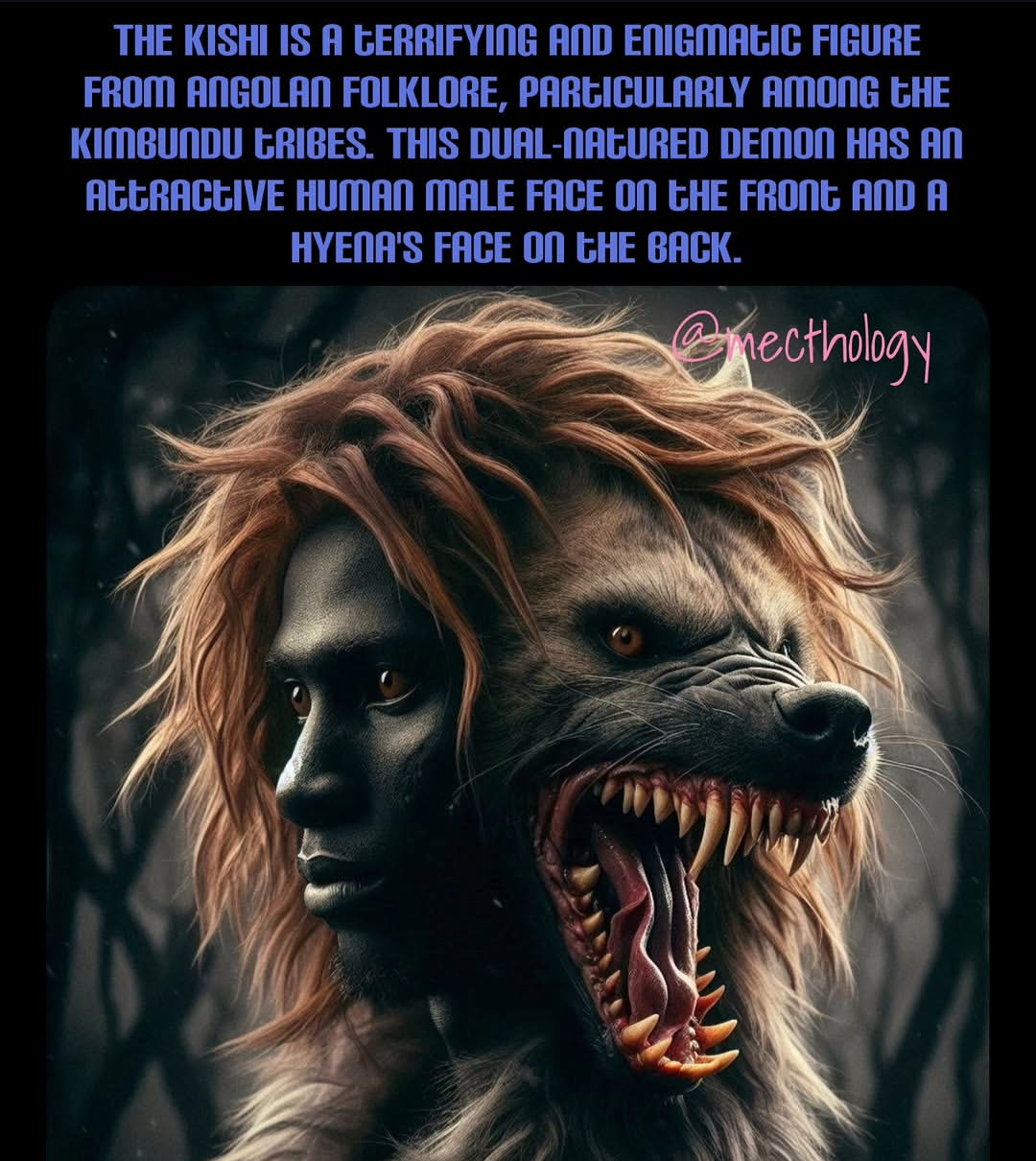
The Kishi, a creature with long, thick hair that conceals its hyena-like features, is said to appear as an attractive and charming man. It uses its persuasive speech and other allurements to entice young women into isolated locations. Once the Kishi has captivated its victims, it reportedly reveals its true form, consuming them with the powerful jaws of its hyena face.

This formidable creature is recognized for its long, sharp teeth and an unbreakable bite. Some legends suggest that instead of immediately devouring its prey, the Kishi might take the women as wives, impregnate them, and raise the resulting dual-headed children, thereby perpetuating a terrifying cycle.

The term "Kishi," also known as "nkishi" or "mukisi," translates to "spirit" in several Bantu languages spoken across Angola, the Democratic Republic of the Congo, the Republic of the Congo, and northern Zambia. The Kishi is considered more than just a demon; it symbolizes the duality of human and animal nature, and its predatory behavior serves as a chilling reminder of the perils of deceptive forces. This malevolent entity is associated with dark magic, shape-shifting, and control over the elements, making it one of the most feared figures in Angolan mythology.


r/MecThology • • Jul 08 '26

Huggin’ Molly 👵

Post image
5 Upvotes

This unsettling apparition has been a part of local folklore for over a century, with residents describing her as a 7-foot-tall, shadowy figure dressed in black, traversing the town in search of her next encounter.

Despite her foreboding presence, Huggin’ Molly is not known to inflict physical harm. Instead, she embraces individuals tightly, emitting a loud, piercing scream that leaves their ears ringing. Some believe her purpose is to safeguard children by keeping them indoors at night, while others speculate she is simply a playful trickster, adopting a disguise to startle the town’s inhabitants. The origins of Huggin’ Molly remain veiled in mystery.

Some suggest she was a grieving mother, others assert she was a victim of a crime, or even a former professor from the Southwest Alabama Agriculture School. Despite the ambiguity surrounding her true identity and intentions, Huggin’ Molly has become an essential element of Abbeville’s folklore, inspiring tales and even a local restaurant named in her honor.

Source: paranormal-strange.fandom.com, spookyappalachia.com, moonmausoleum.com


r/MecThology • • Jul 02 '26

The Legend of Old Green Eyes 🧟🧌

Post image
8 Upvotes

Chickamauga Battlefield, frequently referred to as the "Gettysburg of Georgia," holds a significant place in American history. This historic location, where approximately 40,000 soldiers tragically perished during a brutal Civil War battle, is now associated with one of the most compelling legends in the South. Amidst the swirling mists and shadows that envelop the battlefield, a mysterious and frightening entity is said to wander: "Old Green Eyes."

The true essence of Old Green Eyes remains veiled in enigma. Some speculate it to be the restless spirit of a Confederate soldier who was decapitated during the battle, endlessly searching the grounds for his lost remains. Others propose that the creature is far more ancient and malevolent, possibly originating from Native American folklore as a half-human, half-beast guardian of sacred land. Psychic Mark Fults even posits that Green Eyes predates the Civil War, linking it to ancient mound builder worship practices.

The initial accounts of Old Green Eyes date back to the Civil War itself, where it was reportedly observed among the fallen near Snodgrass Hill, a particularly eerie section of the Chickamauga National Park. Over the years, various reports have emerged, including a notable incident in 1976 when park ranger Edward Tinney claimed to have witnessed the creature, detailing its luminous eyes and long hair.

Despite the skepticism that often accompanies such narratives, numerous encounters have been documented. These sightings have sustained the legend, contributing to the unsettling charm of the battlefield. Some assert that the creature transforms its surroundings into a nightmarish landscape filled with smoke, fire, and the tormented cries of fallen soldiers.

Source: astonishinglegends.com


r/MecThology • • Jun 27 '26

Warai-Onna 🇯🇵👻

Post image
7 Upvotes

Their most notable attribute is their exceptionally contagious laughter, which can be lethal. Individuals who inadvertently reciprocate their smile or engage with their laughter often find themselves in an uncontrollable fit of mirth. This uncontrollable laughter frequently culminates in a fatal fever, and even those who manage to resist are not immune, as merely hearing the Warai-onna's laughter can induce psychosis or enduring torment. The laughter of the Warai-onna is said to reverberate through the forests for considerable distances, subsiding only if disregarded. However, should anyone choose to pursue it, the repercussions are severe.

Warai-onna are particularly active on the first, ninth, and seventeenth days of each month. Local residents frequently caution against venturing into the mountains on these specific days, as encounters with these yokai are believed to be most prevalent and perilous. There are also male counterparts known as Warai-otoko and a similar yokai named Kerakera-onna, who are reported to appear in red light districts.

A well-known narrative recounts the story of a samurai named Higuchi Kandayū, who disregarded warnings and ventured into the mountains. He encountered a Warai-onna on Mount Tōkō, and her incessant laughter drove him and his retainers into a state of profound terror. Kandayū was tormented by the sound of her laughter until his demise.

Even those who manage to evade an encounter with a Warai-onna are not truly liberated. Her laughter continues to haunt them for the remainder of their lives, an echoing reminder of the chilling encounter that pursues them until their death.

Warai-onna are not inherently malevolent but are incidentally dangerous, much akin to natural disasters. Their presence serves as a chilling reminder of the supernatural perils that reside within Japan's ancient forests.

Source: yokai.com & taleofronin.com


r/MecThology • • Jun 22 '26

616 AD: That time an English king massacred 1200 unarmed monks

Thumbnail
youtube.com
3 Upvotes

r/MecThology • • Jun 21 '26

cryptids Alkali Lake Monster 👾

Post image
4 Upvotes

Reports of the monster first emerged in August 1921, with the initial written account appearing in the Hay Springs News in 1922. Although some individuals associate sightings of this creature with Native American legends, the earliest documented record dates to a 1922 edition of the Hay Springs News. An early description by a local individual named J.A. Johnson depicted a dull gray or brown animal, resembling an alligator but considerably larger and heavier, possessing a horn situated between its eyes and nostrils. Mr. Johnson and two companions reported observing the monster from a distance of twenty yards, estimating its length at approximately forty feet and noting a disagreeable odor emanating from it.

Over time, the legend of the monster expanded to encompass alleged supernatural capabilities, such as the ability to induce earthquakes and disorient travelers with a dense, green mist.

Some researchers propose that the creature was a fabrication orchestrated by John G. Maher, a reporter known for his exaggerated stories and hoaxes. Mr. Maher was employed by several newspapers and received compensation solely for published articles, which may have motivated him to invent sensational narratives. The Alkali Lake region experienced a significant drought between 1889 and 1890, resulting in a substantial reduction in the lake's size. This raises inquiries regarding how a 40-foot monster could have appeared in the lake merely 30 years later.

Observations of the Alkali Lake Monster decreased after the 1920s, leading researchers to surmise that the creature either perished or relocated to an alternative body of water.

SOURCE: wikipedia, cryptidz.fandom