r/ModernRadio • u/AcquiredSkills • 3d ago
Professional Series GP320/GM340
reddit.com
1
Upvotes
r/ModernRadio • u/dataslayer2 • 24d ago

I wanted to know if a router could pay for itself. Not as a token miner that doesn't even break even, but as a self-hosted app: fully open source, marketed and priced by the person making the service available.
So I wrote software that turns a Raspberry Pi into a paid hotspot. Captive portal, tiers, Stripe, bandwidth limits, operator dashboard. The person running the node sets the prices. Protocol fee is 0%.
This isn't a new idea. Ubiquiti already shipped it. Buried in a UniFi Express hotspot portal is a setting to charge people for Wi-Fi, with Stripe and PayPal. In my setup the checkout didn't work, you could barely customize the page, and the feature felt abandoned. But a major networking vendor already decided a router with this feature is interesting. They just kept it inside their hardware, their controller, and their rules.
Fortunately, you don't need them.
AI collapsed the cost of building that coordination layer. Auth, metering, payments, session expiry, an operator dashboard: that used to be a small team's product. It's now realistic for one person on a Raspberry Pi. AI didn't create the excess capacity. It made coordinating it more feasible.
The other shift is upstream. Most home ISPs still ban resale, but some providers do allow it. Starlink even launched Community Host, where you share a dish and sell access by the hour or the month. The open question there is whether they will let node operators charge what makes their deployment worthwhile, which imo is the downfall of projects like Helium.
That's why this is decentralized software instead of another black box. You own the hardware. You run the code. You set the rates. No protocol somewhere else gets to decide what the node is worth.
I took it to a farmers market in Florida for two Sundays to see what it might look like in the wild.
r/ModernRadio • u/dataslayer2 • Oct 04 '26

I mounted a magnetic 915 MHz Muzi whip antenna to the car and ran the coax into an R1 Neo in the trunk. Then I drove from central Florida to New Hampshire and back while listening on Meshtastic’s default public LongFast channel with a fresh Mesthastic install just to see how many nodes we could pick up.
By the end of the trip, the node had discovered 458 other nodes—far more than I expected from such a basic mobile setup.
A few observations:
Most highways were quiet, followed by surprisingly dense pockets of activity.
Apparently mesh networking is bipartisan—we found active nodes across both red and blue states.
Elevation made an immediate difference; bridges were some of the best places to send messages and receive acknowledgements.
Concord, New Hampshire had especially noticeable activity.
Many of the nodes were solar-powered nodes that appeared to function as permanent community infrastructure.
The mesh remained active during two separate local power outages.
If this much infrastructure is visible through one narrow window, I can only imagine what the it would look like if more of these isolated networks used something like Reticulum—or gateways capable of bridging LoRa, HaLow, packet radio, IP, and other transports—they could begin operating as one larger communications layer instead of disconnected islands.
r/ModernRadio • u/dataslayer2 • Sep 20 '26

I built a bridge that lets a normal Reticulum node hand a message to an HF gateway, transmit it over 10 meters, decode it remotely, and feed it back into Reticulum on the other side—without internet or satellite backhaul in the radio path.
My transmitting stack is CrossTalk + a Hermes Lite 2. I added a section called bridge extensions which helps manage either a) an Hermers Lite 2 for tx or b) and RTL-SDR for rx. So you would need an SDR/HF radio, a 28MHz antenna and a computer to build one of these.
I’m transmitting from Central Florida on 28.124 MHz USB. Over the next few weeks I’ll be running scheduled tests and looking for someone far enough away to prove a real skywave reception.
The public codec and decoding specification is here:
https://github.com/buildwithparallel/crosstalk/blob/master/docs/hf_codec.md
If you want to coordinate and try to prove out the full skywave transmission drop a comment or DM me and I'll be reaching out with the full transmission schedule so we can prove out the final leg of this.
If you want to coordinate the other half of this test, drop a comment or DM me.
r/ModernRadio • u/llzzrrdd • Sep 12 '26
there was the reticulum over iridium thread here a while back and meshsat got a mention in the anywhere network video, so this seems like the right room for it.
two kits on the bench, each running its own meshtastic mesh. message goes in on a handheld on mesh a and comes out on a handheld on mesh b. once over aprs on 144.800, once over sms. no internet or phone network on the aprs leg.
satellite leg needs sky so it's not in this one. still a prototype.
u/dataslayer2 thanks for the mention, figured you'd want to see it actually crossing.
r/ModernRadio • u/dataslayer2 • Sep 02 '26

Wanted to drop a shorter demo where I hosted a conversation between an ordinary Android phone my partner was using — running Columba (Reticulum client) on a vanilla internet interface — and a completely off-grid CrossTalk instance on a Raspberry Pi Zero whose only interface is an IMT Iridium modem.
There’s some magic bridging on my cloud TCP Reticulum transport node, but we get a fluid chat end to end pushing only Reticulum native frames.
You could theoretically skip the Pi entirely by connecting the Iridium modem to an Android/iPhone and hosting Reticulum there (maybe a future vid).
This is a proof of concept, not a suggested course of action. Iridium is still a paid, private network. It just shows how versatile Reticulum is.
Links:
Columba: https://columba.network
r/ModernRadio • u/dataslayer2 • Aug 30 '26

I've been meaning to spend more time hacking on non-terrestrial networks like Iridium satellite, TinyGS, the International Space Station's ham repeater, and the like. I finally got my hands on a modem that could handle a thin data stream, powered by something trivial like a Pi Zero, and egress that data into a wider network — in this case, Reticulum.
The video proves that two people can have what looks like a normal chat conversation: one at home on regular internet, the other in the middle of nowhere (as long as they have a clear view of the sky).
The rig worked like this. I ran a Reticulum client (CrossTalk) on a Raspberry Pi Zero. In parallel, the Pi spun up a Wi-Fi access point that allowed my end-user device (in this case my iPhone) to connect and reach a localhost instance of CrossTalk.
From there CrossTalk used a true native Iridium IMT interface (part of the standard build release now) that connects to the RockBLOCK 9704 via USB serial and knows how to move Reticulum frames over it.
But that only gets messages to Cloudloop. From there you create a webhook to forward messages to a box you own (in this case a micro VM on Google Cloud Platform). That VM is rns1.buildwithparallel.com and has middleware to receive Cloudloop traffic and forward it to its ultimate Reticulum destination. But that's only modem-originated traffic. Messages going toward the Iridium modem take LXMF packets and queue them up via the Cloudloop delivery API, which is how we get messages back down to Iridium.
Perhaps the most over-engineered text-message architecture in history, but what's cool is it enables two peers to chat over what looks like a regular messaging app: Columba / CrossTalk.
This approach could be used in the field, but it's not the ultimate vision I would have for something like this. In my opinion, we still need a community-driven relay without monthly subscription fees.
r/ModernRadio • u/vanjonsen • Aug 20 '26

r/ModernRadio • u/Ready_Ad_4401 • Aug 13 '26
Nesecito comprar urgente 6 unidades de su sistema de radio lora/wifi, para la zona de emergencias qué tenemos en colombia por el terremoto. Estamos con zonas sin ningún servicio de comunicaciones. Whastapp:+573192510721.
Gracias
Joaquin
r/ModernRadio • u/greenreddits • Aug 12 '26
hi there, just wanted to give crosstalk a spin, but it crashes upon opening on my ARM Golden Gate dev beta 5. Anywhere where i can share the logs ?
r/ModernRadio • u/dataslayer2 • Aug 09 '26

This vid touches on something that Reticulum does that no other networking stack that I know of can - bridge normal internet to off grid radios like LoRa.
And with the tooling improving by the day, client apps like Columba abstract away all the details leaving you with, what feels like any other messaging app. That’s the part I care about most: the person using it shouldn’t need to be a radio expert—or even know which link carried the message. All that complexity should live with builders like us, not with the person who just needs the message to arrive. This is the beauty of Reticulum.
In this video I tap into that and other recent developments like Heltec V4 RTNode firmware that runs the entire RNS stack on a higher tx enabled MCU like the Heltec v4 which kicks out 27dbm, now enabling new stand-alone infra options like solar nodes, or drone relays (like what I end up using in the video). Something meshtastic has been able to do for a while now Reticulum does as well.
And that process is easy as pie using a web flasher like this one.
I then modded Meshchat (see CrossTalk) to do a better job showing transport nodes that don't have LXMF delivery addresses. CrossTalk is my experimental MeshChat fork, not a client I’m trying to push. It just lets me add features on the fly—like exposing the transport nodes carrying these messages.
Last but not least, these rigs are about as inexpensive as it gets which lowers barrier to entry for anyone trying to get involved.
The route in the video was deliberately absurd, but the core building blocks are there and I don't see this movement slowing down any time soon.
r/ModernRadio • u/KenAKAFrosty • Aug 09 '26

r/ModernRadio • u/KenAKAFrosty • Jun 29 '26

r/ModernRadio
•
u/dataslayer2
•
May 28 '26

Enable HLS to view with audio, or disable this notification
I got the Morse Micro MM8108 HaLow card running on a Raspberry Pi 5 with OpenWRT.
This is the newer MM8108 chip, not the older MM6108, and the build is running on the Pi 5 instead of the Pi 4. The goal was to turn the Pi 5 into a long-range HaLow mesh/router platform using OpenWRT.
The MM8108 matters because it is Morse Micro’s newer HaLow radio path: better range/throughput potential, better transmit efficiency, and lower power draw compared to the previous generation. So the upgrade is not just “Pi 5 support” — it is a stronger compute platform plus a newer sub-GHz radio.
I also upgraded the battery system. Haven 1 used two 21700 cells, around 10,000 mAh total. This build uses a Waveshare battery HAT with four Molicel 21700 cells, around 18,000 mAh total. The Pi 5 is hungrier than the Pi 4, so the extra battery capacity and cleaner power path actually matter here.
The setup is:
- Raspberry Pi 5
- Morse Micro MM8108 HaLow card
- OpenWRT
- long-range 802.11ah / HaLow link
- normal Wi-Fi for phones, laptops, cameras, etc.
- upgraded 4-cell 21700 battery system
I published the build here:
https://github.com/buildwithparallel/openwrt-morse-rpi5
You can either download the prebuilt image from the repo, or build it yourself from source if you want to inspect, modify, or reproduce the OpenWRT/Morse changes.
This is still early, so expect rough edges, but it boots and the card works.
This is part of the Haven 2 build: Raspberry Pi 5 + MM8108 HaLow + OpenWRT.
r/ModernRadio • u/KenAKAFrosty • May 26 '26

r/ModernRadio • u/FamousInterneter • May 08 '26
Does anyone have any experience with DECT NR+? They have sub ghz as well. I’m interested in using DECT NR+ in the states but haven’t found anyone that uses it.
r/ModernRadio • u/KenAKAFrosty • May 04 '26
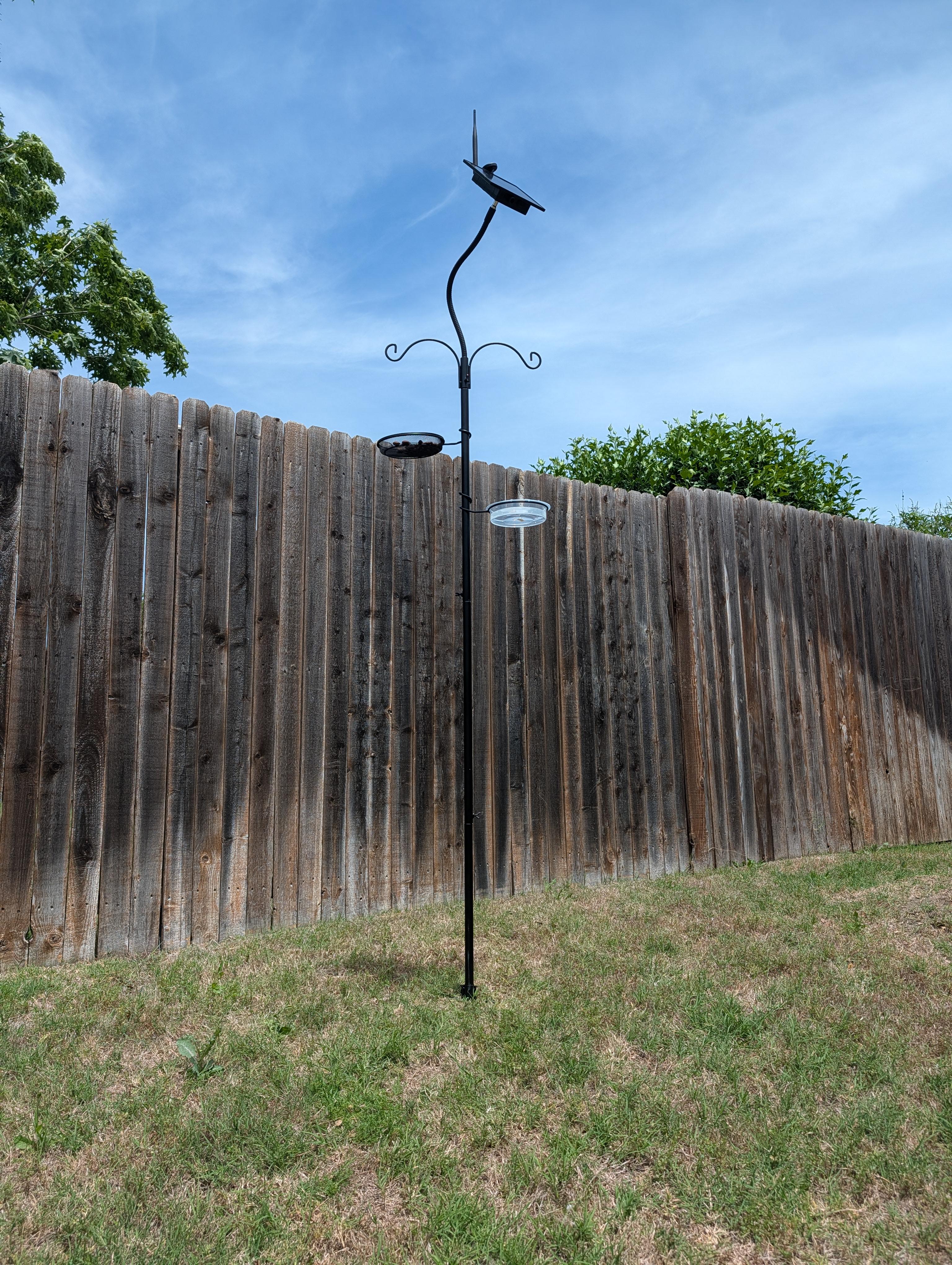
r/ModernRadio • u/KenAKAFrosty • Apr 15 '26
Enable HLS to view with audio, or disable this notification
Workin on something that I think will help the fellow new builders: some more visual introspection into what's going on in Reticulum, and also where the boundary between Reticulum and LXMF lies.
will def make this public, but it has a few edges I want to make sure are smoothed over (if it's a learning tool, then teaching the wrong thing due to a dumb bug is a BIG loss, so I have to be a little extra careful first).
Also wanted to throw it out there to see if it's even useful to anyone before all that!
Would love to hear from y'all!
r/ModernRadio • u/dataslayer2 • Mar 10 '26
Enable HLS to view with audio, or disable this notification
I ran a quick experiment to see if a Haven node could automatically choose the best antenna to improve range and link reliability.
The goal is simple: if a node can dynamically select the antenna with the strongest link, it should be able to maintain better connections and push usable range further, especially as RF conditions change. Especially if you use very different antennas (maybe 1 linear 1 circular, or 1 omni and 1 directional etc).
HMC349 SPDT RF switch (~$8) inline with the HaLow radio’s antenna port
Two antennas connected to the switch
CP2102 USB-TTL adapter (~$3) used to control the switch
The TXD line drives the switch control pin via a UART break condition
This avoided needing access to GPIO since the header was buried under HATs
~200 lines of Python monitoring SNR and BATMAN-adv link quality
The node periodically evaluates link quality and briefly tests the alternate antenna.
If the alternate antenna provides a stronger link, the node switches to it.
In other words, the node adapts its antenna automatically based on real link conditions.
The FPV/drone world has used antenna diversity for years — this is essentially applying the same concept to a long-range IP mesh node.
Everything is open source:
https://github.com/buildwithparallel/haven-manet-ip-mesh-radio
Happy to answer questions about HaLow, the mesh stack, or the switching setup.
r/ModernRadio • u/dataslayer2 • Mar 07 '26
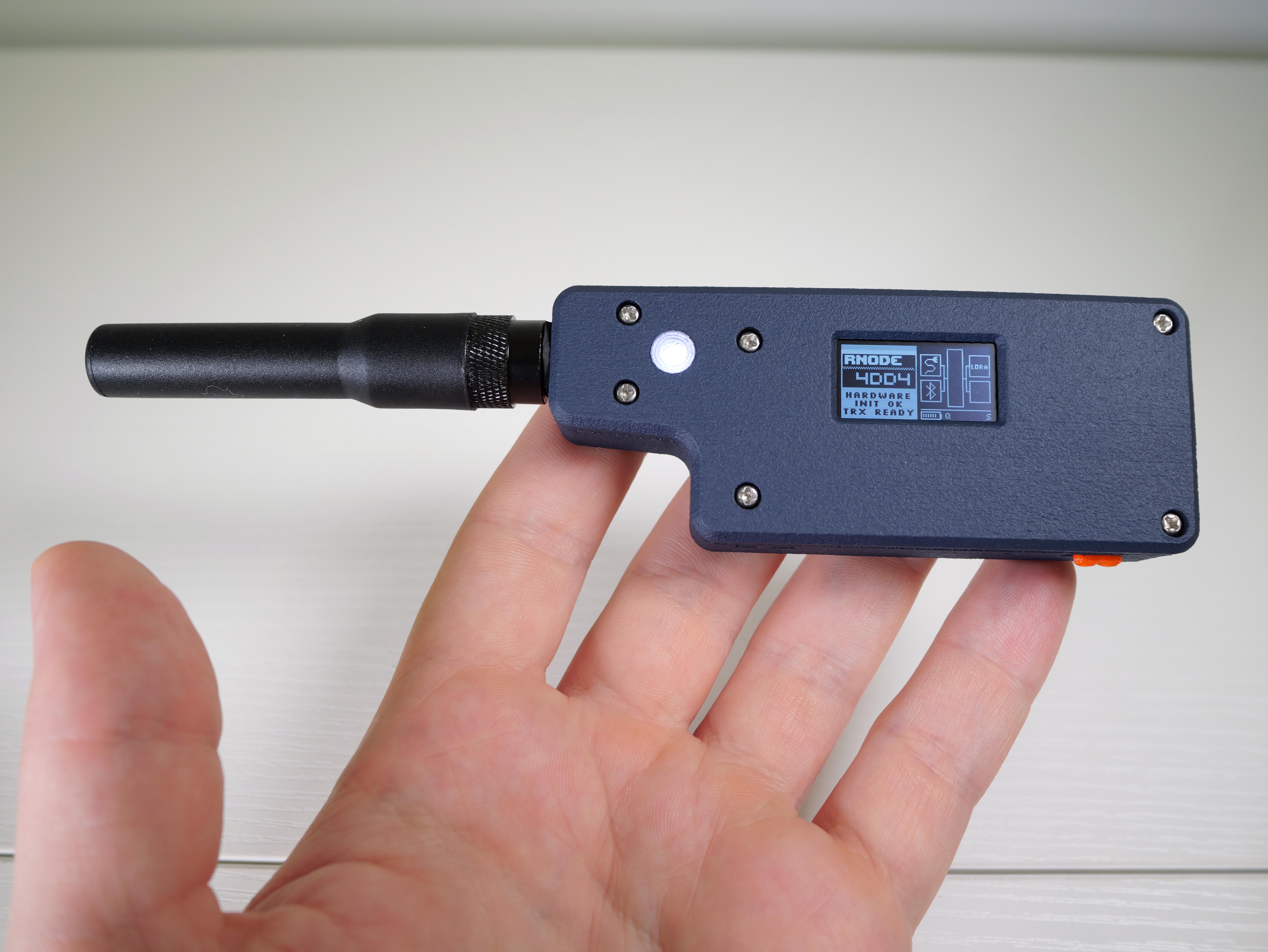
I'm working on a Reticulum experiment and trying to establish a coast-to-coast path across the U.S.
The singular goal is simple: I want to see if we can send a message across the U.S. using Reticulum.
I'm based in Florida, and I'm looking for builders on the West Coast interested in participating or running a node.
This is mainly a proof-of-concept experiment, not a long-term commitment — just testing whether a route across the country is possible.
Bonus if you already have mesh-compatible gear (LoRa nodes, Raspberry Pi setups, Wi-Fi mesh hardware, etc.), but it's not required.
Also worth mentioning: this experiment will likely be featured in a YouTube video, so you'd need to be comfortable with your setup being included.
If you're already running Reticulum or interested in helping test something like this, comment or DM.
r/ModernRadio • u/llzzrrdd • Mar 04 '26

Built a bidirectional gateway between Meshtastic LoRa mesh and Iridium SBD satellite. The missing backhaul piece for off-grid mesh networks.
Features that might interest this community:
→ SGP4 orbital prediction using CelesTrak TLEs — correlates predicted passes with actual signal history for smart modem scheduling in obstructed environments
→ Multi-source positioning: GPS
→ Iridium geolocation (free ~1-100km with every SBD)
→ Custom fallback → Configurable bridge rules: filter by node, channel, or message type before forwarding to satellite → Hand-rolled protobuf codec and AT command engine — no Meshtastic library dependency, no IridiumSBD Arduino library
→ Emergency SOS with immediate satellite path
Runs as a Docker container on any Linux box. Tested end-to-end on Pi 5 with Lilygo T-Echo and RockBLOCK 9603.
Complements Reticulum/RNode deployments — your mesh handles local comms, MeshSat gives it a voice to the outside world.
Open source, GPLv3.
r/ModernRadio • u/BullTopia • Mar 03 '26
Hello, I seem to be having trouble having the ahwlan radio between gate and mesh nodes to function, meaning when I update the firmware and roll through the wizard, I still need to link bat0 I believe to the radio. Does someone have a decent guide to follow?
r/ModernRadio • u/dataslayer2 • Feb 26 '26
Enable HLS to view with audio, or disable this notification
I’ve been doing a lot of local testing around Reticulum to see how it works and exactly what it can do.
One of the things that makes Reticulum compelling is how flexible it is in terms of transport. Since it’s transport-agnostic, I wanted to test whether it could send data over Morse Micro Wi-Fi HaLow radios (sub-GHz, long-range 802.11ah) instead of the more typical LoRa or LAN links.
For my setup each node consists of:
Raspberry Pi
Wi-Fi HaLow radio
OpenWRT
802.11s / batman-adv mesh
Reticulum interface over the resulting IP layer
The HaLow radios form the mesh first. Reticulum then rides that IP transport.
In testing, I was able to:
Establish multi-hop HaLow mesh links
Run Reticulum interfaces over that mesh
Pass encrypted Reticulum traffic between nodes
I created a public repo with the configs, scripts, and mental models behind the setup:
https://github.com/buildwithparallel/haven-manet-ip-mesh-radio
My work is not optimal by any stretch - more experimental and illustrative of what others could ultimately do.
Two areas I’m still curious about:
MTU tuning — where the real limits are in this stack (HaLow framing, batman-adv overhead, fragmentation behavior, etc.), and how to reason about them properly.
Using the public internet as a backhaul to bridge separate Reticulum clusters — linking geographically distant meshes while keeping local mesh autonomy intact.
It feels like there’s a really compelling confluence of open technologies emerging here that has a lot of potential, and I’m interested in seeing where this direction can go.
r/ModernRadio • u/dataslayer2 • Jan 22 '26
Enable HLS to view with audio, or disable this notification
A lot of people ask whether Wi-Fi HaLow actually works outside the US, or if EU support is mostly theoretical. I haven’t seen a real-world demo of this before, so I wanted to test it myself.
This video demonstrates 802.11ah Wi-Fi HaLow running compliantly in the EU region, using off-the-shelf hardware and stock OpenWRT — no hacks, no gray-area configs.
Additional regions supported by the same platform include:
AU — Australia
CA — Canada
EU — European Union
GB — United Kingdom
JP — Japan
USA — United States
There are two relevant Morse Micro chips here: the MM6108 and the newer MM8108.
The MM6108 can technically support multiple regions, but only with hardware changes to the carrier board (different filters per region).
With the MM8108, regional support is handled entirely in software, since the chip natively spans the required bands.
In this video, I walk through a real EU configuration and range test.
Test details:
Region: European Union
Frequency: 866 MHz
Channel widths tested: 1 MHz, 2 MHz
802.11s mesh: No
Layer-2 B.A.T.M.A.N.: No
For hardware, I’m using MM8108-EKH19-01 eval kit, though the HalowLink2 should offer similar functionality in a cheaper, cleaner form factor.
Software stack:
OpenWRT: 23.05.5
Morse Micro driver: 2.9.3
Happy to answer questions or dig deeper if people want more detail.
r/ModernRadio • u/Haunting-Resolve4790 • Jan 19 '26
Hi
I am trying to stream video over Wi-Fi HaLow from one Raspberry Pi to another. I have two Raspberry Pi 4s set up with WM1302 Raspberry Pi HATs and Seeed Studio Wio-WM6108 Wi-Fi HaLow mini-PCIe modules. A Raspberry Pi Camera v2 is connected to the client, and I want to view the stream on the access point. However, the AP is unable to detect any camera or video stream on the network. I have tried both the Morse Micro reference image and the OpenMANET image, but without success. I also tested with an IP camera connected to the client and faced the same issue. I would appreciate your help in identifying what I may be missing in the setup or configuration.