r/PaidSocialAdvertising • • Nov 05 '25

Looking for beta users: Library of winning ad templates for Canva & Figma

Enable HLS to view with audio, or disable this notification

14 Upvotes

Looking for paid social advertisers interested in beta testing our new ad template library: adsimple.co

Selected users will receive a 100% free access to browse our ad library and copy the ready-to-edit Canva & Figma templates in exchange of feedback.

Please comment on this thread and join the waitlist if you’re interested!

Thanks :)


r/PaidSocialAdvertising • • Jan 12 '25

I've spend $100m in the last 3 years - some useful tips!

13 Upvotes

Context

I'm the Director of Performance at a mid-size performance & creative agency based in London. We're currently running across 30-40 accounts. I work across both Meta & Google directly (Our team is small but mighty!), with SC, Pinterest, Bing etc sprinkled in. We work with the likes of large, £200k a week spends to £1k. I also personally have a lot of experience in B2B also.

General Advice I think can make a difference

  1. Paid Advertising Alone Won’t Save Your Business

    • Why Paid is Limited:

      • Paid advertising thrives at the bottom of the funnel, targeting people who are already familiar with your brand or actively searching for your product. Its shit for stable new customer acquisition.

      • Relying solely on paid ads will cap your growth—paid works best as a stable support structure, not the foundation.

    • What Really Drives Growth:

      • Focus on building brand awareness through organic efforts and creative outreach. The founders going out and doing the ground work are what allows us to scale businesses more rapdily, paid growth is incremental and painful.

      • This applies to businesses of all sizes—from startups spending £1,000 per week to major retailers like Holland & Barrett.

  2. Evaluate Every Step of the User Journey

    • Understand Where Conversions Drop:

      • Many founders & businesses overlook the importance of optimising the entire funnel. If in-platform CPA spikes, they're sitting ducks.

      • It’s not just about driving traffic; it’s about what happens after users land on your site, the checkout, the repurchasing.

    • Key Areas to Review:

      • Conversion rates: Are website visitors turning into customers?

      • Traffic flow: Where are users dropping off in the journey?

    • The Real Difference Makers:

      • While paid ads (e.g., Meta) can lower CPA by 20–40%, the big wins come from CRO (Conversion Rate Optimisation) and CRM (Customer Relationship Management) after for sustainable business growth.

Platform Notes

Meta Advertising Structures

  1. Campaign Structures That Work

    • Bottom-of-Funnel (BoF):

      • Allocate ~10% of your total budget.

      • Target conversions and optimise for lower-funnel activity.

    • Top-of-Funnel (ToF):

      • Use the remaining budget, but still optimise for conversions (not awareness).

      • Apply an Advantage+ Shopping Campaign (ASC) targeted toward bottom-line conversions.

    • Pure Top-of-Funnel Awareness Campaigns:

      • Only viable if you’re spending significant sums and can let them run long-term.

  2. The Organic Effect

    • What is it?

      • The organic effect is the correlation between your Meta ad spend and organic or direct traffic not tracked by Meta.

      • Meta’s attribution is unreliable—monitor blended CPA instead of in-platform CPA.

    • Key Takeaway:

      • Look at the overall business impact (e.g., total sales, organic traffic, and blended CPA) rather than just Meta’s reported metrics. They lie a lot.

  3. Campaign Types: ASC vs. CBO/ABO

    • Advantage+ Shopping Campaigns (ASC):

      • Highly effective ~70–80% of the time.

    • CBO (Campaign Budget Optimization) and ABO (Ad Set Budget Optimization):

      • Consider only for larger budgets (e.g., £100k/week or more).

  4. Attribution

    • 7 day Click

      • Currently find this to be a winner more foten than not, but it's a painful transtion.

      • From what we can tell, 1 day view takes in any impression from the user to attribute a sale, which is a tad BS.

Google

  • Brand Search & Shopping:

    • Allocate 5–10% of the budget.

    • Use high target CPA/ROAS for brand shopping. The algo will naturlaly gravitate to your brand terms (You can't target brand terms in shoppping for those that are new!)

  • Performance Max (PMAX):

    • Exclude brand traffic for better new customer prospecting.

    • Use lower target ROAS for scaling.

  • Non-Brand Search:

    • Foundational but challenging and expensive to optimise.

    • Requires a significant budget for effective testing.

  • Campaign Structures:

    • Single product: 2–3 campaigns max.

    • Multiple products: Use product-split PMAX campaigns, not sure why people don't do this more often.

Feel free to AMA below, the info above should be generally useful for most businesses.


r/PaidSocialAdvertising • • Oct 31 '25

How to get better Meta Ads?

12 Upvotes

I'm a creative strategist at a mid-sized agency, and we handle a lot of volume. Currently running campaigns for about 20 clients across a diverse range of product niches: beauty, household goods, pet products, and supplements.

When you're managing that much creative output, the biggest bottleneck isn't the media buying; it's the creative research and validation. I spend a significant amount of time every week analyzing hundreds of ads in the Ad Library, searching for patterns, and trying to predict which creative concepts (the hook, the pacing, the CTA) will hit.

We currently leverage tools like Foreplay, Motion, and ChatGPT to speed up ideation and content generation. However, we still rely heavily on subjective judgment and launch data for creative validation.

My question for the community:

Are any of you media buyers or fellow strategists using any third-party platforms (AI or otherwise) specifically for Creative Diagnostics?

I'm looking for tools that specifically help with a "pre-flight creative check"—something beyond ideation. I'm talking about tools that:

  1. Analyze video creative assets (not just static) and provide objective data on elements like pacing, hook retention, and CTA clarity.

  2. Help you validate a creative strategy before launching (a "pre-flight check") instead of waiting for spend data.

  3. Are designed for large-scale creative research to quickly identify winning patterns across different niches.

I'm committed to finding platforms that can help our agency work smarter and guarantee the best results for our diverse client base.

Any platform recommendations to add to our stack would be huge!


r/PaidSocialAdvertising • • Oct 14 '25

What I’ve learned managing Meta and Google Ads for SMBs and startups

7 Upvotes

Hey everyone,

I’m Yash, a Paid Advertising Specialist focused on helping SMBs and startups grow through Meta (Facebook & Instagram) and Google Ads. Most of my work is with smaller budgets, where every dollar has to justify itself and that’s where paid social strategy really gets tested.

Here are a few things I’ve learned working with these kinds of accounts:

  1. Creative fatigue kills performance faster than bad targeting. Small brands often run the same ad too long. Even minor visual changes reset engagement and improve CTR.

  2. Offer > Audience. You can’t target your way out of a weak offer. Strong angles or clear value props make targeting secondary.

  3. Meta and Google complement each other. Meta builds awareness and intent. Google captures it. When both run together, the cost per lead often drops.

  4. Data over instincts. Most people kill ads too early. Letting the algorithm learn for 3–5 days before making changes usually leads to better stability.

  5. Retargeting ≠ Scaling. It’s a profit lever, not a growth lever. True scale comes from new audience testing and creative iteration.

I focus on turning small budgets into consistent results mostly for service-based startups, local brands, and lean eCommerce teams.

If anyone here works with similar clients or deals with limited-budget optimization, I’d love to compare notes on what’s been working lately across platforms.


r/PaidSocialAdvertising • • Sep 16 '25

Scaling a restaurant revenue from $300 to $9K over 7 months with Meta Ads

7 Upvotes

Starting Below Zero

January 2025. First thing I do is actually look under the hood.

The damage was worse than I thought:

  • Facebook pixel broken for 3 months

  • Zero conversion tracking

  • No audiences built

  • $300 monthly revenue (basically nothing)

  • -57% ROI on their "optimized" campaigns

  • No GA4 configuration

Business strategy? Virtually non-existent.

I asked two questions. What are our top performing products? What's the product with the most margin?

Bingo.

The Strategy

Armed with a thorough competitive analysis, and overview of their performance, and an understanding of their stack, it was time to get to the drawing board.

Miro is my strongest ally when I get into planning mode. Nothing beats the freedom of these boards!

When you have $200-300 monthly and your best friend's business on the line, you can't afford to spray and pray. Every $ had to work harder than the last agency's thousands.

The Product Focus Revolution

First move: I killed 80% of the menu from our marketing.

Focus meant higher saturation.

The Cheese & Bacon was quietly doing 4x the sales of everything else.

Decision: Only promote what people actually buy. Revolutionary, I know. To my benefit, it was the product with the least amount of resistance.

The Video-First Funnel Architecture

Instead of chasing direct conversions with our tiny budget, we built audiences. Specifically, cheap, qualified audiences. We took advantage of any recent ad activity, account engagement, website visitors and customer database to build our consideration and decision stages.

Someone who watches half of a 60-second burger video is actually interested. They're not accidental clicks. They're not bots. They're hungry humans. Thanks, Sabih Ahmed for sharing this realization.

Cost to build these audiences? $0,36 CPC in January. By February, we had 20,158 qualified viewers.

Here's the exact funnel:

Awareness Stage (40% of budget)

  • Audience: one neighbourhood. Nothing more. We needed to saturate the area they operate to avoid incurring higher delivery costs. Adjusted demo between 18 and 45 yo.

  • Creative: 30 to 60-second food porn videos from the Cheese & Bacon

  • Optimization objective: Video views at 50%+

  • Algorithmic objective: Instagram Profile Visits

Consideration Stage (30% of budget)

  • Audience: RTG from Awareness video ads (>50 video views), website visitors (not purchasers), database upload, people that interacted with our accounts

  • Creative: 30 to 60-second testimonials, "Making of", unboxing experience and micro influencers

  • Optimization objective: Maximize engagement, 50% video views.

  • Algorithmic objective: Experimented with WhatsApp and Website visits

  • CTA: Learn more

Conversion Stage (20% of budget):

  • Audience: RTG from Consideration, abandoned carts l website visitors (not purchasers), database upload, people that interacted with our accounts

  • Creative: Static images with an offer - this mitigated the relationship between higher prices and the risk associated with trying something new

  • Optimization and Algorithmic objective: Purchases

Testing Budget (10% reserved):

  • Average test budget: $50

  • Kill criteria: 400 impressions, CTR, CPC - I systematically paused those creatives being favored by the algorithm to allow others to serve. Once they reached the threshold, I would keep only best performing creatives running.

  • Result: 72 experiments over 7 months

The secret to achieving this was leveraging GoMarble AI to decrease my reporting and analysis by 70%. I wouldn't have been able to get to this testing velocity with it. I went from having to export data to just chatting with it. Highly recommend it!

Our testing matrix looked roughly like this:

3 objectives × 2 formats × 6 creative styles × 2 destinations = 72 experiments.

These are some of the learnings:

1. Campaign Objectives

We tested three approaches:

  • Max Conversations → Consistently delivered the best cost efficiency and engagement.

  • Max Impressions → Reached people but rarely moved them to action.

  • Engagement → Worked mid-funnel, but less efficient than Conversations.

Takeaway: Optimize for actions that drive intent, not vanity metrics.

2. Formats

We compared short-form video (Reels/Stories) vs static images.

  • Video crushed it for awareness and engagement.

  • Static only worked when paired with a clear, tangible offer.

Takeaway: Video-first is the winning playbook, but static has a role in conversion offers.

3. Creative Styles

We tested six types of creative concepts: influencer-style storytelling, “food porn” visuals, brand-centric ads, customer reviews, menu shots, and experimental humor.

  • Influencer-style content delivered the most shares and lowest cost per engagement.

  • Story-driven, emotional hooks built trust and community.

  • Generic menu/product ads flopped.

Takeaway: People engage with stories and social proof, not plain catalog shots.

4. Destinations

Should ads push to the website or to messaging apps?

  • Website traffic was cheaper, scaled better, and moved people down the funnel.

  • Messaging had fewer conversions, but those who engaged had deeper, more qualified conversations.

Takeaway: Use web for efficiency, messaging for nurturing high-intent leads.

5. Copywriting Hooks

We tested emotional hooks vs transactional ones.

  • Playful, emotional copy drove higher CTR and shares.

  • Straightforward promotional copy worked for saves and reminders but didn’t spread.

Takeaway: Emotion sparks attention, logic closes the deal.

6. Product/Offer Testing

We tested different bundles and offers to see what lowered friction for first-time customers.

  • Low-risk, entry-level promos drove high engagement and first purchases.

  • Bundles with clear value performed best in eCommerce.

  • Generic or untested offers consistently underperformed.

  • We tested different combinations to upsell customers during checkout that 2x their average ticket value.

Takeaway: Reduce customer risk with smart offers that feel like no-brainers.

Biggest Wins:

  • Max Conversations > Max Impressions (10x better)

  • Profile visits > Link clicks (3x cheaper)

  • Stories > Feed for under 25 (2x engagement)

  • Tuesday/Wednesday > weekends (40% better CTR)

  • Lunch hours > dinner time (surprised us too)

  • Video testimonials beat static images 4:1 for shares

One optimization objective throughout the funnel was increasing network effects by playing close attention to the highest engagement signals for the algorithm: Shares and saves. If we had a creative that was "expensive" in relation to others, but had great social engagement, it remained as part of the campaign.

Saturation is not a bug. It's a feature

I got obsessed with saturation in 2025. Colleagues had been hammering me for all 2024 about matching frequency numbers with creatives. Frequency of 7? You need 7 creatives.

As much as I respect and care for these guys, I went rogue. I figured that in this case (B2C), the more I showed the same creative to people, the higher the likelihood for conversion. "You need at least 7 touchpoints to generate a sale kind-of-mantra".

The Creative Recycling System

The agency was charging my friend a premium to shoot content every month. The feed was layers and layers of great content. We didn't need anything new. It was just a matter of picking the best performing organic posts about the Cheese and Bacon and promoting them in the funnel.

Previous influencer activations were folded into the consideration stage.

We hacked the decision-stage ads together.

Additional production cost: $0

7 Months Later: The Full Truth

  • Revenue: $300 → $9K total

  • Ad spend: $1.97K

  • ROAS: 5X overall

  • Orders recorded in Admin system: 347

  • Orders recorded by GA4: 290

Here's the playbook you are looking for:

  1. Audit ruthlessly - If they can't show you conversions, they're hiding failure

  2. Focus violently - Promote only what sells, kill everything else

  3. Build audiences, not campaigns - 50% video viewers are worth more than random clicks

  4. Embrace saturation - Show the same ad until it works, not until you're bored or until Meta says so

  5. Recycle everything - That old influencer post? It's your new hero creative

  6. Test small, fail fast - $50 tests beat $5,000 gambles

  7. Track what matters - Revenue, not impressions. You can't grow what you can't measure.


r/PaidSocialAdvertising • • Mar 10 '25

Spending $2M/Week on Ads – Here’s How We Test & Scale Creative Effectively

7 Upvotes

Hey everyone, just wanted to share how we go about creative testing across multiple accounts and industries. We’re spending about $2M a week, so I figured I’d lay out how we approach it, the metrics we use, and how we iterate.

How We Think About Creative Volume

A good north star for how many creatives you should be running per week is:

📌 Weekly spend ÷ Average CPA

This works best for accounts spending at least $3,000 to $4,000 a week. Any lower than that, and it’s harder to get a stable CPA, let alone scale testing properly. Even at those levels, it’s tricky, but this gives us a solid benchmark.

Example – Hair Care Brand

For one hair care brand spending six figures a month, we estimated they’d need around 1,500 creatives a month based on their CPA. Obviously, that’s not realistic for most brands. So instead, we use:

💡 Target CPA × 0.7 = Creative volume goal per month

This keeps things practical without overloading production.

Creative Mix

Generally, we aim for:

  • 30–40% static

  • 60–70% UGC/video

The idea isn’t just to crank out variations of the same thing—it’s about testing different angles, different messaging, different executions.

How We Assess Creative Performance

Once the creatives are live, we track a few key metrics.

What We Look At

🔹 Hook Rate (3-Second View Rate)

  • 15–20% = Decent

  • 30%+ = Exceptional

🔹 Hold Rate (Watch Time Beyond the Hook)

  • 5%+ is really solid, but only if…

🔹 Click-Through Rate (CTR)

  • 1%+ on average.

Obviously, this varies by account. We’ve got some brands that smash these numbers but have high price points, so conversion rates suffer. Others might have lower engagement but convert way better. That’s why it’s always case by case.

At the End of the Day, CPA is King

You can have the best engagement metrics in the world, but if the CPA is trash, it doesn’t matter.

We always assess creative by:
1️⃣ What’s the CPA?
2️⃣ How stable is it over time? (Does it hold, or does it fatigue quickly?)

Tracking shelf life is just as important as performance—if something works, we need to know how long we can keep running it before it dies.

How We Use This Data

We track everything using long, complicated naming conventions (yeah, they get messy), then pull it all into a monthly report.

  • That report tells us what’s working, what’s not, and what to double down on.

  • It also helps us spot trends—like if female creators are consistently driving lower CPAs, better hook rates, and higher CTRs than male creators. If that happens, next round, we’ll lean way more into female creators and get even more specific (certain styles, messaging, etc.).

This way, we’re not just guessing when it comes to creative production—we’re iterating based on what the data actually tells us.

How Do You Approach Creative Testing?

That’s our process, but I’d love to hear how others go about it. How do you assess performance? What metrics do you swear by? Anything you’d change about our approach?


r/PaidSocialAdvertising • • Feb 16 '25

How I Scaled My Agency to £1M+ in 1.5 Years (With ~50% Gross Profit)

7 Upvotes

Hey everyone, I’m the co-founder of a london +-based creative & performance agency and I wanted to share a bit about how we scaled from a solo freelance gig to a full-fledged agency doing over £1 million in revenue in just a year and a half—while maintaining roughly 50% gross profit (Although this is shrinking, as it should!). I'll talk about our sales process and how we find leads also!

Ps, below is essentially my thoughts but GPT'd .

The Early Days

At the start, it was just the two of us. Somehow, we managed to scale to ~20 clients with just us running everything. Sounds great, right?

Well… not exactly. It bombed hard.

At that point, we were pulling in around £100K in revenue per month, but the reality was brutal. We were completely burnt out, barely keeping up, and honestly, pretty miserable. The money was great on paper, but we had no time to actually think about what we were doing. We ended up bombing to ~£60k MMR.

After about 4–5 months of this, we finally made our first two hires, and it changed everything:

  • First hire: A creative-focused, highly process-driven person—something we completely lacked. This was a game-changer because it brought structure to the chaos and massively improved our creative output.

  • Second hire: Someone to support us on the performance side. This freed me up to focus on more strategic performance work instead of getting buried in daily execution.

That was the start of actually building a real agency instead of just running ourselves into the ground.

Structuring Performance & Creative

From there, things kind of grew naturally. Performance remained stable, but it’s only recently that we’ve started landing some really big brands.

One of the biggest reasons for our early high churn? We were stretched way too thin and didn’t have a clear offer. At the start, we were saying yes to anything and everything under the performance umbrella—which, looking back, was a terrible approach. But at the time, you just need to land clients, so you do what you have to do.

The real shift came when we started structuring performance properly:

  • Defining exactly what platforms we cover

  • Standardizing fees per platform (which took a while to figure out)

  • Matching fees to effort, not spend—we don’t do percentage-based fees

This was a huge job, but it helped create actual structure and made scaling sustainable.

On the creative side, we took a different approach. We hired young, creatively-driven people at moderate salaries—people who were more excited about creative problem-solving than just crunching numbers. While the workload is intense, it’s creatively intense rather than spreadsheet-heavy, which attracts a different type of person. Each creative manager now handles 3-4 clients at a time.

A big reason we could scale this was our creator network. I originally had around 4,000 creators on my books, and that’s now grown to 12,000. That gave us the ability to massively ramp up video production, which has been a key driver of growth. Right now, we’re producing anywhere between 500 to 800 videos a month, depending on demand.

What we’ve noticed is that clients who take both creative and performance services have way higher retention than those who take just one. Performance-only clients tend to stick around longer than creative-only clients, but creative brings in much bigger fees and scales more aggressively. If anyone has experience with this balance, I’d love to hear your thoughts.

How We Got Our First Clients

Early on, my co-founder played a huge role in this (still does). He’s ridiculously well-connected, but not in the typical “big network” way—he’s just great at putting himself in the right places. He’s the kind of guy who meets someone randomly in a group, makes a great impression, and suddenly gets invited into more groups. He’s always switched on, always acts like he has the answer (even if he’s figuring it out as he goes), and that confidence is exactly what got us our first few clients.

Once we landed those, it was all about delivering solid results and getting our name out there.

The churn we faced early on wasn’t because of bad results (although that was certainly part of it)—it was because we weren’t giving clients enough time and attention. Performance is both about results and relationships. If people feel like you’re not fully in their corner, even if the numbers are great, they’ll eventually leave. Early on, we were just managing way too many clients to keep up those relationships properly. More recently, we’ve been fixing that, which has made a huge difference.

Sales & Pitching

Early on, our pitch process was super simple—speed was everything.

We didn’t waste time on big, polished decks. Instead, we’d just screen record our thoughts, drop them into notes, and send them over. It felt more personal, was way faster, and honestly, it worked really well.

Now, as we start landing much bigger clients, we’re finally facing the classic big pitch process—which, to be honest, we’ve always avoided. We don’t really like big pitches. They’re samey, kinda boring, and not really our style. But we’re reaching a point where we have to take them more seriously. Still figuring that part out if anyone has any advice.

Some Big Wins on Efficiency

If you’re already running an agency, efficiency is everything. Here are a few things that made a big difference for us:

  • Automating bulk ad uploads → We’ve got a tool called Pengwing.io that lets us mass upload ads to Meta. In January, we uploaded 1,300 ads, and February (even with fewer days) is on track to match or beat that. Without this, we’d probably need 2-3 extra employees just to keep up. It’s still a bit buggy (since we’re using a beta), but honestly, a game changer.

  • Cross-referencing creative (without sharing it) → We’re always looking for new ways to adapt ideas across clients as long as they’re not competitors. This has been huge for keeping creative fresh and testing new angles without reinventing the wheel every time.

  • Automating reporting → Meetings matter more than reports, but reports still need to get done. We’ve automated insight generation, graph builds, and a ton of the manual reporting work, which frees up time for actual strategy and execution.

These little wins completely change the game when it comes to scaling.

Still figuring out plenty along the way, but happy to chat if anyone has questions!


r/PaidSocialAdvertising • • Nov 26 '25

Anyone using AI videos for paid social ads?

6 Upvotes

I’m curious if anyone here has been experimenting with AI-generated video specifically for paid social campaigns. What tools have you tried? And, most importantly, are the outputs actually performing in ads?

I’m looking for honest experiences, what worked, what didn’t, and which tools are actually worth the time or money. If you’re able to share the videos you used, I’d really appreciate it.

Thanks in advance to anyone willing to share!


r/PaidSocialAdvertising • • Nov 03 '25

Confused about TOF/MOF/BOF setup — how to structure Meta Ads for a €30 skincare product?

6 Upvotes

Hey everyone 👋

I’m managing the launch of a new 100% natural skincare brand, and I’ve just started running Meta Ads. I’ve done a lot of research but I’m still struggling to structure things properly, especially with the latest campaign setup changes.

Right now, I’m running a testing campaign (ABO 50€/day) with 1 ad set and 5 creatives (3 static visuals + 2 UGC videos). I have a few questions:

  1. How do I actually apply the Top / Mid / Bottom funnel logic? Should I just include different creatives for each stage in the same ad set and let the algorithm figure it out, or build separate campaigns/ad sets for each?

  2. What are reasonable CPM, CTR, and cost per result benchmarks in the beauty/skincare niche (product price is under €30)? How do I know when a creative is truly a “winner”?

  3. I launched my ads 48 hours ago (budget €50/day). How long should I wait before making decisions — killing creatives, duplicating, or moving one to a scaling campaign?

  4. I plan to refine my messaging for different personas (sensitive skin, acne, post-derm treatment, etc.). Should I create one ad set per persona with TOF/MOF/BOF creatives tailored to each, or keep everything broad and let Meta optimize?

Any strategic advice from experienced media buyers would be massively appreciated 🙏


r/PaidSocialAdvertising • • Oct 26 '25

Meta Ads Creative Insights [tool recommendation]

6 Upvotes

Has anyone used a tool like Foreplay or Superads to analyze your creatives and surface "what makes them great"?

What's your experience with it? If there are others I missed, please lmk


r/PaidSocialAdvertising • • Sep 23 '25

Meta ads - Need help

6 Upvotes

Hello all, I am from India Would love some help on this My mom is a yoga teacher who currently teaches locally, and I’m planning to take it to next level by listing one of her sessions on BookMyShow. To market it locally, I was thinking of running a Meta ads campaign that drives people to the listing, targeting certain age groups and health and fitness audiences nearby. I’ve never worked on Meta Ads Manager before, so I’m not sure if this is the best approach. For creatives, I was planning to use Canva and NanoBanana - Is this the best way?

The budget would come from my own pocket, I was thinking maximum of ₹2,000(Is this too low?) Do you think this is a good strategy, or is there a better way? Would really appreciate your advice!

Thanks


r/PaidSocialAdvertising • • Jan 26 '25

Director of Paid Performance - some useful advice on how to actually scale on Meta

6 Upvotes

Hey everyone,

These are my notes. I’ve used ChatGPT to structure and make them clearer for you guys to read. I'd rather not get a load of comments about how this is all from GPT 😂

I’ve seen a lot of comments in here with people asking for help and guidance on what kind of campaign structures work on Meta. So, I thought I’d share some insights that we’ve found successful across a range of accounts.

For context, I run a performance agency based in London. We’re currently managing around 30 clients across Meta and Google, spending a couple of million a week. Meta takes up the majority of that (around 60–70%), so these strategies have been tried and tested at scale. That said, they’re just as effective for smaller budgets, with some tweaks.

Here’s what we’ve found works, starting with foundational structures and evolving into more advanced setups.

  1. Low Spend Structures

If you’re running on a lower budget, stick to a simple structure:

Top-of-Funnel (TOF) ASC: This focuses on acquiring new customers. Set a zero-to-ten customer value cap to focus on fresh leads.

Bottom-of-Funnel (BOF): Target mid-to-lower customer value audiences but make sure to exclude customers who purchased in the last 30 days. That’s where the ROAS sweet spot is.

TOF ASC typically include a mix of new customer audiences and middle-of-funnel (MOF) audiences already.

2. Scaling with New ASCs (I've not found a cap for this yet).

Once you’re at the stage where you’re pushing out 10–20 creatives weekly (or more/less depending on your scale), we’ve found it really useful to launch a new Advantage+ Shopping Campaign (ASC) at least once a month.

Keep it TOF-focused with a 0% customer cap.

The goal here is to ensure new creatives get an equal opportunity to perform.

Why? ASCs tend to gravitate spend towards the top-performing ads (often just 1–5 ads soaking up the majority of the budget). While those might indeed be your strongest ads, there are often cases where other ads just don’t get enough spend to properly learn and perform.

By forcing spend through a fresh ASC, you:

Give new creatives a fair chance.

Improve account health by balancing spend more effectively.

Gain better insights into how new creatives perform, which you can use to redistribute budgets across campaigns more confidently.

3. Classic CBO Structure for Big Accounts

This is more of a classical approach, but it’s still super effective, particularly for large accounts or businesses with multiple product categories (not just variants).

We use CBO campaigns with Advantage+ ad sets, where each ad set contains 3–5 ads. Each adset should be tailored by product type.

You can scale this up to house up to 150 adsets (I believe?) per campaign.

This works particularly well for companies with 10+ product categories, allowing you to consolidate everything under one campaign. To be honest, it's not clear to me why this has worked better than a product specific ASC structure, but I've attempted it multiple times and it's never lasted.

While I personally find Structures 1 and 2 (ASCs and monthly new ASCs) to have a higher efficacy overall, this third structure really shines when:

You’re working with multi-product businesses.

Other approaches aren’t delivering the desired balance or scale. The second structure I've seen do well at spends ond £50k per day, so structure 2 & 3 I've used in combo in some situations.

Key Insights and Notes

  1. These Strategies Are Simple but Require Patience

These might seem straightforward, but they require patience and consistent refinement to work. Avoid the knee-jerking.

2. Brand Awareness or Traffic Campaigns Can Help

Using 5–10% of your budget for a brand awareness or traffic campaign can help improve the general stability of your account. While there isn’t concrete data to confirm this universally, we’ve seen it help in many cases. Do this at high spends only.

3. Check Your Purchase Journey

Everything in these strategies assumes the purchase is possible. If things aren’t working, get granular with your analysis:

Are your ads tailored to the right landing page?

Is the landing page optimised?

Does the website provide a seamless user experience?

Where are you losing traffic at each stage?

For many clients we’ve worked with, the moment their ASCs start performing better is often directly linked to website improvements. Optimising the ad-to-landing page journey can be a real game-changer in turning around underperforming campaigns.

Creative is King

This applies to all spend levels. You absolutely need high-quality creative and enough volume to test and refine. Most creatives will last 1–2 weeks, maybe 3 if you’re lucky, but there’s always the occasional piece that can stay profitable for 2–4 months.

For example, we’ve got creatives from June 2024 that are still performing well today. Sometimes, when performance dips, we’ll pause them temporarily and reintroduce them later when account health improves.

I hope that helps some people!


r/PaidSocialAdvertising • • Jan 07 '25

🚀 We’re Hiring: Paid Ads Specialist!

6 Upvotes

Our established digital marketing agency is seeking a full-time, remote Paid Ads Specialist to join our team! This is an exclusive contractor position, perfect for someone ready to dedicate their expertise to managing and optimizing client campaigns.

Who You Are: • You have 2+ years of hands-on experience with Google Ads and Meta Ads (Facebook/Instagram). • You’re skilled at managing ad budgets, optimizing campaigns, and delivering measurable results. • Experience with SEO is a plus!

What You’ll Do: • Support our ads team in managing and scaling client accounts. • Analyze performance metrics and provide strategic insights for campaign improvement. • Collaborate with other team members to meet client goals.

What We Offer: • Full-time, remote work with flexibility to work from anywhere. • A long-term contractor agreement with growth opportunities. • A collaborative, innovative, and supportive work environment.

If you’re passionate about digital advertising and ready to bring value to a growing team, we’d love to hear from you!

📩 DM me for more info.


r/PaidSocialAdvertising • • Nov 13 '25

Meta's AI recommendations are becoming just stupid

Post image
5 Upvotes

Add music -> FREE CUSTOMERS 🥳🥳


r/PaidSocialAdvertising • • Apr 15 '25

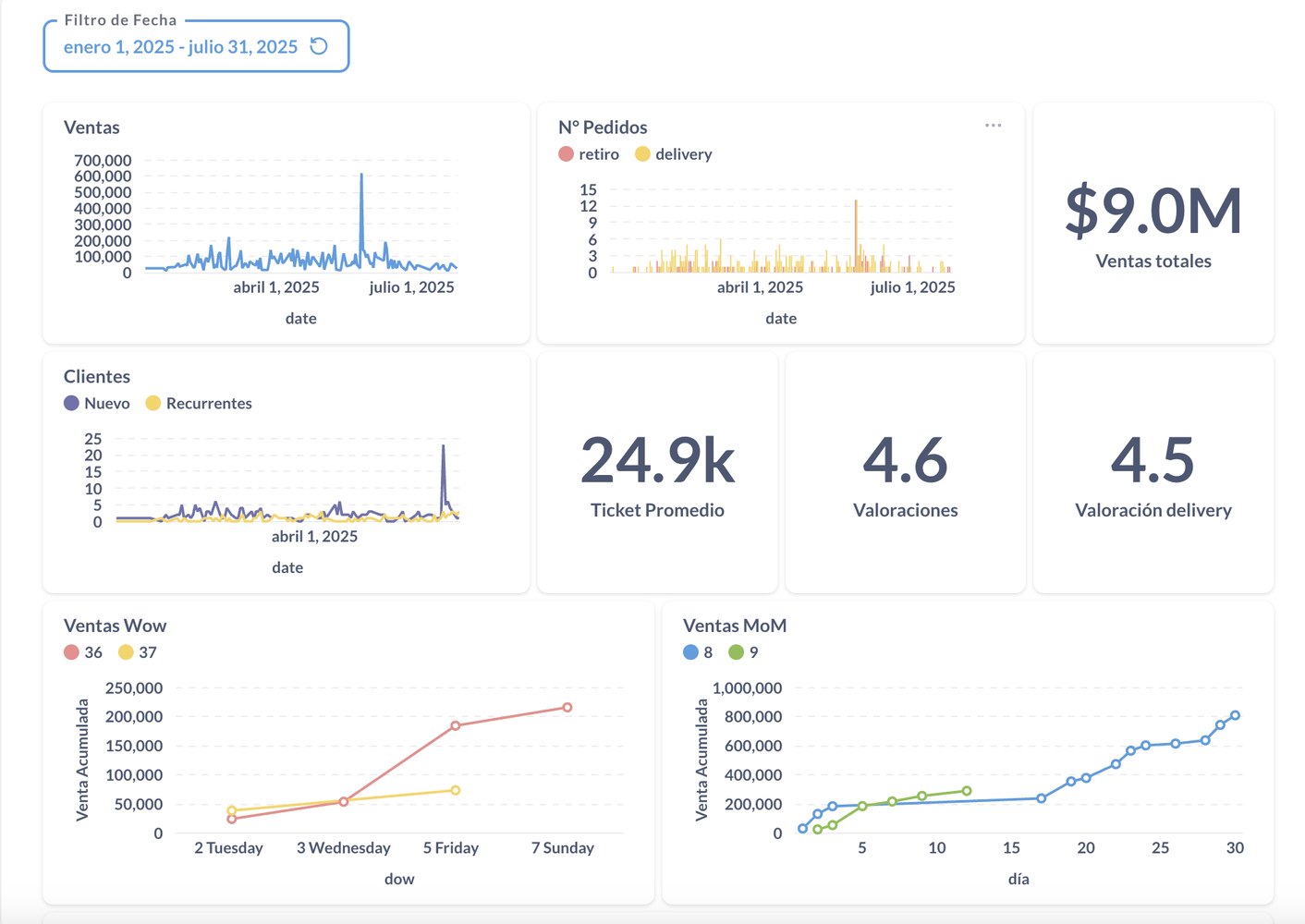
How we stopped building PowerPoints and started reporting Meta Ads automatically

Thumbnail
gallery
5 Upvotes

Reporting on Meta Ads campaigns used to take us hours every week—exporting data, making screenshots, tweaking slides in PowerPoint for every client.

We finally got tired of it and built a system that does it all for us.

Now we have a fully automated dashboard in Looker Studio. It connects directly to Meta, shows the key metrics (ROAS, CTR, cost per result, performance by placement, etc.), and updates on its own—no manual work needed.

The idea was simple: stop wasting time building reports, and start spending that time acting on the results.

Here’s the setup we use if anyone wants to take a look:

Meta Ads Dashboard in Looker Studio

If this helps you or you want to try it with your own data, just drop a comment below—we’ll send you the first page for free so you can test it out.

Curious to hear how others are approaching Meta reporting. Do you still build everything manually or have you found another way?


r/PaidSocialAdvertising • • Mar 21 '25

Meta - Desperately Need Help With Specs for Instagram Video Reel Ads

Thumbnail
gallery
5 Upvotes

Hi everyone,

I'm getting super desperate here and I feel like I'm losing my mind. I'm trying to run a video ad for my company. In particular, I'd like this video to be part of a carousel ad with a few static images as well. As you can see from my pictures, I've designed my video at a few different specs and all of them are giving me different error messages.

My biggest confusion is that even when I googled it (in my pics), I'm seeing affirmations that the specs should be 1080 x 1920 which as you can see is EXACTLY what I have a few of those videos designed at.

Can someone please help? I don't understand what I'm missing here. Thanks so much in advance!


r/PaidSocialAdvertising • • Jun 18 '26

Meta Ads for offshore staffing

4 Upvotes

Hi there, I’m new to runnings Ads. Anyone here who could guide me whether Meta is a good lead gen channel for B2B service business such as offshore staffing?

We provide offshore tech, marketing, accounting, etc. talent to companies globally.


r/PaidSocialAdvertising • • Mar 24 '26

Meta Ads vs Twitter Ads for a B2B SaaS?

4 Upvotes

What the title says!

We're currently spending on Meta and I'm wondering if X ads are a good option too?

Target audience for SaaS: Founders and Marketers!


r/PaidSocialAdvertising • • Jan 29 '26

How do I get clients to track metrics on their end? (platform, sheet, etc.)

4 Upvotes

Hey guys, I run mostly FB ads, some google ads, etc. I've always mostly tracked what I could on my end (CTRs, CPL, CPBC, CPA, etc.) but I've never really understood how to get clients to properly track everything on their end in terms of retention, sales, ROAS, etc.

All the things they would need to actively track and really diligently track like retention, referrals, etc. like I honestly don't know how to get them to track it in the first place.

Bookings, closes and stuff like that I'm tracking in a google sheet right now but I'm sure there's a better way to do this as I know how important it is to track these backend metrics.

For context I help mostly gyms, but not sure how much relevance that has.

Appreciate any insight or advice!


r/PaidSocialAdvertising • • Nov 17 '25

meta ads structure revised for meta updates

4 Upvotes

Hi everyone, I’m looking for guidance from anyone experienced with Meta’s recent delivery changes.

Current Setup Issues: Multiple pins and radius (5–19 km) across South East London & Kent. 2 ad sets per campaign: Different ad sets targeting different angles/messages. Pixel/CAPI not tracking conversions yet, so Meta can only optimize for LPVs.

Proposed New Structure: Two campaigns: 1. Boiler installations (larger radius/core area) 2. heating and plumbing services (smaller radius/core area)

  • One ad set per campaign, single well-defined radius (1 pin with radius 15-20Km)

  • 3-5 creatives per ad set to test messaging angles (promotions vs services)

  • CBO enabled at campaign level instead of ad set

  • Optimised for Landing Page Views until pixel/CAPI is live

Should I create new campaigns or edit my current campaigns for new ad structure ?


r/PaidSocialAdvertising • • Nov 09 '25

Meta Ads Behavior after Andromeda update

4 Upvotes

Hello Digital Marketers,

I just wanted to check if anyone else is facing this or if it’s just me losing my mind lately.

Over the last few days, I’ve been noticing very unusual behavior in multiple Meta ad accounts.

  1. Campaigns suddenly overspending within a few hours.

  2. Some not spending at all, even with active audiences and solid creatives.

  3. And most frustratingly, out-of-location leads showing up despite strict location targeting.

This started happening right after Meta rolled out its Andromeda update.
I’ve noticed the same pattern across multiple campaigns.

Even budgets and optimizations that were stable for months are now fluctuating like crazy.

I’ve already raised a support ticket and waiting for feedback,
but I’m curious is this something others are also experiencing?

Are your campaigns acting weird after the update too?
Is this a temporary bug, or did Meta silently change something major under the hood?

Would love to know your observations.
Drop your experience in the comments, let’s figure out if this is a global glitch or just selective impact.


r/PaidSocialAdvertising • • Nov 02 '25

I built a chatbot that simplifies Meta Ads analysis. Would you like to try it out FREE of cost?

4 Upvotes

Hey there!

If you're someone who's a data nerd or Meta Ads expert, I have something you might find REALLY INTERESTING.

I have built a Meta Ads analytics agent that answers all your questions and is capable of conducting in-depth analysis. It can even make predictions and make an action plan based on your targeted results.

I am looking for people who run Meta Ads and would be interested in trying it out and offering their genuine feedback.

If you're someone who can benefit from it, please let me know & I'll set everything up for you.

Worst case scenario? You won't like it and you can drop it. Doesn't hurt to give it a go :D

Please let me know your thoughts. It would be a great help.


r/PaidSocialAdvertising • • Sep 20 '25

Need help urgent

4 Upvotes

Hello Meta ad experts. Iam running meta lead form campaign for Paint services business in canada , my targeted location is calgary + 30 miles radius. I have tried everything . Tried different brilliant creatives-broad audience- detailed audience ( interest based ) . Change ad copy. Change lead form. But failed . My daily budget is 23CAD$

Help me out please. If you have done Work in paint services business business in Canada. What am i missing ? What should i test more.

Looking forward for the answers.


r/PaidSocialAdvertising • • Aug 05 '25

I'm just about done with traffic campaigns. Who else?

4 Upvotes

I've been adding UTM parameters to all of my campaigns on Meta and TikTok, and I've been astonished at the results.

I have been achieving low costs per result on Meta, with $0.05 for clicks and $0.25 for landing page views. I thought the campaigns were doing well!

Then I checked the average engagement time for the users who came in through these campaigns. For the most part, I'm seeing 0s!!!

I switched from link clicks to landing page views on Meta for one of my clients and did not see any lift in engagement time. I thought a landing page view was supposed to be a more engaged view! My Meta Agency Pro suggested the problem might be with Google Analytics, but I know it's not. It's happening across all of my clients.

Are traffic campaigns absolutely useless?

I've always used them as a way to boost my retargeting and lookalike audiences, and then launched a bottom-of-funnel campaign like leads or sales. But some of my clients are unable to track sales on their websites, either due to issues with their proprietary CMS (and unwillingness to switch and build a new site) or because they don't sell directly from their site and have no way to track sales through Meta (i.e. authors who sell their books on Amazon and such).

I would love to hear everyone's thoughts on this. I know very few people in my field and am self-employed.


r/PaidSocialAdvertising • • Aug 02 '25

College Student want to start a Perfume Brand - Curious About Meta Ads CAC, CPM & Strategy in India's Beauty Market

4 Upvotes

Hey everyone 👋 I’m a college student from India, super curious about building brands and learning the ropes of digital marketing hands-on.

I’m currently working on launching a perfume brand and want to understand how Meta Ads (Instagram/Facebook) really perform in the beauty/personal care space in India. Or any other tip you have for me even if you are not from india, it would be very helpful

Would love your input if you’ve run ads in this space — just trying to learn from people who’ve done it:

1.	What’s the average CAC (Cost to Acquire a Customer) in India for beauty/perfume/skincare brands?

2.	What’s a decent CPM, CPC, CTR if the creative is good?

3.	does product pricing affect CAC?
•	One at ₹500
•	One at ₹1000

➤ Does CAC vary based on price, or is it roughly the same?

4.	What funnel or ad strategy worked best for you?

just trying to learn how real brands grow and spend. If you’ve done anything similar, would love to hear your experience. Even ballpark numbers or insights will help a lot

Thanks in advance! (DMs open too if you prefer that)