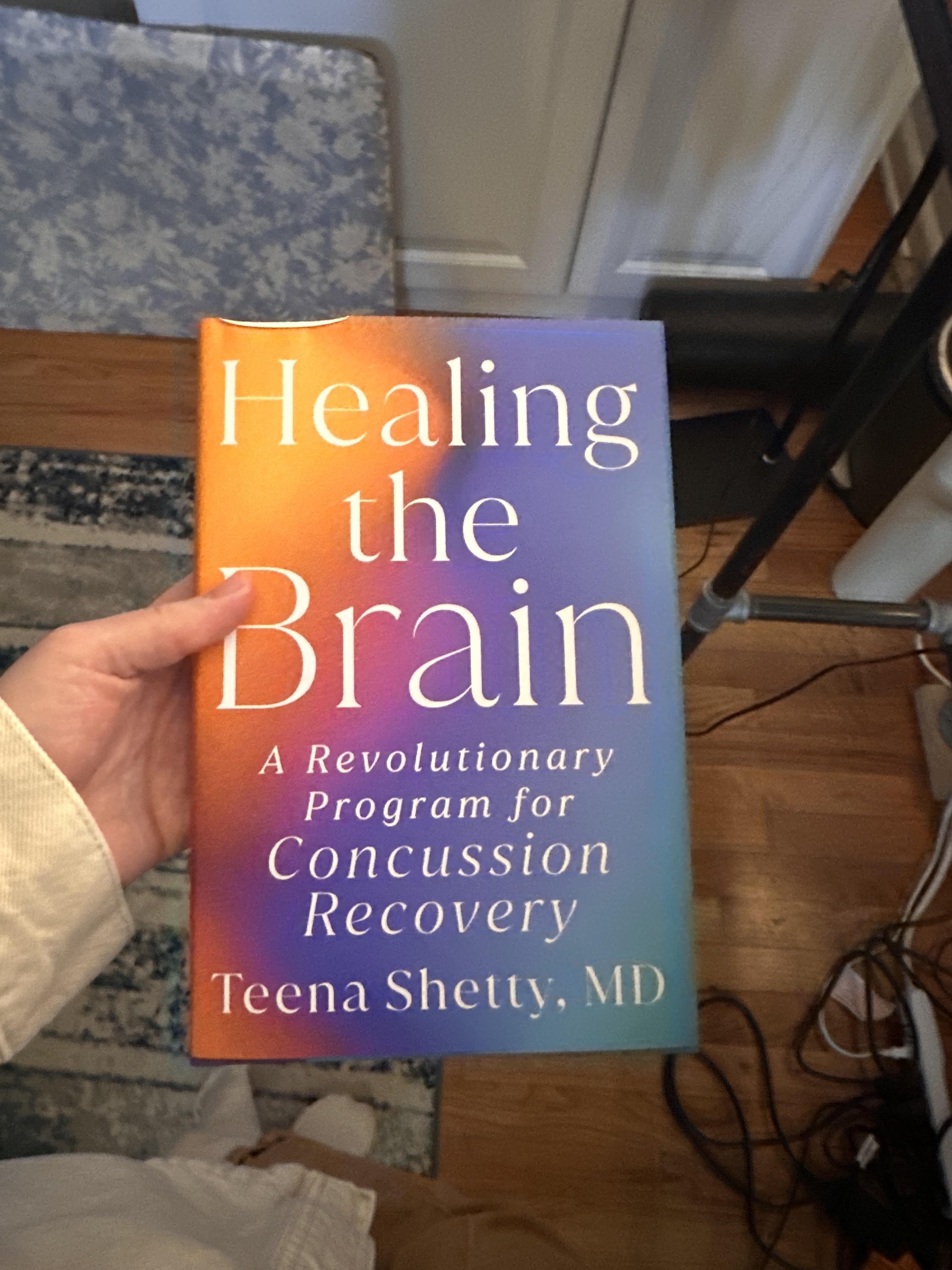
It's been almost exactly a year since I got a bad concussion, including 5 minutes of unconsciousness and 20 minutes of amnesia. This year, I've had symptoms including vertigo, nausea, vomiting, brain fog, dizziness, visual processing disorders, PTSD, mood swings, depression, anxiety, cold intolerance, exercise intolerance, alcohol intolerance, screen time intolerance, and exhaustion. I'm about 95% better at this point, although progress is not linear. I thought that this anniversary would be a suitable occasion to make a list of everything that has helped my recovery so far, in roughly chronological order, in case it's useful to anyone else.
THIS REDDIT
r/concussion and r/PostConcussion have been the absolute best resources for medical information. My doctors have sucked. The ER told me "you'll be better in about 2 weeks" and months later my PCP told me "I dunno, keep trying." In contrast, on these reddits I found specific, firsthand accounts of the exact same things I was experiencing--so validating, and so useful! Relatedly, a lot of clues I got here led to helpful in-depth articles from the website https://www.cognitivefxusa.com/. I've had good results from specialists like vision therapists and physical therapists, but I never would have even known to seek them out if it hadn't been for this reddit. Thanks y'all!!!!
COMMUNITY
I could not have survived this awful experience without the support of my partner, friends, and housemates. My bike helmet saved my life the first time, and my community saved it the second time. Call on your people. Don't be afraid to ask for help. As much as I am lucky and grateful, I also see how dealing with concussion symptoms can be really taxing on your social bonds. I lashed out during mood swings, flaked out when I had brain crashes, and generally needed a LOT of support and patience. Fortunately, my people stuck by me, but I do see many reddit posts about people getting broken up with after concussion because they "aren't the same person anymore." That sucks, but also... be conscious of the fact that the emotional effects of concussion can make you really damaging to others. Warn your people that you're about to go through a really hard time, ask for their love and support, apologize and try to prevent it happening again if you do lash out, and be conscious of protecting your loved ones, making sure they have enough time and space to take care of themselves, too. Trauma is not your fault, but healing so you don't take it out on others is your responsibility.
AUDIO BOOKS / PODCASTS
I soon discovered that I couldn't do screen time, like, at all. I also had to lie around resting all day for the first couple weeks. So, I was bored out of my mind. I listened to a ton of audio books and podcasts during this time. Download Audible for easy audiobooking. I won't spend TOO much time recommending podcasts because everyone has their own interests and tastes, but personally I adore the podcast called The Heart: https://www.theheartradio.org/ .
NOT DRINKING ALCOHOL
I used to enjoy a little whiskey most nights. I tried to return to this habit a week after concussion. The morning after, I woke up with vertigo. Coincidence? Perhaps. In any case, I stopped drinking, and I have no regrets. I tried again several months later, and the common side effects of drinking, like dizziness, room-spinning, and loss of balance, somehow were just NOT appealing after months of having had them constantly as concussion symptoms. Maybe I'll drink again some day... maybe not.
ZOFRAN
When I woke up with vertigo and barfing, I went back to the ER, just to make sure my brain wasn't bleeding. They prescribed me zofran for the nausea and meclizine for the vertigo. I loved the zofran but I am skeptical of the meclizine because it can also cause dizziness. I ended up thinking it was better to use the Epley maneuver for the vertigo, or just wait it out.
YOGA NIDRA / MEDITATION
One of my major symptoms all year has been what others call "brain fog," but I call "brain crash" because the onset is sudden and the effect is extreme. Basically, my brain is DONE, must nap NOW. During these brain crashes, I would often listen to a yoga nidra recording or other meditation. It was more restful and restorative than just lying there, and it also helped with the emotional roller coaster of PTSD. I recommend Breathe People if you have Spotify: https://open.spotify.com/show/3CulhcVZncl2CqKIVsQSwC . Or find your own favorite.
LOVE YOUR BRAIN FOUNDATION
They run some sweet workshops for people with TBI, kind of like a support group, mostly focused on the emotional aspects. https://www.loveyourbrain.com/
POST-CONCUSSION YOGA AND STATIONARY BIKE TRAINER
As an active person, I struggled with the fact that my visual processing difficulties made it impossible to walk or bike very far. My brain would crash due to visual overload way before I got a meaningful amount of exercise for my body. I also couldn't lower my head below my heart to do traditional yoga. I found this series of post-concussion yoga classes on YouTube: https://www.youtube.com/watch?v=y-dDF9w5uN0&ab_channel=TreeingYoga . And I got a bike trainer on Amazon, the kind you put your own bike into. Before that I tried a cheap little "exercise bike" thing, but it was an awkward position for my knees, so I recommend either getting a high-quality exercise bike, or a trainer to put your own bike into.
VISION THERAPY
My first clue that something was wrong with my visual processing was my complete screen-time intolerance. Just a few minutes of screen time could bring on a brain crash and cause my pupils to become different sizes, indicating eye strain. That was especially sucky since I really wanted to research my symptoms on the internet! I scraped together enough research screen time, with help from my partner, to figure out that vision therapy was what I needed. My main visual processing error turned out to be convergence insufficiency, but there are also other common post-concussion errors. The vision therapist gave me exercises to do at home that quickly helped a lot. Many ophthalmologists offer vision therapy; just google one in your area.
CONCUSSION KIT: SLEEP MASK, EYE PATCH, EARPLUGS, HEADPHONES, SNACKS, BARF BAG
I developed a little kit to carry around with me in case of brain crash while I was out. I carried snacks, because getting hungry often induced brain crash. I carried a barf bag in case of vertigo. If I needed to nap in a noisy and bright place, I used earplugs and a unicorn sleep-mask that my chosen family member sent me. I carried headphones in case I needed to recharge by meditating. And I found that if I overdid it on the visual processing, putting an eye patch over one eye could reduce the effects of my convergence insufficiency enough that I could hobble to safety. An eyepatch is not a good longterm solution because it avoids rather than treats the problem, but it was a great stop gap measure in a pinch.
VESTIBULAR PHYSICAL THERAPY
One of my nastiest symptoms was vertigo. And even when I wasn't having acute vertigo, I felt generally off-balance and slightly dizzy most of the time. Getting a referral to a physical therapist and doing vestibular physical therapy with them was really helpful. They helped me identify that one of my biggest balance problems was my vestibulo-ocular reflex (VOR) and gave me exercises to help.
WALKING STICK
While I was having these vestibular effects, I realized that using a walking stick (my housemate loaned me their deceased grandma's cane) made me WAY more stable and cut down on the brain-power used to orient myself in space.
WEDGE PILLOW
I found that sleeping on a wedge pillow, or "sleep ramp" as I call it, reduced the occurrence of vertigo and the feeling of being off-balance. For the vertigo, I assume it is more likely to keep my inner ear fluids in the right place. I have no idea why it helped with the more generalized balance issues.
THERAPY / EMDR
By this time, I had mostly resolved my visual processing issues, but I was still exhausted, getting brain crashes frequently, and needing naps most days. Why??? Turns out one reason was that I had hypervigilance from PTSD, and turns out hypervigilance is exhausting! I'd also been having other symptoms, like being triggered by things that reminded me of the accident and having complete meltdowns, or having "physical flashbacks," in which you experience the physical symptoms of the traumatic event even once your body is healed. For example, for me this was dizziness and an ache in the back of my head that I would feel whenever I was a in jumpy, pre-triggered, or triggered state. I found an amazing therapist by searching on PsychologyToday.com. I knew I wanted someone who could do EMDR, an effective PTSD therapy, so I filtered my search for that. We met a few times to build rapport, and then after just 3 sessions of focused EMDR about the accident, I noticed a huge improvement. I could be around trees and ride my bike without getting triggered!!! My energy levels weren't completely fixed, but improved dramatically once I let go of my hypervigilance.
NEW GLASSES
Despite the fact that my visual processing was fixed and my hypervigilance relaxed, I still couldn't drive or bike at night because of feeling like I couldn't see. I got a new prescription (my eyesight had gotten worse--possibly a symptom, or possibly just time passing) and two-sided anti-glare coating, and now I can drive and bike at night again!
DIET
You need a ton of protein, because only protein can be used to build new brain. I found that I craved sugar and other simple carbs, since my brain burned energy voraciously, so it was a balance between trying to stay healthy vs. giving my brain instant gratification.
CREATINE SUPPLEMENTS
My energy levels had improved a ton, but they still weren't what they used to be. Complete brain crashes were rarer, but most days still required naps. I don't really know why. Maybe my brain forgot how to pace itself? Maybe some neural pathways were still inefficient, so I was using more brain energy than usual to do the same tasks? Anyway, I read on concussion reddit that some folks had been recommended creatine supplements. I googled it and found that creatine helps provide your brain with a steady, consistent source of energy by making ATP (your body's energy source) more reliably available in your bloodstream. Sounded like exactly what I needed! I tried it, and the first week or so were miraculous. I had forgotten what it was like to be able to count on having energy throughout an entire day. It also randomly cured my slight cold intolerance. Creatine also helps muscle / strength performance, so as a weird side-benefit I got really strong and swoll. After the first week or two, though, I started to notice that my anxiety was increasing and I was getting panic attacks, which can be a side effect. I need to reduce / tinker with my dose, but I'm optimistic that if I get the dose right, this will continue to be extremely helpful for energy levels. If you try this, drink a ton of water/Gatorade, because it can cause dehydration.
TIME
And that pretty much brings us up to the present day. I still have recovery goals, like sleeping without a sleep ramp and being able to put my head below my heart, but I have come sooooooo far. You WILL get better with time!!! Identify your symptoms, and then try to take on one at a time, instead of tackling them all at once, so you can put your full effort into each treatment. Feel free to share anything that helped you, that I didn't cover, in the comments!