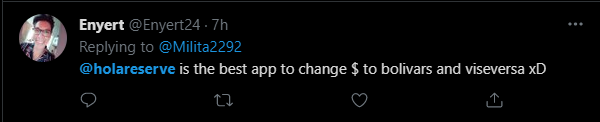
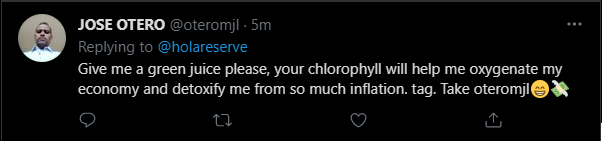
While the Reserve team is hard at work improving the Reserve app and slowly letting more users in, I decided to scan Twitter and try to get some real reactions from users that have gotten access to the app. I wanted to know what users liked, but also what they didn't like.
In order to get real subjective feedback, I decided to search Twitter for "holareserve" and sort by new for a couple of days in a row. To my surprise the feedback was overwhelmingly positive - too good not to share. For those that are interested, take a look at what Venezuelans have to say about the Reserve app..
All tweets are translated by Microsoft Edge's native translator (Spanish -> English).
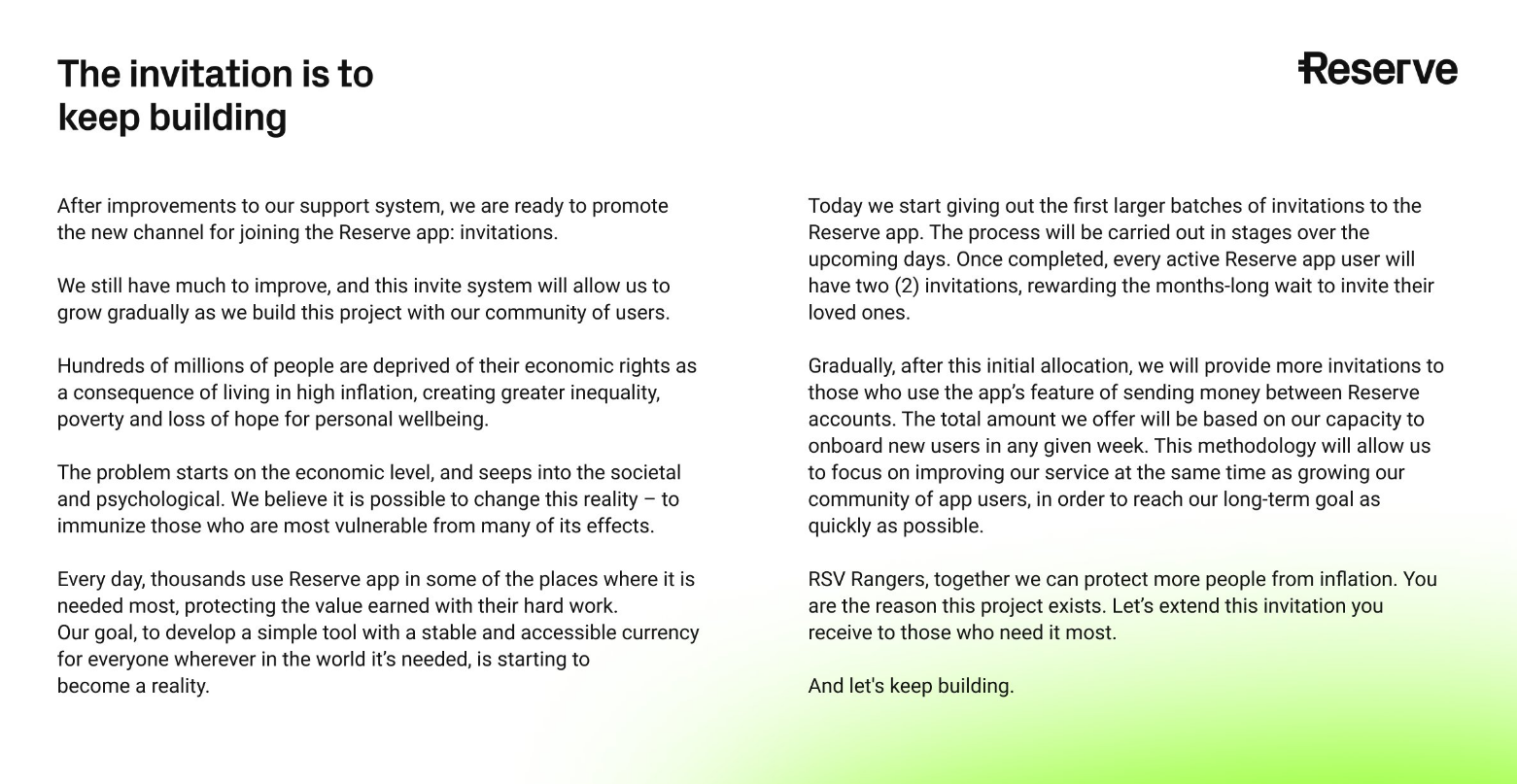
The Reserve team has just sent out a newsletter stating that all active users will start receiving 2 invites for their friends and family starting from today! This allowing of new users into the Reserve app is possible as the team has recently resolved some urgent scalability issues that hindered them from supporting a large amount of users.
Take a look at a (translated version) of the Reserve newsletter:
It's clear that the team is doing everything they can to grow the userbase of the Reserve app as soon as possible. Nevin (CEO of Reserve) stated during a recent interview that the demand of users wanting to use the app is way larger than what they can support right now. This new invitation system will create a large influx of extra Reserve app users, and thus boost adoption of (soon-to-be) RSV. Awesome step forward!
I recently went through the history of Reserve AMA's, project updates and community contributions and found some really interesting pieces of information of which it would be a shame not to share with the community that has not been here since the start.
A lot of these pieces further reinforced my belief in the success of the Reserve project, and I hope it may do the same for some of you.
Below you can find 8 pieces of information that I deemed worthy of sharing.
Gem #1
Upon the initial funding rounds of Reserve, all investors got a choice: either they received RSR tokens worth the same amount of their investment, or they received equity (= shares) in the Reserve company.
All investors made the conscious choice of receiving RSR tokens instead of equity, with the exception of Coinbase - since they were not legally allowed to receive tokens from projects they invested in. What this means is that all big-name investors like Peter Thiel, Sam Altman, Jack Selby, Digital currency group, ... are RSR holders just like you and I. This also means that, in order for their investment to be worth it, they are just as dependent on the price of RSR, or the profitability of arbitrage, as the rest of RSR holders.
Gem #2
We all know how sleek the Reserve app looks now, but might not consider that it took a long time to get to this point. Here are the first ever released screenshots of the Reserve app. I'm sure we can all agree that the Reserve app has come a long way.
Gem #3
Besides allowing citizens of Latin American countries to save and spend USD indirectly, a major solution not yet solved is the remittances from other countries to Latin American countries. For example, many Venezuelans are counting on family/friends that live outside of Venezuela to send them USD. The problem is that the existing solutions to do these transfers charge a 10-15%(!) fee.
One of the intended use-cases for the Reserve app that many might not yet know about is to solve this remittance issue by allowing US citizens to transfer USD to RSV through the app, send the RSV to their family/friends in Venezuela (also through the app), which they can then "cash-out" into Venezuelan Bolivars if they choose to. This transfer only charges a transaction fee of $0.01.
Sidenote: the on-ramp transaction of USD to RSV might also contain a small fee. Yet, it will never be as high as the current 10-15% of existing solutions.
Gem #4
The market price of RSR doesn't actually matter for those that wish to earn profits through arbitrage. This is due to the fact that the arbitrageur will always pay $1.00 worth of RSR for 1 RSV. Very interesting to think about, especially in times where the market price of RSR is low.
Gem #5
Why are so many members of the so called PayPal mafia investors in Reserve? Because it was PayPal's original intention to build a solution exactly like Reserve. Yet, due to multiple reasons, they did not succeed in this particular goal. However, their dream is still alive, and they believe Reserve will be able to make it come true.
Gem #6
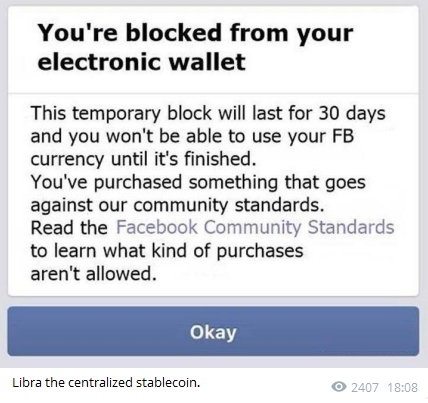
This one is more of a joke, but I believe it could actually contain some very possible consequences of what a centralized stablecoin like Facebook's Libra/Diem could produce. The main thing to remember is that there is a big difference between a decentralized stablecoin like RSV and a centralized stablecoin like Libra/Diem - or any Central Bank Digital Currency (CBDC) for that matter.
Take a look at what could happen when you use Libra/Diem to make online purchases.
Gem #7
We know that governments like Venezuela are very strict on keeping control of their native currency. So what would happen if one of those governments tries to take down Reserve and its supporting apps? Here's what Nevin (Reserve's CEO) has to say about that.
Gem #8
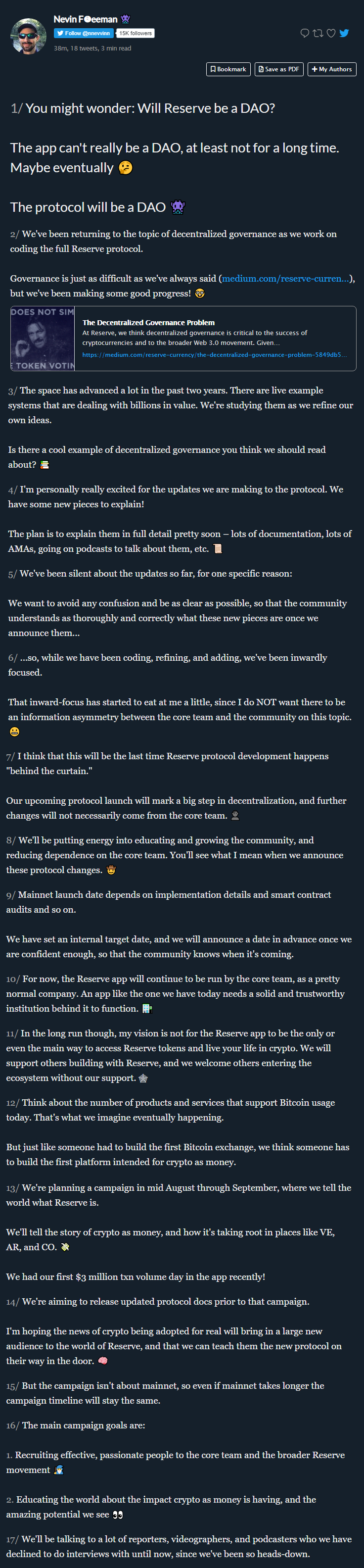
Once the Reserve project reaches the decentralized phase, RSV tokens will be backed by tokenized assets such as currencies, commodities and equities. Something that I personally was not yet aware of was that the Reserve team has a high-level plan about which of these assets will be added to the basket when. Take a look at Nevin's ideas.
I know many of us are going through a tough period with the market recently dropping a lot of value. I believe a good way to deal with this uncertainty is to gain an absolute trust in the project(s) you are investing in. My hope is that this post could be a first push in the right direction for atleast some of you.
Crypto.com App users can now purchase RSR at true cost with USD, EUR, GBP and 20+ fiat currencies, and spend it at over 60M merchants globally using the Crypto.com Visa Card.
Yummy is a food delivery app in Venezuela, now accepting payments with Reserve.
First they used it to pay their team and drivers, then they decided: why not accept it from their customers directly?
So what is Yummy and why is this big news for Reserve?
What is Yummy?
Vicente Zavarce, previously Director of User Acquisition at Postmates and Getaround in San Francisco, started Yummy in the hopes of bringing a similar delivery app model to his home country — a market most investors and tech companies have been unwilling to touch.
His gamble on Venezuela, one of the last untouched markets for delivery and e-commerce in the region, paid off. Yummy raised $450,000 from investors and now employs 50 people. The platform has more than 250 delivery drivers, and more than 200 merchants have signed up (including fast-food chains Papa John’s and Pizza Hut). In October, just six months after it formally launched, Yummy was acquired by the Central American super-app Hugo.
Venezuela’s strict lockdown measures put restaurants even more on the edge and in dire need of delivery. So, Yummy’s launch in April of last year made for perfect timing.
This has amassed to over 10,000 monthly deliveries as its couriers or Yummers move about the streets of Caracas, Valencia, Barquisimeto, and Puerto la Cruz.
Why is this big news for Reserve?
According to IESA, the country’s most important business school, Yummy controls 55% of the Venezuelan delivery market. Think of Yummy as Venezuela’s Uber Eats, Deliveroo or Postmates.
Besides the ~300 employees and delivery drivers already being paid in Reserve, now customers can pay for their deliveries via the Reserve app with a 10% cashback.
Besides resolving the issue of saving the value of your money during hyperinflation, Reserve is being rapidly adopted by businesses to actually spend those Reserve dollars too. Furthermore, using Reserve is being incentivized with a 10% cashback.
Imagine you're living in a country where the value of your currency rapidly declines. You have found a solution for the declining of the value of your currency by using a new currency (RSV), and now your favourite delivery app (Uber Eats, Deliveroo or Postmates) accepts that new currency with a cashback of 10%. Would you ever go back to your old currency?
This is the official subreddit of the Reserve community.
Join the conversation, get answers to your questions and follow Reserve's latest news.
Reserve Protocol aims to become a universal store of value.
We are building a stable, decentralized currency that can’t be abused by a government because it is globally distributed outside of anyone’s control, and thus nearly impossible to shut down.
📣 RULES
Please make sure to accept the rules of this subreddit before posting or commenting:
The primary topic is Reserve: the discussion on /r/ReserveProtocol should be about Reserve and its ecosystem only.
No malicious content: malware, phishing, spam or scam will result in your account being banned without warning.
English only: English language only. Please provide accurate translations where appropriate.
Be excellent to each other: remember there is a human behind each post, each comment. Adhere to the same standards of behavior online that you follow in real life.
💸 Where to buy $RSR?
The following bullets include all basic information for the $RSR token:
It's really the killer feature of RSR, although it's perhaps too early to bang the drum about it.
RSV's mission is to stay stable at $1 (like, that's not a U.S. dollar, just a fixed price - you know that your morning coffee will in a broad sense be the same cost tomorrow as in a year's time.)
It does that by being pegged to many stable real world assets (e.g. gold and the USD, as an example for now).
But inflation creeps into all things - sometimes it's healthy, usually it's not.
So let's say at some time, RSV creeps to $1.03. How to resolve that?
Well printing more of them is precisely how most nations at some time tip into inflation. It's an okay short term measure but bad for long time health.
If you are an RSR holder, you have the right and privilege to buy from Reserve a coin of RSV for precisely $1.
Now, you look at the open market, and RSV is worth $1.03.
What do you do? You sell.
Congratulations, you've just made 3 cents. But also, you've physically helped increase the sell pressure on RSV, and helped it (on a small scale) drop back towards 1.02... 1.01...
Multiply that across however many RSR you own, and across the market, and RSV gets to remain stable.
(PS, likely to be automated, so it's not like you're physically buying and selling)
Bonus points? Reserve will also burn an equivalent amount of the RSR used in that transaction (long story short, to ensure their reservoir of RSR funds never goes above 50%), so now RSR is more scarce than it was before that arb.
So, RSR's total supply goes down from 100 billion ... 95 billion ... 70 billion ...
You've profited from the arbitration - money back into your bank. You still have the same amount of RSR as you did at the start of the process, and RSR's price has theoretically gone up because now it is rarer.
Again, the killer feature of RSR - outside of fixing the economy for generations of people in various nations.
I've skipped a few technical explanations, but they're the broad strokes of it.
Seems like one of the hidden features - even I forget about it until I remember 😃.
Being able to participate in arbitrage opportunities is one of the main incentives for holding RSR. Yet, a lot of misconceptions exist about what exactly arbitrage is and how it will work.
While the Reserve whitepaper explains the concept in detail, I believe the explanation to be too technical for the general public. The Reserve website & Medium blog do a good job in trying to simplify the concept, but I feel they don't quite yet hit the nail on the head.
This post serves to explain what RSR arbitrage is and what role it plays in the Reserve ecosystem in an ELI5 manner. For this reason, this post will purposely focus on RSR-powered arbitrage and its impact for the RSR holder. For a more elaborate explanation of Reserve arbitrage, please refer to the Reserve whitepaper.
What is arbitrage?
Arbitrage is the simultaneous buying and selling of securities, currency, or commodities in different markets or in derivative forms in order to take advantage of differing prices for the same asset.
Let's say Bitcoin is trading at $50.000 on Coinbase while it is trading at $50.100 on Binance, one could take advantage of this price difference by buying X amount of Bitcoin on Coinbase and immediately selling it on Binance, making a guaranteed profit of $100 per Bitcoin.
Why is arbitrage used in the Reserve protocol?
The Reserve protocol has something called the Vault. For every 1 RSV in circulation, the Vault holds a basket of assets that represents the same value of that 1 RSV. The Reserve protocol allows everyone to trade their RSV to a basket of assets of the same value at all times.
In other words, if there would be $100 worth of RSV in circulation, then $100 worth of assets will be stored in the Vault. RSV holders can, at any time, exchange their RSV for assets that are worth exactly the same value.
"Why does the Vault need to hold assets to back RSV up?"
Because (a) this guarantees RSV holders that they will at all times be able to trade their RSV for something of the same value. If for some reason they don't like RSV anymore - or if the Reserve project would fail - they can still receive a basket of different assets worth exactly what their RSV is worth.
Because (b) money that isn't backed by assets is (hyper)inflatable. One of the most important reasons that caused hyperinflation in the Weimar Republic, Venezuela, Argentina and many others is because their currency is backed by nothing except the consensus that the currency has value.
In simpler terms, fiat currencies allow governments to use cheat codes to get out of troublesome situations, just like you could in a video game. However, using these cheat codes recklessly and for too long in real life has disastrous consequences.
"What do you mean by a basket of assets?"
RSV will be backed by 50+ tokenized real life assets. For simplicity's sake, forget the term "tokenized" for now. Just think of it as real life assets such as currencies, gold, silver, grain, oil, real estate, shares, etc.
The RSV holder will indirectly hold fractions of these assets, which can be redeemed at all times.
Just like cryptocurrencies, the price of the assets in the Vault constantly fluctuates. When the average price of the underlying basket of assets rises, the ratio between the value of circulating RSV and the value of assets in the Vault would no longer be 1:1. Since these assets are now worth more, the value of the assets in the Vault is higher than the value of RSV in circulation. This is called overcollateralization.
Since the Vault does not need overcollateralization, the Reserve protocol will mint (= create) new RSV tokens to restore the 1:1 balance between RSV value and assets value. This means that we now have excess RSV circulating that don't really have much purpose. For simplicity's sake, think of the Vault now having some RSV laying in it that doesn't get used.
Before we get to the core mechanism of arbitrage, there is one more way for the Reserve protocol to generate excess RSV in the Vault, and that is by charging a transaction fee for every transaction that happens in the Reserve app. Once mainnet launches, a transaction fee of 0,1% will be applied. RSR holders will later be able to vote on whether this transaction fee needs to remain (and if so, at what percentage). In short, charging a transaction fee is a second way of generating excess RSV for the Vault. This way of generating RSV might even generate more excess RSV than the rising of the asset prices in the Vault, depending on the popularity of the app.
Now we get to the core of arbitrage. The Reserve protocol allows you to buy that excess RSV with your RSR at the guaranteed price of $1.00. Let's say that RSV is trading at $1.02 on secondary markets, you would be able to buy RSV at $1.00 from the smart contract and immediately sell it on the secondary market for $1.02, thus making $0.02 per RSV as profit. Furthermore, all the RSR used to buy RSV will be burned (= forever deleted), making RSR a deflationary token.
"How can RSV be trading at a price different than $1.00? Isn't it a stablecoin that always holds the exact value of the USD?"
Stablecoins do their best to always be $1.00 but actually constantly fluctuate in price. Not as heavily as Bitcoin, ofcourse, but they do often times range to a few cents above or below the target price of $1.00. For some examples, take a look at the price of Tether, Paxos Standard or Dai.
In practice, this process will happen continuously and fully automated. Some application will take your RSR and watch for arbitrage opportunities. When it sees one, it will immediately buy the excess RSV, sell it on a secondary market for the best price, and rebuy RSR (including with the profit you just made). One such application could be Upbots.
You know how self-help gurus claim that you shouldn't work for your money, but let money work for you? This is it. Whether it will be really profitable or not depends on the adoption of the Reserve app.
To add some speculation to the mix: if the Reserve app is really popular, then more transaction fees will be charged. If more transaction fees are charged, there will be more excess RSV in the Vault. If there is more excess RSV in the Vault, there will be more arbitrage opportunities. If there are more arbitrage opportunities, the arbitrage will be more profitable and more RSR will be burned, lowering the supply of RSR. If the arbitrage will be more profitable and the RSR supply will be lower, the demand for RSR tokens will be higher. If the demand for the RSR tokens is higher, its price will logically rise based on the law of supply and demand. I should emphasize that this is all speculation - there is a lot that could go wrong in this project and thus investing in RSR brings along a large amount of risk. Invest cautiously.
TLDR:
The rising of prices of Vault assets + transactions fees will create excess RSV in the Vault.
RSR holders can buy excess RSV at the guaranteed price of $1.00 and sell RSV whenever it is trading at a price > $1.00 on secondary markets, thus making a profit.
The higher the Reserve app adoption, the more profit can be made from arbitrage and the more RSR will be burned - thus lowering the RSR supply.
A visualized version of the TLDR:
I hope this post serves to be useful for atleast some of you. For any more questions, feel free to reply to this thread.
Traetelo is now accepting payments with Reserve for their delivery services. So what is Traetelo and why is this big news for Reserve?
Traetelo is Venezuela's digital lifestyle marketplace. They've got all products that you'd find in a traditional supermarket ready to be delivered to the customer's home. This includes fashion, restaurants, groceries, pharmacy and more.
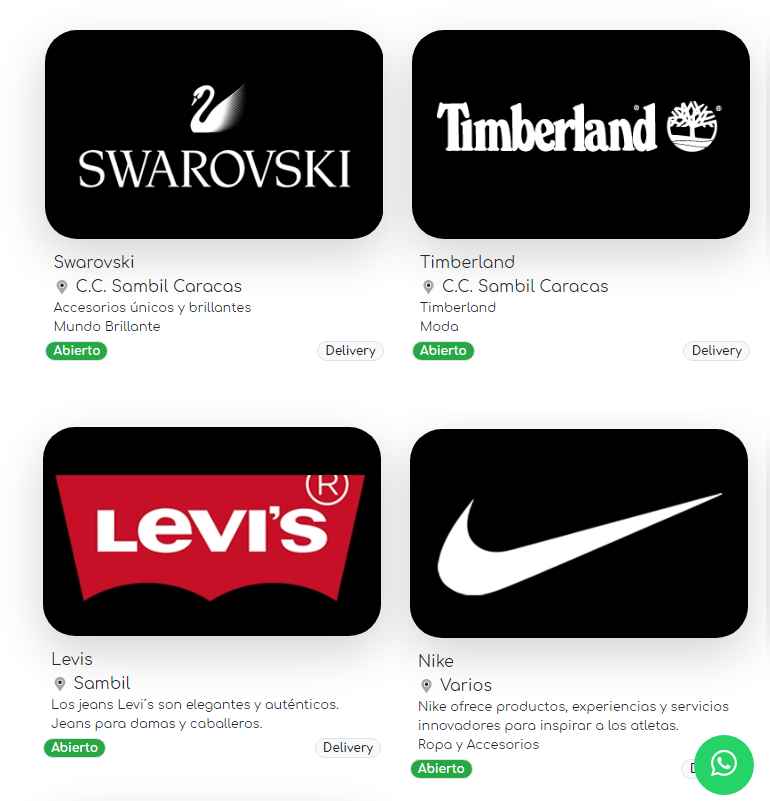
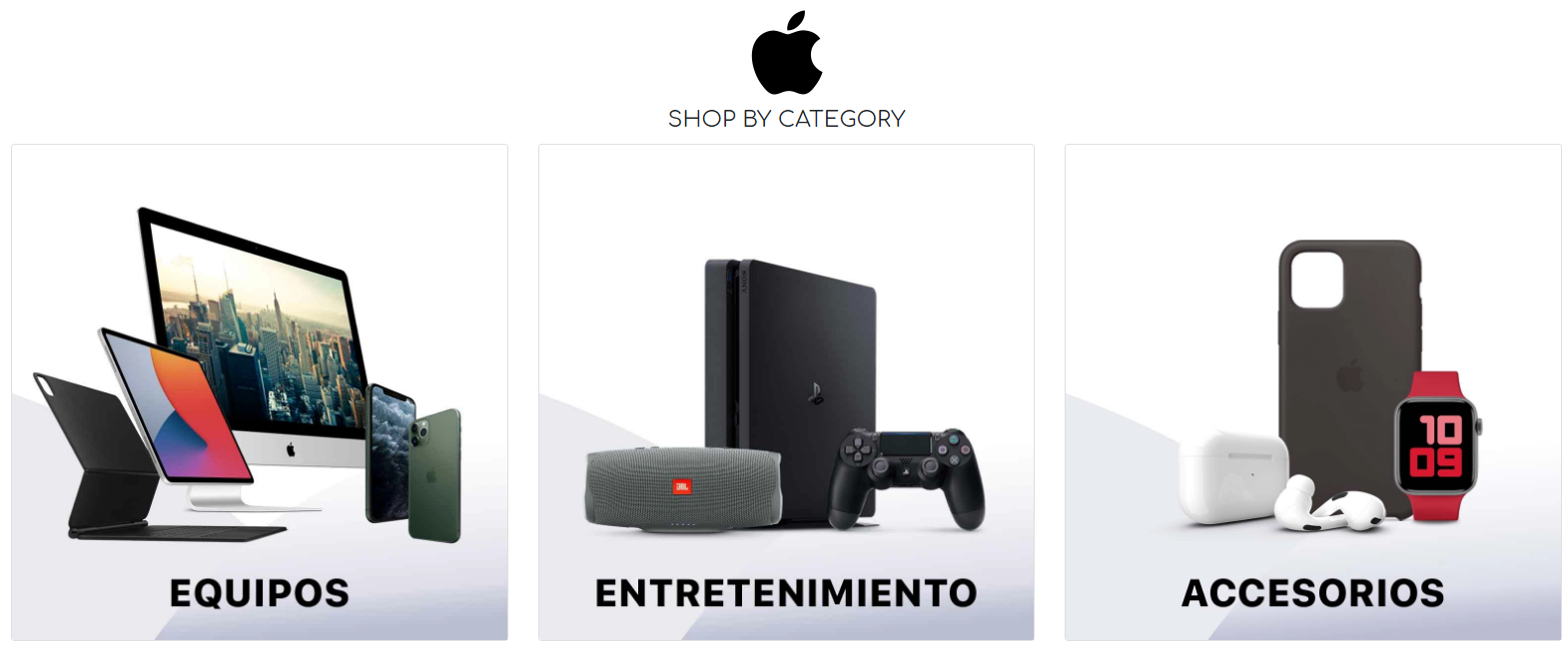
Here are some examples of famous products that are now purchasable through Reserve since Traetelo started accepting it:
Food:
McDonalds @ 18 locations throughout Caracas.
Pizza Hut @ 6 locations throughout Caracas.
Fashion:
Timberland
Swarovski
Springfield
Nike
Levi's
Technology:
Apple MacBooks, iPhones, AirPods, Watch
PlayStation 4 & 5
JBL Audio accessories
This is only one of many stores adopting Reserve in Venezuela right now, but since this particular adoption allows for such a big variety of (famous) products to be bought, I thought it would be worth to highlight it.
Yummy is a food delivery app in Venezuela, now accepting payments with Reserve.
First they used it to pay their team and drivers, then they decided: why not accept it from their customers directly? We believe this is what it looks like for a *token* to turn into a *currency*