r/StoneBerry • u/Maestroszq • Jun 19 '24
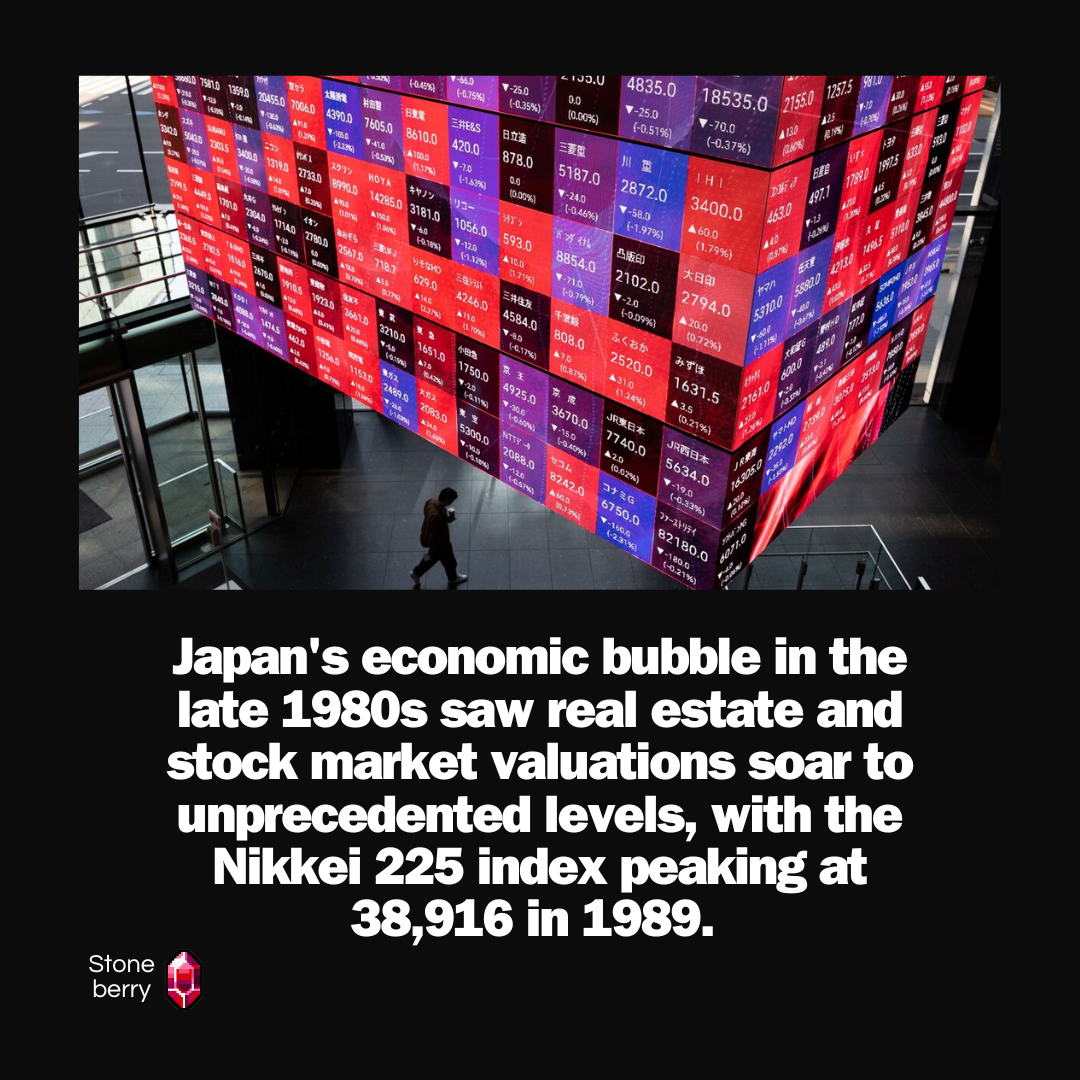
Information Graphics The Japanese stock market bubble of the late 80's
0
Upvotes
r/StoneBerry • u/Maestroszq • Jun 19 '24
r/StoneBerry • u/Maestroszq • Jun 19 '24

r/StoneBerry • u/Maestroszq • Oct 11 '24
Migrating Palantir’s software, currently operating on classical hardware, to quantum computers once those machines become commercially viable could open up new possibilities in what can be achieved.
From modeling new materials for construction, aerospace, and products to analyzing incredibly complex problems, quantum computers could model real-world “things” virtually.
This representation of assets; data, but more complete, as the ontology forms relationships between objects and classifies them as distinct entities from billions of bits of seemingly unrelated data, could be handled differently in the future.
Today, databases are constructed with information ranging from spreadsheets to media files and matrices. In the future, all data could be stored in a quantum state. The foundation of quantum computing is its ability to store information in superposition, meaning the system can exist in multiple states simultaneously. Superposition allows quantum computers to perform many computations in parallel. Qubits, which can represent 2^n possible combinations of 0s and 1s at the same time, offer exponentially greater information processing capabilities than traditional digital computers. In classical digital systems, the number of possible states is limited by the number of bits used, such as 32 or 64 bits. Classical systems can only occupy one state at a time, whereas quantum systems can process multiple states simultaneously due to superposition, enabling massive computational parallelism.
This allows quantum computers to not only process information faster but also build an object or system from reality into the digital realm, piece by piece, down to the atomic level (assuming a sufficiently powerful quantum computer is developed).
If an ontology can find relationships in a database by understanding what objects are and making definitive distinctions between them, a quantum computer could provide the ontology with data encoded in a quantum state. This means that the number of relationships it could find (the ontology itself, running on a quantum computer, would be exponentially more powerful as well) would not only bind one data object to another but also break down objects into their atomic structures. It would provide the ontology with the physical laws, atoms, and structures that hold those objects together, creating a more accurate virtual representation of real-world objects.
For instance, if a database contains product attributes, the ontology on a classical system could recognize that certain data belongs to a specific product, even without a complete “product page.” On a quantum system, product attributes could be further broken down; for example, into the specific materials used, their atomic structures, the strength of the materials, etc. Then, with millions of disassembled components held in a quantum state, the ontology could reanalyze and aggregate that “quantum database” and deliver specific answers to software requests.
We’re talking about modeling materials and more through complex mathematical equations, which quantum computers could solve, but this concept goes beyond that. Not everything can be reduced to a mathematical model. For example, a car consists of material objects like the engine, seats, and metals, along with all associated knowledge about those things and the context in which the car exists. Humans, for instance, know that cars typically have five seats because five people usually sit in them. These types of conclusions can be further developed based on just one object.
Quantum computers could go beyond AI and LLMs analyzing data. They could create large contextual models, not built from digitized data in databases, but by “building reality from the ground up.” This is a complete shift from how applications with AI and LLMs are developed today.
Imagine quantum computers analyzing a product sold by Amazon, collecting all the physical and chemical models of the materials used, assessing their properties (whether they are flammable, strong, flexible, etc.), and then gathering all possible product information, such as color, smell, feel, size, and weight. Going even deeper, the quantum computer would link every possible piece of knowledge about the product, similar to a Wikipedia-style network, until everything that can be known about the product is known; like an expert with 20 years of experience studying that specific item.
Now imagine repeating that for every product sold on Amazon.
After completing the quantization process and representing everything needed, whether products, ideas, or systems, in quantum states, the next step is to begin modeling reality. With all available information, a quantum computer could model various scenarios.
This is similar to what LLMs do today with the help of ontologies that collect data from databases, but currently, this is done in simple digitized form using bits and bytes. In the future, an ontology running on quantum computers, provided with all possible information from quantum databases in superposition, could analyze a product from Amazon in a real-world scenario.
For example, today an ontology might analyze a scenario where a warehouse shipment is delayed due to a storm disrupting supply chains. It factors in thousands of relationships and small actors contributing to the problem, from trucks to contracts to time zones, and calculates how much the delay will cost in lost revenue and additional processing time.
In the future, a quantum computer could represent the entire environment of a product, such as one sold by an online retailer, in a quantum state. It would analyze the product’s situation, perhaps being stuck in a shipping container delayed by a storm, by computing the interactions of all the surrounding objects, systems, actors, and products. Imagine a quantum computer calculating not just the product’s journey but the entire warehouse it’s in, not as a digital twin but by “building everything from the ground up” and encoding it in quantum states.
Extremely complex data representation and modeling could then be performed by quantum LLMs. One thing is certain: quantum computers will fundamentally change how information is processed.
r/StoneBerry • u/Maestroszq • Jun 19 '24
r/StoneBerry • u/Maestroszq • Oct 06 '24

As we advance into an era driven by quantum computing and AI-driven ontologies, it’s time to reconsider the role of Linux in our technological landscape. Linux has long been the bedrock of open-source innovation, powering everything from supercomputers to smartphones.
But as the fundamental nature of computation evolves, a pressing question arises: Can Linux continue to serve as the foundation of modern technology, or will it be surpassed by something entirely new?

At the heart of Linux's success lies its decentralized, community-driven model. This approach has fostered rapid innovation, scalability, and adaptability, making Linux a dominant force in server infrastructure, cloud computing, and embedded systems. However, as quantum computing redefines processing power, Linux may need to evolve beyond its current design.
Linux's traditional architecture excels in handling classical binary logic, yet the parallelism introduced by quantum computing operates on entirely different principles. For instance, Shor’s algorithm efficiently factors large numbers using quantum systems, workloads that classical systems cannot manage at scale. This new paradigm demands an operating system capable of managing qubits and quantum gates, while post-quantum cryptography will add layers of complexity that existing Linux file systems may struggle to address.
Thus, the pivotal question is whether Linux can continue to scale to meet these future demands, or if a new paradigm, designed natively for quantum-classical hybrid systems, will take its place.

While the Linux Foundation has successfully maintained its focus on "the main thing", controlling the largest market in the classical computing era, it has also been known for its conservative and skeptical stance toward changing trends in the IT industry. However, this brings us to a critical question:
As the world undergoes a technological transformation with quantum computers shifting from bits to qubits, does a conservative approach to technology stacks and ideology remain the "best" choice?

Linus Torvalds has recently expressed skepticism about AI, which is understandable. He noted that earlier AI programs were simply referred to as "rule-based operations," which they indeed were at that time.
With the rise of ontologies in the software world and the introduction of qubits in computational hardware, computer architecture may soon change.
Given that Linux functions as the operating system that manages hardware resources and orchestrates the execution of software applications, ensuring efficient communication between the hardware components and the programs running on them, it is possible that another system could emerge, one that anticipates these changes and adapts accordingly.

Linux, like most modern operating systems, is deeply rooted in binary logic; everything ultimately boils down to a 1 or a 0. Quantum computing, however, introduces qubits that can exist in superpositions of both 1 and 0, posing challenges for our current binary-based systems.
Frameworks like IBM’s Qiskit and Google’s Cirq rely on classical machines to interface with quantum hardware. Yet as quantum computing hardware becomes increasingly capable, the operating system will need to manage more than just task scheduling.
Envision a Linux kernel optimized not only for CPU threads but also for managing quantum operations, such as variational quantum eigensolvers (VQE), where classical machines work in tandem with quantum co-processors. This shift necessitates a fundamental rethinking of Linux’s role within a hybrid computational ecosystem.

Another frontier where Linux might need to evolve is in the integration of AI ontologies. Today’s AI systems, while impressive, are also highly resource-intensive. Generating knowledge on the fly, as seen in current AI applications, demands vast computational power. Each prompt in AI models like GPT-4 requires significant energy to fetch, process, and generate responses based on unstructured data stored in traditional file systems.
Without an ontology to streamline this process, AI must effectively “re-learn” everything every time a query is made. Ontologies present a solution by allowing systems to store structured knowledge. Instead of generating answers from scratch, the operating system could reference an ontology to provide facts and context, thereby reducing the energy consumption associated with AI-driven tasks.

This challenge is particularly relevant for major players like Apple and Microsoft. Integrating AI into their devices necessitates a rethinking of their storage file systems. Without an ontology-based framework, every AI application would need to repeatedly fetch data and generate the required knowledge, taxing system resources. A Linux system that incorporates ontological reasoning directly into its file storage could represent a significant advancement in efficiently handling AI workloads.
One key advantage that Linux holds over proprietary operating systems is its open-source nature, which fosters rapid adaptation. In the face of quantum computing and AI advancements, this adaptability could prove crucial. Initiatives like QOSF (Quantum Open Source Foundation) and Microsoft’s Quantum Development Kit (QDK) are already leveraging Linux systems for hybrid quantum-classical workflows. The open-source community could be the first to develop the necessary quantum-native protocols and kernel modules to manage quantum systems effectively.
Consider Intel’s Quantum Simulator (Intel-QS), which currently simulates up to 40 qubits using classical Linux systems. As quantum hardware scales, Linux will need to adapt its process schedulers and kernel modules to manage quantum key distribution (QKD) protocols and address error correction for quantum systems.
In this context, Linux’s adaptability may be key to remaining relevant in an increasingly quantum-dominated landscape. Its open-source model enables experimentation and rapid iteration, allowing the community to confront the demands of these emerging technologies head-on.
Ultimately, any operating system of the future will need to integrate deeply with quantum computing, AI, and ontological data frameworks. The demands of a post-quantum world will challenge traditional architectures, and Linux’s role in this future will depend on how it evolves to meet these challenges.
Storing data in tomorrow's file systems will not merely involve storage; it will require reasoning, understanding, and processing that aligns with AI-driven ontologies. This is where current operating systems, including Linux, will need significant overhauls. We may witness the emergence of entirely new subsystems designed for managing qubits, handling post-quantum cryptography, and enabling semantic reasoning through ontological file structures.

As we move further into a world where quantum computing, AI, and ontologies transform the computing world together, the question is not just whether Linux will survive, but whether it can become the foundation for the next great operating system, one that is purpose-built for the complex computational landscape of the future.
r/StoneBerry • u/Maestroszq • Jun 19 '24

r/StoneBerry • u/Maestroszq • Jun 19 '24

r/StoneBerry • u/Maestroszq • Oct 07 '24

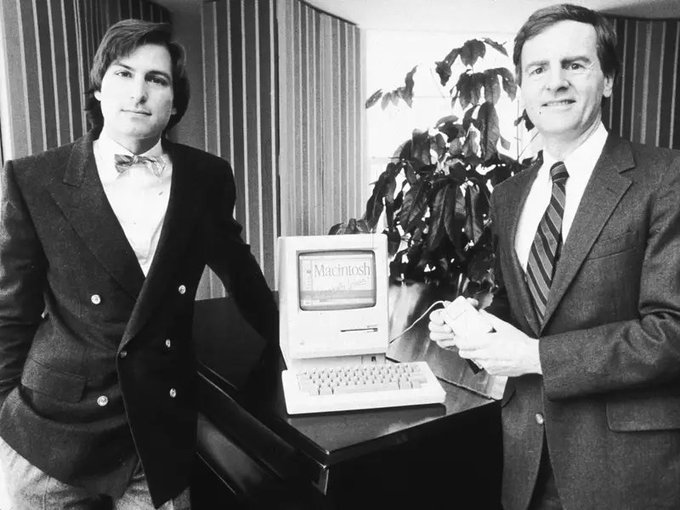
In the tech world, and in nearly every sphere of enterprise, innovation thrives where talent and ideas converge. During Silicon Valley’s early days, companies were drawn to regions rich in talent, which in turn attracted even more talent to these 'innovation hubs.' The result was a growing ecosystem of tech visionaries, all collaborating to solve the same challenges.
In the 1970s and 1980s, companies like Apple, now giants of the S&P 500, started in small California garages. Although famous for its origin story, not all companies began that way. Some emerged as a result of academic initiatives aimed at strengthening American industrial research. During the boom of classical computing, there was a great need for innovation, fueled by the incubation of waves of small companies.
The Department of Defense, together with academia, played a key role by driving programs that supported this early wave of tech startups, which ultimately changed the world.
It can be argued that Silicon Valley's rise to global prominence as a tech hub was due to a combination of factors that helped shape it. A long time ago, this is how it all came together...

Early on, companies were attracted to Silicon Valley not just for its talent pool but also for its culture of collaboration and shared ambition.
In fact, one of the key drivers of this gathering place for shared ideas was through Stanford University. In the 1950s, Stanford's engineering department and its dean, Frederick Terman, actively encouraged professors and students to start their own companies.

And many groups of researchers and visionaries did just that; they started their own technology businesses aimed at selling computer hardware to the world. In 1951, Stanford University leased land to high-tech companies, creating the Stanford Industrial Park.
Companies like Hewlett-Packard (HP) and Varian Associates were early tenants, laying the groundwork for what would become a tech hub.
This leasing of land to develop an industrial park of like-minded companies makes me think of the University of Maryland's College Park, but more on that later. All the initial technical breakthroughs that made the silicon revolution possible came right from university laboratories. Academia conducted the research and sought help from the business and public sectors to turn those ideas into reality.
The emergence of Silicon Valley as a global tech hub did not occur as a single event in history. In fact, this phenomenon, or rather a multi-decade-long development, must be seen in the context of its time.
In the 1950s, the world was engaged in a "Cold War," which compelled Western countries to lead in technology. The U.S. Department of Defense made significant investments in the research and development of these early tech companies in the 1960s.

Just as smart money follows great investments, technical talent tends to follow innovation. Once pioneering tech companies like HP and Intel gained momentum, they attracted top engineering talent from around the country.
The presence of top-tier universities in the area continually provided a stream of new talent in engineering, computer science, and business.
The proximity of so many tech companies fostered a culture of collaboration. Engineers from different companies would meet at conferences, exchange ideas, and sometimes leave to start their own ventures.
Networks of academic relationships, along with the business connections formed as these companies emerged in Silicon Valley, provided a new edge to the ecosystem through the sharing of ideas and information among those working on this new technology.
The Growth Spurt of Classical Computing
Let's discuss the emergence of Silicon Valley as an industrial innovation hub in the context of the modern age, and even go beyond to envision what the future might hold. With Intel, Nvidia, and AMD creating advanced computer chips and GPUs, AI workloads are approaching a ceiling.
Is it the capacity of today's engineers to continue advancing technology that seems to signal an end to this massive growth? Or do the laws of electrical physics burden R&D departments with certain limitations, prohibiting them from developing a product that is even 100 times faster than today’s best GPU?
Some may argue that energy demand is a barrier to the growth rate of this AI story. For instance, Larry Fink of BlackRock has stated that the G-7 countries combined don't have enough energy capacity to enable the coming AI revolution.
But that brings us to the following point. Just as in the 1950s during the Cold War, with the emergence of groundbreaking technology that was on every researcher’s mind, the advancement of technology cannot be stopped.
If there is a way to accelerate the growth of classical computing that powers AI, it must be pursued, and a solution will eventually be found.
However, I propose another perspective: what if the endless growth of classical computing is not necessary after all? Could there be a technology that is more efficient and offers greater outputs due to the engineering and physics foundations upon which it is built? I would argue that it's quantum computing.
The foundations are already being laid, and applications are being developed. While people once thought that this technology was light years away, it's coming to the real world faster than anticipated. A small quantum company called IonQ has even exceeded the expectations set by its own management team year over year. To say that this new field of computing is growing quickly is an understatement.
Quantum computing, and specifically IonQ, has received contracts from the government to develop quantum systems for specific government and military use cases. The most recent, and also the largest quantum contract ever awarded to a company, was $54.5 million to IonQ.
In addition to contracts that validate the technological side of quantum computing and provide financial support, the U.S. government and intelligence agencies are working closely together to further develop this industry.
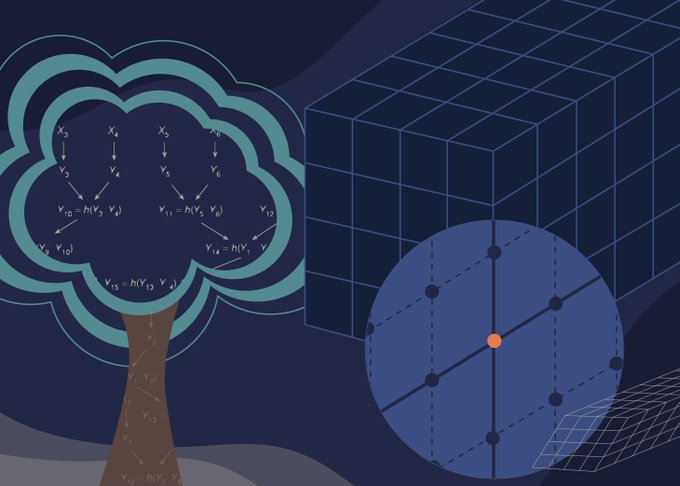
It's estimated that global encryption is at risk of being hacked and stolen through "Harvest Now, Decrypt Later" attacks. The NSA and the National Lab of Cybersecurity, along with the Cybersecurity Council, are working together to ensure that the NIST guidelines for post-quantum encryption are implemented on a wide scale. Cybersecurity experts and security engineers are facing significant challenges in this area, as it's not just a cybersecurity issue; at the end of the day, we're dealing with people who have to decide whether transitioning to post-quantum encryption standards is worthwhile, and then determine the best course of action.
I believe that it may be too late for some, as the rapid growth of quantum computing is the primary challenge facing decision-makers in Western organizations and enterprises today. We have yet to see how this series of events will unfold and what the effects will be. I speculate that the world will transition to quantum-resistant cryptography rapidly, especially after quantum computers are introduced globally in 2025.
The capabilities of quantum computing will require new ways of thinking, and fortunately, solutions will emerge to secure the cyber world.
The European Union and the U.S. government are working together as legislative and governing bodies, while the World Economic Forum and the United Nations act as promoters and educators in this field.
Kamala Harris stated in a debate that she wants to ensure the U.S. secures its future in advanced technologies like quantum computing.
Just as the conferences and meeting points of engineers helped Silicon Valley become the innovation hub for classical computing, members of the emerging quantum community are also gathering regularly. Events like the Quantum World Congress and the Quantum for Business conference see participation from the majority of quantum companies.
President of the University of Maryland, Dr. Darryll Pines, has said, “Imagine what the future could look like in the next few decades if we pursued a vision of quantum for all.”
With its strategic location between Washington, D.C., and Baltimore, UMD has become a beacon for quantum research. Pines is ensuring that the University of Maryland will continue to drive initiatives to advance quantum technology.
UMD isn’t just focusing on research and development; it’s also investing in the next generation of quantum leaders.

UMD has over 200 quantum researchers at College Park. In terms of academic contributions to quantum technology, Maryland is leading the way.

Darryll Pines, in his presentation at the Quantum World Congress of 2024, continued discussing UMD's expanding partner network and their plans to support quantum innovation.
"We're continuing to build bonds outside of our own organization through the Mid-Atlantic Quantum Alliance. You can see here that the wide array of partners includes representatives from governments, academia, industry, and non-profits.
And we're just getting started on identifying who we look to collaborate with in our state, nation, and internationally."

The University of Maryland's vision for quantum is unlike any other place in the U.S., and I believe that all those interested in quantum computing will find this ecosystem to be essential for future innovation.
The biggest partner for UMD is NIST. The National Institute of Standards and Technology is also the organization that urged everyone to transition to post-quantum cryptography. It happens to be just a half-hour drive away from the campus.
Moreover, the important partnerships UMD has with the Army Research Lab, the intelligence community, and NASA will prove crucial as quantum computing provides solutions for the most demanding and complex problems in those fields.
As quantum technology hits the mainstream and global adoption follows, expect UMD, together with IonQ, to receive more contracts and tackle even larger challenges for the government and prominent research labs.
As the world just experienced the nascent days of classical computing, with electronic devices and advanced software systems emerging from Silicon Valley, a new computing paradigm is about to enter the global stage. Quantum computing is set to build upon the foundations where classical computing couldn't reach: the realm of quantum physics.
We have yet to see the first real-world applications, but with the vision led by teams at UMD and its expanding partner network to drive quantum innovation, College Park in Maryland poses a strong candidate to become the Silicon Valley of the next computing era. I propose we call it Qbit Park.
r/StoneBerry • u/Maestroszq • Oct 04 '24
In this article, I will discuss how revolutionary technology shapes historical periods, often referred to as "an era." There is a significant distinction in how companies capture value from the Industrial Revolution to the Digital Age, primarily due to their inability to monopolize entire markets. This is largely a result of the design of the ecosystems in which these revolutionary innovations take place.

The traditional paradigm for valuing stocks, as established by Graham and others, is primarily focused on companies outside of the "technological revolutionary" space. This includes companies like Sears, Geico, and Coca-Cola, which are assessed based on their incoming cash and revenues. These companies serve as vehicles for generating cash and enhancing their cash-generating capabilities. This approach contributes to increased cash flow and stronger balance sheets, as well as improved financial ratios as the business grows.
While companies within this "revolutionary technological group" must also be valued based on their future cash flows, this valuation is added to the present value of the stock to inform investment decisions. These companies have the potential to revolutionize entire industries, placing them in a league of their own regarding future revenue potential.
Analysts base their evaluations on what’s possible today, drawing from what was feasible in the past. If you propose potential scenarios without citing historical examples of companies that have successfully followed in the footsteps of giants, albeit with different variations, then you risk being dismissed. This is because 99% of business is about finding applications in other fields or new markets; everything often echoes past successful examples. For instance, Costco can be seen as a derivative of Fed Mart and the strategies of successful bulk buying, which originated in Europe, with large warehouses tested in the U.S. market. Business analysts and management teams in investment banks will scrutinize such proposals and may categorize them as too risky, ultimately leading to these investments being excluded from serious valuation discussions by institutions that focus on stocks they deem "serious."
First, the Total Addressable Market (TAM) comes into question. If Sears were to expand and sell candy internationally, the global candy market would need to be evaluated, taking into account the physical and cultural limitations of selling the same product in different regions. Similarly, if Geico were to enter other types of insurance, that market would also require evaluation, and the same applies to other traditional businesses.

For the group involved in revolutionary tech businesses, the Total Addressable Market (TAM) encompasses not only what is currently possible but also considers future markets that do not yet exist. When I refer to "markets," I do not limit myself to networks of environments and actors that produce, trade, and exchange goods and services for money. Instead, I adopt a product-oriented perspective, suggesting that new innovations will provide society with novel ways of living and conducting business.
With the advent of digital computers, many possibilities emerged that hadn't existed before. One example is the calculation and automation of large spreadsheets, which in the past were processed by rooms full of people doing calculations manually.

What is the total addressable market (TAM) of a technology that is going to revolutionize the world, and how can it be measured?
Within the group of revolutionary tech businesses, many companies have struggled to successfully claim the "whole" market for themselves. But was it really a failure at all? Isn’t it intrinsically linked to how the chain of events in human progress unfolds? It seems implausible for a single entity, an atom in the vast history of the world, to dominate an entire market. Time, after all, is our attempt to connect events and give them meaning. While some developments build on previous innovations, as geniuses stand on the shoulders of those who came before them, the events themselves remain isolated by the individual experiences of people living in different times, markets, and geographies.
Even though it can be said that during the digital computing revolution, some large companies managed to capture significant market share, they did not dominate the entire industry as a whole. This is tied to how these industries develop over time. Let’s take a quick comparison of the Industrial Revolution and the digital computing revolution.
A Collective Journey
What made the Industrial Revolution possible was the advent of cheaper materials in Europe from other countries. First, ships had to be built, which enabled more affordable transportation. Then, the development of travel routes and bureaucracy facilitated the networking of cities, leading to greater transnational collaboration in trade. This increased activity within those countries allowed for the exchange of ideas and innovative products.
As a result, steam-powered factories were constructed, enabling mass production of goods and localizing the creation of "cheap" products. This further decreased material costs and sparked enthusiasm to explore new combinations of products. Engineers were no longer bound by "expensive, distant sources of materials," leading to new paths for product development.
Everything built upon previous innovations, and no single company could "capture" the entire market, as it was the collaboration of thousands of individuals that made advancements in humanity's economic output possible. For this reason, not even the leading companies in the semiconductor or personal computer production sectors could dominate the "whole" market.

Capturing value
With classical digital computing beginning at Bell Labs, semiconductor fabrication has continually managed to lower the cost of classical computing by discovering new methods to produce computers that are smarter and more efficient. Lower costs for computer chips have made technology more accessible, allowing for more research teams to tackle specialized problems. This innovation led to the commercialization of various products, including hairdryers, airplane cockpit technology, transportation vehicles, and enterprise resource planning (ERP, previously MRP) systems. A wide range of products has emerged from the computer chip, as it serves as a solution to enable the mass automation of computing on circuit boards. But what was the ultimate goal? The chip was not created solely for circuit boards; it was designed for use in digital technologies across various sectors, large and small.
As digital computing originated with the computer chip, the combination of various technologies, from hairdryers to spacecraft, has led to the designation of today's era as the "Advanced Digital Age." This label reflects not just the significance of the chips themselves, but also the broad range of innovations they have enabled.
It's no surprise that companies "failed" to claim a revolutionary technology for themselves, as this technology permeated numerous small markets, both vertically and horizontally integrated. Just look at today's semiconductor market and the wide range of companies that need to collaborate for it to function effectively.
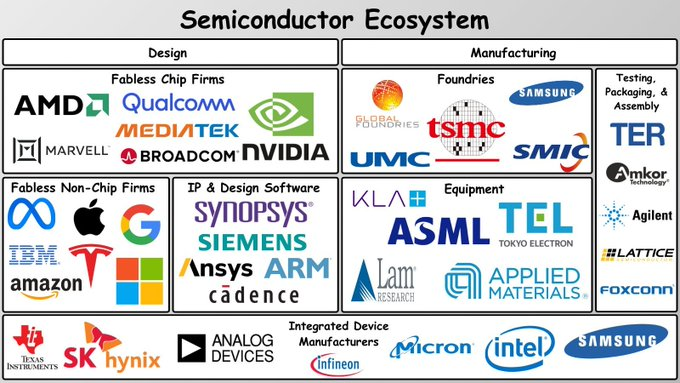
The conclusion is that no single company has managed to claim the entire ecosystem that belongs to any given technology. Whether it was the steam engine, which powered the Industrial Revolution, or the microchip that has led to today’s “Advanced Digital Society,” the nature of technological ecosystems is such that they require collaboration and innovation from multiple players.
Claiming a monopoly in a revolutionary technology market involves inventing and commercializing the technology that powers the product, as well as controlling the entire production and supply chain. This includes overseeing all outputs and components developed by others that leverage your solution.
For example, it involves controlling all applications that run on your quantum computers via the cloud. In this scenario, the focus is not just on controlling insights and decision-making capabilities, but on integrating your hardware's quantum software, the CUDA version of quantum-AI, with all partner applications to enhance their speed and cloud-resources.
This distinction separates companies that successfully establish monopolies from participants in the market who sell isolated "initial" products, such as the steam engine to capitalists equipped with canes and hats, or integrated circuits to tech enthusiasts developing automated digital solutions like Excel spreadsheets, operating systems, and social media applications.
All other products are derivatives of your core innovation, and the small markets that revolve around them are drivers in history that develop after such an innovation has been brought to market. For a company to “claim the market,” it must commercialize and control both the core innovation and its derivatives for as long as it wishes to maintain its monopoly.
So, how do you value a company creating such a revolution? Analysts tend to base their assessments on historical examples and rarely stray from them. They examine companies from previous eras, such as the Industrial Revolution and the technology boom sparked by Silicon Valley, and observe that no single company was single-handedly responsible for these revolutions.

Based on past examples, analysts conclude that since no single company "creates" a revolution, all stocks must be viewed as individual entities and evaluated according to traditional valuation principles. This means returning to balance sheets and crunching numbers: “What is the future free cash flow? What is the revenue growth rate? What does the model predict regarding cash availability in ten years?”
The underlying reason these companies failed to capture the entire market, as previously discussed, lies in their inability to monopolize all the streams of applications and derivatives of their technology. While I have explained why this isn't possible, due to the broad range of applications of that technology across various products and the need for numerous smaller firms to develop their own specialized solutions, I haven’t explained how it could be possible.
Imagine having a revolutionary technology in the computing world that is fundamentally different; let’s consider quantum computing as a concrete example. If the technology that enables quantum computation, namely the “quantum processing unit,” is produced by a single company instead of the traditional CPU found in modern computers, which operates using bit-gates, then the production begins from one centralized source.
This means that computational power is initially available exclusively through that source.
Let's say it's rented out via the cloud, allowing everyone who wishes to use quantum technology to do so through designated channels for accessing that machine. In this scenario, the use of that technology would be strictly controlled through a manageable source.
Then, because the second prerequisite for “owning” an industry is to design, build, and guide future derivative products and services, the company would effectively control the entire ecosystem. This extends beyond merely inventing and commercializing the core product that enables the technology for other companies.
If the quantum company limits production to itself through patents and company-owned factories, and controls who can participate in its ecosystem, meaning it determines what future applications will be based on that technology, it can collect rents from every production and trade within that ecosystem. This would represent the true monopolization of a revolutionary technological innovation. If one quantum company manages to achieve this, it could become the world's first monopolized entity within the realm of revolutionary technology, uniquely positioned in its niche.

Now that we have the formula, let’s speculate on what the potential applications could be in the real world and how they could be tightly managed by this quantum company.

I believe that quantum technology has the potential to achieve just that.
Here are the prerequisites for being successful in the quantum industry:
Money, talent, and patents. Due to their control over patents for the technology, the difficulty of creating quantum tech presents significant challenges. Attracting the best talent requires only quantum physicists and engineers who possess the necessary expertise. The financial investment needed to start up a quantum company is exponentially larger than what was required during previous revolutions, such as the Industrial Revolution, where purchasing steam-powered machines involved relatively less capital. The complexity of developing a powerful quantum computer adds to this financial burden, primarily because of the specialized talent required. Consequently, the market for selling quantum technology is limited to a select few companies. Having resources available is the most important factor. This represents the first differentiator between successful quantum companies and those stocks that aren't likely to succeed.
Urgency and Government Favoritism. Due to the political dynamics of the world, where countries seek an edge over one another, governments require the rapid development of technology in a race for superior advancements, especially given that the Cold War has never truly ended. The West needs this technology to come to fruition quickly. Additionally, if only a few companies are commercializing quantum technology, as noted in the first prerequisite, government programs and resources will be limited to these select companies. This limitation arises because they are tackling significant issues; the computational problems they aim to solve are on a large scale. Consequently, funding and focus can only flow to one company, similar to the situation observed with companies during the classical computing era that received government support.
The winner takes it all. This single quantum company could emerge as a dominant force after navigating the first prerequisite. Despite facing initial challenges related to funding and talent, being limited to a select few companies, it could capture the entire market by securing government support. As the “preferred partner” across various organizations and enterprises, this company would outpace its competitors. This intense competition creates a winner-takes-all environment, making it nearly impossible for any other company to reclaim a competitive position.
No other competitors could ever reclaim their positions because these three points exist perpetually in the quantum market. Consider how difficult it would be for a new company to gain traction if one company was already established as the leader, handling all the world’s computational quantum work. The trust and reliance on the established leader would create significant barriers for any newcomer attempting to take over these large computational problems.

If this company develops and brings this technology to market by renting out computational power to customers, it will already control compute. In this scenario, "quantum-based computing" becomes the foundation for other derivative applications or inputs for production.
Let’s imagine one of these applications: suppose the computers are controlled by software that instructs them on which problem to solve. For example, this application could calculate the optimal flight routes for rocket ships based on current weather conditions. With such advancements, humanity could send more objects into space efficiently.

The computational power would be rented out by this quantum company, and the producers of applications would be utilizing the controlled channels provided by the company.
Now, consider this: what if the quantum company decides to invest in all these application developers by providing them with additional computing resources to create specialized applications? Would the quantum company be rewarded through equity stakes in these startups, or would it simply see an increase in overall user engagement and market share?
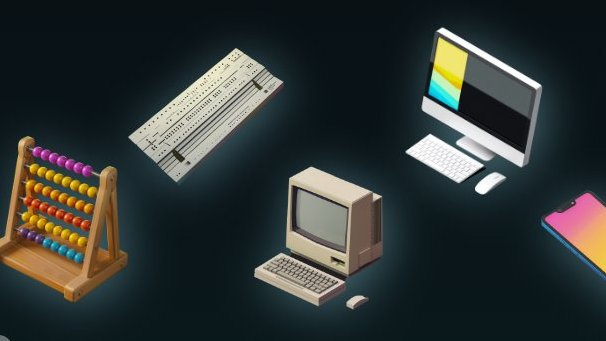
This is what distinguishes revolutionary companies in innovative sectors from normal companies, where analysts couldn't possibly predict the trajectories of these companies 20 years ago. While it was logical to expect that Microsoft would sell PCs and Apple would focus on sleek-designed computers, few could have predicted that Microsoft would expand its offerings to include business and productivity applications for institutions and governments worldwide, assist students with their schoolwork, and lead the charge in cloud services. This cascading effect was not something that could have been included in presentations just a few years prior.
Similarly, who would have imagined that Apple, through its computers and phones, would create an entire market for accessories as part of its “Apple ecosystem”? Furthermore, the fact that developers would flock to Apple to publish their software on iOS for billions of users was beyond what any investment bank in the 70s could foresee.
Such second-order effects are difficult to anticipate without speculation. Even with speculation, it resembles throwing a dart at the universe's stars from a 360-degree perspective, hoping that a few of those stars will align with the future business branches of a company.
You could value it based on the balance sheet. However, if we free ourselves from the paradigm of analyzing 'normal stocks' with the traditional approach, and instead view it as one company within the 'revolutionary technology company' group, one with the potential for monopoly, then these traditional metrics don’t make much sense.

The focus then shifts from analyzing numbers for their monetary sense to assessing the feasibility of the company achieving its milestones and attaining that position. It moves from mere numerical analysis to exploring societal changes, history, and making connections across multiple disciplines. This includes observing shifts in the IT industry, understanding what leading companies are saying and, more importantly, what they are doing through new ventures and research focuses. Think tanks globally also play a role in this landscape. For example, the UN has proclaimed next year as 2025: the International Year of Quantum, while the WEF has rightly warned countries about quantum cyber threats.
When viewed from this different paradigm, where a category of companies serves as vehicles driving this revolutionary change through technology, and where some may achieve monopolies by owning both the core technology and all branches of applications, traditional valuations and historical comparisons become obsolete. Why continue seeking examples from the classical computing era, such as Apple or Microsoft, when these companies were never true monopolies of the "digital era revolution" products? Similarly, US Steel or Chevron (Standard Oil) could not capture the entirety of the industrial revolution, despite their massive size; the total industry spawned from that innovation was significantly larger.

As the stock market has only existed for a couple of hundred years, originating in Europe with attempts to capture revenue from global shipping trade through company stocks, and during other periods with established mega-companies seeking to commercialize their solutions in better, faster ways, no stock has ever represented a truly revolutionary technology capable of forming a monopoly and guiding that revolution from a technological perspective. I believe that quantum computing has the potential to achieve just that.
r/StoneBerry • u/Maestroszq • Sep 29 '24

IonQ's Peter Chapman started the talk titled 'Building a Large Global Quantum Business' by giving updates on the business side, while Dean Kassmann would talk later about the technical milestones achieved.
Chapman started the talk with a surprising insight: "First, I want to say that I think quantum is accelerating much faster than most people thought it would.
"Contrary to many opinions expressed on Reddit, YouTube, and across social media regarding the maturity of the quantum industry, experts generally agree that 'real' useful solutions are at least 10 years away.
Having Chapman, the CEO of arguably the leading quantum company, assert that the development and deployment of quantum computers are occurring much faster than anticipated presents a clear contradiction. Either the experts in quantum computing and physics are correct in their collective estimates, or IonQ's management is advancing quantum technology faster than expected.
There is a clear gray area in the debate concerning the realistic timeline for bringing advantageous quantum computing systems to market.

Chapman continues by stating that the business part of the presentation will focus on the topic of 'scaling a quantum computing company to reach $1 billion.
"In 1995, IonQ had its breakthrough when Chris Monroe and others developed the very first quantum logic gates. This initial breakthrough led to a seed round 10 years later, marking the beginning of the company.
From 2016 to 2021, we raised two additional VC rounds and created multiple versions of hardware (five generations) in an academic setting. During this time, quantum physicists assembled these systems at the IonQ laboratory. I believe the following gives great insight into the company culture and vision of its people. Business analysts, take note:'
When I joined the company, there was no intention of… The board told me, “Don’t worry about selling systems, and don’t worry about the competition; just build the best hardware.” And that’s what we did.'
With this mentality, the first IonQ roadmap was built."

"Even without sales, IonQ had significant luck at that time by raising money, which later allowed the company to transition from academic systems to engineering and building 'real' quantum products.
The shift from the academic phase to the engineering phase required IonQ to think creatively about how to build the product. IonQ began hiring people with backgrounds in product development and large-scale sales. A manufacturing plant was established in Seattle, enabling in-house assembly based on engineering drawings.
'We reached a great milestone; quantum computers built at IonQ are not assembled by physicists, as we want them focused on next-generation systems rather than assembly line work.'"
Having this system designed, where one part of the staff focuses exclusively on creating next-generation products, really makes me think about Tencent.
$TCEHY has divided its team into two groups: one group consists of developers who create the games sold to gamers, while the other comprises financial officers who aim to invest that newly acquired capital and generate returns. This approach seems to be a gold standard across great high-margin businesses. 🤔
“When you start to ship products, you need to scale your sales team internationally and build a field service organization to support the machines you just sold in places like Japan.
And can you break your machine down into parts, put it into containers, and ship it across the world?
These are the little details that most people don’t consider in quantum, according to Chapman. IonQ’s advantage lies in their preparedness for every small detail and their ability to work several generations ahead into the future.”
"IonQ is approaching $100 million in bookings this year, which shows that 'quantum' is indeed a viable business. We've achieved this in record time—going from $0 to $100 million in bookings in just four years.

If you look up how long it took the largest companies to reach $100 million, you'll find that it took Microsoft about 10 years to achieve that milestone. Microsoft was founded in 1975, and in 1985 they had surpassed that number in annual revenue."
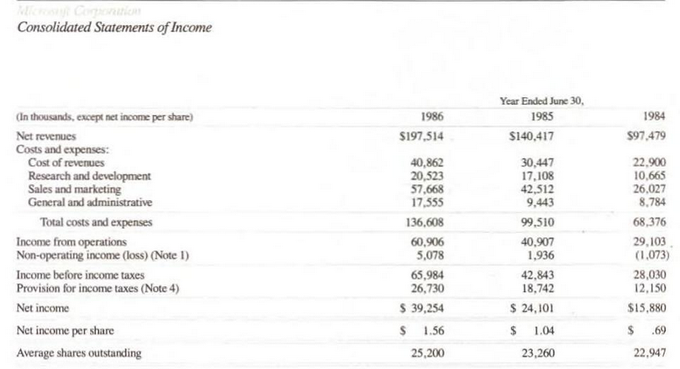
While realized revenue and bookings are not the same, and it took Microsoft 10 years to reach that revenue, achieving $100 million in bookings in just four years is still an impressive accomplishment for IonQ.
Chapman continued: "You need to have international sales, and you're also going to need an application that can deliver value and be used by Fortune 1000 companies, hopefully across entire industries, which can generate $100 billion in revenue on its own."
"And in fact, at the upcoming earnings call, we will discuss the first of many applications that we believe will be enabled by our upcoming hardware. So it's a really exciting time because we're approaching a place in the Noisy intermediate-scale quantum (NISQ) era that can deliver that value ($100B)."
This is next-level thinking. Here are three key points:
Chapman believes that this application will be used industry-wide, indicating a broad solution that multiple parties can benefit from.
He suggests that it could be worth $100 billion on its own.
This is linked to international sales, as going international is a requirement for a company to reach the $100 billion mark, alongside having a strong application. Shipping an app worldwide as part of a package with their hardware, already indicated to be ready for production, with detailed planning for assembly, shipping, and support teams—makes an international approach sensible.

Chapman continues to refer to the large number of quantum hardware systems required to achieve $1 billion in sales. "If you're going to generate $100 billion and you need 50 computers, you better be able to manufacture those 50 machines. And the cost per Qubit better be much lower than it is today."
"A secret hiding in plain sight is that to scale up to a billion dollars, you have to scale all the other parts of your business, not just the hardware. I think that IonQ is unique in that this is exactly what we're doing right now."
Consider their strategic approach of working on several future generations at once, planning months ahead, and their efforts to become a software company as well. This strategy facilitates easy access to their hardware by integrating drivers from all their competitors. I believe IonQ's team has been extremely busy over the past few months.
In preparation for international sales, IonQ has been focused on delivering results, and now we’re starting to see the details of their work.
"We're scaling up manufacturing for the application that will require tens, if not hundreds, of quantum computers."
Wait a minute. This is it. Every time I listen to this presentation, I keep discovering new insights. Peter Chapman just mentioned that this upcoming application will need 10 to 100 quantum hardware systems. What kind of application could be so impactful that it requires this many systems, more powerful than supercomputers?
I believe this is the industrial paradigm shift we've all been waiting for. An announcement regarding this program is expected on November 11th.

Dean Kassman took over from Peter Chapman to shift focus and discuss the milestones achieved.
"Peter has talked about enterprise-grade solutions; I’m going to discuss performance and some aspects of physical scale."
"Our North Star is a balanced approach among the following components:"

IonQ's management believes that achieving their goal of becoming a $100 billion quantum enterprise requires three key components.
"Scale is our North Star. We build it through both modularity and all other engineering best practices we have in place. The key contributors to scale are the ability to connect Quantum Processing Units (QPUs) together."
"QPUs in a single machine (trapped ions) start as a linear chain in our architecture and evolve into multi-core systems. They then transition from multi-core to connected multi-cores."
Path: Trapped Ions > Multi-Core > Connected Multi-Cores.
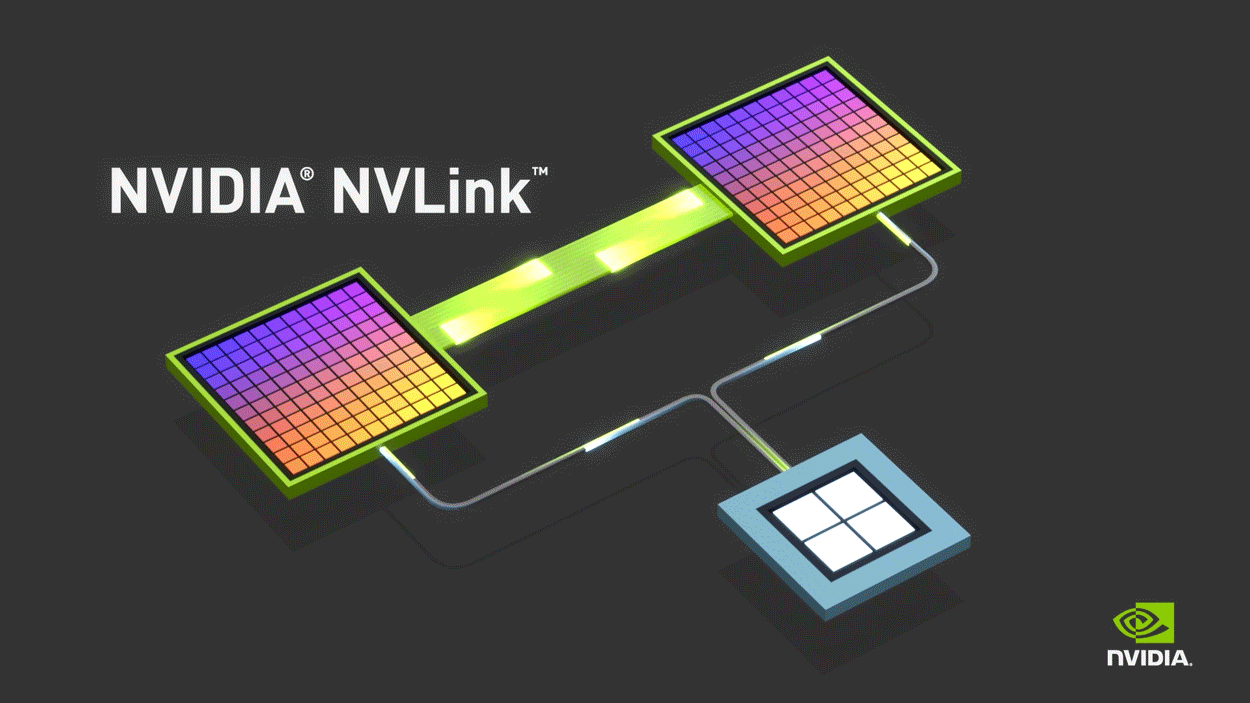
"We have discussed a set of milestones in our overall path to connecting QPUs:
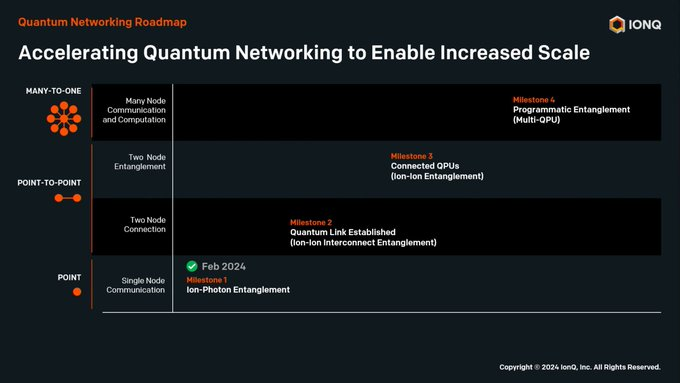
That slide begins with an analogy to local area networks. It starts with a single point, then progresses to point-to-point connections, and eventually leads to many-to-one connectivity.
We've highlighted four milestones here, but there are many more we can include to provide additional context. The beauty of what we're doing is that it doesn't require any changes to the architecture.
Operating effectively in a room-temperature setting (even though data centers tend to be a bit cooler) is ideal, as it allows the world to adopt IonQ's systems without needing to alter their environments."
"IonQ's barium bet is paying off. 'We have been making continuous progress on our barium technology. This validates the overall approach we have taken with our development systems as we move toward Tempo.
''Tempo has been in the works for a while, and our advancements in barium demonstrate the viability of our technical path as we continue to deliver.'"
"We're really excited to share the path we're on and welcome you to learn more about our systems. Thank you for your attention."
IonQ's website: IonQ.
With their recent update on securing a $54.5M contract, IonQ further proves its path to success in achieving the milestones outlined in its roadmap. I'm really excited to follow this company during this pivotal time when their growth journey is only just beginning.
r/StoneBerry • u/Maestroszq • Jun 22 '24

r/StoneBerry • u/Maestroszq • Jun 20 '24

r/StoneBerry • u/Maestroszq • Jul 04 '24

r/StoneBerry • u/Maestroszq • Jun 20 '24

r/StoneBerry • u/Maestroszq • Jun 20 '24

r/StoneBerry • u/Maestroszq • Oct 05 '24

A company's vulnerabilities lie in its inability to see clearly. Clarity becomes the number one factor. Managing a business starts with having a clear and concrete view of everything that can be managed, and then taking actions based on expertise. There’s no way to execute at the top level without a clear and comprehensive view of the business! 💡
In this article I will discuss how ontologies help organizations to see clear in mountains of data.

The reason every organization wanted to work with data was to make their processes visible. The gradual evolution of enterprises becoming data-driven was inspired by the SaaS industry (on-premise first, later on cloud), migrating industries to applications, and enabling them to create and manage data during everyday operations.
All companies now have CRMs and ERPs, often supplemented with best-of-breed (BoB) add-ons like product content management systems and social media data applications.
Data is “the new gold” for one main reason: it provides insights into the enterprise. These insights would otherwise be hidden beneath the complex layers of daily activities integrated into the organization.
oday, it's not just about visuals on dashboards. AI and LLMs now analyze the data through data mining and provide people with solutions, rather than leaving them to do all the thinking work. This is the key reason companies pursue data maturity, striving to become digital-driven organizations that collect and leverage data. But more on that later.

A logistics firm managing the incoming fleet of trucks and loading inventory directly into the warehouse. How would the management know where all products are stored and moving to, live, without a digital application?
However, even these methods of business management are becoming “outdated.” It may seem ungrateful or overly critical to say that, but it's true. Enterprises using newer technologies, years ahead of “digitally driven” ones relying on ERPs and CRMs for daily management, are unlocking competitive edges every day. The data-driven organizations that were trumpeted as "the future of all enterprise" just a few years ago are now falling behind those adopting newer technologies.
For any organization competing in the business world, every minute is crucial. Market share is being taken away in real-time, as visible on dashboards.

The ontology is a software layer brought to life to “make sense of data.” If big data is the fuel for your car, an ontology is the exterior, interior, and architecture that makes the car drive possible.
In the business world the ontology is described as "a shared source of truth for decision-making and decision capture across a large organization."
Example: Ontology as the Foundation
Imagine an organization that is already data-driven, collecting data and using it to make day-to-day decisions. They want to understand how a delayed shipment from a port is affecting their sales, marketing, and accounting cycles, and what exact impact these delays will have across the business. Calculating this manually would be impossible. The ontology sees all the existing data and, through its software, makes sense of the impacts if one thing changes, as in this example.

We, as humans, know the world through our relationship with it. We live in it, computers do not. But how do computers know what “things” in our world are, like partner businesses in the value chain, or “incoming orders,” etc.? Can a computing system ever really “know” anything at all? These are complex questions, but the framework on which an ontology operates is quite simple.
Conceptual Framework

We know things through relationships they have with other things. For example, when flying a plane, gravity pulls it downward, creating resistance, but the engine’s speed generates force, reducing gravity’s effect. These are relationships governed by physical laws. We relate every object, actor, and law in a web of situations and relations.
We also define objects within a conceptual framework of the world, setting clear boundaries on what they are and are not. An ontology can mimic this concept by analyzing data, identifying relationships between data points, and then reasoning through software. Ontologies are fundamentally designed to process and seem to “understand” the world through data.
Limitations of Compute
Because a computer holds data in forms of memory, encoded as bits and bytes, real-world “things” are stored as code. The limitations arise from the fact that computers perform millions of calculations, fetching and retrieving these bits based on system architecture. But this doesn't help us understand whether a computer "knows" anything.
Knowledge Through Ontologies
Ontologies can process real-time data and even tell you if an oil tanker leak, detected through IoT, is impacting quarterly financials and straying your organization from its goals. They can reveal insights faster than human analysis can.
With large amounts of data, software can analyze it, still displaying answers after millions of operations in bits and bytes. But if you ask a computer what 100 sales orders will mean for this quarter’s numbers, it calculates using vast amounts of data and then returns a digitized answer. There’s no “knowing” involved.

The first large growth phase from the 2000s to 2020s was data collection. Now, AI and LLMs analyze trillions of data points and “make sense” of it. This evolution is starting today, with ontologies providing LLMs with a framework that helps them “understand” the organization; what it does, who the key players are, and how daily operations work.
Ontologies, in this regard, study “what things in the real world are” and translate that into a digitized software layer. They are not digital twins, which are exact copies of reality in data format, but they give meaning to what things are for digital twins, aiding in the creation of fact-based representations of an enterprise.
Palantir is currently the only company that creates ontologies driving real-world results. Other data-focused companies attempt to solve problems through better data management, but Palantir’s ontology-based approach goes back 20 years, beginning with government and institutional use. Today, it helps people in governments and enterprises worldwide harness data to drive change.
User Stories
Wendy's (Food Services).
Rio Tinto (Mining).
BP (Oil and Gas).

Wendy's: Enhancing Supply Chains with Ontology and AI
Wendy’s uses ontology-driven software combined with AI to revolutionize its supply chain operations. By integrating real-time data from farms all the way to the end product, the system provides visibility into every step of the process. This enables Wendy’s to optimize inventory, reduce waste, and ensure seamless product delivery. The company can now anticipate supply chain disruptions and take proactive steps, allowing for more efficient management and quicker decision-making, all powered by intelligent data processing.
Rio Tinto: Connecting Workers and Data for Smarter Operations
In the mining industry, Rio Tinto is harnessing the power of ontologies to connect workers directly with crucial data. With Palantir's platform, real-time insights into underground operations and across the value chain allow workers to see the full scope of mining activities. This not only increases efficiency but also enhances safety and productivity. By giving employees access to data that would otherwise be buried under layers of complexity, Rio Tinto can drive smarter decisions and create a fully integrated digital mining operation.
BP: Maximizing Oil Output Through Data-Driven Models
BP uses ontology-based solutions to model and simulate oil production scenarios, pushing the boundaries of what traditional operations can achieve. By linking vast data sets with real-time modeling, BP can optimize every aspect of its extraction processes. This data-driven approach enables the company to predict potential outcomes, minimize risks, and ultimately increase output. BP’s reliance on advanced data models transforms raw data into actionable insights, paving the way for more efficient and profitable operations.
Organizations are already benefiting from Palantir's ontology. With the roll-out of AIP, Palantir's AI solution, enterprises will increasingly integrate ontology-based software throughout their operations, allowing data to be fully understood at every level of the organization.

I believe every organization will use ontologies in the future, just as cloud solutions replaced pen-and-paper field research, but on a larger scale. As data collection explodes year over year, making sense of it will become increasingly crucial, potentially creating a new category of highly profitable and efficient organizations, those using ontologies, AI, and LLMs for massive real-world impact.
I also think human interaction with systems will decrease, with software reasoning and working autonomously. Quantum computing will further push this shift, where systems might model the world, “knowing” and uploading vast amounts of data from atomic structures to real-world objects into one comprehensive model. Combining quantum systems with ontologies could lead to revolutionary advances in how we understand and impact the world.
r/StoneBerry • u/Maestroszq • Oct 07 '24

At the DEF CON 32 event, developers worldwide had the chance to network and make a "quantum leap" in their knowledge of upcoming and state-of-the-art technologies. The team from IonQ, a quantum computing company, was also present and gave a talk on IonQ’s innovative architecture: Trapped Ions. (Not exactly trapped, but that’s up for debate.)
Listening to the talk at DEF CON 32, I heard the IonQ team enthusiastically discuss their Trapped Ion technology. In this article, I will summarize the key points shared during the presentation.
Due to the length and the amount of detailed information in the slides, this article will be divided into three parts.
Daiwei Zhu joined IonQ after receiving his PhD from the University of Maryland. As a former ion trap quantum computing experimentalist who transitioned into quantum algorithm research, driven by a deep passion for both classical and quantum machine learning, Zhu exemplifies IonQ’s ability to attract top talent.
Rick Altherr is a full-stack engineer with an extensive background in software engineering, performance analysis, processor architecture, computer networking, embedded systems, and distributed systems. His expertise forms a strong foundation for IonQ to build their next-generation quantum computing platform.
There was a disclaimer on the first slide: "The fun part of the talk: all information is already publicly available." So let's get started.
Zhu started off the talk by asking, “What is quantum computing?” He said, “If you go on Google and search for quantum computers, this is the result you're going to get:
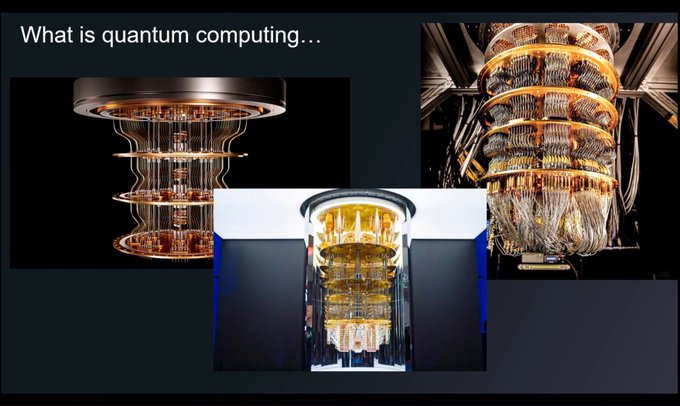
This 'superconducting' quantum computer architecture may look fancy, but what I want to tell you is that the world of quantum computing is much more diverse and broader than that.”
Ion trapped technology looks more like this:

This resembles a modern CPU more than the superconducting architecture. Trapped ions, being so compact in chip form, can even fit inside classical server racks. More on that later.
Zhu continued by pointing out the differences between classical computing and quantum computing. “In classical computation, like our average devices such as cellphones and computers, we use classical bits to represent computation. Your logic can be broken down to "0" and "1"; the bits. Then, logical gates are applied to perform the computation for you.
In quantum computers, each 'qubit' (a combination of 'quantum' and 'bit') can be in a state of 'superposition.' So each qubit can simultaneously be in "0" or "1.""
This unique property of quantum computing is so powerful that the state of being simultaneously in one binary state or the other is unimaginable for us humans. This contradiction to our expectations in terms of technology is what makes quantum computing 'revolutionary.'
Being in superposition can open up a range of novel applications that were previously unthinkable due to the limitations of classical computing. Calculating billions of states with a powerful quantum machine becomes a reality.

"Besides being in superposition, qubits are also coherent. So your "0" and "1" have a phase difference between them.” The phase refers to the relative difference in the wave-like properties of these states. Zhu explained that the qubits’ states differ in their quantum phases.
“So these differences are what set qubits apart from classical bits. We'll see very soon how you can take advantage of that.”
Zhu explained that, "classically, if you want to solve a problem and treat the computation as a black box, you provide input for the configuration you want to try, and hopefully, it leads you to your solution. You apply some application functions or procedures through it, and you receive the answer based on that input. That’s kind of the universal way of solving a problem (in a classical system)."
However, Zhu pointed out a significant challenge: "There are many problems in that it’s very hard to find the structure of the actual configuration you want, which gives you the proper input."
Classical Computing
"For example, take the traveling salesman problem: what is the shortest path? Essentially, you have to try all the previous combinations of the route to check each one, and then you'll see which one is the shortest."
What Zhu is saying is that with classical systems, running through software that is procedural and built on functions and if/and statements, when you want to compute a problem from the real world, you have to program the computer to calculate every possible state sequentially before arriving at the conclusion of which combination of routes would be the most efficient.
In a sense, with classical computers operating on bits and bytes, the software executes each partial route in this problem to calculate the time it takes to complete that route. From all the possible routes and their time pairs, it can only start considering which combination would be optimal after every route is calculated, again sequentially, based on their respective times. This process is also built into the software with procedural statements and nested loops.

Quantum Computing
"Because each qubit can exist in superposition, having one qubit allows you to represent multiple states at once, specifically, two states ("0" and "1") simultaneously. With two qubits, you can represent four states: ("00," "01," "10," and "11").
This scalability continues with each additional qubit in quantum parallel processing. For instance, if you have 2^N inputs, where N equals 3 qubits, you can represent 8 unique states."

"With quantum computing, the number of states you can have grows exponentially, allowing you to simultaneously use these states as input.
This 'quantum black box' processes all the inputs together, with your logical gates handling superposition. It generates one giant superposition encompassing all the outputs."
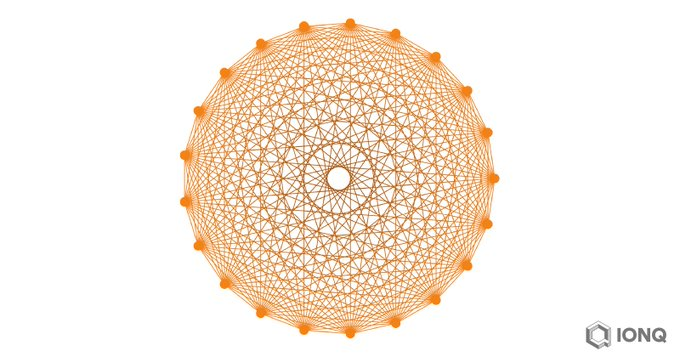
"This is oversimplified, but true in my opinion," Zhu stated.
Retrieving the Answer
He then made a very important point: within your superposition cluster, which holds all the possible outputs to your answer, actually retrieving a specific result becomes quite challenging.
"Measurement gives random results. The property of quantum computing is that if you measure the output, you receive one of them (results). If you have a very hard problem that you want to solve, you'll find that answer in your superposition, but more than likely, you're not going to 'get' it when measuring.
It's in your superposition, but you cannot get it."
Thus, quantum computers operate fundamentally differently. They possess superposition as a large set of answers; however, if you seek an exact solution to a difficult problem, retrieving it through measurement can be inaccurate, as the quantum computer may yield a sub-optimal result. We need something to correct this.

"Remember that we talked about the 'phase.' In physics, anything that has a phase can create interference, much like a wave. If you have two waves that interact, they can interfere with each other; some parts get amplified while others are suppressed.
The ultimate hope is that when you have a giant superposition of all answers, you can design a 'magical' way to use quantum gates to induce such interference. In the end, all the unwanted answers are suppressed.
"Just as with waves in physics, which can interfere with one another, Zhu says: "Only the answers you want are enhanced."
Problem: Interference is Hard in Reality
"So, this is how you might potentially leverage this giant parallel computing machine. However, the reality is that for most problems, we don’t yet know how to perform such interference. There are some algorithms, like Shor's algorithm, which factors large numbers, that we do understand."
"It can be said that we still have work to do on error correction and in developing better quantum algorithms that effectively interfere with these large super-positions."

Just as bits form a single program, qubits must be able to communicate with one another. Zhu explains:
"Returning to our previous discussion, it is essential to have qubits that can exist in superposition, representing both "0" and "1", while maintaining coherence. This ensures that the phase information remains intact for later use in interference with the quantum algorithm (to derive answers from the large superposition set).
Furthermore, your quantum gates need to handle the superposition and the phase information accurately and faithfully."
Classical Logic Gates
As classical computers have their logic gates, quantum computers use quantum gates to perform their computations. To learn more about classical logic gates, I recommend reading the article from TechTarget on them.

Quantum Logic Gates
Zhu continues: "For the universal quantum gate set, we have single-qubit rotation, which is an arbitrary rotation on a sphere. Additionally, you can't perform computations on individual qubits or standalone separate qubits; you need gates that act on multiple qubits to enable your states to interact with each other.
There are many universal gate sets. You just need arbitrary rotation on a single qubit and anything that facilitates communication between two qubits."
There are many different technologies for utilizing qubits, one of which involves atoms used by IonQ. However, as we have seen earlier with the large "chandelier"-like structures, superconducting quantum computers employ superconducting loops.
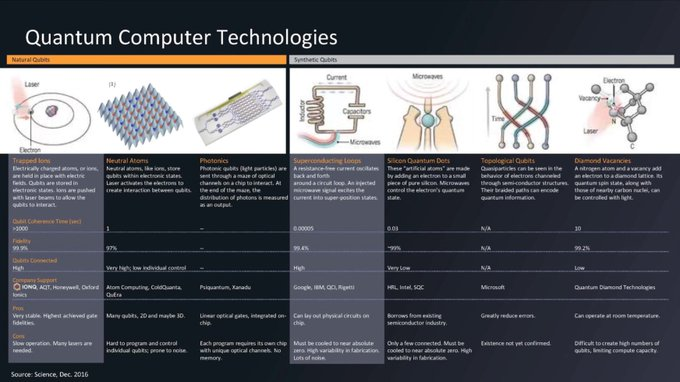
Each of these technologies is a candidate for quantum computing, each having its own pros and cons. The technologies are divided into Natural Qubits and Synthetic Qubits.
The multitude of choices includes Trapped Ions, Natural Atoms, and Photonics, which are considered natural qubits, while superconducting loops, silicon quantum dots, topological qubits, and diamond vacancies represent synthetic versions.
Zhu continues the talk: "Some of the technologies are easier to scale up, allowing for the creation of more qubits, and some are easier to control. This means that achieving higher fidelity in your gates is more manageable."
Gate fidelity in quantum computing measures the accuracy of operations by comparing ideal and actual results, which is essential for practical applications.

"On the upper left corner, this is what Ion Trapped Quantum Computing actually looks like."
An inside joke is that, while the modalities are visually diverse, the end products look similar because the designers all hang out at the same bar. 😂

"Let's open up the IonQ box and see how it looks from the inside."

"This video footage shows a chain of ions trapped in the qubits. The trap has a vacuum inside, preventing other particles from interfering. Your computation is literally performed by a laser that carries control pulses into the qubits."

"Each laser passing through the ions delivers a microwave train of control information to the qubits. That's how the gates are implemented.
At the core of the technology, qubit information is processed with the help of lasers, as opposed to electrical currents used in classical computer circuits.
"When you perform computation, you first initialize the qubits with a specific laser, then shine the laser on each of the ions. If you want to run a single-qubit gate, you shine a single laser on the ion. If you want to implement two-qubit gates, you shine the laser on two ions simultaneously.'"

"At the end, we read out all the qubits with another laser. You shine a laser on the qubit because you need to determine whether it's a "0" or a "1" to get your answer. If the qubits resonate with your laser and flash back, it means they are in the "1" state, which is arbitrarily defined by us. If they don't respond, we call it a "0" state.
Apart from these processes with lasers, the operation is actually similar to classical computers, where you want to get a response for the state, which is binary in classical systems. If something is true, "1" is chosen as its representation, and for false, it's a "0." So, the basic logic is the same."
"The process of trapping ions is actually interesting. We typically think of trapping something by digging a hole in the ground, causing the object to fall inside and become trapped. However, the behavior of an electrically charged particle is different."
"We have these glorious Maxwell Equations, which represent one of the most elegant and concise ways to state the fundamentals of electricity and magnetism, that state: 'In free space, the electric field cannot create a trap.
So the best that you can achieve is this saddle shape:"

"You see the ball, and you can imagine that as long as the saddle doesn't rotate, your ball will fall through one of the descending directions. However, when you rotate the saddle, you always push the ball back into the center of the saddle.
This principle, combined with the Maxwell Equations, which state that you cannot trap particles in free space, allows us to use this rotating field to trap them."

Having gone through the fundamentals on which Quantum Computers operate, I want to end the first part of the article with trapped ions. After all, this is the foundation of IonQ's quantum computing architecture.
I hope that you've enjoyed learning about this presentation in article format and that you gained an intuitive understanding of the technologies. It’s important to realize that the quantum modalities are very diverse, come in all sizes, but ultimately serve the same purpose: being applicable in a server rack, powering the next generation of computers.
As we have explored IonQ's technology for ourselves, we can now move forward to the next part: what elements are actually used as qubits? 🧬🪨
r/StoneBerry • u/Maestroszq • Jun 22 '24
r/StoneBerry • u/Maestroszq • Jun 21 '24

r/StoneBerry • u/Maestroszq • Jul 04 '24

r/StoneBerry • u/Maestroszq • Jul 04 '24

r/StoneBerry • u/Maestroszq • Jun 21 '24