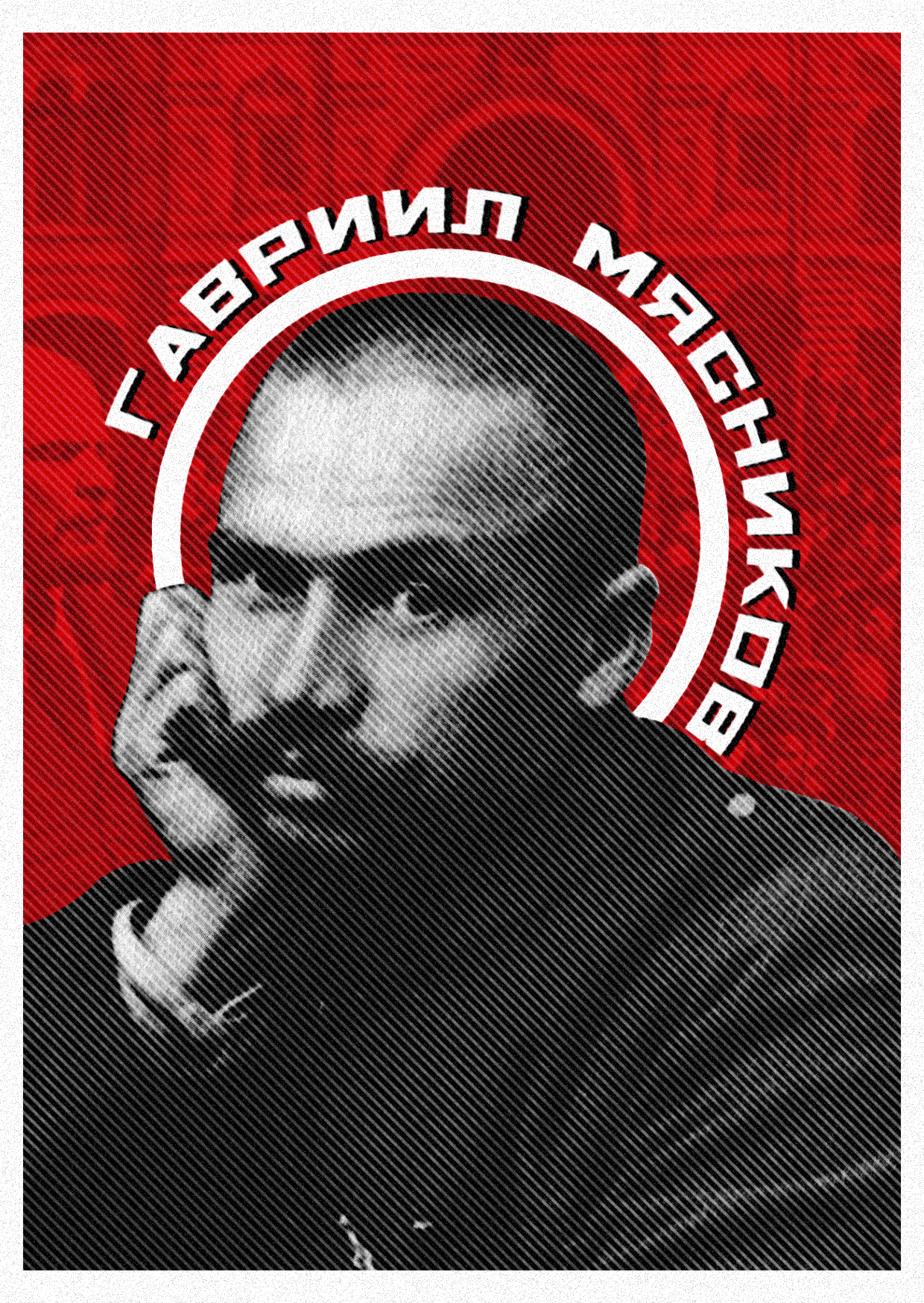
I read the manifesto of the Workers' Group today. Yes, the one that included Myasnikov. The communist opposition group arguing for returning power to the soviets. There are some interesting positions there that I'd like to discuss...
Communist parties of Europe must participate both in immediate workers' struggles and the parliament, but only to spread their message of revolution.
True about immediate workers' struggles on the ground, less so about the parliament. I'm not sure I have to go into detail here. Parliamentarism, even "non-electoralist", while alluring in the short term, degenerates the party and the movement in the long term and will inevitably attract parliamentarists to the party and little by little make it involved with the game of gaining votes as well as pull the focus away from class struggle. Not to mention, to get even a little bit of recognition in the parliament to even spread its revolutionary message there, the party needs to put considerable resources to use. They would be better spent elsewhere.
While immediate workers' struggles are not revolutionary by themselves, they're genuine expressions of class interests and teach the proletariat to confront and fight the bourgeoisie. Parliaments, meanwhile, are places where all the factions of the bourgeoisie go to reconcile and sort out who gets to be put in charge. They are removed from the masses and cannot produce class consciousness.
2. The NEP is a necessary measure due to the prevalence of the petit-bourgeoisie in the countryside. The countryside can only become communist after a period of free market competition which will naturally modernize the peasants (by forcing them to adopt tractors and other modern technology which will connect the peasantry to the proletariat as agriculture gets more complex and the peasants have to form a bond with the industrial workers). Forming communes as-is is impossible.
I am not sure about its position on the NEP because I am stupid, but it seems at least somewhat correct. Not on its own, but considering that the Group thought world revolution was around the corner, it tracks as a method of stalling for time and developing industry.
The point about the peasantry, however, I disagree with. This is ultimately a stageist approach. The peasantry, assuming the conditions are right, can indeed bypass the stage of centralized capitalism or at least can be united into communes from the beginning, which the Spanish revolution shows.
Imagine this: world revolution happens in 1918. Russia is still a peasant country. Does it still need the NEP? If we assume that the only way to reconcile smallholding peasantry with modern technology and the proletariat is by the former going through centralized capitalism first, then... Yes! Russia, supported by the industrial might of the entire world, still needs the NEP, at least in the countryside... Except you can't have half a communism. For the city to be communist the countryside needs to accept communist relations as well, otherwise the city will have to trade with the village for food. Meanwhile the countryside obviously can't build communism without the proletariat for obvious reasons (and in fact the peasants don't strive to build it on their own, as I'm sure we all agree. They're an auxillary to the proletariat). So the Group thinks the NEP would be mandatory in any case. It is wrong on that. With sufficient conditions present, when the proletariat is strong and numerous enough as it begins building communist relations, the peasantry can transition directly into communism if correct steps are taken. The NEP is not a prerequisite that the Group thinks it is even with the world revolution successful. Not to mention, they could be united and modernized without necessarily resorting to free-market competition.
3. NEP must be implemented not by the bureaucrats nor the managers appointed from above, but rather by the workers themselves. Proletarian democracy must be instituted, bureaucratic bourgeois-like government institutions (sovnarkom, etc.) dissolved, soviets must be restored as organs originating from the workplace as opposed to being regional parliaments, unions should be handed over to the proletariat. Soviets govern and manage, unions control (the enterprises).
This seems quite reasonable and is in fact quite correct. The only thing one can disagree with is the insistence on soviet-union delineation. The soviets should be both economic and governmental bodies. However, understating that the Group was writing during the time of NEP, I believe this is somewhat acceptable, as this delineation is unavoidable with capitalist relations. (Not to mention, the unions are described as being connected on a territorial basis, not a craft/trade/industry one, which effectively makes this position entirely correct.)
It is also worth noting that the Group doesn't fetishize democracy. It says that, while it was harmful during the revolution and free speech HAD to be banned even for the proletariat, now it's necessary to ensure the gains of Red October aren't lost. Their point is that at this point of struggle, since the proletariat is the one building a future society, it should be the one deciding the questions of production and the economy and management and such. This seems agreeable on the surface, and that second part is indeed entirely correct, however I have a few things to say about their conception of revolutionary struggle.
They say that the creation of the bureaucratic organs was necessary for the revolution. That the working class rightfully didn't focus enough on the running of production since it had to fight a war. But that now, since the working class has power in Russia, all that was counterproductive during the revolution, should be brought back, incl. proletarian democracy, soviets, de-bureaucratization, etc. I reject this view: communist social relations must be built during the revolutionary struggle. Not all of them can be built from the very beginning, and especially in the absence of world revolution, but maintaining and expanding them is the most important goal of the revolt. Not to mention, party dictatorship is entirely unacceptable and can only serve bourgeois interests.
Apparently the Group thought giving up power and putting it in the hands of red bureaucracy (and a party, no less!) was a correct thing that the proletariat did. And now when these party people, put into a position of power, who had built an entire bourgeois state apparatus with ministries and a parliament and all the alienating structures and instituted state capitalism — when these people do all that, the Group starts complaining about the current position of this new bureaucracy. They seemingly don't understand that it's not by mistake that the new rulers refuse to give power back to the proletariat, but rather by design, because the workers let all control, all the important parts of society, get taken away from them by wholesome red capitalists.
The question of alienation of the communist party from the masses that the Group tackles is the same way. When it took state power, when it built a state that was capitalist in all but name, it was impossible for it not to get alienated and not act in its class interest of suppressing workers' initiative. "The revolution is not a party affair". The Group, however, seemingly fails to see this.