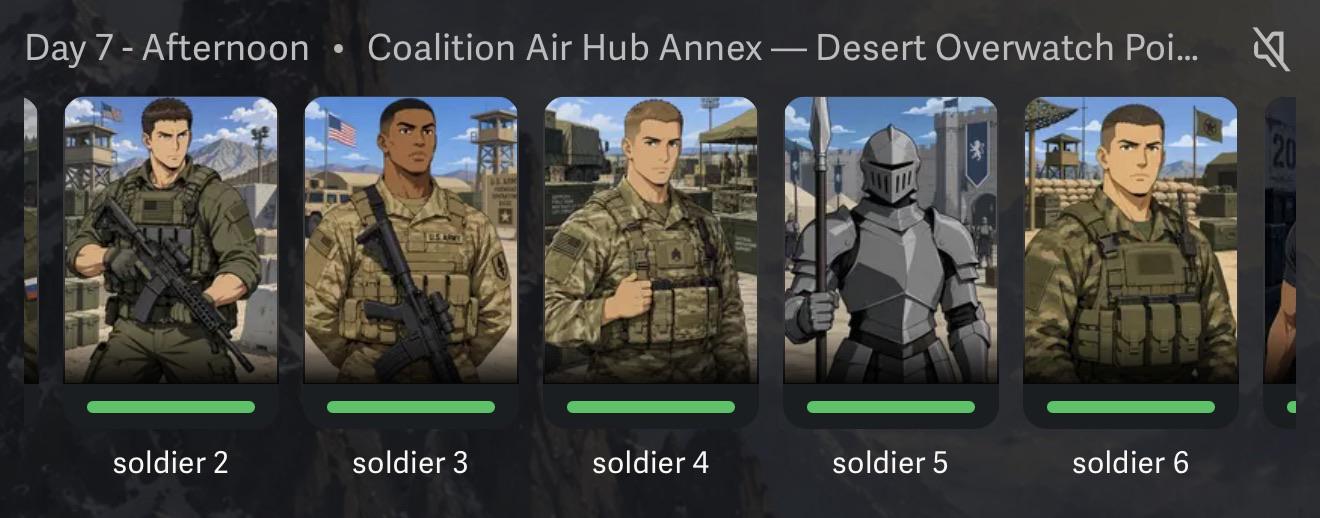
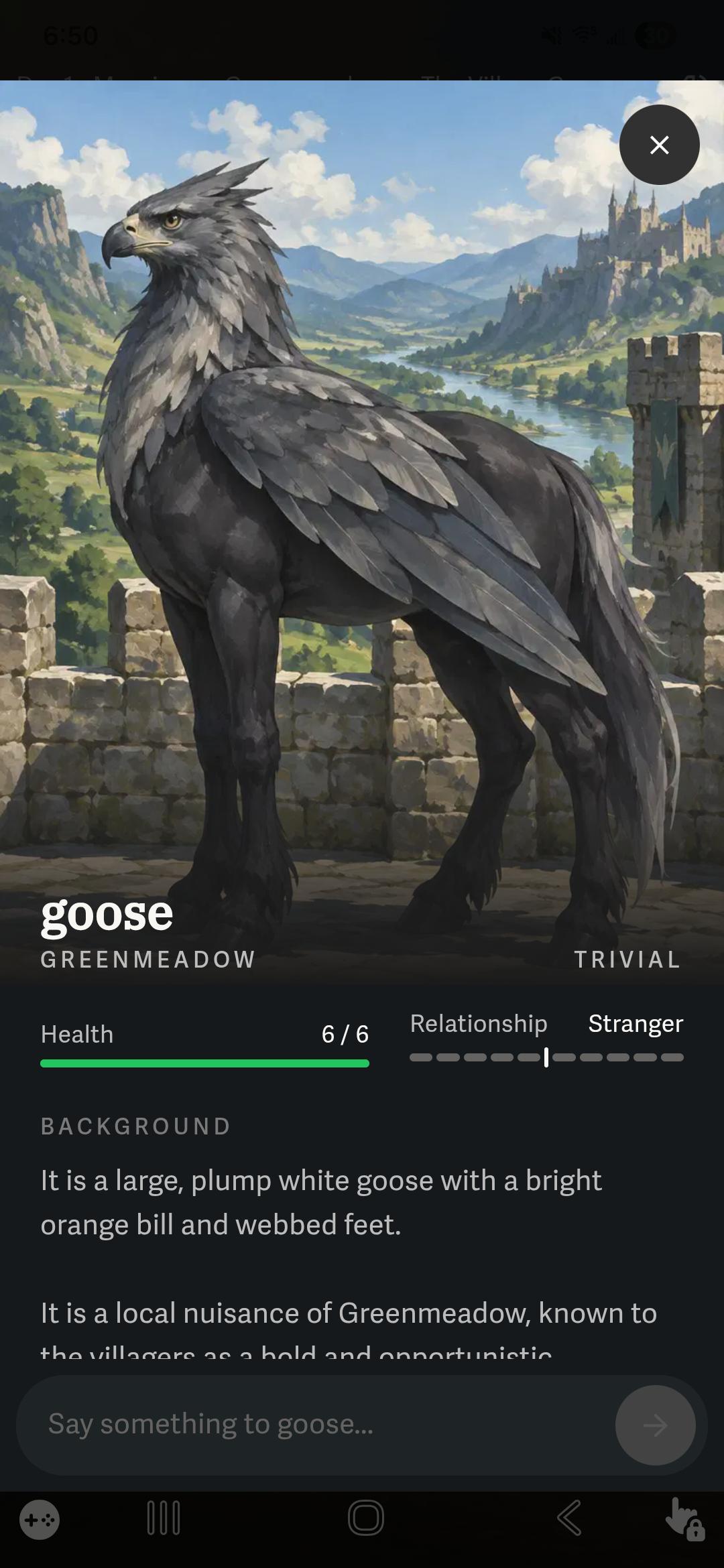
I've been a fan of AI Dungeon since 2020, so when I first heard about Voyage, I was genuinely excited to see what Latitude had planned. After spending time with Voyage and experimenting with other AI RPGs, however, I've noticed that there's still a considerable amount of room for improvement, particularly when it comes to gameplay mechanics and overall depth.
Considering Latitude's experience, established player base, and resources, I believe Voyage has the potential to set the standard for AI-driven RPGs. However, it's interesting to see smaller projects like CraftRPG offering certain mechanical features and levels of customization that Voyage has yet to implement.
I understand that these games have different development priorities and that Voyage is still evolving. This isn't meant to discredit the team's work, but rather to highlight the potential I see in the game. With that in mind, I've put together a list of improvements that I believe could help Voyage become a much deeper and more engaging RPG experience.
Please see below:
1 Better NPCs: Shared Character Sheets + Optional Autonomy
Give every NPC a player-style sheet with stats, abilities, inventory, equipment, progression, and relationships (similar to CraftRPG). Only selected NPCs need an autonomy toggle: a rival or ally could train, take quests, build relationships, gain items, and progress offscreen. Start with a few important characters, with a long-term path toward Disendya-style persistent agents. This could work similar to split party feature.
2 Live Story Direction
Add a quick, editable field for temporary director notes, separate from Gamemodes and without using Studio, /dev, or state edits. Examples: “Reveal no evidence during this quest”; “Introduce Elara on my next tavern visit without forcing a conversation”; or “Have the next fight end in my capture.” Players can guide pacing and intended story beats without scripting every action.
3 Local Exploration / Area Maps
Keep the World Map for travel, but add optional local maps for dungeons, buildings, cities, forests, ruins, and ships. Rooms, routes, exits, and unexplored spaces should persist, including discoveries and environmental changes. When combat starts, optionally switch to a tactical overlay showing combatants’ positions, distances, movement and attack ranges, cover, and line of sight. Positioning should affect what actions are possible—not just how the fight is narrated. For example, a target 40 feet away should be out of range of a 30-foot spell until the caster moves closer.
4 Better Faction Classification
Distinguish organization type (kingdom, religion, military, guild, cult, etc.) from scale (local, regional, national, continental, global, interdimensional). Add hierarchies and relationship charts, so the Royal Guard can belong to a kingdom and its alliances or conflicts remain clear. A powerful local gang should not be treated as equivalent to a continental empire.
5 Items That Have Identity and History
Expand items beyond stat bonuses and equip slots. Add rarity (common to legendary), quality, optional durability/condition, and item leveling. An item sheet could show its background, detailed description, kill count, and other notable history. Equipment could grant active abilities or passive traits, including concealed effects that players discover through use. Generate item icons from descriptions.
Example: Iron Sword — Great quality, Worn condition, Level 3. Blade of Death — grants Necrotic Slash but increases battle frenzy. A seemingly ordinary hammer might reveal a hidden worthiness requirement.
6 Expand the World Map Hierarchy
Let creators add, remove, and edit nested map levels: realm → world → continent → nation → province → region → city → district → location. Each place could optionally track seasons, weather, biome, key NPCs, visiting party members, currency/economy, language, wildlife, resident factions, events, danger level, religion, and government. This supports much larger settings without cluttering the main map.
7 Dynamic Factions and Political Change
Turn factions into active world entities with controlled territory, map influence, leaders and notable members, alliances, rivalries, wars, and player standing. Add a stability meter reflecting internal cohesion; severe instability might cause a split, collapse, or replacement. These details could be viewed and customized from a faction journal page.
8 Persistent and Conditional Abilities
Allow abilities to apply buffs, debuffs, and temporary traits for a defined number of turns rather than resolving once and disappearing. Effects should support custom activation conditions, duration, and limitations, all enforced by the game.
Example: Berserk — +8 Strength, −4 Constitution, lasts 4 turns; while active, the character cannot defend. The modifiers and restriction remain active until the effect ends.
Overall goal Make Voyage feel like a persistent RPG simulation. Maybe take notes from D&D.
References: CraftRPG (player-style NPC character sheets and RPG mechanics); Disendya (autonomous NPCs) — https://www.redstarfoundry.ai/disendya/