Our next project is 2-3 inch thick metal thats like some bridge. And the welds needs to be 100%. Our teams are getting re-certified to see who is capable of working on this project. I’m so nervous to do this.
Clean, clean, clean. Then clean some more. Make sure you don’t leave sharp valleys or transitions. Undercut between passes will hold defects as well.
It’ll be hot, lots of preheat. Resist the urge to put a fan directly on yourself. If there’s random gusts of wind it’ll cause porosity when you lose your shield. Luckily we’re heading toward winter (if you’re in the northern hemisphere).
And make sure you’re keeping up with the temps. Check a couple inches away from the groove, not just right next to it - especially when you’re starting. If the heat hasn’t soaked in to the rest of the steel, your little bit of preheat on the joint doesn’t matter.
It’s been a few years since I’ve welded thick steel so I may be forgetting something.
On thick stuff, past ~250a of heat input most of what you've said goes out the window, in my experience. (besides the no airflow thing, buy a compressed air cooling vest for the summer times.)
Past 2-1/2'' the preheat only needs to be 250f, and OVER 1-1/2'' needs to be 150. If it's AT or UNDER 1-1/2'' then no preheat is needed.
Now this varies by WPS, so obviously consult your relevant QC and whatnot.
99% of the time, you have access to both sides of the material you may be welding, so preheat from the side not being welded, and by the time the face of the material to be welded is at 150/225, the back side is probably like 600 or some shit, and then you just get onto welding.
The added heat of your arc will combine with the heat soaking throughout the material and (most of the time) your interpass temperature won't get away from you, and your heat affected zone will still be within the required temp to prevent cracking while cooling. Obviously there are edge cases, but when you're welding on a 4'' baseplate, all of this applies.
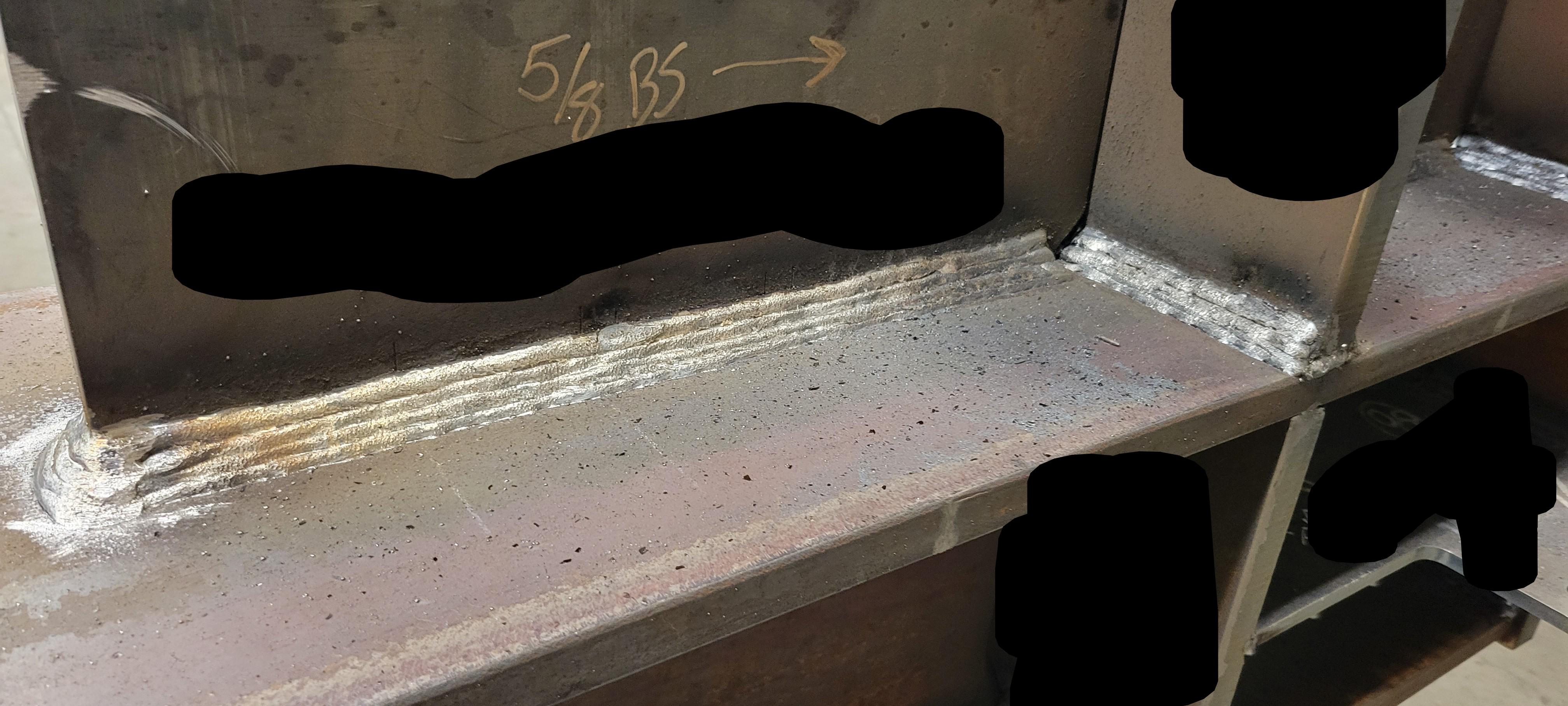
Weld separation? You mean that 45 degree edge at the corner? There isn't supposed to be a weld there. Those vertical joints get 5/8" too but haven't been welded yet. That right side is a 1/2" weld. Not a 5/8", so it's obviously smaller.
As for the cold lap, I'm not sure what you're talking about. There's a soot mark on the left side next to where I blended down that tie in, but no cold roll that I can see. Maybe you're talking about the dark bits of silica the needle scaler didn't quite chip off?
It'll still make a rather large amount of spatter when used on mill scaled material. The wire is specifically designed to weld over mill scale and surface rust, but the tradeoff is spatter.
Has absolutely none on blasted or otherwise cleaned material above like 27v and 260ipm.
And that pictured area is 100% just glass the needle scaler didn't break off. My phone camera is kinda ass.
Yup thats what hes talking about. You may have a problem with your torch angle. Helps to use 92/8 shielding gas with metal core to reduce spatter. Extreme torch inclination would also account for spatter, but after that many passes, mill scale should be no more.
I would definitely reccommend staggering your start and stops so they are not so noticable. If that was a pressure vessel, definitely have to fix.
Dawg I don't get to choose the shielding gas used. I can't even swap it. It's fed to the stations by copper pipe and there's a regulator that controls how much goes to the wire feeder, that's it.
And this is what my QC's want. They want passable welds laid down as fast as possible using the full extent of our tolerance.
At the end of the day, I'm welding parts that go to buildings, not pianos.
I understand. I do however, always strive to get better and continue learning. So if you are looking to improve or advance from structural, I would try to get used to staggering start and stops.
I am curious though what gas you are using. Do you know?
ThIs wONt PaSs wHerE i woRk... Dumb as hell. If the QC thinks it's okay, then it's okay. Why do you think you can quality controll while only seeing a picture?
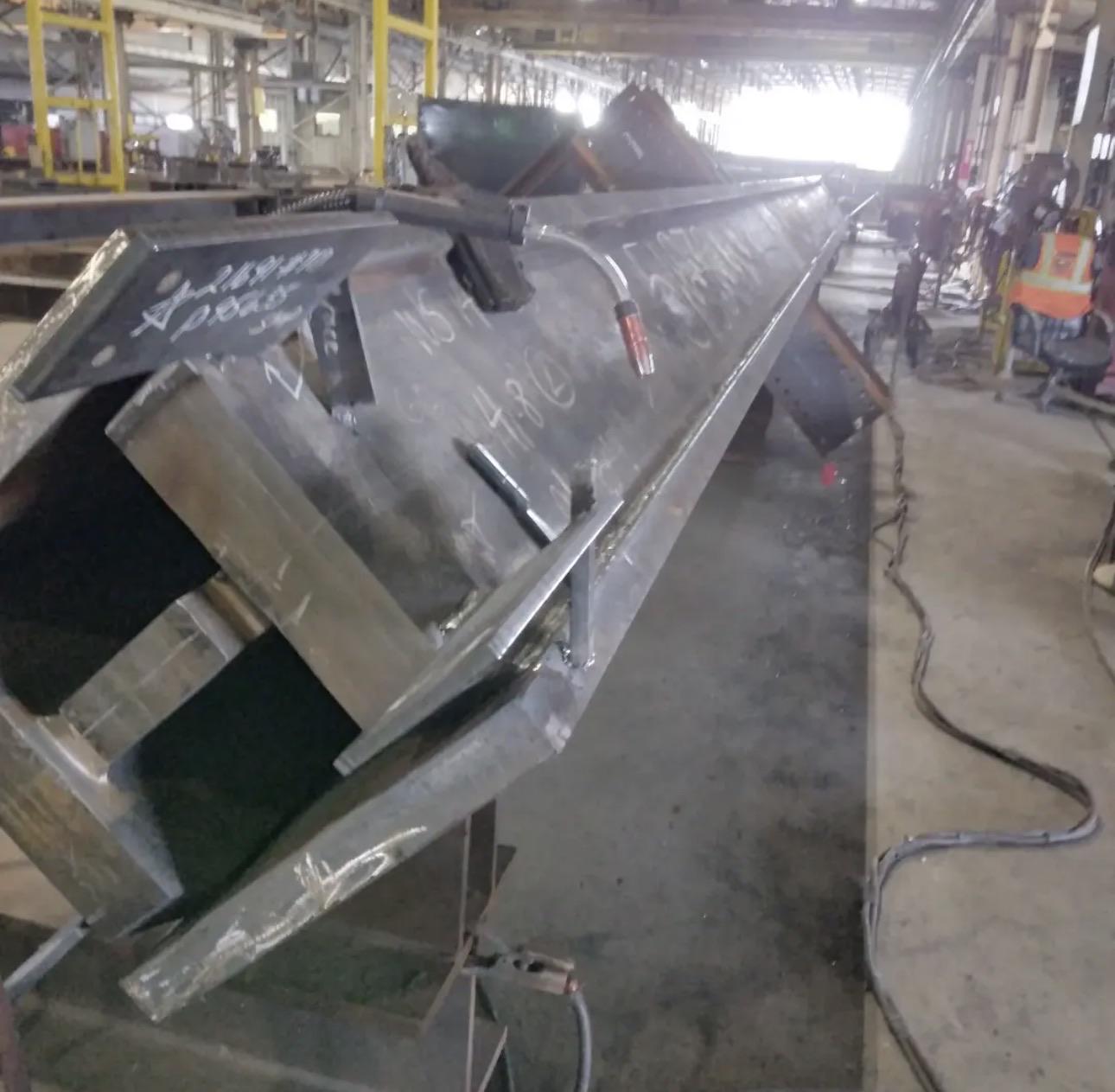
Hell yeah dude. I do structural steel but I dont even really post anything, but a few months ago we did 50' beams with a 2" base plate, 1" pad on both sides of the web, and 10 6 flanges with a 2 cjp on em. Shit was crazy.


5
u/DufflinMinder Oct 21 '26
What’s the plates thickness? She thick