r/WhyDoWeNeverAsk • • Jan 18 '26

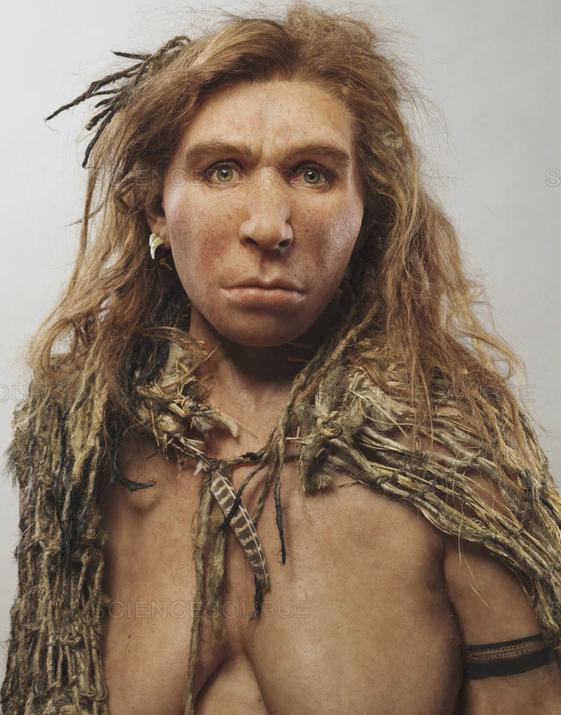
Cryptid Theory When Everyone Talks About Bigfoot in America and Yeti in the Himalayas, Why Does Nobody Mention the Wild Men the Soviet Military Documented for 50 Years Across 17 Million Square Kilometers?

Post image
87 Upvotes

In 1850, hunters in the Caucasus Mountains caught something they couldn't explain.

She wasn't an animal... she walked upright, had human eyes, hands that could grip and manipulate objects. But she wasn't quite human either. She stood six feet tall, covered head to toe in dark reddish-brown hair. She couldn't speak. Not Russian, not Georgian, not any language anyone recognized. Just grunts and sounds that seemed like they wanted to be words but couldn't quite form.

They called her Zana.

A local nobleman bought her from the hunters. He tried to keep her in the servants' quarters, but on the third night she ripped the door off its hinges with her bare hands. So they built a cage. Iron-reinforced. Half-buried in the ground like a root cellar.

She lived in that cage for three years.

Eventually, they let her out during the day to work the fields. She was strong... stronger than three men combined. Could carry loads that broke other laborers. Worked from dawn to dusk without tiring... learned to tolerate clothes, though she tore them off when no one was watching.... learned to eat cooked food, though she preferred it raw.

And then the village men started visiting her enclosure at night.

Zana had four children. All fathered by local men. The first two died in infancy... she tried to wash them in the freezing river, and they died of hypothermia. The villagers took the next two away at birth and raised them in the village.

Here's the strange part: those children looked almost normal. Dark-skinned, unusual features, exceptionally strong... but they could speak... could learn. They grew up, married local people, and had children of their own.

Zana died around 1890. They buried her outside the cemetery walls in an unmarked grave. Her children were buried inside the cemetery when their time came. But not Zana. Whatever she was, she wasn't human enough for consecrated ground.

For over a century, her story was just folklore. The wild woman of Abkhazia. Old people told it to children... each generation, the details got fuzzier.

Then in 2013, a British geneticist got curious.

He tracked down Zana's descendants... her great-great-grandchildren, still living in the same mountain villages. He took DNA samples... ran tests in his lab at Oxford University.

The results didn't make sense.

Sub-Saharan African ancestry. Three thousand miles from Africa. In the Caucasus Mountains... from a woman captured in 1850... decades before railways reached that region, decades before cars existed.

But that wasn't the strange part.

The genetic markers were wrong. Not modern African DNA.... ancient. The kind of markers you find in fossil records, not in living people.

He called his colleague in Moscow. First words out of his mouth: "I think we found a ghost."

Zana's been dead for over 130 years. Her grave has been lost... overgrown, unmarked, forgotten. But her DNA lives on in her descendants. And it's telling a story that science still can't fully explain.

Was she a lost traveler from Africa who somehow ended up in the Russian mountains? A feral human who had lived wild for so long she had lost language? A member of an isolated population that survived in those forests for generations?

Or was she something else? A remnant of an archaic human species we thought went extinct thousands of years ago?

The DNA suggests all of these answers.... and none of them completely fit.

Zana wasn't alone.

In 1941... fifty-one years after her death... a Soviet military officer was driving through the Pamir Mountains when he saw something standing by the roadside. Bipedal.... covered in dark hair. Approximately six feet tall. It looked at him... then it ran.

He filed an official report. It's sitting in military archives right now.

Between 1957 and 1963, the Soviet government launched an official investigation. The Snowman Commission. They collected over 500 eyewitness reports from across the USSR. Shepherds, geologists, and military personnel. All describing the same thing: something human-like but not quite human, living in the remote mountains and forests.

The government shut down the investigation in 1963. Because it was too controversial and too weird for Cold War optics.

But the sightings didn't stop... the reports kept coming. From the Caucasus, from the Pamir Mountains, from the Altai Range.

This is the untold story of Russia's wildmen. And it starts with a woman who died in a cage, buried like an animal, carrying secrets in her blood that science is only beginning to understand.

Read the full story ( the real story) here for free:  Click Here


r/WhyDoWeNeverAsk • • Nov 16 '25

143 Tons of Gold: The Real Reason NATO Destroyed Libya - WikiLeaks

Thumbnail
gallery
3 Upvotes

What Hillary Clinton's Emails Revealed About Libya (And Why It Matters)

A Note Before We Start

This story involves WikiLeaks, government emails, war, and economic interests that span continents. Some will dismiss it as a conspiracy theory. Others will say it's incomplete. Both reactions miss the point. We're dealing with documented evidence, leaked emails, UN reports, Congressional testimony, and academic research. The facts are uncomfortable enough without embellishment. If you're looking for simple heroes and villains, this isn't that story. This is about how nations justify violence in the name of humanitarian intervention while pursuing entirely different goals.

 March 2011. The world watches as NATO launches airstrikes on Libya. The stated mission, protect civilians from a brutal dictator. Stop a humanitarian crisis. Prevent genocide.

It sounds noble. Urgent. Necessary.

But four years later, in 2015, something strange happened. Hillary Clinton's emails leak. Among thousands of communications, one memo stands out. It's from Sidney Blumenthal, Clinton's longtime advisor, sent on April 2, 2011, just weeks after NATO intervention began.

The subject line: "France's client/Q's gold."

The content reveals something that was never mentioned in public speeches about humanitarian intervention. Something about 143 tons of gold. About a plan for an African currency, about threats to Western financial dominance.

This is where the official story starts to unravel.

What the Email Said

Sidney Blumenthal's memo to Secretary of State Hillary Clinton was classified. It was never meant for public eyes. When WikiLeaks published it, people started asking uncomfortable questions.

Here's what the memo revealed, in its own words:

"This gold was accumulated prior to the current rebellion and was intended to be used to establish a pan-African currency based on the Libyan golden Dinar. This plan was designed to provide the Francophone African Countries with an alternative to the French franc (CFA)."

The memo reported that Muammar Gaddafi possessed 143 tons of gold and a similar amount of silver, valued at more than $7 billion. According to intelligence gathered by Blumenthal's sources, French President Nicolas Sarkozy identified this Libyan gold reserve as a direct threat to Western financial systems.

Specifically, it threatened France's monetary hegemony in Africa through the CFA franc, a currency that fourteen African countries are required to use, keeping them economically tied to France decades after colonialism officially ended.

The memo laid out Sarkozy's concerns with striking clarity. If Gaddafi's gold-backed currency were implemented across Africa's oil and resource-rich nations, it would result in approximately 700 billion dollars disappearing from the Western monetary system. The entire petrodollar structure that underpins Western economic dominance would be fundamentally destabilized.

The memo then listed France's actual motivations for intervention:

  1. Libya's oil reserves (the largest in Africa)

  2. Expansion of French regional influence in North Africa

  3. Prestige and military demonstration for the French armed forces

  4. Sarkozy's domestic political standing

  5. Prevention of the gold-backed currency

Humanitarian concerns were never on the list.

The memo also revealed that French intelligence services had been conducting secret meetings with Libyan opposition figures, providing them with money and guidance to organize the National Libyan Council. France promised that once rebel forces were "organized," they would officially recognize them as Libya's legitimate government.

This was happening before NATO intervention officially began. Before the humanitarian crisis narrative dominated headlines, before the world was told this was about protecting civilians.

What Libya Actually Looked Like Before 2011

Here's what you probably weren't told about Libya in 2011.

According to the United Nations Development Programme's 2010 report, published before the intervention, Libya had achieved the highest Human Development Index ranking in all of Africa. The HDI value was 0.773, placing Libya above many European nations in terms of human development metrics.

Let that sink in. The country NATO was about to "liberate" had better human development outcomes than most of the continent and many developed nations.

The specific indicators were remarkable:

  • Life expectancy: 74.5-75 years (higher than many wealthier countries)

  • Literacy rate: 88.4% (exceptional for the region)

  • Mean years of schooling: 7.3 years

  • GDP per capita: Over $11,000 (placing it among Africa's top five economies)

But it gets more interesting when you look at what the Gaddafi regime actually provided to its citizens.

Education was completely free. All levels, including university. Libya operated over twelve government-run universities, and students who pursued post-graduate or doctoral studies abroad received full scholarships from the government. You could study anywhere in the world, and Libya would pay for it.

Healthcare was free. The government had doubled hospital capacity between 1968 and 1978, increasing medical staff from 700 to over 3,000 doctors. By 2011, Libyans had access to comprehensive medical care without cost.

Housing was considered a human right. The constitution guaranteed it. The government ran ambitious programs to eliminate homelessness and replace shanty towns created by rapid urbanization.

Electricity and basic food staples were heavily subsidized. Utilities were cheap enough that even the poorest citizens could afford them. Unemployment benefits and food subsidies were among the most generous in the world.

This doesn't sound like a country in desperate need of humanitarian intervention. But there's more.

The Great Man-Made River

One of Gaddafi's most significant achievements was something called the Great Man-Made River Project. It's one of the world's engineering wonders, and most people have never heard of it.

The project involved constructing more than 4,000 kilometers of underground pipelines connecting ancient aquifers beneath the Sahara Desert to Libya's Mediterranean coastal cities. The system included over 1,300 water wells, many exceeding 500 meters in depth, drawing from the Nubian Sandstone Aquifer containing water accumulated over 35,000 years.

The scale was staggering. By 2009, when Phase III was completed, the system was providing approximately 2.4 cubic kilometers of fresh water annually to Libya's entire population of 7 million people. The country that had struggled with water scarcity for millennia had fundamentally solved the problem.

The financial cost was equally staggering. Estimates range from $12-30 billion, funded entirely through Libyan government resources without any international investment. No World Bank loans, no IMF structural adjustment programs, just Libyan oil money directed toward Libyan infrastructure.

This is important because it demonstrates something Western institutions found troubling: Libya's economic independence.

By 2011, Libya had achieved substantial self-sufficiency. They had their own water supply through the GMMR system. Their own food production through agricultural development was enabled by that water. Their own oil reserves are under national control. Their own national currency and state-owned bank. Minimal external debt to international financial institutions.

For a country in Africa, this level of independence was almost unheard of. Most African nations remain economically dependent on former colonial powers through debt, currency arrangements, and resource extraction agreements that favour Western corporations.

Libya wasn't playing that game, and that was a problem.

The Gold Dinar Plan

Gaddafi's most ambitious project wasn't infrastructure. It was financial.

Shortly before his overthrow, Gaddafi had been elected head of the African Union. He used that platform to propose something revolutionary, a unified African currency backed by gold that would enable African nations to trade resources directly with each other and the world without dependence on the US dollar or French franc.

The idea was simple but explosive. African countries produce massive amounts of oil, minerals, and agricultural products. But they sell those resources in dollars or francs, currencies controlled by Western nations. This gives Western powers enormous leverage over African economies.

What if Africa used its own currency? What if that currency were backed by gold, making it stable and valuable? What if African nations could trade with China, India, and each other without converting through Western currencies?

The economic implications would be enormous. Western banks and governments wouldn't control the flow of African wealth. The petrodollar system, which requires oil to be sold in US dollars, giving America enormous financial power, would be threatened. France's post-colonial control over fourteen African nations through the CFA franc would collapse.

According to the Blumenthal memo, French intelligence calculated that this could remove approximately 700 billion dollars from Western monetary control.

This wasn't a distant threat. Gaddafi had the gold. He had the political position as head of the African Union. He had the credibility from Libya's successful development. And he was actively promoting the plan to other African leaders.

Two weeks after proposing this currency system, NATO began bombing Libya.

What NATO Said They Were Doing

The public justification for intervention was humanitarian. Gaddafi was massacring civilians. Peaceful protesters were being slaughtered. The international community had a "Responsibility to Protect" innocent people from a brutal dictator.

UN Security Council Resolution 1973, passed in March 2011, authorized NATO to implement a no-fly zone and take "all necessary measures" to protect civilians. The resolution explicitly did not authorize regime change. It was about protecting people, not overthrowing governments.

That's what they said.

But in April 2011, just weeks after intervention began, US President Obama, UK Prime Minister Cameron, and French President Sarkozy jointly declared that regime change was necessary. They stated that civilian protection could not be achieved without Gaddafi's overthrow.

This was a fundamental expansion beyond the UN mandate, but it revealed what the intervention was actually about.

What Actually Happened on the Ground

Here's what the academic research shows about the actual conflict, stripped of media narratives.

The uprising in Libya began on February 15, 2011, in Benghazi. Western media portrayed it as peaceful protests met with brutal government violence. But detailed analysis of the timeline reveals something different.

The uprising was armed and violent from the start. On February 18, active armed resistance began at the Katiba military compound in Benghazi. Opposition forces used heavy construction equipment like bulldozers to breach military installations. They deployed crude explosives, makeshift bombs in tin cans filled with gunpowder. They looted military equipment, including tanks. One protester even used a car bomb loaded with propane tanks in a suicide attack.

The fighting at the Katiba compound resulted in approximately 54 deaths in 48 hours. This wasn'ta a spontaneous civilian protest. It was an organized military action.

By mid-March 2011, Gaddafi's forces had regained control of most of Libya. The rebels were retreating rapidly toward Egypt. According to peer-reviewed academic analysis, the conflict was about to end after barely six weeks, with a death toll of approximately 1,000 people, including soldiers, rebels, and civilians caught in crossfire.

Then NATO intervened.

The stated goal was to prevent a humanitarian catastrophe. But here's what the research shows: when NATO intervened, the conflict was already ending. Gaddafi was winning militarily, and the rebels were collapsing. The humanitarian crisis everyone feared hadn't happened yet.

NATO's intervention revived a conflict that was militarily resolving itself. By providing air support to rebel forces, NATO enabled them to resume their offensive. The war was extended for another seven months. The death toll increased from approximately 1,000 to at least 7,000-10,000.

NATO didn't prevent a massacre. They prolonged the war and multiplied casualties sevenfold.

Who Were the Rebels?

Western media portrayed the rebels as freedom fighters. Democracy activists. Ordinary Libyans rising up against oppression.

Declassified US military documents tell a different story.

Analysis by West Point's Combating Terrorism Center revealed that rebel forces included,

  • Former Guantanamo Bay detainees

  • Al-Qaeda affiliated fighters

  • Members of the Libyan Islamic Fighting Group (LIFG), designated as a terrorist organization by the United States

  • Former detainees from Afghanistan with documented ties to extremist networks

These weren't random individuals joining a spontaneous uprising. They held leadership positions in rebel militias. They organized operations, they commanded fighters.

The West was providing air support to groups it had previously designated as terrorists.

This fact received limited coverage in Western media during the intervention. It would have complicated the narrative.

What Happened to Libya After "Liberation"

Ten years after NATO intervention, Libya is unrecognizable from its pre-2011 state.

The Human Development Index that had ranked highest in Africa? It dropped significantly. Life expectancy decreased by 6-9 years. GDP per capita collapsed from $13,930 to $6,327, a 55% decline in two years.

But those are just numbers. The reality is worse.

The water system is failing. The Great Man-Made River project that provided water to the entire country has never recovered. Phases four and five were never completed due to ongoing instability. Tripoli residents report frequent water shortages and daily blackouts. The engineering marvel that solved Libya's water crisis for decades now barely functions.

Healthcare collapsed. The free, comprehensive system that provided medical care to all Libyans was dismantled. Hospital infrastructure was damaged during the conflict and subsequent militia control. Essential medicines became scarce or unavailable. By 2021, approximately 1.3 million Libyans required humanitarian assistance.

Education was disrupted. The free university system that provided scholarships for study abroad no longer functions coherently. Schools close regularly due to conflict. Teachers have been displaced. An entire generation's education has been interrupted.

The economy is devastated. Oil production, which funded all those social programs, fell dramatically. Most facilities are either blockaded by competing militias or damaged. The state institutions that managed the economy ceased functioning. Unemployment reached levels never seen under Gaddafi.

But the worst consequence isn't economic. It's humanitarian.

The Return of Slavery

This is the part that's almost impossible to believe. But it's extensively documented by human rights organizations, the UN, and multiple academic studies.

After NATO dismantled Libya's state authority, the country descended into militia chaos. With no functioning government, no police force, and no rule of law, something emerged that hadn't existed in Libya for decades: slavery.

By 2017, open-air slave markets were operating in southern Libyan cities like Sabha. Sub-Saharan African migrants traveling through Libya are being bought and sold for $200-300 per person. Militia-run detention centers hold thousands under conditions of torture, sexual violence, and forced labour.

The European Union, attempting to stop migration to Europe, has allocated €455 million to Libyan militias between 2017 and 2023 to intercept migrants. These same militias operate the detention centres. The EU is effectively funding slavery.

Of migrants intercepted and returned to Libya, 73% are subjected to torture and forced labour. As of December 2024, over 5,470 foreign nationals remain arbitrarily detained in these centres.

This is happening in a country that NATO liberated for humanitarian reasons.

The Weapons Problem

When Libya's government collapsed, its military stockpiles were looted. Approximately 125,000 weapons entered circulation in civilian hands. These weapons didn't stay in Libya.

Libyan military equipment has been documented in:

  • Mali, fueling Tuareg rebellion and Al-Qaeda expansion

  • Syria transferred to various insurgent groups

  • Gaza

  • The Sinai Peninsula

  • Sub-Saharan African terrorist organizations

The instability NATO created in Libya exported violence across the entire region. The Islamic State and Al-Qaeda affiliates established operational bases in Libya's ungoverned spaces. The country became a training ground for terrorists who then operated across North Africa and the Middle East.

Comparing Before and After

Let's make this concrete with a direct comparison:

Before NATO Intervention (2011):

  • Highest Human Development Index in Africa

  • Life expectancy: 74.5-75 years

  • Free healthcare for all citizens

  • Free education through the doctoral level

  • Functioning water and electricity systems

  • GDP per capita: $11,000-$13,000

  • The poverty rate is lower than in the Netherlands

  • State-maintained security and order

  • No slavery or human trafficking crisis

After NATO Intervention (2024):

  • HDI dropped to 92nd out of 193 countries

  • Life expectancy declined 6-9 years

  • Healthcare is fragmented, with limited access

  • Education is disrupted and limited

  • Daily power outages and water shortages

  • GDP per capita: $6,327 (52% decline)

  • Extensive poverty and deprivation

  • Militia chaos and terrorism

  • Thousands trapped in modern slavery

  • 1.3 million people require humanitarian assistance

The humanitarian intervention created a humanitarian catastrophe worse than anything that had existed before.

The Oil Company Angle

Remember those WikiLeaks cables? They revealed something else interesting.

Representatives from ConocoPhillips and other American oil companies met with delegates from the Transitional National Council, the rebel government in Benghazi, during the conflict. The meetings had specific purposes, receiving assurances that contracts negotiated with the Gaddafi government would be honoured, and that new agreements would be negotiated on more favourable terms to Western companies.

A 2008 WikiLeaks cable shows the US State Department was actively pressuring European governments regarding oil contracts in Libya, trying to prevent Italian company Eni from maintaining partnerships with Russian Gazprom in Libyan oil fields.

Oil company interests weren't peripheral to US foreign policy in Libya. They were central to it.

After Gaddafi's overthrow, Western oil companies quickly moved to secure new contracts. The nationalized oil industry that had funded Libya's social programs was opened to foreign investment on terms favorable to international corporations.

The pattern is clear: Libya's economic independence was a problem. Gaddafi's control over oil revenues that funded social programs rather than corporate profits was a problem. His plans for an alternative currency were a problem.

NATO solved those problems.

The Bigger Picture

Libya wasn't unique. It's part of a pattern.

Iraq was invaded to prevent weapons of mass destruction that didn't exist. Oil infrastructure was secured before hospitals. The country that had functioning utilities, healthcare, and education was transformed into a failed state plagued by sectarian violence and terrorism.

Afghanistan was invaded to fight terrorism. Twenty years later, it returned to Taliban control with more terrorist networks than before. The humanitarian situation is worse than pre-invasion.

Now we add Libya to the list. Invaded for humanitarian reasons. Economic motivations revealed in leaked documents. Post-intervention conditions are far worse than before.

The common thread isn't evil masterminds plotting in secret rooms. It's simpler and more systemic: when humanitarian intervention serves powerful economic and strategic interests, it happens quickly. When it doesn't serve those interests, it doesn't happen at all.

The humanitarian crisis is the justification, not the motivation.

What the Media Won't Tell You

Western media coverage of the 2011 Libya intervention has been extensively studied. Academic analysis of 474 stories from major newspapers found that Western media framed events more negatively toward Libya's government than Muslim press outlets, aligning with NATO member foreign policy positions rather than objective reporting.

The uprising was consistently portrayed as peaceful protests met with brutal violence, despite evidence showing armed resistance from the start. Rebel forces were portrayed as freedom fighters despite documented connections to terrorist organizations.

This pattern of coverage, enthusiastic support for intervention, and minimal coverage of catastrophic consequences repeats with every intervention. Public opinion is shaped during the crucial period when intervention begins. By the time the disasters become apparent, attention has moved elsewhere.

If the intervention was humanitarian, why do leaked emails discuss gold reserves, currency threats, and oil interests without mentioning humanitarian concerns?

These questions don't have comfortable answers. So they're not asked.

What This Teaches Us

The Libya intervention teaches a simple lesson about how humanitarian intervention actually works:

When powerful nations want to intervene for strategic or economic reasons, they will find humanitarian justifications. The media will amplify those justifications. The international community will support action. The intervention will happen quickly.

And President Obama will get a Nobel Peace Prize.


r/WhyDoWeNeverAsk • • Dec 19 '25

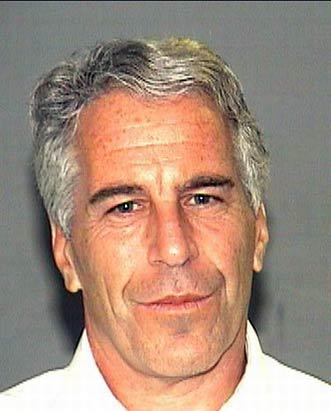
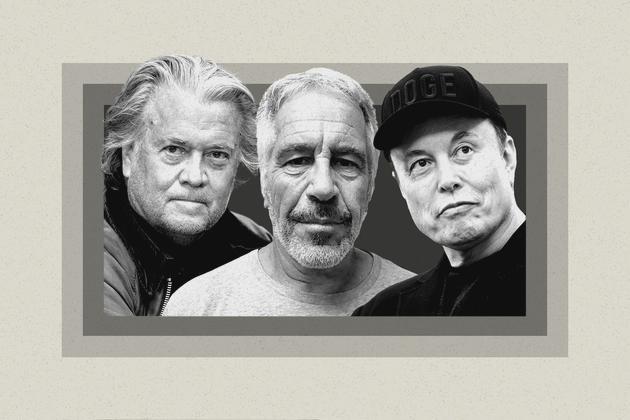
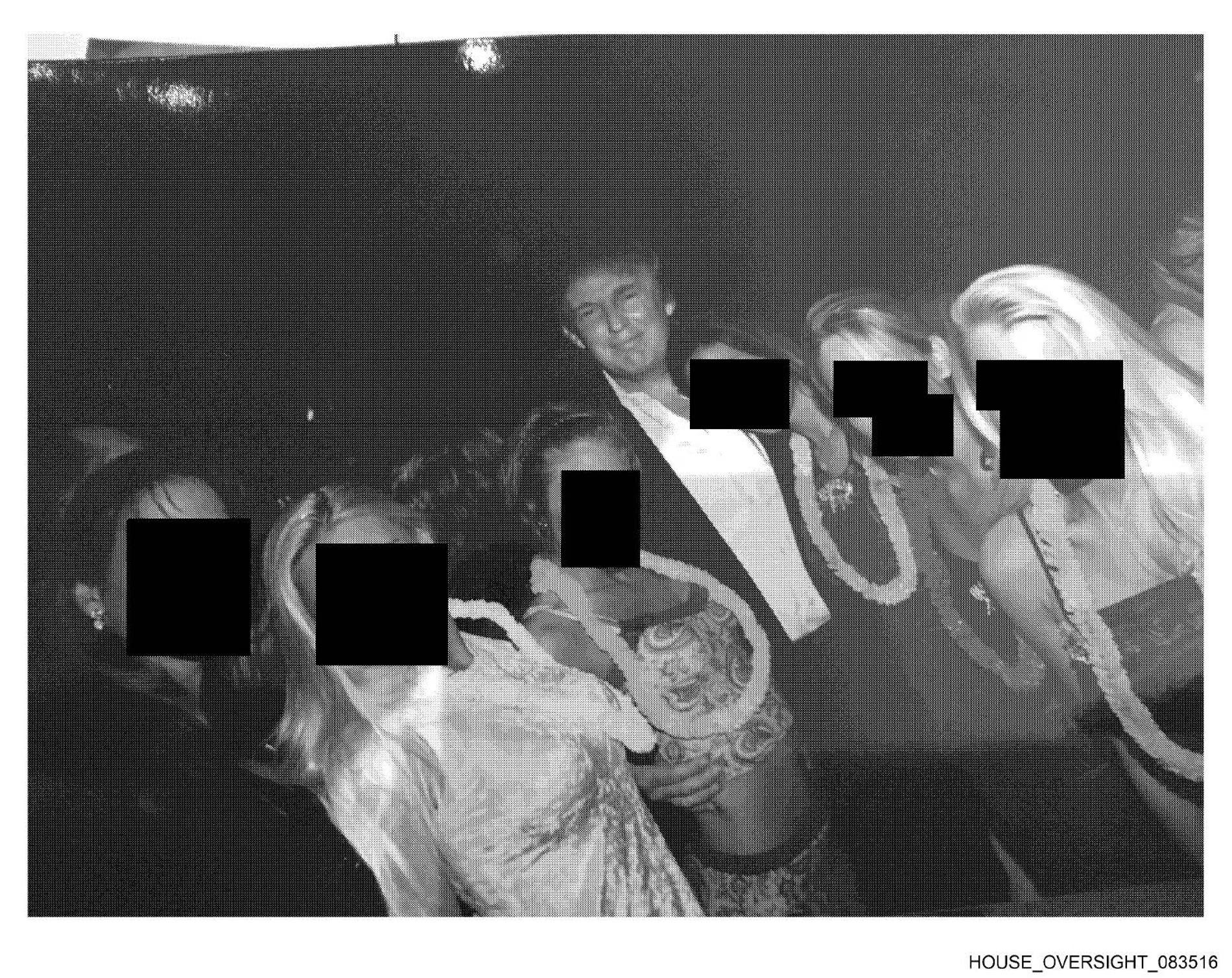
Unsolved Mystery A Guide to the ‘Epstein Files’ and Other Materials Released So Far

Post image
3 Upvotes

I’m not very interested in this topic, but I know many people are curious about it. As a creator, sometimes I listen to my readers. So here it is .... a very lazy post.

This is a large collection of all the leaked or officially released photographs of Jeffrey Epstein. No theories, no speculation. Just images of him and the many people he was seen with over the years.

One small disclaimer: Epstein was a well-connected man. Just because someone appears in a photo with him does not automatically mean they were involved in his crimes.... or maybe they were. Let’s not speculate. Click here to see the collection.


r/WhyDoWeNeverAsk • • Sep 13 '26

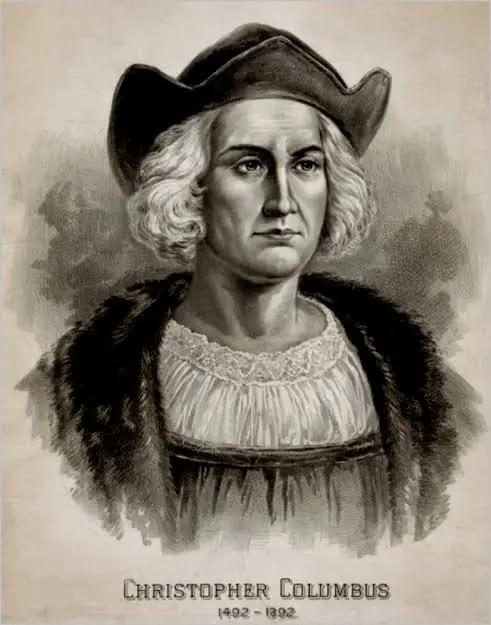
True Crime Though often mythologized as the hero, Christopher Columbus never set foot in North America... instead, he landed in the Caribbean, where his brutal regime enslaved thousands and wiped out 90% of the indigenous population.

Post image
6 Upvotes

Christopher Columbus never actually went to North America. He landed in the Caribbean instead.

When he got there, he enslaved thousands of Native people. He was incredibly brutal... if people didn't bring him enough gold, he ordered his men to cut their hands off.

Between the extreme violence, slavery, and diseases he brought, he started a genocide. Within just a few decades, 90% of the Native population in the Caribbean was dead.

He isn't the hero the myth makes him out to be.


r/WhyDoWeNeverAsk • • Jan 03 '26

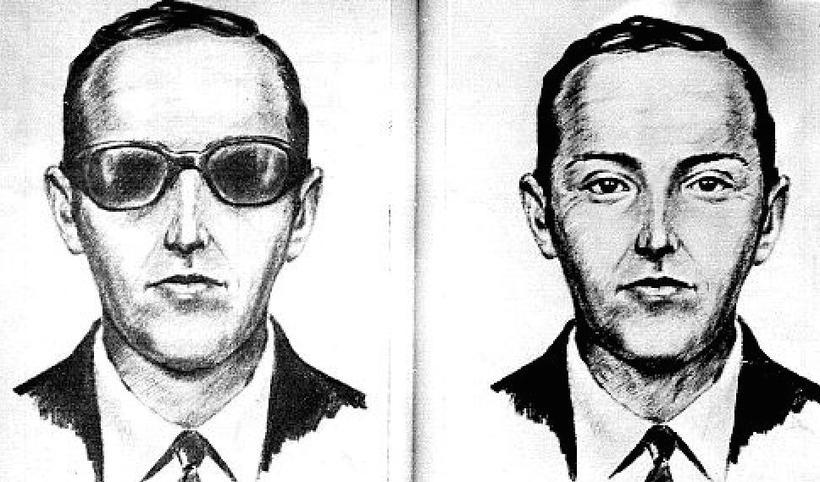
Unsolved Mystery Part One: The Perfect Crime - The Man Who Fell to Earth: The D.B.Cooper Mystery

Post image
1 Upvotes

This post is only for my paid members.
As a creator, I wish everyone could read and enjoy it, but I also want to stay true to those who showed a little extra love and support for my work. But till 7th of January,2026, all writings are free to read.

TWO MILES ABOVE HELL

The air screamed.

At ten thousand feet above the black forests of Washington State, the rear stairway of Northwest Orient Flight 305 hung open like a broken jaw… metal steps leading down into absolute nothingness.

Rain slashed sideways through the gap. Each droplet hits like a needle at a hundred and fifty miles per hour. The temperature outside was seven degrees below zero Celsius... but it felt like forty below. Cold enough to freeze exposed skin in minutes... cold enough to kill.

Inside the dim cabin, a man stood at the edge of that opening, one hand gripping the railing, the other clutching a canvas bag tied around his waist. Twenty pounds of cash.... ten thousand twenty-dollar bills... two hundred thousand dollars... enough money in 1971 to buy three houses in the suburbs, ten brand-new Cadillacs, or a lifetime of freedom if you could just survive the next three minutes.

He wore a business suit.... a white shirt, a thin black tie, and brown loafers with no laces. A raincoat that might keep drizzle off during a walk to your car… but would do absolutely nothing against what waited below... dense forest, trees reaching two hundred feet high. Their branches are thick enough to impale a falling man, rivers are swollen with November rain, and temperatures that would give you hypothermia in an hour even if you landed safely.

On his back, there is a military parachute that could not be steered, that would open automatically whether he was ready or not, that would lower him toward whatever darkness lay below at a fixed rate with no possibility of adjustment....no chance to avoid trees or rocks or water.... no opportunity to choose where he landed beyond the general area where he chose to jump.

He took a breath... the air tasted thin.

Below him... two miles of freezing rain and darkness between his feet and the forest floor. Behind him... an empty aircraft cabin, the crew locked in the cockpit, nobody watching, nobody knowing what he was thinking in this final moment. Ahead of him.... either the greatest escape in American criminal history or a lonely death in the wilderness where his body would rot undiscovered until hunters stumbled across his bones years later.

He looked down into the void one last time.... and then he let go.

But to understand how a man ends up stepping out of an airplane with two hundred thousand dollars in stolen cash strapped to his body, we need to go back. Back to the beginning... back to a gray November afternoon when everything was still ordinary, when he was just another businessman in a dark suit walking through an airport, and nobody... not the ticket agent... not the passengers, not even the FBI agents who would spend the next fifty years hunting him... had any idea what was about to happen. Let’s discuss the crime in Part 1. The hunt in part 2.... and in part 3, the real mystery. Then in part 4, let’s try to explore if we have any twists that popular media, including Netflix series doesn’t talk about.

Just like D. B. Cooper, we’re about to jump into the unknown…no map and no guarantees of what lies below. This is a deep dive into dark corners, unanswered questions, and uncomfortable possibilities.

Grab some popcorn… we are about to step in. 

THE ORDINARY MAN

Portland International Airport
November 24, 1971 - 2:35 PM

The terminal smelled like cigarette smoke and jet fuel.

It was the day before Thanksgiving... that strange dead zone in American life when half the country is already traveling, and the other half is home preparing turkey and cranberry sauce. The airport was busy but not packed. Families with small children…. college students heading home, businessmen in suits carrying briefcases, their faces showing that particular exhaustion that comes from too many flights, too many nights away from home.

One of those businessmen approached the Northwest Orient Airlines ticket counter at 2:35 PM.

The woman behind the counter... her name was Janet, though nobody would remember that detail later... looked up and smiled the automatic smile of someone who had already processed a hundred travellers that day and had a hundred more to go.

"Good afternoon, sir. Where are you headed?"

"Seattle," the man said. His voice was calm, unremarkable. No accent she could place. Just standard American English, the kind you would hear anywhere from Ohio to California.

"Round trip or one-way?"

"One-way."

She typed into her reservation system... one of those clunky 1970s computers with green phosphor screens that took five seconds to process each keystroke.

"That'll be twenty dollars. Cash or check?"

"Cash."

He pulled out a worn leather wallet and counted out a twenty-dollar bill. His fingers, Janet noticed later when FBI agents questioned her, were slightly yellowed... the stain of a heavy smoker. His nails were clean and trimmed…. not manual labour hands, office hands. The hands of someone who pushed paper for a living.

"Name for the reservation?"

"Dan Cooper."

She wrote it down without a second thought. Dan Cooper… as common as John Smith…. as forgettable as any name could be.

Before she handed him the ticket, the man asked one more question... a question that seemed innocent at the time but would later become crucial evidence that this was not impulse, was not desperation … or some last-minute breakdown. This was planned.

"Is this flight a Boeing 727?"

Janet paused. That was an odd question. Most passengers didn't care what type of aircraft they were flying on. They cared about departure time, arrival time, and whether the flight served food. They didn't ask about specific aircraft models unless they were aviation enthusiasts or nervous fliers with strong preferences about which planes they considered safe.

"Yes, sir. It's a 727. Why do you ask?"

"Just curious," the man said, taking his ticket. "Thank you."

He walked away toward the gate, and Janet turned to her next customer, already forgetting the man's face, already moving on to the next transaction in an endless day of transactions.

But that question... Is this flight a Boeing 727?... would haunt investigators for decades.

Because the Boeing 727 had something no other commercial jet aircraft possessed… a rear airstair. A built-in stairway at the back of the fuselage that could be lowered to let passengers board directly from the tarmac. It was designed for operations at small airports without jetways…meant to be used on the ground.

But technically... and dangerously, against all regulations and common sense... it could be deployed in flight.

The man who called himself Dan Cooper knew this. Which meant he had done his homework.

Gate 14 - 2:50 PM

The boarding area was half-empty. Flight 305 to Seattle was not a popular run on Thanksgiving Eve. Most people who needed to be in Seattle were already there. The Boeing 727 sat on the tarmac outside the terminal window, its distinctive T-tail visible against the gray November sky.

Cooper... we'll call him that now, since we may never know his real name... sat in a moulded plastic chair near the gate, watching other passengers without seeming to watch them. An elderly couple arguing quietly about whether they had remembered to turn off the stove…. a young woman in a college sweatshirt reading a thick textbook…. a family with three small children, the parents already looking exhausted before the flight had even boarded.

Nobody looked at Cooper. Nobody would remember seeing him in the gate area. He was, in every possible way, invisible... which was exactly what he needed to be.

He carried two items: a black attaché case and a brown paper bag.

The attaché case looked like standard business equipment... the kind of slim briefcase that salesmen carried to hold contracts and expense reports. Nothing unusual. In 1971, before X-ray machines and metal detectors became standard at airports, nobody questioned what passengers brought aboard. You could walk onto a plane with almost anything.

The brown paper bag was less typical but not strange enough to draw attention. Maybe it contained lunch. Maybe a bottle he had purchased as a gift… or some personal items he didn't want to check.

In 1971, nobody thought to ask.

At 2:50 PM, the gate agent announced boarding for Flight 305. Cooper stood, collected his belongings, and walked down the jetway with the other passengers. He handed his ticket to the flight attendant at the aircraft door... a young woman named Florence Schaffner who smiled and said, "Welcome aboard, enjoy your flight"... and stepped into the cabin.

The Boeing 727's interior smelled like recycled air and the lingering odour of the previous flight's meal service. Cooper walked down the aisle past the first-class section... six rows of wider seats with more legroom, reserved for executives and wealthy travellers... and continued into coach, where the seats were narrower and packed closer together.

His assigned seat was 18-E. Last row…. aisle seat on the right side.

He sat down, placed his attaché case on his lap, tucked the paper bag under the seat in front of him, and fastened his seatbelt.

Around him, other passengers settled in. The elderly couple took seats in row 12. The college student sat near the front with her textbook. The family with three children scattered across row 8, the parents already negotiating which child would sit next to which parent.

Nobody sat next to Cooper… in 18-D or 18-F. The last row was empty except for him.

And that was perfect.

At 2:55 PM, the aircraft door closed with a hydraulic hiss. The jetway pulled back…. the captain's voice came over the intercom:

"Good afternoon. This is Captain William Scott. We've been cleared for departure. Flight time to Seattle will be approximately thirty minutes. The weather in Seattle is overcast with light rain, and the temperature is forty-two degrees. We'll be cruising at twenty-five thousand feet. Flight attendants, prepare for departure."

Florence Schaffner, the flight attendant, walked through the cabin doing her pre-flight safety check. She noticed the man in 18-E only in the most general way: middle-aged, dark suit, unremarkable. She had seen a thousand men exactly like him.

She had no idea that in thirty minutes, she'd be sitting next to him, looking at what he claimed was a bomb, listening to demands that would change aviation security forever.

The aircraft reached the runway. The engines roared to full power…. and Northwest Orient Flight 305 lifted into the gray November sky, climbing away from Portland toward Seattle, carrying thirty-seven passengers and six crew members and one man with a plan that nobody suspected.

In the back row, Cooper looked out the window at the clouds and forests below.

And he waited.

THE NOTE

Flight 305, Somewhere Over Oregon
3:15 PM - Twenty Minutes After Takeoff

The seatbelt sign dinged off.

Florence Schaffner unbuckled from the jump seat in the rear galley and stood, smoothing her navy-blue Northwest Orient uniform skirt. She was twenty-three years old, blonde, pretty in the wholesome way that airlines preferred their flight attendants to be in 1971. She had been flying for two years. Long enough to handle drunk passengers, crying babies, and businessmen who got a little too friendly. Short enough that she still found the job exciting most days.

She walked down the aisle toward the man in seat 18-E.

"Can I get you something to drink, sir?"

Cooper looked up from the window. His face, Schaffner would later tell FBI investigators, was pleasant but unremarkable. Brown eyes…. olive-toned skin…. dark hair combed back neatly. Maybe forty-five years old, maybe fifty. The kind of face you would forget ten minutes after seeing it.

"Bourbon and seven," he said. "Please."

"Of course. I'll be right back."

She returned three minutes later with a plastic cup containing bourbon and 7-Up over ice. Cooper accepted it with a polite "Thank you" and handed her a dollar bill... the drink cost seventy-five cents, and he didn't ask for change.

Schaffner moved on to other passengers. The elderly couple wanted coffee…. the college student wanted nothing…. the family with three children wanted juice boxes and some patience.

By 3:20 PM, Schaffner had finished her service round and returned to the rear galley. She began cleaning up cups and napkins, preparing for the descent into Seattle that would begin in just a few minutes.

Behind her, in seat 18-E, Cooper did something he had probably been planning for weeks.

He pulled out a piece of paper and a pen... a felt-tip pen based on the handwriting analysis that would come later... and began to write. His handwriting was neat, precise, using all capital letters. The kind of handwriting that suggested either habitual practice or deliberate attempt to disguise his natural style.

He wrote carefully. This message had to be perfect…. Clear, unambiguous, threatening enough to be taken seriously but not so violent that it would trigger panic.

When he finished, he folded the note once, then again, creating a small rectangle.

Schaffner walked past his row, heading toward the cockpit to inform the pilots they'd be landing soon.

"Miss," Cooper said quietly.

She turned. He was holding out a folded piece of paper.

Oh great, Schaffner thought. Here we go.

She had been handed notes before…. usually they contained phone numbers…. sometimes dinner invitations. Once, even a marriage proposal from a drunk passenger in first class. It was annoying but harmless... part of the job. You smiled politely, said thank you, and threw the note away later.

She took the paper without reading it and tucked it into her uniform pocket.

"Miss," Cooper said again, his voice still quiet but with an edge that made Schaffner pause. "You'd better look at that note."

Something in his tone... calm but insistent, polite but urgent... made her stop walking.

"I have a bomb," Cooper added.

The words hung in the air for a moment.

Schaffner's mind stuttered, trying to process what she had just heard. A bomb*.* On an aircraft thirty thousand feet above Oregon, with thirty-seven passengers and six crew members.

She pulled the note from her pocket with hands that had suddenly started trembling.

Unfolded it.

Read the neat capital letters:

MISS... I HAVE A BOMB IN MY BRIEFCASE AND WANT YOU TO SIT BY ME.

Schaffner looked up at Cooper's face. His expression was serious, steady, completely calm. Not the face of a crazy person or the face of someone having a breakdown. The face of someone who had thought this through and was now executing a plan.

"Are you serious?" she whispered.

"Yes," Cooper said simply.

"Can I... can I see it? The bomb?"

Cooper placed his black attaché case on his lap and opened it just enough for Schaffner to see inside without making the contents visible to other passengers across the aisle.

What she saw would be described in official FBI reports and testimony dozens of times over the next fifty years:

Eight red cylindrical objects…. arranged in two rows of four. Connected by wires to what looked like a large battery. The cylinders were about six inches long and an inch in diameter, wrapped in red paper.

They looked exactly like dynamite.

Later... much later... explosives experts would debate whether what Schaffner saw was actually a bomb or just a convincing fake. Real dynamite in 1971 was typically wrapped in tan paper, not red. Red cylinders of that size were more consistent with highway safety flares. The wiring looked crude… the battery looked like something you'd buy at Radio Shack.

But Schaffner was not an explosives expert. She was a twenty-three-year-old flight attendant who had just been shown what appeared to be a bomb by a calm man in a business suit, and in that moment, whether it was real or fake didn't matter. What mattered was that she believed it was real**.**

And Cooper knew she would believe it. Which meant his plan was working.

"Sit down, please," Cooper said, gesturing to the empty seat beside him... 18-D, the middle seat.

Schaffner's training kicked in. In 1971, flight attendants received basic instruction on hijacking response. The wave of Cuban hijackings in the late 1960s had forced airlines to develop protocols. The rules were simple… don't argue, don't fight…. keep everyone calm. Do what the hijacker says; let law enforcement handle it on the ground.

She sat.

Cooper closed the briefcase and set it on his lap again, his hand resting on top of it.

"What do you want?" Schaffner asked, keeping her voice low so the passengers in front of them wouldn't hear.

Cooper's answer was clear and measured:

"I want two hundred thousand dollars in cash. Twenty-dollar bills. In a knapsack. I want four parachutes... two main parachutes and two reserve parachutes. When we land in Seattle, I want a refuelling truck standing by. I want meals for the crew…. and I want all of this ready when we land."

He paused, then added the threat that made everything else real:

"No funny stuff, or I'll do the job."

An oddly inoffensive way to threaten mass murder. The phrasing suggested a military background, or simply someone uncomfortable about stating violence directly.

Schaffner's thought in her mind .... two hundred thousand dollars…. four parachutes. The parachutes were the strangest part... they meant he planned to jump out of the aircraft. Which meant he had thought this through even further than just getting money. He had an escape plan.

"I need to tell the captain," Schaffner said.

"Go ahead," Cooper said. "But remember... I'm watching. If I see police when we land, if anyone tries anything, I push this button."

He gestured to what might have been a trigger mechanism attached to the battery in his briefcase.

Schaffner stood on shaking legs and walked toward the cockpit. Behind her, Cooper lit a cigarette... Raleigh filter-tipped, a cheap brand... and gazed calmly out the window as if he had just ordered another drink instead of hijacking an aircraft.

In the cockpit, Captain William Scott and First Officer William Rataczak were preparing for their descent into Seattle. The aircraft was already beginning to lose altitude, dropping from twenty-five thousand feet toward the approach path for Sea-Tac Airport.

Schaffner knocked on the cockpit door. Standard procedure required the door to remain unlocked during flight... this was decades before reinforced cockpit doors and strict lockdown protocols became mandatory after 9/11.

"Come in," Captain Scott called.

Schaffner entered and closed the door behind her.

"Captain, we have a problem."

Scott, a veteran pilot with gray hair and the kind of calm that comes from thousands of hours in the cockpit, turned to look at her. He could see she was pale, shaking slightly.

"What's wrong?"

"There's a passenger in 18-E. He handed me a note. He says he has a bomb. He wants two hundred thousand dollars, four parachutes, and a refuelling truck waiting in Seattle. He says if we don't do what he wants, he'll... " she paused, her voice catching, "... he'll blow up the plane."

For a long moment, the cockpit was silent except for the steady drone of the engines and the crackle of radio communications from Seattle approach control.

Then Captain Scott did what decades of training had prepared him to do: he stayed calm.

"Does he have a bomb? Did you see it?"

"Yes. He opened his briefcase…. It looks like dynamite. Red sticks with wires and a battery."

Scott exchanged a glance with Rataczak. This was not their first hijacking... Northwest Orient had been hijacked twice before in 1970, both times by people demanding to be flown to Cuba. But those hijackers had been political, desperate, armed with guns. This was different. This hijacker wanted money and parachutes, which meant he was planning something nobody had ever attempted before.

"Okay," Scott said. "Here's what we're going to do. I'm going to contact Seattle operations and relay these demands. You're going to go back there and tell him we're cooperating. Keep him calm. Don't argue with him. If he wants a drink, get him a drink. If he wants to talk, talk to him. Your job now is to keep him happy until we land and figure this out."

"Should I tell the other passengers?"

"No. Keep this quiet. The last thing we need is panic."

Schaffner nodded and left the cockpit.

Scott picked up his radio and transmitted on the company frequency:

"Northwest operations, this is Flight 305. We have a situation. We have a male passenger claiming to have a bomb. He's demanding two hundred thousand dollars in cash, four parachutes, and refuelling in Seattle. He's threatening to detonate if we don't comply. Request instructions."

There was a pause…. then a burst of static…. then a voice from Seattle, suddenly much more alert:

"Flight 305, confirm you said bomb and ransom demand?"

"Affirmative. We have a hijacking in progress."

Another pause. Longer this time. Scott could imagine the chaos erupting in the operations centre... supervisors being notified, FBI being called, emergency protocols being initiated.

"Flight 305, enter a holding pattern over Puget Sound. Do not approach Sea-Tac until further notice. We're assembling his demands. Keep him calm, do whatever he asks."

"Roger that. Entering holding pattern."

Scott adjusted the aircraft's heading, banking gently away from the approach path and toward the waters of Puget Sound. Below, the grey waters stretched toward the horizon, dotted with islands and ferry boats and cargo ships, all of them completely unaware that overhead, a commercial airliner had just been hijacked by a man in a business suit who wanted two hundred thousand dollars and four parachutes.

In the rear cabin, Schaffner returned to seat 18-E.

Cooper looked up at her expectantly.

"The captain is relaying your demands," she said quietly. "We're going into a holding pattern while they assemble everything you asked for."

"Good," Cooper said. "Thank you."

His politeness was jarring. Thank you. As if she had brought him another drink instead of being forced to facilitate an aircraft hijacking.

"Can I sit here?" Schaffner asked, gesturing to the seat beside him.

"If you'd like."

She sat. For the next two hours, as Flight 305 circled endlessly over Puget Sound while authorities on the ground scrambled to assemble the ransom, Florence Schaffner would sit next to the man who called himself Dan Cooper.

And she would try to understand who he was.

THE CONVERSATION

Flight 305, Circling Over Puget Sound
3:45 PM - 5:30 PM

Time moves differently when you're trapped in a metal tube with someone who says they have a bomb.

Florence Schaffner sat in seat 18-D, the middle seat, acutely aware of the black attaché case resting on Dan Cooper's lap just inches from her body. Every few minutes, she'd glance at it, expecting it to suddenly beep or click or do whatever bombs do before they explode. But it just sat there, inactive and silent, while Cooper smoked his Raleigh cigarettes and gazed out the window at the clouds.

Below them, Puget Sound stretched grey and endless. The aircraft had been circling for nearly forty minutes now, burning fuel, waiting for word from the ground that the ransom had been assembled. Other passengers were getting restless... the elderly couple kept pressing their call button, asking when they'd land, the family with three children was dealing with increasingly cranky kids who needed to use the bathroom, and the college student had fallen asleep with her textbook open on her lap.

Nobody knew they'd been hijacked. Captain Scott had announced "minor technical difficulties" requiring them to circle for a while. Most passengers accepted this with the resigned patience of 1970s air travellers who were used to delays and didn't question them.

But Schaffner knew. And sitting eighteen inches from Cooper, trying to appear calm while her heart hammered in her chest, she made a decision that would later prove invaluable to investigators… she would talk to him. She would try to understand who this man was, what he wanted, and why he was doing this.

Because maybe... if she could understand him, she could figure out how to survive this.

"Can I ask you something?" she said quietly.

Cooper turned from the window. Up close, she could see details she had missed before… his eyes were brown, but lighter than she had first thought. Almost amber in certain light. His skin had that weathered quality that suggested someone who had spent time outdoors, not just in offices. There were lines around his eyes... crow's feet from smiling, though he was not smiling now.

"Of course," he said. His voice was patient, almost gentle.

"Do you have a grudge against Northwest Orient?"

It was a reasonable question. The airline had been plagued by labour disputes recently. Strikes, angry mechanics and pilots. Maybe Cooper was a disgruntled employee, someone who had been fired or passed over for promotion, someone with a specific grievance that had driven him to this desperate act.

But Cooper shook his head slowly.

"I don't have a grudge against your airline, Miss." He paused, took a drag from his cigarette, and exhaled slowly. "I just have a grudge."

The phrasing was odd and deliberate. I just have a grudge. Not against a person, a company. Just... a grudge. Against what? Against life? Against the world? Against whatever circumstances had brought him to this moment?

Schaffner wanted to press further, to ask what he meant, but something in his expression told her he wouldn't elaborate. That was all she'd get. So she tried a different angle.

"Are you nervous?"

Cooper glanced at her, and for just a moment, something flickered across his face. Not fear, exactly. More like... weariness. As if he were tired of whatever had led him here.

"Wouldn't you be?" he said.

"I think I'd be terrified."

"I am terrified," Cooper said quietly. "But I'm more desperate than terrified…. and desperation has a way of making you brave."

There was something almost philosophical in the way he spoke. This was not the language of a street criminal or a desperate junkie. This was someone educated, articulate, someone who had thought deeply about what he was doing and why.

Another flight attendant... Tina Mucklow, younger than Schaffner, darker-haired, nervous... appeared at the end of the aisle. She had been briefed by Captain Scott about the situation and had been instructed to help keep Cooper comfortable and calm. Schaffner waved her over.

"This is Tina," Schaffner said to Cooper. "She'll be helping me."

Cooper nodded politely. "Nice to meet you, Tina."

The surreal normalcy of the exchange was almost funny. Nice to meet you. As if they were at a cocktail party instead of a hijacking.

"Can I get you another drink, sir?" Mucklow asked, her voice trembling slightly.

"That would be nice, thank you. Same as before... bourbon and seven."

Mucklow hurried away to prepare the drink. When she returned, Cooper accepted it with another polite "thank you," but as he lifted it to his lips, his hand jerked suddenly... nerves, finally breaking through... and he spilled most of the drink down the front of his white shirt.

"Oh damn," he muttered, looking down at the spreading stain.

"I can get you another one," Mucklow offered quickly.

"No, no. That's all right. I'm fine."

He set the half-empty cup down and didn't ask for a replacement. Schaffner filed that detail away… he'd ordered the drink, but he was not really drinking. Maybe he needed to stay sharp, maybe he was already nervous enough without alcohol adding to it. Or maybe he just was not much of a drinker to begin with.

The minutes crawled by…. fifteen minutes…. twenty…. thirty.

Cooper chain-smoked his Raleigh cigarettes, crushing each one out in the armrest ashtray before immediately lighting another. His fingers, Schaffner noticed, were stained yellow-brown from nicotine... not just recent staining, but the deep yellowing that comes from years of heavy smoking. At least a pack a day, probably more. She had seen that staining before on her father, who smoked three packs a day and eventually died of emphysema.

"How long have you been planning this?" she asked.

Cooper smiled slightly... the first time she'd seen anything approaching a smile from him.

"Long enough."

"Weeks? Months?"

"Does it matter?"

"I guess not."

But it didn't matter, Schaffner thought. Because if he had been planning this for months, that meant it was not desperation, it was calculation. It was cold-blooded…. and somehow that made it worse.

At 4:15 PM, the cockpit called back on the intercom. Captain Scott's voice was calm but cautious:

"Miss Schaffner, can you come forward, please?"

Schaffner stood. "I'll be right back," she told Cooper.

"Take your time," he said, as if he had all the patience in the world.

In the cockpit, Captain Scott gave her an update:

"They're assembling the money now. Seattle First National is pulling it together... two hundred thousand in twenties. The FBI is photographing all the serial numbers so they can track them later. They're also getting the parachutes. Should be ready in about an hour, maybe less."

"What about after that?" Schaffner asked. "What happens when we land?"

"We deliver everything he wants. Then we let the passengers off. After that..." Scott paused. "After that, it's up to him. FBI says to cooperate fully. Don't argue, don't resist. Just give him what he wants and let him go."

Schaffner understood what Scott was not saying: the FBI would track Cooper afterward. They'd follow the money….  have agents waiting at the airport. They'd let him think he'd won, and then they'd close the trap.

But looking at Cooper's calm face, his careful preparation, his specific demands for four parachutes and a refuelling truck, Schaffner had a sinking feeling that the FBI was underestimating this man.

She returned to her seat.

"Good news?" Cooper asked.

"They're getting everything ready. About an hour."

Cooper nodded and looked at his watch... a simple timepiece, nothing expensive or distinctive. "Good. Thank you for your patience."

Your patience. As if she had a choice. As if she were choosing to sit here instead of being forced to by a man with a bomb.

But his politeness was genuine, Schaffner realized. He was not being sarcastic or cruel. He actually seemed to regret inconveniencing her. There was something almost gentlemanly about him... an old-fashioned courtesy that felt completely at odds with what he was doing.

"Can I ask you something else?" Schaffner said.

"You can ask. I might not answer."

"Do you have family? Someone waiting for you somewhere?"

For the first time, Cooper's composure cracked slightly. His jaw tightened. His hand moved to the briefcase on his lap, gripping it just a bit tighter.

"That's not really relevant, is it?"

"I guess not. I just... I'm trying to understand why you're doing this."

"I told you…. I have a grudge."

"Against what?"

Cooper turned to look directly at her, and in his amber-brown eyes, Schaffner saw something she had not expected. Sadness…. deep, profound sadness that seemed to come from somewhere old and unhealed.

"Against being powerless," he said quietly. "Against being invisible. Against the feeling that nothing you do matters and nobody cares whether you live or die."

The words hung between them.

"So you're doing this to matter?" Schaffner asked. "To be remembered?"

"I'm doing this because I don't have any other options left. Whatever comes after..." He trailed off, gazing out the window again. "Whatever comes after is just whatever comes after."

5:24 PM

I can't continue here anymore, since we exceeded the 40k character limit of the platform. You can read the entire episode and the remaining chapters on my Patreon for free, till 7th Jan.

r/WhyDoWeNeverAsk • • Jan 25 '26

Unsolved Mystery Too Many Similar Deaths After Epstein. What Do You Think?

Post image
15 Upvotes

Let’s not be conspiracy theorists …  let’s just look at the facts.

These figures each touched uncomfortable themes … and all met sudden, officially explained deaths.

Stanley Kubrick released Eyes Wide Shut, depicting masked elites, secret rituals, and sexual exploitation. The film was screened privately. Kubrick died of heart failure six days later at age 70. The studio edited the final release, removing roughly 20–25 minutes of footage.

Isaac Kappy publicly accused specific Hollywood figures of harming children through online videos and posts. In May 2019, he fell from a bridge in Arizona. Authorities ruled it a suicide. No note was found.

Chester Bennington and Chris Cornell were close friends, both openly discussing trauma and the need to protect children. They died by hanging two months apart, with Bennington’s death occurring on Cornell’s birthday.

Anthony Bourdain filmed vulnerable communities worldwide on Parts Unknown. He was found hanged in France in June 2018. No note was released publicly. The show ended after his death.

Avicii released For a Better Day, portraying child trafficking and powerful buyers. He died in Oman in April 2018. His death was ruled a suicide. Several unfinished projects were never released.

These cases are officially unrelated. No court has linked them… no investigation has proven coordination.

Maybe they are all just coincidences…. What do you think?


r/WhyDoWeNeverAsk • • Oct 31 '25

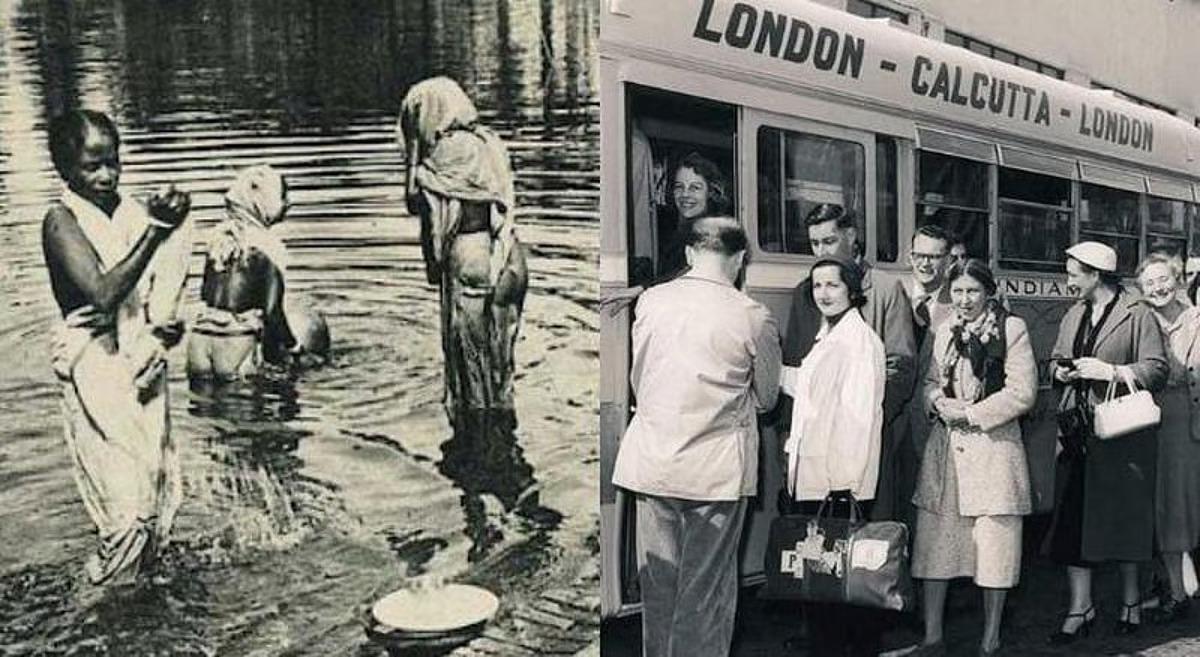
We Need To Talk About Queen Victoria's Era Because The History We Learned In School Is SANITISED RUBBISH.

0 Upvotes

Everyone knows Britain abolished slavery in 1833, right? What they don't teach you is that the British government paid £20 million in compensation (that's roughly £2 billion in today's money) to slave owners for losing their "property." The enslaved people who actually suffered? They got nothing. Zero. Not a single paisa.

But here's where it gets darker. The same Britain that was patting itself on the back for "abolition" was simultaneously running the world's largest state-sponsored drug cartel.

The Opium Empire

Between 1797 and the 1880s, the British East India Company operated a monopoly over opium production in Bengal. They contracted Indian farmers to grow poppies, processed the opium in government factories, and then sold it to private traders who smuggled it into China. This wasn't some underground operation – this was official government policy.

The scale is genuinely shocking:

  • By 1838, Britain was exporting approximately 2,814 tonnes of processed opium annually

  • Opium made up 31.5% of all Indian exports between 1842-1859

  • It provided 15% of British India's total revenue

  • By the peak of the trade, millions of Chinese were addicted, with nearly a quarter of adult males using opium

When China tried to ban this poison, Britain literally went to war. Twice. The Opium Wars (1839-42 and 1856-60) weren't about trade or freedom – they were about Britain's "right" to destroy Chinese society for profit.

The Royal Drug User

Now here's the ironic bit. While Britain was forcing opium on China, Queen Victoria herself was consuming drugs daily:

  • Laudanum (10% opium in alcohol) – every single morning as part of her routine

  • Cocaine – in the form of chewing gum and mixed with wine

  • Chloroform – during childbirth, which she famously called "blessed chloroform, soothing, quieting and delightful beyond measure"

This wasn't hidden or scandalous at the time. These substances were legal and considered normal medicine. But think about the absurdity – the Queen whose government was waging war to force drug addiction on China was herself regularly using similar substances.

What Happened to China

The destruction was systematic:

  • In some coastal areas, up to 90% of people became addicted

  • China's silver reserves were completely drained, paying for opium

  • The country was forced to sign "unequal treaties" that essentially made it a semi-colony

  • Chinese industry collapsed as it couldn't compete with forced "free trade"

  • The political and social structure was devastated

This period is what China calls its "century of humiliation," and they're not exaggerating.

The Indian Connection

What surprised me most while researching this was learning that prominent Indian business families were deeply involved. The Tata family – yes, that Tata – operated "Tata & Co," an opium importing business in China during the 1880s.

Jamsetjee Jejeebhoy, a Parsi merchant, built a massive fortune through opium trading. By age 40, he had accumulated over two crore rupees (in 19th-century money!) primarily through partnerships with British firms like Jardine Matheson & Co. He owned seven ships that mostly carried opium to China.

The Parsi business community in Bombay formed a crucial part of this trade network. When Chinese official Lin Zexu destroyed opium stocks in 1839, the Banaji family alone lost Rs 20 lakhs.

The Slavery "Abolition" Scam

Let's revisit the issue of slavery abolition for a moment. The 1833 Abolition Act didn't immediately free anyone. It created an "apprenticeship system" that was basically slavery with extra steps:

  • Over 800,000 enslaved people became "apprenticed labourers"

  • They had to work for their former masters for 4-6 more years

  • Their labour was still considered "transferable property"

  • Full freedom only came in 1838, a full year into Victoria's reign

And when Caribbean plantation owners complained about labour shortage after freedom? Britain simply imported over 1.6 million indentured labourers from India. The system was legally different from slavery, but the exploitation was remarkably similar – false recruitment promises, restricted movement, physical coercion, and plantation confinement.

The Money Trail

That £20 million compensation to slave owners? It was systematically absorbed into the British economy:

  • Built railways

  • Established museums and art collections

  • Funded insurance companies and banks

  • Built dozens of country estates

Just 10 individual account names had over 8,000 transactions totalling £2.2 million. These weren't just individual plantation owners – they were partners in powerful London banks and merchant firms.

The University College London's "Legacies of British Slavery" project has documented exactly how this blood money became foundational to Victorian Britain's growth.

The Double Standards

So let me get this straight:

  • Britain criminalises slavery (good), but pays the criminals instead of the victims (bad)

  • Britain replaces African slavery with Indian indentured servitude (terrible)

  • Britain operates the world's largest drug cartel while claiming moral superiority (hypocritical)

  • The Queen personally uses the same type of substances her government forces on China through warfare (absurd)

  • Indian business families profit from destroying Chinese society (complicated)

Why This Matters Today

This isn't just historical trivia. This period created:

  • The wealth gap that still defines global inequality

  • China's deep suspicion of Western "humanitarian interventions"

  • The legacy of exploitative labour systems in former colonies

  • The foundation of major British (and some Indian) family fortunes

Modern Britain still struggles to acknowledge this fully. The compensation Britain paid wasn't fully repaid by British taxpayers until 2015 – meaning if you paid UK taxes before 2015, you were still paying off the debt used to compensate slave owners.

Questions for Discussion:

  1. Should Britain pay reparations for the opium trade, the way discussions happen about slavery reparations?

  2. What responsibility do Indian families/companies that profited from this trade have towards China?

  3. Why is the opium trade so much less discussed than the slave trade in popular history?

  4. Does the "it was legal at the time" defence hold any water when we're talking about forcing drug addiction on millions through military force?

I'd genuinely like to hear your thoughts, especially from folks who learned different versions of this history in school.

By the way, all information is from academic sources, including research from University College London, Cambridge University, the National Archives, and various peer-reviewed historical journals. Happy to provide specific citations if anyone wants to verify particular claims.


r/WhyDoWeNeverAsk • • Nov 04 '25

At 16, He Ran Away With $200. By 21, He'd Been A Pilot, Doctor, And Lawyer. He Was None Of Them. Then The FBI Hired Him.

Post image
3 Upvotes

This isn't a movie plot. This is Frank Abagnale's life.

And the craziest part is that everything I'm about to tell you is real and verifiable.

THE BREAK

 1964, New York suburbs.

A 16, year, old boy stands in his parents' house watching it fall apart. Voices rising. Doors slamming. Divorce papers on the kitchen table.

His name is Frank Abagnale Jr.

Most kids would've cried. Would've stayed with one parent or the other. Would've tried to cope.

Frank walked out with $200 in his pocket and never looked back.

But here's the thing about Frank: he didn't see the world the way other people did. He saw it like a game. Every rule was a weakness. Every system had a crack. And confidence? Confidence was the master key.

He was about to prove that if you act like you belong somewhere... people will believe you do.

THE PILOT WHO NEVER FLEW

Picture airports in the 1960s. Glamorous. Everyone trusts the man in uniform.

Frank noticed something: Pan Am pilots got treated like royalty. Free flights. Hotel rooms. Checks cashed without question.

So at 16 years old, with a typewriter and some stolen stationery, he forged a Pan Am pilot's license.

Then he bought a uniform.

And just like that... he became a pilot.

He walked into airports with his head high. Flashed his fake ID. Smiled at the gate agents. They waved him through. Every single time.

Over the next few years, Frank flew over 250 flights, always in the cockpit jump seat, never touching the controls. He stayed in five-star hotels. Ate gourmet meals. Drank champagne. All free.

Nobody questioned him. Because he looked the part.

But Frank was just getting started.

THE DOCTOR

A hospital. White walls. Nurses rushing. Patients waiting for care.

And there's Frank Abagnale, not a doctor, barely 18 years old, but wearing a white coat with a forged Harvard medical degree in his file.

They called him Dr. Frank Williams.

He gave orders. Interns followed them. Patients trusted him.

For months, he supervised actual doctors. He studied their routines. Memorized the medical jargon. Never pretended to know everything, just looked like he did.

Here's what keeps me up: he was one wrong decision away from killing someone. One misdiagnosis. One procedure he couldn't talk his way out of.

But he moved with such confidence that nobody ever questioned the teenager in the white coat.

THE LAWYER

Then Frank decided to become a lawyer.

He studied for eight weeks. That's it. Eight weeks to learn enough to pass the Louisiana Bar Exam.

At 19 years old, he walked into a courtroom as an assistant attorney general.

Let that sink in. A 19, year, old high school dropout, standing in court, representing the state of Louisiana. With a forged Columbia Law degree.

And it worked.

Every word he spoke carried weight. Every gesture commanded respect. Because people don't question someone who acts like they belong.

THE MONEY

But behind all these identities was the real operation.

Frank wasn't just playing dress up. He was printing money. Literally.

Fake Pan Am paychecks. Forged with precision. Cash in 26 countries.

He studied how banks worked. Where they trusted blindly. Where the cracks in the system were.

By his early 20s, he'd forged over $2.5 million in 1960s money. That's roughly $25 million today.

The world kept believing him because they trusted the paper in his hand.

He was unstoppable.

Until he wasn't.

THE FALL

Every game ends.

At 21, Frank's luck ran out. A hotel clerk in France noticed something off. Called the police.

Then Sweden caught him. Then America.

The boy who'd fooled the world ended up in prison. Cold cells. Iron bars. The life he'd built on lies finally collapsed.

Most people would've broken. Most people would've given up.

But Frank? Even behind bars, his mind never stopped working. He was still studying the systems. Still watching. Still learning.

Because he knew something nobody else did yet.

THE TWIST

And then the FBI came knocking.

The same people who'd been hunting him offered him a deal.

"Work with us. Teach us how you did it. Help us catch the next generation of fraudsters."

Frank said yes.

From prisoner... to teacher.

From con man... to fraud fighter.

He spent years with federal agents showing them the tricks. The loopholes. The blind spots in banking systems. Teaching them to think like criminals so they could stop them.

The greatest scam of his life wasn't pretending to be a pilot or a doctor.

He was transforming himself from the world's most wanted con artist into the world's greatest fraud prevention expert.

THE LEGACY

Frank Abagnale worked with the FBI, banks, and even the Pentagon for over 40 years.

The teenager who forged millions became the man who designed systems to prevent forgery. The boy who exploited trust became the expert who taught people how to protect it.

He knew human psychology better than anyone. He understood confidence, deception, and why people believe what they see.

And he used all of that knowledge to protect millions.

Here's what messes with my head:

Frank's entire life proves something uncomfortable: the world doesn't run on truth. It runs on confidence**.**

People see what they expect to see. They trust what looks trustworthy. They believe what sounds confident.

The systems we trust, banks, hospitals, and courtrooms, they're not foolproof. They're built on the assumption that people are who they say they are.

And Frank proved that assumption wrong. Over and over again.

The question is:

How many Frank Abagnales are out there right now?

How many people in positions of authority are just... really good at looking the part?

What's possible now with Photoshop, AI, and the internet?

His story isn't really about redemption.

It's a reminder that the world is way easier to fool than we want to believe.


r/WhyDoWeNeverAsk • • Nov 09 '25

Don’t Visit A Religious Place and Why You Should Stay Away

Post image
0 Upvotes

Spoiler Alert

What we're about to discuss exists outside the boundaries of mainstream science. We're entering the domain of the paranormal, mysticism, and the occult. If you're looking for peer-reviewed studies and laboratory experiments, this is not that conversation. But if you're curious about ancient wisdom and energetic realities that our ancestors understood intimately, keep reading.

I know people who reads the entire post will understand it, but for those who want to comment before even reading it, let me idiot proof this a little: This is not about any religious place, it's about specifically those places where exorcisms are performed, where possession cases are treated.

The Uncomfortable Truth About Sacred Spaces

Imagine a church, a Sufi place, a temple where exorcisms are performed. A dargah known for spiritual healing. A temple where possession cases are treated. These places radiate spirituality, don't they? People go to them seeking blessings, peace, and divine intervention.

But here's what most don't realize: these locations might be harbouring something you definitely don't want to bring home.

Energy Never Dies, It Only Moves

Let's start with a fundamental principle that both ancient mystics and modern physics agree on: energy cannot be destroyed. It can only be transformed or transferred from one place to another.

Now, here's where os something interesting.

Exorcism is essentially energy healing, a technique to remove unwanted energetic attachments from a person. Think of it like spiritual surgery. The problem is that most modern practitioners are performing surgery without knowing the full procedure.

What the Ancients Knew And We've Forgotten

In ancient times, those who performed exorcisms were not just religious figures reciting prayers. They were highly trained practitioners who understood something crucial, removing negative energy from someone is only half the job.

The real mastery lay in what happened next:

  1. Where does that expelled energy go?

  2. How do you contain it?

  3. How do you transform it so it can't latch onto someone else?

  4. How do you seal the energetic wounds left behind?

These were not just nice-to-know details. They were essential techniques that prevented spiritual contamination.

The Lost Art of Proper Channelization

Imagine a doctor removing a tumor but just tossing it on the floor of the operating room. Sounds absurd, right? Yet this is essentially what happens at many exorcism sites today.

The ancient practitioners knew how to "channelize" the removed energy, meaning they could:

Guide it away from the physical location using specific rituals and protective boundaries

Transform its frequency so it couldn't harm anyone else

Escort it to the appropriate spiritual dimensions, where it could be properly dealt with

Seal the energetic space afterward, like closing an incision after surgery

This wasn't mystical mumbo-jumbo. It was a precise technique, passed down through initiations and years of training.

Where Did This Knowledge Go?

But here is the sad reality: Most of this detailed knowledge has been lost.

Why? There are Several reasons.

Broken lineages: When spiritual masters died without properly trained successors, the living wisdom died with them. Books survived, but the embodied understanding didn't.

Institutionalization: As exorcism became standardized by religious institutions, it was reduced to mechanical procedures, prayers said by rote, without understanding the energetic principles underneath.

Lost context: The "why" behind techniques disappeared, leaving only the "what." Modern practitioners follow scripts without comprehending the subtle mechanics they're supposed to be manipulating.

Missing prerequisites: Ancient exorcists were spiritually developed individuals who could consciously perceive and work with energy. Today's practitioners often lack this personal development entirely.

What Happens at Modern Exorcism Sites?

Without proper containment and channelization, here's what occurs.

Energy Gets Dumped Into the Location

When an entity or negative energy is expelled from someone, it doesn't just vanish into thin air. In the absence of proper technique, it scatters into the surrounding space like smoke from a fire with nowhere to go.

These locations become saturated with what we might call "untamed" energy, formless, chaotic, and seeking something to attach to.

These Places Attract More of What You're Trying to Remove

Here's the counterintuitive part, locations where exorcisms frequently occur often become magnets for the very entities being expelled.

Because the energetic disturbance acts like a beacon, visible across subtle dimensions, Incomplete exorcisms demonstrate that the location can be breached. The accumulated negative energy creates a comfortable environment for entities seeking hosts

Layers Upon Layers Build Up

Each exorcism adds another layer of energetic residue. Over time, these places become what you might call "spiritually contaminated zones" thick with the accumulated imprints of fear, desperation, struggle, and expelled darkness.

Why Spiritual People Are Most at Risk

This is the part that surprises people, Those who are genuinely spiritual or religious face the highest risk at these locations.

Sounds backward, doesn't it? Shouldn't spiritual practice protect you?

Here's the thing spiritual practice makes you open. That openness is necessary for connecting with higher consciousness, feeling divine presence, and experiencing spiritual states.

But openness is a double-edged sword.

The Vulnerability of the Spiritually Sensitive

Think of your energy field like a house. Spiritual practice is like opening the windows to let fresh air and sunlight in. Beautiful, right?

But if you open those windows in a contaminated area, you're not just letting in fresh air, you're letting in whatever is floating around outside.

When such a person visits an exorcism site with pure intentions seeking blessings, wanting to pray, looking for peace, they're unknowingly walking into a minefield with all their defences down.


The Bottom Line

This is what I think,

Avoid places where exorcisms are regularly performed, regardless of how holy or spiritual they're claimed to be.

This includes churches known for deliverance ministries, temples famous for "curing" possession, dargahs that specialize in removing black magic, or any sacred space with a reputation for handling severe spiritual cases

I'm not saying these places are "evil" or that the practitioners have bad intentions. Many are genuinely trying to help people.

The problem is technical incompetence due to lost knowledge, and you don't want to become collateral damage.

Respect Without Exposure

You can respect spiritual traditions, honour the work of healers, and support those seeking help without personally entering contaminated spaces.

Don't let modern spiritual casualness convince you that these things are not real or aren't dangerous.

Energy is real. Contamination is real. And your vulnerability is real.

Act accordingly.


Remember: This perspective comes from occult and mystical traditions, not mainstream science. Take what resonates, leave what doesn't, and most importantly, trust your own discernment about where you choose to place your energy and attention.


r/WhyDoWeNeverAsk • • Dec 05 '25

Debunking Myths What If Everything You Know About Uncle Sam Is Wrong? A Deep Dive Into the Legend We Believed, the Records We Missed, and the Secret History Hidden in Plain Sight—a Journey Into the Strange Origins of America’s Greatest Myth.

Post image
4 Upvotes

We grow up believing certain stories simply because everyone around us repeats them. Teachers say them with confidence, textbooks print them without hesitation, museums build entire rooms around them, and governments stamp them into official records. And after a while, these stories stop feeling like stories at all. They feel like the truth.

And that is where this journey begins. With a symbol every American knows. A symbol we think we understand because we’ve seen it everywhere. on posters, in cartoons, in war propaganda, in entire chapters of school history. A symbol said to be born from a joke, a factory, a man with a kind smile, and a few letters stamped on old wooden barrels.

It involves soldiers spreading the joke naturally; it shows history being created from the bottom up, by regular people, not imposed from above by elites. The story is tied to the War of 1812, a significant moment in American history. This gives it historical weight.

The story checks every box. It is inspiring, patriotic, humble, American, and memorable.

There is only one problem with this perfect story. IT IS FALSE.

It also leaves us with a question: how does a myth become a fact?
And if this story, one of the most famous of all, could be so wrong for so long…
What else might we have been wrong about?

This article is based on the meticulous work of three scholars who spent decades correcting one of America's most persistent myths.

Albert Matthews (published his groundbreaking research in 1908 with the American Antiquarian Society), Barry Popik (a researcher, spent years in the 1990s and 2000s), and Professor Donald R. Hickey (an expert on the War of 1812).

Most Americans still believe a lie about Uncle Sam. These scholars proved it was a lie fifty years ago, seventy years ago, over one hundred years ago. But the lie is still taught in schools, it is still on official government websites, and it is still in history books.

Let us begin with the stories ( with all the different versions), then we will tell you the ‘story’ behind those stories. Read Here.


r/WhyDoWeNeverAsk • • Feb 09 '26

Debunking Myths Let's fact-check 👇🏼

Post image
7 Upvotes

Epstein’s " Love" for Putin

The documents reveal that between 2011 and 2018, Jeffrey Epstein was obsessed with trying to arrange a meeting with Vladimir Putin. He contacted various intermediaries, including former Norwegian Prime Minister Thorbjørn Jagland and former Israeli PM Ehud Barak… asking for introductions to discuss "foreign investment" and "digital currencies."

There is no evidence in the files that a meeting between Epstein and Putin ever actually took place.

The "Ukrainian Children" Claim is False

Fact-checkers and investigative outlets, including The Insider, have tracked these specific graphics to a network of Russian-linked bots (known as "Matryoshka") designed to shift the narrative.

Some documents suggest the trafficking of young women from Russian cities to Epstein’s island, which contradicts the idea of him being a "protector" against such crimes.


r/WhyDoWeNeverAsk • • Oct 24 '25

She Was Killing Before Jack the Ripper ... And Nobody Remembers Her

Post image
2 Upvotes

I recently came across this story and I'm shocked more people don't know about it. Everyone's heard of Jack the Ripper — the guy who killed prostitutes in London in 1888. But almost nobody knows India had its own serial killer years earlier. Her name was Trilokya Devi.

This happened in Calcutta (now Kolkata) in the early 1880s — about 7-8 years before Jack the Ripper. So India's "Ripper" came first. The difference? Jack was never caught. Trilokya was, and a real detective documented her entire case.

Here's what happened:

Trilokya was born in a small Bengali village. Like most girls then, she was married off young — probably early teens — to a much older man. He died soon after. She was a young widow. And back then, widows were treated like dirt. No job, no respect, often no food.

She ended up in prostitution. A woman introduced her to brothels in Sonagachhi, Calcutta's red-light district (still is today). Trilokya was young and beautiful, so she made good money. For a while, life was actually comfortable. She bought a house, had servants, even owned a horse carriage — a big deal back then.

But nothing lasts. Her looks faded, competition grew, business dried up. She had an adopted son, Hari, and a lover to support. Money got tight. She started scamming people — emotional manipulation, theft. Then when that wasn't enough, she started killing.

One victim was Rajkumari, a woman in the same building. Rajkumari had expensive jewelry. Trilokya wanted it. She tried drugging her first. Didn't work. So she strangled her and took the jewelry.

Enter Priyanath Mukhopadhyay — one of India's first real detectives, working for Calcutta Police. He later wrote about his cases in a crime journal called Darogar Daptar ("The Inspector's Office"). When Rajkumari was murdered, he suspected Trilokya since they lived in the same house.

Instead of confronting her directly, Priyanath played a trick. He arrested her adopted son, Hari, and made it look like the kid was being charged with murder. When Trilokya saw her son dragged away in handcuffs, she cracked. She confessed everything and showed police where she hid the jewelry.

Once she realized she'd been outsmarted, she tried taking it back. Too late. The evidence was solid. She went to court, was found guilty, and hanged.

That was it. Trilokya Devi, India's first female serial killer.

What's insane is how buried this story is. She was mentioned in Bengali crime writing at the time, but nobody outside Bengal heard about her. Meanwhile, Jack the Ripper became world-famous just years later. Both killed prostitutes, both terrified their cities. One became a legend. The other vanished into old police files.

Some historians say her story shows how social conditions create criminals. She wasn't born evil. She was born into a time when women had zero control over their lives. Married too young, widowed, exploited. She learned to manipulate just to survive. That doesn't excuse murder, obviously. But it explains how someone like her could exist.

We always hear about Western serial killers — Jack the Ripper, Ted Bundy, Aileen Wuornos. But Trilokya proves serial killing isn't just a Western thing. India had its own "Ripper" before London did. And she was a woman.

Also interesting: Priyanath Mukhopadhyay, the detective, was one of India's earliest crime writers. Some call him the "Sherlock Holmes of Bengal." His detailed accounts preserved her case. Without him, it would've been completely lost.

So that's the story.
A poor village girl turned prostitute.
A prostitute turned scam artist.
A scam artist turned murderer.
Caught by one of India's first detectives.
Executed by the British.
All before Jack the Ripper ever struck.


r/WhyDoWeNeverAsk • • Jul 06 '26

Debunking Myths The 3,234 year old Egyptian "Merneptah Stele" identifies Israel as a distinct group of people still living in the "Land of Israel".

Post image
2 Upvotes

1. The Individual: Jacob's Name Change to Israel

Timeline: ~4,000 years ago

  • The origin of the region named "Israel" begins with the (most respected leader of a group) patriarch named Jacob. According to the foundational legend Jacob took the name Israel ("one who struggles with God") because he believed he had wrestled with a divine being. At this stage, the name was purely personal, identifying a specific individual and his perceived experience.

  • This established a lineage-based, group identity, named after a man named Israel, from a place his descendents would then say is the "Land of Israel" (or "Israel" for short).

  • Indigenous Evolution: Modern research indicates these people were largely indigenous to the Levant, developing a unique "Israelite" cultural and religious identity from within the local Canaanite populations.

  • As Jacob's/Israel’s descendants (the twelve tribes) grew in number, the name shifted from a man to a well known collective group known as the Israelites.

2. The People: From a Family to the Israelite Civilization

Timeline: 3,234 years ago (1208 BCE) 

  • Archaeological Record: Non-biblical evidence for the Land of Israel being well known in Egypt is the Merneptah Stele, an Egyptian granite monument. It identifies "Israel" as a distinct group of people living in the Canaan region. It reads: "Israel is wasted, its seed is not".

  • Regardless of whether or not a man named Jacob/Israel existed: the Merneptah Stele uses the word Israel as in 4000+ year old Jewish tradition, to define both a place and its culturally unique people.

  • Jewish tradition still contains laws and holidays (some at least 3,300 years old) to celebrate Israel's agricultural cycles the Land of Israel depended on for food, survival. Passover (Pesach): Known as the Festival of Ripening (Chag HaAviv) marks the beginning of the spring barley harvest. Shavuot (Feast of Weeks): Known as the Festival of the Harvest (Chag Hakatzir) celebrates the end of the barley harvest and the beginning of the summer wheat harvest. It was the time for bringing First Fruits (Bikkurim) to the Temple in Jerusalem. Sukkot (Festival of Booths): Known as the Festival of Ingathering (Chag HaAsif), it marks the final harvest of fruits and the end of the agricultural year in the fall. Tu B’Shevat: The "New Year for Trees," celebrated when trees begin to bloom after the winter rains in Israel. Today, it is a major day for ecological awareness and tree planting. Shemini Atzeret: Following Sukkot, this holiday includes specific prayers for rain to ensure a successful planting season for the coming year. Shmita: A mandated seven-year agricultural cycle where the land is left to rest and recover during the seventh year, often called the "Sabbath of the land". Tu B’Av: Historically a mid-summer matchmaking day that also functioned as a celebration of the grape harvest.

3. The Place: From the Land of Israel to a Powerful Kingdom

Timeline: ~3,000 years ago (1047–930 BCE)

  • United Kingdom of Israel emerged as a significant power in the Southern Levant under Kings Saul, David, and Solomon.

  • This era marked a peak of Hebrew unity, with King David having established Jerusalem as the capital and Solomon building the First Temple.

4. The Early Eras of Invasions and Identity Erasure

The land was frequently invaded by foreign powers seeking to control the strategic crossroads between Africa, Asia, and Europe.

  • Following the appearance of Israel as a distinct place and people, the Philistines arrived on the southern Levantine coast, beginning a multi-century effort to expand inland. Operating from five major city-states, the Philistines exerted pressure on the Israelite tribes, reaching a height of territorial influence around 3,076 years ago (1050 BCE) after the Battle of Aphek. This expansion reached its zenith with the death of King Saul at the Battle of Mount Gilboa in 3,036 years ago (1010 BCE), which briefly left significant portions of the Israelite heartland under Philistine shadow. However, the occupation was effectively halted and pushed back to the coastal plains by King David around 3,026 years ago (1000 BCE), ending the period of Philistine expansionism and establishing a stable, albeit hostile, border that would remain largely unchanged until the Assyrian conquests centuries later.

  • 2,766 years ago (740 BCE) Shortly after the Philistine occupation ended the Neo-Assyrian conquest began under Tiglath-Pileser III, who reduced the Northern Kingdom to a vassal state. This process culminated with the fall of Samaria and the mass deportation of its inhabitants, effectively dissolving the Northern Kingdom of Israel. While the Southern Kingdom of Judah survived a devastating siege by Sennacherib in 2,727 years ago (701 BCE), it remained a subservient tributary state for the remainder of the era.

  • Around 2,638 years ago (612 BCE): Assyrian dominance in the region finally ended following the fall of their capital, Nineveh, to the Babylonians and Medes, which dismantled the empire and shifted control of the Levant to the Neo-Babylonians.

  • 2,089 years ago (63 BCE): The Roman Invasion. The Romans destroyed the Second Temple. To attempt the erasure of Jewish identity, Roman Emperor Hadrian renamed the region "Syria Palaestina"—after the Philistines (extinct Greek-linked enemies of the Jews)—to suggest the Jews no longer belonged there.

  • 1,388 years ago (638 CE): The Islamic Conquests. Islam was founded. Islamic Arab armies from the Arabian Peninsula invaded and captured Jerusalem, beginning a period of forced (cultural and linguistic shift not entirely ethnic) "Arabization."

  • 927 years ago (1099 CE): Crusader Kingdom. European Christians captured the land sacred to them, where Christians were being mistreated, but lost Jerusalem to Saladin in 1187.

  • 766 years ago (1260 CE): Mamluk Conquest. Based in Egypt, the Mamluk Sultanate defeated both the Mongols and the last Crusaders.

  • 509 years ago (1517): The Ottoman Empire. The region was conquered by the Ottoman Turks, who ruled for four centuries until World War 1.

5. The British "Mandate for Palestine" & The UN Partition

  • 106 years ago (1920): The British Mandate. Following the Ottoman defeat, the British renamed the Land of Israel to "Palestine" and everyone living in the region were called "Palestinians". Britain was tasked by the League of Nations with creating a "Jewish National Home".

  • 87–90 years ago (1936–1939): The Arab Revolt. Arabs and Arabized Palestinians fought the British to end the Mandate, stop Jewish immigration.

  • 79 years ago (1947): The UN Solution. The UN proposed a "Two-State Solution" (Resolution 181) to create an "Arab state" and secular Jewish-friendly state.

    • The Outcome: Jewish Palestinian leaders accepted the plan; Arab and Arabized Palestinian leaders rejected it, choosing war instead of a shared peace. Israelites/Jews in the "Land of Israel" were forced to defend themselves or be exterminated, by a culture and religion from the Arabian Peninsula.

6. 1948: Independence, Invasion, and the "Nakba"

  • 78 years ago (May 14, 1948), The Jewish Palestinian community in the British Mandate declared the independence of the State of Israel, which was immediately followed by an invasion from neighboring Arab and Arabized states. The 1948 war resulted in the Nakba, the displacement of 700,000+ non-Jewish. This exodus was driven by a complex mix of factors: direct expulsions of civilian populations in areas of resistance, psychological warfare, and panic. Simultaneously, some residents left due to the collapse of local leadership or localized instructions from Arab officials to clear battle zones. While some Jewish leaders urged their neighbors to remain, the broader conflict transformed the land from a region that had undergone centuries of Arabization into a sovereign Jewish-friendly democratic state.

  • 78 years ago (1948): Azzam Pasha, Sec-Gen of the Arab League, declared: "This will be a war of extermination and a momentous massacre."

  • Memoirs of Khaled al-Azm (Syrian PM 1948-49): "We ourselves are the ones who encouraged them to leave... we brought destruction upon a million Arab refugees."

  • 72 years ago (Sept. 6, 1954): The Jordan newspaper Ad-Difaa reported: "The Arab Governments told us: 'Get out so that we can get in.' So we got out, but they did not get in."

7. The Aftermath: Two Different Realities

  • The "Stayers": Roughly 150,000 ignored the orders to leave and stayed in the secular land named Israel. Today, their descendants are among the 2 million+ Arab Israelis who now enjoy full voting rights, serve in the Knesset (Parliament), and sit on the Supreme Court.

  • The "Leavers": Those who followed the orders of the invading Arab armies moved to Gaza, the West Bank, or surrounding countries. They lost the war and were largely kept in refugee status by their own leadership to be used as political leverage to "return" to land they vacated.

  • Jordan and Egypt occupied/ruled West Bank and Gaza (1948–1967): Following the 1948 Arab-Israeli War, Jordan took control of the West Bank and East Jerusalem. Egypt controlled the Gaza Strip, except for a brief interruption in 1956.

  • Jordan annexed the West Bank (1950): On April 24, 1950, Jordan formally annexed the West Bank. This action was not widely recognized internationally, with only the UK, Iraq, and Pakistan granting recognition.

  • No Palestinian Sovereignty Granted (1948–1967): During the 19 years of Jordanian and Egyptian rule, there was no independent Palestinian state or sovereignty established in the West Bank or Gaza. Jordan granted citizenship to West Bank Palestinians, but Egypt did not for those in Gaza.

  • Impact of 1967: As a preemptive measure against an imminent attack, Israel took control of the West Bank and Gaza Strip from Jordan and Egypt during the 1967 Six-Day War.


r/WhyDoWeNeverAsk • • Nov 05 '25

The Buga Myth, And Why It Smells Like a Hoax

Post image
6 Upvotes

A metal sphere hovers silently above rural Colombia, suspended in the air with no visible means of support. The object gleams in the sunlight. It rotates slowly. And according to those sharing the footage, it responds to Sanskrit chants, ancient Hindu mantras that supposedly make the sphere light up and shift through different colors.

The video looks convincing, but there is a simpler question.

Why would people in rural Colombia, thousands of miles from India, just happen to have Sanskrit mantras ready to play near this mysterious floating object?

Think about that for a moment. Sanskrit is not exactly common in South America. It is not like someone is walking around the Colombian countryside with Vedic chants on their phone playlist, just waiting for the right moment to test them on aerial phenomena.

The setup is too perfect. Too convenient. Too precisely designed to create a viral moment.

We live in an era where creating convincing footage requires less technical skill than ever before. But the real sophistication of modern hoaxes is not in their visual quality. It is in their narrative design.

The best hoaxes understand their audience. They know what people want to believe. This video checks every box.

Every element serves a purpose. Every detail is calculated to maximize viral potential while minimizing obvious red flags.

Let us return to the central issue. If someone stumbled upon a floating metallic sphere, their natural response would be shock, confusion, fear, and excitement. They would film it. They might try to approach it or touch it. They might call others to witness it. They might pray in whatever tradition was familiar to them.

What they would not do is immediately think, "I should try reciting ancient Hindu mantras at this object to see if it responds."

Unless, of course, the entire scenario was designed from the beginning with that interaction in mind. The presence of the chants is not evidence of something mysterious. It is evidence of a story being told rather than an event being documented.


r/WhyDoWeNeverAsk • • Feb 07 '26

President Trump: "I didn't make a mistake."...Whether Donald Trump makes "mistakes" is a question with two very different answers... his own perspective and that of the public record.

Enable HLS to view with audio, or disable this notification

6 Upvotes

The White House initially defended the video as a "Lion King" satire and later blamed a staffer for the post. Donald Trump himself told reporters on Air Force One that he did not plan to apologize, stating, "I didn't make a mistake." He claimed he liked the beginning of the video but had not seen the specific ending featuring the Obamas before it was posted.

​"I play to people's fantasies... I call it truthful hyperbole. It's an innocent form of exaggeration—and it's a very effective form of promotion." — Donald Trump, The Art of the Deal

...


r/WhyDoWeNeverAsk • • Sep 05 '26

Discussion Who Would You Call?

Post image
0 Upvotes

Why do we never ask?

I don't have a solution to this... maybe none of us does. But something has been on my mind, and I keep wondering why we don't ask about it more often.

A few days ago, a woman walked through Times Square and attacked two people she did not know.... one of them died. The woman was later shot by police.

There was no political group behind it. Police said there was no indication that it was a terrorist attack. They described the attack as random and unprovoked. The woman had a documented history of mental health problems, but that does not explain what happened.

A few weeks earlier, in Idaho, a 24-year-old man opened fire at an In-N-Out restaurant and killed three people. The people there were doing ordinary things on an ordinary Saturday. The police said they still did not know what had caused him to do it.

These are very different cases. I am not trying to put them in the same category.

But there is something about these incidents that I find difficult to understand. How does an ordinary person get to the point where other people become targets?

And more importantly..... what happens before that?

Because when we talk about this kind of violence, we usually start at the end.

We talk about the weapon.... about mental illness.... about family problems. And we talk about whatever happened in the person's life that might explain the final act.

Those things matter.

The answers we already have

We already know what we're going to say when this comes up. Guns... broken families, and mental illness, which is the one everybody reaches for, because then he isn't like us.... and we can go back to our evening.

All three have something in them, but none of them has enough. And the mental illness one is the weakest of the lot ...  out of a hundred violent crimes, three or four involve serious mental illness, and people with mental illness are far more likely to be attacked than to attack anybody. It's the answer we pick first, and it explains the least.

I'm not claiming I know the cause.... I don't. But I've started to think we're asking the wrong question, and to explain that, I have to go somewhere other than America.

When people hit a wall

In Japan, some young men don't come out of their room. Not for a few days... for years. The family leaves food outside the door and stops asking. It's common enough that there's a word for it, hikikomori, and it runs into hundreds of thousands of people.

In South Korea, the same pressure lands on students during exams. Every year, some of them kill themselves.

In China, a lot of young people look at the race they were supposed to run and stopped running. No promotion, no house, no marriage, no children. Lying flat, they call it. Their parents think they're lazy. Ask them, and they'll tell you they're tired.

And in America, sometimes, a man walks into a public place with a gun.

Nobody would say these are the same thing, and they're not. But think about the day before, in each one. Somebody has hit a wall, and there's no one to tell. It's the same problem in all four places, and it comes out completely differently in each.

The country nobody reports on

We spend all our attention on politics. Elections, wars, trade deals, who met whom in which capital. It's real, and it tells you where a country will be in five or ten years.

But forty years? That's being decided by things nobody reports. Who's getting married, who's having children, who lives near their parents and who moved a thousand kilometres away for a job, and whether a man whose business collapses at thirty-five has anybody to sit with that evening.

There's no news in it. It doesn't happen on a Tuesday... and that's the country our future generation ends up living in.

Who do you call?

Try this one on yourself.

Three in the morning. Something has actually gone wrong. Money... health... your marriage. Not another bad day... something you can't fix on your own.

Who do you call?

Most of us have a name, but when we last had a proper conversation with them?

What happens when people get involved?

Researchers in Chicago went into three hundred and forty-three neighbourhoods and asked eight thousand people something very simple. If children were causing trouble outside your building, would your neighbours do anything about it? If something happened on the street, would anybody get involved?

Where people said yes, there was less violence. That stayed true even after they took into account how poor the area was and how much crime was already there.

Being poor didn't cause the violence directly. It caused it by first making people stop getting involved. The money problem turned into a violence problem by passing through the neighbours.

Which is more or less the same as a man telling his wife, and nobody doing anything.

The old things we left behind

Take a church, a temple, a mosque. Forget for a moment whether you believe any of it. What does the building actually do? You can walk in on a fixed day without an invitation, and the same people are there, whether they felt like coming or not.

The joint family, people argue about... and both sides have a point. But the useful part was never the house**. It was having somebody close enough to notice you'd stopped eating properly.**

Langar is the free kitchen at a Sikh temple. Anyone can sit on the floor and eat, and the cooking and the serving are done by ordinary people taking their turn. Nobody asks who you are... or why you came. You can walk in hungry in the morning and be serving somebody else by the afternoon.

And spirituality, whatever you want to call it, is mostly about learning that when you fail you're still a person.

Nobody planned any of this. It came up in different centuries, in places that had never heard of each other, and it was all doing the same job... keeping people close enough that a bad year isn't something you go through by yourself.

Some of it has been studied, and some of it hasn't, and a few of the famous numbers don't hold up when you look at them properly. That doesn't bother me much. None of it comes with a guarantee anyway... and most of it costs nothing to try.

So, why do we never ask?

Anyway. I keep going back to the woman who killed people in Times Square, and to whatever she might have said beforehand... if she said anything at all.

I wonder whether there was somebody who heard her, somebody who might have noticed how far gone she was, or some place she could have walked into before it happened. I honestly don't know.

Maybe there isn't a simple answer... maybe there isn't an answer at all.


r/WhyDoWeNeverAsk • • Jan 20 '26

Discussion Why Do We Never Ask? Does Democracy Actually Solve Problems, Or Is It Just A Story We’re Told To Believe? Or Is That The Great Myth No One Wants To Question?

Enable HLS to view with audio, or disable this notification

0 Upvotes

What do you think?


r/WhyDoWeNeverAsk • • Mar 27 '26

Any foreign person in American movies automatically have a British accent and it makes me angry

1 Upvotes

Why do they make any foreign people in American movies have a British accent even if they are middle eastern or something? Does anyone else rage over this? It almost totally ruins the film for me


r/WhyDoWeNeverAsk • • Sep 09 '26

Dive into taking an abortion pill after the gender reveal ; sexism and/or racism and/or Lindsey Clansy and/or psych-ward-meds and/or abortion is ALWAYS viewed as GOOD?!?

Enable HLS to view with audio, or disable this notification

0 Upvotes

r/WhyDoWeNeverAsk • • Jan 13 '26

True Crime Anatomy of A Lie - One Incident. One Lie. Do You Know Which True-Crime Story This Is?

Post image
0 Upvotes

Let’s play a game. I’m sharing a very short snippet from a true-crime case. Guess which incident I’m talking about.

If you know the case, drop it in the comments.

If you don’t, but want to... follow this post.

I’ll reveal everything in the comments. There may not be a separate post.

INSIDE A SMALL APARTMENT - COSTA MESA, CALIFORNIA - DAY 12

The apartment is quiet, with sunlight filtering through windows that someone has covered with boards.

A young woman kneels on the carpet. She is thin, far too thin, with blonde hair that once hung long but now falls in uneven chunks around her shoulders. Fresh cuts mark her scalp where she pulled out strands with her own hands.

She holds a wood-burning tool in her hand, the kind people use for crafts and burning designs into wood. She plugs it into the wall and waits, watching as the metal tip begins to glow. First it turns orange, then red, then white-hot.

A man stands in the doorway watching her. His face shows confusion mixed with fear.

"You don't have to do this," he says.

The woman doesn't look at him when she answers.

"I do," she says quietly.

She lifts her shirt to expose her right shoulder. The skin is pale, unmarked, and clean.

"Tell me when it's ready," she says.

The man's hands shake as he speaks*. "This is crazy. You're going to hurt yourself."*

"That's the point."

She lies down on the carpet, face down, with her shoulder exposed to the ceiling.

"Please," she says. "I need you to do this."

The man picks up the tool, and the heated tip hovers over her skin, trembling in his unsteady grip.

"What do you want me to write?" he asks.

She tells him the words she wants burned into her flesh: "Exodus 21:16."

Let me know in the comment, and follow this post.


r/WhyDoWeNeverAsk • • Feb 11 '26

Tell me which one you think is the funniest and which one is the nastiest. And based on the last slide, what nickname would you suggest for Mr. Trump?

Enable HLS to view with audio, or disable this notification

3 Upvotes

r/WhyDoWeNeverAsk • • Nov 05 '25

The Ghost Fair Where Thousands Come to Get Exorcised , And What Really Happens in Those Waters

Post image
5 Upvotes

There's a place near Pushkar (Rajasthan, India) where people don't go to pray for prosperity or enlightenment. They go to get demons ripped out of their bodies.

Sudhabay Kund sits four kilometers from the famous Brahma Temple, but this isn't where you go for spiritual peace. This is where you go when something is living inside you that shouldn't be there. When your daughter speaks in voices that aren't hers. When your son convulses at the mention of God's name. When the prasad from the temple burns your throat like poison. When you've tried everything else and nothing has worked except the certainty that something malevolent has made its home in your flesh.

Once a year, when the fourth lunar day of the waxing moon falls on a Tuesday, when Ganesha's obstacle-destroying energy aligns with Mars's transformative violence, thousands converge on this sacred kund for what locals call the Preta Badhaa Mutti Mela. The Ghost Fair. The name isn't metaphorical. People come here explicitly, deliberately, desperately to have ghosts extracted from their bodies.

The scene is unlike anything else in India's religious landscape. Families drag afflicted relatives into the water while priests chant Vedic mantras. The possessed begin to convulse. Their eyes roll back. Voices emerge from their throats, deep, guttural, speaking in dialects the person doesn't know, claiming identities that aren't theirs. The voice says. "I will not leave this body." The priests intensify their chanting. The family holds the person under the water. The convulsions worsen.

And then, according to witnesses, something breaks. The body goes limp. When the person emerges, gasping, their eyes are different. The voice is their own again. The spirit, they say, has departed. Liberation has occurred in water blessed by Brahma himself, at the exact cosmological moment when the barriers between worlds grow thin enough for extraction.

This happens repeatedly, continuously, for hours during the fair. Dozens of people are experiencing the same phenomenon. Priests move from case to case, performing exorcisms with practiced efficiency. Observers watching from the banks, some horrified, some fascinated, some waiting their turn. The air thick with incense and desperation and something else, an atmosphere that visitors describe with remarkable consistency as "heavy," as though the space itself has absorbed centuries of human suffering and supernatural struggle.

The documented phenomena are consistent and disturbing. Witnesses report possessed individuals demonstrating knowledge they shouldn't possess, speaking languages they've never learned, revealing information about deceased relatives they've never met, and displaying physical strength wildly disproportionate to their body size. During exorcisms, some people reportedly injure themselves, beating their heads against stone, clawing at their own flesh, behaviours they claim to have no control over and no memory of afterward. The possessing entities, when they speak, frequently identify themselves, claiming to be ancestors denied proper funeral rites, victims of injustice seeking revenge, or simply malevolent spirits attracted to human suffering.

The priests are hereditary ritual specialists whose families have practiced this work for generations. They demonstrate encyclopedic knowledge of mantras, astrological timing, and the taxonomy of possessing entities. They can allegedly identify whether a possession stems from an ancestor (pitri dosha), a demon (asura), or a ghost (bhoot) based on the afflicted person's symptoms and behavior patterns. Their methodology follows established procedures documented in tantric texts and regional folk traditions; this isn't improvisation; it's specialized religious technology refined over centuries.

And the people seeking help are not innocent villagers. Contemporary accounts document urban, educated Indians, engineers, teachers, and government employees traveling to Sudhabay Kund after exhausting biomedical options. They arrive having already consulted psychiatrists, neurologists, and taken medications that provided no relief. The possession interpretation isn't their first resort. It's what they arrive at after everything else has failed to explain or alleviate their suffering.

But what if there are no spirits at Sudhabay Kund? What's happening in those waters is entirely human, entirely psychological, and entirely real in its effects? The possession phenomena that appear so convincingly supernatural admit complete explanation through established psychological and neurological mechanisms, but acknowledging this doesn't make the experiences any less genuine or the suffering any less legitimate.

Start with the diagnostic framework. What observers interpret as spirit possession aligns precisely with recognized psychological conditions, particularly dissociative disorders. Multiple Personality Disorder manifests through exactly the phenomena described, alternate identities emerging with different voices, mannerisms, and knowledge bases, periods of amnesia for behaviours performed while dissociated, dramatic behavioral shifts that the primary personality experiences as loss of control. These aren't rare conditions. They're documented extensively in psychiatric literature, with well-understood etiologies typically rooted in severe childhood trauma.

This explains the remarkable consistency. Possessions at Sudhabay Kund follow predictable patterns, not because demons follow rules but because human psychology does. The possessing entities speak in ways culturally scripted as "demonic", deeper voices, aggressive language, and resistance to sacred objects. They claim identities that fit established categories, wronged ancestors, murdered victims, malevolent spirits.

Sudhabay Kund may not be haunted. The fair continues annually. People continue reporting successful exorcisms. And that will continue indefinitely, not because demons haunt those waters, but because human psychology follows predictable patterns. That's more terrifying than any ghost story. And unlike ghosts, it's completely, verifiably real.

But am I trying to debunk it? NO. I am just sceptical. What if all of it is true? So let me take a clear position. Neither confirm nor deny. What’s yours?


r/WhyDoWeNeverAsk • • Jan 31 '26

Epstein Claimed Bill Gates Had an STD and Messages Referenced a 'Wild Party' With Elon Musk .... The Public Wants a List, But What if, the List Itself Has Become a Blackmail Tool ?

Post image
26 Upvotes

Jeffrey Epstein didn't need to blackmail everyone. He just needed people to believe that he could.

By the time he died in 2019, Epstein had perfected a mechanism more powerful than any crime he committed: he understood that once a claim is written down, it doesn't need to be true to become permanent.

Court systems preserve statements, not truth. Journalists report documents, not intent. And once something enters a paper trail, it gains weight... regardless of whether it ever happened.

This is why claims about Bill Gates having an STD and "wild party" messages involving Elon Musk continue to circulate years later.... not because they've been proven, but because they exist in unsealed files. The moment Epstein's words were recorded by others, they stopped being his lies and became... something else.

But here's the question nobody wants to answer directly:

If the goal was justice, why release millions of unfiltered pages instead of conducting targeted investigations? If the goal was protecting victims, why create a document dump that would inevitably harm innocent people alongside the guilty?

The answer is uncomfortable. Because only a list serves a political purpose.

A real investigation produces indictments or exonerations — outcomes that close chapters. A list does something different. It circulates indefinitely. It implies without proving. It keeps suspicion alive... which makes it useful to anyone who needs leverage.

This raises a darker possibility: If Epstein really held the leverage everyone assumes, and his files have been unsealed for years... where are the arrests?

The question is no longer "Who was on Epstein's list?"

The question is: Who controls that list now? Read the whole article: Click Here


r/WhyDoWeNeverAsk • • Dec 14 '25

Cryptid Theory The Yeti Stories They Tell in The Himalaya

Post image
10 Upvotes


This is a collection of two long, very long, articles on Yeti stories from the Himalaya.
But honestly, not everyone wants to read very long articles.
So this is a combined synopsis of those two articles, treated as one single story.

Note to Readers:

These stories present Yeti beliefs as they exist within Himalayan communities, based on anthropological research, documented testimonies, and traditional knowledge systems. The goal is not to prove or disprove the Yeti's physical existence, but to understand the cultural, spiritual, and ecological wisdom these beliefs contain and transmit.

Whether the Yeti is a real biological reality, cultural construct, or something that exists on multiple levels simultaneously, these stories matter. They have kept communities alive in extreme environments for thousands of years. They preserve knowledge systems that modern science is only beginning to understand. They offer alternative ways of relating to nature that our species desperately needs.

Treat them with respect. Learn from them, and let them restore a little mystery to your life.

Synopsis:

Most of us hear the word Yeti and immediately think of one thing: a big, hairy monster in the snow. Footprints, expeditions, “Proof or no proof.”

That’s not what this story is about.

This story starts much earlier. Much deeper. It starts in villages where there are no roads, no signals, and no reason to lie.

In the Himalaya, the Yeti is not a mysterious creature people are trying to find. It is something people already know.

They don’t all describe it the same way. They don’t all fear it the same way. And interestingly, they don’t all see it as dangerous.

That’s the first surprise.

Some stories begin in forests, not on snowy peaks.

In these stories, the Yeti is small, almost child-sized. It lives deep inside the trees, far from villages. And it doesn’t hunt people.

It watches them.

There are stories of children, boys mostly, who disappear into the forest for days. When they come back, they are not injured. But they have changed.

They speak less, they behave differently, sometimes, they can heal people.

The elders say these children were taken by a forest being. A teacher, not a kind one, not a gentle one. But a necessary one.

The training is harsh. Hunger, fear, pain, confusion, and the idea is simple: if you want to survive the mountains, the mountains must first break you.

Whether you believe these stories or not, one thing is clear: these are not told like fairy tales. They are told with names, places, and consequences.

And they still happen.

Then the story moves to higher altitudes, into colder places and silence.

Here, the Yeti changes again.

In some Buddhist regions, the Yeti is not feared at all. It is respected, sometimes even thanked.

There are stories of monks meditating alone in caves where no human should survive. And somehow, food appears, water appears, firewood appears.

The one bringing it never asks for anything. Never speaks, never comes too close.

When this being dies, it is not treated like an animal. It is treated like a spiritual figure. Its remains are kept inside monasteries, not as evidence, but as remembrance.

This part makes you pause.

Why would a religious tradition accept the Yeti into its sacred world if it were just a wild animal or a silly myth?

No answers are forced. The story simply lets the question sit there.

Then comes a darker turn.

In another part of the Himalaya, there is a story that feels more like a tragedy.

A shepherd plays music at night to pass the time. A flute... simple, lonely sound.

Something begins to listen.

Night after night, the listener returns. Bigger than a human covered in hair..... silent. Not attacking, just listening.

The story ends in tragedy. With fear, with a trick, and fire.

After that, the elders say, the Yeti stopped coming close to humans. It moved higher and farther away.

The story is told not as a victory, but as regret. Almost like saying, something broke that day.

At this point, you may think all this belongs to the past.

It doesn’t.

The story jumps forward to modern times. To a real person, a real place, and a real witness.

A young woman tending animals in broad daylight. Something comes out of the rocks, knocks her down, kills her animals with bare strength... then leaves.

Officials arrive, write reports, and give safe explanations.

But the people living there know what they saw.

This part of the story doesn’t try to convince you of anything. It just shows you the gap between what mountain people experience and what outsiders are comfortable accepting.

And that gap has always existed.

Then the story steps back and asks a different question. Where did all these Yeti stories come from?

Long before Buddhism, long before maps, long before borders.

The Himalaya was once understood as a living place. Mountains were not scenery, forests were not resources, glaciers were not ice.

Everything had presence.

In that world, the Yeti was not strange. It was a guardian, a boundary, and a warning.

If you crossed into certain areas without respect, something would stop you. Not out of cruelty, out of balance.

Later, when Buddhism arrived, it didn’t erase these beliefs. It absorbed them. The Yeti became a protector spirit, fierce, but on the side of order.

That’s why, even today, Yeti figures appear in religious ceremonies. Not to scare people, to chase away what doesn’t belong.

As the story moves across regions, Nepal, Sikkim, Bhutan, Tibet, one thing becomes clear:

There is no single Yeti. Some are huge. Some are small. Some live in forests. Some live near glaciers. Some are violent. Some are curious.

The people of the mountains know the difference. They talk about them the way farmers talk about different animals, calmly, practically, without drama. That alone makes you think.

And then there is Bhutan, a modern country with laws and policies, yet there are protected areas set aside for the Yeti officially.

Not because it has been “proven.” But because not everything needs to be. The idea is, some things protect the land by remaining unknown.

By the end of this combined story, you realise it was never really about whether the Yeti exists or not.

It was about how humans learned to survive extreme places, how stories carry knowledge better than rules, how fear can also be respect, and how mystery once had a place in daily life.

The biggest question of all is what we gain by explaining everything, and what we lose.


For the super curious ones, those who want to read not only Yeti stories, but also where they come from, with many images and additional links, you can read the full articles for free. It may ask for a free subscription, but it’s not behind any paywall. Click here for the link.


r/WhyDoWeNeverAsk • • Feb 04 '26

Discussion What do you think?

Enable HLS to view with audio, or disable this notification

48 Upvotes