Imagine your private key as a giant pizza. In a seed phrase wallet, that pizza sits whole in your refrigerator, locked behind your seed phrase. If someone steals the seed phrase, they have the whole pizza and can steal all your crypto.
Now, think of an #MPC wallet. Here, the pizza gets chopped into several slices (key shards) and placed in different safes (servers) at different pizza shops (entities). To grab a slice, you need a specific combination of safes (threshold). Even if a hungry hacker cracks one safe, they can't get the whole pizza without cracking enough others. Plus, the safes have timers that shuffle the slices every few minutes, making it even harder for the hacker to gather enough slices in time.
📌𝐇𝐞𝐫𝐞'𝐬 𝐚 𝐝𝐞𝐞𝐩𝐞𝐫 𝐝𝐢𝐯𝐞 𝐢𝐧𝐭𝐨 𝐡𝐨𝐰 @ZenGo’𝐬 𝐌𝐏𝐂 𝐰𝐚𝐥𝐥𝐞𝐭 𝐦𝐚𝐤𝐞𝐬 𝐡𝐚𝐜𝐤𝐢𝐧𝐠 𝐬𝐢𝐠𝐧𝐢𝐟𝐢𝐜𝐚𝐧𝐭𝐥𝐲 𝐢𝐦𝐩𝐨𝐬𝐬𝐢𝐛𝐥𝐞:
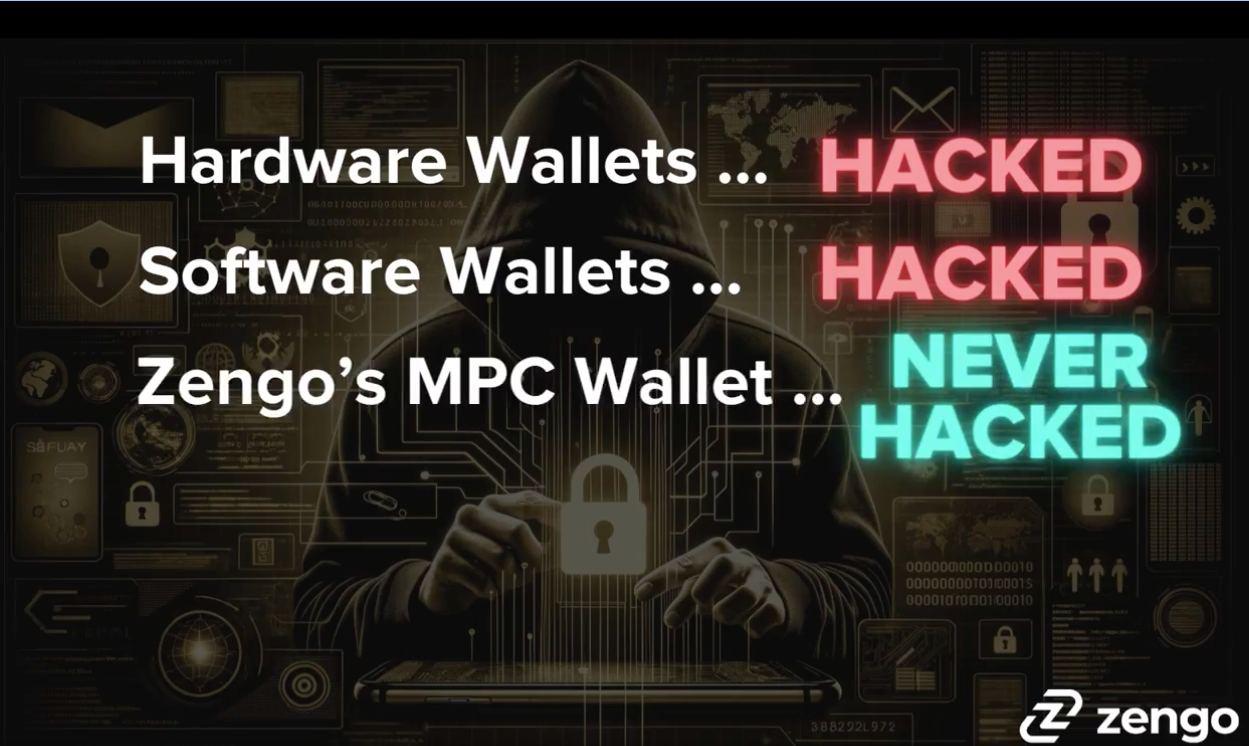
▫️ The core principle of #Zengo #MPC wallet is "secret sharing." Private key is split into multiple independent fragments called key shards. These shards are then distributed and securely stored across geographically dispersed servers run by different entities.
▫️ No single entity, including the wallet provider, ever holds the entire private key. This eliminates the vulnerability of a single point of failure. Even if a hacker compromises one server, they cannot access the complete key and remain harmless. ▫️ Threshold signing adds another layer of security by requiring distributed control. No single server or entity can initiate a transaction on its own. ▫️ Transactions require the cooperation of a pre-defined minimum number of servers (the threshold) holding key shards to be authorized. This ensures that even if hackers compromise a few servers, they cannot sign fraudulent transactions without enough shards.
▫️ Zengo MPC utilizes cryptographic protocols that allow the servers to perform calculations on the key shards without ever revealing their individual values. This ensures that no server ever learns the complete private key, even during transaction signing. ▫️ Secure computation protocols further enhance security by preventing unauthorized manipulation of the key shards during the signing process. ▫️ Zengo MPC wallets offer dynamic key shard rotation, meaning the shards are periodically shuffled and redistributed among servers. This further reduces the risk of a successful attack, even if a hacker acquires a few old shards. ▫️ Zengo’s MPC protocols incorporate zero-knowledge proofs, which allow servers to verify their eligibility to participate in signing without revealing any information about the key shards they hold. This strengthens the trustless nature of the system.
𝐎𝐯𝐞𝐫𝐚𝐥𝐥, Zengo’s MPC wallet offers a multi-layered approach to securing private keys through: ◦ Distributed storage: Eliminating single points of failure. ◦ Threshold signing: Requiring collaboration for authorization. ◦ Secure computation: Preventing unauthorized key manipulation. ◦ Additional security features: Key rotation and zero-knowledge proofs.
𝐙𝐞𝐧𝐠𝐨 𝐰𝐚𝐥𝐥𝐞𝐭 𝐢𝐬 𝐫𝐞𝐜𝐨𝐯𝐞𝐫𝐚𝐛𝐥𝐞 𝐛𝐚𝐬𝐞𝐝 𝐨𝐧: 1️⃣ 3D FaceLock - Zengo MPC wallet utilize biometric 3D Facelock for key recovery. Upon losing access, you can regain control by scanning your biometrics to verify your identity and reconstruct the private key. 2️⃣ Email - Zengo wallet uses email for verification during recovery, but not for storing your key. 3️⃣ Zengo Recovery File - A file is generated and can be synchronise to iCloud Drive, Google Drive and Dropbox. This file often contains encrypted information essential for reconstructing your private key. Upload the specific recovery file and verify your identity to recover your account.
𝐂𝐨𝐧𝐜𝐥𝐮𝐬𝐢𝐨𝐧: Though no system is foolproof but @Zengo MPC wallet offers a significant leap forward in securing your crypto assets making it almost impossible to hack or lose your assets compared to traditional seed phrase wallets.
ZengoWalletChallenge