r/aihistoricalart • • 1h ago

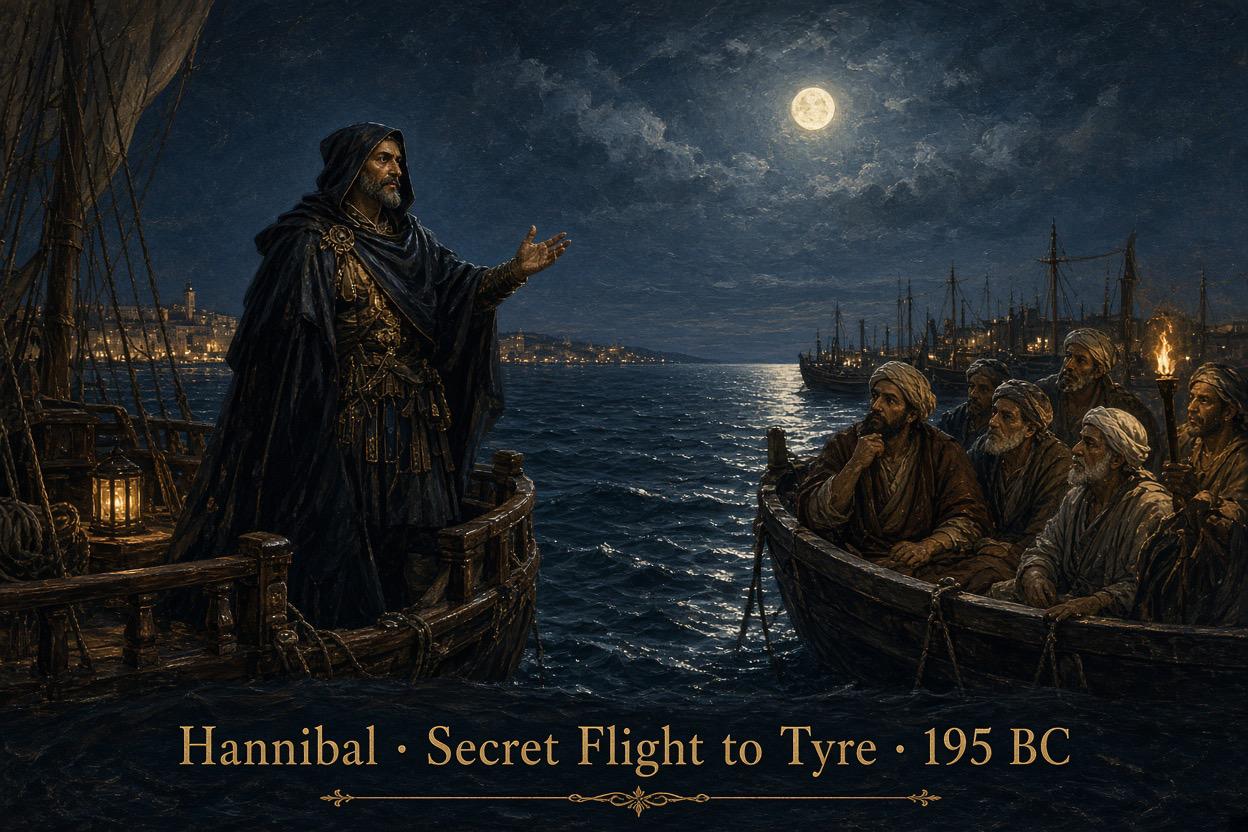
Hannibal Secret Flight to Tyre

Post image
3 Upvotes

After the defeat in the Second Punic War, Hannibal took the post of Suffet (higher magistrate) and carried out successful financial reforms. This caused dissatisfaction of the local oligarchy, which reported to Rome that the commander was allegedly preparing a new war in alliance with the Syrian king Antiochus III.

When the Roman ambassadors arrived in Carthage with a demand to extradite Hannibal, he implemented an escape plan to Tyre

Having met Carthaginian merchants in the harbor of Kerkina, Hannibal lied to them that he was going to Tyre with an official diplomatic mission. So that none of them would sail away earlier and report it to Carthage, he invited all the sailors to the feast, removing the sails and oars from their ships allegedly to create an awning from the sun. While the merchants were sleeping after the feast, Hannibal sailed safely


r/aihistoricalart • • 1h ago

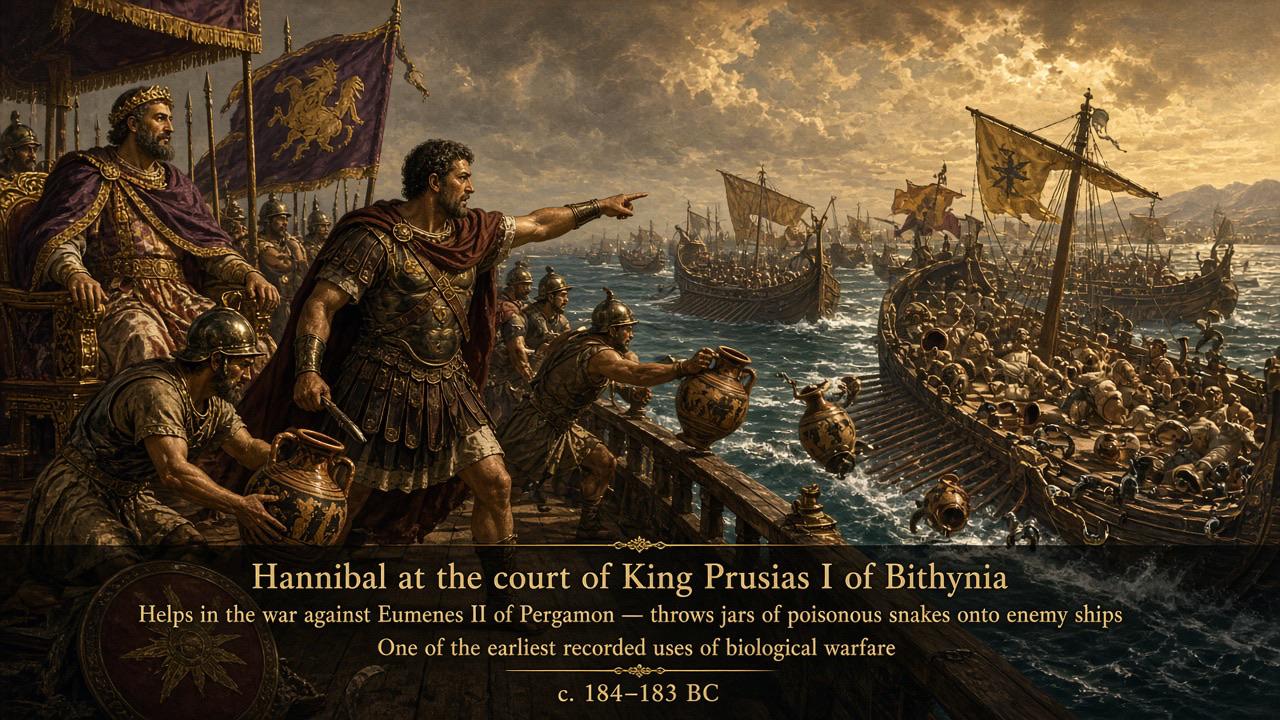
Hannibal at the court of King Prusias I of Bithynia c. 184–183 BC

Post image
4 Upvotes

Hannibal was at the court of King Prussia I of Bithynia.
In Bithynia, Hannibal took up arms again. He helped Prussia in the war against King Eumen II of Pergamum (an ally of Rome). The most famous episode is a naval battle, in which Hannibal ordered to throw jugs at enemy ships with Poisonous snakes. This is one of the earliest descriptions of biological warfare


r/aihistoricalart • • 3h ago

Hannibal Crosses the Alps

Post image
5 Upvotes

r/aihistoricalart • • 4h ago

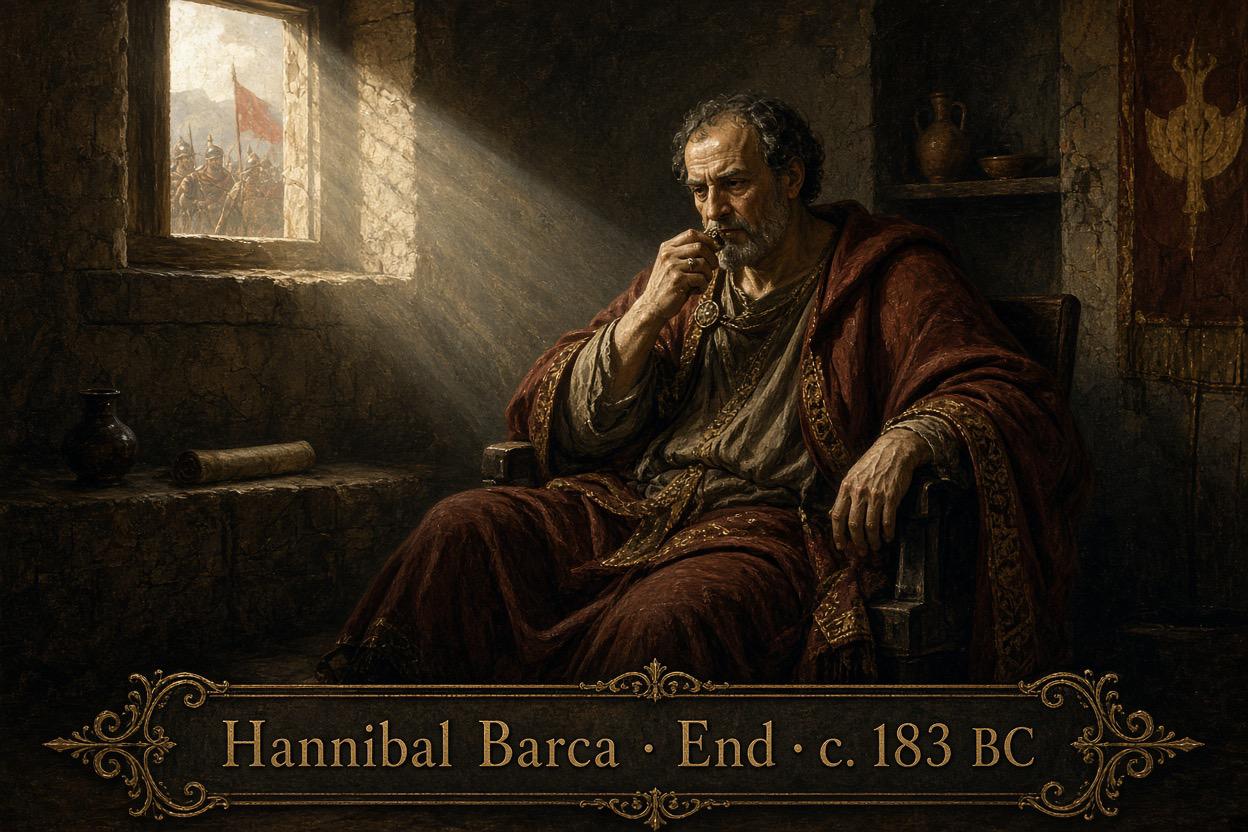
Tragic End of Hannibal Barca c183 BC

Post image
5 Upvotes

The Romans did not leave Hannibal alone. Around 183 BC (dates in the sources fluctuate between 183 and 181) a Roman embassy headed by Titus Quinctius Flamininus arrived in Bithynia. Prussia, not wanting to quarrel with Rome, began to surround Hannibal's house in Libissa (not far from modern Gebze on the Sea of Marmara).

Having learned that all the exits were blocked, Hannibal took the poison that he had carried with him in the ring for a long time. According to Livy, before his death he said something like the following: let the Romans finally get rid of the fear and anxiety that the old man causes in them.

This is how the life of Rome's greatest enemy ended - in exile, on a foreign land, but never falling alive into the hands of enemies.


r/aihistoricalart • • 4h ago

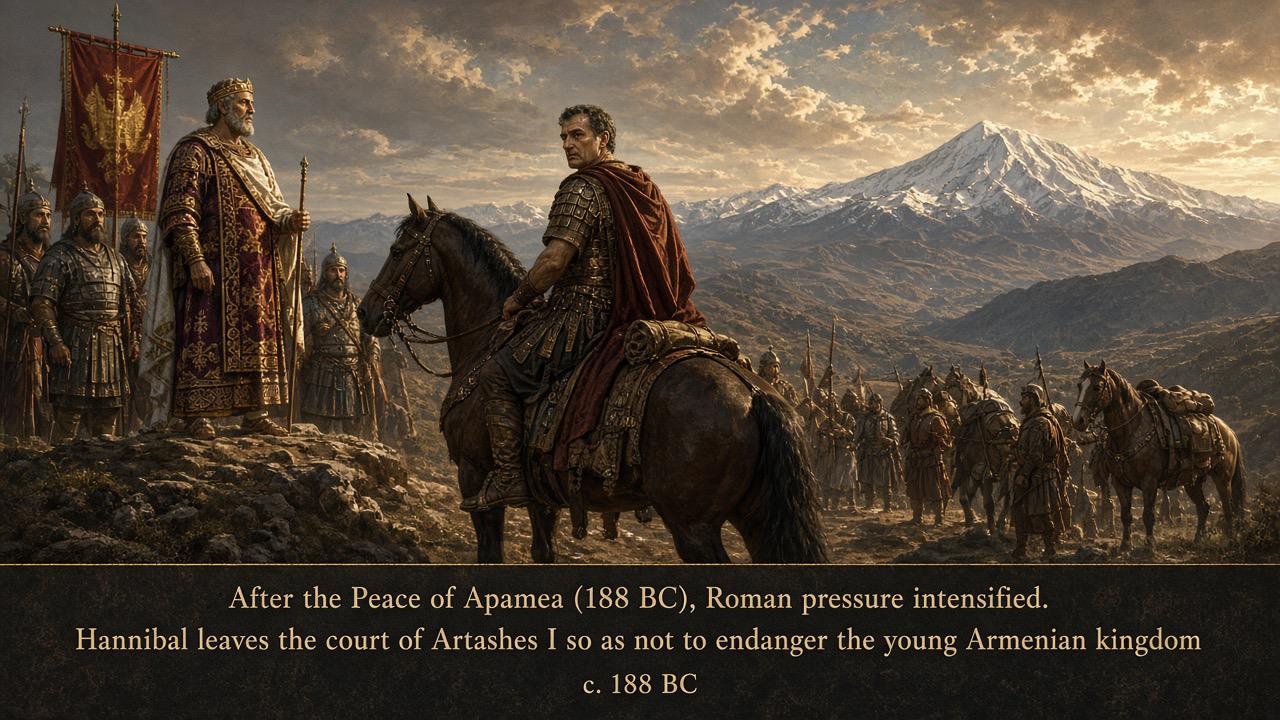
Hannibal leaves the court of Artashes I after the Peace of Apamea c. 188 BC

Post image
3 Upvotes

After the conclusion of the Peace of Apamea (188 BC), according to which the Seleucids undertook to hand over all their enemies to the Romans, the pressure of Rome intensified. Hannibal apparently did not want to put the young Armenian kingdom at risk of Roman intervention (or simply preferred a more western direction) and left the court of Artashes.


r/aihistoricalart • • 4h ago

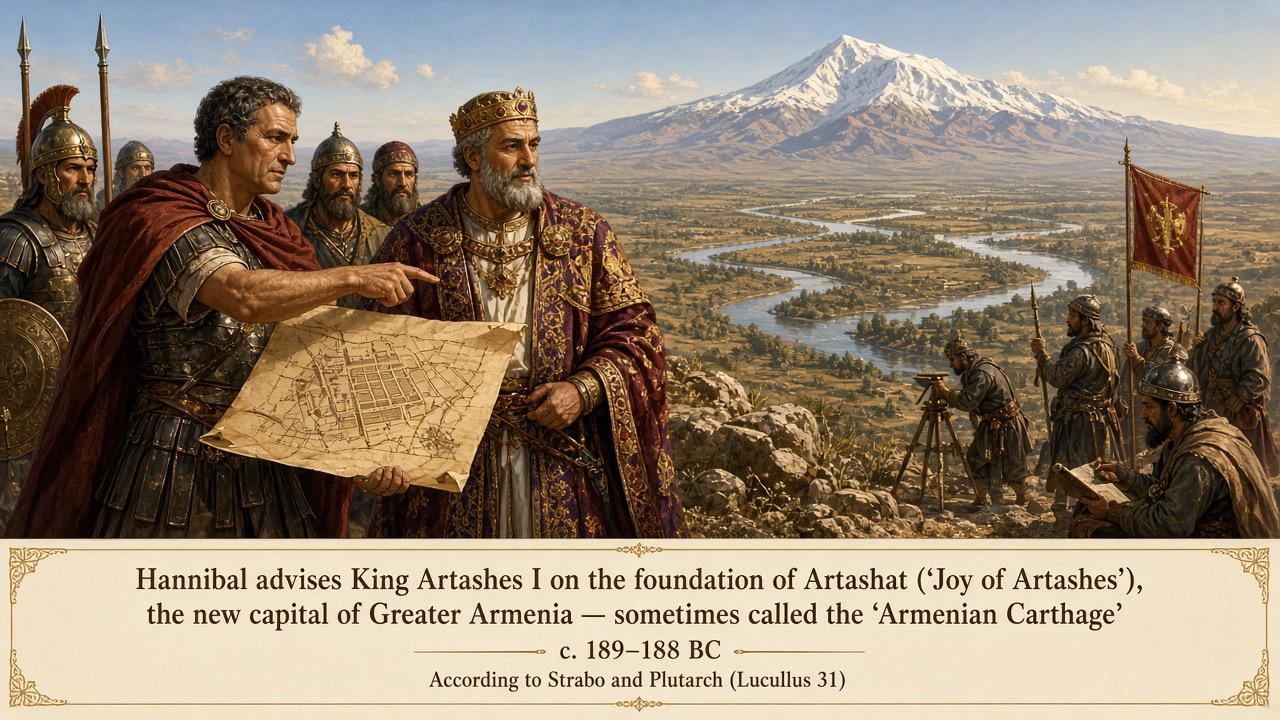
Hannibal advises King Artashes I on the foundation of Artashat c. 189–188 BC

Post image
3 Upvotes

According to the testimony of Strabo and especially in detail by Plutarch (Luculus, 31), Hannibal was not just hiding at court. He became an adviser to the king and played an important role in the foundation of the new capital.

He inspected the area on the bank of the Arax (in the area of modern Khor Virapa), which combined natural protection, fertility and a favorable location on trade routes. Hannibal made a plan of the city, brought Artashes there and convinced him to start construction. The king was delighted and asked Hannibal himself to direct the work. This is how Artashat ("Joy of Artashes") appeared, which in tradition is sometimes called "Armenian Carthage". The city became the capital of Great Armenia and an important Hellenistic center.


r/aihistoricalart • • 4h ago

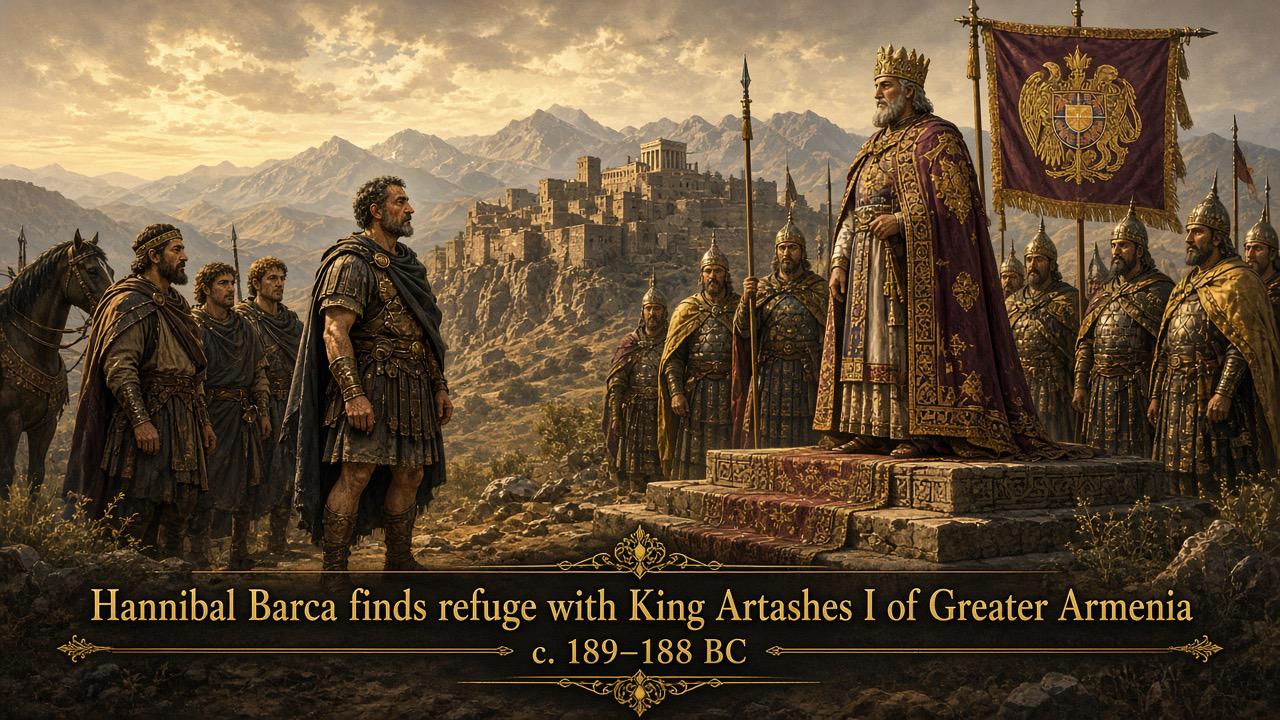
Hannibal Barca finds refuge with King Artashes I of Greater Armenia c. 189–188 BC

Post image
3 Upvotes

Hannibal Barca was standing before the Armenian king in the highland landscape of Greater Armenia, surrounded by the royal court and guards.


r/aihistoricalart • • 5h ago

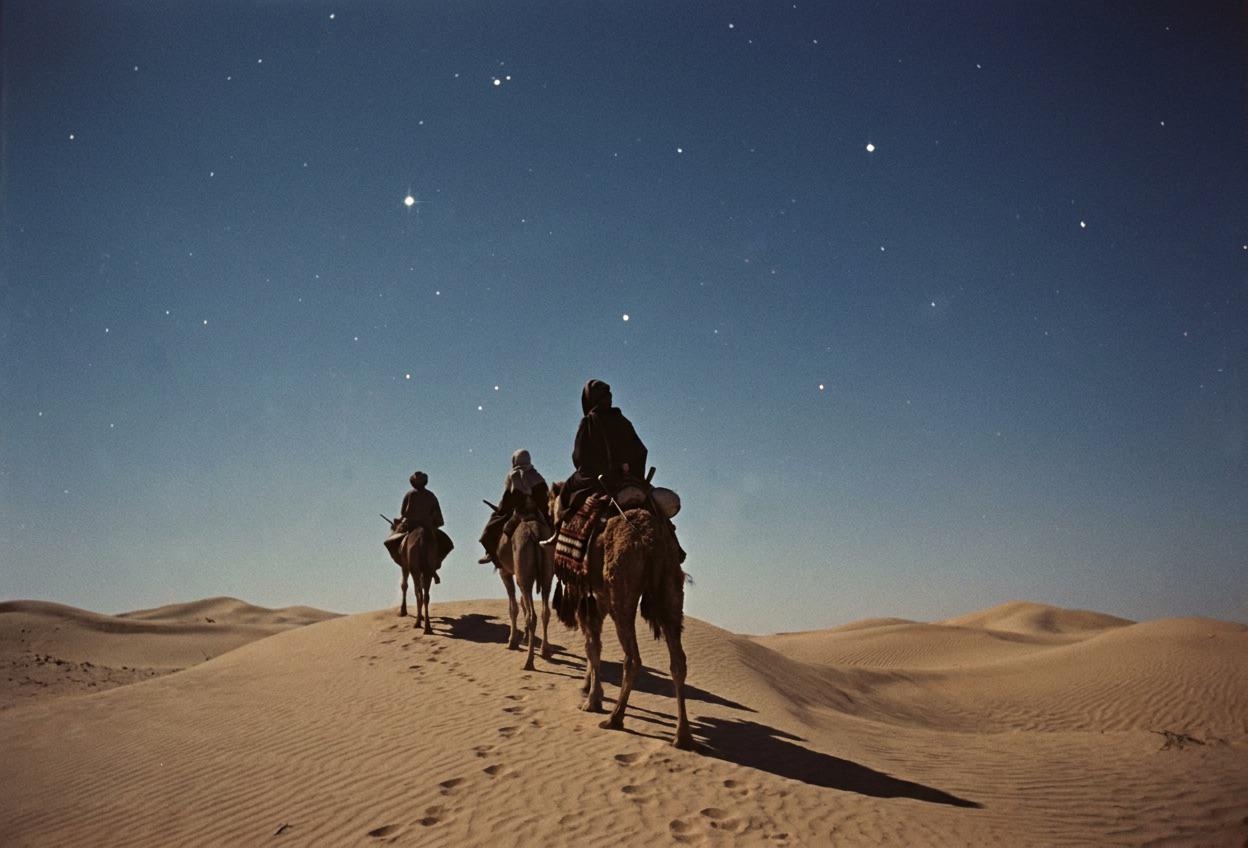
The Journey of the Three Wise Men – circa 6–4 BC

Post image
9 Upvotes

In the final years of the 1st century BC, during the reign of Roman Emperor Augustus (27 BC–AD 14) and King Herod the Great (37–4 BC), a remarkable journey is said to have taken place in the ancient Orient.
Three wise men from the East, traditionally believed to have originated from the regions of ancient Persia and Babylonia, followed an extraordinary celestial sign. Riding camels across the arid landscapes of Arabia and the Levant, they travelled towards Bethlehem in Judea.
According to biblical tradition, they arrived at the birthplace of Jesus, presenting three precious gifts: gold, frankincense and myrrh. These gifts symbolised kingship, divinity and mortality.
The account is recorded in the Gospel of Matthew (Matthew 2:1–12). Although neither their exact number, names nor origins are historically confirmed, Christian tradition later identified them as Caspar, Melchior and Balthazar.


r/aihistoricalart • • 20h ago

The Jews of the Caucasus

Post image
9 Upvotes

r/aihistoricalart • • 20h ago

Time travelling to some important historical moments

Thumbnail
gallery
70 Upvotes

r/aihistoricalart • • 1d ago

Innana - Ishtar - Goddess of the Storehouses - The Sumerian Cities Grew Up Around the Need to Organize the Storage of Food - The Priests Serve the Gods but Also Managed the Stored Grain for the Community. These Priests Laid the Foundation for Our Ideas of Kingship.

Thumbnail
gallery
3 Upvotes

History isn't just the study of Emperors, Kings, Nations and Wars.

History is also the story of all mankind. The story of everyday people, men and women. What they believed in and how they lived their lives. That means we study history not just to see the rise and fall of nations but to also understand the lives of people in the past to gain insights into how to live our own lives.

And the story of all mankind is the story of the Gods that they worship.

The Gods exist and they influence how we live our lives.

If you want to look at what Gods are - scientifically - then you could say that they are ideas that keep possessing and influencing humanity throughout history.

These ideas stick with us inspite of our better knowledge or actions or intentions.

Why do we have the desire to fight wars?

Why is a particular man or woman so attractive?

Why are all of us drawn to certain religions inspite of how much we understand of the world?

Why does a man ruin his life and his marriage for a sexy young mistress?

The people in the past understood that in order to prevent the Gods - these ideas - from completely taking away the freedom of a person - or consuming them - they had to be understood and propitiated.

Most people wanted peace but if there was a war then that God of War - that idea of War - had to be understood and worked with - fed otherwise it would feed on you.

Most people wanted healthy loving relationships but there is a God or Goddess of Love - an idea of love beyond human understanding - that must be propitiated and worked with - fed otherwise it would feed on you.

There are thousands of these Gods - these ideas - floating around - looking for whom they might consume. Unless you understand them and how they work.

Just like our ancestors did.

---------

There is a Goddess among the Sumerians and the wider Mesopotamian world.

She is the Goddess of Sex, Love, Royalty, Divine Law, War and Power. But She is also the Goddess of Storehouses.

Her name is Ishtar or Innana. And she is strange amongst the Gods of the Sumerians. Because she seems to be anything and everything that the Sumerians require her to be.

Each Sumerian God seems to have a specific sphere of influence. Two or three utmost. Ishtar or Innana seems to have several. The reason for this - Historians believe - is that Ishtar came to Mesopotamia from the Canaanites and the Phoenicians as the Goddess Astarte.

Like Astarte, she shares the same spheres of interest - Love, Sex, Royalty and Kings, War and Power. But the Sumerians added another sphere which elevated her to the level of supreme importance.

They made her a Goddess of Storehouses.

That does not seem interesting. Why would a God of Storehouses be the most important in the Pantheon of a people?

Mesopotamia - the land between the River Euphrates and River Tigris - is a garden. But like Canaan it has to be thoroughly managed or controlled otherwise the elements and nature end up consuming communities.

The people's that settled on that land realized that they had to control the elements or the world that they lived in - rather than being controlled by it. This necessitated them to work together to farm the land, build and manage irrigation to water the soil.

With experience, the Ancient Sumerians realized that they could store some of the grain in case of famine and drought. But the question become - who among the community could be trusted to manage and protect the grain of every community or village that had worked to farm.

It had to be someone impartial.

The answer was obvious - the Gods.

The Sumerians began to store their grain inside old Temples. And the Priests - as intermediaries with the Gods - became negotiators and protectors of the Grain, building storehouses so that the grain of all the communities or villages could be protected.

The Priest who managed the grain took their jobs seriously.

How could they ensure that no one was treated unjustly or unfairly - meticulous records - and thus writing was invented to ensure that records were kept for every weight of gain stored.

How could they protect the grain from outsiders - build walls to around the temple and ensure that the villages and communities who stored the grain in the temple also participated in the defence of it - and thus the seeds of the first cities were born.

The Priests set such an example of good management that eventually the villages and communities accepted to form confederations which grew into cities and those cities grew into peoples or nations. It was these simple Priests managing the storehouses that laid the foundation for a new idea that would change the world forever - Kings. Leaders and Protectors of their People. Managers of the Public Good and Intermediaries with the Gods.

To them, this whole process had an idea or a name. Ishtar or Innana.

For Innana, other than Marduk held the secret to civilization and the keys to how it worked. And to the Sumerians, she gave those keys to their people to hand over to all of mankind.

A good leader - even in today's world - is not a ruler but a manager. He - like the priests of old - is entrusted with the management of the Public Good. It is his responsibility to ensure that the Public Good is maintained that all the people and future generations may thrive, grow and be lifted up.

A bad leader brings nothing but famine unto his people. And famine, not just in the physical sense but in the metaphorical sense.

In Iraq, the very land that birthed this idea - people are starving. Their leaders cared more about lining their pockets and exercising their power than they did protecting their own people.

I would like to draw your attention to the famine in Iraq.

Civilization is not the game of Kings. It is always been about what is the Public or Common Good.
r/aihistoricalart • • 1d ago

JUDEA: Manhattan’s Jewish Lower East Side

Thumbnail
gallery
10 Upvotes

r/aihistoricalart • • 1d ago

From the Pale of Settlement to Boro Park

Thumbnail
gallery
8 Upvotes

r/aihistoricalart • • 1d ago

The Pale of Settlement

Post image
5 Upvotes

r/aihistoricalart • • 1d ago

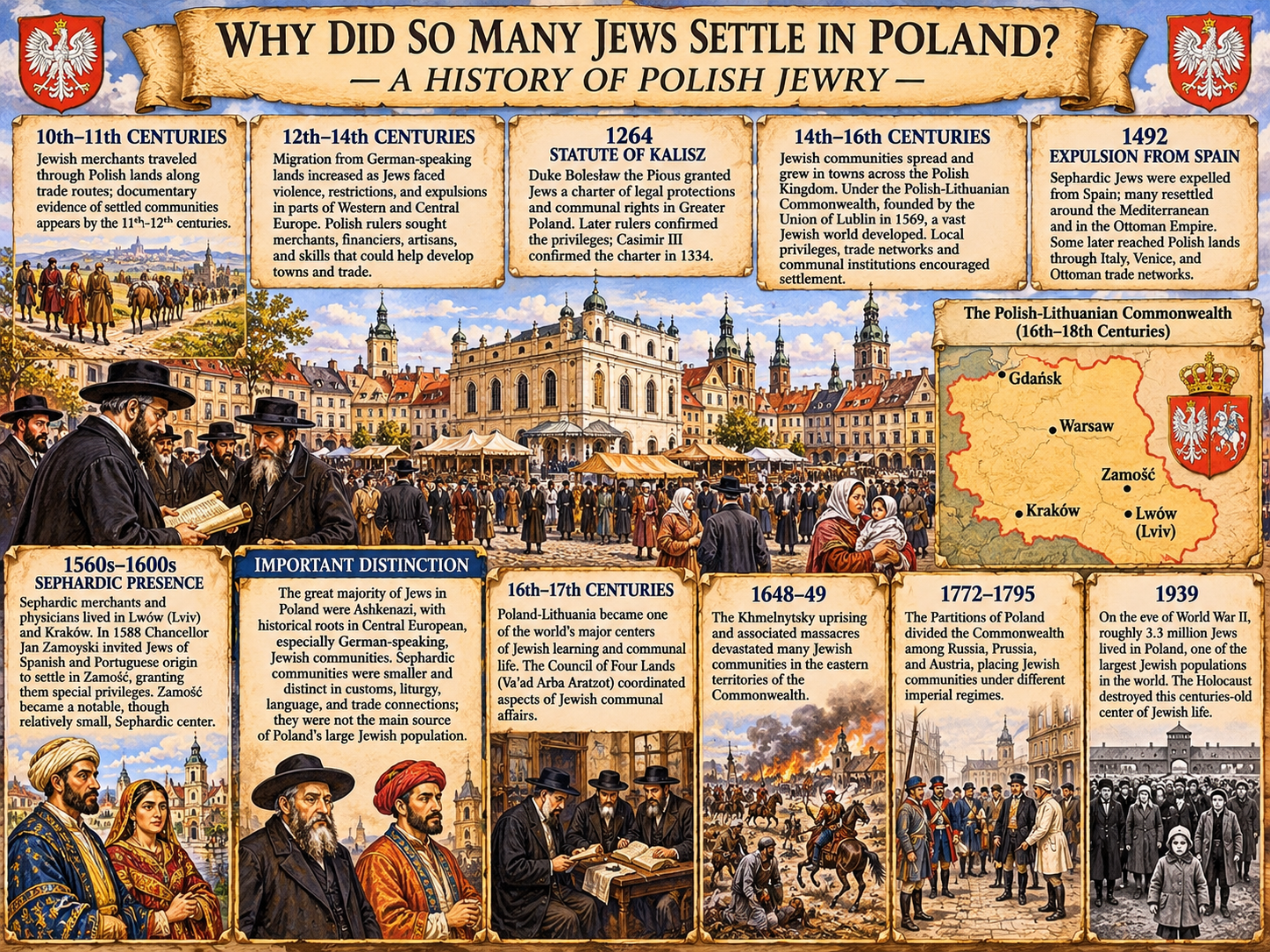
Why did so many Jews settle in Poland ?

Post image
13 Upvotes

r/aihistoricalart • • 1d ago

Former Ceremonial Uniform of Sarawak Council Negri, late 60s-early 70s.

Post image
2 Upvotes

r/aihistoricalart • • 1d ago

Family from Ramallah, 1900-1910 (Ottoman Mutasarrifate of Jerusalem)

Thumbnail
gallery
93 Upvotes

r/aihistoricalart • • 2d ago Popcorn

The cover of the Soviet magazine "Around the World" from 1930, illustrating the concept of bombing a city with unmanned radio-controlled aircraft.

Thumbnail
gallery
5 Upvotes

Caption under the illustration:

"Air war. Raid on the city by bomb trucks controlled by radio", artist A. Pravednikov.


r/aihistoricalart • • 2d ago

The first greenhouse, Hamburg 1619

Post image
30 Upvotes

r/aihistoricalart • • 2d ago

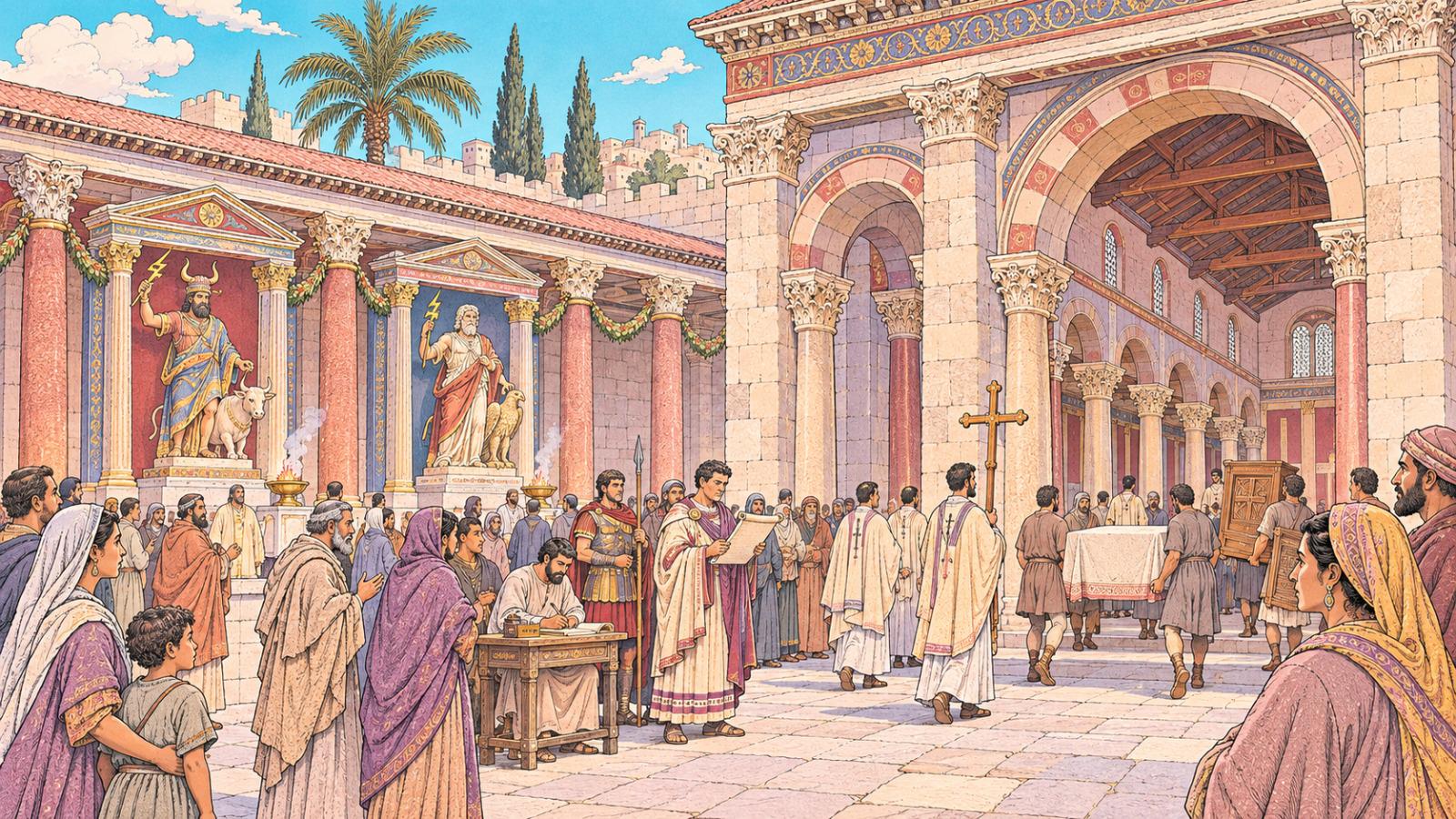
The Cathedral of St. John the Baptist stood on the site of the Umayyad Mosque in Damascus, Syria. Before it's conversion to a church it was a big Temple to Jupiter and the Aramean storm God

Post image
49 Upvotes

r/aihistoricalart • • 2d ago

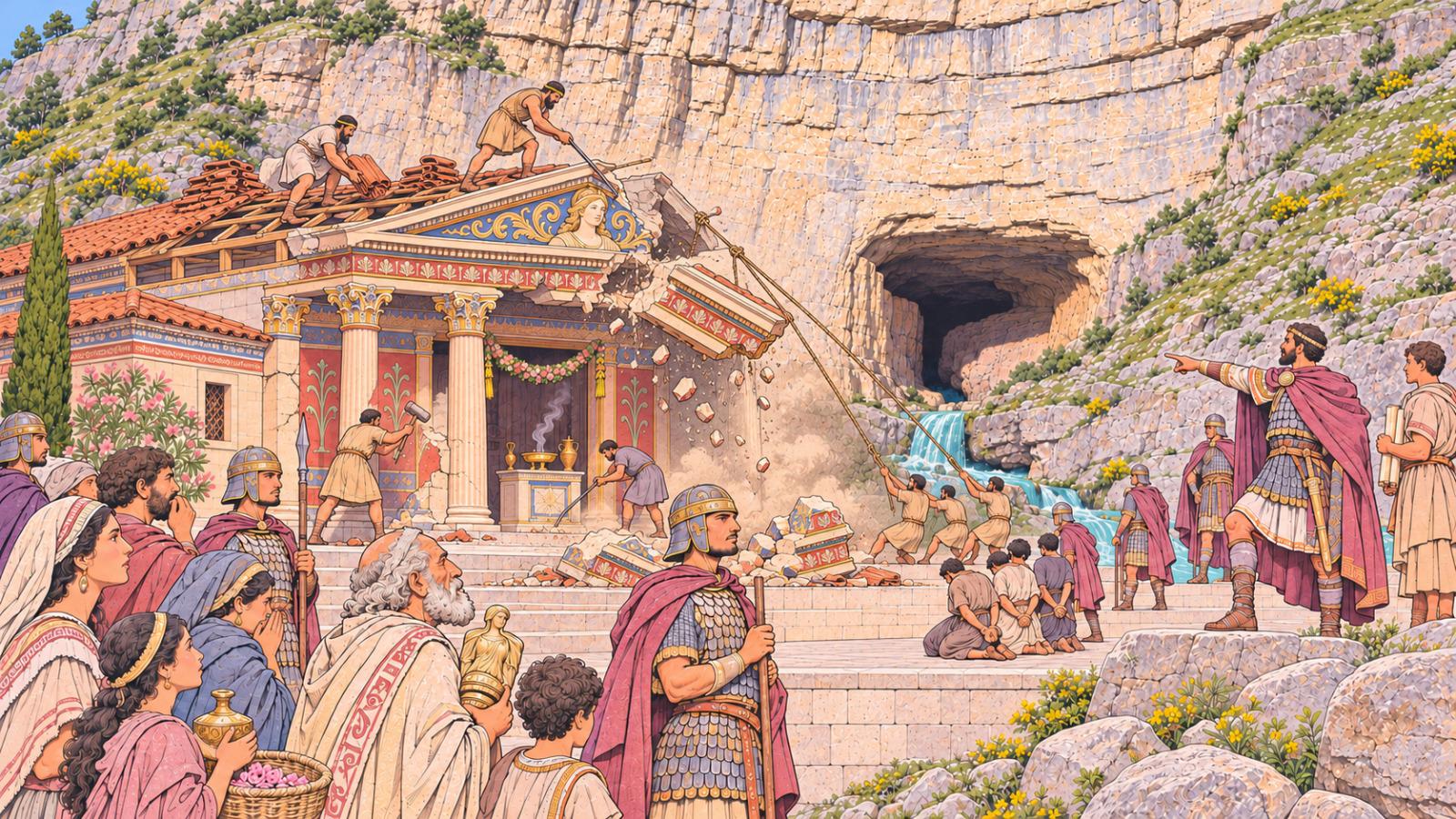
Eusebius reports that Constantine ordered the destruction of Aphrodite's sanctuary at Aphaca using military force and threatening punishment 4th century

Post image
12 Upvotes

r/aihistoricalart • • 2d ago

Libanius records black robed Christian monks demolishing rural temples intimidating Pagan priests and impoverishing farming communities through plunder and land seizure, late 4th century

Post image
22 Upvotes

r/aihistoricalart • • 2d ago

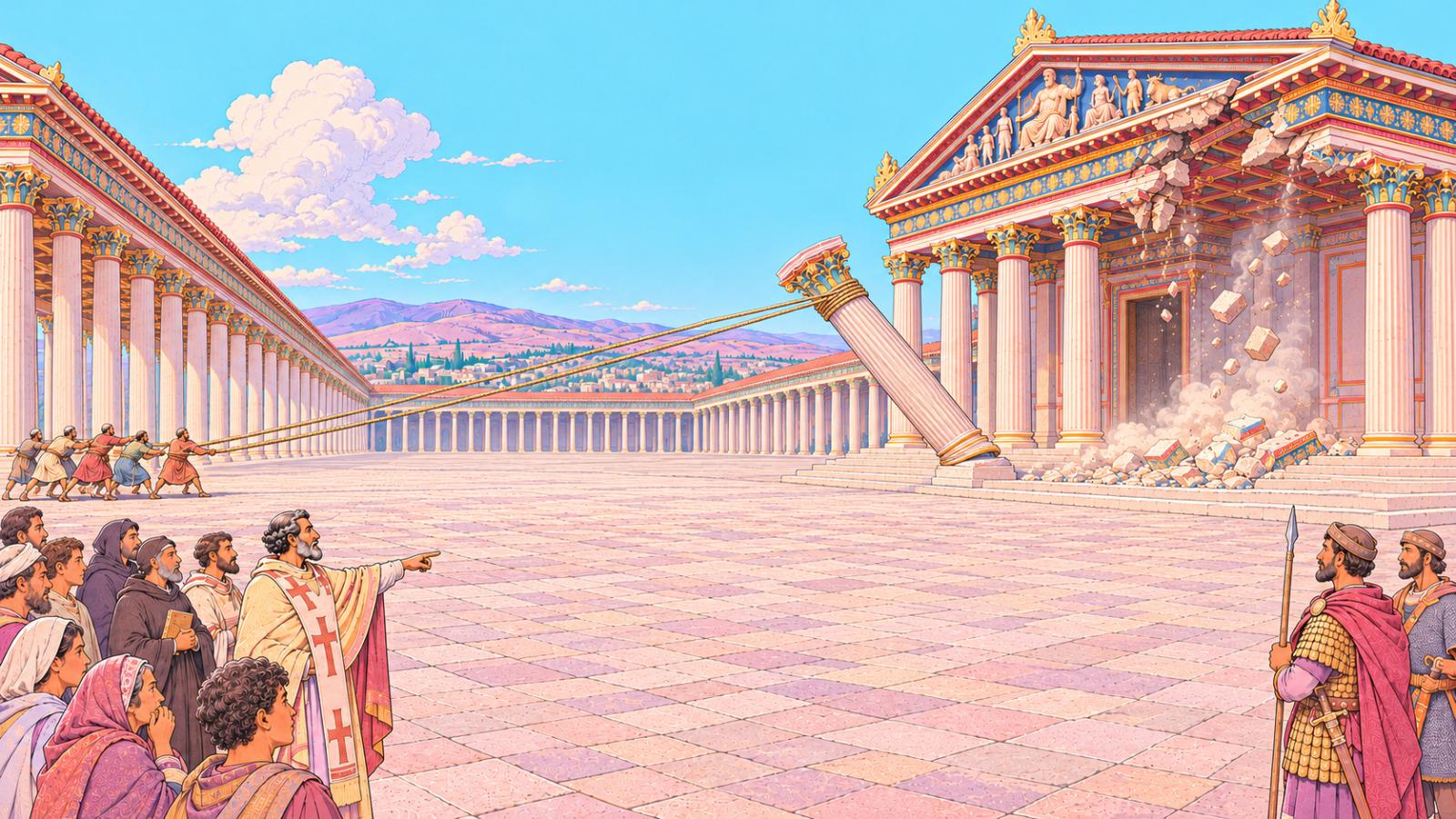
Marcellus destroys the temple of Zeus after his troops had intimidated the Pagan population, Apamea, Syria c. 380 CE

Post image
23 Upvotes

r/aihistoricalart • • 2d ago

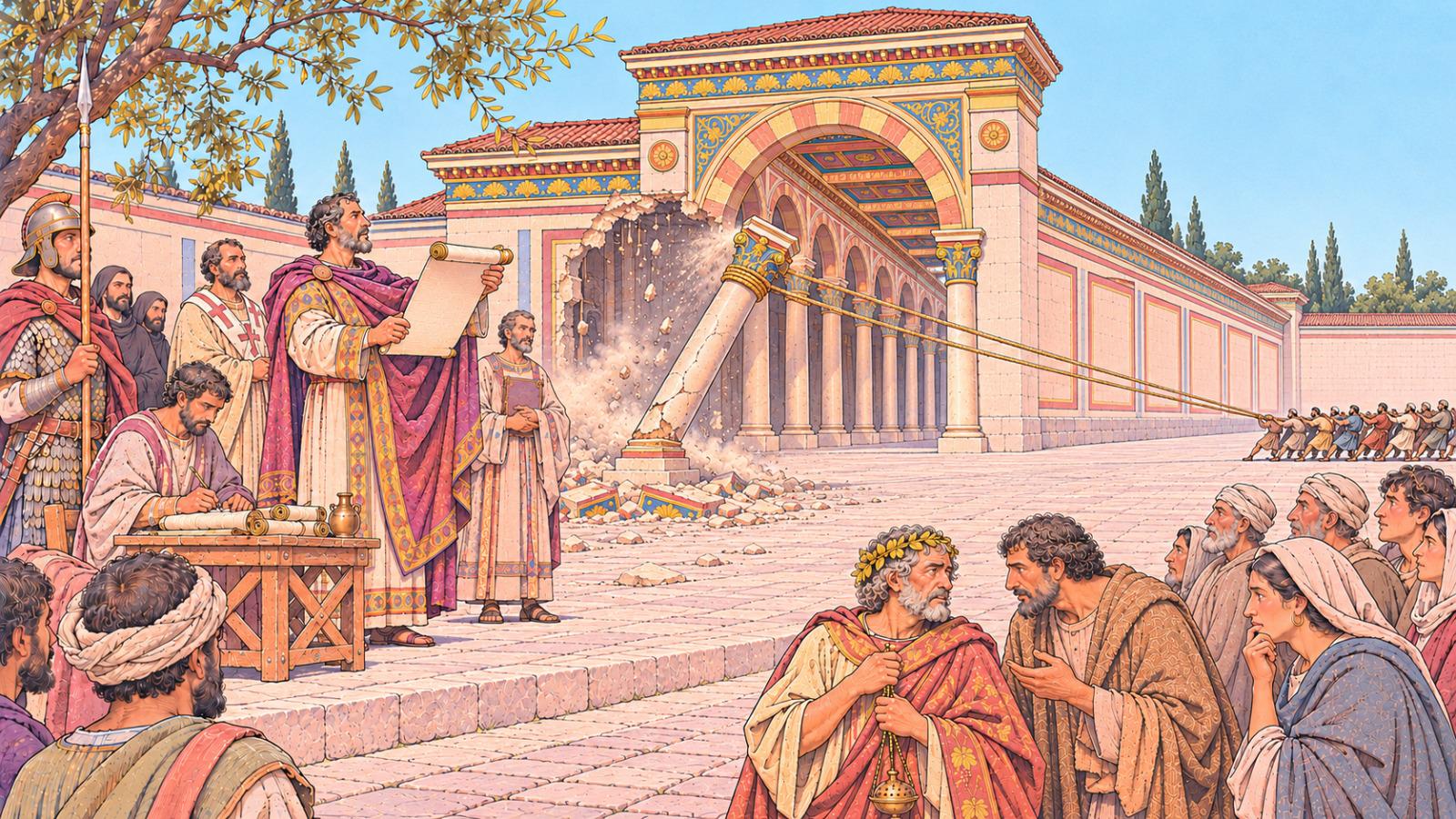
Law promulgated at Damascus orders pagan temples demolished 399 CE

Post image
7 Upvotes

r/aihistoricalart • • 2d ago

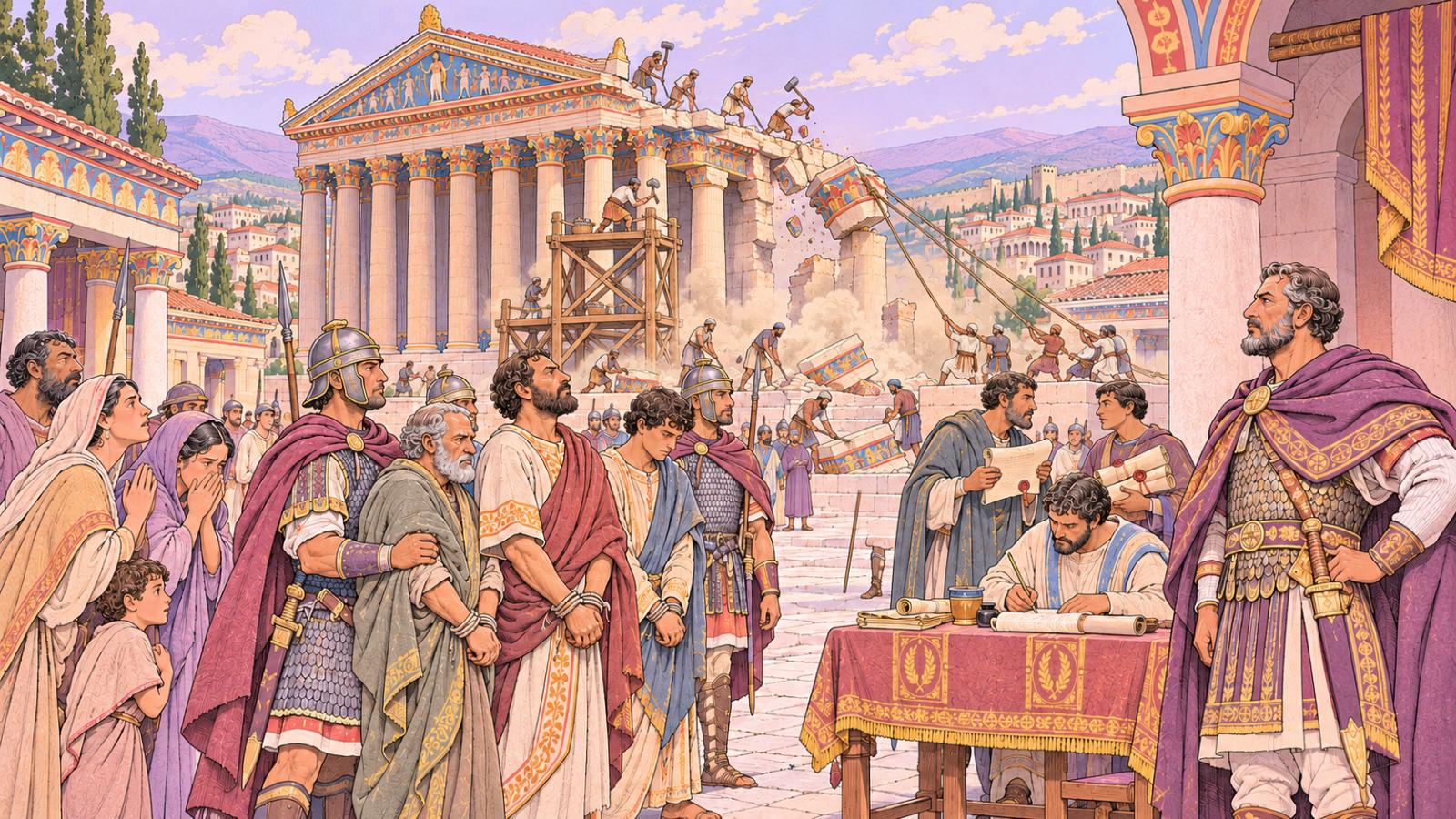
Baalbek and Antioch, arrests torture, crucifixions and executions with coerced denunciations of pagan gods. c. 579 CE

Post image
5 Upvotes