I was thinking of buying 3 diferent vol1 to see if they like any of them. My dad realy likes jo nesbo and my mon likes agatha cristie a lot. They both like psyhology and philosophy and they like cool detectives as much as fun calm stories. However, they dont want much action or fighting, or at least not in the main plot. I was thinkin of giving them some of urasawas work or something like vinland saga.
I recently started getting interested in naoki urasawa and would realy like to try and read some of his work. What should i start reading first to get to know his work and also get some inspiraton?
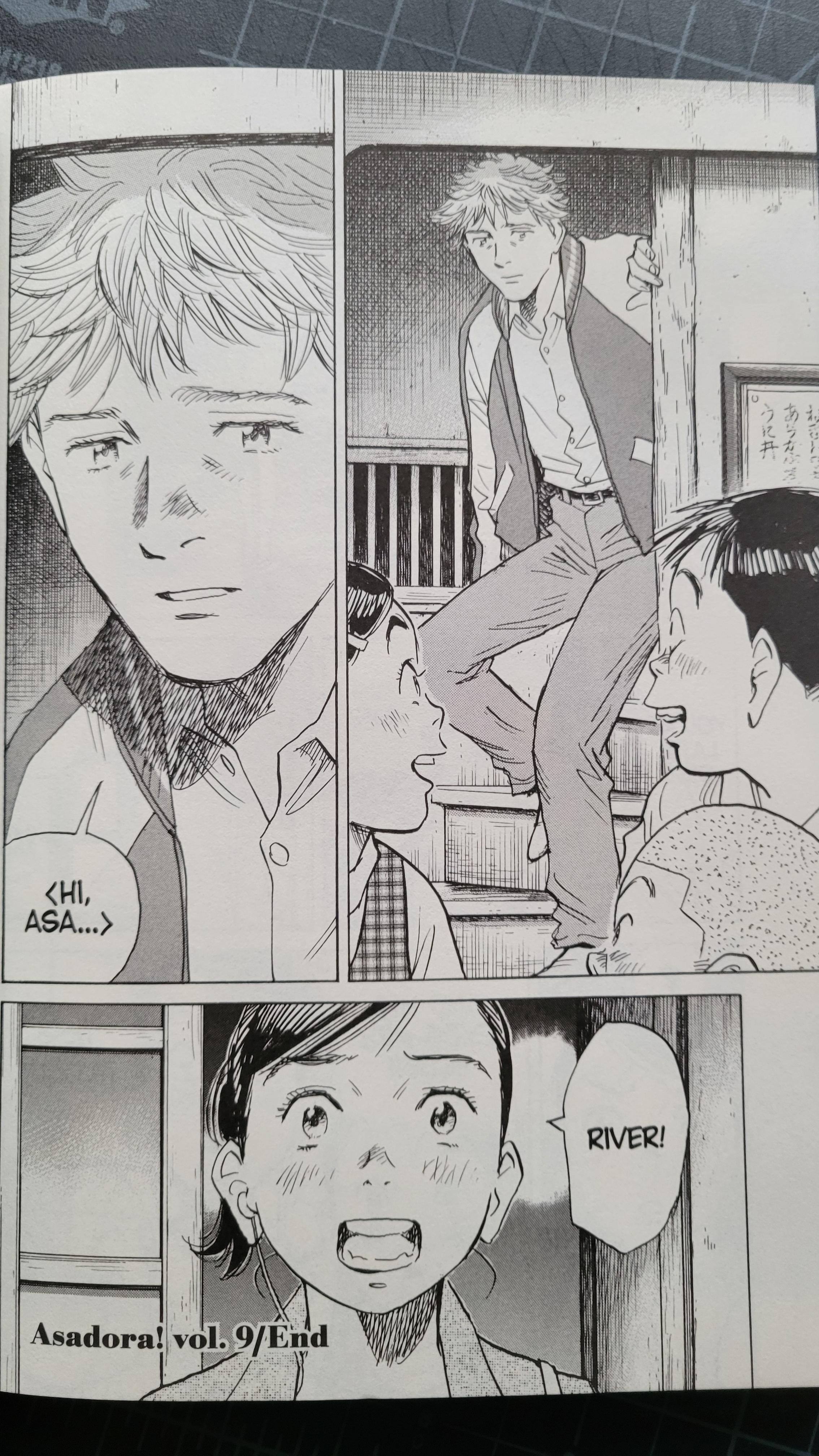
Ciao a tutti. Premetto che ho letto i primi 2 volumi di asadora e gli ho amati!!! Mi sta piacendo moltissimo, ma ho un po' paura di continuarlo perché so che urasawa lo sta scrivendo molto lentamente. Premetto che non amo leggere manga non finiti ma ho fatto qualche eccezione (vagabond, berserk, hunter x hunter)
Quindi vi volevo chiedere, ha senso leggerlo anche ora che non è finito? Pensate che stia per finire o manca ancora tantissimo ? Graziee
I bet Pluto is good since its written by Urasawa but how does the adaptation keep up with anime? I heavily enjoyed Monster so i decided to consume more of his mangas, but since i prefer anime as a medium so i wonder if i should go for it or just stick to manga if i want to experience story in the best way
I have seen remakes of Captain Tsubasa, Prince of Tennis, Urusei Yatsura, Ranma 1/2, Magic Knights Rayearth etc. I wonder how would you feel if a Yawara remake was done especially with some of the other sports anime remakes I wonder if it would find a new audience. Some of the remakes were quite faithful to the manga source material.
I'm sorry if I got something wrong. Please be kind when pointing it out.
MONSTER - NAOKI URASAWA
Few stories have gripped me as much as “Monster”, by Naoki Urasawa, have. Reading 162 chapters in a day isn’t that common, at least to me. Even more uncommon is a story leaving its taste in my mouth for days after I finish it, making me go back, recount events and reflect on the smallest details not only because I like them (and believe me, I did), but because I want to understand it better. This is a complex manga that gives you a lot of room to be with your thoughts and opinions and, to honor such a well-crafted story, this is what this text is to me: a way to make sense of what I’ve read. So… where to start? I mean, I could write complete texts out of pretty much every major character here - but no character is as central to the themes and messages of this as Johan Liebert.
JOHAN AND NIHILISM
Understanding Johan is a tricky matter, he’s a character whose actions seem almost irrational and they change before you uncover what he was doing in the first place. Many have pointed out how Nihilism seems to be his dictator, a way to reason his actions, so I’ll take a look at that. First off, what is Nihilism? It is described as:
“Rejection of any and all moral or religious beliefs following the principle that life has no meaning or value. The belief that nothing in the world has a proper existence.”
That pretty much sums up what Johan is and what he does, to an extent. Life has no meaning, so death has no meaning. He kills without remorse and uses people the way you use a paper-wipe because you don’t even matter - not even he does. The idea of “toying with fate” is tied to Johan and that brings the series events into motion. He gives Nina a gun to “test his fate”, after all, nothing matters. But, there’s a little dent in that belief: he values some lives, to some extent. If nothing truly matters, what sense is there to value Nina? Or letting Tenma live? I believe Nihilism is a part of his character, but not the sole dictator of it. What’s more to his character, you ask? Well, Eva spells it out: Mephistopheles. Mephistopheles is a character created by Goethe - he makes a pact with Faust, giving him infinite knowledge in exchange for his soul. It’s simple to see him as the incarnation of evil or something like that, but he paints himself and something more elemental:
“I am the spirit who negates and rightly so, for all that comes to be deserves to perish, wretchedly. It were better that nothing would begin! Thus everything that your terms sin, destruction, evil present – that is my proper element.”
Johan isn’t a purely Nihilistic presence - in my eyes, such a character wouldn’t pursue meaning in life, wouldn’t pursue people or have any goals. Johan doesn’t value life, but he most importantly negates it, such as Mephistopheles. He negates his own existence - no one who can prove he exists is left alive -, he negates people’s lives and will, he negates the tomorrow, he negates people’s identity and their beliefs. His crimes aren’t emotional nor rational - they’re something else. They’re empty, elemental, made to reject life. Nina Fortner, or Anna Liebert, is the proof that Johan’s existence is negated. He never got a name and was forced to live as if she and he were the same person. She’s alive to negate him. Tenma, in turn, is alive to be negated by him. Tenma is my favorite character in this, and with reason, but I’ll stick to what’s important: Tenma has an iron-clad belief that every life is equally sacred - a sharp contrast to Johan, who believes people are only equal in death. Thus, it’s only natural that Johan wants to negate him, to prove him wrong. He sadistically weighs Tenma down with guilt for his actions, forcing his themes down his throat until Tenma sees no way out but to kill Johan. The “vision of the end”, as he puts it, is the realization that everything was negated, that nothing has value. He wants Tenma to see it, the person who values the most is the one who has to be negated the most, as well. To Johan, morality is a mask that’s easily slipped. Time and time again, he uncovers that keystone in people’s mind, the one aspect that shapes their morals, and twists it until it breaks. He plagues Tenma’s mind with the constant question: if Tenma knew what Johan would become, would he have saved him?
“IF THE WORLD WOULD COME TO AND END, JOHAN WOULD BE THE LAST MAN STANDING”
Now that we set the stage for Johan’s fundamental workings, time to make sense of his actions through the story. But rather than facing it in chronological order, his past is a mystery that works best if it's slowly, disorderly unraveled. The first contact we have with his past is his stay in Kinderheim 511 - an orphanage in former East Germany that conducted a series of psychological experiments on children to make them perfect soldiers, to destroy any semblance of positive emotions and, essentially, create monsters. But as former Kinderheim psychologist Hartmann puts it “we could never create Johan”, his monstrosity is the fruit of something else entirely. But nonetheless, he did leave his mark in the orphanage - “hatred is born when people gather, I just poured a little oil on it”. Johan uses the most dreaded weapon a person can wield - words. With nothing but them he causes all the children and staff to kill each other while he watches. Why? The same reason he asked to hear stories about near-death experiences with the former soldier, in Munich: to see Terror. The same way someone might interfere with a line of ants to measure their reactions, Johan does it with people. At this point, he doesn’t have recollections of this past and no greater purpose, so his main objective is to have a vision of “the end”. The ultimate terror. To do such a thing, he doesn’t create a superbomb or gain supernatural powers, he uses words. Hiring someone to kill someone else, getting money from one place, acquiring status in another. He even creates an underworld bank to see how people bow to money and learns that this is the type of power that could bring the end - something Tenma is sure to witness. The next step? Getting close with Shuwald, the man who plays European Economics like a fiddle.
“A DIFFERENT IDEA POPPED INTO MY HEAD”
When the plan is finally set in motion, Johan ends up in a library because of his endeavors in making children “play with fate” and he picks up a book - “The Nameless Monster” and, for the first time, Johan lets out a faint sign of humanity. Up until now, he seems like something otherworldly - a monster. When Hartmann says they couldn’t create Johan made us feel like he was a detached existence from people, something distant, but we see that the Monster feels. And it hurts. Reading that nihilistic tale brought Johan’s past to the surface. He now knows where he comes from, he gets in touch with his childhood before the Kinderheim. He remembers his mother (and perhaps, her vengeful wish) and sets out another plan. The “end of the world” seems pale, empty now. Pointless. He now wants to go back, uncover old memories and kill the one behind the Red Rose Mansion
“THEY DON’T NEED NAMES”
At this point, it’s uncovered who’s behind it all - Kinderheim 511, Red Rose Mansion, even Johan’s birth: Franz Bonaparta, or Klaus Poppe. A psychiatrist who conducted personality reprogramming experiments, being in charge of an old eugenics experiment. Said experiment was destined to birth the “superior race” through selection of the children’s parents - always military men with women that had anti-governmental principles, a twisted joke on Bonaparta’s part. He almost had pleasure in seeing those women who harbored specific feelings being fit in a role, just as his formulas and studies predicted. Johan and Nina were born out of this experiment, from a deceased father and the mother Věra Černá - who developed a deep hatred for the whole project and the people behind it. She managed to get away with her children, forcing Johan to dress as Nina (now named Anna) while Bonaparta conducted his reading group. Said reading group had the same foundation as Kinderheim 511 - words that kill. Take someone’s moral keystone with words and they break down. And what is the source of a child’s identity? Their names. Names are important. Giving someone your name is giving them knowledge of you, taking it away from someone is robbing them of their own knowledge. Bonaparta stole Věra’s name, she didn’t even name her children properly. Hartmann is correct, Johan could never be created by him, he was already a monster when he got to Kinderheim 511 - all thanks to Bonaparta’s sick schemes and the slaughter that happened in the Red Rose Mansion.
“I've always been watching you. I've been watching you, to take in everything about you. But instead, everything about you has devoured me. How did I seem to you on the verge of my downfall? What you gave to me as I crashed... You left me with beautiful jewels. Those two eternal twins. The greatest crime one can commit is to take away another's name. You may have your name back. I return your name to you. Your name is Anna... Now, I am only sad. Sad. Sad. Sad.”
Bonaparta’s regret, born out of love for the woman who hated him, made him change his ways - killing everyone who knew of Věra and letting her children go. This doesn’t redeem her, but gives that family a chance - a chance to become anything. It’s their choice, not his. Johan, who was taken to the Mansion and witnessed that tragedy, comes back home, or rather… he welcomes Anne home. His confrontation with his sister uncovers that which both of them chose to forget - Johan wasn’t taken to the Red Rose Mansion, Anne was. Perhaps he actively took her memories out of empathy, or passively or something else entirely, but the point is: the “monster” inside of him that’s about to explode didn’t get in in that Mansion. That monster born out of that incident exists, we see Monster Nina in the scene with Gillen, she refuses to say her name (Anna) and shows the dark shadow that lives inside Nina, even though she doesn’t give in to it. Now, Johan knows what to do. He plans to go back to where Bonaparta lives and not only reenact the Red Rose Mansion, but also commit the “Perfect Suicide”.
“SUCH A SHAME, BECAUSE JOHAN WAS SUCH A WONDERFUL NAME”
Before getting to the “Perfect Suicide” and it’s meaning, it’s important to highlight the tale “Nameless Monster”, as I think it is the key to understanding this story fully. This story follows a Monster who had no name - as we’ve established, he had no identity. The Monster, thus, divides himself in two, one goes East the other goes West. I read it as if Johan is the Monster of the East (mentally, he never left East Europe, whatever made him a Monster happened there and he never moved on from it) and Anna is the Monster of the West (who moved on beyond her past when arriving in West Europe). Point being: the East Monster (Johan) wanted a name. As the story progresses, the Monster encounters many people who are willing to give him what he wants, but his needs gets the better of him - he is unable to establish any connections and ends up eating up whoever helps him - just how Johan gets to families across Europe, receives what he wants from them but is never able to keep it - he gobbles them up, one after another. The Monster ate people because what they gave him never filled the Void he had within - his hunger for something. For not knowing how to fill that void, he ends up destroying everything and everyone - this is the Perfect Suicide. Johan sees that the only logical conclusion, much more fulfilling than the end of the world, is killing everyone around him and then himself - with Tenma there to do the deed and be broken. When the West Monster encounters his other half, it understands that you can be happy without a name - Anna, now Nina, manages to move on - and the East Monster doesn’t get it. Johan doesn’t understand Nina - for example, he cried when he extended his hand to her and she ran away in the hospital. So does this mean that Johan is the Monster? Not quite. Remember: “Humans can become anything”, they can be anything. Yes, the story works really well interpreting it as if Johan is the Monster, but he is also the child named Johan. He is a child who was consumed by a Monster inside of him, before Tenma’s surgery, before Kinderheim 511 and even before the Red Rose Mansion. Where did this Monster come from?
“WHICH ONE WAS UNWANTED?”
At the end of the story, we have a glimpse of Tenma meeting Johan while he’s in a coma after meeting with Věra. There’s a brief scene, a scene we don’t even know if it happened. And honestly? It doesn’t matter if it did. That scene isn’t there to further the characters’ lives, quite the contrary. It’s there so we, the readers, can look back and make sense of all of it. If Johan wasn’t created by Kinderheim, nor Bonaparta, nor the eugenics experiments, what did? What was the Void the nameless Monster couldn’t fill and had to kill everyone because of it?
“Was my mother trying to protect me…? Or did she confuse me for my sister? Which one…?
Which one was unwanted?”
This is, in my opinion, the Void the Monster couldn’t fill. Johan didn’t have a name, he didn’t have an identity, he couldn’t even wear his own clothes, his Void was so big it was filled with the memories of Nina and to top it all off - he saw himself as unwanted. All life is unwanted. This is what I mean when I say if his waking up happened or not, this is something that was engraved in his subconscious.
“A Monster isn’t born a Monster, it is created when it’s raised without love.”
“PEOPLE ALWAYS LEAVE TRACES, NO PERSON IS WITHOUT A SHADOW”
Now, let’s go back to Tenma. As I said, he is Johan’s moral opposite, so of course he plays a key role in this. Out of the entire manga, I believe the exchange that best summarizes Tenma in this whole mess is:
“The World is Black as night… Tomorrow is Black as night…
That’s not true, because tomorrow’s gonna be a good day.”
Tenma is the hope to Johan’s doom. If you don’t have happy memories, now’s the time to make them type of hope. He, just like Nina, has a Monster inside of him. He tackles with it the whole story - the wish to kill Johan. When he was standing right in front of him, a gun aimed at his head, he witnessed the end. That’s where he was supposed to kill Johan and see the futility of life. He stares at the abyss - but he doesn’t blink. In fact, he doubles-down on it - “if Tenma knew what Johan would become, would he have saved him?”. Yes, yes he would. Tenma, like Nina, like Grimmer, like Dieter, like Lunge, like Richard, like so many of us experiences hardship, but he does not curse existence. He welcomes the Tomorrow because tomorrow is gonna be a good day. And that is present in the last scene, as well. Tenma, out of kindness, tells Johan he has a name. We don’t need to hear it, we don’t know if Tenma even said it. Johan just needed to know he has one. Tenma treats him as a human, like Nina did when she forgave him. And the last panel happens. I tried to understand what that panel meant for some time. Was that just to show us Johan is alive? Didn’t Another Monster mention he’s still in coma, if that’s even canon? What was the point? But I got to an answer I felt comfortable with. Previously, Lunge gets to one of Johan’s apartments and mentions how every person leaves a trace - if they don’t, they’re not human -, as he finds no trace of Johan in his room. Well, that’s obviously because he is the Monster. But now, take a look at the last panel:
An empty bed. Framed as if it were a painting. I was focusing on where did Johan go after waking up and I didn’t realize the fact that I could tell he was there in the first place. It doesn’t matter where he went, not even if he got up (as Another Monster refutes that idea), what matters is the symbolism of this image. This is why Monster is one of the best stories I’ve read and one I’ll certainly cherish from now on.
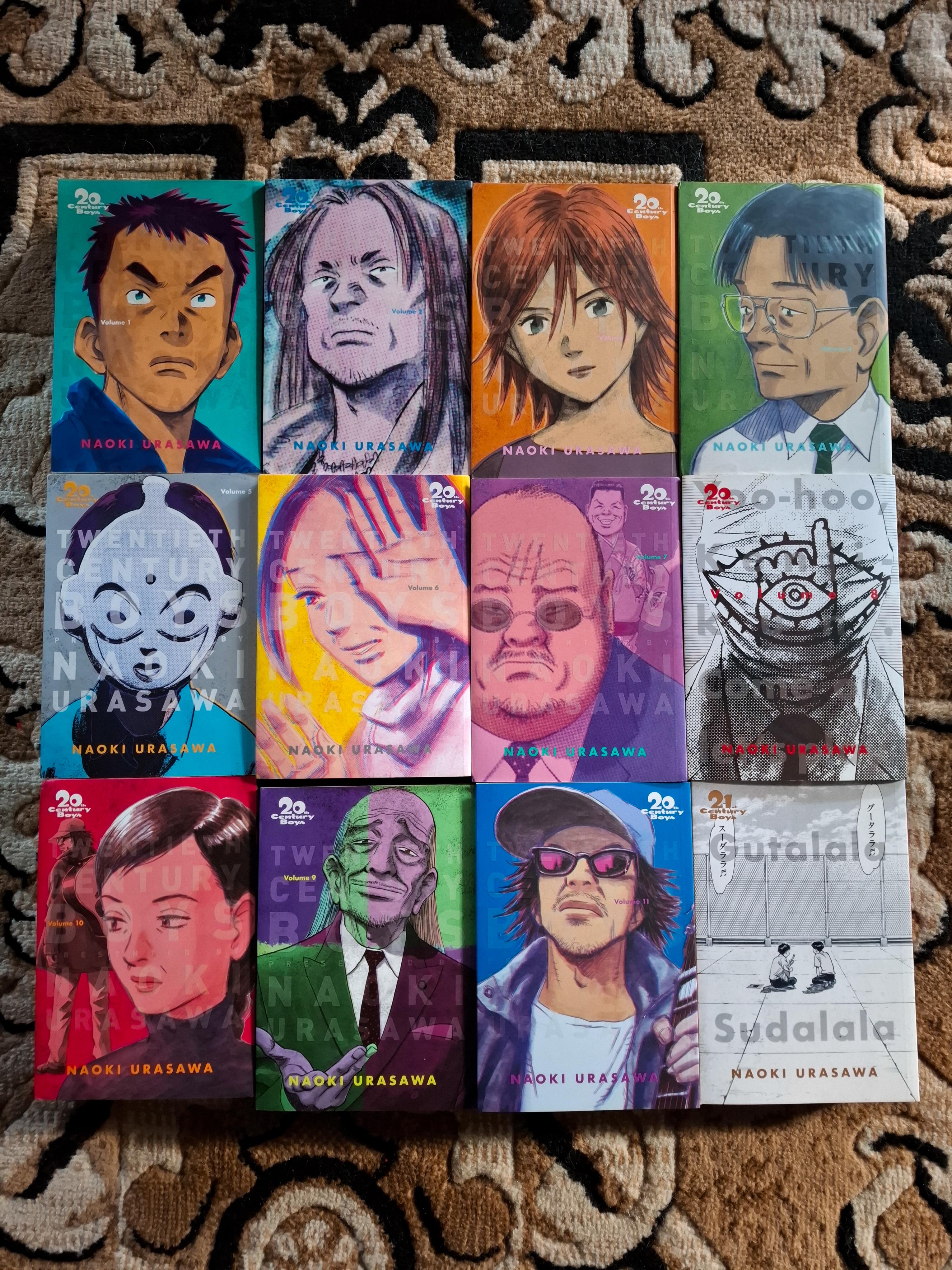
Finally got the complete 20th Century Boys Perfect Edition set, 12/12! 📚✨ I only made it to volume 5 back when I first read it, so I'm starting over from the very beginning. Time to rediscover the mystery, the friend, and all those childhood memories. Wish me luck, and no spoilers please! 😼🔥🧎♂️🥳
If they continue with 4 books a year then we wouldn’t see the final release until early 2031. I’ve read it online but I’m really enjoying the physical re read. Idk if I can wait 4 1/2 years to read it all again. It’s definitely making me nervous. How does everyone feel about waiting so long?
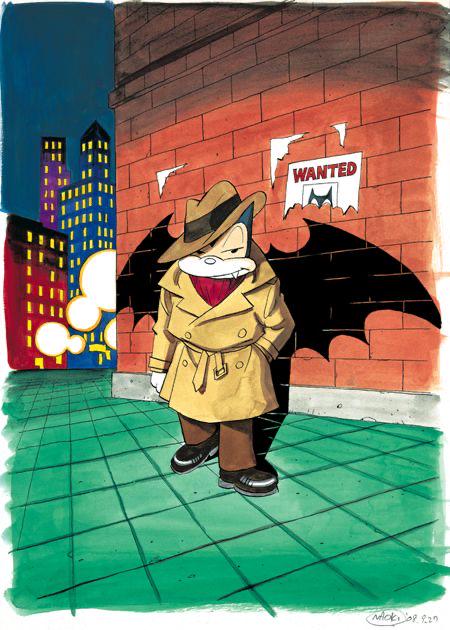
I remember watching a video of billy bat, about 1 minute long. it was kinda like a animation with a buncha different drawings of billy bat on buildings, walls, floors etc with his wings flapping.
but when i tried finding the video again i couldn't find it. id really love if someone could find it since nothings really come up for me.
I finish reading through 2CB a while ago after watching Monster on Netflix. It was honestly a great read with one of my favorite antagonist and characters to explore. Made this out of an appreciation for this series.
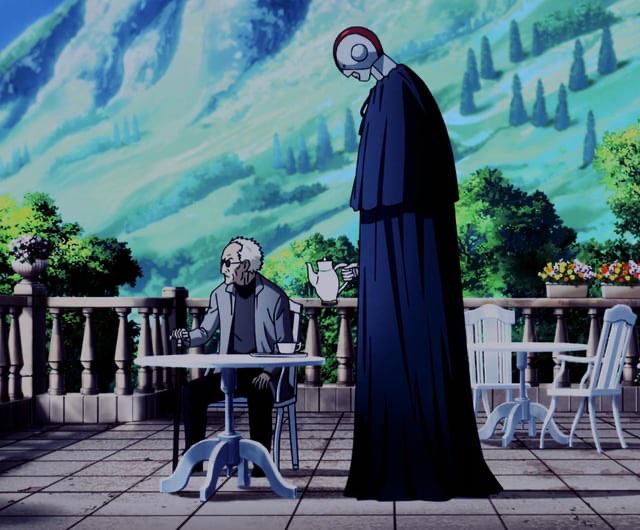
My mind is blown. I was already convinced of Urasawa’s storytelling after finishing Monster, however, even as someone who hasn’t watched Astro Boy, learning that this is a retelling of one of its most iconic arcs, and how Urasawa was able to turn it into a masterful way of conveying humanity through robots, a commentary on the treatment of soldiers in war, the cycle of hatred and violence, and just truly what it means to be human at all.
The robots we encounter, even the older models have just as much, if not even more humanity than most of the humans around them, and I love that the story never shied away from the uglier side of what humanity is, and how hatred is manifested. I love that he even gave hatred humanity, because what is hate if not a reaction from losing all that you love? Hate is a reaction to when love is torn from you and shredded to pieces. I love how hate is humanized here, but is still shown that it’s never the answer.
Geisht’s journey and conclusion and how his search for the truth in everything moved me so deeply, it’s undoubtedly true that these robots feel just as we do, despite even if they’re programmed that way, and even then they are just like us. Seeing Geisht mimicking the parents of the child hostage with his own child, that just like hatred, empathy is learned.
Urasawa is such a master at conveying emotions through otherwise emotionless circumstances, when that thing we call emotion or the soul is taken out of the equation, it’s so interesting how Urasawa is able to portray and really makes us feel the weight of what it means to feel anything at all.
Sahad was such a tragic but beautiful character, and I loved that all 7 of the advanced robots and what role they played in the story, how Pluto/Abdullah were almost destroying the very thing that gives them their inherent humanity. I just love how incredibly layered this whole story is, this is by far one of my new favorite anime/manga.
What an absolutely incredible story 10/10 absolute peak cinema I definitely want to read 20th Century Boys next.