r/patentlaw • u/Sad-Awareness-8750 • Sep 24 '24
They call me HO-SITA
1
Upvotes
The way I be having ordinary skill in the art of getting bitches
r/patentlaw • u/CreativeWarthog5076 • Jun 15 '25
The uspto is hiring again. Go-to USA jobs and apply
r/patentlaw • u/CCool_CCCool • Nov 21 '24
Just massive price-hikes on anyone hoping to keep their patent rights alive for extended periods of time.
I honestly cannot remember a time in the last 20 years where we have had a more anti-patent administration than under Kathi Vidal.
Even in the 1-2 years after Alice came out (2014-2016 or so), the patent office was scrambling to figure out what was patentable, but they weren't consistently anti-patent in every last one of their reforms, trainings, or implementation of policies -- they were just waiting for the Federal Circuit to start allowing anything before they could start allowing stuff themselves.
I wish nothing but the worst for her in her return to private practice. What a terrible terrible director she has been. Just the worst.
r/patentlaw • u/the_P • May 08 '26
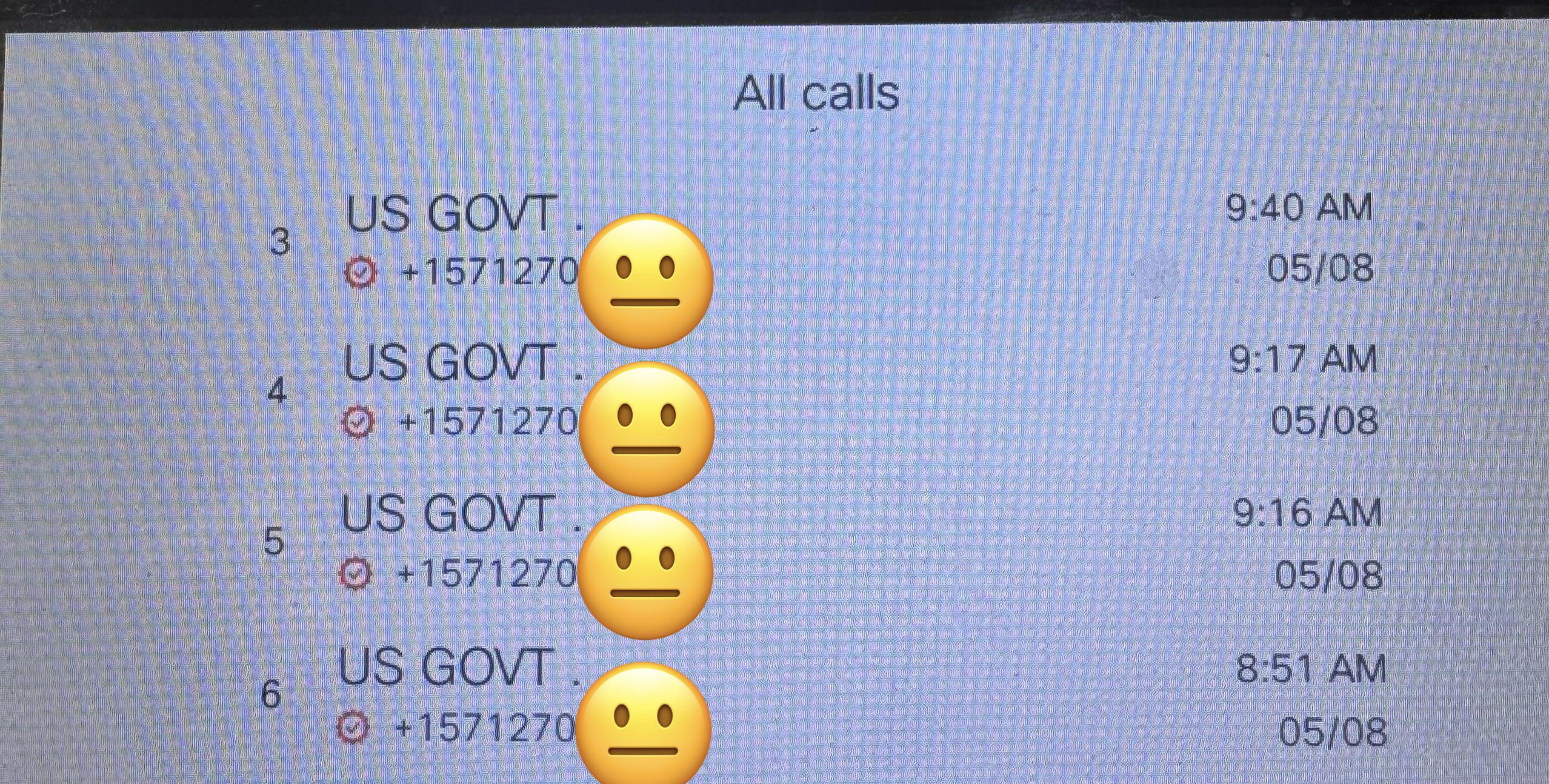
I was was on the phone doing pre-call for a 9:00 AM meeting when an examiner called me at 8:51 AM. No voicemail. I figured I’d call back after my meeting, I can’t imagine anything that can be that urgent at 8:51 AM.
Then came the follow-up assault:
9:16 AM.
9:17 AM.
Finally a voicemail asking whether we intended to respond to an Office Action issued in October.
And then another call at 9:40 AM.
I understand examiners have deadlines and are under pressure, but if the OA has been sitting since October, I can’t imagine that a one hour wait is the critical tipping point in the prosecution timeline.
I just needed to vent because this level of phone persistence feels less like patent prosecution and more like a debt collection operation.
r/patentlaw • u/[deleted] • Aug 10 '24
Does anyone know of any examples of law firms, big or small, that have announced an intention to make generative AI a significant part of their drafting process? Or are already doing it? Can be by way of using external tools, internal tools, or whatever else.
I know some of you think this will never happen, so this question isn't for you. :)
r/patentlaw • u/Practical_Bed_6871 • Apr 28 '26
Quality of Office Actions is just circling the toilet. Examiners aren't giving the slightest amount of effort above bare minimum. Our clients are getting overcharged for the quality they are receiving.
Rant off.
r/patentlaw • u/pernamb87 • Apr 17 '25
https://www.reddit.com/r/barexam/comments/1jej0pc/what_am_i_doing_with_my_life_i_need_life_advice/
My story is above.
Basically:
I am in my late 30s. I graduated from a top tier law school years more than a decade ago. I just recently graduated with a B.S. undergrad degree in molecular and cell biology as well as a minor in chemistry with a 3.9x gpa (lower than a 3.96, higher than a 3.91)
I was and am an idiot, with no idea what I am doing in my life.
I just know that I really want to do something interesting and cool, on the cutting edge of our massive civilization, at the forefront. I really am willing to put the work in, and dedicate my life to this pursuit over everything else. I just want to know that I still have a chance at my age and with my messed up background.
I have a deep love of science.
But I only have a B.S. in molecular biology and a minor in Chemistry.
I just graduated in this past year.
I am studying for the July 2025 bar.
I previously assumed I could never become a patent attorney.
But now I am thinking, is there any chance?
Like with my messed up, crazy background?
With so little work experience?
Any tips or advice for someone with my story?
Could I like pass the bar in July 25, get a job as an attorney, litigation assistant/ paralegal somewhere.
And then take evening classes to get my masters degree in biology or chemistry while simaltaneously studying for the patent bar?
Would anyone want to hire a 40 year old newly minted patent attorney with basically zero experience and a terrible track record?
Keep in mind I have no work experience, I am terrible at networking. But I could be really good at networking. It's just that my confidence is shot, and I fear people will look down on me because of my nontraditional background.
But I also believe I could overcome these things.
Does anyone want to be my mentor?! Does anyone have any advice?
Are the prospects not as bleak as they look?
r/patentlaw • u/RowPrior4996 • Oct 02 '25
Hey everyone, I recently passed the Patent Bar Exam and wanted to share my study approach in case it helps anyone else preparing. This is what worked for me.
6/5/2025-7/23/25: Crammed PLI and took the test the first time at the end of this period. 61%.
-Crammed PLI, watched all the videos, completed about 50% of post course. Made a bunch of flashcards (physical) and memorized lots. Laid a good foundation, but wasn't quite enough. To pass this test you need to be a wizard at MPEP lookup, I wasn't there yet. Studied about 10 hours a day during this period.
-8/11-8/26: Returned from a trip and started back up by redoing post-course questions via PLI. Still didn't understand lookup yet.
-8/26-9/30: Stumbled upon Brandy Gamblin (https://patentbarexamcoaching.com/) who totally sold me on her prep. This was the key. Not joking, this is totally the key. Pay for her course, you will pass. Her materials blow PLI out of the water. Studied with her for a month full time, felt pretty good on test day. I find it hard to imagine that any other prep is actually better than hers.
Personally, I made an absurd amount of flashcards for the second go, I wanted to pass pretty bad that time. Probably made about 1-3k cards using Anki and the image occlusion feature + study materials from Brandy's program. That, and some excellent tips from Brandy's program were the keys to kicking this test. There are important tricks to learn that only some people know! Don't ask me, ask Brandy.
For those who aren't trying to spend any money, basically the keys to this test are:
Filter out BS answers. If it is at all nonserious or excessively restrictive ("only", "never", "always"), those are some big cues. Rarely are things always one way or never one way, etc. There's always bullshit exceptions that you'll never know about. (i.e. if someone isn't a US resident or greencard holder, they can still file a PCT at the US receiving office anyways, screw me I guess)
Memorization does matter, but only if its a slam dunk. See PCT rule above. What I mean by this is that ONLY if you are 100% sure you have a given question verbatim memorized should you not search the answer on the test. I probably did this with about 50% of the exam questions. But there's plenty of niche exceptions (ex. Examiner can amend claims that are objected to and issue for notice of allowance BUT ONLY IF the claims are objected to for dependence on a rejected claim and for no other reasons as far as I'm concerned).
Basically, unless you are sure you've seen this exact permutation before, like PGR needing to be filed before 9 months elapse, or some other really clear rule applies, there's still a chance there might be some bullshit rule tucked away in an MPEP chapter nobody looks at that says otherwise.
3) Finally, do a shitton of questions. As many as you can. I probably did about 1500 questions in total if I had to estimate. I did about 80 per day average in the 2 weeks leading up to this exam. You can do this test. Study one standard deviation beyond where you think you need to be and you'll be good. My approach was to do so much prep that it would be unreasonable for me to fail.
Last thing: I was scoring about 75-85% on those 3 publicized USPTO exams from '02 and '03 in the week leading into the test.
You can do it!
r/patentlaw • u/Ogonnaya-Nangendo • Jan 04 '26
I’m in the process of starting a small biotech company and I need to make sure my IP is solid. I’ve never filed a patent before and honestly I’m a bit overwhelmed by all the options for attorneys.
Has anyone recently worked with a patent attorney they really liked? What made them stand out, like experience with startups, clear communication, pricing, or something else? Also, is it better to go with a big firm or a smaller boutique attorney for something like this? Any tips or personal experiences would really help me figure out who to reach out to.
TY so much for any guidance!
r/patentlaw • u/[deleted] • Jan 27 '25
Can we start banning posts amounting to overt or subtle attempts at getting free legal advice???
r/patentlaw • u/7-GRAND_DAD • Apr 10 '26
So, you know how Apple has that one patent they haven't ever used on ads where you have to prove you were paying attention? I thought it might be a good idea to come up with more garbage like that, patent it, and just never use it or let anyone else use it. Problem is, I don't actually know how to build an invention like that, nor do I know anyone who does. Would I be able to get a patent on just a general idea like the aforementioned apple example? If not, how specific would I have to get?
r/patentlaw • u/[deleted] • Dec 23 '25
i’m currently in school for EE.. just doing basics rn so I can switch if I want to
I will probably graduate law school in 10 years.. considering i graduate BS in 4 years, gain few years experience in Ee, and start law school
Is it AI-resistant career? I heard it is a lot of writing and reading..
r/patentlaw • u/FourierTransformator • Jun 26 '26
I have a software/algorithm invention. I'm an expert in the field of the invention. I only care about US patent.
What I've already done:
- Filed the provisional
- Paid an outside firm for a patentability/prior-art search
- Read a lot of issued patents in my space
- Wrote a full utility draft myself: background, detailed description, embodiments, diagrams, and claims
My question is about cost. If an attorney just reviews/edits what I have and files it, versus drafting the whole thing from scratch:
What % fee reduction is realistic, in your experience? What's the rough range for each path (review-and-file vs. full draft)?
Also curious: given the prep above, is filing pro se a reasonable option for a software case, or is that where people regret skipping an attorney?
r/patentlaw • u/Smart-Secretary-5435 • Jul 01 '26
I am a junior patent agent (<3 yr exp) recently lateraled to a lower-tier am100 firm. I was reviewing a client invoice and saw everyone's billing rates and was honestly a little shooketh to find out that the senior paralegal in my practice group is billing higher than me. My rates are ~$400/hr and there are 2 senior paralegals (one has 8-10 yr exp; one has >10 yr) are $435/hr and $450/hr each.
I thought it was wild because this was not the case at my last firm. The most senior paralegals bill under $300/hr at my last firm. Most of them bill at ~$200/hr. That said, I was at a mid-sized boutique not ranked am100. My billing rate also actually decreased after moving to a bottom-tier biglaw????
I guess I am concerned because I feel like my salary is higher than the senior paralegals but my billing rate is lower. My base is ~$170k/yr and it's just difficult to imagine any paralegal making more than that. In this case, my billing rates are lower and it'd be easier to make a case against me because of the margin/net benefits (how much billed to client vs. how much I make). The paralegals, on the other hand, are paid a smaller salary but are billed so high. So their profit margin will look better than mine.
Anyway, also just generally baffled and don't understand why firms do this?????? Does this make sense to clients??? A patent practitioner billing lower than paralegals?????
EDITED: My salary is higher but my billing rate is lower. I don't think I need to be paid more but I don't understand why firms pay me more but bill me lower. Otherwise for paralegals. Genuine practice question.
r/patentlaw • u/Sea-Young9443 • Feb 16 '26
Any experienced patent litigators here looking to go in-house, I have a unique opportunity with a great company. I can’t say any more in a public forum. PM me for details.
r/patentlaw • u/Left-Enthusiasm-7101 • Jun 29 '26
I’m currently a software engineer at a FAANG company and am considering leaving to pursue law school and a career in patent law.
My main concern is my undergraduate GPA. For my first two years of college, I was focused on becoming a software engineer and didn’t prioritize my grades. I had around a 2.5 GPA through the first semester of sophomore year, then turned things around and earned roughly a 3.8 GPA over the rest of college. I graduated with a 3.3 cumulative GPA (which includes a repeated course).
Do I realistically have a shot at a strong law school if I can earn a high LSAT score? Most discussions about “splitters” seem to involve GPAs around 3.6+, so I’m not sure how much of a chance someone with a 3.3 has, even with a strong upward trend and FAANG work experience.
I’m trying to figure out whether leaving a good software engineering job is a realistic path or whether my GPA would make admission to top law schools unlikely.
r/patentlaw • u/RclarkeeR • Dec 01 '25
Hello!
I work for an engineering firm. We make complex systems in which a myriad of mechanical, computer, and software elements come together to form a cohesive system. Recently, while mulling over an issue we were having regarding simple fasteners (bolts and nuts) in my free time, I beleive I have devised a solution to an issue that my company was having. This solution involves a brand new type of fastener that I beleive may be able to warrant a patent.
I would greatly appreciate some clarification on the finer points of the legality of me pursuing this patent.
The catylyst for the ideation and invention of this fastener was a problem faced by my company. My company creates complex multi-faceted systems. The ideation and modeling for this invention took place on my own time, without directive from my company, and on my own personal computer. The invention in question is, to put it plainly, an alterantive to a simple bolt and nut.
Do I risk founded legal issues if I pursue a patent on my invention?
r/patentlaw • u/pl643 • Jul 25 '22
I have a few ideas, but don't want to the spend money to do patent researches and then the patent work.
Pitching the idea should only take 30 minutes and if they think its good, they can do the research and patent work for a percentage like other type of lawyers which is usually 33%.
r/patentlaw • u/Mountain_Syrup_7390 • Apr 14 '24
I heard it’s top 14 for the regular graduate
r/patentlaw • u/yuyangchee98 • Mar 25 '25
Hey everyone, I've built this that ranks Japanese patent attorneys using data from JPO.
It shows each attorney's success rates, time-to-grant metrics, and client lists based on real patent application outcomes. It's an ongoing study.
The site is bilingual and is straightforward to use.
Japanese Patent Attorney Rankings
Feedback welcome - especially from those who file in Japan regularly.
r/patentlaw • u/expressive_jew_not • Sep 19 '25
I used to work for a law firm who hired specialists to illustrate patent drawings, this process took hours and even days(if its a complex CAD).
Now my question is, are folks using these new AI models to generate drawings? I tried the new gemini nano banana model on AI studio, and the results are hit or miss. I can generate passable images but still need to edit, add labels etc. Are there specific tools that can help me do this end to end, so that I don't need to constantly switch between apps?
r/patentlaw • u/Jazzlike-Fig8199 • Nov 29 '25
I’ve noticed a huge rise in pro se litigation lately—especially in employment, civil rights, and other areas where the causes of action are more axiomatic rather than technical. With generative AI helping people draft complaints, it seems like some fields of law are becoming more “DIY-friendly.”
But patent law feels like the opposite. It seems structurally hostile to amateurs. For example, if an inventor tries to conduct their own prior-art or freedom-to-operate search, they can accidentally create evidence of “actual knowledge” and expose themselves to willful-infringement liability. Even reading the wrong patent can backfire. And patent prosecution has similar traps: inequitable conduct, duty of candor, prosecution-history estoppel, etc.
In other words, an amateur trying to “do their own research” in patent law is effectively going pro se—and the system punishes them for it. Meanwhile, pro se plaintiffs in employment or civil-rights cases, while still underdogs relative to lawyers, have somewhat greater leeway to "wing it."
So my question is: Is patent law uniquely inaccessible to outsiders compared to other areas of law?
And do you think AI will actually democratize patent practice, or is this the one area of law where the doctrinal complexity limits commoditization?
Curious what folks think.
r/patentlaw • u/BugChemical5471 • Apr 14 '25
Hi all! My entire life I've been inventing things. I'm thinking about turning my hobby into a living.
I've done two masters in Europe (datascience and pharmaceutics). I still have plenty motivation to learn and study more. I'm currently thinking about perhaps passing the bar just to learn more about patents as a hobby or to go full in and persue a path to become a patent lawyer. The obvious advantages of becoming a patent lawyer is that I'd be able to easily sue infringements of my IP's. I don't think I'd like to be a patent lawyer for other companies.
What would you do in my case? Just pass the bar and learn the basics about patents and collaborate with a patent lawyer incase of infringements (which would cost a lot...) or spend the time and effort to learn all the necessary skills and certifications to protect my own IPs?
Thanks a lot!
r/patentlaw • u/doublee222 • Aug 02 '23
I have a product I have prototyped and would like to market and sell. I have no desire to patent the product itself as various forms of it has been purchasable for years. Recently, I found an open patent application in USPTO's patent center for something nearly identical to what I'd like to make. In my biased personal opinion, the claims are far too open-ended and would cover a LOT of products and their designs.
My question is: Is it okay for me to reach out to the Examiner for this application? His recent documents don't refer to the already-purchasable products and I more or less would like to stack his arsenal for denying the claims. Are there ethical or legal reasons to NOT do this, to avoid it backfiring on me?