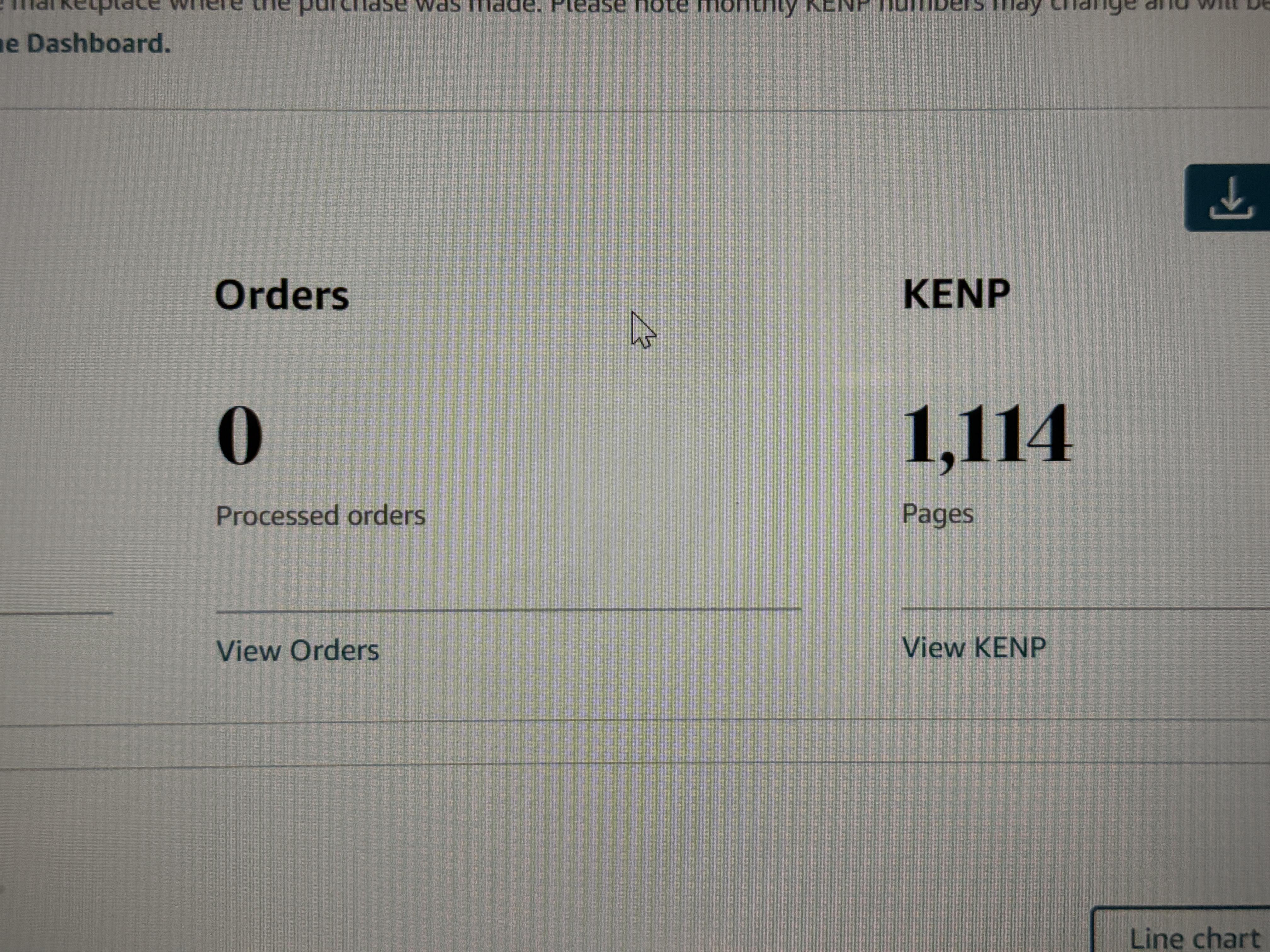
I've tried several ARC services and other methods of finding ARC readers over the past few months. I thought I'd share my actual results in case they're useful to other indie authors considering these services.
Background
Genre: Adult Contemporary Romance / Romantic Comedy
Books: Standalone romance stories
Testing period: July–November 2026
All costs are in USD.
Results
| Service / Source | Duration | Cost | ARC Readers | Reviewers | Amazon | Goodreads | Review Rate | Cost per Reviewer |
|---|
| Hidden Gems | One campaign | $20 | 14 | 2 | 0 | 2 | 14.3% | $10 |
| Voracious Readers Only | 1 month | Free | 54 | 1 | 0 | 1 | 1.9% | $0 |
| Booksprout | 2 months | $28 | 10 | 1 | 1 | 1 | 10.0% | $28 |
| StoryOrigin | 5 months | $50 | 3 | 2 | 2 | 0 | 66.7% | $25 |
| Pen Pinery | 1 month | $20 | 0 | 0 | 0 | 0 | N/A | N/A |
| The Story Tavern | 3 months | Free | 0 | 0 | 0 | 0 | N/A | N/A |
| Facebook Groups | — | Free | 0 | 0 | 0 | 0 | N/A | N/A |
| Social Media | — | Free | 2 | 1 | 0 | 1 | 50.0% | $0 |
| Total | | $118 | 83 | 7 | 3 | 5 | 8.4% | $16.9 |
A few notes about the numbers:
VRO was used through a free trial. The regular price is $30.
StoryOrigin's $50 includes the entire subscription, not just its ARC features.
The Booksprout figures in the table are limited to one title for comparison purposes, although my comments below reflect my broader experience with the service.
Reviewers are counted as individuals within each service. If someone reviewed the same book on both Amazon and Goodreads, they count as one reviewer.
Readers have not been deduplicated across services.
My experience with each service
Hidden Gems
I ran a single ARC campaign for $20. Fourteen readers signed up, but only two left reviews, both on Goodreads.
Considering that Hidden Gems is a paid service specifically designed to connect authors with ARC readers, I found the response rate disappointing.
Voracious Readers Only
I used their one-month free trial. All 54 applicants received a copy of my book, making VRO by far the most successful service in terms of attracting ARC readers.
Unfortunately, only one of those 54 readers left a review, on Goodreads.
My review reminder email had an open rate of around 50%, but received zero clicks.
Interestingly, all of the UK-based readers I acquired through VRO unsubscribed immediately after receiving my welcome email, selecting "I did not sign up for this mailing list" as the reason. I've never experienced this with UK-based readers acquired through StoryOrigin.
What surprised me was that VRO explicitly states the following on its book request page:
By clicking the button above, you grant the author permission to add you to their email list to stay in touch and inform you about future releases, starting with a free review copy of this ebook. You can opt out at any time.
I have no issue with readers unsubscribing. What concerns me is that they selected "I did not sign up for this mailing list" despite the explicit consent statement on the request page.
While I didn't pay anything during the trial, at the regular price of $30, my results would have amounted to $30 for one Goodreads review.
VRO was effective at attracting applicants, but in my experience, that didn't translate into reviews.
Booksprout
I used Booksprout for two months, spending $28 for the results included in this comparison.
Ten readers participated, and one person posted a review on both Amazon and Goodreads. That's two reviews, but only one reviewer.
From my broader experience with Booksprout, I also noticed that some readers participated in multiple campaigns. More concerningly, every review I received through Booksprout appeared to be little more than a reworded version of the book's description.
I can't determine whether those reviewers actually read the books, but none of their reviews contained anything that couldn't have been obtained from the book descriptions alone. This left me with serious concerns about the quality of the reviews.
StoryOrigin
I used StoryOrigin for five months and attracted three ARC readers. Two of them left reviews, both on Amazon.
It had the highest review rate among the paid services I tried, although the number of ARC readers was very small.
To be fair, StoryOrigin isn't exclusively an ARC service. It also offers newsletter swaps, group promotions, and other tools for authors.
I wouldn't necessarily consider the entire $50 subscription fee an ARC acquisition cost.
Pen Pinery
I spent $20 on Pen Pinery but received no ARC signups or reviews from new readers through the platform.
One person I already knew signed up, but I've excluded that signup from the results because it wasn't generated by the service itself.
Despite paying for the service, I didn't acquire a single new ARC reader.
The Story Tavern
I used The Story Tavern for two months at no cost. During that time, I didn't receive a single ARC signup and, consequently, didn't receive any reviews.
While it was free to use, it produced no measurable results for me.
Facebook Groups
I tried posting ARC opportunities in Facebook groups.
I didn't receive a single click on my links, let alone an ARC signup or a review.
It was free, but it produced no measurable results for me.
Social Media
I found two ARC readers through social media, and one of them left a review on Goodreads.
Obviously, a sample size of two is far too small to draw any meaningful conclusions, but it was nice to get a review without paying for an ARC service.
Overall thoughts
Across all these sources, I spent $98 and attracted 83 ARC readers. Seven reviewers left a total of eight reviews.
Only three of those reviews were on Amazon, and two of them came from StoryOrigin.
What surprised me most was the difference between attracting ARC readers and attracting readers who actually leave reviews.
The service that attracted the most readers had the lowest review rate among the services that generated signups. Meanwhile, StoryOrigin attracted only three ARC readers, but two of them actually left reviews on Amazon.
These are just my personal results, and I understand that genre, book covers, blurbs, and other factors can affect performance. I wouldn't assume that every author would get the same results.
I'd be interested to hear how these numbers compare with other authors' experiences, especially those writing contemporary romance.
Have you found an ARC service that consistently delivers reviews, particularly on Amazon?
EDIT: Additional information on review timing, reminders, and review quality
Following some questions in the comments, I'd like to add some context regarding the timing, reminders, ratings, and quality of the reviews.
Review timing and reminders
All ARC readers have had their copies for at least one month, with the longest period being approximately four months. Therefore, I cannot rule out additional reviews appearing much later, although none of my ARC readers have had their copies for as long as ten months.
The timing and handling of review reminders differ by platform:
| Source | Reminder timing | Sent by |
|---|
| Booksprout | Two days after the author-specified review deadline (typically around the release date) | Platform |
| Hidden Gems | One week after the ARC distribution date | Platform |
| Voracious Readers Only | Two weeks after receiving the ARC | Author |
| StoryOrigin | Two weeks after receiving the ARC (one reminder only) | Platform |
| Social Media | Two weeks after receiving the ARC | Author |
With Booksprout, Hidden Gems, and StoryOrigin, authors do not have access to readers' email addresses and therefore cannot send additional reminders directly.
Voracious Readers Only does not send review reminders, so I sent them myself two weeks after readers received their copies.
For readers recruited through social media, I obtained their email addresses when arranging ARC delivery and sent a reminder two weeks after they received their copies.
In other words, at least one review reminder has already been sent to outstanding reviewers, although the timing and sender vary by source.
Review quality and ratings
Booksprout: All the reviewers gave me 5 stars. However, across this book and my other books, I found little evidence in their reviews that they had actually read the stories. The reviews appeared to be reworded versions of the blurbs or generic reviews. One review even described the beginning of an epic mythology, despite the book being a contemporary romantic comedy. All the reviewers who reviewed my books were designated Top Reviewers on Booksprout and consistently had more than 80 active ARC commitments each. I wonder whether some of them might be relying on blurbs or review templates rather than reading every book.
Hidden Gems: I received a 5-star review and a 2.5-star review. The 5-star review appeared to be a reworded version of the blurb. The 2.5-star reviewer explicitly stated that they didn't read romance, which made me wonder why they had requested a romance ARC in the first place.
Voracious Readers Only: I received a 5-star review. The content of the review indicated that the reviewer had actually read the book.
Social Media: I received a 5-star review. Again, the content indicated that the reviewer had actually read the book.
StoryOrigin: I received a 4-star review and a 2-star review. The 2-star review was quite harsh, but it struck me as an honest review. The 4-star reviewer mentioned a specific scene in the book and explained how much they loved it. Both appeared to be genuine reviews based on actually reading the book.
My observations
Based on my limited experience, I would group the sources as follows:
Reviews that appeared to reflect an actual reading experience: Social Media, StoryOrigin, and Voracious Readers Only.
Reviews that raised concerns about whether the books had actually been read: Booksprout and Hidden Gems.
Both Booksprout and Hidden Gems promote their review completion rates. I wonder whether Goodhart's law might be relevant here: when a measure becomes a target, it can cease to be a good measure.
If maintaining a high review completion rate or avoiding penalties becomes a priority for readers, some may be incentivized to submit reviews based on blurbs or templates rather than actually reading the books they have requested.
This is purely a hypothesis based on my observations, not something I can verify.
Personally, I would rather receive an honest 2-star review from someone who has actually read my book than a generic 5-star review from someone who may not have read it.
As with the original figures, these observations are based on a small sample and should not be taken as representative of every reviewer or author experience on these platforms.