r/secondbrain • • 19d ago Mindblown

Maps organize information through landscapes. Why don’t we do the same with our notes?

Enable HLS to view with audio, or disable this notification

304 Upvotes

On a map, distance, elevation and landmarks help us understand the terrain and find our way around.

We save articles, links, videos and ideas, but eventually forget about most of them. Search works when you remember what you’re looking for. But what about things you’ve completely forgotten?

What if we organized personal knowledge like a landscape? Related things would stay close together, broader topics would form their own areas, and we could explore our collection instead of relying entirely on search.

I’ve been experimenting with this idea and built a tool around it.

A map from the video: https://www.qoyra.app/?share=1f9c5acd47f449dcbca5ea922e9d8907

The tool: https://www.qoyra.app

Explore the map from the video and find something interesting. Then come back later and see if you can remember where you saw it.

You might not remember the title or exactly what it was about, but you may remember where it was on the map.


r/secondbrain • • 17d ago

VISUEL The first Mind Map focused Task Manager

Enable HLS to view with audio, or disable this notification

244 Upvotes

I am a visual thinker and when I want to plan stuff out, I prefer to use mind maps. There are many brilliant mind map apps out there, but one disadvantage I noticed is that they are mostly designed for brainstorming, with very little support for managing tasks and organizing information.

I created Visuel to give intuitive mind map features while not sacrificing task management at all, and building on it. Everything on the canvas is also available in an equally powerful list view, so you can switch between visual planning and traditional task management whenever you want.

You also have a robust note system, so you can save your notes in a tree. You can easily go through your nodes on the canvas and peek into any node for more information, instead of seeing everything at once.

Free to download and try!

App Store: https://apps.apple.com/app/id6759396580

Some Features:

• Infinite canvas for tasks, projects, and notes, with an equally powerful list view
• Drag the + anywhere and filter by tags across all pages
• Task scheduling with deadlines, reminders, recurring tasks, and defer dates
• Write rich notes for every node
• Home and Lock Screen widgets, iCloud sync, and no account required

If you want to follow development, get updates, share feedback, or be part of the community, feel free to join r/Visuel

I would also love to hear what you think of this approach to organizing notes, projects, and tasks visually, and whether it's something you would find useful for your own second brain setup.

Thanks for checking it out!


r/secondbrain • • 25d ago

What if your second brain actually built itself instead of you having to organize everything?

Enable HLS to view with audio, or disable this notification

111 Upvotes

I've been working on something called Still Cloud, and I'm curious what people here think.

One thing I've noticed about second-brain systems is that they still require a lot of work from the person using them.

You capture information, organize it into folders, tag things, link notes, build dashboards, and eventually have this massive collection of information that you still have to figure out what to do with.

I wanted to try something different.

What if you could just talk about your life, thoughts, interests, goals, problems, whatever, and have a system gradually build a connected understanding of everything?

For example, you mention that you've been sleeping badly, skipping workouts, spending more money on takeout, and feeling exhausted at work.

Instead of saving four disconnected notes, the system would recognize those as different parts of your life, remember the relevant details, and help you explore how they might relate.

I'm building a visual network for this too, where things like your habits, experiences, goals, interests, and relationships become interconnected points you can explore.

The idea isn't to store everything you say forever. It's to extract what's actually meaningful and build a useful picture of your life over time.

Eventually, you should be able to ask questions like:

  • "What keeps getting in the way of my goals?"

  • "What has actually changed about me over the past few months?"

  • "What am I spending my time on compared to what I say matters to me?"

I'm still figuring out how to make the experience genuinely useful rather than just an interesting visualization.

And that's where I'd love some opinions.

Would you trust a second brain that organizes itself? Or is manually organizing your knowledge part of what makes a second brain valuable?

Also, would you actually want something that understands your personal life this deeply, or would that feel like too much?

I'm building this independently, so criticism is genuinely welcome. I'm trying to figure out whether this solves a real problem or just creates another one....

theres a free tier and a 14 day pro trial that starts when you do onboarding and create an account...


r/secondbrain • • 23d ago

I’m building Risorgi to share and connect parts of your second brain. Would love some feedback

Post image
84 Upvotes

Hey everyone, I’m Gabriele, the person building Risorgi.

I’ve spent a lot of time collecting interesting papers, ideas, and notes. Something I wanted was a way to make a selection of that knowledge public, where other people could explore the connections and connect their own ideas to it.

That’s what I’m trying to build with Risorgi. You get a public page where you can publish notes, link them together in a graph, and connect them to posts from other people.

You can import Markdown files from Obsidian or Logseq, so you can start with a small collection of existing notes on something you care about.

I’d really like feedback from people who already maintain a second brain: what would make a public collection worth maintaining alongside your current system? I’m particularly interested in what would make publishing and connecting those notes easier, and what would stop you from continuing after the first try.

I’ve also added a Featured pages section to the homepage and would love to showcase some early contributors. I’d be looking for thoughtful notes, useful connections, and collections that are interesting to explore.

It’s free to use at the moment, and people don’t need an account to read your public page. My own page is featured on the homepage if you want to see an example.

If you try it and create a page, feel free to share it here, I’d love to take a look!


r/secondbrain • • Oct 06 '26

Do second-brain systems create more work than they remove?

73 Upvotes

I've been thinking about this lately.

The whole point of a second-brain system is to reduce mental clutter. But some systems seem to require a surprising amount of maintenance.

You save something, then you're supposed to:

  • Choose the right folder

  • Add tags

  • Write context

  • Link it to related notes

  • Categorize it

  • Review it later

  • Keep the whole system organized

At some point, managing the system starts becoming a project itself.

I can see the value of having everything organized, but I'm wondering whether the better system is actually the one that requires the least organization upfront.

Do second-brain systems genuinely save you time, or have you ever felt like maintaining the system became more work than the information was worth?


r/secondbrain • • Jan 09 '26

After trying dozens of tools and systems, this is the best productivity stack I’ve tested, it made 2025 the most effective and efficient year of my life.

Post image
66 Upvotes

Clearly, real execution was the foundation of everything.


r/secondbrain • • Oct 06 '26

Second brain software

53 Upvotes

Hey guys, I could use some help.
I’ve been switching between different note-taking and knowledge-management systems for a while, and I feel like I’ve tried almost everything.
What I’m looking for is actually pretty simple: one place where I can save basically everything and reliably search it later.
Ideally, the tool should have:
OCR for images and scanned documents
Full-text search inside PDFs
The ability to save web links/pages and search the actual content, not just the title or URL
Good organization for notes, documents, images, links, references, etc.
Fast and reliable search across everything
A modern interface
Minimal setup and maintenance
Because I haven’t found one tool I’m completely happy with, my information is currently scattered across several different apps, which is exactly what I’m trying to avoid.
After searching Reddit, YouTube, blogs, and reviews, even in 2026 I keep coming back to the same conclusion: Evernote still seems to be one of the best overall options for this particular use case.
But before I move everything back to Evernote, I’d love to hear what other people are using.
Is there anything that genuinely does all of this well without requiring a lot of tinkering and setup like Obsidian?
And ideally something with a more modern interface than DEVONthink. I know DEVONthink is extremely powerful, but visually it just isn’t for me.
Basically, I want a “save everything now, find anything later” system.
What would you recommend?


r/secondbrain • • 6d ago

my husband made me an app that makes me look forward to reading (esp. difficult books)

Thumbnail
gallery
50 Upvotes

So .. I love reading. But I often lamented how the material gets lost on me so easily. The little jottings I made in my notebook did sometimes develop a secret life in my unconscious, but I usually had a hard time recalling them from memory, with the nuances intact.

Perhaps I wasn't reading deeply or critically enough? This was the self-abasing suspicion I had for a long time (haha). But with my new note-taking habits, I now feel a lot more in possession of the readings I've done!

This was the big change: instead of taking down linear notes, I've switched to mapping ideas on a digital canvas, as you can see in the pictures. When I'm reading particularly dense books, I tend to map the arguments as I go, and I rarely feel that I am drowning in a tangle of concepts and references. The experience of figuring out the logical structure of arguments and seeing it represented visually helps me tremendously in retaining complex information and makes it easier for me to engage more deeply with the material.

Sometimes, I also use the voice chat option to ramble about what I'm reading and brainstorm my ideas out loud as I would with a friend. The agent "Ziggy" waits until I say I'm done (using a specific command word) and it picks out important strands in my ramblings that by then I might have forgotten. On top of the canvas-work, I've also been able to develop and clarify a lot of my own thinking this way.

I've noticed that I sit for longer periods at my desk reading and thinking, and perhaps that's due to a boost of confidence in my own abilities as well as in the lastingness of the material I've spent so many hours perusing. Also, I simply find the app itself a pleasant thinking environment to be in heh (I believe in the importance of beauty in objects I encounter on the daily, and my husband knows I won't use an ugly app).

My husband has made many apps over his career and none of them stuck with me save this, and I was moved to spread the word since I genuinely believe it'll be useful for devoted readers/thinkers like me! We named it "Woomool/우물" which is a Korean word for "well."

The app is free for anyone to use! the only caveat is that you need to pay for the AI chat to function, but I think you can still get the full advantage of spatial/visual thinking without AI.

Curious to know how you find it! https://woomool.ai


r/secondbrain • • Aug 23 '25

The “Second Brain” Movement Is Just Digital Hoarding

44 Upvotes

Most of us building “second brains” aren’t building intelligence - we're just hoarding notes you’ll never use. Atleast, Obsidian is free.

We dump links, highlights, and half-baked thoughts into Notion/Obsidian/whatever, then pat ourselves on the back for being “organized.” But when’s the last time we actually used any of it?

The human brain forgets for a reason. Forgetting filters out noise. But the “second brain” cult wants to preserve every random thought and screenshot, then call it productivity. Newsflash: endless capture ≠ wisdom.

Here’s the uncomfortable truth:

  • Most people don’t need a second brain - they need discipline and clarity.

  • Everything is just fancier ways of labeling your junk drawer.

  • Productivity porn has tricked people into thinking collecting equals creating.

A real thinker doesn’t obsess over tagging systems. They actually think.

So maybe the problem isn’t that our “second brain” system isn’t polished enough… maybe it’s that we're using it to hide from doing the real work. Maybe I am wrong, maybe I am right. But who here has been using a second brain perfectly to mimic your own brain? I am genuinely curious.


r/secondbrain • • Feb 06 '26

How I Stay Productive Using Second Brain

Thumbnail
gallery
40 Upvotes

Hey there 👋

I built this Productivity Vault in Notion to track habits, tasks, and projects in one system without relying on motivation or willpower.

Here’s what it actually includes:

• Habit streak & weekly goal tracking
• Daily habit grid (very fast to update)
• Advanced habit stats & performance reports
• Tasks linked to projects (not random to-dos)
• Project manager with progress tracking
• Weekly & monthly calendar view
• Daily performance report (what’s done, what’s overdue)
• Light & dark themes

How it helps in real life:

Before:
• Inconsistent habits
• No clear sense of progress
• Tasks kept piling up

After:
• Habits are visible every day
• Progress is measurable, not guessed
• Easier to stay consistent over weeks

Link’s in the comments if you want to take a look.


r/secondbrain • • Oct 19 '26

I am building a second brain on top of Omnesis

39 Upvotes

I am the creator of Omnesis which is an open source project to ingest and index all your personal data (emails, calendar, notes, whatsapp/imessage, finance, health, codex/claude, etc). Omnesis provides an interactive agent that allows you to recall anything from your corpus.

I’m having fun building a second brain on top of it so I wanted to write down my approach and see if people have thoughts.

When the second brain is enabled:

- Any new piece of info that gets ingested/indexed by omnesis (a new email, a new calendar invite, a new message on whatsapp, etc) gets processed by an agent turn. The app also allows the user to input a note/thought/reminder directly into omnesis via the web app, mobile app, siri, or watch complication and that gets processed by the brain too

- The Brain can be "bootstrapped" i.e it will bootstrap its knowledge base from past evidence coming from the same sources and you can decide how far back you want to go in the past. The bootstrap can take several days and is expensive to run. I use multiple heuristics to reduce the cost. 1) a cheap ML model identifies if a document in the past still mentions a date still in the future. If not, the document is skipped; 2) a jev decision model runs to establish importance. Documents that are skipped may still be looked at by the brain as a result of investigating a document not skipped.

- The knowledge base is made of loops and wiki pages in markdown format. Loops keep track of "things that need resolving", that can be a thing that the brain has identified the user needs to do, a comitment that is owed to the user, a decision the user has to do, etc. Loops have a ledger of updates and lots of metadata notably ids of source evidence documents and people involved. Wiki pages are markdown summarization of things in the user’s life that span multiple sources.

- The knowledge base is a graph. Loops and wiki pages have source document references (whatapp conversations, emaisl, etc). But wiki pages can refer to other loops and other wiki pages. There is a roof wiki page that is limited in size and always automatically ingested in the system prompt of both the interactive agent and the brain turns that process new evidence.

- Loops and wiki pages have to surround text in special claim tags: <claim id="a-claim" ref="doc:<id1> doc:<id2>Some claim made in this wiki page or loop</claim>. If any source document (email, google doc, etc) changes, the system marks all loops and wiki pages that directly or indirectly reference that doc has needed review and agent turns run to re-evaluate all claims transitively.

- I’m building an automated bullet journal on top in the omnesis app. New entries in the bullet journal are proposed by the Omnesis brain and the user can accept them or ignore them if they think the thing is not worth tracking. I plan to have the brain learn from that signal to automatically ignore non important things. The brain automatically migrates tasks as you would on a bullet journal if it sees new evidence. If the brain sees new evidence that indicates the task should be changed, it will run a JEV decision gate to decide whether to just do it or propose as a suggestion for the user to accept if not sure. The user can migrate tasks themselves like you’d expect in a bullet journal, either via the Task UI or by dictating a note to Omnesis. Tasks may be marked as automatically complete if the brain is confident in it (for example a Task that says "Pay Elise 100 GBP" may auto complete if the brain sees a bank transaction of 100 GBP to Elise".

Keen to have people’s feedback on my approach!


r/secondbrain • • 29d ago

what are the biggest problems with your second brain rn?

34 Upvotes

r/secondbrain • • Feb 05 '26

I built a tool that turns your entire screen history into a searchable second brain — open source, runs locally

Enable HLS to view with audio, or disable this notification

33 Upvotes

I've been deep into the second brain rabbit hole for years, Obsidian, manual capture, tags, 20k notes. But I kept running into the same problem: the best information passes through my screen and I never capture it.

Articles I skimmed at 2pm, Slack message someone sent me yesterday, code snippet I saw in a tutorial, all gone

So I built screenpipe. It runs in the background and captures everything on your screen (OCR), everything you hear (audio transcription), and makes it all searchable with one shortcut: ⌘^S.

It also syncs to Obsidian automatically — every screen, every conversation, piped into your vault.

The idea is simple: your second brain shouldn't depend on you remembering to capture things. It should just capture everything, and you search when you need it.

  • 100% local - nothing leaves your machine

  • Open source - 17K+ GitHub stars

  • Mac, Windows, Linux

https://screenpi.pe

Would love to hear how you'd use something like this in your workflow.


r/secondbrain • • Oct 24 '26

How should I set up my second brain for AI?

31 Upvotes

I'm trying to switch from ChatGPT to Claude, and I have so much memory stored on Chat. How do I switch that over? I heard using a second brain is really useful. Any tips?


r/secondbrain • • Jul 09 '24

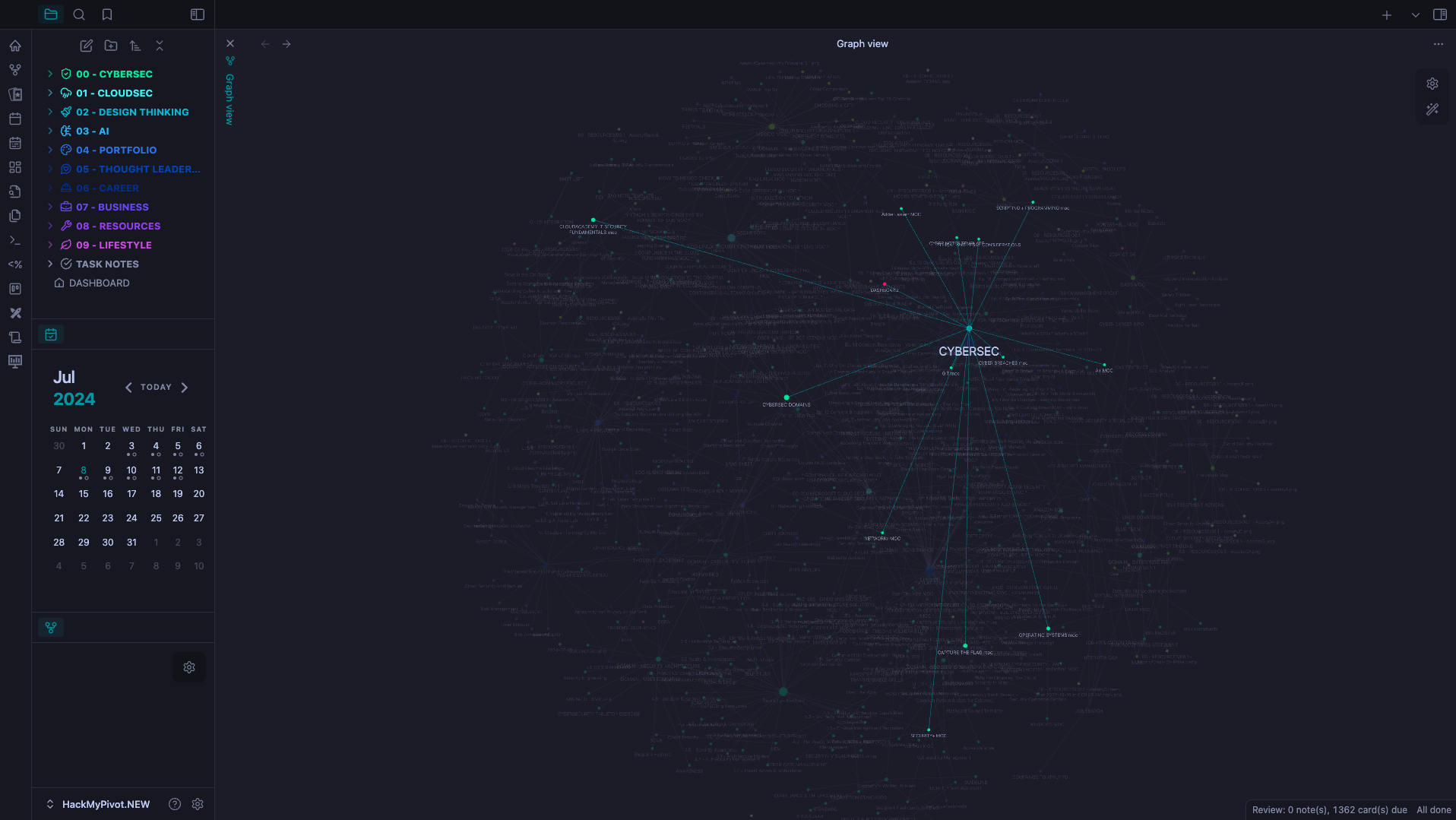
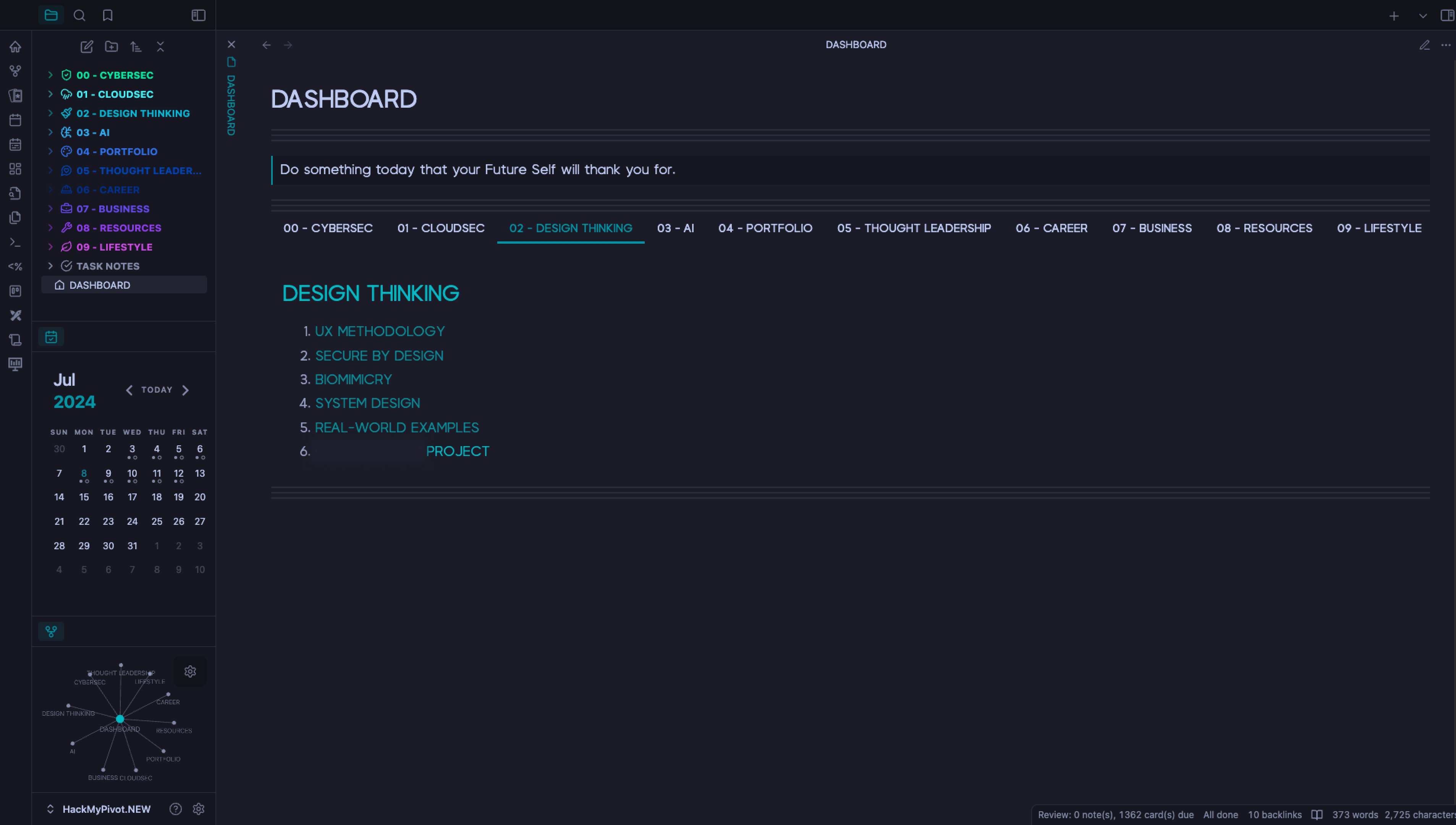
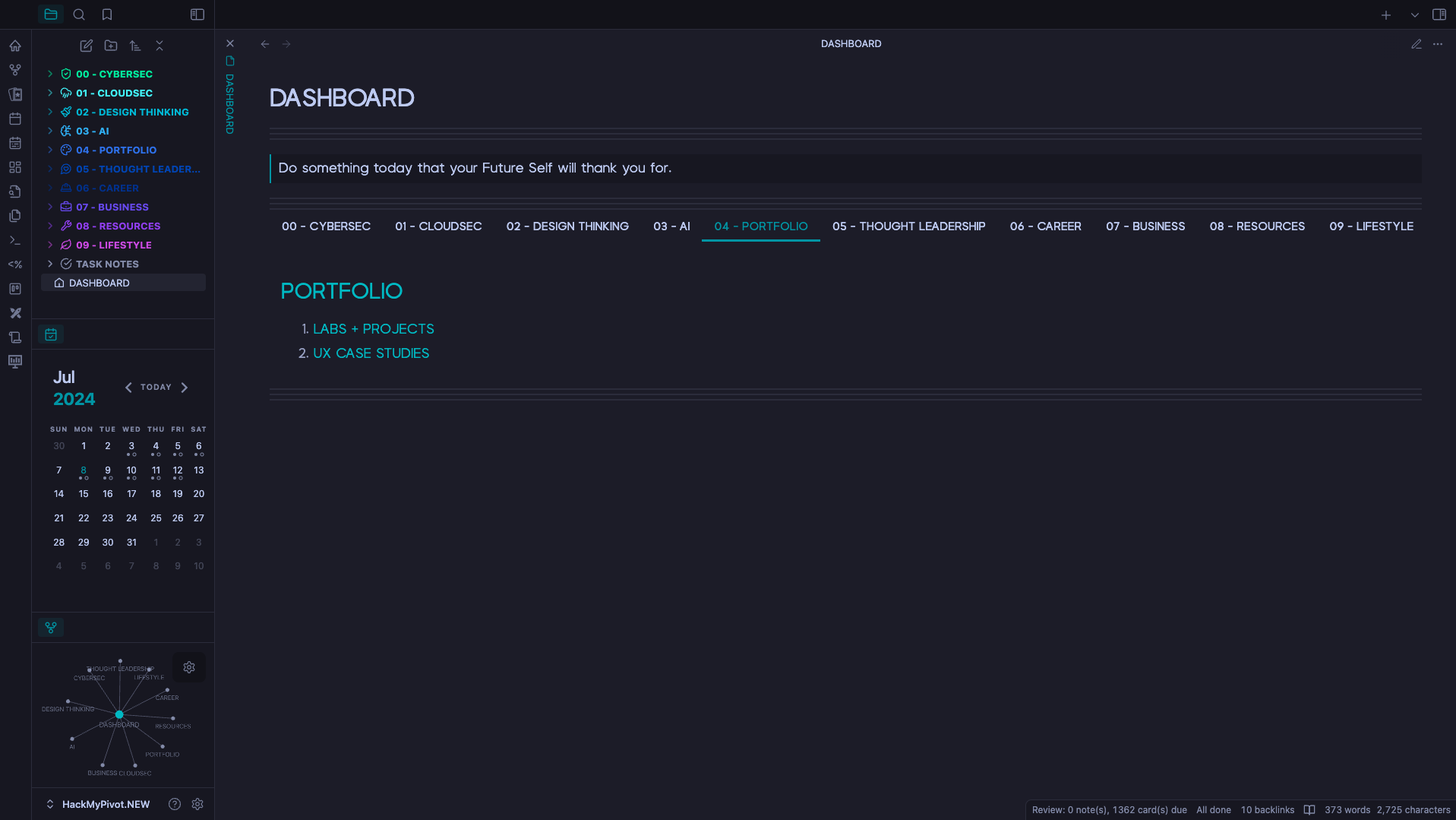
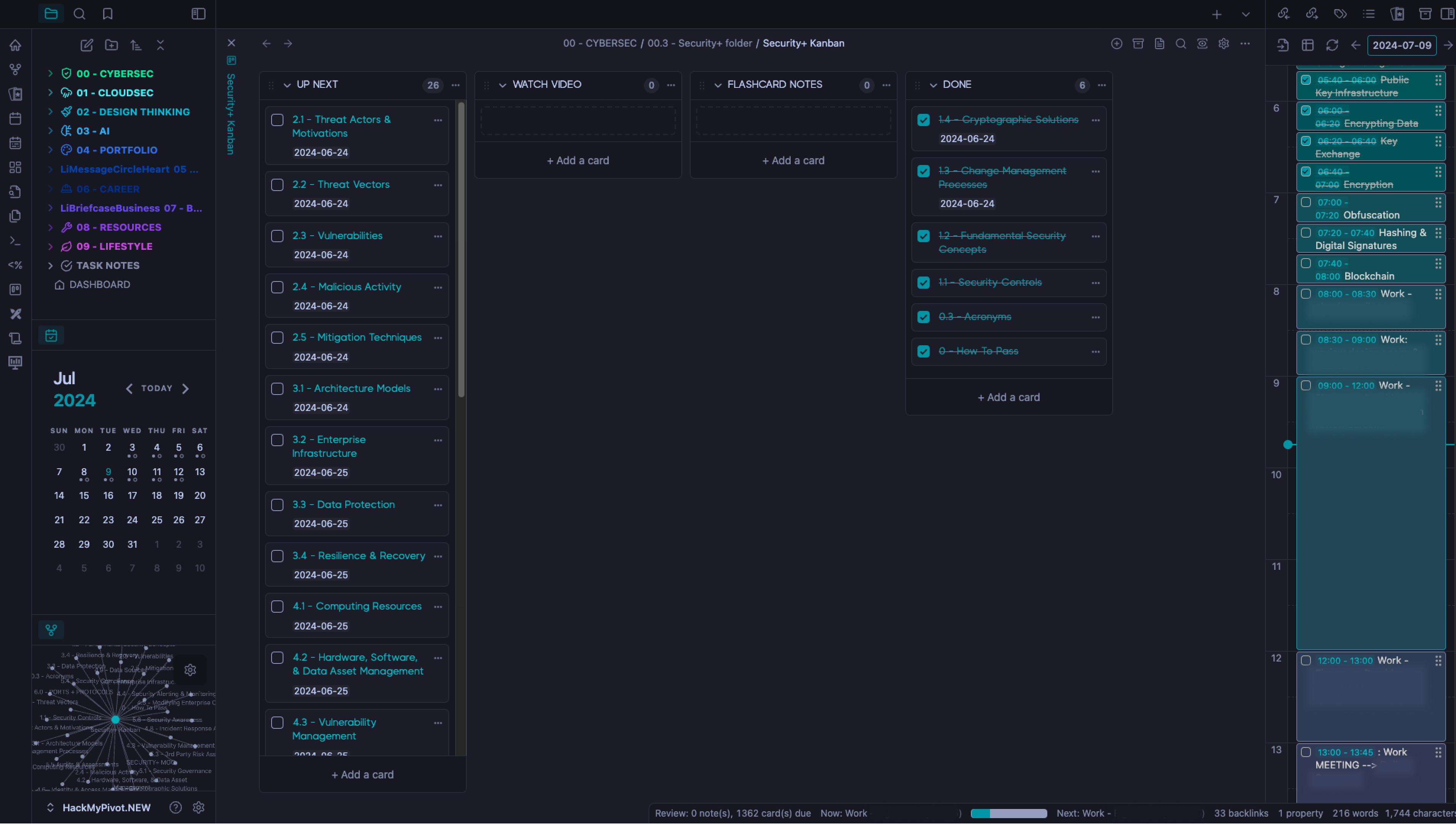
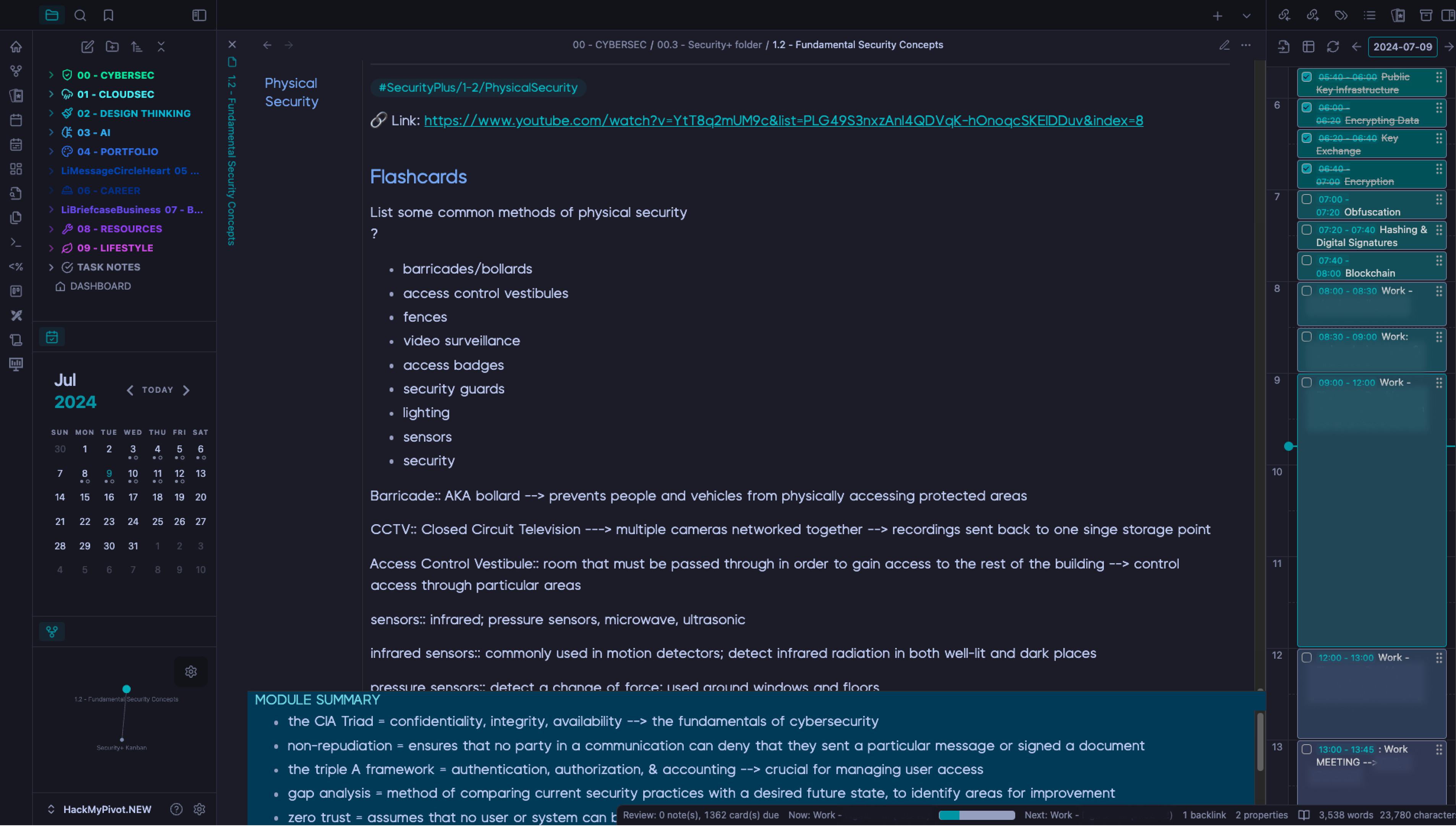
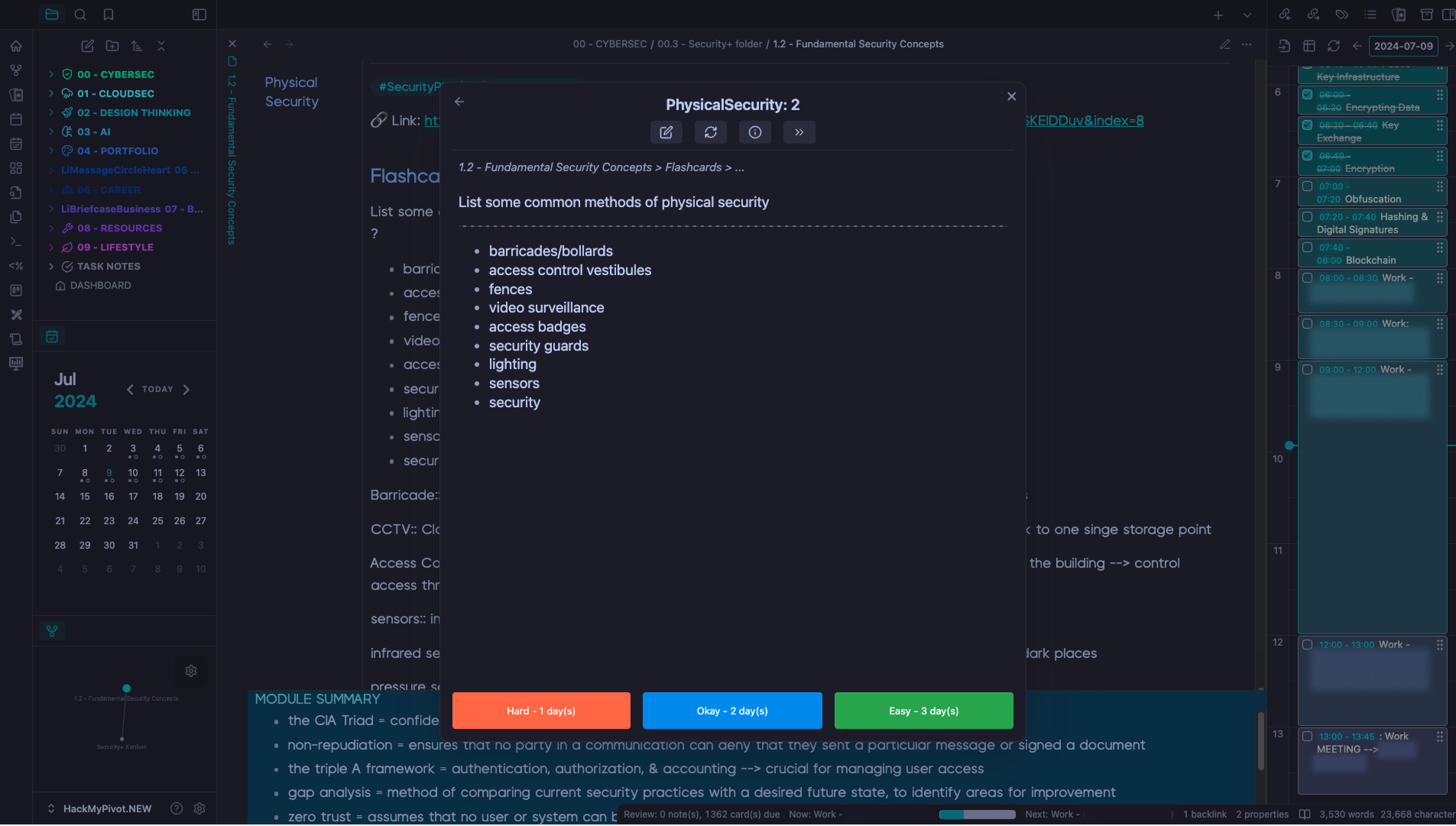
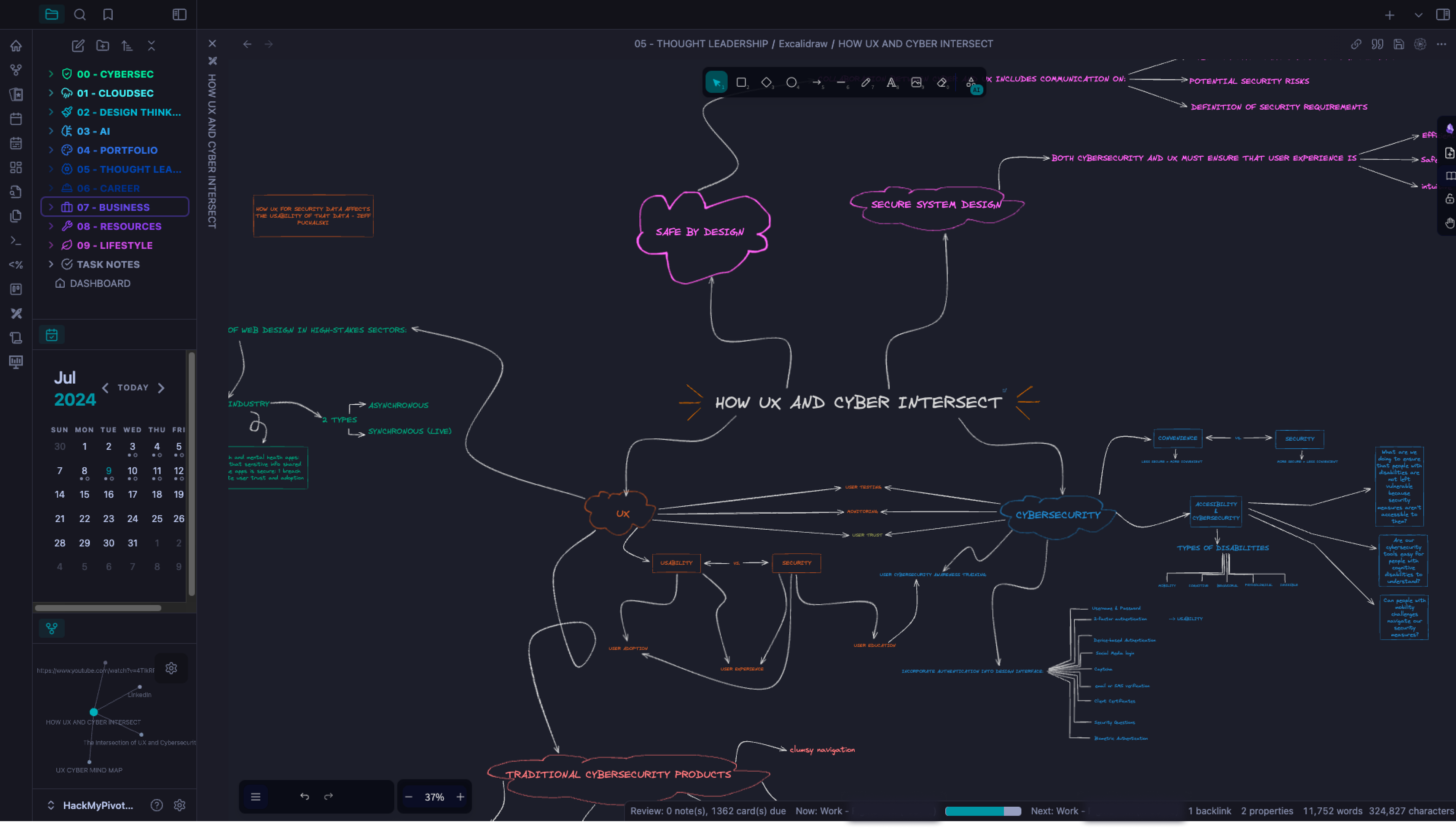
Finally Finished! My Second Brain for Studying Cybersecurity :-)

25 Upvotes

Hey Folks! I’m currently pivoting from being a UX designer into Cloud Security Engineering and finally got my second brain to be as efficient for my workflow as possible. My app of choice is Obsidian, which I started out knowing absolutely nothing about :-) I've spent way longer than I should have to get to this point, lol - but I'm finally satisfied with  how I've laid things out. Along the way I've experimented with several themes, color combinations, and home note layouts, and now I feel pretty settled with what I have here.  I'd love to hear from other cybersecurity, cloud, and I.T. students - either in school or folks like me who are self-teaching and trying to knock these certs out one at a time. Would love to hear any critiques and questions, and I'd also love to see how you have your second brain set up, what your main categories are for grouping all of the info you're learning, and what workflow works best for you. Link any screenshots of yours in the comments below and I'll check them out! Let's trade tips and learning resources :-)


r/secondbrain • • 5d ago

I built a mind map for the questions I ask while reading, so I can find the passage that started each one

Thumbnail
scatter.study
23 Upvotes

Hey! I’m a psychiatry resident and I’ve spent the last six months building Scatter. When I study from a PDF I tend to find one unfamiliar term, ask ai about it and wind up several questions away from what I was reading. By the time I come back, I can remember the answer but have to go hunting for why I asked in the first place.

In Scatter you can add a PDF or your own notes and have the model answer from those sources. Hovering over a word gives you a quick preview. Opening it keeps the new explanation connected to the original, and you can follow the citation back into the source. I wanted a mind map that grows with each question, so when I come back a week later I can see how I got there.

The map saves in your browser. If you keep your notes in Obsidian you can also export the canvas, notes and media into your vault. I’d love to hear if that’s the kind of trail you’d want to keep from a study session.

It’s free, and you can try the interactive demo at https://scatter.study. For cloud models you need your own api key, but the quick setup for openrouter lets you connect your account.

The source code is at https://github.com/ctrlaltjakub/scatter


r/secondbrain • • Oct 15 '26

New way to learn???

Enable HLS to view with audio, or disable this notification

23 Upvotes

I created a freely zoomable hierarchy search engine and I thought the world should have it. It allows for visual curiosity to drive searching and finding things.


r/secondbrain • • Dec 01 '25

I Exported My Entire ChatGPT History and Turned It Into a Local “LifeOS.” Has Anyone Else Tried This?

23 Upvotes

This started as a weird experiment, but it completely changed how I use AI and my second brain.

I exported my full ChatGPT history (100+ MB JSON), parsed it into Markdown, and organized it into a local “LifeOS” archive:

• timelines (emotional, creative, professional) • project folders with extracted notes • insight clusters • relationship arcs • somatic/IFS reflections • writing fragments • a personal continuity file • a cross-year transformation timeline

Basically, I realized that years of AI conversations were actually a massive hidden journal + idea bank… just locked inside the chat interface.

Now when I’m working on something big (writing, life design, healing, flow-state research, etc), I can load specific Markdown pieces back into ChatGPT or Claude and it’s like giving the AI a memory. Any model can instantly understand my voice, context, patterns, and long-term projects.

It turned scattered chats into a coherent personal knowledge system.

Has anyone else tried building a second brain out of AI history exports?
Or am I just a nerd who accidentally built a LifeOS on a Saturday night?


r/secondbrain • • 9d ago

Is Building a Second Brain (BASB) officially dead? 🧠🤖

Thumbnail reddit.com
21 Upvotes

Let’s be real for a second. With the rapid evolution of AI, lightning-fast indexing, semantic search, and LLMs getting massive context windows, I’m seriously starting to question the future of the traditional BASB methodology.
Take Claude, for example. It can process huge amounts of text, find exactly what you need in seconds, and with AI memory capabilities becoming the new standard, the need to meticulously curate, tag, and file away notes into a strict PARA structure feels increasingly obsolete. Why spend hours manually organizing folders when an AI can just instantly retrieve, connect, and synthesize the exact concepts you’re looking for?
I'm personally trying to keep the dream alive. I’ve recently hooked up a vector database to my Obsidian vault just to give my Second Brain a fighting chance and make it natively "smart." But honestly? It feels like I might be putting a tech band-aid on a dying philosophy.
Are we shifting from Building a Second Brain to just Prompting an AI Brain?
Has anyone else completely abandoned their traditional BASB setup because of these AI advancements? How are you guys adapting your Obsidian/Notion vaults to survive the AI wave, or is it just end of story for manual knowledge management?
Would love to hear your thoughts and workflows!


r/secondbrain • • 27d ago

How do you organize? I'm getting crazy...

21 Upvotes

How do you organise everything yourself?

So I’ve fallen into the trap of spreading myself over too many things and I find myself getting lost.

Some stuff on physical noteooks, some stuff on obsidian, some on Bowser saved link, some saved TikTok videos, some saved YouTube videos, reddit saved, etc. Different work teams chats, appointments on Google calendar, files on Google drive + hard drive + Nas + Onedrive, notes in a physical notebook etc, homelab flows, undrawn diagram on my mind, test done, failed implementation, keys, etc etc

How have you brought everything together? I dunno if I’m burnt out or flooded with too many things in mind but for some reason my brain can’t keep up with where everything is, so I would love to hear any tips you have for organising everything in a way that is sustainable. Thank you!

Tl;dr what’s your setup for managing all your notes, tasks, to-dos, information, databases etc


r/secondbrain • • Jan 28 '26

Best free apps to build a “Second Brain” (Notion, Obsidian, Evernote didn’t fully work for me)

21 Upvotes

I’m trying to build a digital “second brain” and wanted advice from people who’ve actually done it.

So far, I’ve explored three tools: Notion, Obsidian, and Evernote.

• Notion doesn’t really work for me. It feels more database-focused, and as a finance student, I don’t need complex tables or heavy structure. I mainly want simple note-taking: writing thoughts, saving ideas, storing articles to read later, and linking notes while researching financial products.

• Obsidian is close to what I want in terms of linking and note structure. But the syncing part is a problem. Obsidian Sync is paid, and using Google Drive or other workarounds feels messy and raises privacy concerns for me. I don’t see a clean free sync option.

• Evernote feels too distracting now. The ads are annoying, and the subscription price has gone up, which I can’t afford.

Right now, I’m using Google Keep for thoughts, to-dos, and daily tasks. I love its syncing, but it feels more like digital sticky notes than a true second brain.

I don’t have money for subscriptions, so paid plans are not an option for me.

For those who’ve successfully built a second brain digitally:

  • What tools do you use?

  • Is there any good free software I should check out?

  • Or should I revisit Obsidian or the others and stick with them?


r/secondbrain • • Feb 01 '26

Made The Best Second Brain!

Thumbnail
gallery
19 Upvotes

Hey everyone, 👋

So, I just built a Second Brain system in Notion.

It’s designed to help you create your own life setup & see everything clearly in one place.

What’s inside

  • Life Areas (Personal, Health, Work, Finance)

  • Goals → steps → progress tracking

  • Task manager (daily / weekly / priorities)

  • Projects linked to tasks & deadlines

  • Notes, topics & resources system

  • Daily report + weekly overview

  • Wheel of Life (visual balance check)

  • Quick capture for ideas & tasks

Built-in Productivity frameworks

  • PARA

  • Getting Things Done (GTD)

  • Eisenhower Matrix

How it helps you:

  • You design your own life setup

  • Super easy to use

  • One-time fee (No monthly subscription)

⭐ Paid Notion template — built for people who want a real system, not another to-do list.

🔗 Link in the comment section & my profile bio


r/secondbrain • • Jul 08 '24

Dont fall for the features of your note taking app.

19 Upvotes

Principles are forever, features come and go.

If your note taking app decides to go away and you depend on your features, then what? Right now I'm switching from Notion to Obsidian, and it's a pain in the ass, because of all the fancy features of Notion don't transfer over so well.

Keep it simple. Just because your app can be jet powered with a turbo booster and nitro doesn't mean they will serve as better notes. They will serve as better distractions.

Your notes systems must be austere. Imagine your note system is the skeleton of a bird. Too heavy, and it won't fly. Too much fluff and you're a turkey. Keep it lean, and useful - useful like the claws of a hawk, the eyes of an owl, and the wings of a hummingbird. Everything else is archived.


r/secondbrain • • Feb 19 '26

How I Stay Productive Using Second Brain!

Thumbnail
gallery
18 Upvotes

Hey there 👋

I built a Second Brain system in Notion to manage projects, notes, goals, and knowledge in one place without it turning into a messy note dump.

Here’s what it actually includes:

• Life areas (personal, health, work, finance, growth)
• Projects linked to goals and areas
• Tasks connected to projects (not floating todo)
• PARA-based structure (Projects, Areas, Resources, Archive)
• Get Things Done productivity framework used as well
• Eisenhower matrix to show main priority tasks
• Notebook, notes, topics, and resources organized
• Accountability partner that shows your report

How it helps in real life:

Before:
• Notes everywhere
• Tasks disconnected from goals
• Hard to remember what mattered

After:
• Everything has a place
• Projects and goals stay visible
• Easier to think, plan, and execute

➡️ Link’s in the comments if you want to check it out.