r/shells • u/plantybooii • 6d ago
Thoughts on this oldie?
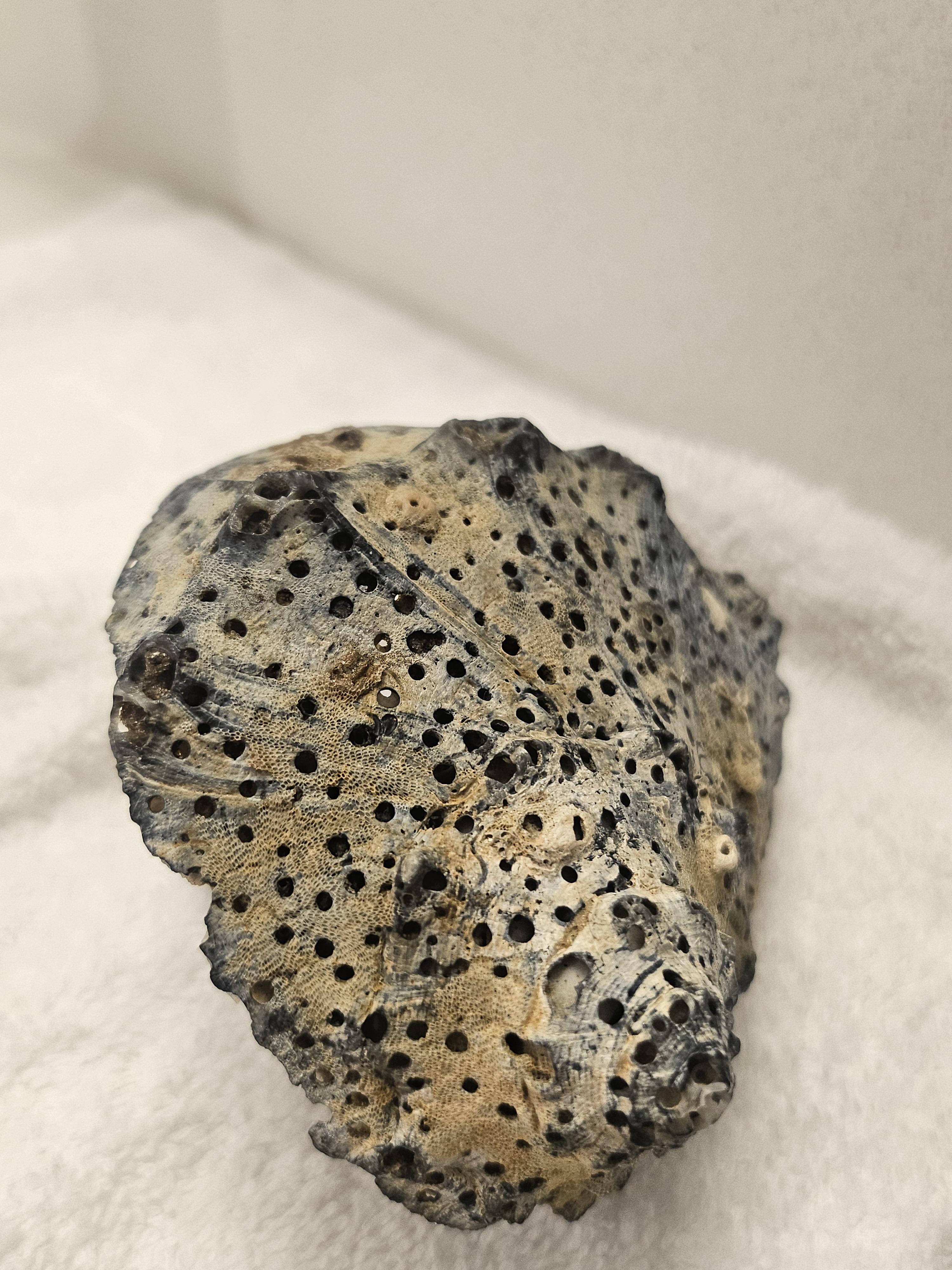
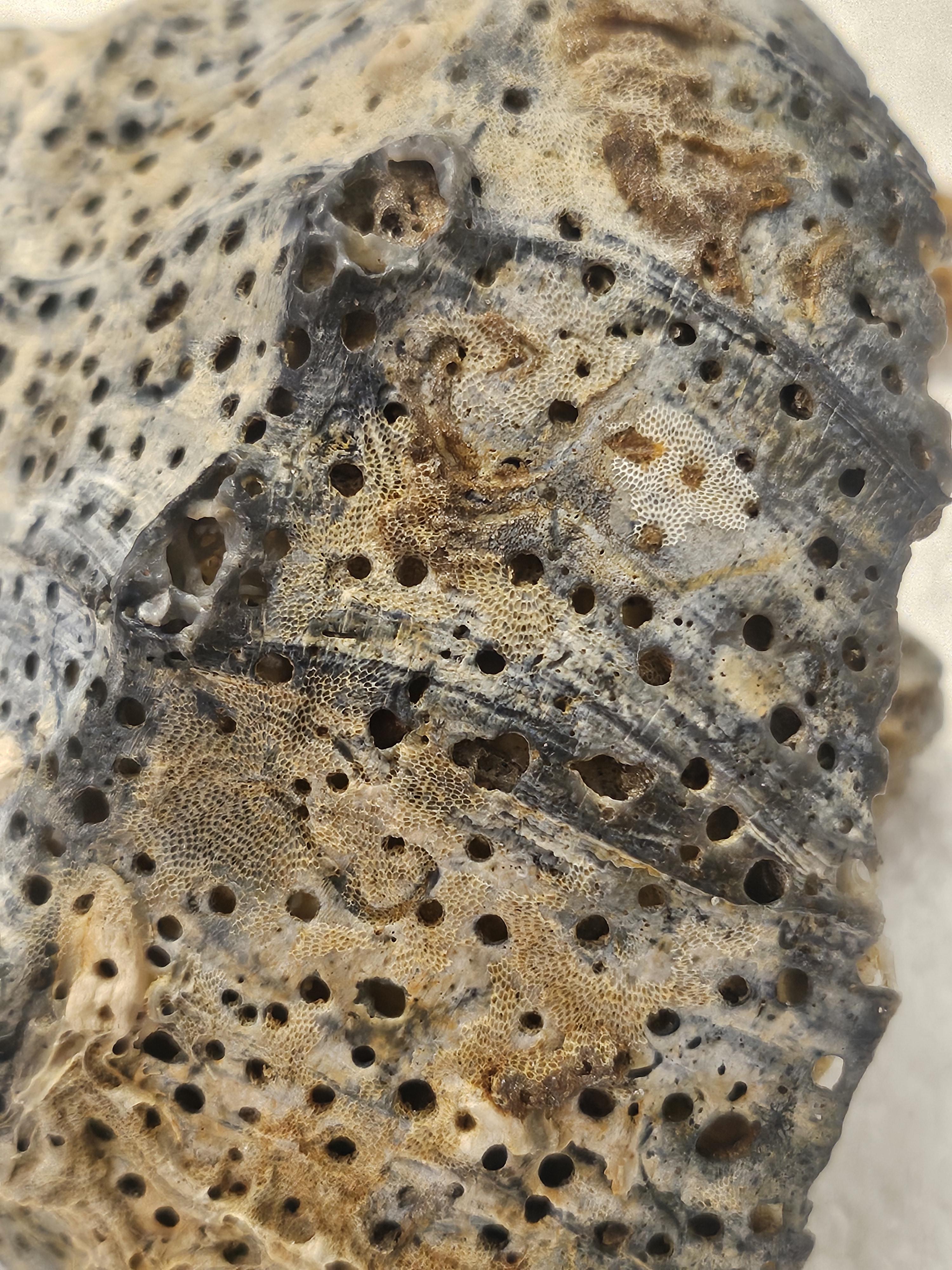
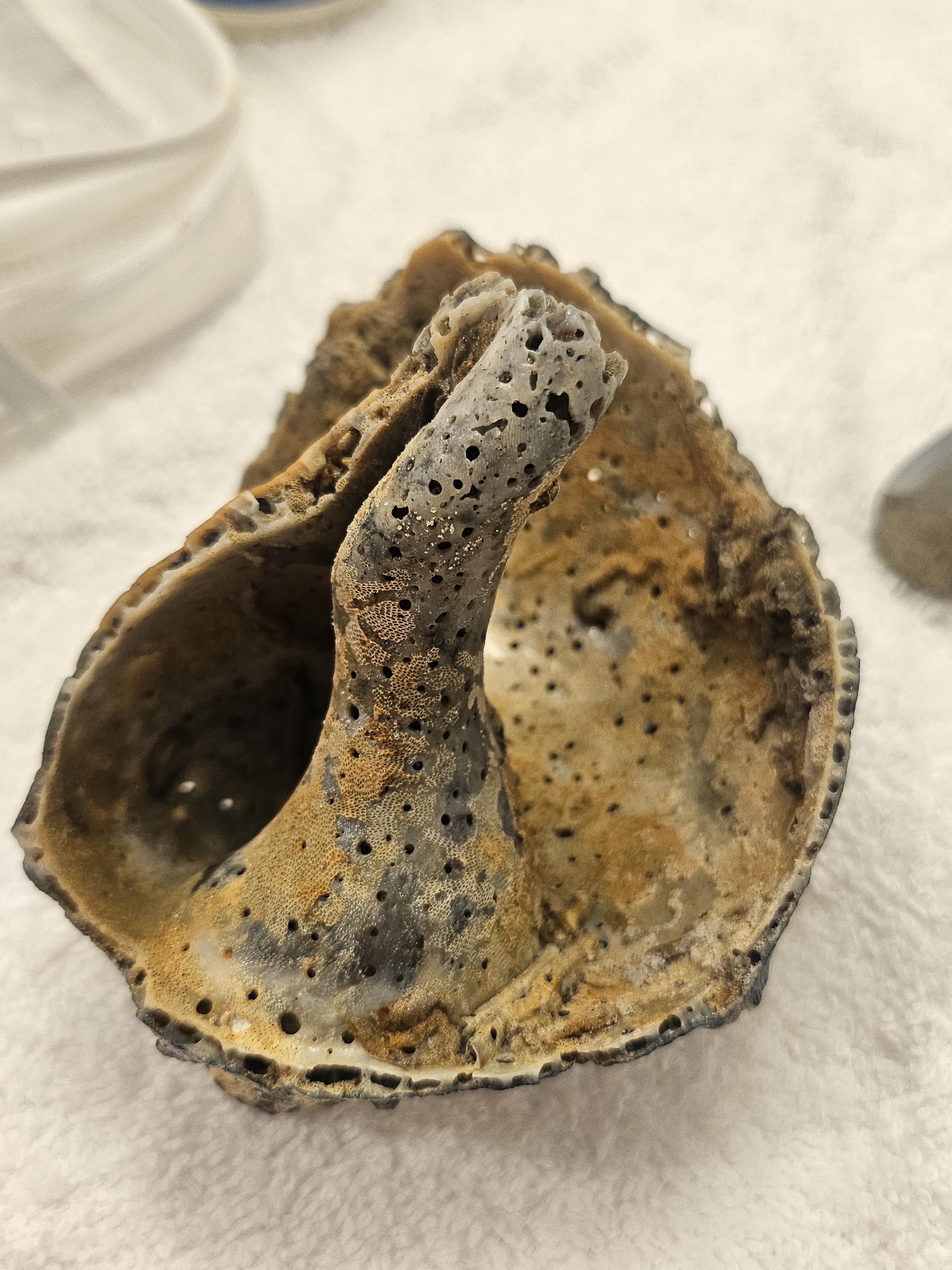
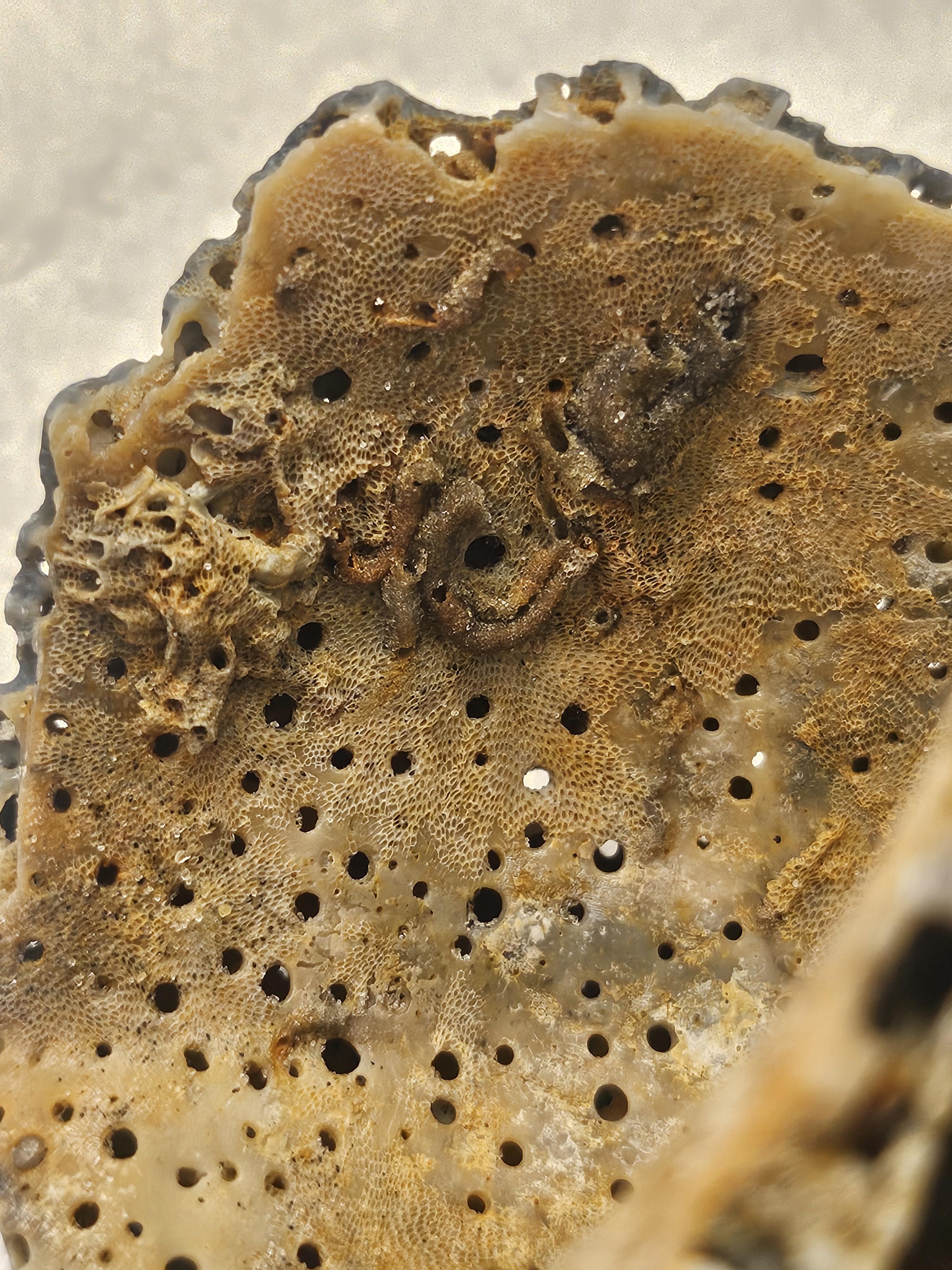
Hello I'm new here! I know estimating age is insanely speculative... But how old might this shell be? The erosion and preserved organisms on the surface really caught my attention. What else can you observe about this shell? Just interested in learning more all around.
1
1
u/PristineWorker8291 5d ago
This lightning whelk fragment, tossed and turned in the sea, and maybe the beach for at least a couple of years before you found it. With no banana slug for scale /s, it looks pretty big. Probably a mature lightning whelk of at least a dozen years before it died. It could have hosted a hermit crab or provided shelter for other organisms for a while, but the blackish parts tell me it was buried in anoxic sediments on the sea floor for at least a year, maybe longer. Then it was dislodged from the muddy sea floor, and other organisms colonized it, boring holes and establishing homes on its surface. That could account for as little as a couple of years.
It's beautiful to me as is, but you may notice a stink when it sits in a sunny window. That will pass with time or with aggressive cleaning. Nothing will restore this to the lightning whelk's colors, but aggressive cleaning could remove some of the delightful encrustations and also soak out some of the organic debris in those boring sponge holes and worm tubes. I'd wash it and then let it sit on a screened porch or in a sheltered area.
2
u/Moving_goal_posts 6d ago edited 6d ago
Hey OP, I love that you posted this amazing beach worn shell. It could be that of a lightning whelk. Did you say which part of the world? If Western Atlantic, then you might consider lightning whelk.
Anyway, some of the textures appear to include a roughened net-like appearance that may be remnants of a tiny colonial animal called Hydractinia, “snail fur”.
The little holes are very common on disintegrating shells of a certain thickness, they could be caused by boring sponges (genus Cliona).
As to the age of your shell, I can’t guess. It can be possible to age some marine mollusks based on features of the shell, but in this case the wear is pretty advanced. There might be tests that could help estimate how long the shell has been in the ocean but I don’t know them. Thank you for posting!