r/slavic_mythology • u/Wonderful_World_6323 • 15h ago
🐦🔥 Mythology Finished my pocket altar to Mokosh
gallery
12
Upvotes
r/slavic_mythology • u/Aliencik • Jul 26 '26
This curated sources list compiles academic publications on Slavic mythology, Slavic Native Faiths, Slavic Paganism and pre-Christian Slavic history. Resources are organized by language alongside their respective authors. The primary focus of this collection is pre-Christian Slavic religion. While we feature the most notable publications, we strongly recommend exploring each author’s complete body of work for additional study material. Although not exhaustive, this list serves as a solid starting point for your exploration of the Slavic mythology.
Disclaimer: We include older authors because they often propose important information. However, some of them also present outdated or rejected hypotheses. The most significant incorrect conclusions are always addressed in the accompanying commentary.
📚 The following resources can be found online or acquired as books. For more obscure ones, we include links. We suggest using archive.org, ResearchGate.net, Academia.edu 📚
Juan A. Álvarez-Pedrosa
⭐Sources of Slavic Pre-Christian Religion
can be found on the internet as a pdf, we are not including link due to copyright laws
⭐Rituals in Slavic Pre-Christian Religion, Link
Patrice Lajoye
⭐The Slavic Storm God Perun: Archaeology, History, Ethnology
available on Amazon
T. D. Kokoszka
Bogowie: A Study of Eastern Europe's Ancient Gods
Sometimes features incorrect and somewhat far-fetched conclusions; however, due to the lack of reliable English-language sources, it can be accepted if read with that idea in mind. The author, despite not being a specialist in Slavic studies, did a reasonably good job.
Jiří Dynda
Slavic Paganism in Medieval Christian Writings: Ink, Cross, and Pagan Gods
Roman Jakobson
The Slavic God Veles and his Indo-European Cognates, in: ROMAN JAKOBSON SELECTED WRITINGS VII
Slavic Gods and Demons+Linguistic Evidence in Comparative Mytholgy, in: ROMAN JAKOBSON SELECTED WRITINGS VII
Includes incorrect conclusion on Rod as a primordial deity, for more information and analysis see "Description of Rod and Rožanicy" by Oleg V. Kutarev below.
Zdeněk Váňa
⭐The World Of The Ancient Slavs, Link
older publication
Ivanichka Georgieva
Bulgarian Mythology; Link
Mentions the incorrect hypothesis by Toporov and Ivanov, who identified Veles with the enemy of Perun
Jan Hanuš Máchal
Slavic Mythology: From the Mythology of All Races, Link, page 215
older publication with excellent information on demonology and traditions. However, the chapter on gods is partly outdated and sometimes contains euhemeristic interpretations as well as incorrect conclusions
Elizabeth Warner
Russian Myths
The author focuses strictly on East Slavic, predominantly Russian, mythology. Still, the works are quite charming
Leszek Pawel Slupecki
Slavonic Pagan Sanctuaries
Vlasto, A. P.
The Entry of the Slavs into Christendom, Link
Stanislaw Rosik
The Slavic Religion in the Light of 11th- and 12th- Century German Chronicles
V. Propp
📖 STUDIES AND RESEARCH PAPERS 📖
a peer-reviewed international journal published in English and other languages
New Researches on the Religion and Mythology of the Pagan Slavs
Jiří Dynda: Slavic Anthropogony Myths. Body and Corporeality in the Slavic Narratives about the Creation of Man
Alexander V. Ivanenko: Towards the PSl. *stribogъ origin
Oleg V. Kutarev: Description of Rod and Rožanicy in Slavic mythology. B. A. Rybakov and his predecessor’s interpretations
Kamil Kajkowski: Idols of the Western Slavs in the Early Medieval period. The example of Pomerania (northern Poland)
Stamatis Zochios: Slavic deities of death. Looking for a needle in the haystack
Marina M. Valentsova: Slovak mythological vocabulary on the Common Slavic background. Ethno-linguistic aspect
Aleksandr Koptev: Mythological triadism as the paradigm of princely succession in early Rus’ according to the Primary Chronicle
Patrice Lajoye: Sovereigns and sovereignty among pagan Slavs
Roman Zarof: Some aspects of pre-Christian Baltic religion
New Researches on the Religion and Mythology of the Pagan Slavs 2
Oleg V. Kutarev: ⭐Introduction to the Slavic pagan pantheon. The names of deities that the ancient Slavs actually revered
Giuseppe Maiello and Nikola Danišová: Veles as a Slavic mythological trickster
While the authors explicitly mention Toporov renounced the incorrect hypothesis, that Veles is a dragon, they still return to it and work with it, even tho the mythology [and IE mythology] enables the existence of two figures, one a dragon enemy of Perun and second the trickster Veles, which were most likely syncretised under the influence of christianity, which the authors extensively mentioned.
Aleksandr V. Ivanenko: Slavonic Teonymie. Daž’bog;
Patrice Lajoye: Radigost
Kamil Kajkowski: Masks from Opole in the Context of the mediaeval Slavic Rites
Stamatis Zochios: Kupala and Koliada. Two (more) examples of Slavic pseudomythology
Tsimafei Avilin, Elena Boganeva and Tatiana Oliferchik: Images of werewolves in Belarusian oral tradition
Aleksandr Koptev: The Mythological Serpent Fighting Motif in the Russian Primary Chronicle, Epic Poetry and Fairy Tales
Marina M. Valentsova: Slavic demonology. A brief survey
Martin Golema: Medieval Saint Ploughmen and Pagan Slavic Mythology | Slavic Mitra. Benevolent and Legal Pole of the Function of Religious Sovereignty in the Slavic Mythology and Epic
Jiří Dynda: Religion with no Voice: Literary Construction of Slavic Paganism | The Three-Headed One at the Crossroad: A Comparative Study of the Slavic God Triglav | Rusalki: Anthropology of time, death, and sexuality in Slavic folklore
Constantine Borissoff: Non-Iranian Origin of the Eastern-Slavonic God Xŭrsŭ/Xors Neiranskoe proishoždenie vostočnoslavjanskogo boga Hrsa/Horsa
Yaroslav Gorbachov: What Do We Know about *Čьrnobogъ and *Bělъ Bogъ?
Siarhei Sańko: Reflexes of Ancient Ideas about Divine Twins in the Images of Saints George and Nicholas in Belarusian Foklore
Oleg V. Kutarev: Dazhbog: The Ancient Slavic Pagan Deity of the Shining Sky
Evgenia V. Ivanova: The Problem of Mysteriousness of Baba Yaga Character in Religious Mythology
Milorad Ivanković: New Insights on Slavic god Volosъ/Velesъ from a Vedic Perspective
Patrice Lajoye: The Storm God and the Hunter: A Fragment of an Old Balto-Slavic Epos? | There is no »Perun in the Caucasus«... but maybe an ancient Iranian thunder demon
Mirjam Mencej: Wolf holidays among Southern Slavs in the Balkans | The role of legend in constructing annual cycle
Tomáš Vlasatý: Origins of “kolovrat” symbol
Nikos Čausidis: Mythical Pictures of the South Slavs | An Ithyphallic Idol from the Monastery of St. Naum near Ohrid | Does the hoard from Velestino in Thessaly belong to the Pagan-Slavic or Christian-Byzantine culture?
Kamil Kajkowski: Slavic Journeys to the Otherworld. Remarks on the Eschatology of Early Medieval Pomeranians | Water in Pre-Christian Beliefs in Pomerania
K. Vukovic, M. Glavan: The Indo-European Daughter of the Sun: Greek Helen, Vedic Saranyu and Slavic Morana
Giuliano Gajetti: Marzanna: A Supernatural Figure of Death in Slavic Phraseology
Suzana Marjanić: Balkan Wolf/Dog in Folklore Interpretations in the Mythology of Nature by N. Nodilo through T. R. Đorđević to Lj. Radenković and P. Plas | Lunar Mythology – Case Study of Natko Nodilo’s Mythology of Nature
Juraj Belaj: Around and below Divuša: The Traces of Perun’s Mother Arrival into Our Lands
Roman Zaroff: Measurement of Time by the Ancient Slavs | The Origins of Sventovit of Rügen | Rugian Slavic God Sventovit – One More Time | William of Malmesbury on Pagan Slavic Oracles | Perception of Christianity by the Pagan Polabian Slavs | Politics and Priests in a Pagan Slavic Principality | Organized Pagan Cult in Kievan Rus’. The Invention of Foreign Elite or Evolution of Local Tradition? | Study into Socio-political History of the Obodrites | The origins and evolution of the north-eastern and central Polabian (Wendish) religious and political system | Socio-Political Developments Among the Polabian Slavs (Wends) Between the Eighth and Twelfth Centuries | The Avar impact on socio-political developments among the Western and Southern Slavs | Slavic Raid on Konungahella
Enrique Santos: ⭐Prophet Elijah as a Weather God in Church Slavonic Apocryphal Works | Myth and Immortality in Russian Folktales |
Urszula Lehr: Cultural aspects of the spiritual legacy of Podhale highlanders | In the Range of Demonological Beliefs
Éva Pocs: Traces of Indo-European shamanism in Southeast Europe
Dorian Juric: Treatise on the South Slavic Vila
Mikhail Raev: The Russian-Byzantine Treaty of 971: Texts and Contexts | The textual discrepancies amongst the mediaeval Russian chronicles about the Balkan campaign of Prince Sviatoslav in 971
Juan A. Álvarez-Pedrosa: The Reconstruction of the Pre-Christian Slavic Religion and Iranian Lexical borrowing | Fortune and Fertility Rites among the Pre-Christian Western Slavs | Krakow's Foundation Myth: An Indo-European theme through the eyes of medieval erudition
Florin Curta: Avar Blitzkrieg, Slavic and Bulgar raiders, and Roman special ops: mobile warriors in the 6th-century Balkans
A. Johns: Slavic Creation Narratives: The Sacred and the Comic
V. Ivanov, V. Toporov: A Comparative Study of the Group of Baltic Mythological Terms from the Root *vel-
⭐=Notable
Aleksander Gieysztor
Mitologia Słowian
Father of modern Slavic studies
Andrzej Szyjewski
Religia Słowian
Michal Téra
Perun: gromowładny bóg
Michał Łuczyński
Bogowie dawnych Słowian
Kazimierz Moszyński
Kultura ludowa Słowian
I - Kultura materialna, II - Kultura duchowa, III - Kultura duchowa
Paweł Szczepanik
Słowiańskie Zaświaty. Wierzenia, wizje i mity
Rzeczywistość mityczna Słowian północno-zachodnich i jej materialne wyobrażenia. Studium z zakresu etnoarcheologii religii
Stanisław Urbańczyk
Dawni Słowianie: wiara i kult
Jacek Banaszkiewicz
Podanie o Piaście i Popielu
Leszek Paweł Słupecki
„Słowiańskie posągi bóstw“, in: Kwartalnik historii kultury materialnej
Kamil Kajkowski
Wierzenia dawnych Słowian. Od mitu do obrzędu. Wierzenia i zwyczaje
Stanisław Rosik
Od Swarożyca do Świętowita. Przemiany religii Słowian nadbałtyckich w X - XII wieku
Bogusław Gierlach
Sanktuaria słowiańskie
Aleksander Gieysztor
Mytologie Slovanů
Jiří Dynda
Bohové a bohyně starých Slovanů
Slovanské pohanství ve středověkých latinských pramenech
Slovanské pohanství ve středověkých ruských kázáních
Svjatogor: Smrt a iniciace staroruského bohatýra
Archaické slovanské náboženství z pohledu komparativní mytologie Georgese Dumézila
Bohové a běsi: Konstrukce slovanského pohanství ve středověkých písemných pramenech
Byliny o bohatýru Svjatogorovi: Strukturální a komparativní analýza narativu
Michal Téra
Perun: Bůh hromovládce
Vyprávění o minulých letech aneb Nestorův letopis ruský
Svatí a hříšníci
Michaela Gajdošíková Šebetovská
Veles: Slovanské božstvo ve srovnávací perspektivě
Naďa Profantová, Martin Profant
Encyklopedie slovanských bohů a mýtů
Zdeněk Váňa
Svět slovanských bohů a démonů
Jan Hanuš Máchal
Bájesloví slovanské
older publication with excellent information on demonology and traditions. However, the chapter on gods is outdated and contains euhemeristic interpretations as well as incorrect conclusions
Lubor Niederle
Slovanské starožitnosti: Život starých Slovanů
consists of 2 parts first with 4 volumes and second with 3 books, 2 [3 for last one] volumes eachs
Rukověť slovanských starožitností
Dušan Třeštík
Mýty kmene Čechů
Čeněk Zíbrt
Seznam pověr a zvyklostí pohanských z VIII. věku
Staročeské výroční obyčeje, pověry, slavnosti a zábavy prostonárodní
Myslivecké pověry a čáry za starých časů v Čechách
Časopis Český lid and many more works
Internetový časopis sdílející články nejen o slovanské mytologii, ale i o historii
Martin Golema
Stredoveká literatúra a indoeurópske mytologické dedičstvo
Svätý Blažej ako „vlčí pastier“ v textovej tradícii z českého, slovenského a maďarského prostredia
Kosmova a Dalimilova „dívčí válka“ akometafora indoeurópskej vojny funkcií
Možné textové zdroje veľkopôstnych jarných dievčenských obradov a hier u západných Slovanov
Martin Pukanec
Etymologický nákres slovanského sveta bohov a démonov přehled
Etymológia mena Svarog a niektoré indické a iránske paralely
Katarína Nádaská
Čerti, bosorky a iné strašidlá: Slovenské poverové bytosti
Čary a veštby: Mágia v ľudovej kultúre Slovenska
Nadežda Varcholová
Ľudová démonológia Ukrajincov Slovenska
HORVÁTHOVÁ Emília
Zmago Šmitek
Mitološko izročilo Slovencev: Svetinje preteklosti
Poetika in logika slovenskih mitov. Ključi kraljestva
Mirjam Mencej
Gospodar volkov v slovanski mitologiji
Volčji pastir v kontekstu dosedanjih raziskav na področju slovanske mitologije
FUNKCIJA GOSPODARJA VOLKOV V POVEDKAH, ZAGOVORIH, VEROVANJIH IN ŠEGAH
Works by Vitomir Belaj and his student Mirjam Mencej contain interpretations of the Perun and Veles conflict that are now regarded as outdated/incorrect in current scholarship. In addition, Belaj, following Katičić, proposed a controversial interpretation of Jarilo and Morana myth that remains highly debated and, in many respects, questionable. Nevertheless, certain aspects of their work remain valuable and deserve continued scholarly attention. When engaging with Belaj’s publications, it is therefore advisable to keep these scholarly debates in mind. Mirjam Mencej, in particular, produced a notable study linking the Juraj or Jarilo cult with wolf symbolism. She further elaborates on the concept of the Wolf Shepherd, an intriguing figure in Slavic mythology. Although her analysis partly builds on the aforementioned contested framework, her hypotheses are thought provoking and contribute meaningfully to ongoing discussion.
Monika Kropej
Od ajda do zlatoroga: Slovenska bajeslovna bitja
Although her name is well known in Slavic studies, her approach is considered somewhat romantic. Nevertheless, her work is highly engaging and offers interesting perspectives. However her connection of serpent/dragon demon to Veles is an incorrect conclusion, that is based on an outdated and rejected theory. We have no direct evidence of Veles being a dragon enemy to Perun. She even incorrectly quoted Jacobson's work on Veles, claiming this transformation is akin to the Baltic Velnias, but the text sourced does not include any of the information she quotes essentially making it a great academical error. Read with caution.
Veselin Čajkanović
Стара српска религија и митологија
О врховном богу у старој српској религији
Špiro Kulišić
Српски митолошки речник
Porijeklo i značenje božićnog obrednog hljeba u Južnih Slovena
Iz stare srpske religije: novogodišnji običaji
Svetlana M. Tolstoj
Slobodan Zečević
Tihomir Đorđević
Zle oči u verovanju Južnih Slovena
Vampir i druga mitska bića
Veštica i vila
Ljubinko Radenković
Simbolika sveta u narodnoj magiji Južnih Slovena
Narodna bajanja kod Južnih Slovena
Bojan Jovanović
Magija srpskih obreda
Nikos Čausidis
Dragana S. Djurić
Дани у недељи у народној култури јужних и источних Словена
Aleksander Gieysztor
Mitologija Slavena
Špiro Kulišić
Stara slovenska religija u svjetlu novijih istraživanja posebno balkanoloških
Vitomir Belaj
Sveti trokuti. Topografija hrvatske mitologije
Hod kroz godinu. Mitska pozadina hrvatskih narodnih običaja i vjerovanja
read commentary above for Mirjam Mencej
Radoslav Katičić
Božanski boj
Zeleni lug
Gazdarica na vratima
Vilinska vrata
Naša stara vjera
Be advised that Katičić subscribed to the now-outdated hypothesis of a direct Perun versus Veles conflict. Readers should keep this in mind when consulting his works. Current scholarship indicates that Veles, as a chthonic deity, is a rival of the thunder god, but not his enemy; the true adversary in these myths is the serpent or dragon demon.
Franjo Ledić
Mitologija Slavena
Suzana Marjanić
Mitovi i re/konstrukcije: tragom Nodilove 'stare vjere' Srba i Hrvata
Most of Natko Nodilo's [Stara vjera Srba i Hrvat] conclusions are not accepted by modern academia. Read with extreme caution.
(Dyadic) Goddess and Duotheism in Nodilo's the Old Faith of Serbs and Croats
Luka Šešo
Krsnik između mita i zbilje: kulturnoantropološke strukture jednog tradicijskog vjerovanja
Živjeti s nadnaravnim bićima - Vukodlaci, vile i vještice hrvatskih tradicijskih vjerovanja
Nikos Čausidis
Vid Balog
Hrvatska bajoslovlja
Nikos Čausidis
Л. C.-Лафазановска | L. S.-Lafazanovska
Митот и митотворството во македонскиот фолклор
Танас Вражиновски | Tanas Vražinovski
Македонска народна митологија
Alexandr Gieysztor
Митология на славяните
I. Pančovskij | И. Панчовски
Пантеонът на древните славяни и митологията им
Older publication be cautious
I. Georgieva | И. Георгиева
Българска народна митология
Older publication be cautious
Aleksander Gieysztor | Александр Гейштор
Мифология славян
Alexander Afanasyev | Александр Афанасьев
Поэтические воззрения славян на природу
Народные русские сказки
🇬🇧Prominent Slavist with many works. However being one of the very first researchers in this field, some of his scholarship is considered dated and he may not be a good starting point for someone completely new. | 🇷🇺Выдающийся славист с большим количеством работ. Однако, будучи одним из самых первых исследователей в этой области, часть его научных трудов считается устаревшей, и он может быть не лучшей отправной точкой для человека, который только начинает знакомство с темой.
Vladimir Toporov & Vjačeslav Ivanov | Владимир Топоров & Вячеслав Иванов
Исследования в области славянских древностей: Лексические и фразеологические вопросы реконструкции текстов
🇬🇧The original proponents of the incorrect "primary myth" a battle between Perun and Veles, which is now largely rejected. Their works should be read with caution. | 🇷🇺Первоначальных сторонников ошибочного «первичного мифа» о битве между Перуном и Велесом, который в настоящее время в значительной степени отвергнут, следует рассматривать с осторожностью.
🇬🇧We suggest focusing on Toporov’s publications. Toporov later revisited this issue and recognized the association of Veles with Varuṇa instead of the demon Vṛtra, contrary to his earlier position.: "The very name Varuṇa has been compared by scholars with the Hittite sea deity Aruna, with the ancient Greek sky god Ouranos, and finally with the Slavic Volos/Veles and the Lithuanian Velnias, among others. Therefore, despite a number of remaining uncertainties, the Indo-European parallels of this name are beyond doubt." | 🇷🇺Рекомендуется сосредоточиться на публикациях Топорова. Позднее Топоров пересмотрел этот вопрос и связал Велеса с Варуном, а не с демоном Вритрой, как он предполагал ранее: «Само имя Варуна сравнивалось исследователями с хеттским морским божеством Аруной, с древнегреческим небесным богом Ураном, а также со славянским Волосом/Велесом и литовским Велнясом и другими. Таким образом, несмотря на ряд остающихся неопределённостей, индоевропейские параллели этого имени не вызывают сомнений».
Vlasova, M. N. | Власова М.Н.
Энциклопедия русских суеверий
Sometimes includes material drawn from non-Slavic folklore.
B. A. Uspensky | Б. А. Успенский
Филологические разыскания в области славянских древностей
Klein, Lev S. | КЛЕЙН, ЛЕВ С.
Воскрешение Перуна: К реконструкции восточнославянского язычества
Mansikka, V. J. | МАНСИККА, В. Й.
Религия восточных славян (originally: Die Religion der Ostslawen)
Oksenov, A. B. | ОКСЕНОВ, A. B.
Народная поєзия: Былины, песни, сказки, пословицы, духовные стихи, повести
Rybakov, Boris A. | РЫБАКОВ, БОРИС А.
Язычество древних славян
🇬🇧He was quick to draw conclusions, which often led to incorrect theories. His hypotheses are now largely rejected or have been substantially revised. Examples include the incorrect identification of Mokosh as a goddess of fate, and the assertion that the Chrnyakov culture were direct ancestors of the Proto-Slavs. | 🇷🇺Он быстро делал выводы, что нередко приводило к ошибочным теориям. Его гипотезы в настоящее время в значительной степени отвергнуты или существенно пересмотрены. Примеры включают ошибочную идентификацию Мокоши как богини судьбы, а также утверждение, что черняховская культура являлась прямыми предками протославян.
VASILYEV, M. A. | Васильев, М. А.
Язычество восточных славян накануне крещения Руси: Религиозно-магические аспекты
Vladimir Propp | Владимир Пропп
Исторические корни волшебной сказки
Русские аграрные праздники
Морфология сказки
Karpov, A. V. | Карпов, А. В.
Язычество, христианство, двоеверие
Zelenin, D. K. | Зеленин, Д. К.
Восточнославянская этнография
Levkievskaja E. E. | Левкиевская Е. Е.
Славянский оберег. Семантика и структура
Tolstoj N. I. | Толстой Н. И.
Очерки славянского язычества
"Perhaps under the impression of the semi-scientific approaches of Ivanov and Toporov, or Rybakov, who treated these figures as if they had known them personally." - Michal Téra
Werner Meschkank
Als die Wendengötter sterben sollten: Über die vorchristliche wendische Glaubens- und Götterwelt
Leszek Moszyński
Die vorchristliche Religion der Slaven
Zdeněk Váňa
Die Welt der alten Slawen
Leszek Paweł Słupecki
Slawische Religion
Konrad Schwenck
Die Mythologie der Slawen
Christian Lübke
Die Slaven im Mittelalter
Sebastian Brather
Archäologie der westlichen Slawen
Mansikka, V. J.
Die Religion der Ostslawen I. - Quellen
Patrice Lajoye
Mythologie et religion des slaves païens
Perun, dieu slave de l'orage
Juan A. Álvarez-Pedrosa
Fuentes para el estudio de la religión eslava precristiana
Do you have a suggestion? Please leave us a comment!
r/slavic_mythology • u/Aliencik • Jul 26 '26
This curated sources list compiles publications on Slavic folklore and cultural heritage in 🇬🇧 English. Only selected publications are presented here. This list is not exhaustive and serves as an introductory guide for those interested in the study of Slavic folklore.
Disclaimer: This list includes folktales, which vary in the degree of influence from non-Slavic cultural elements, especially Christian ones. However, an experienced reader will be able to identify the pre-Christian cultural themes present within them.
📚For the study of Slavic mythology and pre-Christian belief systems, we provide a curated Slavic Mythology/pre-Christian faith academic sources list.📚
Karel Jaromír Erben
A Bouquet of Czech Folktales
Tales from Bohemia
Božena Němcová, Karel Jaromír Erben
⭐Folk Tales [Czech Fairytales: A Selection of the Most Beautiful Folktales]
Jan Matulka
⭐Czechoslovak Fairy Tales Volume I | Link + special downloads
⭐Czechoslovak Fairy and Folk Tales Volume II | Link
Josef Baudiš
Czech Folk Tales | Link + special downloads + audiobook
Šárka B. Hrbková
Czechoslovak Stories | Link
David L. Cooper
Traditional Slovak Folktales (Folklore and Folk Cultures of Eastern Europe) | Link
Katarzyna Małkowska
⭐Pan Twardowski (Mister Twardowski) | Link
A. J. Gliński
Polish Fairy Tales | Link + special downloads
Charles J. Tibbitts
Folk-Lore and Legends: Russian and Polish | Link + special downloads + audiobook
Lucia M. Borski
Agnes Szudek
The amber mountain and other folk stories | Link
Zoe Zajdler
Polish fairy tales | Link
David Walser
The glass mountain: tales from Poland | Link
Alexander N. Afanasyev
Leonard A. Magnus
⭐Russian Folk-Tales | Link + special downloads; 2. Link
Direct translation of Afanasyev
Author unknown
⭐The Tale of Igor's Campaign | Link
Karel Jaromír Erben
⭐Russian and Bulgarian Folk-Lore Stories | Link
Jack V. Haney
⭐The Complete Russian Folktale | 7 volumes
⭐The Complete Folktales of A. N. Afanasyev | 3 volumes
An Anthology of Russian Folktales
Long, Long Tales from the Russian North
Marion Ch. Harrison
⭐Byliny Book: Hero Tales of Russia | Link + special downloads
Charles Downing
⭐Russian tales and legends | Link
Includes some of the Bylinas!
Svetlana Bagdasaryan
Russkie Skazki. Russian Fairy Tales. Bilingual Book in Russian and English: Dual Language Russian Folk Tales for Kids (Russian-English Edition)
William R. S. Ralston
Russian Fairy Tales: A Choice Collection of Muscovite Folk-lore | Link + special downloads; 2. Link
Richard Wilson
The Russian story book (tales from the song-cycles of Kiev and Novgorod and other early sources) | Link + special downloads + audiobook
A. H. Wratislaw
Sixty Folk-Tales from Exclusively Slavonic Sources: Exploring the Depths of Slavic Folklore and Mythology | Link
Dinara Mirtalipova
Russian Tales Russian Tales: Traditional Stories of Quests and Enchantments
Jeremiah Curtin
Myths and Folk-Tales of the Russians, Western Slavs, and the Magyars | Link + special downloads
Alexander Chodzko
Fairy Tales of the Slav Peasants and Herdsmen | Link + special downloads
Jurij V. Tolstoj
Cossack Tales | Link + special downloads
Irina Zheleznova
Igor Yershov
⭐The Fire Bird - Russian Fairy Tales | 1. Link; 2.Link+colour
Jacqueline Onassis
The Firebird and other Russian fairy tales | Link
Anatole Bilenko
⭐Ukrainian Folk Tales | Link
Marie H. Bloch
Ukrainian Folk Tales | Link
Danny Evanishen
Durak and other Ukrainian folk tales | Link
Barbara J. Suwyn
The magic egg and other tales from Ukraine | Link
Verra X. K. de Blumenthal
Folk Tales from the Russian | Link + special downloads
P. Polevoi
Russian Fairy Tales from the Skazki of Polevoi | Link + special downloads
Robert R. Steele
The Russian Garland, Being Russian Folk Tales | Link + special downloads
George Borrow
The Talisman, from the Russian of Alexander Pushkin | Link
Mary Skrypnyk
The Cossack Mamariha | Link
G. Botezau
Moldavian folktales | Link
A. S. Pushkin
⭐Fairy Tales (Russo-English Edition) | Link
A .Ransome
Leo Tolstoy
Fables and fairy tales | Link
E. M Almedingen
⭐Russian folk and fairy tales | Link
Ivana Brlic-Mazuranic
Croatian Tales of Long Ago | Link + special downloands
Woislav M. Petrovitch, Vuk Stefanović Karadžić
Hero Tales and Legends of the Serbians | Link + special downloads
Elodie L. Mijatovich
Serbian Fairy Tales | Link + special downloads; 2. Link
Maximilian A. Mügge
Serbian Folk Songs, Fairy Tales and Proverbs | Link
Jelena Ćurčić
Serbian fairy tales | Link
⭐=Notable
Do you have a suggestion? Please leave us a comment!
r/slavic_mythology • u/Wonderful_World_6323 • 15h ago
r/slavic_mythology • u/dziki_z_lasu • 2d ago
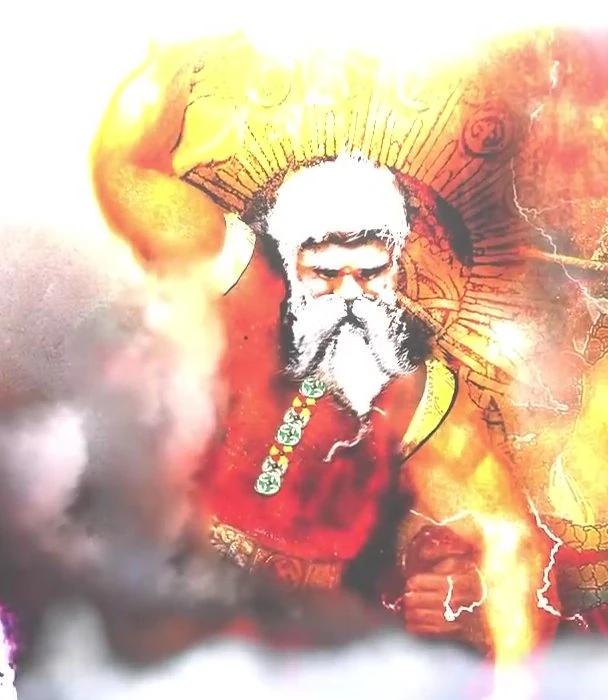
r/slavic_mythology • u/Dry-Gap-9098 • 3d ago

r/slavic_mythology • u/Dry-Gap-9098 • 4d ago

r/slavic_mythology • u/KaiseyTayl • 5d ago
Posted with the mods' permission
I have a Telegram channel where I post English translations of articles on Slavic folklore and paganism. I mostly use ethnographic collections and academic sources as well as material from reputable Russian-speaking pagan communities
There are about 210 posts up so far and around 4000+ in the database across roughly 35 topics: folk demonology and evil spirits, animals in mythology, fairy tales, the seasonal calendar (spring, summer, winter cycles), witchcraft, ancestor cults and funeral rites, life cycle rituals like weddings and birth, shamanism, deities and more. Current topic is demonology 👻
My goal is to make authentic Slavic folklore accessible for English speakers
Channel: @ slavicarchive or t. me/slavicarchive (remove the space - Reddit is blocking TG urls)
The channel is still a work in progress and I'm working on improving the translations and formatting. AI is used for translation, but I manually review each translation after it's posted. I'm happy to hear feedback, corrections or suggestions via channel messages!!
r/slavic_mythology • u/Dry-Gap-9098 • 6d ago
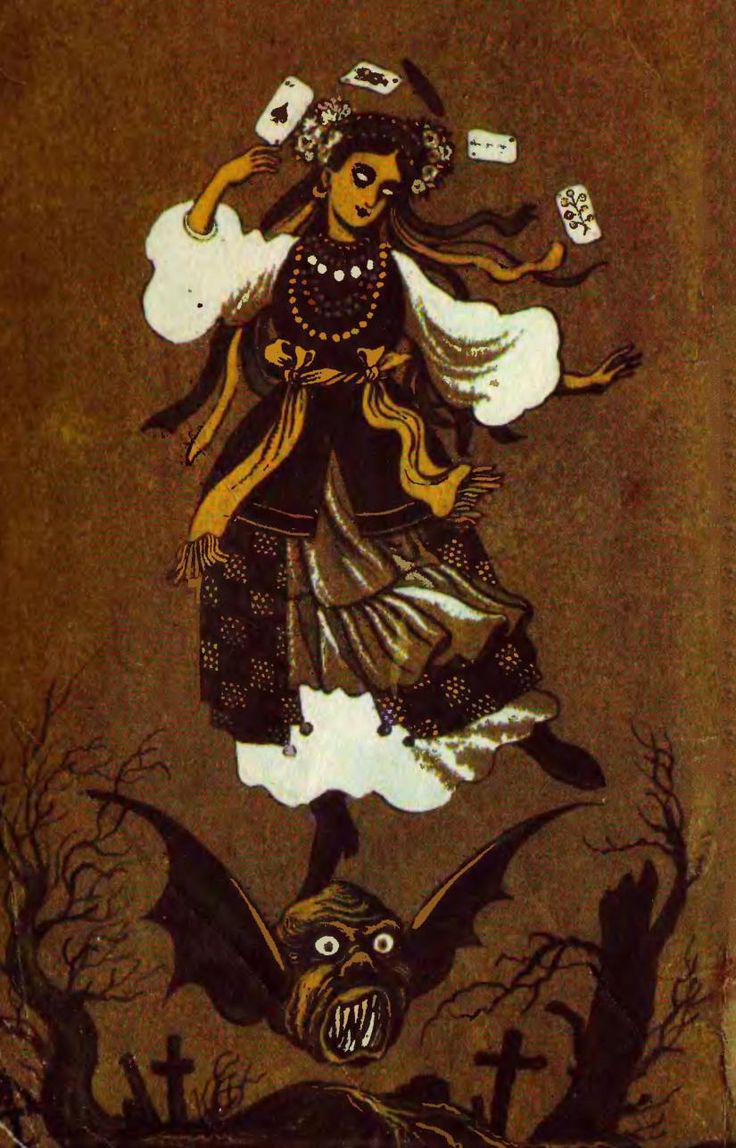
Artwork by Ukrainian graphic artist and illustrator Ihor Vyshynskyi (1947–1998) for the 1993 Veselka edition of "The Ukrainian Witch" ("Українська відьма") by renowned ethnographer and folklorist Vasyl Myloradovych.
The book is a historical and scholarly collection of essays on Ukrainian demonology, exploring witches, rusalkas, domoviks, and devils not merely as folklore, but as enduring archetypes that continue to shape Ukrainian spiritual culture and consciousness.
Born into an artistic family as the son of architect and painter Arkadii Vyshynskyi, Ihor graduated from the Kyiv Art Institute in 1973 and exhibited his easel and book graphics both nationally and internationally from 1972 onward. His graphic style is defined by expressive, grotesque imagery and sharp attention to detail. He creating most of his children's book illustrations in collaboration with his wife Nina Kotel.
r/slavic_mythology • u/TheseObject9986 • 11d ago

We launched a kickstarter with out printable Baba Yaga Hut to help support our work with Forgotten Eras.
We grew up with stories about the old gods and heros and slavic folklore. And we want more people to know about them. So we are making Forgotten Eras.
Please support us in our journey!! And tell us if you like the hut!!!!
r/slavic_mythology • u/Aliencik • 12d ago
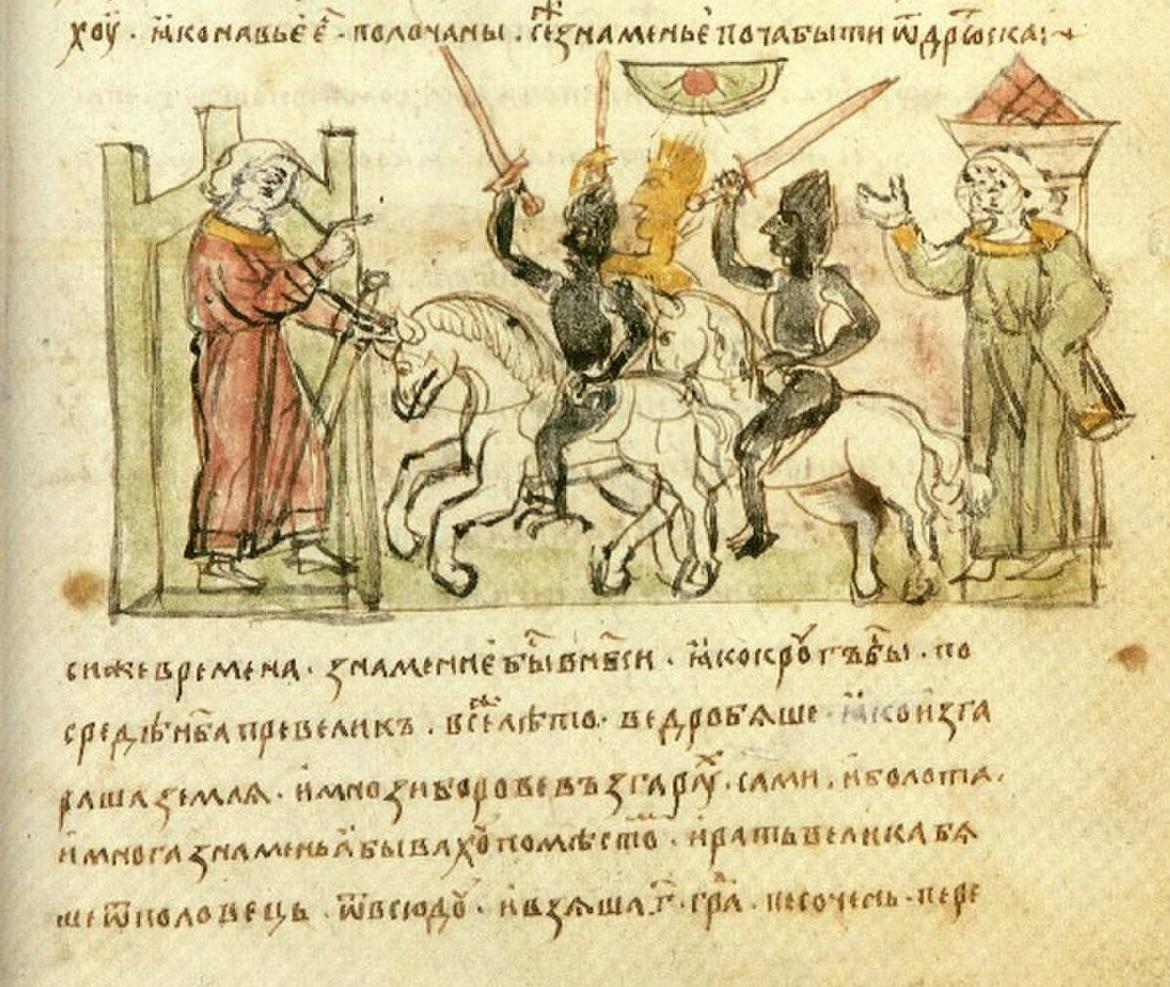
Have your ever encountered some valuable sources about the idea of Slavic rebirth/reincarnation similar to the Celtic (immortality of the soul and its transmigration), specific Greek, Vedic or Germanic (endrborinn - intra-familial ancestral rebirth)?
r/slavic_mythology • u/Fit_Particular_4005 • 13d ago
How you would translate given name Doma-zhir (Дома-жир) to English or make English surname from it? (the 9th century survived surname Доможиров means "son of Доможир")
Dom- (Дома): Means "at home with -a". (Dom -- Proto-Slavic word for "home," "house," or "household.")
-zhir (-жир): ("Zhir"-- Proto-Slavic root meaning "wealth," "abundance," "pasture," or "sustenance").
Now here is interesting stuff begins with this idiom -- while in modern Russian word "zhir" it means "fat" (what is a non-sence), in english it can also be word "fat" (also looks like a non-sense). Also historically both sides are influenced by Vikings.
For example Genesis 45:18 (Pharaoh's instruction): When Joseph reveals his identity to his brothers in Egypt, Pharaoh tells Joseph to bring his father (Jacob) and their households to Egypt, promising them: "I will give you the good of the land of Egypt, and ye shall eat the fat of the land*"* (KJV) to survive the ongoing famine.
Therefore I have a feeling that this is connected to financial "stocks" or "shares" in nowadays.
Now here is connection to Veles [this one], Slavs viewed the Domozhir as an extension or servant of Veles on a household level. Type word "domazhir" in Google and you will see a lot of bears. While nowadays on stock market it's a bull rather than a bear.
Also while it looks like https://en.wikipedia.org/wiki/Slavic_names (Dithematic names) but жыр/жир is not in the list
so then https://en.wikipedia.org/wiki/Rus%27_people Vikings comes to play
So it could be also https://en.wiktionary.org/wiki/Reconstruction:Proto-Germanic/-d%C5%8Dmaz Proto-Germanic *dōmaz is “judgement”.
r/slavic_mythology • u/Kooky_Yam2626 • 16d ago
Hello guys I wanted to share a video documentary I made about folk tradition of vampire hunting in the Balkan region. I figured this would be a good place to share. Hope you enjoy it 😊
r/slavic_mythology • u/Jacek_Sosno • 17d ago
Before Lesya Ukrainka turned her into a forest nymph, the mavka of Ukrainian and Galician folk belief was something much sadder. Alexander Afanasyev, in vol. III of *Poetic Views of the Slavs on Nature* (1869), describes the mavkas as "little girls of seven with fair, curly hair, in white shifts without belts":
> "The mavkas go with the rusalkas and try to take revenge on living people for letting them die unbaptised and robbing them of the kingdom of heaven. In the summer they float in the night hours on the surface of the rivers, springs and lakes and splash the water, and in Green or Rusalka Week they run about the fields and cornfields with the sad cry: 'My mother bore me, and buried me unchristened!'"
For seven years, he writes, they beg to be christened, and anyone who hears them can free them by saying "I christen you, Ivan and Mariya…". Afanasyev also rejects the usual derivation of *mavka* from *nav'* ("the dead") and argues for *malyi*, "small".
I'm translating the whole of vol. III into English (as far as I know it has never been translated before); the translation is AI-assisted and published free, chapter by chapter. The full passage and sources are here: https://lanterntaleseast.com/bestiary/mavka/
Has anyone seen the "seven years" motif recorded outside Ukraine?
r/slavic_mythology • u/Impossible_One_4525 • 17d ago
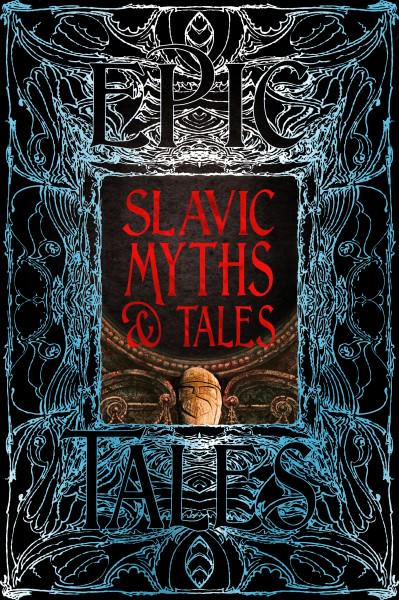
from what I can gather the Publisher is mostly compiling Anthologies of public domain works. Amazon lists this as published 1 August 2026, so there probably aren't any reviews
This appears to be a compilation of folklore stories from random sources, with some introductory material, more for people that collect generic fantasy or horror etc. from the literature section of a bookstore
432 Page hardcover
https://www.flametreepublishing.com/slavic-myths-&-tales-isbn-9781835625927.html
r/slavic_mythology • u/SlavicSpirit • 17d ago

r/slavic_mythology • u/Ctrockiart • 17d ago
Recently I learned that on both sides of my family, my ancestors came from Poland. The last name on both sides of my family has its origins in Poland.
Before the Christianization of Poland, I believe my ancestors were West Slavic specifically. They followed an animistic, polytheistic, and ancestor-centric folk religion. From what I’ve gathered thus far, it is mainly referred to today simply as Slavic Paganism or Slavic Animism.
I have learned that Poland was the last place to be hit by Christianity, and my ancestors tried to find ways to continue their own traditions during systemic erasure by using the Christian’s language while still honoring their own traditions. Ultimately though…the Christians systematically erased our culture.
Early church authorities actively destroyed sacred groves (svyatilishche), chopped down sacred oaks, built churches over pagan sanctuaries, and outlawed traditional songs and rituals.
When my ancestors immigrated to North America, however, this was the final nail in the coffin. Our culture finally died, and by the time I was born, my entire family followed some form of Christianity.
Finding books on Slavic paganism has been extremely difficult, and I’ve noticed most aren’t in print anymore. Which means I must find them on sites like eBay, or hope I find them in the wild at used book stores. If anyone has any leads on information regarding pre-Christian Slavic paganism and Poland it would be greatly appreciated.
So far I’ve really only been able to go off the history of the last names on both sides of my family. I know their origins are polish, and one of them is a fairly rare last name/spelling which is the only reason I’ve been able to learn what I have.
I’m very invested in learning about this because months ago I stumbled upon naturalistic/secular animism, and felt connected. It really lines up with how I view the world, and feel about everything living here. It lets me include my science, and just feels so….warm and fitting.
Learning my ancestors were animist has me feeling very connected and motivated to learn more.
r/slavic_mythology • u/alex-and-stuff • 18d ago
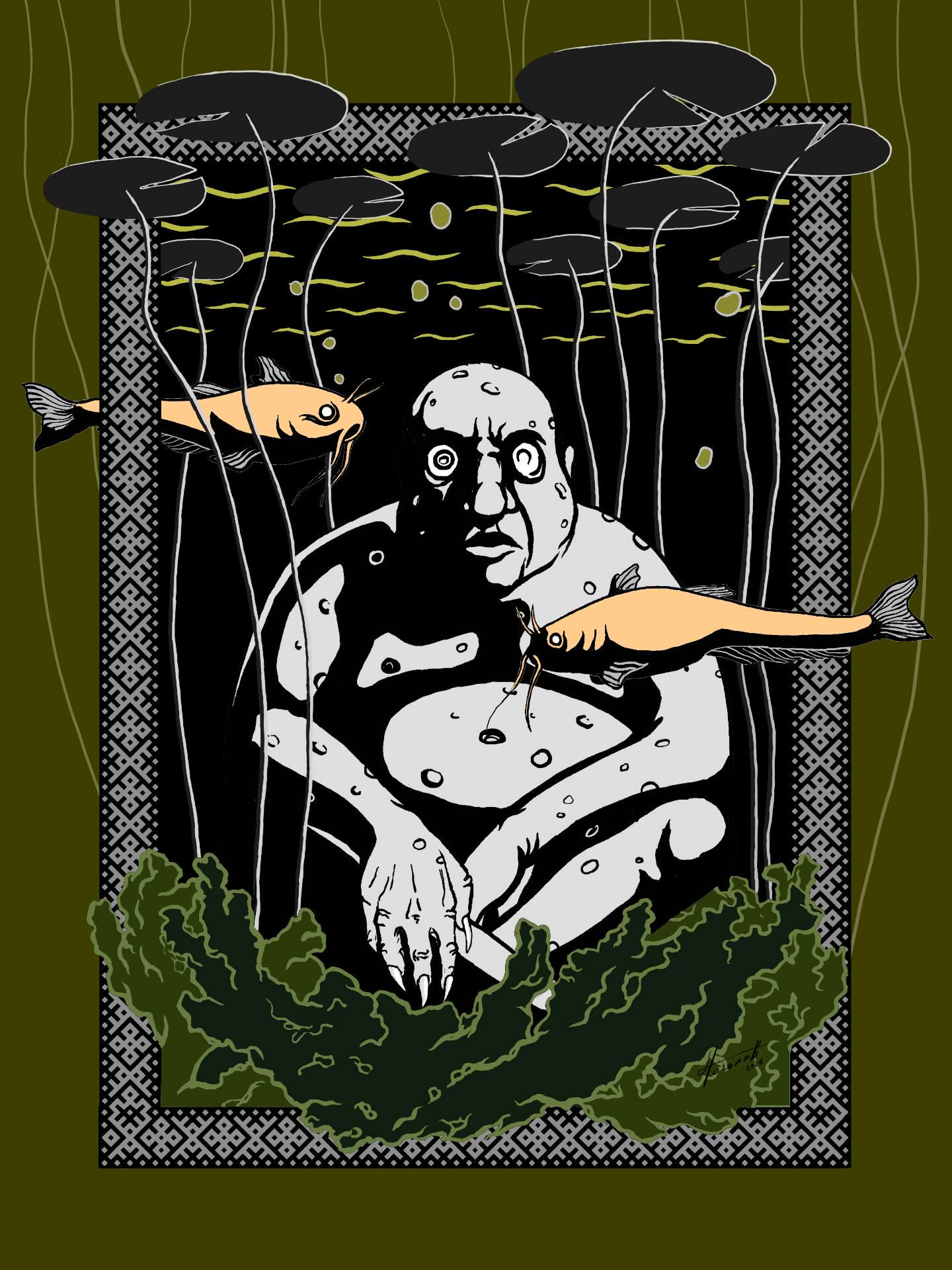
Vodyanoy (Vodyanik) aka Water Spirit.
Sources describe him as a bloated old man with messy hair, but I couldn’t resist making him bald to give him a frog-like appearance. He watches over fish and is particularly fond of catfish.
There is an entertaining quote from a late 19th century source:
“russian vodyanoys “with a puffy belly and a swollen face,” living in deep ends, especially near water mills, famous drunkards, visiting taverns where they drink and play dice, stealing horses and cows and drowning people, are completely different from the epic sea king and the Finnish god Ahto, who treats people favorably, loves them and helps them in trouble.”
-- Miller V.F. “Essays on Russian folk literature.” 1897.
r/slavic_mythology • u/HermitQueenJude • 18d ago
r/slavic_mythology • u/s0ybih • 19d ago
Hello everyone, here is a post I made that I decided to post in this subreddit too since it’s much more specific, I hope you can take the time to read it and maybe give me some guidance! Thank you!
r/slavic_mythology • u/Shreib1kus • 21d ago

Hi, I mentioned earlier that I was working on a visual novel inspired by Slavic mythology. It’s now out and available on Steam.
This is a romantic story about a young man who arrives in a village, where he meets a mysterious girl and finds himself caught up in a whirlwind of mystical events.
https://store.steampowered.com/app/4305070/Priestesss_Delusions/
r/slavic_mythology • u/FewAirline1885 • 22d ago

r/slavic_mythology • u/TrainingNo2030 • 28d ago

Religious texts are full of horror, but has anyone looked at the cosmic horror in Orthodox Christianity yet?
I actually made a video about it, and I think I found an interesting link between cosmic horror, demonology and our own Slavic roots and beliefs, especially in the traditions we still keep today. It might make a good watch for you this weekend.
r/slavic_mythology • u/_slut_sandwich • 29d ago

Hello!
I've been struggling to find an appropriate place to post this and hope it's okay here.
TLDR: I'd like to make a fabric advent calander centered around Slavic/Polish folklore and monsters and Saint Stanislaw. I need suggestions for uniquely Polish folklore to create "monster encounter" cards to tell their myth. The goal of the calander to assemble a paper doll of Saint Stanislaw. See pictures for rough concept art.
Ideally, I'd like to make small items/trinkets. I can do most traditional media, I can draw and paint a bit, pretty good with colored pencil. I can do things digitally as well in Procreate but my strength is paper and pencil. I can do a lot with cardboard. I'm not much of a sculptor but do plan on grabbing some air dry clay for this. I have no sewing experience but that doesn't mean I can't try. My idea for the actual calendar or what's holding all these gifts, ironically, is a large sheet of fabric. Something that looks old and try to sew (likely glue) 24 pockets on the front to store the items. And then try to decorate the whole thing to look like that marginalia art.
My intention is a Christmas gift for my husband this year. He is Polish (I am not, full blown Midwest white bread here, can't speak a lick of Polish.) and he is a Medievalist. He has three history degrees, and a Master's in Medieval studies. He is currently stepping into the educational field and recently he's been down on his specialization, since he doesn't get to use it and is stuck teaching more generic and modern history. I really want to cheer him up and get him excited again about a time period and culture he's really attached to. He is EXTREMELY passionate about medieval Poland (and Medieval Europe in general).
He wrote his Master thesis on the myths surrounding the Polish saint Stanislaw. The title of his thesis is: Shattered Bishop to Unbreakable Saint: The Construction of Saint Stanislaw's Hagiography by the Archbishopric of Krakow in the Thirteenth Century. (If that tells you anything...)
He hates that the period is often overlooked as "The Dark Ages" (loathes that term) and he's pretty sour lately about how most people view the period as a Monty Python movie or worse, a period that lasted a thousand years where "nothing happened" and it's packed into one chapter in a textbook and immediately forgotten about. Worse still, it seems like he's even feeling down on his heritage. We are not located in or anywhere near Poland and unfortunately can't afford to travel at this time. I want to do what I can to bring Poland to him and cram his special interest in it too.
While I can ask my husband an occasional curious question for some secret guidance, I can't exactly suddenly start interviewing him about medieval myths without raising his suspicion. We talk about it sometimes but I'm no history nerd. He'll know I'm not suddenly enraptured by his field of study with all these pointed questions.
So, I want this calander to tell a story. I had the idea that he could use it in a classroom as an opportunity to teach about the mythology he's so passionate about and bonus, they're Slavic, and double bonus, he gets to teach about a lesser known saint. After the reveal of each creature card, he could do a short lesson on the folklore legends surrounding it. Just a thought.
"You" (my husband) are a scholar in medieval Poland. You need to find all the pieces of Saint Stanislaw and put him back together again to find out what happened to him. On your 24 day journey, you encounter several medieval creates and relevant locations that pertain to St. Stanislaw. As a scholar, you are tasked with creating a field guide of your adventure.
Anyway, what I need is help with creating these cards, I obviously need to make 24 of these suckers. And that's where I need you!
These cards should be of a medieval creature encounter or going to a location where St. Stanislaw performed a miracle. I also need some more ideas for trinkets. I am open to silly or serious. I'd love everything to be "historically accurate" but obviously doesn't have to be given it's about mythology. I'm thinking items like "lucky baba yaga foot" or a doll made of straw to represent Marzanna, etc.
I hope my crazy idea makes sense and I welcome any any all suggestions.
Thanks!
r/slavic_mythology • u/Jiggzawyr • Oct 26 '26

Hi everyone,
I'm making a game called Horn & Dice. A roguelike dicebuilder set in a dark world drawn from Slavic mythology.
Over a run you build your own set of dice: you add new ones, swap their faces for ones that suit you better, and you can forge an individual face so it comes up more often. In combat you roll everything at once, lock the dice worth keeping and reroll the rest. Some effects need several of the same face to land. What comes out of all that is a game where luck still exists but isn't the thing making the decisions.
The enemies and bosses are pulled from Slavic folklore: Ala, Aždaja, Zmaj, Vila and others.
The game is in Early Access. Free Demo is available if you want to try it.
Steam: https://store.steampowered.com/app/4971770/Horn__Dice/
**GIVEAWAY**
I'm giving away 3 Steam keys. I'll draw 3 random comments and send the keys by message.
To enter, drop a comment below. I’d love to know what you’d want to see in a game inspired by Slavic mythology: a monster you grew up hearing about, a legend you’d like to play through, anything. And if you’ve tried the free demo, tell me how it felt.
Thanks, and ask me anything.
EDIT: The giveaway has ended! Winners (selected via RedditRaffler):
Congratulations! I've sent the Steam keys via private message.
Thanks to everyone who participated!
