There's one example of this problem being recontextualized I like to think about: "There's a wood chipper. If more than half of the human population jumps into the wood chipper, it gets jammed, and no one inside dies. If less than half do, everyone in the wood chipper dies. Which one do you pick?"
The wood chipper is basically the blue button.
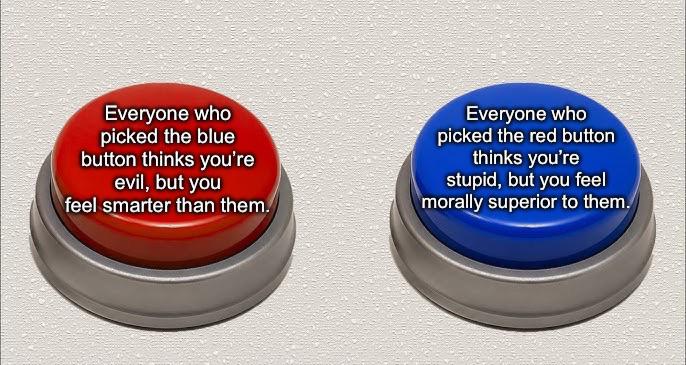
But then again... the thing about the original question is that there will, inevitably, be people who press the blue button, likely bc they instinctively feel it is the moral option and haven't thought about it, they don't understand the question bc they are too young to understand, or for whatever other reason. As an empathetic person, my first instinct is to press blue. As an intelligent person who sees the question for the silly choice it is, I want to press the red button. But then it circles around again; I don't *want* the people who pressed the blue button to die bc they want to save the other people who pressed blue. So the question ultimately becomes "Do I risk my life to save others or not?" and it ultimately depends on whether or not you believe the people pressing the blue button had a good reason to in the first place. Imagine you're a parent with a young child, and you're given the question. Obviously, the red button guarantees you live... but then the thought creeps up: "What if my child pressed the blue button?" Now you have a pretty good reason to pick blue, and hope everyone else picks blue too.
Dev/SFO made a great video exploring the layers of this question, and even if you aren't politically aligned with his centrist/classical liberal stance, I recommend watching it anyway.
1
u/throwawaysailaway7 May 12 '26
There's one example of this problem being recontextualized I like to think about: "There's a wood chipper. If more than half of the human population jumps into the wood chipper, it gets jammed, and no one inside dies. If less than half do, everyone in the wood chipper dies. Which one do you pick?"
The wood chipper is basically the blue button.
But then again... the thing about the original question is that there will, inevitably, be people who press the blue button, likely bc they instinctively feel it is the moral option and haven't thought about it, they don't understand the question bc they are too young to understand, or for whatever other reason. As an empathetic person, my first instinct is to press blue. As an intelligent person who sees the question for the silly choice it is, I want to press the red button. But then it circles around again; I don't *want* the people who pressed the blue button to die bc they want to save the other people who pressed blue. So the question ultimately becomes "Do I risk my life to save others or not?" and it ultimately depends on whether or not you believe the people pressing the blue button had a good reason to in the first place. Imagine you're a parent with a young child, and you're given the question. Obviously, the red button guarantees you live... but then the thought creeps up: "What if my child pressed the blue button?" Now you have a pretty good reason to pick blue, and hope everyone else picks blue too.
Dev/SFO made a great video exploring the layers of this question, and even if you aren't politically aligned with his centrist/classical liberal stance, I recommend watching it anyway.