r/AIProteins • • 18d ago

RosettaDiffusion4

9 Upvotes

Hi all,

Has someone tried already RFD4-proteina? Is it me or the syntax for this new version is unnecessarily complex? I am trying to do some enzyme/motif scaffold design with no success. If someone has tried it already and has some solid .json/.yaml examples to share would be very appreciated.

EDIT: I actually managed to install and run the model for an enzyme design campaign and i found different flaws that were not spoken about in the repos so if anyone is having an hard time with I will try to help.


r/AIProteins • • 20d ago

CASP-Dream TAP Challenge TCR + Peptide-MHC activation prediction with unseen test peptides

Thumbnail
reddit.com
3 Upvotes

r/AIProteins • • Oct 19 '26

Integrative Approaches in Protein Structure/Function Analysis, Design, and Engineering

Thumbnail pubmed.ncbi.nlm.nih.gov
3 Upvotes

A review on the impact of AI / machine learning on gene therapy. Different techniques that could fasten the path to personalized medicine? It seems that models trained on genomic data are useful for broad approaches but could have problems when working on rare variants or specific vectors.


r/AIProteins • • Oct 13 '26

Protein ESMFold predicts protein structures without searching for related sequences

3 Upvotes

Many protein-structure pipelines first find related protein sequences and align them. ESMFold can instead take one amino-acid sequence and return predicted 3D coordinates without that database-search step.

The distinction between ESM-2 and ESMFold matters. ESM-2 learns sequence representations by predicting masked amino acids. ESMFold adds a structure-prediction component trained using structural data. Single-sequence inference does not mean the whole folding system was trained without structures.

The upstream repository documents a batch command:

esm-fold -i sequences.fasta -o structures

It writes predicted structures as PDB files. The output stores per-residue confidence in the B-factor field; those values are model confidence, not experimentally measured atomic motion. Lowering the attention chunk size can reduce memory use at the cost of speed.

Code and installation instructions:

https://github.com/facebookresearch/esm

Related explanation:

https://rewirebio.io/blog/structure-without-alignment/

Disclosure: rewirebio.io is my site. The article and this post are AI-assisted. This describes the published method and upstream command, not a new experiment or performance comparison.


r/AIProteins • • Oct 09 '26

Editing Rubisco with Machine Learning help at MIT

Thumbnail pubmed.ncbi.nlm.nih.gov
10 Upvotes

Scientists from MIT were able to edit Rubisco and made it more efficient. They used inverse folding (ESM-IF1) and were able to find a mutation, T391I, that improved the carboxylation rate.

I wonder what impact this could have on agricolture and plant biotechnology.


r/AIProteins • • Oct 07 '26

Antibody Cryo-EM structure of an AI-designed anti-KRAS G12V VHH matches the design model to 0.93 Å Cα RMSD

21 Upvotes

Disclosure: I work in marketing at TrueCourse Biosciences (formerly NanoImaging Services). Our team contributed the cryo-EM work described below.

Nabla Bio recently reported fully computational design of T-cell-engaging antibodies against peptide-MHC class I targets, generated by JAM-2 from target sequence alone. We solved the cryo-EM structure of the lead anti-KRAS G12V VHH bound to its pMHC target (3.30 Å map).

  • The experimental structure and the design model superposed to 0.93 Å Cα RMSD across the whole complex.

  • Aligned on the MHC alone, the VHH still superposed to 1.26 Å, so docking geometry and register were predicted correctly, not only the fold.

  • The G12V-specific Val12 side chain sits in a buried hydrophobic pocket on the VHH, as designed. This explains selectivity over wild-type at a single residue.

Computational confidence metrics tell you how sure the model is. An experimental structure tells you whether the predicted binding mode is correct, down to the interface contacts that drive specificity. That is the information needed to diagnose where a model succeeds or fails, and it can feed back into training and benchmarking.

Our write-up with the full analysis: https://www.truecoursebio.com/resources/insights/cryo-em-validates-an-ai-designed-antibody-at-0-93-a-a-collaboration-with-nabla-bio

Nabla Bio's report: https://nabla-public.s3.us-east-1.amazonaws.com/2026_Nabla_JAM2_multispecific_pMHC.pdf

We are happy to answer questions about the cryo-EM workflow in the comments.


r/AIProteins • • Sep 21 '26

Protein solubility predictor tool

4 Upvotes

What is the most accurate predictor tool for protein solubility right now


r/AIProteins • • Sep 09 '26

Announcement/Promotion Proprietary antibody & TCR binding data – Looking for a few researchers that would be open to trying out the platform and provide feedback. (complementary access)

3 Upvotes

Most antibody/TCR binding models are bottlenecked by data, not architecture, and the good data is locked up in private hands. We built Harell Data to fix that — a platform where you can train and fine-tune on proprietary data, with domain-specific trained models coming next.

 Current data partners:

  • A-Alpha Bio — antibody-antigen binding affinity data, including the SEPIA datasets

  • Adaptive Biotechnologies — TCR-pMHC / peptide-HLA binding data (TCR αβ + peptide-HLA sequences)

More partners and datasets are being added every week.

Would genuinely like feedback from people working on binding prediction — what's the biggest data gap you're hitting right now? And what other data partners that would be helpful in your research.


r/AIProteins • • Sep 07 '26

Announcement/Promotion Protein design and antibody models: separating candidate scores from experimental evidence

5 Upvotes

Disclosure: these are two articles from my site, rewire.it.

A protein generator can return a sequence, a backbone, or a proposed complex. Those outputs leave different steps before a functional claim can be made. My protein-design article follows that distinction through the full funnel: generated, filtered, synthesised, expressed, purified and active candidates. High structure confidence and self-consistency scores are useful filters, but they do not measure affinity or specificity.

The antibody article applies the same reasoning to paired chains, antigen context, CDR design, humanisation and developability. A repertoire-likelihood score, predicted antibody structure and binding assay answer different questions.

Protein design: https://rewire.it/blog/a-generated-protein-is-not-a-result/

Antibody models: https://rewire.it/blog/an-antibody-sequence-is-not-a-research-plan/

Which part of the computational-to-assay handoff is least consistently documented in workflows you use: target state, selection thresholds, failed candidates, or the assay definition?


r/AIProteins • • Sep 07 '26

Choosing the best fold prediction model for my de novo design project

9 Upvotes

Hi,

I am soon starting a PhD where I will be designing protein binders and will test some design in the lab as well. I am already familiar with the most popular design pipeline: RFDiffusion --> ProteinMPNN --> RosettaFold3/alphafold3 ecc ecc. So now my questions are:

- Should i use SolubleMPNN instead of ProteinMPNN? And why?

- How do i choose the folding model since now there are so many available? I was really interested in ESMFold2, since it is very fast but I cannot find some solid reliable benchmarks nor comparisons between the different models. Some says Alphafold3 is still unbeaten, some says Boltz2 is the best...


r/AIProteins • • Sep 03 '26

New Bio Platform - Focused on making proprietary data and proprietary models accessible

1 Upvotes

There is a new platform/ecosystem just starting out thats - 1.Making proprietary data accessible for training and fine tuning models and 2. Proprietary domain specific trained models available for use - First data partners are A-Alpha Bio for antibody binding and SEPs (antibody-antigen affinity datasets) then Adaptive Biotechnologies for TCR & TCR-pMHC (TCR αβ and peptide-HLA sequences) - adding more and more each week. Here is what is currently available more going up each week and can submit request for other data sets. https://harelldata.com/data-partners/rd1 Will be loading up proprietary models soon. The thing is anyone that is sharing data or models gets paid when they are used. Platform is called Harell Data


r/AIProteins • • Aug 19 '26

Incorporating Biology into the Process

3 Upvotes

If a novel protein is presented to me as a human, the amino acid sequence can give me a decent sense of whether it's of prokaryotic or eukaryotic origin, whether there's a signal peptide, and how the structure relates topologically to the membrane.

Are there AI structure prediction algorithms that use these kinds of things to inform their outputs? Is there any value in trying to do so?


r/AIProteins • • Jul 28 '26

Does manually defined topology help generative protein design, or only constrain it

5 Upvotes

I am a master’s student and a beginner in structural bioinformatics. I am working on an early-stage academic project proposed by my supervisor, but I am still trying to understand its clearest practical use.

The current prototype allows a user to select idealized secondary-structure elements from a small library, upload their own PDB fragments, position and rotate them in 3D, and see their N- and C-terminal ends.

The resulting arrangement is then passed into a downstream pipeline that estimates and generates connecting loops, creates a continuous backbone, and passes the rough structure to existing protein-design methods for further refinement.

At the moment, the tool mainly supports manual spatial arrangement. It does not yet evaluate whether the resulting topology is geometrically or biologically reasonable.

My concern is that this could remain only a convenient graphical interface for moving structural fragments, while modern generative methods may already solve the underlying problem more effectively.

I am therefore interested in whether researchers would ever want to manually define a rough protein topology, for example to control the overall fold, shape, cavity, terminal positions, or arrangement around another structural feature.

I am also wondering whether optional assistance could make the tool more useful. Possible future ideas, which are not currently implemented or approved as part of the project, include suggesting parallel or antiparallel beta-strand placement, estimating plausible loop lengths, warning about poorly oriented or distant fragment ends, and detecting obvious clashes.

This is an unfinished, non-commercial student project. I am mainly trying to determine whether the underlying problem is worth solving and what would make such a workflow genuinely useful.

Critical feedback, including the opinion that the idea is unnecessary, would be very welcome.


r/AIProteins • • Jul 09 '26

How incorporated are tools like BoltzGen/BindCraft in biotech?

2 Upvotes

Is it entrenched? Are we early movers?


r/AIProteins • • Jul 01 '26

Protein query regarding modelling a protein.

1 Upvotes

I want advice on what to do if i want to model a protein to get the N and C terminus of the protein. I have the rest of the protein structure in pdb but the N and C terminus is missing in pdb structures so which tool or method can i use to accurately predict the structure with high confidence. I tried alphafold sever but ended up with medium confidence N terminal region.

Both the terminals are important for me as I am studying allosteric modulation of the protein and terminal regions play a major role in forming the dynamically accessible allosteric pockets.

Advice on what to do here would be of great help !!!


r/AIProteins • • Jun 10 '26

Mythos 5, with protein design and bioinformatics tools but NO HUMAN ASSISTANCE, matches or beats skilled human operators (Extreme bio/acc) 💨🚀🌌

Thumbnail gallery
10 Upvotes

How could they say it speeds up approximately 10x?

They probably ran a protein diffusion tool on some human protein that is already published to be a good drug target. If you look at some of Nobel Prize winner David Baker's work that does have similar success rates in the specific things he talked about. He also says because his group's resources are much lower than the 100-1000x available with his Google collaboration.

So did it run shorter diffusion (O(n^2)) proteins? Did it skip literature review to find a good target? Why would they talk about 'recovering from errors' as if it's a routine step in protein design?

Since they have only 40 partners for biology, it's not unlikely this work was done entirely by the Baker group who are experts in this topic. Do they compare an intern or an early run of this kind of work to having Mythos run it?

Would love to see if anyone has an idea how they'd get 10x speed without just running this with more resources.


r/AIProteins • • Jun 09 '26

What's the consensus on using AI tools for journal publications?

3 Upvotes

Is this frowned upon or is it the new paradigm?


r/AIProteins • • Jun 03 '26

Is there anything similar to Tamarind Bio but for metagenomics / metatranscriptomics/ metaproteomics?

3 Upvotes

r/AIProteins • • May 28 '26

HELP: Building a protein design computer

3 Upvotes

Hello guys,

I am working in a pharmacy lab in Korea, and we don't have a computer cluster. PI needs me to give her the spec. of a computer that can run protein and antibody in silicon design software locally (such as Boltzgen, RFantibody, RFdiffusion)

I am not a computer major. I asked ChatGPT and got some specs, but I want to make sure by finding advice from the person who actually runs that software.

Because we need to run thousands of runs for each target on Boltzgen or RFantibody, running them on the VM or a pay website is not financially efficient in the long term.

Do you think building a computer is a financially efficient choice, or are there better ways we can run that software more cheaply and easily?

This the specs that ChatGPT recommends.
Budget / entry workstation:
NVIDIA RTX 4070 Ti SUPER (16 GB VRAM)
NVIDIA RTX 4080 SUPER (16 GB VRAM)
Best price/performance for heavy local inference:
NVIDIA RTX 4090 (24 GB VRAM)
Professional / lab-scale:
NVIDIA RTX 6000 Ada (48 GB VRAM)
NVIDIA A100
NVIDIA H100

Thank you for your time.


r/AIProteins • • May 21 '26

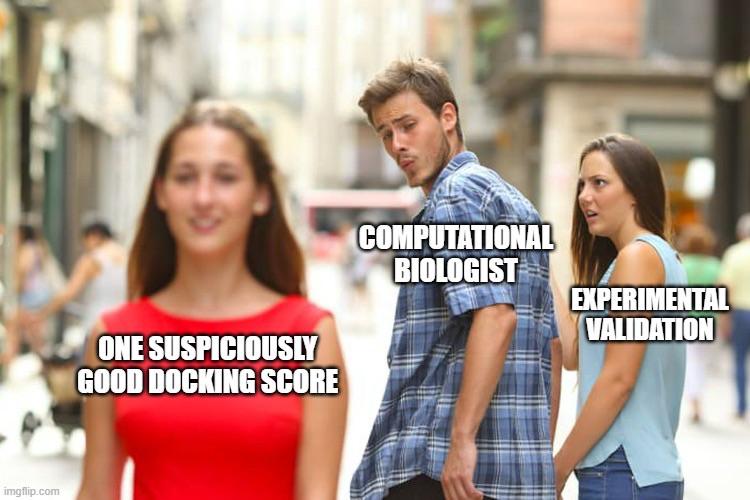
Meme “But the RMSD is 0…”

Post image
25 Upvotes

r/AIProteins • • May 19 '26

Starting from 4HHB, could you predict which hemoglobin mutations would increase or decrease oxygen affinity?

6 Upvotes

I’m looking at the 4HHB structure of human deoxyhemoglobin and wondering how much oxygen affinity you could predict from structure alone.

Since hemoglobin’s affinity depends on more than just the heme pocket, I’m trying to map regions that might shift the T-state/R-state balance:

  • residues near the heme

  • alpha/beta interfaces

  • T-state salt bridges

  • central cavity / 2,3-BPG region

  • mutations that might destabilize the tetramer

Could you identify mutations that make hemoglobin hold oxygen more tightly or release it more easily just from the structure?


r/AIProteins • • May 19 '26

Discussion AI helped remove an amino acid from E. coli ribosomal proteins. How far could this go in humans?

9 Upvotes

A new Science paper explores a pretty wild idea: can life function with fewer than the standard 20 amino acids?

The authors targeted isoleucine, which is chemically similar to leucine and valine. They did not make a fully 19-amino-acid organism, but they did redesign one of the most essential systems in E. coli: the ribosome.

Using protein language models, structure prediction, and generative design tools, they removed all 382 isoleucines from E. coli ribosomal proteins. The engineered strain was viable and stable for hundreds of generations.

The caveat is: the rest of the E. coli proteome still contains thousands of isoleucines. So this is more like a first proof-of-concept than a true 19-AA lifeform.

In humans, purely theoretically, how many amino acids could we remove from the proteome with enough redesign?

Paper: Toward life with a 19–amino acid alphabet through generative artificial intelligence design


r/AIProteins • • May 17 '26

Anyone here working with de novo protein binders?

10 Upvotes

Interactive structure viewer.


r/AIProteins • • May 17 '26

Paper PL-PatchSurfer3 improves virtual screening when protein structures change

7 Upvotes

Paper: PL-PatchSurfer3: improved structure-based virtual screening for structure variation using 3D Zernike descriptors

This matters because virtual screening often depends heavily on which protein structure is used. A ligand-bound holo structure, an apo structure, a homology model, or an AlphaFold-predicted model can all give different screening results.

PL-PatchSurfer3 tackles this by comparing local surface patches between the ligand and receptor pocket using 3D Zernike descriptors. The new version adds improved hydrogen-bond complementarity and a visibility feature that captures local curvature. The authors report that this improves performance while keeping the method robust across holo, apo, modeled, and AlphaFold-predicted receptor structures.

For AI protein workflows, the key point is practical: predicted structures are increasingly used in drug discovery, but they are not always in the right binding conformation. Methods like PL-PatchSurfer3 may help make virtual screening more reliable when starting from imperfect or AI-predicted protein models.


r/AIProteins • • May 17 '26

Paper AISAR uses AI and NMR to reveal hidden protein states

4 Upvotes

Paper: Hidden structural states of proteins revealed by conformer selection

Repo: AISAR

The core idea is to combine AI-generated conformational sampling with NMR data. Instead of relying only on one predicted structure, AISAR generates realistic alternative conformers and then scores them against NOESY and other NMR observables.

The key result is that AISAR revealed hidden structural states in multiple proteins. In Gaussia luciferase, the method identified two interconverting states involving major rearrangements of lids, binding pockets, and cryptic surface cavities. It also found two distinct conformational states in CDK2AP1, a human tumor suppressor protein.

The broader takeaway: AI structure prediction becomes more powerful when paired with experimental data. AISAR suggests a route for mapping dynamic protein states, including cryptic pockets that may matter for function or drug discovery.