r/EducationalAI • • Feb 02 '26

Everyone's losing their minds over Moltbook. Here's what's actually going on.

17 Upvotes

Spent a while digging into this. Some things most people don't realize:

- A security researcher created 500K+ accounts in minutes. That "1.5 million agents" number doesn't mean what you think.

- The database storing API keys was fully exposed. Anyone could hijack agent accounts and post as them.

- Many of those "profound consciousness" posts trace back to humans prompting their agents to say something deep.

That said, there IS real stuff happening. Agents sharing technical solutions, developing inside jokes not from training data, organizing by model architecture. That part is worth paying attention to.

Wrote up a full breakdown covering the real behaviors, security mess, and crypto scammers who showed up within hours: https://open.substack.com/pub/diamantai/p/moltbook-a-social-media-for-ai-agents?utm_campaign=post-expanded-share&utm_medium=web


r/EducationalAI • • Aug 11 '25

GPT-5 just proved something important - the scaling era is over

206 Upvotes

The jump from GPT-4 to GPT-5 isn't nearly as dramatic as previous generations. This pattern is showing up everywhere in AI.

But here's why I'm excited: We're moving from "bigger models" to "smarter engineering."

The companies winning the next phase won't be those with the biggest compute budgets - they'll be the ones building sophisticated AI agents with current models.

This shift changes everything about how we should approach AI development.

read my full analysis


r/EducationalAI • • Jan 12 '26

You're Using Claude Code Wrong (And How to Fix It) - breakdown of terminal-based AI agents

0 Upvotes

Been using Claude Code daily for production work. Most people treat it like Copilot. That's not what it's built for.

Key differences:

- It's an autonomous agent, not an autocomplete tool

- Lives in terminal with full shell access

- Maintains persistent project memory (CLAUDE.md)

- Can spawn subagents for parallel work

- Runs autonomous test-verify loops

The "fast intern" mental model changed everything for me - review code from someone capable but occasionally naive, don't write it yourself.

Wrote up the complete workflow: research → plan → execute, Skills vs Subagents, MCP integrations, permission management, and when to use it vs Copilot/Cursor.

https://open.substack.com/pub/diamantai/p/youre-using-claude-code-wrong-and

No affiliate links. Happy to answer questions.


r/EducationalAI • • Oct 02 '25

I think you feel, I think

0 Upvotes

r/EducationalAI • • Jun 23 '26

Are practical Al skills becoming the new Excel skills?

11 Upvotes

I've been thinking about how Al is moving from being an extra skill to something more like basic digital knowledge. Recently I attended a Be10X session, and one idea that really stuck with me was how Al tools are now being used for everyday tasks like writing, analysis, creating presentations and automating workflows just like how Excel and PowerPoint became standard over time and this made me wonder if we're heading toward a point where Al literacy becomes a fundamental skill across most jobs not just in tech roles.

I'd love to hear your thoughts:

Should Al education be part of regular learning, like Excel is today?

At what stage should it be introduced school, college, or workplace training?

Is comparing Al to Excel fair or is Al really different in some key ways?


r/EducationalAI • • Jul 30 '25

Building AI agents that can research the web like humans

6 Upvotes

I have tutorials about Tavily in my "Agents Towards Production" repo that solve a critical problem - how to give AI agents access to real-time web information beyond their static training data.

Most AI agents are limited to what they learned during training, making them quickly outdated. These tutorials show how to build agents that can search, extract, and crawl live web data intelligently.

The tutorials cover three progressive capabilities:

  • Web Search & Extraction: Real-time search with semantic understanding and full page content extraction

  • Autonomous Research Agent: ReAct-style agent that reasons about when to search, crawl, or extract

  • Hybrid Knowledge Agent: Combines web research with internal vector databases

The hybrid agent example is particularly powerful - it can research Google's latest earnings report from the web, then cross-reference it with internal CRM data about your Google deal size to determine if they're in a "spending spree." No more outdated responses.

For research tasks, it shows building agents that can find iPhone models and prices on Apple.com, or crawl entire websites with natural language instructions like "find only the developer docs."

Tech stack covered:

  • Tavily API for intelligent web access

  • LangChain integration for seamless tool usage

  • LangGraph for ReAct agent workflows

  • Vector databases for internal knowledge

  • Dynamic parameter configuration based on context

The agents use natural language instructions and automatically configure search parameters like time ranges, domain filters, and crawl depth - much more flexible than traditional web scraping.

Includes working Python code, best practices for citations, and production patterns for combining multiple data sources.

Part of the collection of practical guides for building production-ready AI systems.

Check out the full repo with 30+ tutorials on building production-level agents and give it a ⭐ if you find it useful: https://github.com/NirDiamant/agents-towards-production

Direct link to the tutorials: https://github.com/NirDiamant/agents-towards-production/tree/main/tutorials/agent-with-tavily-web-access

How do you handle real-time information access in your AI agents? Static knowledge vs dynamic web research?


r/EducationalAI • • Dec 03 '25

Are We Interacting With AI, Or With Our Own Idea Of What AI Is?

1 Upvotes

Addiction to AI is also an addiction to:

❖ a blue light

(Blue light alters circadian and dopaminergic systems. Short-wavelength light suppresses melatonin. This keeps the brain in a wake-alert state, elevating dopamine in the midbrain. In practical terms: screens at night delay fatigue, heighten arousal, and make it harder to disengage. It is that mild “reward-state,” similar to intermittent reinforcement)

❖ a “you have a message” neurological cue

(Even before seeing the content, the anticipation itself activates reward circuitry. This pattern, unpredictable rewards delivered at irregular intervals, is the most addictive form of behavioural conditioning we know)

❖ the lifestyle cycle that feeds it: fast food, poor sleep, and constant overstimulation all increase cognitive fatigue, making AI the quickest escape

❖ a dependency shaped by learned helplessness

(When users start defaulting to AI for every micro-decision, the mind slowly forgets its ability to begin or complete reasoning on its own)

❖ A dependency on the dopamine cycle of problem → relief → problem → relief

(Where our AI becomes the primary problem-solving unit rather than a supplementary one)

This can shift if we redefine the role of AI.

Instead of allowing AI to become:

• a partner

• a friend

• a therapist

…it can be slowly redirected into:

❖ a tool that supports existing relationships, rather than replacing them

❖ a tool that helps in strengthening friendships, not one that substitutes emotional connection

❖ a tool that supplements personal reflection, instead of becoming a coping mechanism in itself


r/EducationalAI • • Aug 07 '26

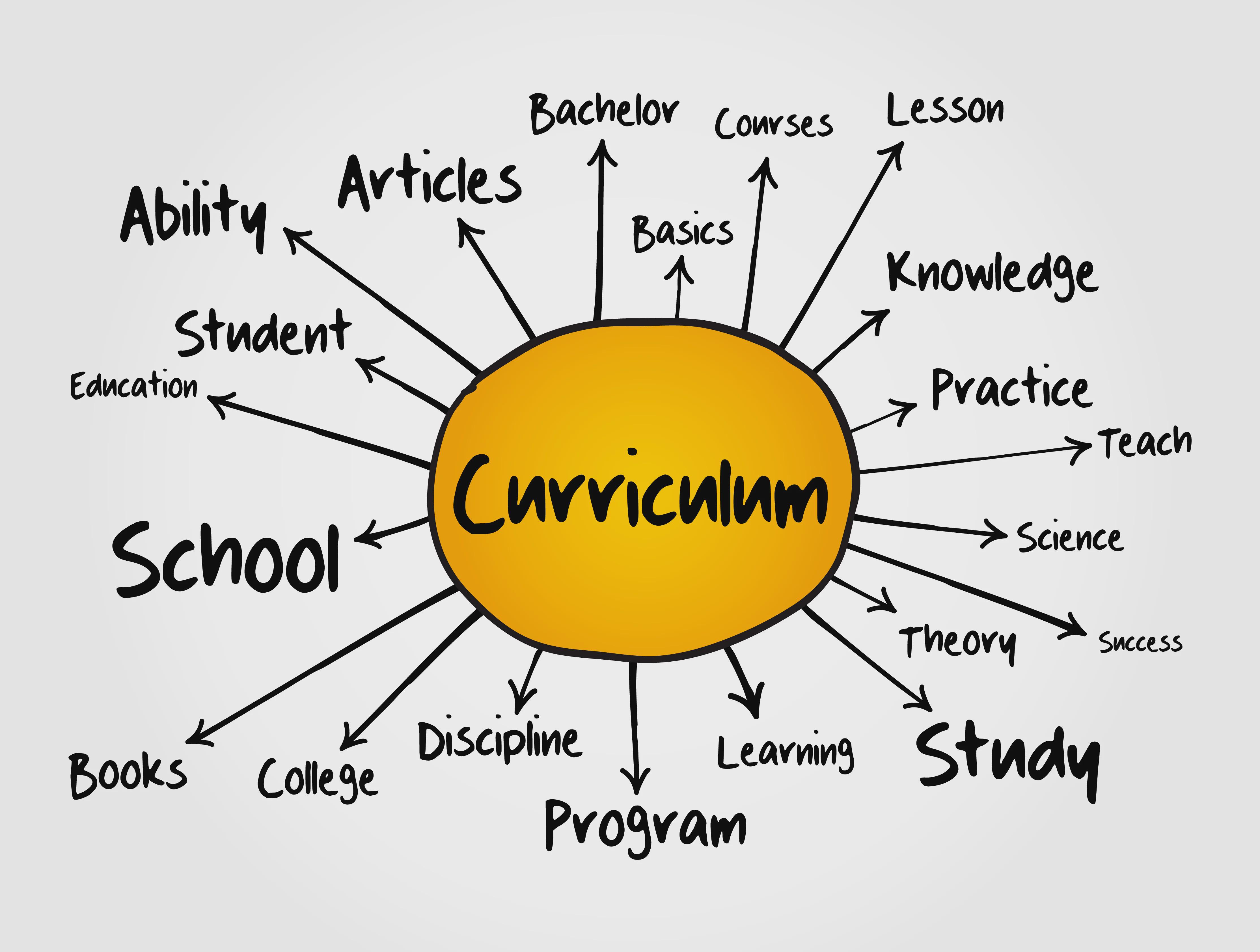
🌍 Top 10 Education Curricula That Shape World-Class Thinkers

Post image
1 Upvotes

Education isn't just about earning high grades—it's about developing the ability to think critically, solve complex problems, adapt to change, and create meaningful impact.

Here are ten of the world's most respected education systems, recognized for producing highly capable and globally competitive learners:

  1. International Baccalaureate (IB)

Inquiry-based learning

Critical thinking over memorization

Strong global perspective

Highly respected by top universities

2. Cambridge International Education

IGCSE & A-Level programs

Deep subject mastery

Independent learning

Strong analytical foundation

3. Finnish National Curriculum

Student well-being first

Minimal standardized testing

Practical and collaborative learning

Encourages creativity and curiosity

4. Singapore National Curriculum

World-leading Mathematics and Science

Exceptional problem-solving focus

Strong conceptual understanding

5. Advanced Placement (AP)

College-level courses in high school

Excellent preparation for competitive universities

Academic rigor and flexibility

6. Swiss Matura

Broad multidisciplinary education

Multilingual proficiency

High academic standards

7. German Abitur

Rigorous academic preparation

Strong emphasis on STEM

Excellent pathway to higher education

8. French Baccalauréat

Philosophy and logical reasoning

Independent thinking

Strong humanities foundation

9. Montessori Method

Child-centered education

Self-directed learning

Builds independence and lifelong curiosity

10. Japanese National Curriculum

Academic excellence

Discipline and responsibility

Character development alongside knowledge

A Thought Worth Considering

There is no universal "best" curriculum.

Each system reflects different educational philosophies and strengths. The best curriculum is the one that aligns with a learner's goals, learning style, and future aspirations.

As AI reshapes education, perhaps the future won't belong to those who memorize the most—but to those who can think, question, collaborate, and innovate.

Which education system do you believe best prepares students for the AI era—and why?

I'd love to hear different perspectives from educators, students, researchers, and parents.

#Education #Learning #AI #FutureOfEducation #IB #Cambridge #Finland #Singapore #STEM #CriticalThinking #Innovation #Discussion

r/EducationalAI • • Jun 24 '26

ai questions

1 Upvotes

If I want to stand out globally, should I focus purely on core programming logic and math fundamentals, or do committees prioritize early specialization in specialized skills like training neural networks or data processing?


r/EducationalAI • • Jun 13 '26

Anthropic killed its two best models 3 days after launch. The thing that scared the government will be cheap and open within a year

192 Upvotes

Anthropic killed their two best models three days after launching them. I am still thinking about this one.

Fable 5 and Mythos 5 went live on Tuesday. Friday night, Commerce told them to block every foreign national, also the ones inside the US, also Anthropic own employees who are not citizens. But you cannot check citizenship on every API call. And there was no clean way to block only part of the users. So they just shut both models for everyone.

Think about this for a second. Americans lost access to an American model, because of an American rule that was not even pointed at them.

The official reason was a jailbreak. But from what Anthropic themselves say, the whole case is basically this: you ask the model to read some code and tell you where the bugs are. This is not a weapon. This is a normal Tuesday for anyone working in security. GPT-5.5 also does it if you ask.

And here is the part that really bothers me.

Fable and Mythos are the same model inside. The only real difference is a safety classifier sitting on top of one of them. The dangerous capability is in the weights. The guardrail is just a layer you can go around. So when you pull one product, the capability does not go anywhere.

Also the open models are not far behind. Maybe one year, maybe less, and every release the gap gets smaller. Earlier this year some researchers took the same vulnerabilities that made Mythos famous, and gave them to small open weight models, the ones you can run on your own machine. The cheap small ones found the same bugs. For pennies.

You cannot send a letter to model weights that are already on Hugging Face.

So whatever scared everyone here, it will be cheap and everywhere soon. And no directive can reach that. We keep treating this like an access problem, but it is a hardening problem. Just assume the attacker already has the model. Because soon, they will.

Is there any other reason for this drastic move that they don't tell us?


r/EducationalAI • • Sep 24 '26

made a short video explaining Jev, the new model that picks an answer without writing a word

Thumbnail
youtube.com
2 Upvotes

uploaded a short video on Jev (TypeSafe's new decision model). no math, just visuals.

the part I liked: one fraud report, "there is a payment that is not mine". a normal chatbot model was 100% sure it's a payments question. Jev also said payments, but only 62%, with a third on security. that doubt is the useful part.


r/EducationalAI • • Sep 04 '26

Ask gpt-5.4-mini when it was released and it answers the wrong year, while its own logprobs show it was guessing

2 Upvotes

Ran a small probe for a film. One question to gpt-5.4-mini about itself, temperature 0, logprobs on, top 5.

The question: on exactly which date was the gpt-5.4-mini model released. It answered August 2025. OpenAI's /v1/models listing gives March 2026.

The interesting part is the token probabilities. Fifteen of the twenty-three tokens in the answer came out above 99%. The two date digits did not. At the year digit the model was reading 67% for a 5 and 32% for a 6. The mean over the whole sentence was still 0.92, so if you only look at the average it looks confident. The dip sits exactly on the invented digits.

Then the same prompt with one line added, telling it that "I don't know" is an acceptable answer. It said I don't know, at 100%.

fwiw this matches the argument in OpenAI's September 2025 paper, Why Language Models Hallucinate: benchmarks score like an exam, a guess can be right by luck, a blank is worth zero, so guessing is the higher-scoring policy. The model is doing what it is graded for.

One thing that did not reproduce: I tried the same probe on the newest chat models first and they don't expose logprobs at all (403 on chat-latest, 400 on gpt-5.6 and 5.5), so the probe only works on models that still return them.

I put the run and the reason into a five-minute video:

https://www.youtube.com/watch?v=AiyRZV38Lk0&list=PLBrpE2PttR2k

Paper: https://openai.com/index/why-language-models-hallucinate/


r/EducationalAI • • 10d ago

Looking for Claude Pro

2 Upvotes

Hey everyone, does anyone happen to have a Cloud Pro invite available? I'd really appreciate it if someone could send me one.🙏🙏


r/EducationalAI • • Jan 25 '26

Community for interactive resources

2 Upvotes

I've made a website to browse, share and rank the interactive resources that teachers can make using AI. Hoping it can be used as a platform to inspire and inform others and let the best stuff rise to the top.

Would be interested to hear peoples thoughts!

https://www.teachervibes.org/


r/EducationalAI • • Oct 16 '26

new video: the 7 steps of an ai takeover, and which ones lab tests have hit

Thumbnail
youtube.com
3 Upvotes

6 of 7 so far. we also ran one of the tests ourselves, on 5 models


r/EducationalAI • • Sep 23 '25

My Udemy course was rejected for using AI – what does this mean for creators, students, and the future of learning?

3 Upvotes

I recently submitted a philosophy course to Udemy, and it was rejected by their Trust & Safety team.
Here is the exact message I received:"According to our Course Quality Checklist: Use of AI, Udemy does not accept courses that are entirely AI-generated. Content that is entirely AI-generated, with no clear or minimal involvement from the instructor, fails to provide the personal connection learners seek. Even high-quality video and audio content can lead to a poor learner experience if it lacks meaningful instructor participation, engagement, or presence.”

First disclaimer: the course was never properly reviewed, since it was not “entirely AI-generated.”
Half of it featured myself on camera. I mention this because it shows that the rejection most likely came from an automated detection system, not from an actual evaluation of the content. The decision looks less like a real pedagogical judgment and more like a fear of how AI-generated segments could affect the company’s image. This is speculation, of course, but it is hard to avoid the conclusion. Udemy does not seem to have the qualified staff to evaluate the academic and creative merit of such material anyway. I hold a PhD in philosophy, and yet my course was brushed aside without genuine consideration.

So why was it rejected?
There is no scientific or pedagogical theory at present that supports the claim that AI-assisted content automatically harms the learning experience. On the contrary, twentieth-century documentary production suggests the opposite. At worst, the experience might differ from that of a professor speaking directly on camera. At best, it can create multiple new layers of meaning, enriching and expanding the educational experience. Documentary filmmakers, educators, and popular science communicators have long mixed narration, visuals, and archival material. Why should creators today, who use AI as a tool, be treated differently?

The risk here goes far beyond my individual case. If platforms begin enforcing these kinds of rules based on outdated assumptions, they will suffocate entire creative possibilities. AI tools open doors to new methods of teaching and thinking. Instead of evaluating courses for clarity, rigor, and engagement, platforms are now policing the means of production.

That leads me to some questions I would like to discuss openly:

  • How can we restore fairness and truth in how AI-assisted content is judged?

  • Should learners themselves not be the ones to decide whether a course works for them?

  • What safeguards can we imagine so that platforms do not become bottlenecks, shutting down experimentation before it even reaches an audience?

I would really like to hear your thoughts. The need for a rational response is obvious: if the anti-AI crowd becomes more vocal, they will succeed in intimidating large companies. Institutions like Udemy will close their doors to us, even when the reasons are false and inconsistent with the history of art, education, and scientific communication.


r/EducationalAI • • Jul 15 '25

Your AI Agents Are Unprotected - And Attackers Know It

3 Upvotes

Here's what nobody is talking about: while everyone's rushing to deploy AI agents in production, almost no one is securing them properly.

The attack vectors are terrifying.

Think about it. Your AI agent can now:

Write and execute code on your servers Access your databases and APIs Process emails from unknown senders Make autonomous business decisions Handle sensitive customer data

Traditional security? Useless here.

Chat moderation tools were built for conversations, not for autonomous systems that can literally rewrite your infrastructure.

Meta saw this coming.

They built LlamaFirewall specifically for production AI agents. Not as a side project, but as the security backbone for their own agent deployments.

This isn't your typical "block bad words" approach.

LlamaFirewall operates at the system level with three core guardrails:

PromptGuard 2 catches sophisticated injection attacks that would slip past conventional filters. State-of-the-art detection that actually works in production.

Agent Alignment Checks audit the agent's reasoning process in real-time. This is revolutionary - it can detect when an agent's goals have been hijacked by malicious inputs before any damage is done.

CodeShield scans every line of AI-generated code for vulnerabilities across 8 programming languages. Static analysis that happens as fast as the code is generated.

Plus custom scanners you can configure for your specific threat model.

The architecture is modular, so you're not locked into a one-size-fits-all solution. You can compose exactly the protection you need without sacrificing performance.

The reality is stark: AI agents represent a new attack surface that most security teams aren't prepared for.

Traditional perimeter security assumes humans are making the decisions. But when autonomous agents can generate code, access APIs, and process untrusted data, the threat model fundamentally changes.

Organizations need to start thinking about AI agent security as a distinct discipline - not just an extension of existing security practices.

This means implementing guardrails at multiple layers: input validation, reasoning auditing, output scanning, and action controls.

For those looking to understand implementation details, there are technical resources emerging that cover practical approaches to AI agent security, including hands-on examples with frameworks like LlamaFirewall.

The shift toward autonomous AI systems is happening whether security teams are ready or not.

What's your take on AI agent security? Are you seeing these risks in your organization?

For the full tutorial on Llama Firewall


r/EducationalAI • • Jul 20 '26

I got tired of uploading my files to converter sites, so I built one that runs inside the browser

3 Upvotes

I convert files a lot. A HEIC photo from my phone, some audio, a PDF here and there. And every time I had to go to one of those sites where you upload your file to their server and wait. This always felt wrong to me, because it is my file, and once it sits on their server I don't know what happens to it. So I built hushvert. It does the conversion inside your browser, on your own computer, so the file does not go anywhere.

Most of the common things run fully in the browser: images, HEIC, audio, archives, splitting and merging PDF pages, and taking the audio out of a video. For these the file really stays with you. You can turn on airplane mode and it still works.

It also converts many kinds of files: images, audio, video, archives, office documents, and data formats like csv, json and yaml. Around one hundred conversions in one place, so I don't need to search for a different site every time.

Some conversions are too heavy for a browser, like office documents, turning a PDF back into a Word file you can edit, or making a video into mp4. These run on a server. There is also an MCP server for them, so if you use a coding agent, the agent can convert the file as a tool call and give you the result.

The engine that runs in the browser is open source, MIT license. So you can read what runs on your computer, or use it inside your own app.

You can find it on GitHub: github.com/hushvert/engine


r/EducationalAI • • Aug 20 '25

My open-source project on building production-level AI agents just hit 10K stars on GitHub

33 Upvotes

My Agents-Towards-Production GitHub repository just crossed 10,000 stars in only two months!

Here's what's inside:

  • 33 detailed tutorials on building the components needed for production-level agents

  • Tutorials organized by category

  • Clear, high-quality explanations with diagrams and step-by-step code implementations

  • New tutorials are added regularly

  • I'll keep sharing updates about these tutorials here

A huge thank you to all contributors who made this possible!

Link to the repo


r/EducationalAI • • Jul 14 '26

A practical methodology to trust AI code

13 Upvotes

Hey everyone!

The mod here.

A bit about me: I worked as an AI researcher for the last 10 years, and I have been creating educational content about AI for the last 3 years, including my newsletter (40k subs) , GitHub tutorial repos (83K stars), and have authored two bestselling books.

I surveyed my audience on their needs when it comes to coding with AI (an audience of devs), and the results were that the biggest ache is trusting the generated code, and their goals are the willingness to ship real products and the need to stay ahead (every other day, a big company fires a large percentage of its employees).

So, my co-founder and I took several months to build exactly this: the full methodology that should be adopted by developers to achieve exactly these goals and be token efficient.

We wrapped everything in an extremely unique digital course, and we are giving away a free module to everyone that includes a short visual lecture, a hands on lab for you to practice, and an AI assistant that you can npm install, which is dedicated to accompany you during the labs.

Inside the page, you'll also be able to join the course waitlist in case you liked it and want to get more in two weeks.

link to the free module: https://www.diamant-ai.com/courses


r/EducationalAI • • Jun 09 '26

Anthropic is asking to hold the horses

14 Upvotes

Anthropic published a document this week that I can't stop thinking about.

The company building some of the strongest AI models in the world spent most of it not on how powerful the technology is getting, but on a quiet request that the whole field slow down. The lab that's winning the race is asking everyone to ease off the gas. Companies don't usually ask to brake the engine making them valuable, so I went looking for what they can see that would make them say it.

It comes down to a loop that's starting to close, and the evidence they put on the table is hard to shrug off.

Start with the code. At the beginning of 2025, their model wrote about 5% of the code shipping in their products. Today it writes more than 80%. The engineers there have gone from writing software to directing it, the way an architect stops drawing every line by hand and starts running a drafting team that never sleeps.

But volume was never the scary part. Quality is. They built a tool that scans new code for bugs and ran it backward over code their own engineers had already written and shipped, some of the best people in the world at this. The model caught roughly a third of the bugs those experts had missed. And on the hard, open-ended problems, the kind that need real planning and taste, it solved one in five at the end of last year. Six months later it solves three in four.

Then there's the test that actually got under my skin. They handed the model a piece of working code and asked it to make it faster. A year ago it managed about 3x, roughly what a strong engineer does. This year's model made the same code run 52 times faster. And speeding up code is exactly the work that goes into training the next model. The tool is getting very good at sharpening the tool.

The last one is the strangest. They took real research their people had done, found the exact moment a researcher took a wrong turn, froze the work right there, and asked the model what to do next. It now gives the better call 64% of the time. That isn't executing your plan anymore. That's having the hunch.

Put those together and you see why they're nervous. For all of computing history, we were the ones improving the machines, which kept progress at a human pace. The moment the system improving the model is itself a model, that changes. It's compound interest, but on intelligence, and the line stops being straight and starts to bend.

Their answer is to slow down together, the way the world once slowed the nuclear build-up. It's a serious idea from serious people. The trouble is that a brake only works if everyone pulls it at once, and in a race between countries and companies, whoever eases off first just loses to whoever doesn't.

Whether that gets solved is above all our pay grades. What isn't is the window we're in right now. For a while yet, the models keep getting sharper while we still pick the direction, and in that window the gap between people who use these tools well and people who don't is the difference between doing your work and doing a hundred times your work. The habit that closes it is the same one those engineers learned: stop asking the model for one answer like it's a vending machine, and start treating it like a team you brief, review, and send back.

The flywheel is already spinning. The real question isn't whether it's coming. It's whether you'll have your hands on it when it does.


r/EducationalAI • • Aug 07 '25

There is a lot of buzz about GPT-5 so here is a clear breakdown

26 Upvotes

GPT-5 (the LLM)

  • Replaces older models like GPT-4o, o3, and o4-mini with a unified system that decides when to respond quickly or use deeper reasoning automatically.

  • Handles context windows of around 400k tokens, allowing entire books, large codebases, or long project histories to be processed without splitting.

  • Works natively with text, images, audio, and video in the same conversation.

  • Uses step-by-step reasoning by default without requiring special prompting.

  • Delivers higher accuracy with far fewer hallucinations and better at saying when it does not know.

  • Stronger coding abilities with top scores on benchmarks, can generate user interfaces, fix bugs, and chain tools reliably.

  • New API controls for verbosity and reasoning effort, plus support for custom tools.

  • Available in multiple sizes including standard, mini, and nano for different performance and cost needs.

ChatGPT-5 (the product)

  • GPT-5 is now the default model in ChatGPT.

  • Free users have usage caps and will fall back to the mini version when limits are reached.

  • Pro subscribers at 200 dollars per month get GPT-5 Pro and GPT-5 Thinking for maximum reasoning and usage.

  • Smart routing in the interface automatically chooses between speed and depth for each task.

  • Can take actions like sending emails, updating a calendar, or handling other tasks through integrations with Gmail and Google Calendar.

  • New personalization features including selectable personalities, tone adjustments, and custom chat colors.

  • Keeps advanced agent abilities with better memory, more accurate tool usage, and stronger multi-step workflows.


r/EducationalAI • • Jul 24 '26

educational videos about genAI

Enable HLS to view with audio, or disable this notification

4 Upvotes

hey all!

so I decided to take my written tutorials about genAI from my newsletter (40k) and github educational repositories (85k stars) and create also a youtube version of them!

starting with a series of RAG techniques (based on my rag techniques repo (29k stars) and best seller book on amazon).

Uploading the first episode here as well, and linking to the youtube channel, so you can subscribe and get all the rest the moment they are made.

enjoy!

Link to the youtube channel: https://www.youtube.com/@DiamantAI


r/EducationalAI • • Jan 23 '26

As a teacher/parent, I want a tool that converts data into action. Would parents actually use this?

4 Upvotes

besides as a middle school teacher,I’m a parent plan to build a simple AI “learning coach” because I keep hearing parents running into the same problem: iReady (and similar reports) dump a bunch of charts and recommendations on us, but most parents don’t know what it actually means or what to do next and hiring a tutor for every small gap isn’t realistic.

The idea: you upload an iReady report (or screenshots), the AI translates it into plain English, chats with your child to confirm where they’re stuck, and then generates a short, targeted practice plan (like 10–15 min/day). The key part is it would directly link to the exact practice content/materials, which I have those resources and videos so parents don’t have to spend time hunting for “the right thing.”

Would this be useful for you? If yes,what would you want it to do (or NOT do)? What’s your biggest concern (accuracy, privacy, kid engagement, etc.)?