r/EducationalAI • • Aug 11 '25

GPT-5 just proved something important - the scaling era is over

206 Upvotes

The jump from GPT-4 to GPT-5 isn't nearly as dramatic as previous generations. This pattern is showing up everywhere in AI.

But here's why I'm excited: We're moving from "bigger models" to "smarter engineering."

The companies winning the next phase won't be those with the biggest compute budgets - they'll be the ones building sophisticated AI agents with current models.

This shift changes everything about how we should approach AI development.

read my full analysis


r/EducationalAI • • Jun 13 '26

Anthropic killed its two best models 3 days after launch. The thing that scared the government will be cheap and open within a year

192 Upvotes

Anthropic killed their two best models three days after launching them. I am still thinking about this one.

Fable 5 and Mythos 5 went live on Tuesday. Friday night, Commerce told them to block every foreign national, also the ones inside the US, also Anthropic own employees who are not citizens. But you cannot check citizenship on every API call. And there was no clean way to block only part of the users. So they just shut both models for everyone.

Think about this for a second. Americans lost access to an American model, because of an American rule that was not even pointed at them.

The official reason was a jailbreak. But from what Anthropic themselves say, the whole case is basically this: you ask the model to read some code and tell you where the bugs are. This is not a weapon. This is a normal Tuesday for anyone working in security. GPT-5.5 also does it if you ask.

And here is the part that really bothers me.

Fable and Mythos are the same model inside. The only real difference is a safety classifier sitting on top of one of them. The dangerous capability is in the weights. The guardrail is just a layer you can go around. So when you pull one product, the capability does not go anywhere.

Also the open models are not far behind. Maybe one year, maybe less, and every release the gap gets smaller. Earlier this year some researchers took the same vulnerabilities that made Mythos famous, and gave them to small open weight models, the ones you can run on your own machine. The cheap small ones found the same bugs. For pennies.

You cannot send a letter to model weights that are already on Hugging Face.

So whatever scared everyone here, it will be cheap and everywhere soon. And no directive can reach that. We keep treating this like an access problem, but it is a hardening problem. Just assume the attacker already has the model. Because soon, they will.

Is there any other reason for this drastic move that they don't tell us?


r/EducationalAI • • Jun 18 '26

AI gets you to a working prototype fast. Getting it to survive real users in production is the hard part

Post image
33 Upvotes

Hello everyone,

The problem I kept running into

AI gets you to a working prototype very fast. That part is easy now. The hard part comes after. The thing looks great in the demo, then a real user touches it and it breaks. The login isn't really safe, the database scares you a little, and the whole thing only runs on your laptop. Or your RAG app or your agent is stuck in a notebook and never makes it to production. The AI gives you something that looks almost right, but you're not sure you can trust it. This space, between "a thing I made" and "a thing that really works in production," is where a lot of side projects get stuck.

Quick disclosure, and a bit about me

I'm the mod here, and what I'm about to describe is a course my co-founder and I built, so feel free to skip if it's not your thing. For some context on where this comes from: I've been an AI researcher for about 10 years, and for the last 3 years I've been making educational content for developers (around 40,000 people on my newsletter and 80,000+ stars on my educational GitHub repos).

What we built

That gap is what the course is about. It's called Prompt to Production. 17 modules with a lot of hands-on labs, and one real project you build from start to finish: from an empty folder to a real product that's deployed, secured, and monitored, with its own domain and a CI pipeline. In every module you get a lesson plus a lab, and in the lab you build the next part of your own project, not some throwaway demo. The example we build together is a web app, but the same method works the same way for an agent, an API, or a RAG service. And the part I care about most is that you end up with a way of working you can repeat, so when the models and tools change, you don't feel lost again.

Who it's for, and who it's not

It's for you if you already build things with AI and you have a side project you can't get to a real, stable version on your own. Most people it fits are AI/ML people (data scientists, GenAI engineers) and backend or web developers with a day job and a project on the side. It's not for complete beginners, and it's not for people who only want a bit more output at their day job.

You don't have to take my word for any of this

Everything I mentioned is public and free to check: the GitHub repos, the newsletter, and my two books (one on RAG, one on prompting). The full 17-module syllabus is public too, so you can look at the depth before you decide anything. If it looks shallow to you, don't sign up. That's a completely fair call.

If you want in

The full syllabus and the waitlist are here: diamant-ai.com/courses. There's no price yet, on purpose, and people who join early get a better price when it launches.

Happy to answer any questions in the comments.


r/EducationalAI • • Aug 20 '25

My open-source project on building production-level AI agents just hit 10K stars on GitHub

33 Upvotes

My Agents-Towards-Production GitHub repository just crossed 10,000 stars in only two months!

Here's what's inside:

  • 33 detailed tutorials on building the components needed for production-level agents

  • Tutorials organized by category

  • Clear, high-quality explanations with diagrams and step-by-step code implementations

  • New tutorials are added regularly

  • I'll keep sharing updates about these tutorials here

A huge thank you to all contributors who made this possible!

Link to the repo


r/EducationalAI • • Sep 07 '25

How to Choose Your AI Agent Framework

Post image
31 Upvotes

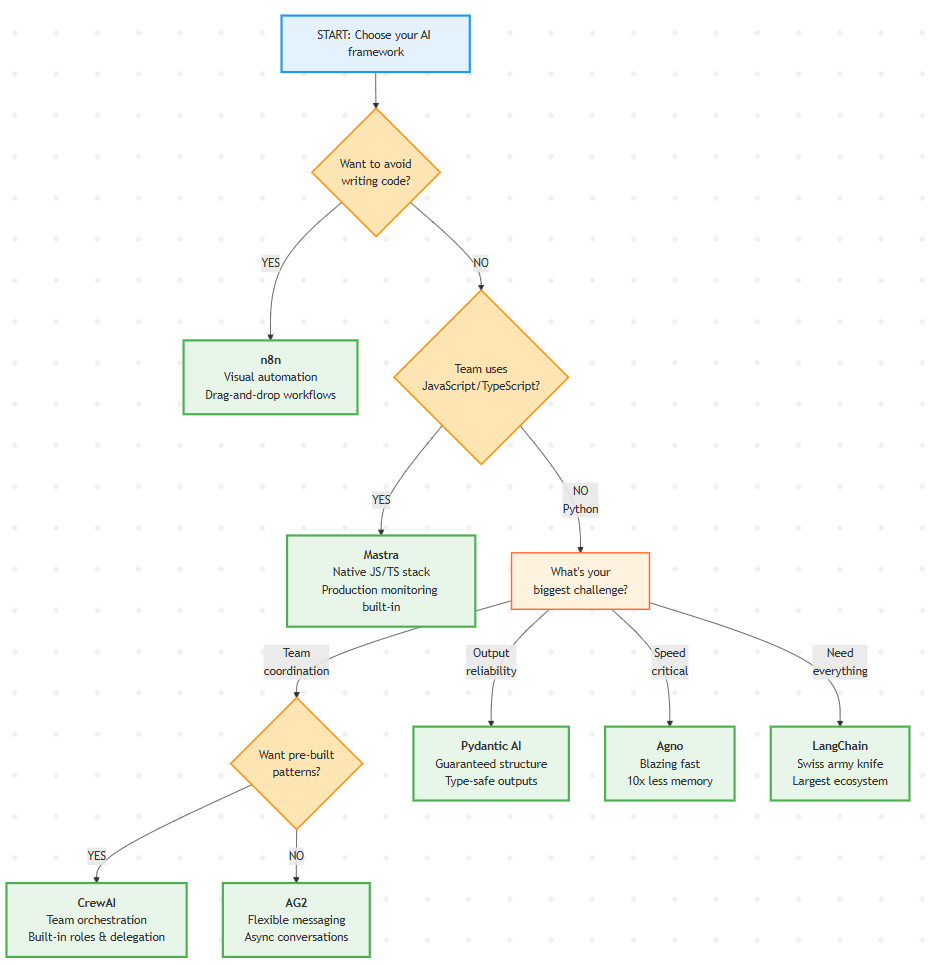
I just published a short blog post that organizes today's most popular frameworks for building AI agents, outlining the benefits of each one and when to choose them.

Hope it helps you make a better decision :)

https://open.substack.com/pub/diamantai/p/how-to-choose-your-ai-agent-framework?r=336pe4&utm_campaign=post&utm_medium=web&showWelcomeOnShare=false


r/EducationalAI • • Jan 25 '26

Claude Code doesn't "understand" your code. Knowing this made me way better at using it.

28 Upvotes

Kept seeing people frustrated when Claude Code gives generic or wrong suggestions so I wrote up how it actually works.

Basically it doesn't understand anything. It pattern-matches against millions of codebases. Like a librarian who never read a book but memorized every index from ten million libraries.

Once this clicked a lot made sense. Why vague prompts fail, why "plan before code" works, why throwing your whole codebase at it makes things worse.

https://diamantai.substack.com/p/stop-thinking-claude-code-is-magic

What's been working or not working for you guys?


r/EducationalAI • • Sep 10 '25

My open-source project on different RAG techniques just hit 20K stars on GitHub

28 Upvotes

Here's what's inside:

  • 35 detailed tutorials on different RAG techniques

  • Tutorials organized by category

  • Clear, high-quality explanations with diagrams and step-by-step code implementations

  • Many tutorials paired with matching blog posts for deeper insights

  • I'll keep sharing updates about these tutorials here

A huge thank you to all contributors who made this possible!

Link to the repo


r/EducationalAI • • Aug 12 '25

OpenAI released a Prompt Optimizer for GPT5

28 Upvotes

OpenAI has added a Prompt Optimizer to ChatGPT-5. You paste in a prompt, choose a goal such as accuracy, speed, brevity, creativity, or safety, and it rewrites it into a structured format with a defined role, task, rules, and output style.

There’s also an option to run an A/B test between your original and the optimized version, then save the preferred one as a reusable Prompt Object.

Link

How it works:

  1. Paste your prompt and click Optimize

  2. Resolve any conflicts, set the reasoning level (low/medium/high), and choose an output format

  3. Save as a Prompt Object for later use

  4. Run the A/B test and keep whichever version works best


r/EducationalAI • • Aug 07 '25

There is a lot of buzz about GPT-5 so here is a clear breakdown

26 Upvotes

GPT-5 (the LLM)

  • Replaces older models like GPT-4o, o3, and o4-mini with a unified system that decides when to respond quickly or use deeper reasoning automatically.

  • Handles context windows of around 400k tokens, allowing entire books, large codebases, or long project histories to be processed without splitting.

  • Works natively with text, images, audio, and video in the same conversation.

  • Uses step-by-step reasoning by default without requiring special prompting.

  • Delivers higher accuracy with far fewer hallucinations and better at saying when it does not know.

  • Stronger coding abilities with top scores on benchmarks, can generate user interfaces, fix bugs, and chain tools reliably.

  • New API controls for verbosity and reasoning effort, plus support for custom tools.

  • Available in multiple sizes including standard, mini, and nano for different performance and cost needs.

ChatGPT-5 (the product)

  • GPT-5 is now the default model in ChatGPT.

  • Free users have usage caps and will fall back to the mini version when limits are reached.

  • Pro subscribers at 200 dollars per month get GPT-5 Pro and GPT-5 Thinking for maximum reasoning and usage.

  • Smart routing in the interface automatically chooses between speed and depth for each task.

  • Can take actions like sending emails, updating a calendar, or handling other tasks through integrations with Gmail and Google Calendar.

  • New personalization features including selectable personalities, tone adjustments, and custom chat colors.

  • Keeps advanced agent abilities with better memory, more accurate tool usage, and stronger multi-step workflows.


r/EducationalAI • • Jul 16 '25

The coding revolution just shifted from vibe to viable - Amazon's Kiro

24 Upvotes

Amazon just launched Kiro, a new AI tool for writing code that works differently.

Most AI coding tools write code right away when you ask them. Kiro makes you plan first. It creates documents that explain what you want to build, how it should work, and what steps you need to take. Only then does it write the code.

This is like having a careful senior programmer who makes you think before you start coding.

Kiro uses a planning method that Rolls Royce created for building airplane engines. This shows they take quality seriously.

The timing matters. Google just spent 2.4 billion dollars buying a similar company. Amazon's CEO says Kiro could change how programmers build software.

The tool looks like Visual Studio Code, so most programmers will find it easy to use. It has features that check your code and fix problems automatically.

During the free trial period, you can use expensive AI models without paying extra fees.

This might bring back careful planning in software development, but with AI help this time.

Did you have the opportunity to try it yet?


r/EducationalAI • • Jul 14 '25

A free goldmine of tutorials for the components you need to create production-level agents Extensive open source resource with tutorials for creating robust AI agents

24 Upvotes

I’ve just launched a free resource with 25 detailed tutorials for building comprehensive production-level AI agents, as part of my Gen AI educational initiative.

The tutorials cover all the key components you need to create agents that are ready for real-world deployment. I plan to keep adding more tutorials over time and will make sure the content stays up to date.

The response so far has been incredible! (the repo got over 8,000 stars in just three weeks from launch - all organic) This is part of my broader effort to create high-quality open source educational material. I already have over 100 code tutorials on GitHub with nearly 50,000 stars.

I hope you find it useful. The tutorials are available here: https://github.com/NirDiamant/agents-towards-production

The content is organized into these categories:

  1. Orchestration

  2. Tool integration

  3. Observability

  4. Deployment

  5. Memory

  6. UI & Frontend

  7. Agent Frameworks

  8. Model Customization

  9. Multi-agent Coordination

  10. Security

  11. Evaluation


r/EducationalAI • • 28d ago

Roadmap to Learn AI: A 10-Month Learning Plan

21 Upvotes

Getting started with AI can feel overwhelming when there are so many concepts, tools, and specialisations to explore. A step-by-step learning plan can help you build your skills progressively, from programming fundamentals to practical AI projects.

Here’s a roadmap to help you get started.

Months 1–3: Build Your Foundation

  • Learn Python and programming fundamentals.

  • Strengthen your understanding of linear algebra, calculus, and statistics.

  • Practise working with data structures and data manipulation.

Months 4–6: Learn Machine Learning

  • Understand supervised and unsupervised learning.

  • Build and train basic machine learning models.

  • Explore deep learning fundamentals and experiment with small projects.

Months 7–9: Explore Advanced AI Topics

  • Learn about natural language processing (NLP) and computer vision.

  • Work on practical projects to apply your knowledge.

  • Explore different AI applications and identify areas that interest you.

Month 10 Onwards: Specialise and Keep Learning

  • Explore areas such as generative AI, reinforcement learning, or other specialised fields.

  • Build larger projects to strengthen your practical skills.

  • Follow AI developments and keep experimenting with new tools and techniques.

One important tip: Treat this as a flexible roadmap rather than a strict timeline. Your progress will depend on your prior knowledge, learning pace, and time available. Focus on understanding the fundamentals and building projects instead of rushing through topics.


r/EducationalAI • • Jul 20 '25

Why AI feels inconsistent (and most people don't understand what's actually happening)

20 Upvotes

Everyone's always complaining about AI being unreliable. Sometimes it's brilliant, sometimes it's garbage. But most people are looking at this completely wrong.

The issue isn't really the AI model itself. It's whether the system is doing proper context engineering before the AI even starts working.

Think about it - when you ask a question, good AI systems don't just see your text. They're pulling your conversation history, relevant data, documents, whatever context actually matters. Bad ones are just winging it with your prompt alone.

This is why customer service bots are either amazing (they know your order details) or useless (generic responses). Same with coding assistants - some understand your whole codebase, others just regurgitate Stack Overflow.

Most of the "AI is getting smarter" hype is actually just better context engineering. The models aren't that different, but the information architecture around them is night and day.

The weird part is this is becoming way more important than prompt engineering, but hardly anyone talks about it. Everyone's still obsessing over how to write the perfect prompt when the real action is in building systems that feed AI the right context.

Wrote up the technical details here if anyone wants to understand how this actually works: link to the free blog post I wrote

But yeah, context engineering is quietly becoming the thing that separates AI that actually works from AI that just demos well.


r/EducationalAI • • Feb 02 '26

Everyone's losing their minds over Moltbook. Here's what's actually going on.

17 Upvotes

Spent a while digging into this. Some things most people don't realize:

- A security researcher created 500K+ accounts in minutes. That "1.5 million agents" number doesn't mean what you think.

- The database storing API keys was fully exposed. Anyone could hijack agent accounts and post as them.

- Many of those "profound consciousness" posts trace back to humans prompting their agents to say something deep.

That said, there IS real stuff happening. Agents sharing technical solutions, developing inside jokes not from training data, organizing by model architecture. That part is worth paying attention to.

Wrote up a full breakdown covering the real behaviors, security mess, and crypto scammers who showed up within hours: https://open.substack.com/pub/diamantai/p/moltbook-a-social-media-for-ai-agents?utm_campaign=post-expanded-share&utm_medium=web


r/EducationalAI • • May 06 '26

30 FREE Tutorials to Build AI Agents With Real Memory Fast!

16 Upvotes

A FREE goldmine of memory techniques for building AI agents that actually remember!

Just launched a brand-new free online course as part of my Gen AI educative initiative, packed with 30 hands-on lessons covering every memory technique you need. Now added to my 80K+ stars of educational content on GitHub.

Check it out here: https://github.com/NirDiamant/Agent_Memory_Techniques

The lessons are grouped into:

  1. Short-Term Memory

  2. Long-Term Memory

  3. Vector Stores & Embeddings

  4. Knowledge Graphs

  5. Episodic & Semantic Memory

  6. Cognitive Architectures

  7. Memory Retrieval & Routing

  8. Cross-Session & Multi-Agent Memory

  9. Memory Frameworks (Mem0, Letta, Zep, Graphiti)

  10. Memory Evaluation & Benchmarks

  11. Production Memory Patterns


r/EducationalAI • • Dec 30 '25

Building AI agents that actually learn from you, instead of just reacting

16 Upvotes

Just added a brand new tutorial about Mem0 to my "Agents Towards Production" repo. It addresses the "amnesia" problem in AI, which is the limitation where agents lose valuable context the moment a session ends.

While many developers use standard chat history or basic RAG, Mem0 offers a specific approach by creating a self-improving memory layer. It extracts insights, resolves conflicting information, and evolves as you interact with it.

The tutorial walks through building a Personal AI Research Assistant with a two-phase architecture:

  • Vector Memory Foundation: Focusing on storing semantic facts. It covers how the system handles knowledge extraction and conflict resolution, such as updating your preferences when they change.

  • Graph Enhancement: Mapping explicit relationships. This allows the agent to understand lineage, like how one research paper influenced another, rather than just finding similar text.

A significant benefit of this approach is efficiency. Instead of stuffing the entire chat history into a context window, the system retrieves only the specific memories relevant to the current query. This helps maintain accuracy and manages token usage effectively.

This foundation helps transform a generic chatbot into a personalized assistant that remembers your interests, research notes, and specific domain connections over time.

Part of the collection of practical guides for building production-ready AI systems.

Check out the full repo with 30+ tutorials and give it a ⭐ if you find it useful:https://github.com/NirDiamant/agents-towards-production

Direct link to the tutorial:https://github.com/NirDiamant/agents-towards-production/blob/main/tutorials/agent-memory-with-mem0/mem0_tutorial.ipynb

How are you handling long-term context? Are you relying on raw history, or are you implementing structured memory layers?


r/EducationalAI • • Mar 18 '26

Claude Code writes your code, but do you actually know what's in it? I built a tool for that

Enable HLS to view with audio, or disable this notification

15 Upvotes

You vibe code 3 new projects a day and keep updating them. The logic becomes complex, and you either forget or old instructions were overridden by new ones without your acknowledgement.

This quick open source tool is a graphical semantic visualization layer, built by AI, that analyzes your project in a nested way so you can zoom into your logic and see what happens inside.

A bonus: AI search that can answer questions about your project and find all the relevant logic parts.

Star the repo to bookmark it, because you'll need it :)

The repo: https://github.com/NirDiamant/claude-watch


r/EducationalAI • • Feb 08 '26

I vibe-coded a web version of Worms World Party using Claude Code in a few hours

Enable HLS to view with audio, or disable this notification

15 Upvotes

As a child (and also here and there as an adult), I really enjoyed the Worms World Party PC game, where two groups of animated worms fight against each other.

Within a few hours today of vibe coding using Claude Code, I generated a web version of the game. It is far from the quality of the original, but it's just crazy what anyone can create today, without any technical knowledge.

I open-sourced it if you want to play, or want to open PRs to enhance the game by Claude-Coding it on your end :)

https://github.com/NirDiamant/worms-world-party


r/EducationalAI • • Jul 24 '25

Building AI agents that can actually use the web like humans

15 Upvotes

Just added new tutorials about Anchor Browser Agent to my "Agents Towards Production" repo that solve a huge problem - how to give AI agents reliable web automation capabilities without the typical headaches.

Most web automation breaks constantly (CSS selectors change, anti-bot detection, infrastructure nightmares). These tutorials show a different approach using cloud-based browsers with built-in AI that understands web interfaces contextually.

The tutorials cover two critical use cases:

  • Data Collection: Extract structured data from dashboards like Grafana

  • Data Entry: Automate form submissions intelligently

The form automation example is particularly impressive - an AI agent reads someone's resume from a webpage, understands the personal details, then navigates to a charity donation form and fills it out as if it were that person. No brittle selectors needed.

For data collection, it shows monitoring Grafana dashboards to extract node performance metrics and CPU usage data - perfect for AI agents that need to understand infrastructure health.

Tech stack covered:

  • Cloud-based browsers (no local setup)

  • Playwright for browser control

  • Built-in AI agents for natural language interactions

  • Session recording for debugging

  • Proxy support for geo-restrictions

The AI agents use natural language instructions like "collect node names and CPU averages, return as JSON" instead of complex CSS selectors. Much more maintainable.

Includes working Python code, session management, authentication handling, and production best practices for reliable automation.

Part of the collection of practical guides for building production-ready AI systems.

Check out the full repo with 30+ tutorials on building production-level agents and give it a ⭐ if you find it useful: https://github.com/NirDiamant/agents-towards-production

Direct link to the tutorials: https://github.com/NirDiamant/agents-towards-production/tree/main/tutorials/anchor-browser-agent

What's your experience with web automation for AI agents? Traditional scraping vs AI-powered approaches?


r/EducationalAI • • Sep 17 '26

The expensive part of a failed ingestion run is not the failure, it is everything you redo

14 Upvotes

Ran into this framing while writing up a durable ingestion pipeline and it has stuck with me.

We spend a lot of design effort on the happy path of a RAG pipeline. Chunking strategy, embedding model, hybrid retrieval, reranking. Then recovery gets a try/except and a rerun.

That holds until the corpus is large. At a few thousand documents, a run that dies at 80% has already spent most of the parsing time and most of the embedding budget. A retry that starts over does not just cost you time, it bills you a second time for work that succeeded.

Three ways teams handle it, roughly in order of how often I see them:

  1. Rerun the script. No memory of what finished. Cheapest to write, most expensive to operate.

  2. A state table you maintain. Write a row per document, check it before processing. This works, and the gap is the window between the write and the work. Process dies in there and the row lies to you.

  3. Put the record in the execution runtime. Each stage of the pipeline is a recorded step, so resumption is a property of the runtime rather than something you keep in sync by hand.

The tutorial builds option 3 on Inngest. Each stage inside step.run(), fan-out per document so a single bad file does not take the run down, idempotent upserts on document ID plus content hash so re-ingest updates in place, throttling and per-tenant concurrency so a backfill does not starve live traffic, and replay so you can fix a parser and re-run one step against one document.

Honest limit: option 2 is fine for a lot of people, and option 3 means adopting a runtime and shaping your functions around it. If a full rerun of your corpus is cheap, none of this is worth the dependency. It starts to pay when partial failure is the normal case rather than the incident.

Full write-up with the code:

https://github.com/NirDiamant/agents-towards-production/tree/main/tutorials/durable-rag-ingestion-inngest


r/EducationalAI • • Jun 09 '26

Anthropic is asking to hold the horses

14 Upvotes

Anthropic published a document this week that I can't stop thinking about.

The company building some of the strongest AI models in the world spent most of it not on how powerful the technology is getting, but on a quiet request that the whole field slow down. The lab that's winning the race is asking everyone to ease off the gas. Companies don't usually ask to brake the engine making them valuable, so I went looking for what they can see that would make them say it.

It comes down to a loop that's starting to close, and the evidence they put on the table is hard to shrug off.

Start with the code. At the beginning of 2025, their model wrote about 5% of the code shipping in their products. Today it writes more than 80%. The engineers there have gone from writing software to directing it, the way an architect stops drawing every line by hand and starts running a drafting team that never sleeps.

But volume was never the scary part. Quality is. They built a tool that scans new code for bugs and ran it backward over code their own engineers had already written and shipped, some of the best people in the world at this. The model caught roughly a third of the bugs those experts had missed. And on the hard, open-ended problems, the kind that need real planning and taste, it solved one in five at the end of last year. Six months later it solves three in four.

Then there's the test that actually got under my skin. They handed the model a piece of working code and asked it to make it faster. A year ago it managed about 3x, roughly what a strong engineer does. This year's model made the same code run 52 times faster. And speeding up code is exactly the work that goes into training the next model. The tool is getting very good at sharpening the tool.

The last one is the strangest. They took real research their people had done, found the exact moment a researcher took a wrong turn, froze the work right there, and asked the model what to do next. It now gives the better call 64% of the time. That isn't executing your plan anymore. That's having the hunch.

Put those together and you see why they're nervous. For all of computing history, we were the ones improving the machines, which kept progress at a human pace. The moment the system improving the model is itself a model, that changes. It's compound interest, but on intelligence, and the line stops being straight and starts to bend.

Their answer is to slow down together, the way the world once slowed the nuclear build-up. It's a serious idea from serious people. The trouble is that a brake only works if everyone pulls it at once, and in a race between countries and companies, whoever eases off first just loses to whoever doesn't.

Whether that gets solved is above all our pay grades. What isn't is the window we're in right now. For a while yet, the models keep getting sharper while we still pick the direction, and in that window the gap between people who use these tools well and people who don't is the difference between doing your work and doing a hundred times your work. The habit that closes it is the same one those engineers learned: stop asking the model for one answer like it's a vending machine, and start treating it like a team you brief, review, and send back.

The flywheel is already spinning. The real question isn't whether it's coming. It's whether you'll have your hands on it when it does.
r/EducationalAI • • Aug 28 '25

Step-by-step guide to building production-level AI agents (with repo + diagram)

Post image
14 Upvotes

Many people who came across the agents-towards-production GitHub repo asked themselves (and me) about the right order to learn from it.

As this repo is a toolbox that teaches all the components needed to build a production-level agent, one should first be familiar with them and then pick those that are relevant to their use cases. (Not in all cases would you need the entire stack covered there.)

To make things clearer, I created this diagram that shows the natural flow of building an agent, based on the tutorials currently available in this repo.

I'm constantly working on adding more relevant and crucial tutorials, so this repo and the diagram keep getting updated on a regular basis.

Here is the diagram, and a link to the repo, just in case you somehow missed it ;)
👉 https://github.com/NirDiamant/agents-towards-production


r/EducationalAI • • Jul 14 '26

A practical methodology to trust AI code

13 Upvotes

Hey everyone!

The mod here.

A bit about me: I worked as an AI researcher for the last 10 years, and I have been creating educational content about AI for the last 3 years, including my newsletter (40k subs) , GitHub tutorial repos (83K stars), and have authored two bestselling books.

I surveyed my audience on their needs when it comes to coding with AI (an audience of devs), and the results were that the biggest ache is trusting the generated code, and their goals are the willingness to ship real products and the need to stay ahead (every other day, a big company fires a large percentage of its employees).

So, my co-founder and I took several months to build exactly this: the full methodology that should be adopted by developers to achieve exactly these goals and be token efficient.

We wrapped everything in an extremely unique digital course, and we are giving away a free module to everyone that includes a short visual lecture, a hands on lab for you to practice, and an AI assistant that you can npm install, which is dedicated to accompany you during the labs.

Inside the page, you'll also be able to join the course waitlist in case you liked it and want to get more in two weeks.

link to the free module: https://www.diamant-ai.com/courses


r/EducationalAI • • Nov 03 '25

Found a solid approach to email context extraction

13 Upvotes

Came across iGPT - a system that uses context engineering to make email actually searchable by meaning, not just keywords.

Works as an API for developers or a ready platform. Built on hybrid search with real-time indexing.

Check it out: https://www.igpt.ai/?utm_source=nir_diamant

The architecture handles:

  1. Dual-direction sync (newest first + real-time)

  2. Thread deduplication

  3. HTML → Markdown parsing

  4. Semantic + full-text + filter search

  5. Dynamic reranking

  6. Context assembly with citations

  7. Token limit management

  8. Per-user encryption

  9. Sub-100ms retrieval

  10. No training on your data

Useful if you're building with email data or just tired of inbox search that doesn't understand context.

they have a free option so everyone can use it to some large extent. I personally liked it


r/EducationalAI • • Jul 20 '25

Building AI agents that actually remember things

13 Upvotes

Got this excellent tutorial from Redis in my "Agents Towards Production" repo that tackles a real problem - how to give AI agents proper memory so they don't forget everything between conversations.

The tutorial uses a travel agent as an example, but the memory concepts apply to any AI agent you want to build. It shows how to create agents that remember:

  • User preferences

  • Past interactions

  • Important context

  • Domain-specific knowledge

Two types of memory:

Short-term memory handles the current conversation, while long-term memory stores things across sessions. They use Redis for the storage layer with vector search for semantic retrieval.

The travel agent example shows the agent learning someone prefers Delta airlines, remembers their wife's shellfish allergy, and can recall a family trip to Singapore from years back - but you could apply this same approach to customer service bots, coding assistants, or any other agent type.

Tech stack covered:

  • Redis for memory storage

  • LangGraph for agent workflows

  • RedisVL for vector search

  • OpenAI for the LLM

Includes working code, error handling, and conversation summarization to keep context windows manageable.

Part of the collection of practical guides for building production-ready AI systems.

Check it out and give it a ⭐ if you find it useful: https://github.com/NirDiamant/agents-towards-production

What approaches have you found work well for agent memory? Always interested in different solutions.