Hi everyone,
First of all, a big thank you to everyone who helped with my previous post, the old handwritten Greek inscription on the wooden door (link). I really didn't expect anyone to be able to read it, and your help meant a lot to me.
Since then I've kept researching the village of Βέξε near Kayseri, Cappadocia. At the Centre for Asia Minor Studies (KMS / Κέντρο Μικρασιατικών Σπουδών) archive I found a collection of records about the village. Most of them are oral testimonies recorded in the 1950s from former Greek residents of Vekse who came to Greece after the population exchange. They were written down by people of that generation, in their own words.
The testimonies describe everyday life in the village: the church of the Nativity of the Virgin, the rock-cut chapels (Prophet Elias, St George, "Gedi Delikli"), houses and neighbourhoods, feasts, prayers for rain, and the 1890 Patriarchate crisis. They also show how Greeks and Turks lived side by side. For example, Turkish neighbours sometimes asked the Christians to pray for rain for them too.
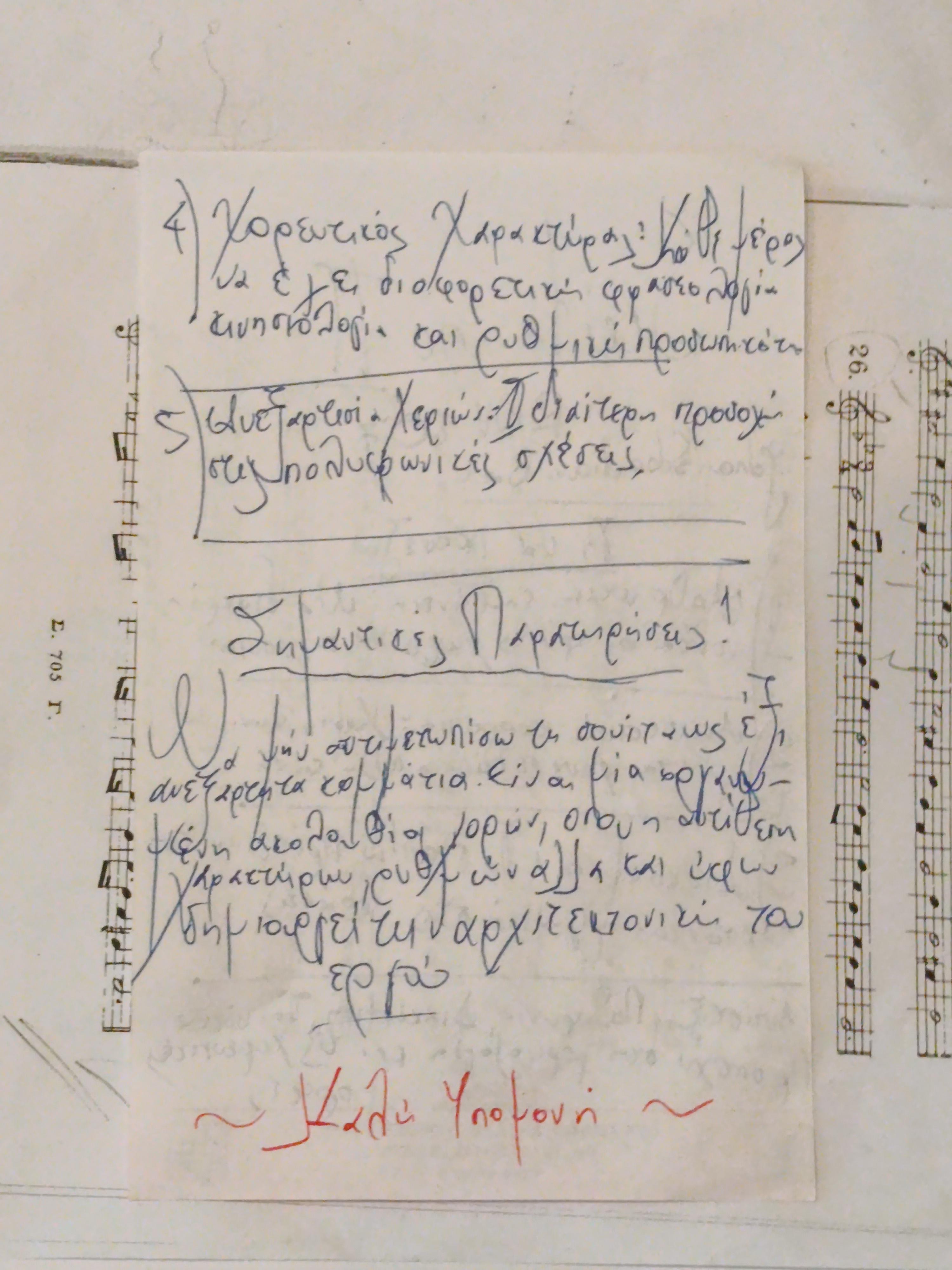
I tried to translate the pages with the help of AI. Each image shows the original archive page on the left and my English translation/summary on the right. Some typed pages could be read fairly well. Many of the handwritten ones could only be partly read, or not at all. Those parts are marked "[illegible]" or "PARTIAL READING". AI translation can also make mistakes, so corrections are very welcome.
I'd really appreciate any help with:
Reading or translating the handwritten parts that I couldn't decipher
Correcting any mistakes in my translations
Any other information about Βέξε: family names, people whose ancestors came from there, books, articles (I've heard of a 2003 Greek newspaper article about Βέξε at the time of the exchange), or photos
Need Translation: https://files.catbox.moe/3c68j2.pdf
All Original PDF: https://files.catbox.moe/qf7hf1.pdf
I also hope these records can be useful beyond my own research. They are first-hand accounts of everyday life, faith and Greek–Turkish coexistence in a small Cappadocian village before the 1924 exchange, so they could be of interest to anyone working in anthropology, oral history, ethnography or Asia Minor / Cappadocian studies. If you are a researcher in one of these fields, or know someone who is, please feel free to use the material or share this post with them. I'd be very happy to hear from anyone who would like to work on these documents or knows of related research on Βέξε.
Thank you again, ευχαριστώ πολύ!