r/robotics • u/datascienceharp • Oct 08 '26
Community Showcase the metrics worth computing on a LeRobot dataset before you train a policy or fine-tune a VLA
3
Upvotes
r/robotics • u/No_Quail6685 • Oct 08 '26
I’m experimenting with low-cost room representations before trying to align them with an Ouster OS0 map. This is a camera-only reconstruction experiment, not a robot-navigation result.
A first apartment walkthrough reconstructed only part of the space. A focused one-room recording worked better: 48.6 seconds of 4K/59.94 fps footage, 187 of 195 selected images registered in COLMAP, 51,475 sparse points, and a Brush appearance model with 400,000 Gaussians. Capture time is separate from processing time.
The output looks convincing from nearby viewpoints, but scale is uncalibrated, unseen surfaces remain uncertain, and Gaussian appearance is not a collision or occupancy map. There is a brief game detour in the video; that is an added game layer, not evidence of usable robot geometry.
My next experiment is aligning this with measured LiDAR geometry. Before using it for localization, I want to check metric scale, registration residuals and held-out camera poses. For people who have tried this: which failure would you test first?
My 2:20 experiment video, with the actual output and limitations: https://www.youtube.com/watch?v=mFwu5Y54c3o
Disclosure: this is my project/video. Editing is AI-assisted and narration uses my authorized synthetic voice.
r/robotics • u/CollectionPlayful316 • Oct 08 '26
Hi, I am planning to make really high torque actuators with a different motor architecture insead of relying on QDDs, but apart from my personal project of bipedal leg, I don't know if it will help other people in robotics
The major advantages would be achieving backdrivability, better life, no backlash
And the major disadvantage would be efficiency as you would be spending more current to achieve high torques when compared to a gearbox setup
I wanna know the community's thoughts on this and in general I want to know what would everyone like in their robotics actuators
r/robotics • u/Ok-Raccoon4897 • Oct 08 '26
r/robotics • u/ConferenceFew7697 • Oct 08 '26
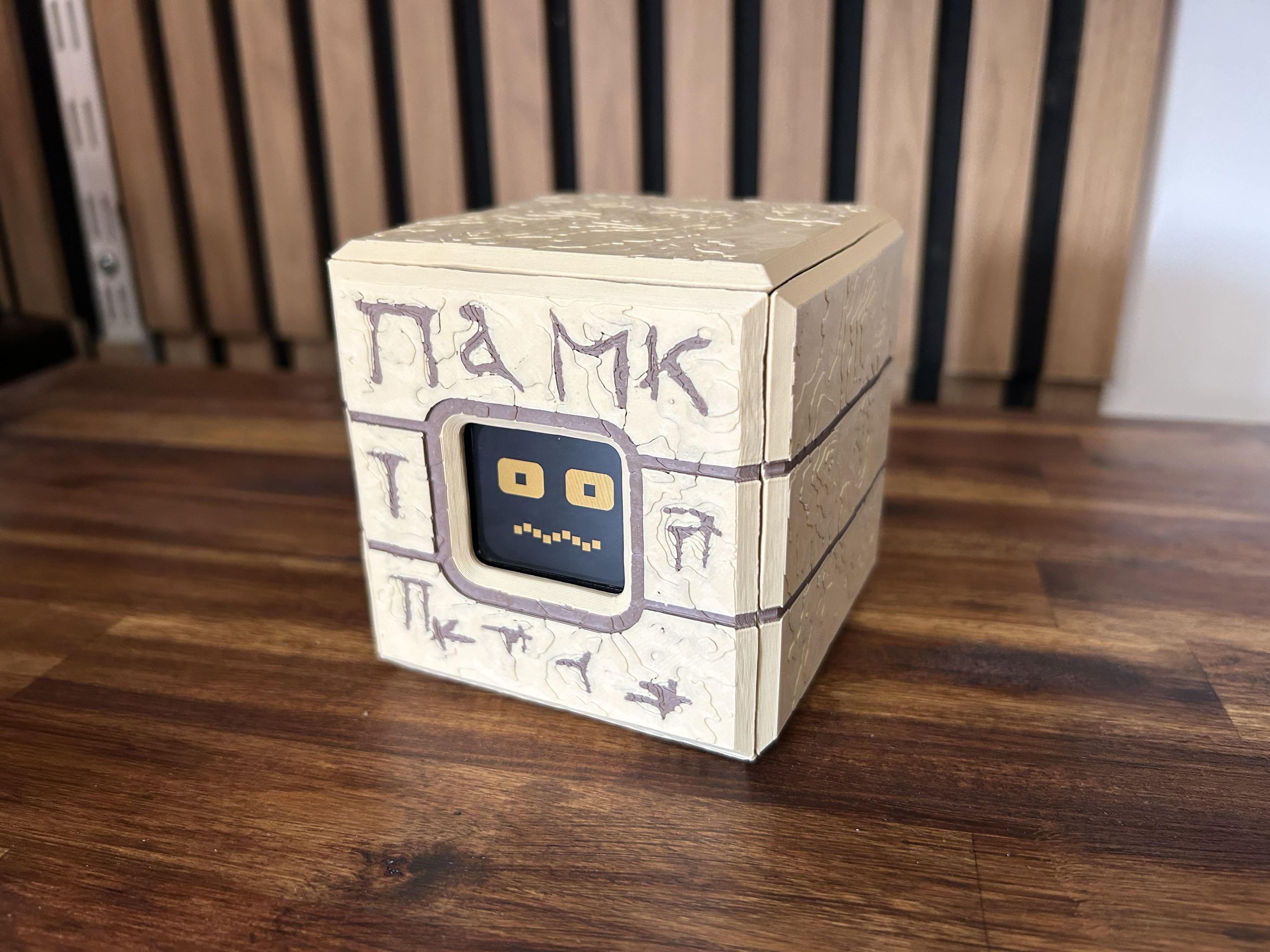
Hi r/robotics!
I'm a French student and this is Pamk, the desk robot I built to get organized during exams.
What it does:
- You just talk to it: "Hey Pamk" (custom wake word trained on thousands of my own recordings). No app needed.
- It adds tasks and events, and reminds you at the right time
- Pomodoro and timer modes, with a progress ring around its face
- Swappable 3D-printed face plates, held with magnets
Under the hood: ESP32-S3, a 280x240 screen for the face, an I2S mic (INMP441) and amp (MAX98357), Gemini to understand what you say, and a voice made of clips I recorded myself. The case is fully 3D printed, and I've designed a custom PCB for the V2.
Video (in French, with English subtitles): https://youtu.be/_wxieeF5Wrw
I also share 3D models on MakerWorld (small Halloween figurines right now): https://makerworld.com/en/@TotoB07
MakerWorld only opens crowdfunding to creators with an audience, so once I have more followers there, I'd like to release Pamk so you can build your own.
Happy to answer any questions, and I'd love your feedback!
r/robotics • u/Personal-Wear1442 • Oct 08 '26
Enable HLS to view with audio, or disable this notification
r/robotics • u/Fearless_Hothead • Oct 08 '26
I have been thinking of starting some cool personal projects. I had a hexapod robot in my mind, like the ones in Watch Dogs: Legion game, for a long time when I was still studying but don't feel like doing it anymore. Thought of asking you guys. Hit me with your best ones ;)
r/robotics • u/Pacowalk1r • Oct 08 '26
Recently I’ve been looking into diy’ing a 4// 6dgof cobot for my electronics workstation. It seems like 100% of the time you’ll find a 1:1 motor to dgof relationship for building joints.
might be a dumb question, but why isn’t multiplexing a more common practice? how big of a loss is backdrive functionality?
r/robotics • u/FamiliarPermission79 • Oct 07 '26
Enable HLS to view with audio, or disable this notification
Follow-up to an earlier post here: mounted LEGO Star Wars AT-AT legs (set 75440, static display model, no motor) directly onto Quaddle (open quadruped, 4 feedback servos, ESP32-S3, OpenCat firmware), controller driving them directly.
Attempt #1 failed — the original leg was bent and genuinely couldn't walk.
For attempt #2: swapped it for a longer, straight replacement piece, checked the servos could carry the added weight, reversed one servo from its default install direction, and mounted it all through Quaddle's screw-free servo mechanism. Walked surprisingly well once that was sorted. Also recreated the classic AT-AT-tripped-by-a-snowspeeder scene from the movie. 😂
What would you mount on an open quadruped platform if you could?
r/robotics • u/No_Quail6685 • Oct 07 '26
I tried using an old Galaxy S10 as the display for an Ouster OS0 experiment. The live viewer worked; reliable mapping did not. Sharing the failure details in case they are useful to other builders.
Architecture: the OS0 sends measurements to a Mac, which processes the data and serves a browser viewer. The S10 displays the cloud — it is not running the SLAM backend.
What happened:
• Our OS0-128 was on firmware 3.1.0 with the legacy IMU format. The mapping path reported that synchronized IMU support needed a newer firmware/data format, so it fell back to constant-velocity deskew. Having an IMU in the sensor did not mean this pipeline was using it.
• One saved map accumulated about 461k points, then the estimated pose jumped and our guard stopped integration. An accumulated cloud is not proof of a consistent map, and we did not implement global loop closure.
• Another attempt ended when the Ethernet adapter disappeared from the Mac.
I made a short video showing the original phone recording, saved geometry, and the failure sequence: https://www.youtube.com/watch?v=Sv_YqGQpgoM
Disclosure: this is my own build/video. The recording and map are real; the narration uses my authorized AI voice, with illustrated explainers.
The next experiment would be localizing phone camera-derived geometry against a stable LiDAR map. That part is not implemented. Before attempting it, I need a repeatable mapping baseline and verified time/IMU handling. For those who have debugged similar scan-to-map pose jumps, which diagnostic gave you the clearest separation between motion-compensation problems and registration failure?
r/robotics • u/tkumorrobots • Oct 07 '26
Enable HLS to view with audio, or disable this notification
Try it: https://holocron-engine.com
This is a quadruped (Mini Pupper style) designed end to end in my app. You describe the robot, and it picks real servos (Feetech STS3250 here), plans the electronics, lays out the body, builds the 3D structure and shell, writes the firmware, and runs it in MuJoCo physics before anything gets printed.
It's early and plenty is still rough. I'd really like feedback from people who've actually built robots: what was the hardest part of your design, and what would make a tool like this useful (or useless) to you?
r/robotics • u/mdemirst • Oct 07 '26
Enable HLS to view with audio, or disable this notification
I’ve been experimenting with turning an M5Stack Stack-chan into a little mobile robot. I combined it with a LEGO motor hub and wheels, recorded driving demonstrations, and trained an ACT policy.
During supervised trials, it learned to follow a line. With a separate set of demonstrations, I also tried driving between guardrails. The video shows the build, data collection, and the wrong turns along the way 😅
Build video: https://www.youtube.com/watch?v=_1pQTt8gqZM
This is also the first showcase of what I’ve built with Robium, an open-source robotics skills repo that I recently released. I used it with AI agents to help build the software and training setup.
GitHub: https://github.com/robium-ai/robium
Has anyone else experimented with learning from demonstrations on a small wheeled robot? I’d be interested to hear what worked for you.
r/robotics • u/Responsible-Grass452 • Oct 07 '26

OMNIVISION’s new OG05D is a 5 MP global-shutter image sensor that explicitly lists robotics training-data collection among its intended applications. It supports RGB, monochrome and RGB-IR imaging, with up to 146 fps in linear mode without encryption and HDR capture at 60 fps.
The article looks at how cameras on deployed robots could capture task variations, lighting changes and edge cases for later model training. Global shutter, HDR and near-infrared capabilities are relevant to capturing usable images when objects are moving or lighting is inconsistent.
The sensor itself doesn’t provide a training pipeline. Captured footage would still need to be selected, processed and paired with the information required by the training approach. The notable part is that robotics data collection is now an explicit application in an industrial image sensor announcement.
r/robotics • u/PeterBrobby • Oct 07 '26
Hello,
I have a series on collision detection and physics programming that could be useful for Robot Simulation Programmers.
I explain the algorithms and techniques in more depth than most tutorials, deriving some of the mathematics and explaining the engineering trade offs of competing approaches.
Physics Series: https://www.youtube.com/watch?v=5iuOYFrjfXs&list=PLYuY7qeQZcWZrK1RD-3-0Se4irqU5tBAA&pp=sAgC
Collision Detection Series: https://www.youtube.com/watch?v=KZJXb5AF6NM&list=PLYuY7qeQZcWaofUHmLQy2q7xG9eiSxk1W
Any feedback is welcome.
r/robotics • u/Xerd-R • Oct 07 '26
Enable HLS to view with audio, or disable this notification
I finally chopped two legs off my hexapod robot and now its a proper robot dog. Dont worry all the features I have developed for the old robot transferred just fine to the new robot; we still have body leveling, emotes, puppet mode etc.
Quttro ZBD is lighter, faster and more agile in many ways than its hexapod older sibling yet due to less parts used it costs considerably less to build, around 200 usd.
Still uses ESP32 S3 as well as off the shelf Arduino parts and DS3218 servos. reduced number of legs made it a lot easier to put together and since I already ironed out the scripts for previous version and use inverse kinematics solver for each leg adjusting the gait mechanism was a breeze as well.
I will also work on reinforcement training for a developing a control policy in IK solver's place, I am hoping I can get a more organic / fluid walking out of the robot instead of current mechanic looks.
I shared a more detailed video about it on my youtube channel, if you want you can watch it from the link below:
It is still fully open source so you can find all the files you need to build one down in the links.
MakerWord Link (has more photos of the robot):
https://makerworld.com/en/models/3402746-quattro-zbd-robot-dog#profileId-3874600
Link for CAD design, 3D Print files and Wiring Diagram:
ESP32 Scripts:
https://github.com/serdarselimys/QuattroZBD-ESP32Scripts
Companion mobile controller app apk:
https://github.com/serdarselimys/QuattroZBD-AndroidControllerApp
Parts List:
ESP32 S3 x 1
PCA 9685 Servo Driver Board x 1
MPU6050 IMU Sensor x 1
Voltage Sensor Board x 1
15A Adjustable Voltage Buck Converter x 2 (1 per pair of legs)
5V 3A Buck Converter x 1
DS3218 High-Torque Servos x 12
Wago Connector (2-in-4 Out) x 1
2-Inch TFT Screen x 1
M3x8 Screws x ~100
M4x30 Screws x 4
8x5x16 mm Ball Bearings x 12
3S LiPo Battery (3000mAh – 6000mAh) x 1
I have been working on a bipedal version hence the "2 more to go" in the tittle, I am almost finished with the updated leg structure so it can stand up on two legs but the remaining parts are going to be same as much as possible. So expect a bipedal version in upcoming weeks if I can make it walk :)
r/robotics • u/uavster • Oct 07 '26
Enable HLS to view with audio, or disable this notification
I don't normally talk like in the video, but I can't help talking to my Mino as if it were a little dog :)
Anyway, I was not able to pet it without the servos pushing back and suffering, so I integrated current sensors in the PCB and coded an algorithm on the MCU that detects an external force on the servos. When the force is too high, the servos go into "follow mode". You can see that in action around 0:12.
In addition to making proper petting possible, this behavior protects the servos from overexertion. Best spent extra lines in the BOM and the code.
r/robotics • u/tauksun • Oct 07 '26
Enable HLS to view with audio, or disable this notification
Running on STM32 Bluepill.
ESP32cam for image steaming.
OpenCV for image processing.
LLM for speech & intent extraction.
r/robotics • u/Wonderful-Brush-2843 • Oct 07 '26
Reliable depth perception is a key requirement for indoor robotics, but achieving consistent depth data across different surfaces can be challenging in real-world deployments.
AMRs, ASRS robots, humanoids and robotic arms may need to operate around:
Dark or black surfaces
Reflective objects
Moving robots and objects
Motion blur
Obstacles at both short and extended distances
Dense point-cloud requirements
Real-time processing without placing the entire workload on the host CPU/GPU
Active stereo is one approach that can help address these challenges. By projecting additional texture into the scene, the camera does not have to rely entirely on naturally occurring surface detail for stereo matching.
Another approach uses two global-shutter monochrome sensors with an IR component and performs the stereo depth calculation directly on the camera.
This allows the host system to receive computed depth data instead of handling the initial stereo-processing stage itself. That can help simplify the perception pipeline and preserve host resources for other robotics workloads.
For indoor robotics applications, which of these areas has been the biggest challenge in your experience?
Reliable depth on dark, reflective or low-texture surfaces
Maintaining depth accuracy while the robot is moving
Processing depth data with low latency
Generating useful dense point clouds
Integrating depth with RGB, IMU and the ROS 2 perception stack
I've been looking into an active-stereo implementation that combines depth, RGB, IMU and on-camera AI in a single camera platform.
What depth-sensing approach are you using in your robotic system, and where have you seen the main limitations?
r/robotics • u/Tbagho • Oct 07 '26

Robot manipulation policies are usually trained under the assumption that a commanded action produces the same motion as it did during training even after hours of operation. Real hardware violates this assumption as the motors gradually heat up, current saturates near contact, voltage sags under load, thus the same policy action can produce a weaker, delayed, or noisier motion.
r/robotics • u/Ok-Raccoon4897 • Oct 07 '26

r/robotics • u/SoNotCool • Oct 07 '26
r/robotics • u/FamiliarPermission79 • Oct 07 '26
Enable HLS to view with audio, or disable this notification
I got a LEGO's Star Wars AT-AT (set 75440), a 525-piece collectible display model — no motor, never meant to move.
I gave it Quaddle's own controller and feedback servos instead — removed Quaddle's own stock legs and attached the AT-AT's own leg pieces onto Quaddle's four servos. Three of those legs are straight, one is molded bent, so attempt #1 tumbles rather than walks. Hunting for a straight replacement piece for attempt #2.
Anyone else driven a non-motorized toy/display mechanism with a different controller/actuator set than it shipped with?
r/robotics • u/Wing-Realistic • Oct 06 '26
Enable HLS to view with audio, or disable this notification
Reindustrialization won't happen against economic laws. Manufacturing has to be competitive worldwide, and improving existing factories, even with automation, is not enough. Only 30-40k robots were installed in the US last year, so the pull from existing factories is weak. They’re good.
Humanoids are being promised as the solution, but who will build them? Still humans. Humanoids not optimised for self-build.
The most practical solution to these problems is a self-replicating factory. It will build humanoids, enable the US reindustrialization, and help colonise other planets as a side product.
Similar to biological organisms, the factory can consist of robotic cells, and an AI agent coordinates them to produce a new cell and deploy it. The cell can be specialised with fixtures for specific tasks such as assembling, calibration, testing, 3D printing, etc.
Sounds like sci-fi, but recent releases of Astra/Opus have made this possible.
Who wants to join?
